

P0192 on 2014-2016 Chevrolet Tahoe 5.3L: Fuel Rail Pressure Sensor Circuit Low Causes and Fixes
On a 2014-2016 Tahoe, code P0192 is most often caused by a failed Fuel Rail Pressure Sensor (FRPS). A GM Technical Service Bulletin (PIP5279A) specifically advises replacing this sensor if initial diagnostics don't find another cause. Expect to pay $70-$120 for an OEM sensor; replacement is moderately difficult as it requires removing the intake manifold to access the sensor located on the driver's side fuel rail.
- P0192 on a 2014-2016 Tahoe points directly to a problem in the Fuel Rail Pressure Sensor circuit, not necessarily the fuel pump.
- The most probable cause is a failed Fuel Rail Pressure Sensor itself, a known issue acknowledged by GM service bulletin PIP5279A.
- The correct OEM part number for the sensor is 12673824, which is a 4-pin sensor specific to 2014-2016 models.
- Repair requires removing the intake manifold and can cost between $463 and $605 at a shop.
- If major engine work was recently done, check for swapped electrical connectors at the rear of the engine before replacing parts.
What's Unique About the 2014-2016 Chevrolet TAHOE
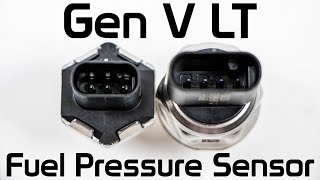
The 2014-2016 Tahoe uses a direct injection (GDI) fuel system, which operates at very high pressures. The Fuel Rail Pressure Sensor (FRPS) is a critical input for this system. General Motors issued Technical Service Bulletin #PIP5279A for these vehicles, which directly addresses P0192 and other fuel pressure codes. The bulletin's guidance to replace the sensor if other diagnostics are inconclusive suggests that sensor failure is a known issue on this platform. The 2014-2016 models use a specific 4-pin analog sensor (Part No. 12673824) that measures both pressure and temperature; this was changed to a 3-pin digital (SENT protocol) sensor in 2017, making it important to use the correct part for the vehicle's year.
Diagnostic Flowchart
Tap your situation to follow the diagnostic path that matches what you're seeing on this vehicle.
Symptoms You May Notice
- Check Engine Light is on
- Engine is hard to start or requires long cranking time
- Engine stalls, especially at idle or low speeds
- Noticeable loss of power and poor acceleration
- Rough idle or engine misfires
- Increased fuel consumption
- Vehicle enters 'Reduced Engine Power' mode
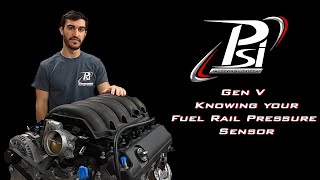
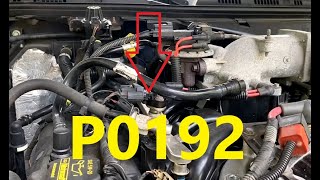
- Replacing the high-pressure fuel pump or the in-tank fuel pump. P0192 is an electrical circuit code. While a failing pump can cause low fuel pressure, it will typically set different codes (like P0089, P00C6, or P2635). Always diagnose the sensor circuit first 🎬 Watch this breakdown of common causes and fixes for the P0192 code. as instructed by TSB PIP5279A.
Most Likely Causes
- Failed Fuel Rail Pressure Sensor (FRPS) 🔴 High Probability A GM Technical Service Bulletin (PIP5279A) specifically identifies this sensor as the likely culprit if initial wiring checks do not resolve the issue. Forum and repair data show this is a common failure item on the L83 engine.
How to confirm: Using a scan tool, observe the fuel rail pressure reading. If it is stuck at an unnaturally low value (e.g., 0 PSI) regardless of engine state, and the sensor's wiring tests good for 5V reference and ground, the sensor has failed internally. With the key on, engine off, the signal wire should read between 1.5V and 1.8V; a reading below 0.5V indicates a fault. The presence of raw fuel in the vacuum hose (if applicable) also confirms internal failure.
Typical fix: Replace the fuel rail pressure sensor. This requires removing the intake manifold to access the sensor on the driver's side fuel rail. The sensor should be torqued to 24 ft-lbs.
Est. part cost: $70-$120 - Wiring or Connector Issue 🟡 Medium Probability Engine harnesses can be susceptible to damage from heat and vibration. Wires can chafe against brackets, the cylinder head, or other components, causing a short to ground. A user on Chevroletforum.com reported P0192 appearing only after it rains, suggesting a wiring issue where moisture causes a short.
How to confirm: Visually inspect the wiring harness leading to the fuel rail pressure sensor for any signs of damage, chafing, or melting. Unplug the connector and check for corrosion or bent/loose pins. Use a multimeter to test for the correct 5-volt reference, a good ground, and continuity on the signal wire back to the ECM. A bent pin within the larger bulk harness connector on the driver's side has been identified as a specific, hard-to-find cause.
Typical fix: Repair the damaged section of the wiring harness or clean/replace the sensor connector. Applying dielectric grease can help prevent future moisture intrusion.
Est. part cost: $10-$50
Rare But Worth Checking
- Swapped Harness Connectors: After major engine work, like an engine replacement, it is possible to swap two adjacent main harness connectors at the back of the engine. This can cross-connect the fuel rail pressure sensor circuit with another, causing a no-start and code P0192. A diagnostic video for a 2016 Silverado with the same engine documented this exact scenario, where swapping the connectors back to their correct positions restored the 5V reference and fixed the issue.
- Faulty Powertrain Control Module (PCM): This is very rare. The PCM's internal circuit for the sensor could fail, but this should only be considered after thoroughly ruling out the sensor and its wiring. Before condemning the PCM, ensure its power and ground supplies are stable.
Diagnosis Steps
- Connect an OBD-II scanner and confirm P0192 is present. Check for any other codes and note them, especially those listed in the 'often_seen_with_codes' section.
- Using the scanner's live data function, monitor the 'Fuel Rail Pressure' PID. With P0192, the reading will likely be abnormally low (e.g., 0 psi or a fixed low value) and will not change when the engine is cranked or running.
- Turn the ignition off. Locate the fuel rail pressure sensor on the high-pressure fuel rail, which is under the intake manifold at the rear of the driver's side fuel rail.
- Visually inspect the sensor's electrical connector and the nearby wiring harness for any obvious signs of damage, corrosion, or loose connections. Pay close attention to areas where the harness may chafe against engine components.
- Disconnect the sensor. With the key on, engine off, use a multimeter to test the connector terminals. You should find a 5-volt reference wire (4.8V-5.2V), a ground wire (near 0 volts), and a signal wire.
- If the 5-volt reference or ground is missing, you have a wiring issue that needs to be traced back to the ECM. Check for blown fuses related to the fuel system or ECM. If both are present, the wiring is likely okay.
- If wiring tests good and the sensor's reading on the scan tool is illogical, the fuel rail pressure sensor itself is faulty and should be replaced. This is the most common outcome, as suggested by TSB #PIP5279A.
Parts You'll Likely Need
- Fuel Rail Pressure Sensor
(OEM #12673824)— This is the most common failure point for code P0192 on this vehicle, as identified by repair data and a manufacturer TSB. This part number supersedes the older 12623130.
Trusted brands: ACDelco, GM Genuine
OEM price range: $70-$158
Aftermarket price range: $40-$80
Related Codes That Often Appear With This One
- P0193 — This code for 'Fuel Rail Pressure Sensor Circuit High Input' can appear with P0192 if there is an intermittent short or wiring problem causing the voltage to fluctuate between too high and too low.
- P0089 — This code for 'Fuel Pressure Regulator Performance' is listed in TSB #PIP5279A as being related and may set due to the erratic signals from the faulty sensor circuit.
- P228C — This code for 'Fuel Pressure Regulator 1 Exceeded Control Limits' is also listed in TSB #PIP5279A and points to the control system's inability to manage fuel pressure, likely due to bad data from the P0192 fault.
- P127C — This manufacturer-specific code is often related to fuel pressure sensor correlation and was seen in a diagnostic case alongside P0192 on a 2016 Silverado with the same engine, caused by swapped harness connectors.
Technical Service Bulletins (TSBs) & Recalls
- PIP5279A: Addresses Service Engine Soon lamp with various fuel rail pressure codes, including P0192. Recommends replacing the fuel rail pressure sensor if standard diagnostics do not lead to a repair. This TSB was issued in August 2015 and supersedes the earlier PIP5279.
Platform-Specific Known Issues
- TSB #PIP5279A: This bulletin covers the 2014-2016 Tahoe and indicates that if diagnostics for P0192 (and other related codes like P0089, P0193, P228C) are inconclusive, the fuel rail pressure sensor (FRPS) should be replaced.
- Harness Chafing: TSBs for similar GM trucks highlight potential for the engine wiring harness to chafe against the ECM/TCM bracket, upper control arm, or shock tower, which could cause a short in the FRPS circuit.
Mechanic-Grade Diagnostic Values
- High-Side Fuel Rail Pressure (GDI System) — expected: Cranking: 300-400 PSI. At Idle: 500-1,000 PSI. Under Load: 2,000-2,800 PSI.. Failure: Pressure significantly below these ranges, or stuck at a fixed value, can indicate a mechanical pump issue, but P0192 points to the sensor circuit first.
- Fuel Rail Pressure Sensor (FRPS) Signal Voltage — expected: Approximately 1.5V to 1.8V with Key On, Engine Off (KOEO).. Failure: A voltage reading below 0.5V will trigger code P0192. A reading of 0V or one that is static and unresponsive indicates a failed sensor or circuit fault.
- FRPS 5-Volt Reference Circuit — expected: 4.8V to 5.2V at the sensor connector with key on, engine off.. Failure: Voltage significantly lower than 4.8V or 0V indicates a wiring issue between the sensor and the ECM or a fault within the ECM itself.
Scan Tool Commands That Help
- GDS2 / Professional Scan Tool: Fuel System > Sensor Relearn — After replacing the fuel rail pressure sensor, this function may be necessary to calibrate the new sensor to the ECM for accurate readings.
- GDS2 / Professional Scan Tool: Reset Fuel Trim Learn — After significant fuel system repairs, such as replacing a high-pressure fuel pump or injectors, resetting the long-term fuel trim data forces the ECM to relearn fuel delivery adjustments.
Wiring & Ground Locations
- Bulk Harness Connectors — At the back of the engine, where the engine harness connects to the main vehicle harness.. There are two physically similar connectors that can be swapped during reassembly after major engine work. Swapping them will cross-connect circuits, causing a loss of the 5V reference to the FRPS and setting code P0192.
Real Owner Repair Stories
- Reddit user on r/MechanicAdvice (2016 Chevrolet Silverado 5.3L L83) — Check Engine Light with codes P0192 and P0191. Scan tool showed 4-4.5 volts to the sensor but desired fuel pressure was 0.
❌ Tried (didn't work) Checking grounds and connectors.
✅ What actually fixed it A bent pin in the bulk harness connector for the driver's side injectors and fuel pressure sensor was found and repaired. - YouTube channel 'ADVANCED LEVEL AUTO' (2016 Chevrolet Silverado 1500 5.3L V8) — Cranks but will not start after an engine replacement. Codes P0192 and P127C were present.
❌ Tried (didn't work) Initial check at the sensor connector showed incorrect voltages (ground on the 5V reference wire and 8.5V on the ground wire).
✅ What actually fixed it Two main harness connectors at the back of the engine had been connected in reverse. Swapping the connectors to their correct positions restored the proper 5V reference and ground, allowing the engine to start.
OEM Part Supersession History
12623130→12673824— Standard part revision by the manufacturer.
Model Year Variations Within This Range
- 2014-2016: These models use a 4-wire fuel rail pressure sensor that measures both pressure and temperature. Later models (2017+) switched to a 3-wire sensor using the SENT digital protocol. The sensors are not interchangeable despite potentially similar connectors.
Helpful Videos
We Have This Part in Stock



The information in this article is provided for general reference and educational purposes only. Vehicle specifications, procedures, and part compatibility can vary by production date, trim level, and region. Always consult your vehicle's factory service manual and verify part numbers before purchasing or performing repairs. Safety-critical components such as airbags, seat belts, and braking systems should be installed by a qualified professional.
- Chevrolet TAHOE:
- 🎬 Helpful Videos
- 🛍️ Shop This Part
- What's Unique About the 2014-2016 Chevrolet TAHOE
- Diagnostic Flowchart
- Symptoms You May Notice
- Most Likely Causes
- Rare But Worth Checking
- Diagnosis Steps
- Parts You'll Likely Need
- Related Codes That Often Appear With This One
- Technical Service Bulletins (TSBs) & Recalls
- Platform-Specific Known Issues
- Mechanic-Grade Diagnostic Values
- Scan Tool Commands That Help
- Wiring & Ground Locations
- Real Owner Repair Stories
- OEM Part Supersession History
- Model Year Variations Within This Range
- 🎟️ Get 5% Off