

P0192 on 2014-2016 Chevrolet Suburban: Fuel Rail Pressure Sensor Circuit Low
P0192 on a 2014-2016 Suburban most often points to a faulty fuel rail pressure sensor (OEM Part #12673824 or superseded #12682589) or its wiring. If diagnostics on the sensor are inconclusive, GM Technical Service Bulletin #PIP5279A suggests replacing it. A DIY sensor replacement is difficult due to its location under the intake manifold, a job that requires several hours.
- P0192 on your Suburban indicates a low voltage signal from the fuel rail pressure sensor.
- The most common cause is a failed fuel rail pressure sensor itself, followed by wiring issues.
- A GM Technical Service Bulletin (PIP5279A) acknowledges this issue and often points to sensor replacement as the fix.
- Due to the high-pressure fuel system and the location of the sensor under the intake manifold, this repair is complex and best left to a professional.
- Do not ignore this code, as it can lead to stalling, poor performance, and unsafe driving conditions.
What's Unique About the 2014-2016 Chevrolet SUBURBAN
For the 2014-2016 Suburban with direct injection engines (5.3L L83, 6.2L L86), the fuel system operates at extremely high pressures. GM has issued a Technical Service Bulletin (TSB #PIP5279A) that groups P0192 with other fuel pressure codes, indicating a known pattern across a wide range of GM trucks and SUVs. The bulletin advises that if standard diagnostics don't find a cause like a wiring fault, the fuel rail pressure sensor (FRPS) itself should be replaced. This suggests the sensor is a common failure point on this platform. A key detail for this platform is the transition from a 4-pin analog sensor to a 3-pin digital sensor around 2016-2017; using the wrong sensor or harness can cause persistent issues even though the connectors are physically interchangeable.
Diagnostic Flowchart
Tap your situation to follow the diagnostic path that matches what you're seeing on this vehicle.
Generation note: The 2014 model year was the last of the 10th generation (GMT900 platform), while the 2015-2016 models are part of the 11th generation (K2XX platform). However, both generations in this range utilize direct injection V8 engines (L83/L86). The relevant TSB #PIP5279A specifically covers 2014-2016 models, indicating the issue and diagnostic procedure apply across this transition period. A notable difference is that the 2014 GMT900 models have well-documented ground locations (like G104 on the cylinder head) that are critical to check.
Symptoms You May Notice
- Check Engine Light is on
- Engine is hard to start or requires long cranking time
- Engine will crank but not start 🎬 Watch: Troubleshooting a Suburban that cranks but won't start.
- Hesitation or stumbling during acceleration
- Reduced engine power / Limp Mode
- Rough idle
- Engine may stall, especially at low speeds or idle
- Replacing the in-tank low-pressure fuel pump when the issue is with the high-pressure system.
- Replacing fuel injectors without confirming a fuel pressure or sensor electrical fault first.
- Replacing the high-pressure fuel pump when the root cause is a much cheaper faulty sensor or wiring issue.
Most Likely Causes
- Faulty Fuel Rail Pressure Sensor (FRPS) 🔴 High Probability As noted in TSB #PIP5279A, replacing the sensor is the recommended fix if other diagnostics are inconclusive, pointing to it as a common failure item on these GM direct injection engines.
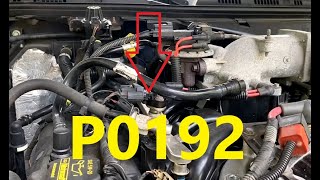
How to confirm: Using a scan tool, monitor the fuel rail pressure live data. If the reading is near zero or stuck regardless of engine RPM, the sensor is likely bad. If the sensor is unplugged, the scan tool should read 0 PSI; if the 5V reference and signal wires are shorted, it will read a fixed high value like 4,626 PSI. Also, test the sensor's electrical connector for the correct 5-volt reference and ground. If power and ground are good, the sensor is the primary suspect. 🎬 Watch: Understanding the causes and fixes for the P0192 code. A failed sensor can also sometimes leak fuel internally through its vacuum hose connection.
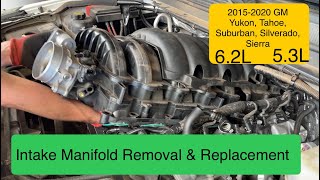
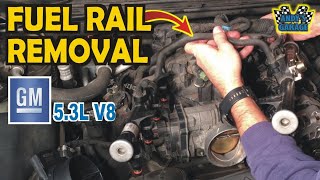
Typical fix: Replace the fuel rail pressure sensor. This requires removing the intake manifold to access the sensor located on the rear of the driver's side fuel rail.
Est. part cost: $50-$150 - Wiring or Connector Issue 🟡 Medium Probability The sensor is located at the back of the engine under the intake manifold, where heat and vibration can degrade wiring or connectors over time. Another potential issue, particularly after major engine work, is the incorrect connection of two similar-looking bulk harness connectors under the intake manifold, which can be swapped by mistake, leading to P0192.
How to confirm: Visually inspect the wiring harness and connector for the fuel rail pressure sensor for any signs of damage, corrosion, or loose pins. Perform a continuity test on the signal, reference, and ground wires between the sensor connector and the ECM. If major engine work was recently performed, verify the two main harness connectors under the intake are not swapped; they are physically interchangeable but wired differently. Pay close attention to the main engine ground stud on the rear driver's side of the engine and the cylinder head grounds (G104 on 2014 models).
Typical fix: Repair the damaged section of the wiring harness or replace the connector pigtail. If connectors were swapped, reconnect them to their correct counterparts.
Est. part cost: $15-$50 - Failing High-Pressure Fuel Pump ⚪ Low Probability While less common for a P0192 specifically (which points to an electrical circuit fault), a failing high-pressure pump can lead to genuinely low fuel pressure, which could trigger this code in conjunction with others. The TSB groups P0192 with performance codes like P0089 and P228C that are more directly related to pump performance.
How to confirm: This requires advanced diagnostics, including monitoring commanded vs. actual fuel pressure with a scan tool. If actual pressure consistently fails to meet the commanded pressure and the sensor/wiring are good, the pump is suspect.
Typical fix: Replace the high-pressure fuel pump, which is located in the engine valley beneath the intake manifold.
Est. part cost: $400-$800
Rare But Worth Checking
- Powertrain Control Module (PCM) Fault: This is very rare. The PCM should only be considered after all other possibilities, including the sensor, wiring, and mechanical fuel system components, have been exhaustively tested and ruled out.
Diagnosis Steps
- Connect an OBD-II scanner and confirm P0192 is present. Record any other codes and freeze-frame data.
- Using the scanner's live data feature, observe the 'Fuel Rail Pressure' reading. With the key on and engine off, it should show some pressure. While running, it should change with engine load. A reading of 0 PSI or one that is unchanging and below specification points to a sensor or wiring issue. Unplugging the sensor should cause the reading to drop to 0 PSI, confirming the ECM is seeing an open circuit.
- Turn the vehicle off and relieve fuel system pressure if performing any physical repairs. Locate the fuel rail pressure sensor at the back of the driver's side fuel rail, under the intake manifold.
- Inspect the sensor's electrical connector and wiring for any visible damage, corrosion, or looseness. Pay close attention to where the harness may rub against engine components.
- Disconnect the sensor and test the connector for a 5-volt reference signal (should be 4.8-5.2V) and a good ground connection (resistance to chassis ground < 0.5 Ω) using a multimeter.
- If power and ground are present, the sensor is the most likely culprit. If they are not, trace the wiring back to the ECM to find the open or short circuit. Check critical grounds like G104 (2014 models) on the cylinder head and the main ground stud on the rear of the engine. If recent engine work was done, verify the two large harness connectors under the intake are not swapped.
- If diagnostics for the sensor and wiring are inconclusive, follow the advice of TSB #PIP5279A and replace the fuel rail pressure sensor.
- After the repair, clear the codes and perform a test drive to ensure the issue is resolved.
Parts You'll Likely Need
- Fuel Rail Pressure Sensor
(OEM #GM 12673824 (supersedes 12623130), or GM 12682589 (supersedes 12652442, 12662738))— This sensor is the most frequent cause of P0192, as identified by common repair data and GM's own service bulletin. Note: GM used different sensors (4-pin for 2014-2016 vs. 3-pin for 2017+) that are not interchangeable despite having similar connectors. Physical verification or VIN lookup is crucial.
Trusted brands: ACDelco (OEM), Bosch, Dorman
OEM price range: $80-$150
Aftermarket price range: $50-$100
Related Codes That Often Appear With This One
- P0193 — This code is for 'Fuel Rail Pressure Sensor Circuit High', the opposite of P0192. Seeing them together or intermittently can indicate a failing sensor or erratic wiring connection.
- P0089 — Relates to 'Fuel Pressure Regulator 1 Performance'. It often appears with P0192 as they are both part of the high-pressure fuel system diagnostics, as noted in TSB #PIP5279A.
- P228C — This code for 'Fuel Pressure Regulator 1 Control Circuit Low' is also mentioned in TSB #PIP5279A and points to a potential problem in the overall high-pressure fuel control system.
- P127C — This is another fuel rail pressure sensor code mentioned in TSB #PIP5279A and can be set alongside P0192, often pointing to the same root causes.
Technical Service Bulletins (TSBs) & Recalls
- PIP5279A: Addresses an SES lamp with various fuel rail pressure codes (P0089, P127C, P127D, P0192, P0193, P228C, P228D, P006C) and recommends replacing the fuel rail pressure sensor if diagnostics are inconclusive. This TSB applies to a wide range of 2014-2016 GM vehicles with 4.3L, 5.3L, and 6.2L direct injection engines.
Platform-Specific Known Issues
- TSB #PIP5279A was issued by GM for a group of fuel pressure codes including P0192 on 2014-2016 Suburbans (and related trucks/SUVs). The bulletin instructs technicians to replace the fuel rail pressure sensor if standard diagnostics do not reveal a clear cause, suggesting this is a known failure pattern.
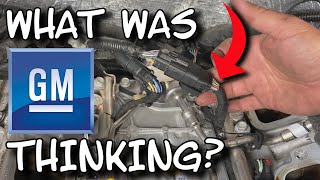
- A specific repair scenario documented on a 2016 Silverado involved P0192 appearing after an engine replacement. The cause was found to be two physically identical harness connectors under the intake manifold that were swapped, reversing polarity to the FRPS and other components. This highlights a potential installation error during major repairs.
Mechanic-Grade Diagnostic Values
- Fuel Rail Pressure Sensor (FRPS) Signal Voltage, Key On Engine Off (KOEO) — expected: ~0.5 V. Failure: Voltage significantly below 0.5V triggers P0192. A reading of 0V indicates an open circuit or loss of power/ground.
- Fuel Rail Pressure Sensor (FRPS) Signal Voltage, at Idle — expected: ~1.2 V to 2.5 V. Failure: Voltage is stuck low (e.g., <0.5V) and does not respond to engine RPM changes.
- FRPS 5-Volt Reference Circuit — expected: 4.8 V - 5.2 V. Failure: Voltage below 4.8V or above 5.2V indicates a problem with the ECM or a short in the harness.
- FRPS Ground Circuit Resistance — expected: < 0.5 Ω (measured between the sensor connector ground pin and chassis ground). Failure: High resistance indicates a poor ground connection, which can cause a low voltage signal.
- Scan Tool Fuel Pressure Reading (Sensor Unplugged) — expected: 0 PSI. Failure: If the reading is not 0 PSI, it may indicate a short in the wiring harness.
- Scan Tool Fuel Pressure Reading (5V Ref Shorted to Signal Wire) — expected: 4,626 PSI (or other fixed high value). Failure: This is a default reading for a short-to-voltage condition. If seen under normal circumstances, it indicates a shorted sensor or wiring.
Scan Tool Commands That Help
- Professional Scan Tool (e.g., GDS2, Autel, Snap-on): Fuel Pump On/Off Command or System Pressure Test — Use this bidirectional control to activate the fuel pump with the engine off. This helps to build pressure in the system and verify if the low-pressure side is working and if the high-pressure system can hold pressure, helping to isolate the pump from the sensor circuit.
Wiring & Ground Locations
- G104 (for 2014 GMT900 models) — On the rear of the driver's side (left) cylinder head.. This is a primary engine-to-chassis ground. A poor connection here can cause erratic sensor readings and various electrical faults, including P0192.
- Engine Ground Stud (K2XX models) — On the rear of the engine, driver's side (port side), near the top of the flywheel housing.. This is a main ground point for the engine harness. Corrosion or looseness here can directly impact the fuel rail pressure sensor's ground reference.
- ECM Connector X2, Pin 56 (2015 L83) — At the Engine Control Module.. This is the 5V Reference wire for the Fuel Rail Pressure Sensor. It should be a Gray wire.
- ECM Connector X2, Pin 57 (2015 L83) — At the Engine Control Module.. This is the Low Reference (Ground) for the Fuel Rail Pressure Sensor. It should be a Yellow/Black wire.
- ECM Connector X2, Pin 71 (2015 L83) — At the Engine Control Module.. This is the Signal wire from the Fuel Rail Pressure Sensor. It should be a Tan wire.
OEM Part Supersession History
GM 12673824 (4-pin, analog)→N/A, different technology— Used on 2014-2016 models. This is an analog sensor.
Heads up: This 4-pin sensor is NOT interchangeable with the later 3-pin digital sensor (e.g., GM 12684286) used from 2017 onward. The harness connectors are physically identical and can be plugged into the wrong sensor, which will cause the system to fail. The entire sub-harness for the injectors and sensor must match the sensor type.
Model Year Variations Within This Range
- 2014-2016: These model years predominantly use a 4-pin analog fuel rail pressure sensor (PN 12673824).
- 2017 and newer (for reference): GM switched to a 3-pin digital fuel rail pressure sensor. While outside the primary vehicle range, it's a critical distinction during diagnosis or if an engine from a different year has been swapped in. The ECM and wiring harness are different between the two sensor types.
Helpful Videos
We Have This Part in Stock



The information in this article is provided for general reference and educational purposes only. Vehicle specifications, procedures, and part compatibility can vary by production date, trim level, and region. Always consult your vehicle's factory service manual and verify part numbers before purchasing or performing repairs. Safety-critical components such as airbags, seat belts, and braking systems should be installed by a qualified professional.
- Chevrolet SUBURBAN:
- 🎬 Helpful Videos
- 🛍️ Shop This Part
- What's Unique About the 2014-2016 Chevrolet SUBURBAN
- Diagnostic Flowchart
- Symptoms You May Notice
- Most Likely Causes
- Rare But Worth Checking
- Diagnosis Steps
- Parts You'll Likely Need
- Related Codes That Often Appear With This One
- Technical Service Bulletins (TSBs) & Recalls
- Platform-Specific Known Issues
- Mechanic-Grade Diagnostic Values
- Scan Tool Commands That Help
- Wiring & Ground Locations
- OEM Part Supersession History
- Model Year Variations Within This Range
- 🎟️ Get 5% Off