

P0191 on 2012-2013 Mazda 3 SkyActiv: Causes and Fixes for Fuel Rail Pressure Faults
On a 2012-2013 Mazda 3 with the 2.0L SkyActiv engine, P0191 is almost always caused by a failing high-pressure fuel pump (HPFP). Mazda has issued multiple TSBs for this known issue. The fix is to replace the HPFP and the high-pressure fuel line.
- For the 2012-2013 Mazda 3 SkyActiv, P0191 is almost certainly caused by a faulty high-pressure fuel pump (HPFP).
- Mazda has acknowledged this as a known issue with multiple Technical Service Bulletins (TSBs).
- The correct repair involves replacing the HPFP with an updated part (e.g., PE19-20-3F0) and also replacing the single-use high-pressure fuel line (PE01-13-490A).
- Due to the extremely high pressures and fire risk, this is not a recommended DIY repair and should be performed by a professional.
- Do not waste money replacing the fuel rail pressure sensor first; the pump is the overwhelmingly likely culprit.
What's Unique About the 2012-2013 Mazda 3
The 2.0L SkyActiv-G is a direct injection engine, which uses both a low-pressure in-tank fuel pump and a high-pressure, engine-driven fuel pump (HPFP). This code specifically relates to the high-pressure side of the system. Mazda has officially acknowledged a widespread issue with the HPFP on these models due to a 'manufacturing error of the inner parts,' making it the most common cause of P0191 by a large margin.
Symptoms You May Notice
- Check Engine Light is on
- Engine stalling, especially when idling for a long time or during acceleration
- Rough idle
- Hesitation or lack of power during acceleration
- Reduced fuel economy
- Hard starting or no-start condition
- Engine bucks or kicks when under load, like going up a hill
- Smell of gas in the engine oil
- Replacing the fuel rail pressure sensor when the actual cause is the high-pressure fuel pump. Given the known TSBs for this vehicle, the pump should be the primary suspect.
Most Likely Causes
- Failing High-Pressure Fuel Pump (HPFP) 🔴 High Probability Mazda issued TSBs 01-010/14 and 01-004/15 confirming this is a known issue due to a 'manufacturing error of the inner parts' of the pump. This is a widely documented failure on early SkyActiv engines. Manufacturer Bulletin #01-010-14-2896A notes that the MIL illuminates because the high pressure fuel pump is not generating the target pressure.
How to confirm: Use a scan tool to monitor desired vs. actual fuel rail pressure. At idle, pressure should be 3.0 MPa (435 psi) or more. If the actual pressure cannot keep up with the desired pressure, especially under load, the HPFP is faulty. A deviation of over 725 psi can trigger the code. Before replacing, it's also wise to inspect the cam follower bucket that the HPFP piston rides on for any damage.
Typical fix: Replace the high-pressure fuel pump with the updated/modified part. It is also required to replace the one-time-use high-pressure fuel line and the rubber seal for the pump.
Est. part cost: $160-$997 - Faulty Fuel Rail Pressure Sensor ⚪ Low Probability While less common than the pump, sensor failure can happen. On some Mazda models, the sensor is not sold separately from the fuel rail, which can increase repair cost.
How to confirm: With the key on and engine off, check the sensor's voltage reading; it should be between 0.5V and 4.5V. If the sensor's readings on a live data scanner are erratic, stuck at one value (e.g., 2281 psi or 0 psi), or don't correlate with known good pressure, the sensor is likely bad.
Typical fix: Replace the fuel rail pressure sensor. A 27mm deep well socket is typically required for removal. 🎬 Watch: How to diagnose and fix fuel rail sensor codes
Est. part cost: $50-$200 - Low-Pressure Fuel System Issue ⚪ Low Probability
How to confirm: Check the low-side fuel pressure from the in-tank pump. With the key on and engine off, pressure should be between 55-71 psi (around 60 psi is ideal). If the low-side pressure is weak, the HPFP will be starved of fuel, causing a P0191 code.
Typical fix: Diagnose and repair the low-pressure fuel system, which may involve replacing the in-tank fuel pump module. The fuel filter is typically integrated into this module.
Est. part cost: $200-$500
Rare But Worth Checking
- Wiring or Connector Issue: Corrosion or damage to the fuel rail pressure sensor's wiring harness or connector can cause erratic signals, mimicking a sensor failure. 🎬 See this breakdown of P0191 symptoms and common causes One owner on Mazdaspeeds.org found a damaged wire under the intake manifold was the root cause after replacing other parts.
- PCM Malfunction: In very rare cases, the Powertrain Control Module itself can be the source of the problem. This should only be considered after all other possibilities have been exhausted.
- Gasoline in Engine Oil: A failing high-pressure fuel pump can leak gasoline into the crankcase, contaminating the engine oil. One mechanic noted this as a necessary check when diagnosing a P0191 on a similar GDI engine. This can cause additional engine problems if not addressed.
Diagnosis Steps
- Check for any Technical Service Bulletins (TSBs) related to your vehicle's VIN. Mazda has several TSBs for P0191 on this model, specifically 01-010/14 and 01-004/15. Bulletin #01-024-12-2729A specifically notes that the engine may stall during a stop after idling for a long time when this code is present.
- Connect an OBD-II scanner and check for any other stored codes, such as P0088 or P0192.
- Use the scanner's live data function to monitor 'Desired Fuel Rail Pressure' and 'Actual Fuel Rail Pressure'.
- Observe the pressure at idle. It should be stable and at or above 3.0 MPa (435 psi).
- Safely increase engine RPM while monitoring the pressure readings. The actual pressure should closely follow the desired pressure. A significant lag or a deviation over 725 psi points towards a faulty HPFP.
- If actual pressure lags significantly behind desired pressure, especially under load, the High-Pressure Fuel Pump (HPFP) is the primary suspect.
- If the pressure readings are erratic, stuck, or nonsensical (e.g., jumping to 0 psi), inspect the fuel rail pressure sensor's connector and wiring for any signs of damage or corrosion.
- If the wiring is intact, test the fuel rail pressure sensor's voltage output to ensure it is within specification (typically 0.5V-4.5V).
- If the high-pressure side seems to be functioning but the code persists, check the low-pressure fuel system to ensure the HPFP is receiving adequate fuel supply (55-71 psi).
- Check the engine oil for a strong smell of gasoline, which would indicate a leaking HPFP seal.
Parts You'll Likely Need
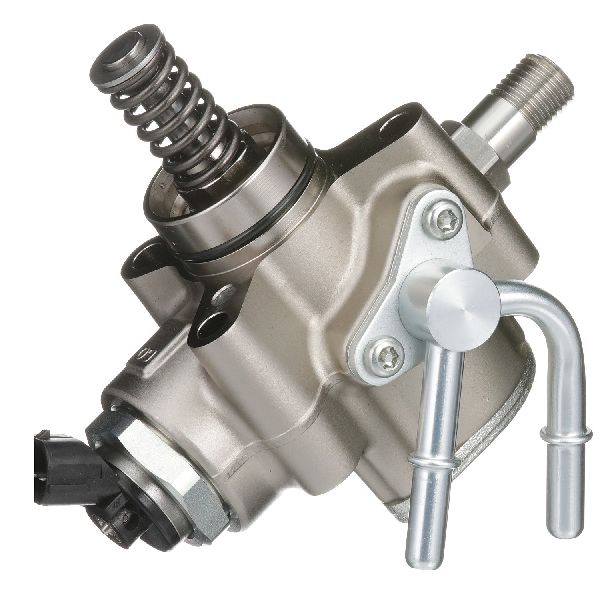
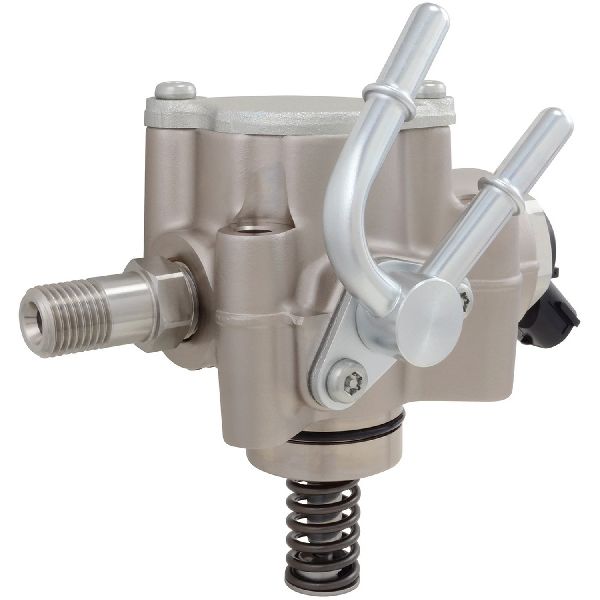
- High-Pressure Fuel Pump
(OEM #PE19-20-3F0 (or updated versions))— This is the most common failure item for P0191 on this specific vehicle, as documented by Mazda in multiple TSBs.
Trusted brands: Mazda OE, Bosch, Hitachi
OEM price range: $400-$1000
Aftermarket price range: $160-$600 - High-Pressure Fuel Pipe
(OEM #PE01-13-490A)— This is a one-time use, torque-to-yield part that must be replaced whenever the high-pressure fuel pump is serviced to prevent dangerous leaks.
Trusted brands: Mazda OE
OEM price range: $50-$80
Related Codes That Often Appear With This One
- P0088 — This code means 'Fuel Rail/System Pressure - Too High' and is also mentioned in Mazda's TSB 01-004/15 for the faulty high-pressure fuel pump, which can behave erratically and over-pressurize the system. Manufacturer Bulletin #01-004-15-3028 confirms vehicles may experience the check engine light with P0191:00 or P0088:00 stored in memory.
- P0192 — This code for 'Fuel Rail Pressure Sensor Circuit Low Input' is mentioned in TSB 01-010/14 and can also be triggered by the same failing HPFP or a faulty sensor. Manufacturer Bulletin #01-010-14-2896B notes that vehicles may experience the check engine light with P0191:00 or P0192:00 stored in memory.
Technical Service Bulletins (TSBs) & Recalls
- 01-004/15: Supersedes TSB 01-010/14 and identifies the high-pressure fuel pump as the cause for DTC P0191 or P0088 due to a manufacturing error. It applies to 2012-13 Mazda3, 2013-14 CX-5, 2014 Mazda3, and 2014 Mazda6.
- 01-010/14: States that P0191 or P0192 is caused by the high-pressure fuel pump not generating target pressure due to an internal manufacturing error. It instructs technicians to replace the pump, the high-pressure fuel pipe, and the rubber seal.
- Bulletin #01-024-12-2729A: Specifically addresses the 2012 Mazda3, noting that P0191:00 may be stored in the PCM memory and the vehicle may experience rough idle or engine stalling during a stop after long periods of idling.
Platform-Specific Known Issues
- Mazda TSB 01-004/15 and 01-010/14 directly address P0191 on the 2012-2013 Mazda 3 2.0L SkyActiv. They state the cause is a manufacturing defect within the high-pressure fuel pump and the solution is to replace it with a modified part.
Mechanic-Grade Diagnostic Values
- High-Pressure Fuel Pressure (PID: FUEL_PRES) at Idle — expected: 3.0 MPa (435 psi) or more.. Failure: Pressure below 3.0 MPa (435 psi) at idle points to a failing high-pressure fuel pump.
- Fuel Pressure Sensor Voltage at Idle (ECT at 92°C / 198°F) — expected: Approx. 1.0 V (corresponds to approx. 3.45 MPa / 500 psi).. Failure: Voltage that is erratic, stuck, or does not correlate with pressure indicates a sensor or wiring fault.
- Fuel Pressure Sensor Voltage (Key On, Engine Off) — expected: Approx. 1.01 V (corresponds to approx. 3.6 MPa / 522 psi with ECT at 92°C / 198°F).. Failure: Input voltage at PCM terminal greater than 4.86 V for 5 seconds will trigger a high input code (P0193).
- Low-Pressure Fuel System Pressure (Key On, Engine Off) — expected: 55-71 psi.. Failure: Pressure below this range indicates a problem with the in-tank fuel pump or its supply circuit, which can starve the HPFP.
Scan Tool Commands That Help
- Mazda M-MDS (or equivalent like FORScan): PID Monitoring: FUEL_PRES, LOAD, RPM — This is the primary diagnostic function. It allows a technician to monitor the actual fuel pressure reported by the sensor ('FUEL_PRES') against engine speed ('RPM') and load ('LOAD') to see if it meets the target pressure commanded by the PCM.
Wiring & Ground Locations
- Fuel Pressure Sensor Connector — Located on the high-pressure fuel rail, which is mounted to the cylinder head.. This 3-pin connector is the primary interface for the sensor. Corrosion or damage here can cause P0191. The pins correspond to PCM terminals for signal, power, and ground.
- PCM Terminal 1CA (Signal) — At the Powertrain Control Module connector.. This is the specific pin where the PCM receives the fuel pressure signal from the sensor (via terminal B on the sensor). A high input voltage (>4.86V) at this pin can trigger a fault.
- PCM Terminal 1CB (Power) — At the Powertrain Control Module connector.. This pin supplies the reference voltage to the sensor (via terminal A on the sensor). An open circuit here would cause the sensor to stop working.
- PCM Terminal 1BJ (Ground) — At the Powertrain Control Module connector.. This pin provides the ground for the sensor (via terminal C on the sensor). An open circuit here would cause the sensor to stop working.
OEM Part Supersession History
PE01-20-3F0B, PE01-20-3F0C, PE01-20-3F0D, PE01-20-3F0E, PE01-20-3F0F, PE18-20-3F0, PE18-20-3F0A→PE19-20-3F0— The original pumps were prone to internal failure due to a manufacturing defect, as stated in Mazda TSBs. The new part number is for the modified/updated pump designed to fix the issue.
Heads up: A part listed as PE22-20-3F0 is noted by some vendors as not being suitable, indicating a potential incompatibility trap. Always verify the correct part for the specific VIN and engine.
Model Year Variations Within This Range
- 2012-2013: The 2012 model year was the first to introduce the 2.0L SkyActiv-G engine and its direct injection fuel system to the Mazda 3 platform as part of a mid-cycle refresh. These early SkyActiv engines are the primary subjects of the TSBs for HPFP failure. While the 2012 and 2013 models are mechanically very similar, the 2012 model represents the first iteration of this technology in this chassis.
Diagnostic Flowchart
Real Owner Stories
Aggregated from forums and TSBs cited above. Mileages and costs reflect what owners reported in those sources.
2015 Mazda 3 — 65243 miles
Symptoms: High-pressure fuel pump failed prematurely. Dealer tech noted it was premature, but Mazda customer service claimed it was due to 'ignoring signs'.
What fixed it: Replaced the high-pressure fuel pump.
Source hint: Reddit - r/mazda3
2015 Mazda 3
Symptoms: Received a P0192 code and experienced confusion between sensor and pump issues.
What fixed it: Quoted for sensor replacement, though commenters noted wiring or PCM could also be causes.
Cost: $200-$350
Source hint: Reddit - r/MechanicAdvice
2012 Mazdaspeed3
Symptoms: Chased a P0192 code and replaced multiple parts before finding the actual culprit.
What fixed it: Replaced the fuel pressure sensor itself using a 27mm deep well socket and specific Bosch parts.
Source hint: MazdaSpeeds.org
2012 Mazda CX-5
Symptoms: Experienced a persistent P0191 code.
What fixed it: Resolved by replacing the fuel rail pressure sensor.
Source hint: Platform mates section (2013-2014 Mazda CX-5)
Related OBD-II Codes
Frequently Asked Questions
Does TSB 01-004/15 apply to my 2012-2013 Mazda 3?
What parts need to be replaced if my high-pressure fuel pump is failing?
How can I tell if the P0191 code is caused by the HPFP or the fuel rail pressure sensor?
Why does my engine oil smell like gas with a P0191 code?
Can I buy just the fuel rail pressure sensor for my Mazda 3?
What should the fuel pressure be at idle on my 2.0L SkyActiv-G?
Helpful Videos
Used OEM Parts in Stock


New Aftermarket Parts Available


The information in this article is provided for general reference and educational purposes only. Vehicle specifications, procedures, and part compatibility can vary by production date, trim level, and region. Always consult your vehicle's factory service manual and verify part numbers before purchasing or performing repairs. Safety-critical components such as airbags, seat belts, and braking systems should be installed by a qualified professional.
- Mazda 3:
- 🎬 Helpful Videos
- 🛍️ Shop This Part
- What's Unique About the 2012-2013 Mazda 3
- Symptoms You May Notice
- Most Likely Causes
- Rare But Worth Checking
- Diagnosis Steps
- Parts You'll Likely Need
- Related Codes That Often Appear With This One
- Technical Service Bulletins (TSBs) & Recalls
- Platform-Specific Known Issues
- Mechanic-Grade Diagnostic Values
- Scan Tool Commands That Help
- Wiring & Ground Locations
- OEM Part Supersession History
- Model Year Variations Within This Range
- Diagnostic Flowchart
- Real Owner Stories
- 2015 Mazda 3 — 65243 miles
- 2015 Mazda 3
- 2012 Mazdaspeed3
- 2012 Mazda CX-5
- Related OBD-II Codes
- Frequently Asked Questions
- 🎟️ Get 5% Off