

P0191 on 2018 Land Rover Range Rover Velar: Causes and Fixes for Fuel Pressure Faults
On the 2018 Range Rover Velar with the 2.0L Ingenium petrol engine, code P0191 almost always points to either a faulty Fuel Rail Pressure Sensor or a required PCM software update per TSB LTB01245NAS3. The sensor is a common failure item, with an OEM-quality replacement (like Bosch part #0261545074) costing between $50 and $120. This can often be installed as a DIY project in under an hour.
- For a 2018 Velar with P0191, first check if the PCM software update from TSB LTB01245NAS3 is needed.
- If the software is current, P0191 is most often caused by a bad fuel rail pressure sensor.
- Symptoms include reduced power ('limp mode'), engine hesitation, and a Check Engine Light.
- Always inspect the sensor's wiring and connector for damage before replacing the part.
- This repair can be done by a DIYer, but extreme caution is required due to the high-pressure fuel system.
- Check for associated codes like P168F-00, P2178-00, or P144C-00, which are listed in JLR TSBs.
What's Unique About the 2018-2018 Land Rover RANGE ROVER VELAR
On the 2.0L Ingenium petrol engines used in the 2018 Velar and other JLR products, this code is a well-documented issue. The problem is so common that Land Rover has issued multiple technical service bulletins (TSBs) addressing it. A key difference for the 2018 model year is that TSB LTB01245NAS3 identifies a potential software glitch in the PCM that can falsely trigger the P0191-85 code. Therefore, unlike other vehicles where P0191 immediately suggests a hardware fault, the first step for a 2018 Velar should be checking its service history for this software update. If the update has been performed, the cause is most likely the sensor itself.
Diagnostic Flowchart
Tap your situation to follow the diagnostic path that matches what you're seeing on this vehicle.
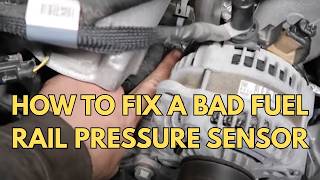
Symptoms You May Notice 🎬 Watch: Common symptoms and fixes for a bad fuel rail sensor
- Reduced engine performance or 'limp mode'. [Bulletin #SSM74093, 3]
- Check Engine Light (Malfunction Indicator Lamp or MIL) is illuminated. [Bulletin #LTB01245NAS3]
- Engine hesitation or stuttering, especially during acceleration.
- Difficulty starting the engine.
- Engine may stall unexpectedly.
- Rough idle.
- Abnormal smell from tailpipe emissions due to a rich or lean condition.
- Replacing the fuel pump before thoroughly testing the fuel rail pressure sensor and its circuit.
- Replacing the fuel rail pressure sensor without first checking if the vehicle requires the PCM software update per TSB LTB01245NAS3.
- Replacing the wrong pressure sensor. Some engines may have more than one fuel pressure sensor; it is critical to identify and replace the one on the high-pressure fuel rail.
Most Likely Causes
- Incorrect PCM Software Calibration 🔴 High Probability Land Rover TSB LTB01245NAS3 specifically identifies that an incorrect PCM calibration can cause a 'false flag' of the P0191-85 DTC on 2018 Velar models with the 2.0L Ingenium petrol engine.
How to confirm: A Land Rover dealer or authorized shop with access to the TOPIx system can check the vehicle's service history or connect the JLR diagnostic tool to see if the software update specified in LTB01245NAS3 has been applied.
Typical fix: Update the Powertrain Control Module (PCM) software using the JLR-approved diagnostic equipment (PATHFINDER). This is a dealer or specialist-level repair.
Est. part cost: $0 - Faulty Fuel Rail Pressure Sensor 🔴 High Probability This is a known issue on JLR's 2.0L petrol engines, as documented in multiple TSBs and owner forums. If the PCM software is up to date, this becomes the most likely culprit.
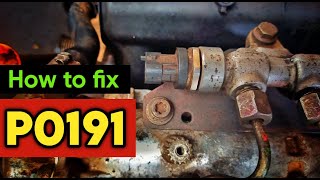
How to confirm: After confirming no wiring issues, monitor live fuel rail pressure data 🎬 See how to diagnose P0191 circuit range and performance issues with an OBD-II scanner. If the pressure readings are erratic, stuck at one value (e.g., a Land Rover owner on LandyZone reported a stuck high reading of 1359 Bar with just the ignition on), or clearly don't correspond to engine load, the sensor is likely bad.
Typical fix: Replace the fuel rail pressure sensor located on the high-pressure fuel rail.
Est. part cost: $50-$120 - Wiring or Connector Issue 🟡 Medium Probability
How to confirm: Visually inspect the wiring harness and connector going to the fuel rail pressure sensor for any signs of damage, corrosion, or loose pins. A diagnostic video for a JLR vehicle advises checking for damaged wiring before replacing the sensor. Perform a continuity and voltage drop test on the circuit to check for a short to ground or an open circuit.
Typical fix: Repair the damaged section of the wiring harness or clean/replace the connector.
Est. part cost: $5-$50
Rare But Worth Checking
- Clogged Fuel Filter: A clogged filter can cause inconsistent or low fuel pressure, leading the PCM to flag the sensor's readings as irrational. This is less common but worth considering if a new sensor doesn't solve the issue, as noted by a Jaguar owner on 2CarPros who replaced the filter as part of their diagnosis.
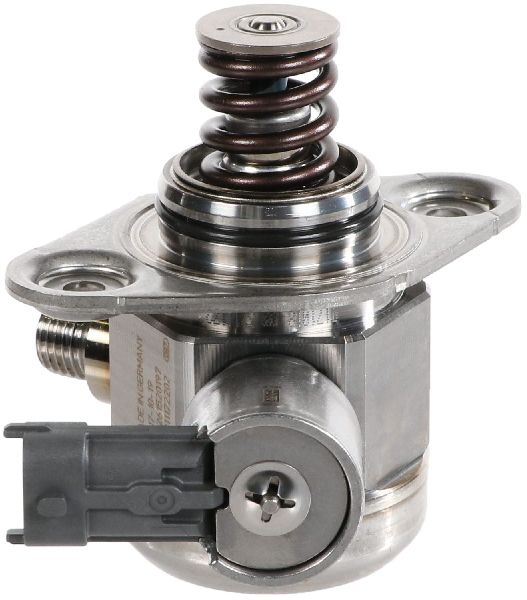
- Failing High-Pressure Fuel Pump (HPFP): While the sensor is the most likely culprit, a failing high-pressure fuel pump can also produce erratic pressure readings that trigger a P0191 code. This is often seen in conjunction with code P2178 ('System Too Rich Off Idle'). In a severe case on a Land Rover Discovery, a P0191 led to a full fuel system replacement including the HPFP, injectors, and pipes, though this was an extreme case involving fuel contamination.
- Powertrain Control Module (PCM) Fault: In very rare cases, the PCM's internal circuitry for interpreting the sensor's signal can fail. This should only be considered after the software update has been performed and all other sensor, wiring, and mechanical fuel system possibilities have been exhausted.
Diagnosis Steps
- Connect a high-quality OBD-II scanner to verify the presence of code P0191 and check for any other stored codes, particularly P2178, P168F, or P144C.
- Check vehicle service history or contact a dealer to determine if the PCM software update from TSB LTB01245NAS3 has been performed. If not, this is the first recommended action.
- Review the freeze-frame data to see the engine conditions when the code was set.
- Monitor live data for 'Fuel Rail Pressure'. Observe the readings at idle and while carefully increasing engine RPM. Look for readings that are erratic, frozen, illogical, or stuck at an extreme value.
- Turn the engine off. Remove the engine cover to locate the fuel rail pressure sensor on the fuel rail.
- Carefully inspect the sensor's electrical connector and wiring harness for any signs of damage, fraying, or corrosion.
- If wiring appears intact, carefully disconnect the sensor and check for a stable 5V reference voltage and good ground at the connector using a multimeter.
- If the software is up-to-date and the wiring/voltages are correct, the fuel rail pressure sensor is the most likely cause of the fault.
- Before replacing, safely relieve the fuel system pressure according to the manufacturer's service manual.
- Replace the fuel rail pressure sensor. An owner on an Australian Land Rover forum noted the sensor can be extremely tight from the factory, so proper tools are essential.
- Clear the trouble codes and perform a test drive to ensure the issue is resolved.
Parts You'll Likely Need
- Fuel Rail Pressure Sensor
(OEM #LR095371, C2Z28424, AJ813994)— This sensor is the most common hardware failure point for code P0191 on this vehicle, as confirmed by TSBs and repair data, especially after the PCM software has been updated.
Trusted brands: Bosch, Genuine Jaguar Land Rover
OEM price range: $80-$150
Aftermarket price range: $50-$100
Related Codes That Often Appear With This One
- P168F-00 — This code is specifically mentioned in Land Rover TSBs as potentially appearing alongside P0191-85. [Bulletin #SSM74093, Bulletin #SSM73959.2]
- P2178-00 — This code ('System Too Rich Off Idle') is specifically mentioned in Land Rover TSBs as potentially appearing alongside P0191-85. [Bulletin #SSM74093, Bulletin #SSM73959.2] The combination strongly points to a fault in the high-pressure fuel system, such as the sensor or HPFP.
- P144C-00 — This code is specifically mentioned in Land Rover TSBs as potentially appearing alongside P0191-85. [Bulletin #SSM74093, Bulletin #SSM73959.2]
Technical Service Bulletins (TSBs) & Recalls
- LTB01245NAS3: Notes that the engine MIL may be illuminated with DTC P0191-85 stored. States the cause may be an incorrect PCM calibration and the fix is a software update.
- SSM74093: Mentions customer reports of reduced performance with P0191-85, with or without the MIL, and lists other potential accompanying DTCs like P2178.
- SSM73959.2: Repeats the information from SSM74093, confirming the issue.
Platform-Specific Known Issues
- Land Rover has issued multiple Technical Service Bulletins (TSBs) regarding P0191-85 causing the Malfunction Indicator Lamp to illuminate and/or reduced engine performance. [Bulletin #LTB01245NAS3, Bulletin #SSM74093, Bulletin #SSM73959.2]
- TSB LTB01245NAS3 is particularly important for the 2018 model year, as it states the cause may be an incorrect PCM calibration that can be fixed with a software update, with no parts required.
Mechanic-Grade Diagnostic Values
- Fuel Rail Pressure Sensor Signal Voltage (KOEO) — expected: ~0.5V. Failure: Voltage is 0V, 5V, or significantly different from 0.5V with the key on and engine off.
- Fuel Rail Pressure Sensor 5V Reference — expected: 4.8V - 5.2V. Failure: Voltage is 0V or significantly below 4.8V, indicating an open or short in the reference circuit from the PCM.
- High Pressure Fuel System at Idle — expected: ~40 bar (~580 PSI). Failure: Pressure is significantly lower (e.g., matching the low-pressure system around 4-5 bar) or excessively high, indicating a fault with the high-pressure pump or sensor.
Hidden / Shadow Codes Worth Checking
- P0191-85: The '-85' suffix is a JLR-specific sub-code indicating 'Signal is invalid'. This means the signal from the sensor is present but not plausible or within the expected performance range for the current engine conditions. (see via JLR-specific diagnostic tools like Pathfinder or some high-end aftermarket scanners. Standard OBD-II readers may only show 'P0191'.)
Scan Tool Commands That Help
- JLR Pathfinder: Software Update via VIN eligibility check — This is the first step for a 2018 Velar within VIN range 700000-778452, as per TSB LTB01245NAS3. The Pathfinder tool (version 211 or later) is required to apply the corrective PCM software.
- Advanced Aftermarket Scanner (e.g., iCarsoft CR MAX): Fuel Pump Activation Test — To test the health of the fuel pump independently. This command runs the pump with the engine off, allowing a technician to monitor the fuel rail pressure rise on the live data screen to see if it builds pressure quickly and holds it.
Wiring & Ground Locations
- Fuel Rail Pressure Sensor Connector — On the end of the high-pressure fuel rail, accessible after removing the top engine cover.. This is the primary point for electrical testing. The connector typically has three pins: a 5V reference, a ground, and a signal return to the PCM. Verifying correct voltages at these pins is essential to distinguish a sensor failure from a wiring or PCM issue.
Real Owner Repair Stories
- iCarsoft US article citing a user example (Jaguar XF with 2.0L Petrol engine (same Ingenium family as the Velar)) — Limp mode and hesitation during acceleration, with code P0191 stored.
❌ Tried (didn't work) Initial diagnosis focused on wiring, but inspection showed no visible damage.
✅ What actually fixed it The owner replaced the fuel rail pressure sensor with a new OEM part and cleared the codes, which immediately resolved all symptoms.
When the Usual Fixes Don't Work
- If the P0191 code persists after both the PCM software has been updated (per TSB LTB01245NAS3) and the fuel rail pressure sensor has been replaced, the root cause may not be in the fuel pressure circuit itself. A documented possibility is a fault on the shared 5V reference circuit that powers multiple sensors. A short-to-ground on this circuit can drag down the voltage supplied to the fuel pressure sensor, causing it to send an invalid signal and trigger the P0191 code, even though the sensor itself is functional. This condition is often accompanied by other sensor codes and a specific reference voltage fault code (P0642).
Model Year Variations Within This Range
- 2018 (VIN range 700000-778452): Vehicles within this specific VIN range are subject to TSB LTB01245NAS3, which states that code P0191-85 can be caused by an incorrect PCM calibration. For these vehicles, the primary recommended fix is a software update, not immediate hardware replacement.
Helpful Videos
We Have This Part in Stock




The information in this article is provided for general reference and educational purposes only. Vehicle specifications, procedures, and part compatibility can vary by production date, trim level, and region. Always consult your vehicle's factory service manual and verify part numbers before purchasing or performing repairs. Safety-critical components such as airbags, seat belts, and braking systems should be installed by a qualified professional.
- Land Rover RANGE ROVER VELAR:
- 🎬 Helpful Videos
- 🛍️ Shop This Part
- What's Unique About the 2018-2018 Land Rover RANGE ROVER VELAR
- Diagnostic Flowchart
- Symptoms You May Notice
- Most Likely Causes
- Rare But Worth Checking
- Diagnosis Steps
- Parts You'll Likely Need
- Related Codes That Often Appear With This One
- Technical Service Bulletins (TSBs) & Recalls
- Platform-Specific Known Issues
- Mechanic-Grade Diagnostic Values
- Hidden / Shadow Codes Worth Checking
- Scan Tool Commands That Help
- Wiring & Ground Locations
- Real Owner Repair Stories
- When the Usual Fixes Don't Work
- Model Year Variations Within This Range
- 🎟️ Get 5% Off