

P0191 on 2017-2019 Jaguar XE: Fuel Rail Pressure Sensor Causes and Fixes
For a 2017-2019 Jaguar XE with the 2.0L Ingenium petrol engine, code P0191 almost always points to a faulty Fuel Rail Pressure Sensor or an incorrect PCM software calibration. Jaguar has issued Technical Service Bulletins (like JTB00659NAS3) confirming a software update can fix false triggers of this code. If software is not the cause, replacing the sensor (Part #LR105424) is the most common fix, with parts costing between $60 and $200.
- P0191 on a 2017-2019 Jaguar XE is a known issue, strongly pointing to a faulty Fuel Rail Pressure Sensor.
- Symptoms include reduced performance ('limp mode'), engine hesitation, and the Check Engine Light.
- Check for associated codes like P2178, P168F, and P144C, as they confirm the fault pattern described in Jaguar's own service bulletins.
- Before replacing parts, ensure the vehicle's engine computer (PCM) has the latest software, as a calibration update was released to address this specific problem.
- Replacing the Fuel Rail Pressure Sensor is the most common and effective repair for this code.
What's Unique About the 2017-2019 Jaguar XE

On the 2017-2019 Jaguar XE, particularly with the 2.0L Ingenium petrol engine, P0191 is a well-documented issue. Jaguar Land Rover issued multiple Technical Service Bulletins (TSBs) acknowledging that this code, often appearing as P0191-85, can cause reduced performance. 🎬 Learn more about manifold pressure sensor performance and limit issues. These bulletins strongly suggest the problem is often linked to a software calibration issue causing a 'false flag' of the DTC, or the sensor itself, rather than a major mechanical fuel pump or wiring problem. This makes it a distinct, and often software-based, platform-specific fault.
Diagnostic Flowchart

Tap your situation to follow the diagnostic path that matches what you're seeing on this vehicle.
Symptoms You May Notice
- Reduced engine performance or 'limp mode'
- Check Engine Light (Malfunction Indicator Lamp or MIL) is on
- Engine hesitation or stuttering, especially under acceleration
- Rough idle or stalling, sometimes after a few minutes of running
- Decreased fuel efficiency
- Car may fail to start or die shortly after starting
- Replacing the fuel pump. While a weak fuel pump can cause pressure issues, the TSBs for this specific vehicle point directly to the sensor or PCM calibration as the primary culprits. An owner on JaguarForums reported changing the pump did not solve their P0191 issue.
- Replacing the fuel filter. A clogged fuel filter is a general cause for low fuel pressure, but it is not the specific issue highlighted for P0191 on this Jaguar model. It's often changed as a first step but rarely solves the problem.
Most Likely Causes

- Faulty Fuel Rail Pressure Sensor 🔴 High Probability This is a widely documented failure point on this platform, as evidenced by multiple TSBs (SSM74092, JTB00659NAS3) and numerous owner accounts on forums and repair guides. The sensor is critical for the returnless fuel system and can fail, causing intermittent stalling and performance issues.
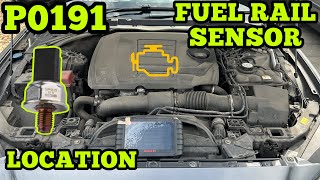
How to confirm: After verifying the PCM software is up-to-date and wiring is intact, replacing the sensor is the most common diagnostic step. A technician can monitor live data from the sensor to check for erratic, stuck, or out-of-range readings that don't correspond to engine load. A YouTube video by SA Diagnostic's shows the sensor's location on top of the 2.0L petrol engine.
Typical fix: Replace the fuel rail pressure sensor. The OEM part for the Ingenium engine is a 4-pin combined pressure/temperature sensor. Clear the diagnostic trouble codes after replacement.
Est. part cost: $60-$200 - PCM Software/Calibration Issue 🔴 High Probability TSB JTB00659NAS3 explicitly states that for 2018 models, an incorrect PCM calibration can cause a 'false flag' of DTC P0191-85. This indicates the original software was prone to setting this code incorrectly without a hardware fault. This is especially true if no other drivability issues are present.
How to confirm: A Jaguar dealership or qualified shop with access to Jaguar's diagnostic software (TOPIx or PATHFINDER) can check if the vehicle's PCM has the latest software version and if it is eligible for the update under this TSB.
Typical fix: Update the Powertrain Control Module (PCM) software to the latest version. According to the TSB, no parts are required for this fix.
Est. part cost: $0 (if covered) - $250 - Wiring or Connector Issue ⚪ Low Probability Engine bay heat can cause wiring insulation to become brittle and connectors to fail over time. While less common than sensor failure or software issues for this specific code, it should not be overlooked.
How to confirm: Visually inspect the wiring harness and connector for the fuel rail pressure sensor for any signs of damage, melting, or corrosion. Perform a continuity and voltage check on the sensor's circuit to ensure proper power, ground, and signal return to the PCM.
Typical fix: Repair the damaged wiring or replace the connector pigtail.
Est. part cost: $20-$100
Rare But Worth Checking
- Faulty Powertrain Control Module (PCM): While rare, a faulty PCM can incorrectly interpret sensor data and set false codes. This should only be considered after all other possibilities, including software updates, sensor replacement, and wiring checks, have been exhausted.
- Weak Fuel Pump or Clogged Filter: Although the TSBs point away from this, a failing fuel pump or a severely clogged fuel filter can cause genuine low-pressure conditions that might trigger a P0191 code. However, on this platform, these are less likely to be the root cause than the sensor or software. One owner on JaguarForums.com replaced the filter and pump with no success, pointing to how this can be a misdiagnosis.
Diagnosis Steps
- Scan the PCM for all stored and pending codes. Note if P2178, P168F, or P144C are present alongside P0191.
- Check for applicable Technical Service Bulletins (TSBs), specifically JTB00659NAS3 for 2018 models, but also SSM74092 and SSM73960.2.
- If TSBs apply, contact a Jaguar dealer or specialist to determine if the PCM software is up to date. If not, have it updated as this may be the entire fix.
- If the software is current or the update doesn't resolve the issue, locate the fuel rail pressure sensor on the engine's fuel rail. A video from SA Diagnostic's on YouTube shows its location on the 2.0L petrol engine.
- Visually inspect the sensor's connector and wiring harness for any signs of damage, melting, or corrosion.
- Using a multimeter, check for proper voltage and ground at the sensor connector. Check the signal wire for continuity back to the PCM.
- Using a capable scan tool, monitor the fuel rail pressure reading in real-time. Look for readings that are erratic, stuck, or do not respond logically to changes in engine RPM and load.
- If wiring is good and software is current, the fuel rail pressure sensor (OEM Part #LR105424 for Ingenium engines) is the most likely faulty component and should be replaced.
Parts You'll Likely Need
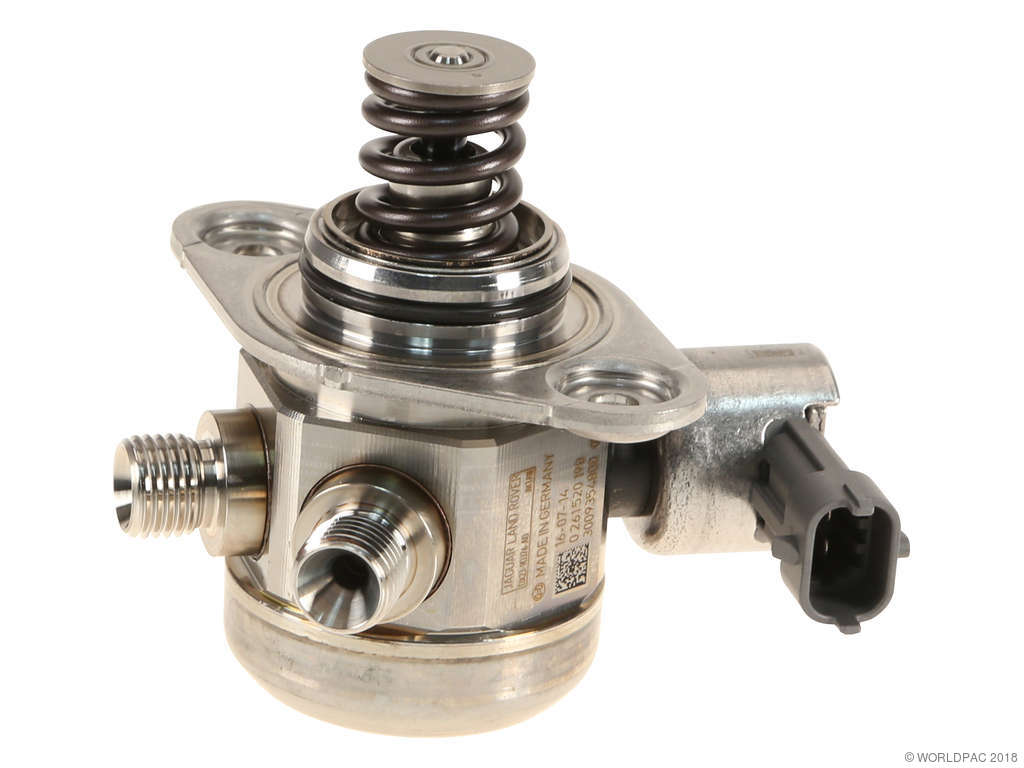
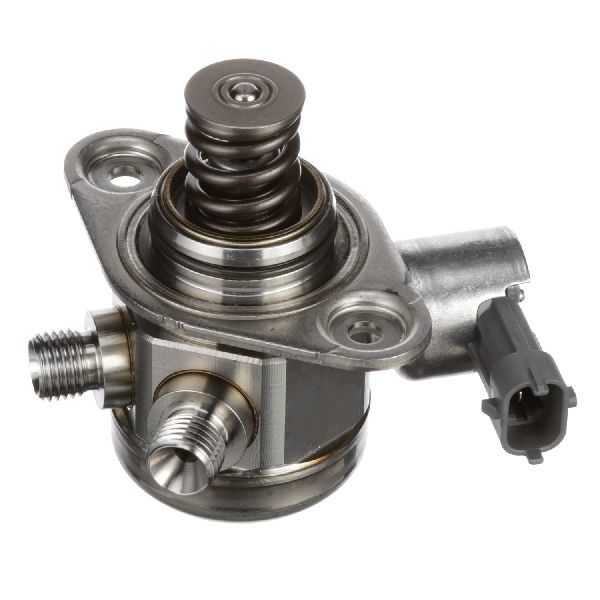
- Fuel Rail Pressure Sensor
(OEM #LR105424)— This is the most common hardware failure for P0191 on JLR Ingenium engines, as documented by owner experiences and manufacturer TSBs which point to this component after software is ruled out.
Trusted brands: Jaguar (OEM), Bosch (often the OEM manufacturer)
OEM price range: $110-$200
Aftermarket price range: $60-$150
Related Codes That Often Appear With This One
- P2178-00 — System Too Rich Off Idle. TSBs SSM74092 and SSM73960.2 directly link P0191-85 with P2178-00, indicating that an incorrect fuel pressure reading can cause the PCM to create a rich fuel mixture.
- P168F-00 — Manufacturer-defined code. This code is mentioned in the same TSBs as P0191 and P2178, suggesting it's part of the same fault cascade related to fuel system monitoring.
- P144C-00 — EVAP System Purge Flow Performance. Also listed in the TSBs, this code suggests the faulty fuel pressure data may impact the evaporative emissions system calculations.
Technical Service Bulletins (TSBs) & Recalls
- JTB00659NAS3: The most definitive TSB for 2018 models. States P0191-85 can be a 'false flag' caused by incorrect PCM calibration and the fix is a software update, not a part replacement.
- SSM74092: Links P0191-85 with reduced performance and other DTCs like P2178-00.
- SSM73960.2: An earlier bulletin that mentioned an upcoming PCM calibration to fix the P0191-85 issue and advised against replacing parts if no other issues are found.
Platform-Specific Known Issues
- TSB JTB00659NAS3 (Feb 2019) supersedes previous bulletins for the 2018 model year XE, F-Pace, and E-Pace with the 2.0L Ingenium petrol engine. It states the cause for P0191-85 may be an incorrect PCM calibration causing a 'false flag'. The fix is a software update using PATHFINDER version 211 or later, with no parts required.
- TSB SSM74092 notes that customers may report reduced performance with code P0191-85 stored, sometimes without the check engine light on. These bulletins link the issue to other codes (P168F-00, P2178-00, P144C-00).
- An owner on JaguarForums.com with a P0191 code detailed a lengthy diagnostic process. After changing the fuel filter and fuel pump without success, their issue persisted, highlighting that the sensor, wiring, or PCM are more likely culprits for this specific code.
Mechanic-Grade Diagnostic Values
- Fuel Rail Pressure Sensor - Reference Voltage — expected: 5V (Key On, Engine Off). Failure: Voltage significantly lower or higher than 5V indicates a problem with the PCM or wiring.
- Fuel Rail Pressure Sensor - Signal Wire Voltage — expected: Approximately 0.5V at 0 PSI, rising towards 4.5V at maximum pressure.. Failure: Voltage that is stuck, erratic, or does not correspond to pressure changes points to a faulty sensor.
- Fuel Rail Pressure Sensor - Ground Wire — expected: Near 0 Ohms resistance to a known good chassis ground.. Failure: High resistance (more than a few ohms) indicates a poor ground connection, which can cause erratic sensor readings.
- Live Data - Fuel Rail Pressure at Idle — expected: Approximately 40-60 PSI (275-414 kPa).. Failure: Readings that are wildly fluctuating, dropping to zero, or are excessively high at idle suggest a sensor, pump, or wiring issue.
Hidden / Shadow Codes Worth Checking
- P0191-85: This is a manufacturer-specific sub-code. The '-85' suffix indicates 'Signal is above allowable range'. This is the specific variant of P0191 mentioned in Jaguar TSBs JTB00659NAS3 and SSM74092, pointing to the PCM receiving a voltage signal from the sensor that is higher than the pre-programmed maximum threshold. (see via This sub-code is visible on dealer-level diagnostic tools like Jaguar's SDD or Pathfinder, and some advanced professional scan tools.)
Scan Tool Commands That Help
- Jaguar Pathfinder: PCM Software Update — As per TSB JTB00659NAS3, this is the primary fix for a 2018 XE showing P0191-85 without other symptoms. The software update recalibrates the expected sensor range to prevent false triggers.
- Professional Scan Tool (e.g., iCarsoft CR Max BT): Clear Fault Codes / Erase Stored Codes — This is a necessary step after any hardware repair, such as replacing the fuel rail pressure sensor, to turn off the Check Engine Light and reset the system monitors.
- Advanced Scan Tool with Live Data: Wiggle Test Monitoring — While monitoring the live fuel rail pressure sensor voltage, physically wiggle the sensor connector and its associated wiring harness. If the voltage reading jumps or drops out, it confirms an intermittent wiring or connector pin issue.
Wiring & Ground Locations
- Fuel Rail Pressure Sensor Connector — On the 2.0L Ingenium petrol engine, the sensor is located on the high-pressure fuel rail, visible on the top of the engine after removing the main plastic engine cover.. This is the primary connection point for the sensor. Corrosion, loose pins, or heat damage to the connector or its short pigtail are common failure points that will directly cause a P0191 code.
- PCM Ground Connection — While specific ground point locations (e.g., G218) require a service manual, a forum user identified a high-resistance ground connection for the sensor circuit as the root cause of their P0191. They fixed it by splicing in a new ground wire.. A poor ground for the sensor circuit can cause the signal voltage to float or become erratic, leading the PCM to believe the sensor has failed or is out of range.
Real Owner Repair Stories
- JaguarForums.com user 'Stevegledhill' (Jaguar S-Type (demonstrates a common JLR diagnostic path)) — P0191 code, initially with no running issues, then progressed to stalling. Fuel pressure on live data would start around 53 PSI and then drop until the engine died.
❌ Tried (didn't work) Replaced the fuel filter., Replaced the fuel rail pressure sensor., Replaced the in-tank fuel pump.
✅ What actually fixed it The owner followed the workshop manual diagnostic steps and found high resistance between pin 2 of the pressure sensor plug and ground. Splicing in a new ground cable for the sensor circuit resolved the issue. - iCarsoft User Example (Jaguar XF (with same 2.0L Ingenium engine family)) — Limp mode and hesitation with code P0191.
❌ Tried (didn't work) Initial diagnosis focused on wiring, but no damage was found.
✅ What actually fixed it The owner replaced the fuel rail pressure sensor with an OEM part and cleared the codes, which immediately returned the car to normal operation.
When the Usual Fixes Don't Work
- While the most common fixes for P0191 on this platform are a PCM software update or a new fuel rail pressure sensor, there are documented cases where these steps do not solve the problem. In one detailed account on JaguarForums, an owner replaced the filter, pump, and sensor without success. The ultimate cause was a high-resistance ground wire in the sensor's electrical circuit. This highlights that even with strong TSB guidance, basic electrical diagnostics (checking power, ground, and signal wires) should not be skipped, as a simple wiring fault can mimic a component failure.
OEM Part Supersession History
Bosch 0261545053 (example of correct pressure range sensor)→Bosch 0261545074 (example of incorrect but similar-looking sensor)— N/A - This is not a direct supersession but a common parts mix-up.
Heads up: A forum post for a different GDI vehicle highlights a critical issue where a visually identical Bosch sensor (0261545074) was incompatible because it was rated for a lower pressure (70 bar) than the required OEM spec (140 bar), causing an immediate P0191 code. This demonstrates the importance of matching the exact OEM part number (LR105424) or a cross-referenced equivalent with the correct pressure rating.
Model Year Variations Within This Range
- 2018: TSB JTB00659NAS3 specifically calls out 2018 models with the 2.0L Ingenium petrol engine as being prone to a 'false flag' P0191-85 due to incorrect PCM software calibration. The prescribed fix is a software update, not a hardware replacement.
- 2019 (facelift): The 2019 model year marked a facelift for the XE, which included interior technology updates like the optional Touch Pro Duo infotainment system. While the core Ingenium engine remained, vehicles from late 2019 onwards may use the newer EVA 2.0 vehicle architecture, which requires JLR's cloud-based TOPIx Cloud for module programming, as opposed to the older offline Pathfinder system.
Helpful Videos
We Have This Part in Stock



The information in this article is provided for general reference and educational purposes only. Vehicle specifications, procedures, and part compatibility can vary by production date, trim level, and region. Always consult your vehicle's factory service manual and verify part numbers before purchasing or performing repairs. Safety-critical components such as airbags, seat belts, and braking systems should be installed by a qualified professional.
- Jaguar XE:
- 🎬 Helpful Videos
- 🛍️ Shop This Part
- What's Unique About the 2017-2019 Jaguar XE
- Diagnostic Flowchart
- Symptoms You May Notice
- Most Likely Causes
- Rare But Worth Checking
- Diagnosis Steps
- Parts You'll Likely Need
- Related Codes That Often Appear With This One
- Technical Service Bulletins (TSBs) & Recalls
- Platform-Specific Known Issues
- Mechanic-Grade Diagnostic Values
- Hidden / Shadow Codes Worth Checking
- Scan Tool Commands That Help
- Wiring & Ground Locations
- Real Owner Repair Stories
- When the Usual Fixes Don't Work
- OEM Part Supersession History
- Model Year Variations Within This Range
- 🎟️ Get 5% Off