

P0191 on 2017-2019 Jaguar F-PACE: Fuel Rail Pressure Sensor Causes and Fixes
On a 2017-2019 F-PACE, P0191 is often caused by a faulty fuel rail pressure sensor or an outdated Powertrain Control Module (PCM) software. Check for applicable software updates with a dealer before replacing the sensor, which costs about $60-$150 for the part. This issue is common across other JLR models with the same engines, like the XE, XF, and Discovery Sport.
- For a 2017-2019 F-PACE, P0191 could be a simple software issue. Always check with a dealer for available PCM updates before replacing parts.
- If no software update is needed, the most likely failed part is the fuel rail pressure sensor itself.
- Look for other codes like P2178 or P144C. Their presence alongside P0191 strengthens the diagnosis of a fault in the fuel pressure sensor or its related control system.
- This repair involves the high-pressure fuel system and should be handled by a professional to avoid fire risk and injury.
What's Unique About the 2017-2019 Jaguar F-PACE

For the 2017-2019 F-PACE, particularly the 2018 model with the 2.0L Ingenium petrol engine, this code is the subject of multiple Technical Service Bulletins (TSBs). These bulletins state that P0191-85 can be triggered by incorrect PCM software, causing a false error flag. In these specific cases, the fix is a software update performed by a dealer, not a hardware replacement. This makes checking for software updates a critical first step before assuming a part has failed. This same software issue affects other JLR vehicles with the Ingenium engine, such as the Range Rover Evoque and Discovery Sport.
Diagnostic Flowchart

Tap your situation to follow the diagnostic path that matches what you're seeing on this vehicle.
Symptoms You May Notice
- Check Engine Light (MIL) is on.
- Reduced engine power or 'limp mode'.
- Engine hesitation or stuttering, especially during acceleration.
- Vehicle 'chugging' or 'juddering' during operation.
- Difficulty starting or prolonged cranking times.
- Engine stalls.
- Replacing the fuel pump before verifying the fuel rail pressure sensor's signal and checking for software updates.
- Replacing the fuel rail pressure sensor when the actual cause is a software glitch that requires a PCM update.
- Chasing a fuel system fault when the P0191 code is set alongside lean codes (P0171/P0174) caused by a separate issue, such as a failed PCV valve. An Identifix repair tip notes to disregard P0191 if it's set in conjunction with a known crankcase ventilation issue.
Most Likely Causes

- Outdated Powertrain Control Module (PCM) Software 🔴 High Probability Jaguar issued TSB JTB00659NAS3 specifically for the 2018 F-PACE 2.0L petrol engine, stating an incorrect PCM calibration can cause a false P0191-85 code. TSB SSM73960.2 also mentions a new calibration was developed for this issue. This is a known software glitch rather than a mechanical fault.
How to confirm: A Jaguar dealer or a specialized shop with access to Jaguar's diagnostic software (Pathfinder or SDD) can check the current software version against available updates for your vehicle's VIN.
Typical fix: Update the PCM software to the latest version.
Est. part cost: $0 - Faulty Fuel Rail Pressure Sensor 🔴 High Probability This is the most common hardware failure associated with code P0191 across most vehicles, including Jaguar. The sensor is exposed to engine heat and vibration, and its internal electronics can fail over time, sending incorrect voltage signals to the PCM.
How to confirm: Using a diagnostic scan tool, monitor the live data for fuel rail pressure. If the reading is erratic, stuck at a specific value (e.g., 70.1 psi), or doesn't correlate with engine RPM, the sensor is likely bad. A technician can also test the sensor's voltage output; it should typically be between 0.5V and 4.5V.
Typical fix: Replace the fuel rail pressure sensor.
Est. part cost: $60-$150 - Wiring Harness or Connector Issue 🟡 Medium Probability The wiring harness to the sensor is located in the engine bay and is subject to heat and vibration, which can cause wires to degrade, insulation to fray, or pins in the connector to corrode or loosen over time. One owner on a forum noted that cleaning a heavily oxidized connector temporarily resolved the issue, pointing to the connector as a weak point.
How to confirm: Visually inspect the wiring and connector for any signs of damage, melting, or corrosion. Perform a continuity test on the wires between the sensor and the PCM. A multimeter can be used to check for the correct voltages at the connector (typically a 5V reference, a ground, and the signal wire).
Typical fix: Repair the damaged section of the wiring harness or clean/replace the connector.
Est. part cost: $5-$50
Rare But Worth Checking
- Failing Fuel Pump (High or Low Pressure): While less common for this specific code on this platform, a failing fuel pump can cause genuine fuel pressure issues that the sensor correctly reports, triggering the code. This should be investigated if a new sensor and software update do not resolve the issue. One owner on an Australian Land Rover forum with a similar engine experienced a no-start P0191 that was suspected to be a fuel pump failure.
- Clogged Fuel Filter: A clogged fuel filter can restrict fuel flow, leading to low pressure readings and triggering P0191. It's a maintenance item that is sometimes overlooked and should be considered, especially if the vehicle has higher mileage or a history of fuel contamination.
- Faulty Fuel Pump Control Module: On vehicles with returnless fuel systems like the F-PACE, a dedicated module controls the fuel pump's speed. A malfunction in this module can lead to incorrect fuel pressure being delivered, which the P0191 code would then report. This is a less common but possible cause if other components check out.
Diagnosis Steps
- Connect a diagnostic scanner and check for any Technical Service Bulletins (TSBs) related to P0191 for your vehicle's VIN. Prioritize checking for PCM software updates as per TSB JTB00659NAS3 and SSM73960.2.
- Record all stored fault codes and freeze-frame data. Pay close attention to P2178, P144C, and P168F, as they are often linked by TSBs.
- Using the scanner's live data function, monitor the 'Fuel Rail Pressure' reading. Observe the pressure at idle, during acceleration, and with the key on, engine off. For GDI engines, idle pressure should be stable around 40 bar (approx. 580 psi). Erratic readings or values that are stuck high or low point to a sensor/circuit issue.
- If the pressure reading is erratic, unchanging, or clearly illogical (e.g., reading high pressure with the engine off), suspect the sensor or its wiring.
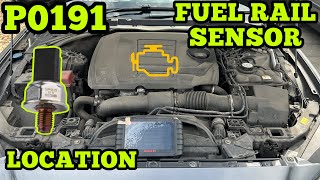
- Turn the vehicle off and locate the fuel rail pressure sensor on the engine's fuel rail, which is on top of the engine for the 2.0L petrol. 🎬 Watch: See the sensor location and how to fix it.
- Visually inspect the sensor's electrical connector and nearby wiring for any signs of damage, melting, or oxidation. Ensure the connector is securely seated.
- If wiring appears intact and a software update is not applicable or doesn't fix the issue, the fuel rail pressure sensor is the most likely component to have failed and should be replaced.
- If the sensor's readings appear plausible but the code persists, the issue may be mechanical. Further diagnosis of the low-pressure and high-pressure fuel pumps and the fuel filter would be necessary.
Parts You'll Likely Need
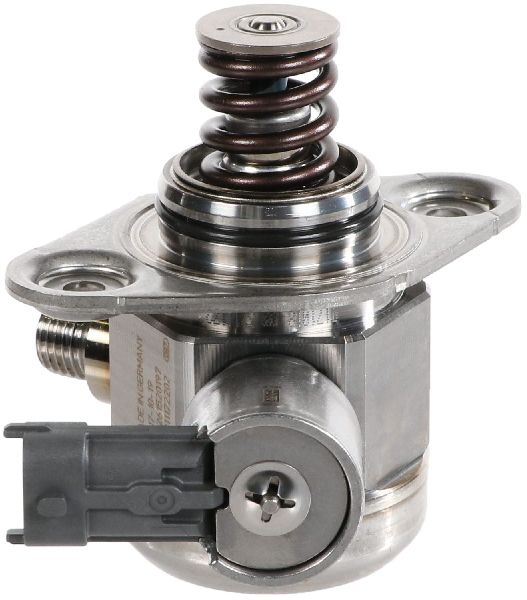
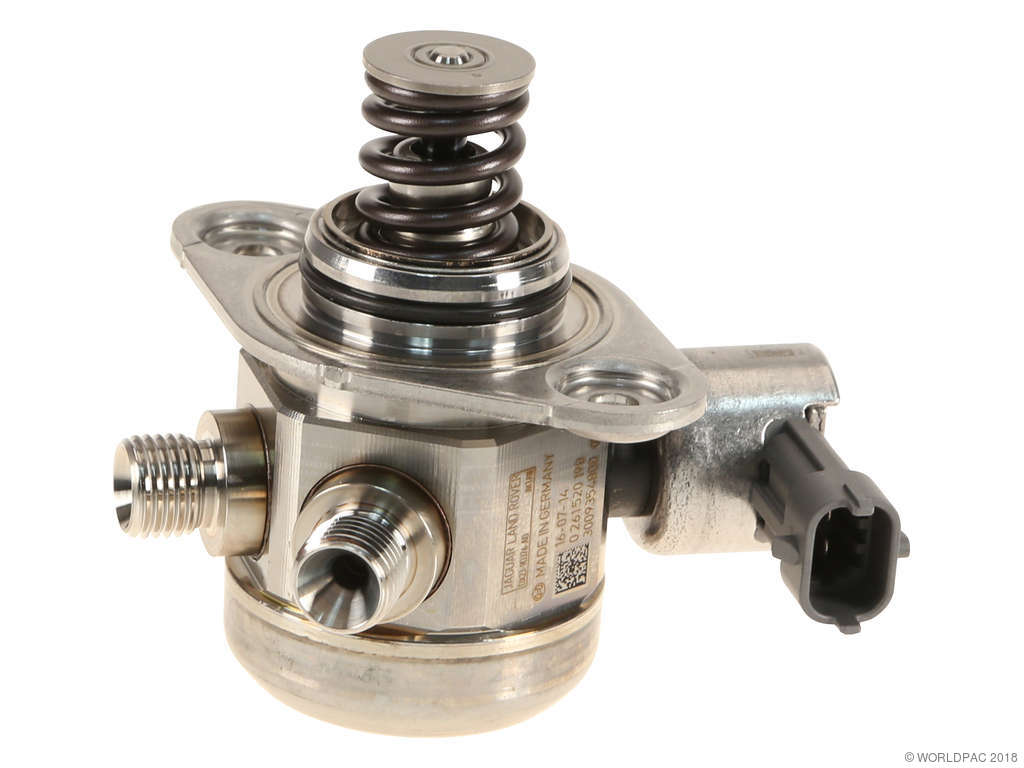
- Fuel Rail Pressure Sensor
(OEM #AJ813994)— This sensor is the most common hardware failure for code P0191. It directly measures the pressure that the code reports as being out of range. TSBs and forum reports confirm it's a frequent cause. This part number supersedes previous versions AJ813066 and AJ813639.
Trusted brands: Bosch, Genuine Jaguar
OEM price range: $90-$160
Aftermarket price range: $60-$110
Related Codes That Often Appear With This One
- P2178 — System Too Rich Off Idle. TSBs SSM73960.2 and SSM74092 explicitly link P0191-85 with P2178-00, suggesting they are part of the same fault pattern related to incorrect fuel pressure readings or control. A faulty sensor can send a high-pressure reading, causing the PCM to reduce fuel delivery, which paradoxically can be misinterpreted under certain conditions.
- P144C — EVAP System Purge Flow Performance. This code is also mentioned in TSBs alongside P0191. A related TSB suggests this can be caused by a 'fueling adaption drift', pointing to a broader fuel system control issue.
- P168F — Manufacturer-specific code. While the exact definition is not widely published, it is consistently listed in Jaguar TSBs with P0191, indicating it is a related diagnostic code within the same fault sequence.
Technical Service Bulletins (TSBs) & Recalls

- JTB00659NAS3: Engine MIL Illuminated With DTC P0191-85 Stored. [14
Platform-Specific Known Issues
- TSB JTB00659NAS3: States that on some 2018 F-PACE models with the 2.0L petrol engine, the Malfunction Indicator Lamp (MIL) may illuminate with DTC P0191-85 stored due to an incorrect PCM calibration. The fix is a software update.
- TSB SSM73960.2 & SSM74092: Note that customers may report reduced performance with P0191-85 stored. These TSBs confirm that other codes like P168F-00, P2178-00, or P144C-00 may also be present and that a software update was being developed to resolve the issue.
- PCV Valve Issues Causing False Codes: An Identifix tech tip for the 3.0L V6 engine notes that a failed partial load crankcase ventilation valve can cause lean codes (P0171/P0174) and may also trigger a P0191 code. In this specific scenario, the P0191 should be disregarded and the PCV system should be repaired first.
Mechanic-Grade Diagnostic Values
- Fuel Rail Pressure Sensor Signal Voltage (KOEO - Key On, Engine Off) — expected: ~0.5V - 1.8V. Failure: Voltage is stuck at 0V, 5V, or does not change appropriately with pressure.
- Fuel Rail Pressure Sensor Signal Voltage (at idle) — expected: ~1.3V - 1.8V. Failure: Voltage is erratic, or does not correspond to a stable idle pressure reading.
- FRP Sensor Signal Circuit Resistance to PCM — expected: Less than 5 ohms. Failure: Resistance is greater than 5 ohms, indicating high resistance in the wiring.
- FRP Sensor Signal Circuit Short to Ground — expected: Greater than 10,000 ohms. Failure: Resistance is less than 10,000 ohms, indicating a short to ground.
Hidden / Shadow Codes Worth Checking
- P0191-85: This sub-code, referenced in Jaguar TSBs, typically means 'Signal Invalid'. In the context of the F-PACE TSBs, the PCM's software is incorrectly flagging a valid signal from the sensor as being out of the expected range, necessitating a software update rather than a part replacement. (see via JLR-specific diagnostic tools like SDD or Pathfinder.)
Scan Tool Commands That Help
- JLR SDD / Pathfinder: Service Functions — After replacing a component like the fuel rail pressure sensor or fuel pump, it may be necessary to run a service function to reset fuel system adaptations. This allows the PCM to relearn the characteristics of the new part.
- JLR SDD / Pathfinder: Read/Clear DTCs — This is a basic but critical function. After performing a repair, all DTCs must be cleared. Some codes may not clear until a drive cycle is completed or a specific service routine is run.
Wiring & Ground Locations
- C1E786AP — The electrical connector at the fuel rail pressure sensor on the 2.0L I4 Petrol engine.. This is the primary connection point to test for power, ground, and signal. A poor connection here due to corrosion or damage is a common cause of P0191.
- C1E786AP Pin 3 (BK-GY) — Pin 3 (Black/Grey wire) on the fuel rail pressure sensor connector.. This is the ground circuit for the sensor, provided by the PCM. A fault in this wire will cause incorrect sensor readings.
- C1E786AP Pin 4 (GY-VT) — Pin 4 (Grey/Violet wire) on the fuel rail pressure sensor connector.. This is the signal wire that sends the pressure reading back to the PCM. It should be tested for correct voltage.
- C1E786AP Pin 5 (GY) — Pin 5 (Grey wire) on the fuel rail pressure sensor connector.. This is the 5-volt reference power supplied by the PCM. If this voltage is missing or incorrect, the sensor cannot function.
Real Owner Repair Stories
- iCarsoft US User Example (Jaguar XF with 2.0L Petrol engine (shared with F-PACE)) — Limp mode and hesitation with code P0191.
❌ Tried (didn't work) Visual inspection of wiring showed no damage.
✅ What actually fixed it The owner replaced the fuel rail pressure sensor with an OEM part and cleared the fault codes, which immediately resolved the issue.
OEM Part Supersession History
aj813066, aj813639→AJ813994— Likely an updated design for improved reliability or accuracy, as supersessions are common for electronic sensors that have known failure patterns.
Heads up: No known incompatibilities; AJ813994 is the correct service replacement for the earlier parts.AJ813994 (Jaguar)→0261545161 (Bosch)— This is the Bosch OEM part number, which is often sold as an alternative to the Genuine Jaguar part.
Heads up: This is a direct cross-reference for the OEM part.
Model Year Variations Within This Range
- 2018: The 2018 F-PACE with the 2.0L petrol engine is specifically called out in TSB JTB00659NAS3 for having a potential software calibration issue in the PCM that can falsely trigger code P0191-85. For this model year, checking for a software update is a critical first diagnostic step.
Helpful Videos
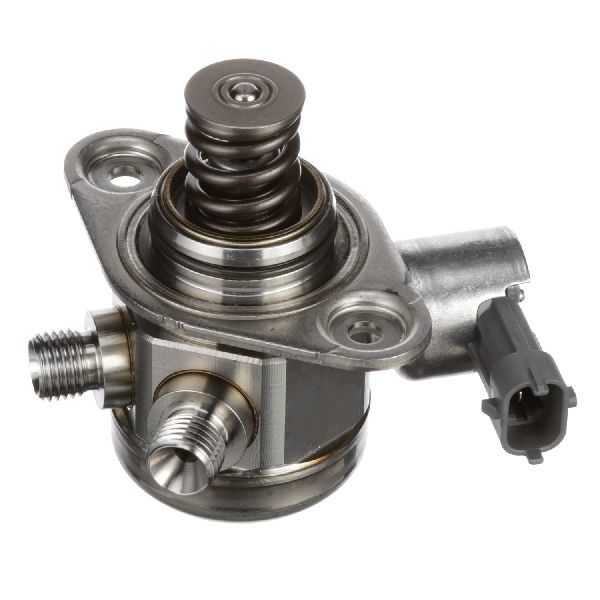
We Have This Part in Stock



The information in this article is provided for general reference and educational purposes only. Vehicle specifications, procedures, and part compatibility can vary by production date, trim level, and region. Always consult your vehicle's factory service manual and verify part numbers before purchasing or performing repairs. Safety-critical components such as airbags, seat belts, and braking systems should be installed by a qualified professional.
- Jaguar F-PACE:
- 🎬 Helpful Videos
- 🛍️ Shop This Part
- What's Unique About the 2017-2019 Jaguar F-PACE
- Diagnostic Flowchart
- Symptoms You May Notice
- Most Likely Causes
- Rare But Worth Checking
- Diagnosis Steps
- Parts You'll Likely Need
- Related Codes That Often Appear With This One
- Technical Service Bulletins (TSBs) & Recalls
- Platform-Specific Known Issues
- Mechanic-Grade Diagnostic Values
- Hidden / Shadow Codes Worth Checking
- Scan Tool Commands That Help
- Wiring & Ground Locations
- Real Owner Repair Stories
- OEM Part Supersession History
- Model Year Variations Within This Range
- 🎟️ Get 5% Off