

P0191 on 2018-2019 GMC Terrain: Fuel Rail Pressure Sensor Causes and Fixes
For a 2018-2019 GMC Terrain, code P0191 most often points to a faulty Fuel Rail Pressure Sensor, a failing high-pressure fuel pump (HPFP), or a weak in-tank fuel pump. Always check for fuel contamination as noted in GM service bulletins before replacing parts. On some GM platforms, a faulty Fuel Pump Control Module (FPCM) is also a common cause. Critically, inspect the engine wiring harness for chafing near the ECM bracket, a known issue covered by GM TSB #21-NA-149 that can cause this code.
- P0191 means the computer can't trust the fuel pressure reading. It could be a bad sensor or a real pressure problem.
- Before buying parts, use a scan tool to watch the 'Desired' vs. 'Actual' fuel rail pressure. This is the most important diagnostic step.
- The three most likely culprits are the fuel rail pressure sensor, the high-pressure fuel pump (HPFP), or the in-tank low-pressure fuel pump.
- Check the sensor's electrical connector for corrosion or damage, as this is a simple, known issue.
- Be aware of GM Technical Service Bulletin #PIP5151F, which warns that fuel contamination can cause this code and requires a full system cleaning.
What's Unique About the 2018-2019 Gmc TERRAIN
The 2018-2019 GMC Terrain uses a gasoline direct injection (GDI) system with two fuel pumps: a low-pressure pump in the tank and a high-pressure fuel pump (HPFP) on the engine. This complexity means P0191 can be triggered by more components than on a traditional port-injected vehicle. GM has issued service bulletins for similar models pointing to issues like fuel contamination (TSB #PIP5151F) and a critical engine wiring harness chafing problem (TSB #21-NA-149) that can cause this and other random DTCs. This chafing can occur against the ECM bracket or upper control arm and may not be visible with the engine off. Furthermore, the Fuel Pump Control Module (FPCM) can require programming after replacement.
Diagnostic Flowchart
Tap your situation to follow the diagnostic path that matches what you're seeing on this vehicle.
Symptoms You May Notice
- Hard start or no-start condition [TSB #PIP5151F]
- Engine stalling, potentially at high speeds or when coming to a stop
- Rough running or rough idle
- Hesitation or stumbling during acceleration
- Noticeable loss of engine power
- Reduced Power warning light / Limp Mode
- Check Engine Light illuminated
- Replacing only the fuel rail pressure sensor without checking for an actual fuel delivery problem from one of the fuel pumps.
- Replacing the high-pressure fuel pump when the issue is a weak low-pressure in-tank pump.
- Replacing the ECM when the root cause is a chafed wiring harness, an issue specifically warned against in GM TSB #21-NA-149.
Most Likely Causes
- Faulty Fuel Rail Pressure Sensor 🔴 High Probability The sensor can fail electrically, sending incorrect voltage signals to the ECM. It is a sensitive electronic component located in a high-heat engine bay.
How to confirm: Using a scan tool, compare the 'Desired Fuel Rail Pressure' to the 'Actual Fuel Rail Pressure' PID. If the reading is stuck, erratic, or clearly incorrect (e.g., reading high pressure with the engine off), the sensor is likely faulty. A voltage test at the sensor should show ~5V reference, <0.5V ground, and a signal of ~0.5V at KOEO that rises with pressure.
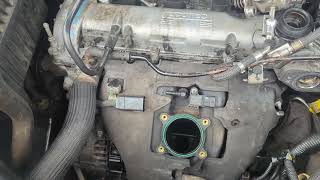
Typical fix: Replace the fuel rail pressure sensor. 🎬 Watch this step-by-step guide on replacing the fuel pressure sensor. On many GM engines, this requires removing the intake manifold for access. 🎬 Watch: Locate the fuel rail and crank sensors on your engine.
Est. part cost: $35-$135 - Failing High-Pressure Fuel Pump (HPFP) 🟡 Medium Probability The HPFP is a mechanical pump driven by the camshaft that can wear out, failing to generate the high pressures (over 2,000 PSI) required for direct injection. GM also issued a customer satisfaction program (N182199610) for some 1.5L engines where the HPFP could crack and leak.
How to confirm: With a scan tool, monitor desired vs. actual fuel rail pressure under load (e.g., during acceleration). If the actual pressure consistently fails to meet the desired pressure and drops significantly, the HPFP may be weak. Also inspect the cam follower for wear when removing the pump.
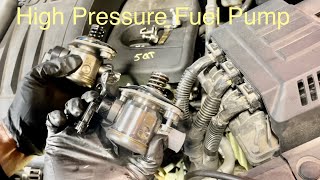
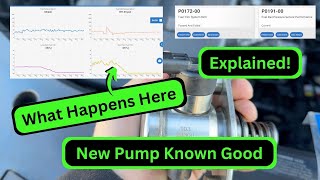
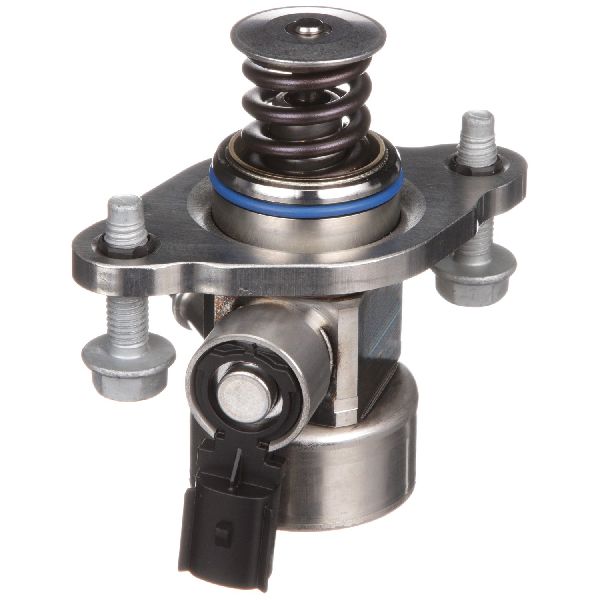
Typical fix: Replace the high-pressure fuel pump. 🎬 See how to properly replace the high-pressure fuel pump. It is critical to use a genuine OEM part, as some aftermarket pumps are known to cause this code. The high-pressure fuel line is typically a one-time-use part and should also be replaced.
Est. part cost: $200-$500 - Failing Low-Pressure (In-Tank) Fuel Pump 🟡 Medium Probability The HPFP relies on a steady supply of fuel from the in-tank pump. If the in-tank pump is weak, it starves the HPFP, preventing it from reaching commanded pressure. This can be misdiagnosed as a bad HPFP.
How to confirm: Test the low-pressure fuel system pressure at the feed line to the HPFP using a mechanical gauge. It should meet the manufacturer's specification (typically 345-690 kPa or 50-100 PSI) and remain steady. A whining noise from the fuel tank area is also a common symptom.
Typical fix: Replace the in-tank fuel pump module.
Est. part cost: $200-$400 - Wiring or Connector Issue ⚪ Low Probability GM TSB #21-NA-149 identifies a critical issue where the engine wiring harness can chafe against the ECM bracket, upper control arm, or shock tower, causing shorts or open circuits that trigger P0191 and other codes. This damage may not be visible without moving the harness, as engine rock during operation causes the contact.
How to confirm: Thoroughly inspect the engine wiring harness at the specific chafe points identified in TSB #21-NA-149, particularly near the ECM/TCM bracket. Test for 5V reference, ground, and signal continuity back to the ECM using a multimeter.
Typical fix: Repair the damaged wiring following approved procedures and secure the harness with clips and protective sleeves as detailed in TSB #21-NA-149 to prevent recurrence.
Est. part cost: $15-$50 - Fuel System Contamination ⚪ Low Probability GM TSB #PIP5151F specifically mentions that fuel system contamination can cause P0191 along with other fuel codes on 2018 models.
How to confirm: Take a fuel sample from the fuel rail and inspect it for water, debris, or separation.
Typical fix: The complete fuel system will need to be drained and cleaned, and the source of contamination addressed. [TSB #PIP5151F]
Est. part cost: $0 (for inspection) - $1000+ (for extensive cleaning and part replacement) - Faulty Fuel Pump Control Module (FPCM) ⚪ Low Probability On many GM trucks and SUVs, the FPCM is mounted on the frame, where it is vulnerable to corrosion. A failing FPCM can cause erratic low-pressure fuel supply, leading to a P0191. Replacement may require programming.
How to confirm: Inspect the FPCM and its electrical connector for corrosion. Check for power and ground at the module. The code P069E is often stored along with P0191 when the FPCM is the root cause.
Typical fix: Replace the Fuel Pump Control Module. An OEM module for a 2018-2019 Terrain/Equinox 1.5L is available.
Est. part cost: $70-$170
Rare But Worth Checking
- Faulty Engine Control Module (ECM): This is extremely rare. TSB #21-NA-149 notes that the ECM is often unnecessarily replaced when the actual cause is harness chafing. Exhaust all other possibilities before considering ECM replacement.
Diagnosis Steps
- Check for other stored DTCs. Codes like P0087, P0088, or P069E can immediately point towards a specific mechanical or module issue rather than a sensor fault.
- Connect a scan tool and monitor the 'Desired Fuel Rail Pressure' and 'Actual Fuel Rail Pressure' PIDs.
- With the key on, engine off, the actual pressure should be low. If it reads high, the sensor may be faulty.
- Start the engine and observe the pressures at idle. They should be very close to each other.
- Increase engine RPM and briefly road test under load. If the actual pressure cannot keep up with the desired pressure, suspect a fuel delivery issue (pumps, filter, contamination).
- If the actual pressure reading is erratic, stuck at one value, or clearly incorrect, suspect a faulty sensor or its wiring.
- CRITICAL: Per GM TSB #21-NA-149, thoroughly inspect the engine wiring harness for chafing, especially where it passes the ECM/TCM bracket, the upper control arm, and the shock tower. Repair any damaged wires and secure the harness.
- If a fuel delivery issue is suspected, test the low-pressure fuel pump's output pressure with a mechanical gauge to ensure it is supplying adequate fuel (345-690 kPa / 50-100 PSI) to the HPFP.
- If fuel contamination is suspected, take a fuel sample and inspect it visually.
- If an aftermarket HPFP was recently installed, be aware it could be the cause of the code even if it seems to be working. The ECM runs a pressure bleed-down test at shutdown that some aftermarket pumps fail.
Parts You'll Likely Need
- Fuel Rail Pressure Sensor
(OEM #12686809)— This sensor is a common failure point and is often the direct cause of the P0191 code when fuel pressure is actually normal. This part number is also used on heavy-duty Duramax diesel engines, suggesting it's a robust part, but failures still occur.
Trusted brands: ACDelco, Standard Motor Products, Bosch
OEM price range: $100-$175
Related Codes That Often Appear With This One
- P0087 — Indicates 'Fuel Rail/System Pressure - Too Low,' which is a direct mechanical cause for the P0191 performance code. [TSB #PIP5151F, 4]
- P0088 — Indicates 'Fuel Rail/System Pressure - Too High,' another mechanical fault that can trigger the P0191 performance code. [TSB #PIP5151F, 4]
- P128E — A GM-specific code related to fuel rail pressure that is cited in the same TSB as P0191, indicating a shared root cause. [TSB #PIP5151F]
- P0172 — Indicates 'System Too Rich (Bank 1).' A leaking high-pressure fuel pump can dump excess fuel into the crankcase, or an incompatible aftermarket HPFP can cause this code to appear alongside P0191.
- P069E — Indicates a fault with the Fuel Pump Control Module (FPCM). If you see this code with P0191, the FPCM is a very strong suspect.
Technical Service Bulletins (TSBs) & Recalls
- PIP5151F: Addresses hard start, no start, rough running, or low fuel pressure with codes P0087, P0088, P0191, and P128E, pointing to potential fuel system contamination.
Platform-Specific Known Issues
- Aftermarket High-Pressure Fuel Pump Incompatibility: Professional technicians have documented that some aftermarket (non-OEM) high-pressure fuel pumps can fail the ECM's specific diagnostic self-test for the fuel system. The vehicle may run fine, but the P0191 code will set because the pump's pressure bleed-down rate doesn't match the expected parameters programmed into the ECM. This can lead to a frustrating misdiagnosis where a new part is assumed to be good. Using an OEM ACDelco pump is strongly recommended.
Mechanic-Grade Diagnostic Values
- Fuel Rail Pressure Sensor (3-wire) - Signal Voltage — expected: Approx. 0.5V with Key On, Engine Off. Rises with pressure (e.g., ~2.2V at idle, ~3.4V when revved).. Failure: Voltage is stuck, does not change with engine load, or is absent.
- Fuel Rail Pressure Sensor (3-wire) - Reference Voltage — expected: 5.0V. Failure: Significantly lower than 5.0V or no voltage.
- Fuel Rail Pressure Sensor (3-wire) - Ground Circuit — expected: Less than 0.5V (500mV). Failure: Voltage significantly higher than 0.5V, indicating a poor ground.
- Low-Pressure Fuel System Pressure (at HPFP inlet) — expected: 345-690 kPa (50-100 PSI) with pump commanded on.. Failure: Pressure is below 345 kPa (50 PSI), indicating a weak in-tank pump or restriction.
- Low-Pressure Fuel System Pressure (at idle) — expected: 300-400 kPa (43-58 PSI). Failure: Pressure is unstable or below 300 kPa (43 PSI) at idle.
Scan Tool Commands That Help
- GDS2 / Professional Scan Tool: Fuel Pump Enable / Fuel Pump On/Off Command — Used to manually activate the low-pressure fuel pump to test its function and measure system pressure without the engine running. This helps isolate a faulty pump or FPCM circuit.
- GDS2 / Professional Scan Tool: Live Data: Desired vs. Actual Fuel Rail Pressure — This is the primary diagnostic data to monitor. A large, consistent discrepancy between desired and actual pressure under load points to a mechanical fuel delivery problem (pump, filter), not a sensor issue.
Wiring & Ground Locations
- Engine Harness Chafe Point — The engine wiring harness where it passes the sharp metal edge of the ECM/TCM mounting bracket, typically in the driver's side wheel well area.. Per GM TSB #21-NA-149, this is a primary chafe point that can short circuits within the harness, including those for the fuel pressure sensor, causing P0191 and other DTCs.
- Engine Harness Chafe Point — The engine wiring harness where it may contact the driver's side upper control arm or shock tower bolt.. Another known chafe point from TSB #21-NA-149 that can cause intermittent shorts as the engine and suspension move during normal driving.
- G103 — Typically located at the rear of the left-hand (driver's side) engine cylinder head.. This is a critical ground point for multiple control modules. A poor connection here can cause erratic module behavior and communication codes that may accompany a P0191.
- FPCM Location — On similar GM SUVs, the Fuel Pump Control Module is often mounted to the frame rail on the driver's side, near the spare tire, making it vulnerable to corrosion.. If the FPCM fails due to corrosion or internal fault, it cannot properly regulate the low-pressure fuel pump, which will starve the high-pressure pump and trigger P0191.
OEM Part Supersession History
12647909→12686809— Updated design for the fuel rail pressure sensor.
Model Year Variations Within This Range
- 2018-2019: Three engines were available: 1.5L Turbo Gas, 2.0L Turbo Gas, and 1.6L Turbo Diesel. The diesel engine was discontinued after 2019. Fuel system components, like the Fuel Pump Control Module, may have different part numbers depending on the engine (e.g., gas vs. diesel).
Helpful Videos
We Have This Part in Stock


The information in this article is provided for general reference and educational purposes only. Vehicle specifications, procedures, and part compatibility can vary by production date, trim level, and region. Always consult your vehicle's factory service manual and verify part numbers before purchasing or performing repairs. Safety-critical components such as airbags, seat belts, and braking systems should be installed by a qualified professional.
- Gmc TERRAIN:
- 🎬 Helpful Videos
- 🛍️ Shop This Part
- What's Unique About the 2018-2019 Gmc TERRAIN
- Diagnostic Flowchart
- Symptoms You May Notice
- Most Likely Causes
- Rare But Worth Checking
- Diagnosis Steps
- Parts You'll Likely Need
- Related Codes That Often Appear With This One
- Technical Service Bulletins (TSBs) & Recalls
- Platform-Specific Known Issues
- Mechanic-Grade Diagnostic Values
- Scan Tool Commands That Help
- Wiring & Ground Locations
- OEM Part Supersession History
- Model Year Variations Within This Range
- 🎟️ Get 5% Off