

P0191 on 2010-2014 GMC Sierra Denali: Fuel Pressure Sensor Range/Performance Issues
Code P0191 on a 2010-2014 GMC Sierra Denali most often points to a failing Fuel Rail Pressure Sensor (FRPS). This sensor tells the computer how much pressure is in the fuel rail. Replacing it is a common fix and a relatively low-cost DIY job. However, issues with the Fuel Pump Control Module (FPCM) or its wiring are also frequent culprits.
- P0191 means the computer is getting an unbelievable signal from the Fuel Rail Pressure Sensor.
- The most likely cause is a bad Fuel Rail Pressure Sensor itself, which is relatively easy and inexpensive to replace.
- If the sensor isn't the problem, check the Fuel Pump Control Module (FPCM) and its wiring on the frame rail for corrosion or damage.
- Always check for other codes like P0087 or P069E, as they can help pinpoint the exact failure.
- In rare cases, a weak fuel pump or fuel contamination could be the root cause, as noted in official GM service bulletins.
What's Unique About the 2010-2014 Gmc SIERRA DENALI
On these GMT900 platform trucks, the fuel system uses a Fuel Pump Control Module (FPCM) to manage fuel pressure by varying the voltage to the in-tank fuel pump. Unlike many later direct-injection systems, there is no engine-mounted high-pressure pump. The P0191 code is often a straightforward electrical or sensor issue, but as noted in official GM service bulletins, it can also be triggered by fuel contamination, which requires a more thorough system cleaning. The FPCM is notoriously prone to failure due to its mounting location on the frame rail, where it is exposed to moisture and corrosion.
🎬 See how to replace a corroded fuel pump control moduleDiagnostic Flowchart
Tap your situation to follow the diagnostic path that matches what you're seeing on this vehicle.
Generation note: This guide covers the second generation (GMT900) of the GMC Sierra. The 2014 model year was a split, with both the outgoing GMT900 and the new K2XX generation being sold. This guide specifically applies to the GMT900 models (2010-2013, and 2014 'Limited' or classic body style). The underlying fuel system architecture is shared with many other GMT900 trucks and SUVs.
Symptoms You May Notice
- Check Engine Light is on
- Hard starting or no-start condition
- Engine hesitates or stumbles during acceleration
- Rough idling
- Reduced engine power or entering 'limp mode'
- Decreased fuel economy
- Engine stalls, sometimes intermittently or during deceleration
- Abnormal smell in exhaust emissions
- Replacing the fuel pump when the actual issue is the Fuel Pump Control Module (FPCM) or the Fuel Rail Pressure Sensor.
- Replacing the Fuel Rail Pressure Sensor when the root cause is a corroded connector or a chafed wire in the harness.
Most Likely Causes
- Failing Fuel Rail Pressure Sensor (FRPS) 🔴 High Probability Sensors are exposed to heat and vibration and can fail electronically over time. It's the most frequently replaced part for this code, as it provides the direct reading that the ECM flags as irrational.
How to confirm: With a scan tool, compare the 'desired' fuel pressure to the 'actual' fuel pressure reading from the sensor. If the reading is erratic, stuck, or doesn't match a mechanical gauge reading, the sensor is likely bad. For example, with the key on and engine off, the pressure should be low; if it reads high, the sensor is likely shorted.
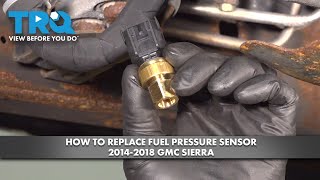
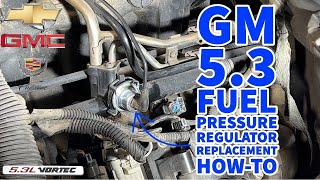
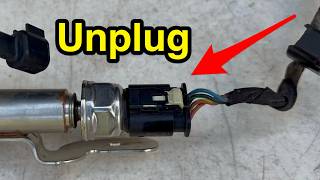
Typical fix: Replace the fuel rail pressure sensor. On the 6.2L V8, it's located on the driver's side fuel rail, sometimes tucked under the intake manifold but often accessible from the back.
Est. part cost: $40-$100 - Faulty Fuel Pump Control Module (FPCM) 🟡 Medium Probability The FPCM is mounted on the frame rail, often near the spare tire, exposing it to moisture, road salt, and corrosion which can damage the module's internal electronics or its connector pins. This is a very common failure point on GMT900 trucks.
How to confirm: Visually inspect the module and its connector for heavy corrosion. Check for power and ground at the FPCM. Use a scan tool to command the fuel pump on and check for a corresponding duty cycle signal from the FPCM to the pump. A lack of output signal with good inputs points to a bad module. Code P069E often accompanies FPCM failure.
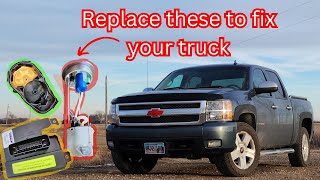
Typical fix: Replace the Fuel Pump Control Module. It is typically located on the driver's side frame rail, under the vehicle, near the spare tire. Aftermarket versions from brands like Dorman are available and often feature design improvements over the original.
Est. part cost: $80-$200 - Damaged Wiring or Connector 🟡 Medium Probability The wiring harness to the FRPS or FPCM can be damaged by engine heat, vibration, or corrosion, leading to an intermittent or lost signal. A known issue on these trucks is engine harness chafing against the ECM/TCM bracket, upper control arm, or shock tower.
How to confirm: Visually inspect the wiring harness for any signs of chafing, melting, or corrosion at the connectors for the FRPS and FPCM. Perform a continuity and voltage drop test on the power, ground, and signal circuits between the sensor and the ECM/FPCM to check for high resistance or an open circuit. Wiggling the harness while monitoring live data can help identify intermittent breaks.
Typical fix: Repair the damaged section of the wiring harness or replace the affected connector pigtail. In some cases, the fix requires re-securing the harness away from known chafe points.
Est. part cost: $15-$50 - Weak In-Tank Fuel Pump ⚪ Low Probability While durable, the fuel pump can weaken with age and high mileage, failing to deliver the pressure commanded by the FPCM. This becomes a more likely cause on higher-mileage trucks.
How to confirm: Connect a mechanical fuel pressure gauge to the fuel rail. If the pressure is consistently below the specification (typically 55-62 PSI at idle for these trucks) or drops significantly under load while the FPCM is commanding higher pressure, the pump is likely weak.
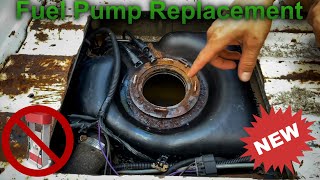
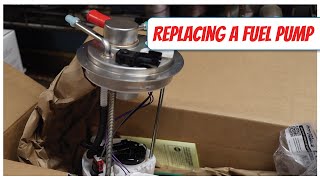
Typical fix: Replace the in-tank fuel pump module. This requires dropping the fuel tank or lifting the truck bed for access. It is highly recommended to use a quality OEM (ACDelco) or reputable aftermarket (Delphi, Bosch) pump, as labor is intensive.
Est. part cost: $200-$450
Rare But Worth Checking
- Fuel System Contamination: As mentioned in TSB #PIP5151B and #PIP4949E, contamination in the fuel (like water, debris, or excessive ethanol) can cause erratic fuel pressure. If magnetic metal debris is found on the fuel pressure sensor or regulator, it may indicate a failing injection pump, requiring a full system flush and parts replacement.
- Clogged Fuel Filter: The fuel filter is part of the in-tank fuel pump module and is not separately serviceable on these models. If it's clogged, the entire fuel pump module assembly must be replaced. This is a common cause of low fuel pressure that can trigger a P0191.
- Faulty Engine Control Module (ECM): In very rare cases, the ECM itself can be the source of the problem, either through a software glitch or hardware failure. This should only be considered after all other possibilities (sensor, wiring, FPCM, pump) have been exhaustively ruled out.
Diagnosis Steps
- Connect an OBD-II scanner and check for any other accompanying codes. Note the freeze frame data to see engine conditions when the code was set.
- Using the scanner's live data function, monitor 'Desired Fuel Rail Pressure' and 'Actual Fuel Rail Pressure'. Also observe the Fuel Rail Pressure sensor voltage.
- If the actual pressure reading is erratic, stuck at a specific value, or clearly incorrect (e.g., reading high pressure with the engine off), the Fuel Rail Pressure Sensor (FRPS) is the primary suspect.
- For confirmation, connect a mechanical fuel pressure gauge to the service port on the fuel rail. Compare the mechanical reading to the scanner's reading. A significant difference confirms a bad FRPS. Expected pressure is around 55-62 PSI at idle.
- If the sensor reading seems to follow the mechanical gauge but both show low pressure, inspect the Fuel Pump Control Module (FPCM) and its wiring. The FPCM is usually on the driver's side frame rail near the spare tire. Look for obvious signs of corrosion on the module and in the connector.
- Check for 12V power, good ground, and the command signal from the ECM at the FPCM connector. Use a multimeter to test continuity and check for shorts in the harness.
- If FPCM inputs are good but there is no or incorrect output to the fuel pump, the FPCM is likely faulty.
- If the FPCM and sensor are confirmed to be good but pressure is still low, the in-tank fuel pump may be weak or the fuel filter (part of the pump assembly) may be clogged. This would require a fuel pump replacement.
- If all components test good, carefully re-inspect the entire wiring harness between the FRPS, FPCM, and ECM for intermittent shorts or opens, which can be caused by chafing against the frame or engine components.
Parts You'll Likely Need
- Fuel Rail Pressure Sensor
(OEM #12621292)— This sensor is the most common failure point for a P0191 code, as it provides the direct reading that the ECM flags as irrational. - Fuel Pump Control Module (FPCM)
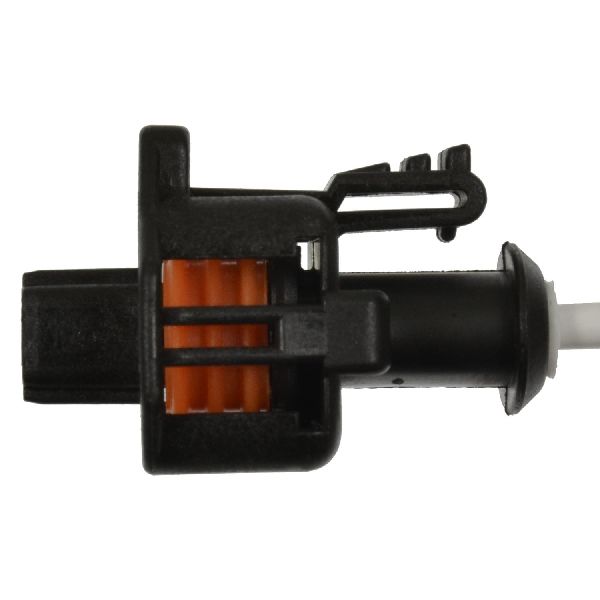
(OEM #20856290)— Due to its exposed mounting location on the frame rail, the FPCM is highly susceptible to corrosion and water damage, making it a frequent cause of fuel system codes like P0191 and P069E. - Fuel Rail Pressure Sensor Connector Pigtail — The connector itself can corrode or the wires can become brittle from heat and vibration, causing an intermittent signal. Replacing the pigtail is often necessary when the sensor itself is not the problem.
Related Codes That Often Appear With This One
- P0087 — This code for 'Fuel Rail/System Pressure - Too Low' often appears with P0191 when there is a legitimate low-pressure condition, as cited in TSBs #PIP4949E and #PIP5151B.
- P0088 — This code for 'Fuel Rail/System Pressure - Too High' can appear with P0191 if the sensor is failing or there's a regulation issue causing pressure spikes, as cited in TSBs #PIP4949E and #PIP5151B.
- P069E — This code indicates a fault was requested by the Fuel Pump Control Module (FPCM). It points directly to a problem within the FPCM-controlled part of the fuel system and is a strong indicator that the FPCM itself or its wiring is the culprit.
- P0171/P0174 — These codes for 'System Too Lean' can be triggered if the fuel pressure is genuinely lower than what the engine requires, causing a lean air/fuel mixture.
Technical Service Bulletins (TSBs) & Recalls
- PIP4949E: Addresses hard start/no start conditions which may be accompanied by DTCs P0087, P0088, P0191, or P128E. It guides technicians to inspect for magnetic metal debris in the fuel regulators if a fuel injection pump is suspected, indicating a larger system failure.
- PIP5151B: Relates to hard start, no start, rough running, or low fuel pressure. It specifically advises that if fuel contamination is found, the complete fuel system must be cleaned.
- GM TSB 21-NA-149: While for a later generation, it details common engine harness chafing points that can cause a wide variety of DTCs, including P0191, which is a valuable reference for diagnosing wiring issues.
Platform-Specific Known Issues
- TSB #PIP4949E notes that P0191 can be associated with hard start or no-start conditions and may involve inspecting for metallic debris in the fuel system.
- TSB #PIP5151B highlights that if fuel contamination is found during diagnosis, the entire fuel system requires cleaning to prevent repeat failures.
- A known issue on some GM trucks is a faulty electrical connector or pigtail for the fuel rail pressure sensor, which can mimic the symptoms of a failed sensor.
- Another TSB for some GM trucks mentions that code P0191 may set if the fuel rail pressure does not drop quickly enough after the engine is shut off, pointing to a potential regulation issue.
Mechanic-Grade Diagnostic Values
- Fuel Rail Pressure Sensor (FRPS) 5V Reference Circuit — expected: 4.8-5.2 V. Failure: A reading outside this range indicates a short to voltage, short to ground, or an open/high resistance in the circuit. If the circuit tests normal, the FPCM may be at fault.
- Fuel Rail Pressure Sensor (FRPS) Low Reference Circuit Resistance to Ground — expected: Less than 1 Ω. Failure: A reading greater than 1 Ω indicates an open or high resistance in the ground circuit.
- FPCM Power and Ground Circuit Voltage Drop — expected: Close to 0 V, no more than 0.1 V per connection (0.2 V - 0.5 V total is typical for a good circuit).. Failure: Excessive voltage drop indicates high resistance in the power or ground side of the FPCM circuit which must be repaired before condemning the module.
- FPCM Command Signal (from PCM) — expected: 12V present with Key On, Engine Cranking, or for 3-6 seconds after key-on.. Failure: No voltage on the Dark Green/White wire at FPCM Pin 13 indicates a break in the wire or a faulty PCM. Note: On these newer trucks, the signal may only be present while the engine is actively cranking.
Scan Tool Commands That Help
- GDS2 (GM Global Diagnostic System 2): Fuel Pump Relay / Fuel Pump Control Module ON/OFF Command — This bidirectional control is used to verify if the FPCM and the fuel pump are capable of being activated. If the pump runs with the command, it suggests the pump and FPCM are likely functional, pointing the diagnosis towards the sensor or wiring.
- GDS2 (GM Global Diagnostic System 2): Entering 'Service Only Mode' — For some bidirectional tests, the vehicle must be in a specific power mode. Pressing the ignition button for 5+ seconds without depressing the brake pedal puts the vehicle in 'Service Only Mode', which may be required before the scan tool can command components like the fuel pump.
Wiring & Ground Locations
- FPCM Fuses — In the main under-hood fuse box on the driver's side.. Three separate fuses power the fuel control module circuits. Check fuses #20, #21 (FSCM 20A), and #56 (ECM 15A) before diagnosing the module itself.
- FPCM Connector — On the Fuel Pump Control Module, mounted to the frame rail near the spare tire.. Pin 13 (Dark Green/White) is the command signal from the PCM. Pin 15 (Pink) is ignition voltage. Pin 32 (Red/White) is battery voltage. Pin 1 (Black) is ground. Testing these specific pins is the fastest way to verify FPCM inputs.
- PCM Connector (Black) — At the Powertrain Control Module (PCM/ECM).. Pin 50 is the origin of the Dark Green/White wire that sends the fuel pump command signal to the FPCM. If there is no signal at the FPCM, checking for 12V at this pin can determine if the PCM is sending the signal or if there's a break in the wire.
- Engine Harness Chafe Points — Driver's side wheel well area: specifically against the ECM/TCM bracket, the upper control arm, and the shock tower bolt.. GM has identified that the engine harness can rub through in these locations due to an omitted retaining clip during production. This can cause shorts or opens in any of the circuits running through that harness, including those for the fuel system.
Real Owner Repair Stories
- Reddit user in r/Duramax (2015.5 GMC Sierra 3500HD LML Duramax (Note: Different engine, but analogous high-pressure system issue)) — P0191 and limp mode only when towing a heavy load uphill.
❌ Tried (didn't work) Replacing MAP sensor, Replacing MAF sensor, Replacing fuel rail pressure sensor, Replacing fuel and air filters
✅ What actually fixed it The final diagnosis from a mechanic was a weak high-pressure fuel injection pump (CP4). Live data showed that under full throttle, the actual rail pressure would drop about 1000 PSI below the desired value, triggering the code. The recommended fix was to replace the high-pressure pump.
OEM Part Supersession History
12589447, 12613350, 12614935→12621292— Standard part revision and consolidation by the manufacturer.N/A→20856290— This is a common OEM part number for the FPCM on GMT900 trucks. It has an interchange part number of 591-8586.
Heads up: Replacement FPCMs must be programmed to the vehicle's VIN to function correctly.
Model Year Variations Within This Range
- 2014 (K2XX Platform): The new generation of Sierra introduced in 2014 (K2XX chassis) features a different family of engines (EcoTec3) that use gasoline direct injection (GDI). This is a fundamentally different fuel system with both a low-pressure in-tank pump and an engine-mounted high-pressure fuel pump, making diagnosis for P0191 different from the port-injected GMT900 models this guide focuses on.
Helpful Videos

![Easy Fix for Common Chevy Problem [Fuel Pump Control Module]](https://img.youtube.com/vi/38Xeo1uLBoU/mqdefault.jpg)
We Have This Part in Stock



The information in this article is provided for general reference and educational purposes only. Vehicle specifications, procedures, and part compatibility can vary by production date, trim level, and region. Always consult your vehicle's factory service manual and verify part numbers before purchasing or performing repairs. Safety-critical components such as airbags, seat belts, and braking systems should be installed by a qualified professional.
- Gmc SIERRA DENALI:
- 🎬 Helpful Videos
- 🛍️ Shop This Part
- What's Unique About the 2010-2014 Gmc SIERRA DENALI
- Diagnostic Flowchart
- Symptoms You May Notice
- Most Likely Causes
- Rare But Worth Checking
- Diagnosis Steps
- Parts You'll Likely Need
- Related Codes That Often Appear With This One
- Technical Service Bulletins (TSBs) & Recalls
- Platform-Specific Known Issues
- Mechanic-Grade Diagnostic Values
- Scan Tool Commands That Help
- Wiring & Ground Locations
- Real Owner Repair Stories
- OEM Part Supersession History
- Model Year Variations Within This Range
- 🎟️ Get 5% Off