

P0191 on 2010-2016 GMC Sierra 1500: Fuel Pressure Sensor Causes and Fixes
On a 2010-2016 GMC Sierra, P0191 usually means a faulty fuel rail pressure sensor, a failing high-pressure fuel pump (2014+ models), or a bad Fuel Pump Control Module (FPCM). For 2014-2016 models with direct injection, the high-pressure fuel pump (HPFP) is a very common cause. For earlier models, the FPCM is a frequent culprit. Expect to pay $200-$1200+ for a shop repair, depending on which pump or module has failed.
- P0191 on a 2010-2016 Sierra indicates a fuel pressure problem that requires immediate attention.
- For 2014-2016 models, the high-pressure fuel pump (HPFP) is a primary suspect and a known failure point.
- For all years, the fuel rail pressure sensor and the in-tank fuel pump are also common causes.
- Diagnosis should involve checking live data on a scan tool to see if actual fuel pressure matches desired pressure.
- Due to high pressures and fire risk, this repair is best left to a professional mechanic.
What's Unique About the 2010-2016 Gmc SIERRA 1500

The 2010-2016 Sierra 1500 spans two different fuel system designs, which is critical for diagnosing P0191. The 2010-2013 models (GMT900 generation) use a conventional low-pressure port injection system controlled by a Fuel Pump Control Module (FPCM) that is a known failure point. The 2014-2016 models (K2XX generation) introduced direct injection EcoTec3 engines (like the 5.3L L83 and 6.2L L86), which add a second, engine-driven high-pressure fuel pump (HPFP). This high-pressure system, operating at over 2,000 PSI, adds complexity and a common failure point (the HPFP itself) that is frequently the cause of P0191 on the newer trucks.
Diagnostic Flowchart

Tap your situation to follow the diagnostic path that matches what you're seeing on this vehicle.
Generation note: This range covers two generations: the GMT900 (2010-2013) and the K2XX (2014-2016). The primary difference for this code is the fuel system. K2XX models feature a direct injection system with both a low-pressure in-tank pump and a high-pressure engine-mounted pump, making them more prone to high-pressure side failures. GMT900 models are more likely to experience issues with the Fuel Pump Control Module (FPCM) or the in-tank pump.
Symptoms You May Notice
- Check Engine Light is on
- Reduced Power Mode message on the dash
- Hard starting or no-start condition
- Engine stalling, especially when coming to a stop or under load
- Rough running or idling
- Hesitation or stuttering during acceleration
- Reduced engine power and hesitation during acceleration
- Decreased fuel economy
- Replacing the in-tank (low-pressure) fuel pump on a 2014-2016 model when the actual fault is with the high-pressure fuel pump (HPFP).
- Replacing the fuel rail pressure sensor without first verifying if the fuel pressure is actually out of range due to a mechanical pump or FPCM issue.
- Replacing the high-pressure fuel pump (HPFP) on a 2014+ model when the issue is actually a weak in-tank (low-pressure) pump that is starving the HPFP.
Most Likely Causes

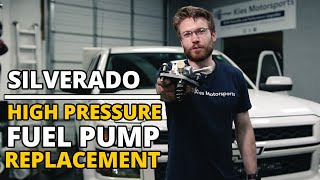
- Failing High-Pressure Fuel Pump (HPFP) 🔴 High Probability Applies to 2014-2016 models with direct injection. The HPFP is a known failure point on these GM engines. A recall was issued for leaking pumps that could also cause insufficient pressure. Forum discussions frequently point to the HPFP as the culprit when actual pressure drops significantly below desired under load, especially when towing or going uphill.
How to confirm: Use a scan tool to monitor desired vs. actual fuel rail pressure. If actual pressure drops significantly below desired during a wide-open throttle acceleration, the HPFP is a likely cause. A mechanic noted a 1000 PSI drop under load pointed to a bad HPFP. This diagnosis should be performed by a professional.
Typical fix: Replacement of the high-pressure fuel pump and associated fuel lines.
Est. part cost: $300-$700 - Failing Fuel Pump Control Module (FPCM) 🔴 High Probability The FPCM (or Fuel Pump Driver Module) is a very common failure on GMT900 (2010-2013) trucks. It is mounted on the frame rail near the spare tire and is susceptible to corrosion and water intrusion. It controls the voltage to the in-tank pump, and its failure can cause low or no fuel pressure. It can also be a cause on 2014+ models, but is less common than the HPFP.
How to confirm: Check for communication with the FPCM using a scan tool. A code P069E often accompanies P0191 when the FPCM is at fault. Check for power and ground at the FPCM connector. A bad ground on the frame is a common issue. A DIY test involves jumping the pump directly to see if it runs.
Typical fix: Replacement of the Fuel Pump Control Module. Some aftermarket modules do not require programming.
Est. part cost: $70-$200 - Faulty Fuel Rail Pressure Sensor 🟡 Medium Probability This sensor provides the data that triggers the code. It can fail by sending incorrect readings, even if the mechanical pressure is fine. It can also become heat-sensitive. On 2014+ DI engines, this sensor is on the high-pressure fuel rail. On earlier models, a similar sensor monitors the low-pressure system and is often located on the frame rail.
How to confirm: Check the sensor's voltage output against the manufacturer's specifications. A technician can also compare the sensor's reading to a mechanical gauge. If the readings don't match, the sensor is bad. A user on a forum replaced it three times before finding the actual issue was the pump, highlighting the importance of proper diagnosis.
Typical fix: Replacement of the fuel rail pressure sensor.
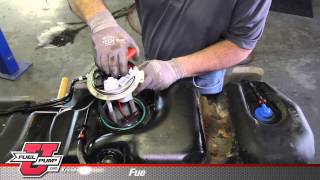
Est. part cost: $50-$150 - Failing In-Tank (Low-Pressure) Fuel Pump 🟡 Medium Probability The entire fuel system relies on the in-tank pump. A weak low-pressure pump will starve the high-pressure pump (on 2014+ models) or the engine itself (on 2010-2013 models), causing a drop in rail pressure. A YouTube video demonstrated how a failing low-pressure pump caused P0191 on a similar GM vehicle, even after another shop had already replaced the HPFP.
How to confirm: Test the low-pressure fuel system pressure with a mechanical gauge or via scan tool data from the FPCM. The pressure should be stable and within GM's specifications (typically 50-60 PSI). If the pressure is low, fluctuating, or drops under load, the pump is suspect.
Typical fix: Replacement of the in-tank fuel pump module.
Est. part cost: $250-$500 - Damaged Wiring or Connector 🟡 Medium Probability GM Technical Service Bulletin 20-NA-197 explicitly states that corrosion or damage at the fuel pressure sensor's electrical connector can cause P0191 and a host of other fuel codes. The bulletin suggests inspecting terminals for corrosion (black or green residue) and replacing the connector pigtail if damage is found. A Reddit user's issue was ultimately solved by replacing the wiring harness between the fuel rail and the ECM.
How to confirm: Visually inspect the fuel rail pressure sensor connector and harness for signs of corrosion, backed-out pins, or physical damage. Perform a continuity and voltage drop test on the sensor circuit from the sensor to the ECM.
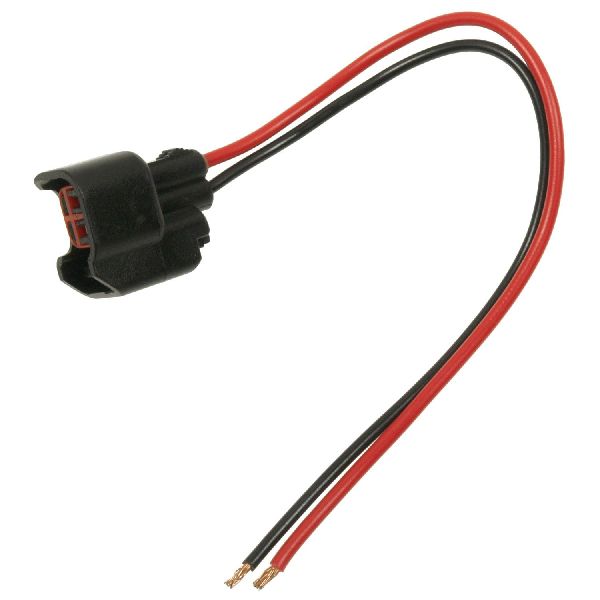
Typical fix: Repairing the damaged wire or replacing the connector pigtail (GM Part #19367009).
Est. part cost: $20-$60
Rare But Worth Checking
- Fuel System Contamination: TSB #PIP5151F explicitly states that if contamination is found in the fuel system, the entire system must be cleaned. This can be caused by a disintegrating fuel pump or a bad tank of fuel.
- Faulty Powertrain Control Module (PCM): This is extremely rare, but a malfunctioning PCM can incorrectly interpret sensor data. This should only be considered after all other possibilities have been exhaustively ruled out.
- Clogged Fuel Filter: While many of these trucks have a 'lifetime' filter in the tank, it can still become clogged, restricting flow and causing low pressure. This is often overlooked.
Diagnosis Steps

- Connect a quality OBD-II scanner and confirm P0191 is present. Check for other fuel-related codes like P0087, P0088, or P069E.
- View live data on the scanner. For 2014+ models, monitor "Desired Fuel Rail Pressure" and "Actual Fuel Rail Pressure". For all models, monitor low-side fuel pressure if available.
- At idle, the values should be very close. Briefly rev the engine and perform a test drive (if safe), monitoring the values under load. A significant lag or drop in actual pressure points to a mechanical fuel delivery problem (pump).
- If the pressure reading is erratic, stuck at one value, or clearly incorrect (e.g., reading high pressure with the engine off), suspect the sensor or its wiring.
- Visually inspect the fuel rail pressure sensor's electrical connector and wiring harness for any signs of corrosion, damage, or loose connections, as per TSB 20-NA-197.
- For all models, inspect the Fuel Pump Control Module (FPCM) located on the frame crossmember near the spare tire. Check its connector for corrosion and ensure its ground wire has a clean connection to the frame.
- Perform a fuel pressure test on the low-pressure side to rule out the in-tank pump. The pressure should be stable and within GM's specifications (typically 50-60 PSI).
Parts You'll Likely Need
- High-Pressure Fuel Pump
(OEM #12691016 (supersedes 12677329, 12625817))— A very common failure on 2014-2016 direct injection models that causes a drop in fuel rail pressure under load.
Trusted brands: ACDelco, Bosch
OEM price range: $400-$700
Aftermarket price range: $250-$500 - Fuel Rail Pressure Sensor (High Pressure)
(OEM #12673824 (supersedes 12623130))— The sensor itself can fail on 2014-2016 DI models, sending incorrect data to the PCM. It's often replaced but may not be the root cause.
Trusted brands: ACDelco, Delphi, Standard Motor Products
OEM price range: $80-$150
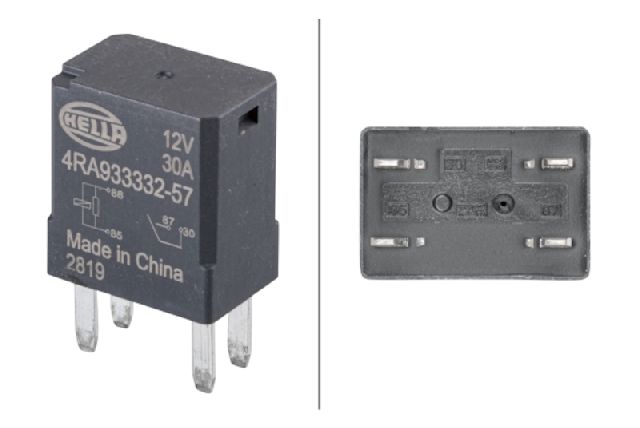
Aftermarket price range: $40-$90 - Fuel Pump Control Module (FPCM) — A primary cause of failure on 2010-2013 models, and still a possibility on later models. It fails due to its location on the frame, leading to corrosion.
Trusted brands: ACDelco, Dorman
OEM price range: $150-$250
Aftermarket price range: $70-$150 - In-Tank Fuel Pump Module — This is the primary pump on 2010-2013 models and the lift pump for 2014+ models. Its failure will cause low fuel pressure across the system.
Trusted brands: ACDelco, Delphi
OEM price range: $300-$550
Aftermarket price range: $200-$400
Related Codes That Often Appear With This One
- P0087 — This code means "Fuel Rail/System Pressure - Too Low," which is a direct mechanical consequence that can trigger the P0191 performance code. They are often seen together, as noted in TSB 20-NA-197.
- P0088 — This code means "Fuel Rail/System Pressure - Too High," the opposite of P0087. It can also trigger P0191 if the pressure exceeds the sensor's expected range.
- P069E — This code indicates a fault was logged in the Fuel Pump Control Module (FPCM). It frequently appears alongside P0191 when the FPCM itself, its wiring, or the low-pressure pump it controls is the root cause.
Technical Service Bulletins (TSBs) & Recalls
- PIP5151F: Mentions P0191 in the context of fuel system contamination requiring a full system cleaning.
- 20-NA-197: Details how corrosion at the fuel pressure sensor electrical connector can cause P0191 and other fuel-related DTCs. Recommends inspecting the connector and replacing the pigtail if needed.
- PIP4949E: Discusses hard start/no start conditions associated with P0191 and other fuel pressure codes, directing technicians to standard diagnostic procedures.
Platform-Specific Known Issues
- Fuel Pump Control Module (FPCM) Failure: On GMT900 (2010-2013) and K2XX (2014-2016) trucks, the FPCM is mounted to a frame crossmember, making it highly vulnerable to corrosion from road salt and moisture. This can lead to a no-start or stalling condition, often throwing P0191 and/or P069E. A common diagnostic step is to check the ground wire for the module, which is often corroded.
- High-Pressure Fuel Pump (HPFP) Failure (2014+): The mechanical, engine-driven high-pressure pump on the EcoTec3 engines is a well-documented failure point. It often fails under load, causing hesitation, stalling, and codes P0191 and P0087. This is a more expensive repair than the low-pressure system components.
Mechanic-Grade Diagnostic Values
- High-Pressure Fuel System (2014+ Gen V) — expected: Around 500-600 PSI at idle.. Failure: A significant drop (>1000 PSI) between desired and actual pressure under load points to a weak HPFP. A default reading of 4,612 PSI indicates the sensor signal wire is shorted to the 5V reference. A reading of 0 PSI indicates an open circuit or unplugged sensor.
- Low-Pressure Fuel System (All Years) — expected: 50-60 PSI, stable.. Failure: Pressure that is low, fluctuating wildly (e.g., between 30-50 PSI at idle), or drops significantly under load indicates a failing in-tank pump or FPCM issue.
- Fuel Rail Pressure Sensor Voltage (2014+ 4-pin Analog) — expected: Signal should vary between 0.5V and 4.8V. At key-on-engine-off, it should be around 0.5V; at idle, around 1.32V; and during snap acceleration, it can rise to ~3.77V.. Failure: Voltage that is stuck, out of range, or doesn't correspond to pressure changes indicates a faulty sensor or wiring issue.
Scan Tool Commands That Help
- GDS2 (GM Dealer Scan Tool): Fuel System Depressurize — Used to test the fuel rail pressure sensor. With the engine idling, command the system to depressurize. The engine should stall and the scan tool pressure reading should drop to zero. If the sensor still reads residual pressure (e.g., 30-40 PSI) after the stall, the sensor is faulty.
- GDS2 / Tech 2: FPCM Duty Cycle Command — Allows a technician to manually command the Fuel Pump Control Module to a specific duty cycle (e.g., 25%, 50%, 75%) to test the response of the low-pressure in-tank fuel pump. This helps isolate whether a low-pressure problem is caused by the pump or the module controlling it.
Wiring & Ground Locations
- FPCM Ground — On the driver's side frame rail, near the FPCM module which is located by the spare tire.. The FPCM is highly susceptible to corrosion due to its exposed location. A bad ground here is a very common cause of erratic FPCM behavior, leading to incorrect low-pressure fuel supply and triggering P0191 or P069E.
- G103 / G104 — On the cylinder heads. G103 is on the front of the passenger side head; G104 is on the rear of the driver's side head.. These are primary engine-to-chassis grounds. While not directly for the fuel sensor, a poor engine ground can introduce electrical noise and voltage offsets that can affect sensor readings across the engine, including the fuel rail pressure sensor, leading to performance-related codes.
- Fuel Rail Pressure Sensor Connector (2014+) — At the back of the driver's side fuel rail, behind the throttle body.. This is the direct connection point for the sensor that triggers the code. It's in a tight, high-heat area. The connector itself or the wiring pigtail can become brittle and fail, causing an open or short in the sensor circuit.
Real Owner Repair Stories
- eBay Listing Case Study (2013 Sierra 1500) — Randomly stalled when coming to a stop, but only when the fuel tank was below half full. Occasional P069E code.
❌ Tried (didn't work) Diagnosis by two other shops failed to find the cause.
✅ What actually fixed it The Fuel Pump Control Module (FPCM) casing was corroded, allowing moisture to damage the internal circuit board. Replacing the FPCM with a pre-programmed unit resolved the intermittent stalling. - YouTube User Comment (2015 GMC Sierra 1500 6.2L L86) — Engine would not start or had a long crank after an engine swap. Threw code P127C (related to fuel pressure sensor).
❌ Tried (didn't work) Checking for correct harness connections.
✅ What actually fixed it The replacement engine was a newer model (2017+) and came with a 3-pin digital fuel pressure sensor, but the 2015 truck's wiring was for the 4-pin analog sensor. Swapping the driver's side fuel rail and harness from the old engine to the new one to accommodate the correct 4-pin sensor fixed the problem.
OEM Part Supersession History
12677329→12691016— This is the part number for the high-pressure fuel pump (HPFP) on 2014+ models. The original part has been superseded multiple times by GM, with 12691016 being a more recent replacement. Earlier numbers include 12641740, 12622475, and others. These updates often address reliability issues in the original design.
Heads up: When replacing the HPFP, it is critical to also replace the associated one-time-use fuel lines to prevent leaks.20791901→20877116— This is the Fuel Pump Control Module (FPCM) for 2010-2012 models. The part has been updated over time.
Heads up: FPCMs must be programmed to the vehicle's VIN. A new module will not work without programming.20964304→20964305— This is the Fuel Pump Control Module (FPCM) for 2013-2015 models.
Heads up: FPCMs must be programmed to the vehicle's VIN. A new module will not work without programming.
Model Year Variations Within This Range

- 2014-2016: These models use a 4-pin analog fuel rail pressure sensor.
- 2017 and newer (relevant for part swaps): Starting in 2017, GM switched to a 3-pin digital fuel rail pressure sensor. The harnesses are not interchangeable. Using the wrong sensor for the vehicle's wiring will cause no-start conditions and codes.
- 2014: The 2014 model year marked the introduction of the new K2XX platform and the EcoTec3 direct-injection engines, which is the primary reason P0191 diagnoses differ so much from the 2010-2013 models.
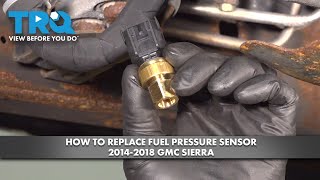
Helpful Videos
Used OEM Parts in Stock


New Aftermarket Parts Available


The information in this article is provided for general reference and educational purposes only. Vehicle specifications, procedures, and part compatibility can vary by production date, trim level, and region. Always consult your vehicle's factory service manual and verify part numbers before purchasing or performing repairs. Safety-critical components such as airbags, seat belts, and braking systems should be installed by a qualified professional.
- Gmc SIERRA 1500:
- 🎬 Helpful Videos
- 🛍️ Shop This Part
- What's Unique About the 2010-2016 Gmc SIERRA 1500
- Diagnostic Flowchart
- Symptoms You May Notice
- Most Likely Causes
- Rare But Worth Checking
- Diagnosis Steps
- Parts You'll Likely Need
- Related Codes That Often Appear With This One
- Technical Service Bulletins (TSBs) & Recalls
- Platform-Specific Known Issues
- Mechanic-Grade Diagnostic Values
- Scan Tool Commands That Help
- Wiring & Ground Locations
- Real Owner Repair Stories
- OEM Part Supersession History
- Model Year Variations Within This Range
- 🎟️ Get 5% Off