

P0191 on 2010-2014 GMC Savana: Fuel Rail Pressure Sensor Issues and Fixes
Code P0191 on a 2010-2014 GMC Savana most often points to a faulty Fuel Rail Pressure (FRP) sensor, its wiring, or fuel system contamination. Replacing the sensor is a common fix, costing around $80-$125 for an OEM part. Always check for fuel contamination and wiring issues, as noted in GM service bulletins, before replacing parts.
- P0191 on a 2010-2014 Savana indicates a problem with the fuel rail pressure sensor's signal.
- Before replacing parts, inspect the fuel system for contamination, as this is a known issue documented in GM Technical Service Bulletins.
- The most common fix is replacing the Fuel Rail Pressure (FRP) sensor, but always check its wiring and connector first.
- This code can cause serious drivability problems, including stalling, and should be addressed promptly.
What's Unique About the 2010-2014 Gmc SAVANA
For this generation of GMC Savana and its platform-mate, the Chevrolet Express, the P0191 code is strongly linked to fuel system contamination. Multiple General Motors Technical Service Bulletins (TSBs) have been issued advising technicians that debris in the fuel system can cause this code, along with hard starting and rough running. TSB 16-NA-102 specifically details looking for magnetic metal debris on the fuel pressure regulator and sensor, which indicates a failing high-pressure fuel pump is shedding material and contaminating the entire system. This makes a contamination check a critical first diagnostic step.
Diagnostic Flowchart
Tap your situation to follow the diagnostic path that matches what you're seeing on this vehicle.
Symptoms You May Notice
- Check Engine Light is on.
- Hard starting, long crank times, or no-start condition.
- Engine stalls, especially at idle or when coming to a stop.
- Rough or erratic idle.
- Hesitation or loss of power during acceleration.
- Reduced fuel economy.
- Engine enters 'limp mode' or reduced power mode.
- Replacing the high-pressure fuel pump without first verifying the fuel rail pressure sensor's accuracy with a mechanical gauge and checking for a faulty low-pressure pump.
- Replacing the fuel rail pressure sensor without checking for fuel contamination, which is a known issue on this platform and can cause the new sensor to fail or the code to return.
- Condemning the sensor before thoroughly inspecting the connector and wiring for corrosion or damage, which is a common and cheaper fix.
Most Likely Causes
- Faulty Fuel Rail Pressure (FRP) Sensor 🔴 High Probability Sensors are a common failure point due to age, heat cycles, and constant exposure to fuel pressure fluctuations. Using low-quality or contaminated fuel can also lead to premature failure.
How to confirm: Use a scan tool to monitor live fuel rail pressure data. If the reading is erratic, stuck at one value, or doesn't match a mechanical fuel pressure gauge reading, the sensor is likely bad. The sensor can be tested with a multimeter for proper voltage (typically a 5V reference signal).
Typical fix: Replace the fuel rail pressure sensor. 🎬 Watch: How to fix a P0191 fuel rail pressure sensor On many GM gas engines, this sensor is located on the fuel line on the driver's side frame rail, underneath the door. Be sure to relieve fuel system pressure before removal and wear safety glasses, as fuel will spill.
Est. part cost: $80-$150 - Fuel System Contamination 🔴 High Probability As documented in multiple GM TSBs (#16-NA-102, #PIP5151F), these vehicles can be susceptible to debris in the fuel system, leading to incorrect pressure readings and performance issues. This is often caused by a failing high-pressure fuel pump disintegrating internally and sending metallic debris through the lines.
How to confirm: Inspect the fuel filter and fuel tank for debris, water, or other contaminants. TSB #16-NA-102 specifically instructs technicians to remove and inspect the fuel pressure regulator and FRP sensor for magnetic metallic debris to confirm a failing high-pressure pump.
Typical fix: If contamination is found, the entire fuel system must be cleaned and flushed, including the tank, lines, and rails. The fuel filter must be replaced, and all contaminated components (injectors, high-pressure pump) must be replaced according to the TSB.
Est. part cost: $20-$60 for a filter; system cleaning and component replacement can cost thousands. - Damaged Wiring or Connector for FRP Sensor 🟡 Medium Probability The sensor's location on the frame rail on some models exposes the wiring harness and connector to weather, road debris, and corrosion. Wires can become brittle, frayed, or connectors can corrode, causing an intermittent or lost signal.
How to confirm: Visually inspect the FRP sensor's electrical connector and harness for signs of corrosion (green or white powder), damage, or loose pins. Perform a continuity and voltage test on the wiring from the sensor back to the control module.
Typical fix: Clean the connector with electrical contact cleaner and apply dielectric grease. If the wiring or connector is damaged, it will need to be repaired or replaced.
Est. part cost: $5-$50 - Failing High-Pressure Fuel Pump (HPFP) or Low-Pressure Fuel Pump ⚪ Low Probability
How to confirm: If a mechanical gauge shows that fuel pressure is genuinely low or erratic and does not match the commanded pressure from the ECM, the pump may be at fault. This is often confirmed after ruling out the sensor and contamination. A weak in-tank (low-pressure) pump can also starve the high-pressure pump, causing this code.
Typical fix: Replace the high-pressure fuel pump or the in-tank low-pressure fuel pump, depending on which is faulty.
Est. part cost: $300-$800+ for a high-pressure pump; $200-$400 for an in-tank pump.
Rare But Worth Checking
- Clogged Fuel Filter: While a maintenance item, a severely clogged filter can restrict flow enough to cause erratic pressure readings and trigger P0191.
- Faulty Powertrain Control Module (PCM) or Fuel Pump Control Module (FPCM): This is very rare. The control module should only be considered after all other possibilities, including sensors, wiring, and mechanical fuel system components, have been exhaustively tested and ruled out.
Diagnosis Steps
- Scan the ECM for any other stored trouble codes to get a complete picture of the issue. Note any codes like P0087, P0088, or P128E.
- Visually inspect the Fuel Rail Pressure (FRP) sensor and its electrical connector for any obvious signs of damage, corrosion, or loose connections. This is a common point of failure.
- Using a capable OBD-II scanner, monitor the live data stream for Fuel Rail Pressure. Observe the reading with the key on, engine off (KOEO) and while the engine is running at idle and under load.
- Compare the scanner's pressure reading to a mechanical fuel pressure gauge connected to the fuel rail service port. The readings should be very close. If they differ significantly, the FRP sensor is likely faulty.
- If the pressure reading (both on the scanner and the mechanical gauge) is erratic, low, or high, investigate the underlying cause. Following GM TSBs, inspect for fuel contamination by checking the fuel pressure regulator screen for magnetic debris.
- Check the fuel filter to see if it is clogged.
- If no contamination is found and the filter is clean, test the low-pressure and high-pressure fuel pumps' performance to ensure they can supply the commanded pressure.
- If the sensor signal is erratic but mechanical pressure is stable, test the sensor's wiring for proper voltage (5V reference), ground, and signal integrity back to the ECM/FPCM.
Parts You'll Likely Need
- Fuel Rail Pressure Sensor
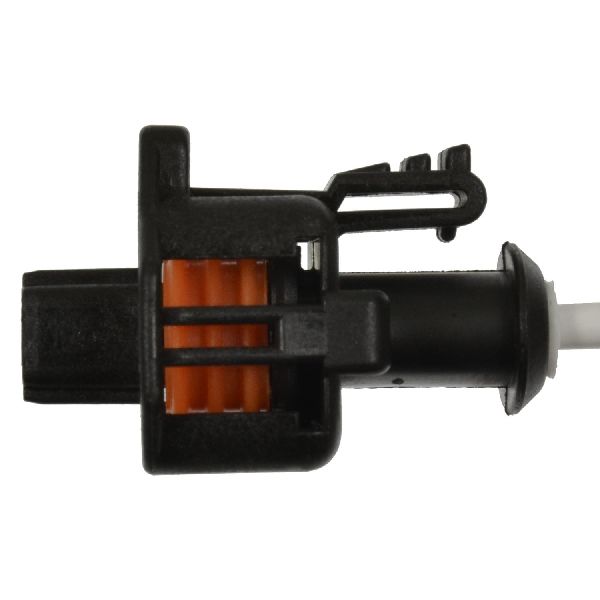
(OEM #12635273)— This sensor is the most frequent point of failure for code P0191. It directly measures the value that is being reported as out of range. The original part number 12678782 may have been superseded by 12635273 for many applications.
Trusted brands: ACDelco (OEM), Standard Motor Products, Bosch
OEM price range: $85-$160
Aftermarket price range: $50-$125
Related Codes That Often Appear With This One
- P0087 — This code means "Fuel Rail/System Pressure - Too Low." It often appears with P0191 when there is a legitimate low-pressure problem, such as a weak fuel pump or clogged filter. The TSBs cite this code appearing alongside P0191.
- P0088 — This code means "Fuel Rail/System Pressure - Too High." It can be triggered with P0191 if the sensor is failing and sending erroneously high readings or if a mechanical fault is causing over-pressurization. The TSBs also cite this code.
- P128E — This is a GM-specific code often related to the fuel rail pressure sensor performance. Its appearance with P0191 is noted in the manufacturer TSBs, reinforcing a focus on the fuel rail pressure circuit.
- P069E — This code relates to the Fuel Pump Control Module (FPCM) requesting the MIL to be illuminated. An owner of a 2008 Suburban reported this code alongside P0191, which was resolved by replacing the fuel pressure sensor.
Technical Service Bulletins (TSBs) & Recalls
- Bulletin #16-NA-102: Addresses hard start, no start, and DTCs P0087, P0088, P0191, or P128E. Details the procedure to inspect for magnetic metal debris from a failing fuel injection pump and outlines the extensive cleaning and parts replacement required if contamination is found.
- Bulletin #PIP5151F: Pertains to hard start, no start, rough running, or low fuel pressure with DTCs P0087, P0088, P0191, and P128E, pointing to fuel system contamination.
- Bulletin #PIP4949E: Discusses hard start or no start conditions with DTCs P0087, P0088, P0191, or P128E, advising technicians to follow standard diagnostic procedures.
- Bulletin #18-NA-361: A later bulletin that clarifies procedures for fuel system flushing and warns against immediately replacing the entire fuel system per TSB 16-NA-102 without proper diagnosis, indicating that other contamination sources (like water) should be considered.
Platform-Specific Known Issues
- Fuel System Contamination from HPFP Failure: TSBs #16-NA-102 and #PIP5151F specifically call out that metallic debris from a failing high-pressure fuel pump can contaminate the entire fuel system, causing P0191 and related codes. The diagnostic procedure involves inspecting the fuel pressure regulator and sensor for magnetic particles. If found, a full system cleaning and replacement of the high-pressure pump, injectors, and filter is required.
- Corroded Frame-Mounted Connector: On models where the fuel rail pressure sensor is located on the frame rail under the driver's door, the wiring connector is highly susceptible to corrosion from road salt and moisture. TSBs like 20-NA-197 (for later models, but principle applies) highlight this issue. A thorough inspection and cleaning of the connector pins should be performed before condemning the sensor itself.
Mechanic-Grade Diagnostic Values
- Low-side fuel pressure (Key On, Engine Off) — expected: 55-65 PSI. Failure: Pressure below 55 PSI or that bleeds off quickly can indicate a weak in-tank pump or a leak.
- Low-side fuel pressure (at idle) — expected: Stable around 45-55 PSI. Failure: Pressure below 45 PSI at idle suggests a problem with the fuel pump or regulator. A fluctuating reading (e.g., bouncing between 30 and 51 PSI) points to a failing low-pressure pump or control module.
- FRP Sensor 5V Reference Voltage — expected: 4.8V - 5.2V. Failure: A reading of 0V indicates an open or short to ground in the circuit. A reading at battery voltage could indicate a short to power.
- FRP Sensor Connector Pinout (Typical 3-wire) — expected: Pin 1: 5V Reference, Pin 2: Signal, Pin 3: Low Reference (Ground). Failure: Incorrect voltages or lack of continuity on any pin points to a wiring or ECM/FPCM issue.
Scan Tool Commands That Help
- GDS2/Tech2: Fuel System Depressurize — This function can be used to test a suspect sensor. After activating the function at idle, the engine should stall and the fuel pressure sensor value on the scan tool should drop to zero. If the sensor still reads significant pressure (e.g., 30-40 PSI) after the engine stalls, the sensor is faulty.
- GDS2/Tech2: Fuel Pump On/Off — This bidirectional command allows the technician to manually activate the fuel pump. It's used to verify the pump is receiving the command to run and to check if the system can build and hold pressure, helping to isolate a faulty pump from a control module or wiring issue.
Wiring & Ground Locations
- Fuel Pump Control Module (FPCM) — Located on a cross-member above the spare tire.. The FPCM controls the in-tank fuel pump. A faulty module can fail to provide adequate voltage to the pump, causing low fuel pressure that can trigger P0191. Its location makes it susceptible to corrosion and damage.
- FRP Sensor Connector — On the fuel line, typically on the driver's side frame rail below the door.. This is the direct electrical connection for the sensor. As noted in TSBs and forums, this connector is a common failure point due to exposure to weather and road debris, causing corrosion and poor contact that mimics a failed sensor.
Real Owner Repair Stories
- 2CarPros Forum (Vehicle not specified, but GM platform with P0191) — Engine sputtering.
❌ Tried (didn't work) Replaced fuel filter, Replaced fuel rail pressure sensor, Replaced fuel pump
✅ What actually fixed it The user reported that replacing the Fuel Pump Driver Module (FPDM), also known as the FPCM, finally fixed the issue. After replacement, the fuel pressure held steady at 40 PSI and the vehicle ran fine. - Reddit r/gmcsierra (2024 GMC Sierra 6.6L Duramax (newer model, but relevant logic)) — Check Engine Light with P0191, often during deceleration.
❌ Tried (didn't work) Replaced fuel rail sensors, Replaced fuel rail (which included the regulator), Replaced fuel rail a second time
✅ What actually fixed it The dealership ultimately replaced the wiring harness between the fuel rail and the ECM, which resolved the persistent P0191 code.
OEM Part Supersession History
12633417→12635273— Standard part evolution, design improvement, or manufacturer change.
Heads up: No incompatibilities noted; 12635273 is the correct service replacement for applications that used 12633417.
Helpful Videos

We Have This Part in Stock


The information in this article is provided for general reference and educational purposes only. Vehicle specifications, procedures, and part compatibility can vary by production date, trim level, and region. Always consult your vehicle's factory service manual and verify part numbers before purchasing or performing repairs. Safety-critical components such as airbags, seat belts, and braking systems should be installed by a qualified professional.
- Gmc SAVANA:
- 🎬 Helpful Videos
- 🛍️ Shop This Part
- What's Unique About the 2010-2014 Gmc SAVANA
- Diagnostic Flowchart
- Symptoms You May Notice
- Most Likely Causes
- Rare But Worth Checking
- Diagnosis Steps
- Parts You'll Likely Need
- Related Codes That Often Appear With This One
- Technical Service Bulletins (TSBs) & Recalls
- Platform-Specific Known Issues
- Mechanic-Grade Diagnostic Values
- Scan Tool Commands That Help
- Wiring & Ground Locations
- Real Owner Repair Stories
- OEM Part Supersession History
- 🎟️ Get 5% Off