

P0191 on 2008-2012 Ford Escape 3.0L V6: Causes and Fixes for Fuel Pressure Faults
For a 2008-2012 Ford Escape 3.0L with code P0191, the most likely cause is a failing Fuel Rail Pressure (FRP) sensor. This is a very common failure point for this engine. Replacing this sensor is a common DIY fix that requires basic tools and costs around $75-$150 for a quality part. Before replacing, verify the sensor's signal with a scan tool and inspect its wiring, as chafed wires can mimic sensor failure.
- P0191 on a 2008-2012 Escape 3.0L is most often caused by a failed Fuel Rail Pressure (FRP) sensor.
- Symptoms typically include hard starting, intermittent stalling, and loss of power.
- Before replacing the expensive fuel pump, confirm the FRP sensor is working correctly by testing it with a scan tool and, if possible, a mechanical gauge.
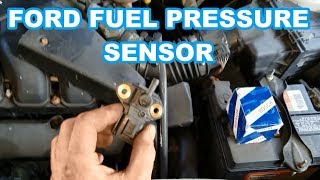
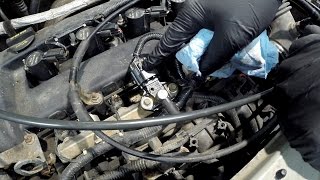
- The FRP sensor is located on top of the engine and is relatively easy to replace with basic hand tools, making it a good DIY task.
- Always depressurize the fuel system before starting the repair to prevent fuel spray and a fire hazard.
What's Unique About the 2008-2012 Ford Escape

On the 3.0L V6 in the second-generation Escape, the Fuel Rail Pressure (FRP) sensor is a very common failure point that can cause a frustrating range of intermittent symptoms like stalling and hard starts. While other issues like a weak fuel pump can trigger this code, owners and technicians frequently find the sensor itself is the culprit. The sensor is conveniently located on top of the engine on the fuel rail, making it much more accessible for DIY replacement than on many other vehicles.
Symptoms You May Notice
- Check Engine Light is on
- Engine is hard to start or requires multiple crank attempts
- Intermittent stalling, especially when coming to a stop or at idle
- Stalling or rough idle shortly after refueling
- Loss of acceleration power or engine hesitation
- Rough or unstable idle
- Reduced fuel economy
- Unusual smell from the tailpipe emissions
- Replacing the fuel pump when the Fuel Rail Pressure sensor is the actual cause.
- Replacing the FRP sensor repeatedly when the underlying issue is a chafed wire in the harness.
- Replacing the PCM when the issue is a simple wiring fault or a bad sensor.
Most Likely Causes

- Faulty Fuel Rail Pressure (FRP) Sensor 🔴 High Probability The sensor is a known high-failure item on this platform due to age, heat cycles, and internal diaphragm failure.
How to confirm: With a scan tool, monitor the FRP sensor PID. The normal signal range should be between 0.5V and 4.5V. If the reading is erratic, stuck, jumps to 5V or 0V, or doesn't change with RPM, the sensor is likely bad. You can also test the sensor's resistance with a multimeter; a known-bad sensor may show low resistance (under 10k ohms) between certain pins, whereas a new one shows infinite resistance. A definitive sign of internal failure is the presence of fuel in the vacuum line 🎬 See how to check for a bad sensor attached to the sensor.
Typical fix: Replace the Fuel Rail Pressure sensor. SAFETY: Relieve fuel system pressure before removal by pulling the fuel pump fuse and running the engine until it stalls. After installing the new sensor, cycle the key on and off a few times to re-pressurize the system and check for leaks before starting the engine.
Est. part cost: $75 - $230 - Damaged Wiring or Connector 🟡 Medium Probability The wiring harness can become chafed or corroded over time, especially where it may rub against other components. TSBs on similar Ford models point to harnesses rubbing on transmission pans or brackets. For example, manufacturer TSB #19-2231 notes that P0191 can be caused by an engine harness chafe on the powertrain control module (PCM) bracket.
How to confirm: Visually inspect the wiring harness and connector for the FRP sensor. Look for chafed wires, corrosion in the connector pins (green crust), or a loose connection. Perform a wiggle test on the harness while monitoring the FRP PID on a scan tool to see if the reading fluctuates. Use a multimeter to check for continuity and for shorts to power or ground on the signal wire.
Typical fix: Repair the damaged section of the wiring harness or clean/replace the sensor connector. Use dielectric grease in the connector to prevent future corrosion.
Est. part cost: $10 - $50 - Weak Fuel Pump or Clogged Fuel Filter ⚪ Low Probability As vehicles age, fuel pumps wear out and filters become clogged, leading to insufficient fuel pressure. This is a general wear item not specific to this platform. In one instance, NHTSA ODI #10780588 describes a vehicle that stalled at 45mph where technicians found P0191 and verified there was no fuel pressure because the bolts holding the internal fuel pump had broken off.
How to confirm: Connect a mechanical fuel pressure gauge to the fuel rail's test port. Compare the gauge's reading to the FRP sensor's reading on a scan tool. If the mechanical pressure is low or drops under load but the sensor reads accurately, the pump or filter is the likely issue.
Typical fix: Replace the fuel pump module and/or the fuel filter. The fuel filter is part of the fuel pump assembly located inside the gas tank.
Est. part cost: $150 - $400 - Cracked Vacuum Line to FRP Sensor ⚪ Low Probability
How to confirm: Visually inspect the small rubber vacuum hose attached to the FRP sensor. Check for cracks, splits, or a loose fit. A leak can sometimes be heard as a hissing sound. Pulling the hose and checking for the presence of fuel is also a definitive sign of a ruptured internal diaphragm in the sensor itself.
Typical fix: Replace the cracked vacuum hose. If fuel is present, the FRP sensor must also be replaced.
Est. part cost: $5 - $20
Rare But Worth Checking
- Faulty Fuel Pump Driver Module (FPDM): The FPDM, located in the rear of the vehicle, controls the voltage to the fuel pump. If it fails intermittently due to corrosion or internal faults, it can mimic a failing fuel pump and cause erratic pressure. It's worth considering if a new fuel pump doesn't solve a confirmed low-pressure issue.
- Powertrain Control Module (PCM) Fault: This is extremely rare. Before condemning the PCM, all other possibilities (sensor, pump, wiring) must be exhaustively ruled out. Manufacturer TSB #18-2326 indicates that P0191 may be stored in the PCM alongside other codes, requiring specific service procedures to correct the module's condition.
Diagnosis Steps

- Scan for any other stored trouble codes to get a full picture. Codes like P0192, P0193, or lean/rich codes 🎬 Watch: How to diagnose the P0191 trouble code (P0171, P0174) provide important context.
- Visually inspect the Fuel Rail Pressure (FRP) sensor, its electrical connector, and the vacuum line for obvious damage, fuel leaks, or corrosion.
- Using an OBD-II scanner with live data, monitor the 'FRP' PID. The pressure should be stable at idle and increase smoothly as you press the accelerator. Watch for erratic jumps or values stuck at 0V or 5V.
- Perform a Key On, Engine Off (KOEO) test. The FRP sensor should show some residual pressure. If it reads zero or an unusually high number, the sensor is suspect.
- If possible, connect a mechanical fuel pressure gauge to the fuel rail. Compare the reading from the mechanical gauge to the reading from the FRP sensor on your scan tool. They should be very close.
- If the mechanical pressure is good but the sensor reading is bad, the FRP sensor or its wiring is the problem. Test the wiring before replacing the sensor.
- If both the mechanical pressure and sensor reading are low, investigate the fuel pump, fuel filter, and Fuel Pump Driver Module (FPDM).
- If the sensor signal is intermittent, perform a wiggle test on the sensor's wiring harness while watching the live data to check for a short or open circuit.
Parts You'll Likely Need
- Fuel Rail Pressure Sensor
(OEM #3F2Z-9G756-AC)— This is the most common failure point for code P0191 on this specific vehicle and engine combination.
Trusted brands: Motorcraft (CM5229), Bosch (0261230093), Standard Motor Products (FPS5) 🎬 Watch this step-by-step sensor replacement walkthrough
OEM price range: $100-$230
Aftermarket price range: $75-$150
Related Codes That Often Appear With This One
- P0192 — This code for 'Fuel Rail Pressure Sensor Circuit Low Input' can appear if the sensor or wiring shorts to ground, causing a lower-than-normal signal.
- P0193 — This code for 'Fuel Rail Pressure Sensor Circuit High Input' can appear if the sensor shorts internally or there's a circuit issue causing a higher-than-normal signal.
- P0171/P0174 — Codes for 'System Too Lean' can be triggered if the PCM receives an inaccurately low fuel pressure reading, causing it to command more fuel than necessary, which the oxygen sensors then interpret as a lean condition due to the miscalculation.
- P0172/P0175 — Codes for 'System Too Rich' can be triggered if the FRP sensor's diaphragm ruptures, allowing raw fuel to be sucked into the intake manifold through the vacuum line, causing a rich condition.
Technical Service Bulletins (TSBs) & Recalls
- Ford TSB #14041 (for Ford Taurus): While not for the Escape specifically, this TSB is highly relevant as it addresses P0191 on the same 3.0L engine family. It warns that the wiring harness for the FRP sensor can chafe on top of the transmission pan, causing a short that mimics a failed sensor. This highlights the importance of inspecting the wiring harness thoroughly before replacing parts.
- Manufacturer TSB #19-2231: This bulletin notes that P0191 can be triggered by an engine harness chafe on the powertrain control module (PCM) bracket.
- Manufacturer TSB #18-2326: This bulletin describes conditions where the malfunction indicator lamp is illuminated with P0191 and other DTCs stored in the PCM, requiring specific service procedure steps.
Mechanic-Grade Diagnostic Values
- Fuel Rail Pressure (FRP) Sensor Signal Voltage — expected: 0.5V to 4.5V. Failure: Readings stuck at 0V or 5V, or erratic fluctuations not corresponding to engine load.
- Fuel Rail Pressure (FRP) Sensor Internal Resistance — expected: Infinite resistance (open circuit) between signal and ground pins on a known-good sensor.. Failure: Resistance under 10k Ohms between the signal and ground pins of the sensor itself (when disconnected) indicates an internal short.
- Mechanical Fuel Pressure at Rail — expected: Approximately 38 to 40 PSI at idle.. Failure: Pressure below 20 PSI or above 70 PSI will typically set the code. Low pressure indicates a delivery issue (pump/filter), while high pressure can indicate a pump control or sensor issue.
- Long Term Fuel Trim (LTFT) — expected: Close to 0%, typically within +/- 5%.. Failure: Consistently high positive LTFTs across all engine loads with no other apparent cause (like a vacuum leak) can indicate the FRP sensor is under-reporting pressure, causing the PCM to command a longer injector pulse width to compensate.
Scan Tool Commands That Help
- Ford IDS (or equivalent advanced scanner): Monitor specific Parameter IDs (PIDs) — To diagnose the relationship between the command and the result. Key PIDs to graph together are: 'FRP' (Fuel Rail Pressure, PID 168C), 'FP_DSD' (Desired Fuel Rail Pressure), and 'FP_DC' (Fuel Pump Duty Cycle, PID 1672). This allows a technician to see if the PCM is commanding a change, if the pump duty cycle is responding, and if the resulting pressure matches the desired pressure.
Wiring & Ground Locations

- G108 — On the firewall at the rear of the engine compartment.. This is a primary chassis ground point in the engine bay. A corroded or loose connection here can cause erratic sensor readings and phantom electrical issues for multiple systems, including the PCM and its sensor network.
- G109 — At the rear of the 3.0L engine itself.. This is a critical engine-to-chassis ground. Poor grounding here can create a voltage potential difference between the engine block (where sensors are grounded) and the chassis, leading to incorrect sensor readings for the PCM.
- Engine to Frame/Body Ground Strap — A braided metal strap connecting the engine block to the vehicle's frame or unibody. One is often located near the starter motor.. Ensures the engine has a solid ground path back to the battery. If this strap is broken or corroded, the electrical system may try to ground through other paths (like throttle or shifter cables), causing widespread electrical issues, including faulty sensor data that can trigger P0191.
Real Owner Repair Stories
- 2CarPros forum user 'MAVIS AYORINDE OLORUNLEKE' (2008 Ford Escape 3.0L V6 FWD, 121k miles) — Sudden loss of power, ineffective accelerator, Check Engine Light on.
❌ Tried (didn't work) Replacing the Fuel Rail Pressure (FRP) sensor initially fixed the issue, but the problem returned after one week.
✅ What actually fixed it The owner's mechanic diagnosed a bad fuel pump and filter. An update posted over a year later stated the same issue had returned, and the owner planned to replace the fuel pump again, suggesting the pump was the recurring root cause. - NHTSA ODI #11478786 — An owner reported multiple failures of fuel system equipment with P0191 codes occurring two and three times per day on a vehicle with only 22,000 miles.
- NHTSA ODI #10446792 — An owner reported that they replaced the fuel rail pressure sensor due to a P0191 code, but it did not resolve the underlying issue, suggesting further diagnostic work was needed.
"I Checked Everything" — The Actual Cause
- A common scenario for P0191 is when a mechanical fuel pressure gauge shows correct pressure at the rail, yet the code persists. This points away from the fuel pump and towards the sensor's circuit. As noted in the TSB for a similar Ford 3.0L engine, the FRP sensor wiring harness can chafe on the transmission pan or other brackets, causing an intermittent short or open in the signal wire. The fuel pressure is perfect, but the PCM receives a corrupted signal, triggering the P0191 'Range/Performance' code.
OEM Part Supersession History
3F2Z-9G756-AC→CM-5229 (Motorcraft part number)— CM-5229 is the service part number from Ford's Motorcraft brand for 3F2Z-9G756-AC.
Heads up: Part number 3F2E-9G756-AD is also associated with this sensor and is considered an equivalent. Using a genuine Motorcraft part is highly recommended as aftermarket versions are frequently reported to have a short service life or be faulty out of the box.
Model Year Variations Within This Range
- 2008: The 2008 model year is a transitional or 'half-gen' model. It features the second-generation body style but carries over the 200hp 3.0L V6 and 4-speed automatic transmission from the first-generation Escape.
- 2009-2012: Starting in 2009, the 3.0L V6 was significantly updated, increasing output to 240 hp. It was paired with a new, more efficient 6-speed automatic transmission. While the P0191 issue is common to both versions, a technician should be aware of the different engine performance characteristics and transmission when diagnosing.
Diagnostic Flowchart
Real Owner Stories
Aggregated from forums and TSBs cited above. Mileages and costs reflect what owners reported in those sources.
2007 V6 Ford Escape
Symptoms: Persistent stalling and rough idle accompanied by P0191, P0192, and P0193 codes that multiple shops failed to diagnose.
What fixed it: Replaced the Fuel Rail Pressure sensor after graphing PID data and checking the sensor resistance with a multimeter, which showed under 10k ohms (indicating internal failure).
Source hint: reddit.com - r/MechanicAdvice - '2007 V6 Ford Escape P0191, P0192, P0193 Codes, Stalling, Rough Idle'
Ford Escape 3.0L Duratec
Symptoms: Triggered a P0191 code along with a P0193 (high input) code.
What fixed it: Replaced the Fuel Rail Pressure sensor, noting that the location made for an easy replacement.
Source hint: fordescape.org - Fuel Rail Pressure Sensor - 3.0L Duratec
Related OBD-II Codes
Frequently Asked Questions
Does Ford TSB #14041 apply to my 2008-2012 Escape 3.0L?
I have a Mercury Mariner 3.0L with a P0191 code. Is the diagnosis the same as the Escape?
How can I tell if the Fuel Rail Pressure (FRP) sensor on my 3.0L Escape has failed internally?
My Escape stalls right after refueling and has a P0191 code. What should I check first?
Can I test the FRP sensor on my Escape with a multimeter before buying a new one?
Where is the fuel filter located on the 2008-2012 Ford Escape 3.0L?
Helpful Videos
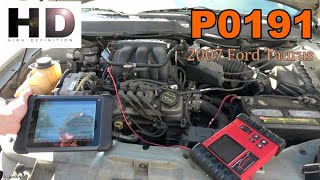
We Have This Part in Stock

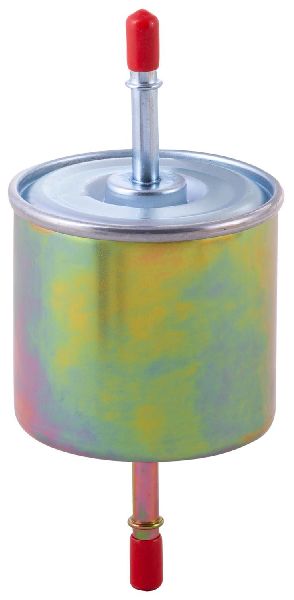
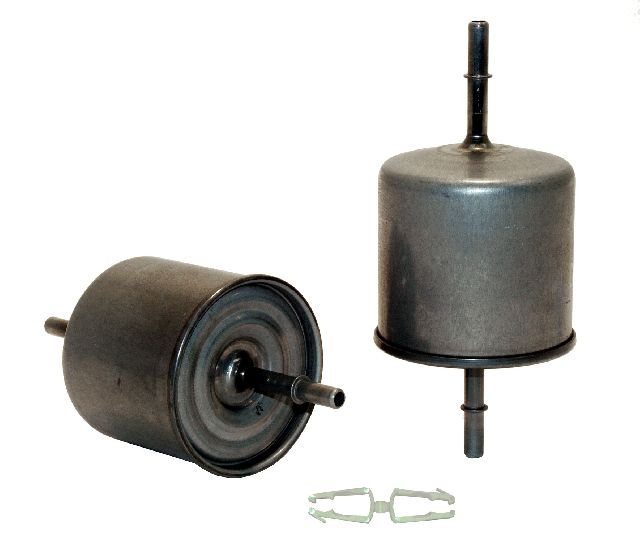

The information in this article is provided for general reference and educational purposes only. Vehicle specifications, procedures, and part compatibility can vary by production date, trim level, and region. Always consult your vehicle's factory service manual and verify part numbers before purchasing or performing repairs. Safety-critical components such as airbags, seat belts, and braking systems should be installed by a qualified professional.
- Ford Escape:
- 🎬 Helpful Videos
- 🛍️ Shop This Part
- What's Unique About the 2008-2012 Ford Escape
- Symptoms You May Notice
- Most Likely Causes
- Rare But Worth Checking
- Diagnosis Steps
- Parts You'll Likely Need
- Related Codes That Often Appear With This One
- Technical Service Bulletins (TSBs) & Recalls
- Mechanic-Grade Diagnostic Values
- Scan Tool Commands That Help
- Wiring & Ground Locations
- Real Owner Repair Stories
- "I Checked Everything" — The Actual Cause
- OEM Part Supersession History
- Model Year Variations Within This Range
- Diagnostic Flowchart
- Real Owner Stories
- 2007 V6 Ford Escape
- Ford Escape 3.0L Duratec
- Related OBD-II Codes
- Frequently Asked Questions
- 🎟️ Get 5% Off