

P0191 on 2013-2014 Chevrolet Silverado 3500: Fuel Pressure Causes and Fixes
P0191 on a 2013-2014 Silverado 3500 indicates the fuel rail pressure is out of the expected range. For gasoline engines, this is often due to fuel system contamination, as cited in GM TSBs. For Duramax diesels, it is a very common code indicating a weak high-pressure CP4 fuel pump, a failing fuel rail pressure sensor, or a bad electrical connector to the sensor. In either case, the most common fixes are replacing a faulty fuel rail pressure sensor, its connector pigtail, or addressing a weak fue
- P0191 indicates a fuel pressure problem that should be addressed immediately to avoid stalling or a no-start situation.
- For gasoline engines, the cause is very likely fuel system contamination, as documented in multiple GM service bulletins.
- For 6.6L Duramax diesel engines, P0191 is a serious warning sign of a potentially failing high-pressure fuel pump, which can lead to a catastrophic and expensive system-wide failure.
- Diagnosis must differentiate between a faulty sensor, a weak pump, or a contaminated system before replacing parts.
- Due to the complexity and potential danger, especially with high-pressure diesel systems, professional diagnosis is strongly recommended.
What's Unique About the 2013-2014 Chevrolet SILVERADO 3500

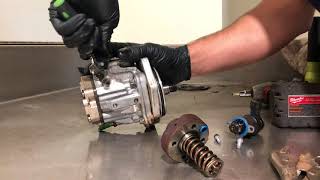
For the 2013-2014 Silverado 3500, this code has distinct implications depending on the engine. On gasoline models, General Motors has issued multiple Technical Service Bulletins (TSBs) pointing to fuel system contamination as a primary cause of P0191, often requiring a full system cleaning. [Bulletin #16-NA-102, Bulletin #PIP5151F] For the 6.6L LML Duramax diesel engine, P0191 is a well-documented symptom of a failing high-pressure fuel pump (CP4), which can be a precursor to a catastrophic failure that sends metal debris through the entire fuel system. 🎬 See why the CP4 pump is a fatal flaw for LML owners. It is also frequently caused by corrosion or poor terminal tension in the fuel pressure sensor's electrical connector, a problem addressed in TSB 20-NA-197. The LML engine also features two fuel pressure regulators, one on the pump and one on the rail, which can be a source of diagnostic confusion.
Diagnostic Flowchart

Tap your situation to follow the diagnostic path that matches what you're seeing on this vehicle.
Symptoms You May Notice
- Check Engine Light is on
- Engine is hard to start or will not start. [Bulletin #16-NA-102, Bulletin #PIP5151F]
- Rough running or erratic idle. [Bulletin #PIP5151F]
- Reduced engine power or entering "limp mode", especially when towing or going uphill.
- Engine stalling, especially under load.
- Hesitation or 'falling on its face' during acceleration.
- Squealing or grinding noise from the in-tank fuel pump (lift pump).
- Replacing only the fuel rail pressure sensor when the actual problem is a weak fuel pump or system-wide contamination.
- On Duramax engines, replacing the sensor or injectors without first checking for CP4 pump failure, leading to repeat failures when metal debris destroys the new parts.
- On gasoline direct injection (GDI) engines, replacing the high-pressure pump when the low-pressure in-tank pump is actually at fault for not supplying enough fuel to the high-pressure side.
Most Likely Causes

- Fuel System Contamination 🔴 High Probability Multiple GM Technical Service Bulletins (#16-NA-102, #PIP5151F, #PIP4949E) for gasoline models specifically cite debris in the fuel system as a cause for P0191, leading to hard/no starts. For Duramax models, this is typically metal shavings from a failing CP4 pump.
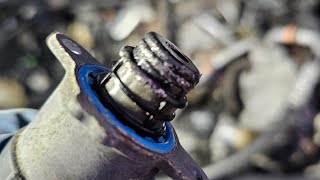
How to confirm: A technician must inspect the fuel tank, fuel lines, and fuel pressure regulator for debris. On Duramax engines, checking the fuel filter and the fuel pressure regulator for metallic 'glitter' or shavings is a critical step to check for high-pressure pump failure.
Typical fix: The TSBs recommend cleaning the entire fuel system, including the tank, lines, and replacing contaminated components like the fuel pump module. [Bulletin #PIP5151F] If a Duramax CP4 has failed, the entire system (pump, rails, lines, injectors) must be replaced.
Est. part cost: $500-$2000+ - Failed Fuel Rail Pressure (FRP) Sensor 🟡 Medium Probability The FRP sensor is a common failure point. On the LML Duramax, there are two potential culprits: the sensor on the fuel rail itself and the fuel pressure regulator on the high-pressure pump. Forum users report that for P0191 at idle, the sensor on the rail is often the cause. It can fail internally or develop a poor electrical connection, sending incorrect voltage signals to the PCM.
How to confirm: Use a scan tool to compare the sensor's reported pressure with the desired pressure. A definitive test involves comparing the scan tool reading to a reading from a mechanical fuel pressure gauge. If the values are inconsistent, the sensor is likely faulty.
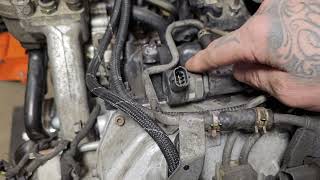
Typical fix: Replace the fuel rail pressure sensor. On an LML Duramax, this is the sensor located at the end of the fuel rail, near the brake reservoir.
Est. part cost: $50-$150 - Failing High-Pressure Fuel Pump (6.6L Duramax) 🟡 Medium Probability The Bosch CP4 high-pressure pump used on LML Duramax engines (2011-2016) is known for failing and contaminating the fuel system with metal particles. P0191 is a common code when the pump can no longer meet the commanded rail pressure, especially under load.
How to confirm: Monitor desired vs. actual rail pressure under load with a scan tool; a significant drop of 2,000 PSI or more indicates a weak pump. A Reddit user's mechanic noted a 1,000 PSI drop under full throttle was enough to condemn the pump. Inspect the fuel pressure regulator and fuel filter for metal shavings.
Typical fix: If metal is found, the entire fuel system must be replaced, including the pump, injectors, rails, and lines. Many owners preventatively upgrade to a more reliable CP3 pump conversion kit.
Est. part cost: $2000-$7000+ - Failing In-Tank Fuel Pump / Fuel Pump Control Module (FSCM) ⚪ Low Probability The in-tank pump (lift pump) supplies fuel to the high-pressure pump (on diesels) or directly to the rail (on gas engines). A weak pump or a faulty Fuel System Control Module (FSCM) that controls the pump can cause low pressure, which in turn can trigger P0191 because the high-pressure side is starved of fuel.
How to confirm: Test fuel pressure from the in-tank pump with a mechanical gauge; it should be steady. Test for power and proper signals at the FSCM and the pump itself. A loud squealing from the tank is a sign of a failing lift pump.
Typical fix: Replace the in-tank fuel pump module or the Fuel System Control Module (FSCM). The FSCM is often located above the spare tire and is prone to corrosion.
Est. part cost: $250-$600
Rare But Worth Checking
- Wiring or Connector Issue: Corrosion or damage to the FRP sensor's wiring harness or connector can cause an erratic signal. TSB 20-NA-197 specifically addresses this, recommending inspection for corrosion and poor pin tension. The fix is to replace the connector pigtail (GM Part #19367009). Some owners have fixed the issue by simply cleaning the connector and applying dielectric grease.
- Clogged Fuel Filter: A severely clogged fuel filter can restrict flow and cause a pressure drop, triggering P0191. This should be the first and cheapest part to replace during diagnosis, especially on Duramax engines.
- Faulty Powertrain Control Module (PCM): In very rare cases, the PCM itself can be the source of the problem, sending incorrect voltage or misinterpreting the sensor signal. This should be the last resort after all other possibilities, including wiring, have been exhausted.
- Weak Fuel Pressure Relief Valve (FPRV): On Duramax engines, the stock fuel pressure relief valve has a spring that can weaken over time. Under a spike in fuel pressure (like heavy acceleration), the valve can open prematurely, causing a sudden pressure drop that the ECU sees as a fault, triggering limp mode. An aftermarket 'race fuel valve' or plug is a common fix. Note: This is primarily for pre-LML engines; the 2013-2014 LML uses a different design with a second electronic regulator on the rail.
Diagnosis Steps
- Check for other stored trouble codes that could provide more context, especially P0087 or P069E.
- Replace the fuel filter, especially if its age is unknown. Inspect the old filter media for metallic 'glitter' (on Duramax models), a tell-tale sign of CP4 pump failure.
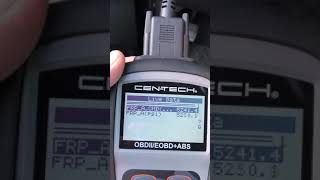
- Connect a scan tool to monitor live data for 'Desired Fuel Rail Pressure' and 'Actual Fuel Rail Pressure'. At idle on a Duramax, they should be within 100 PSI of each other, around 4,000-6,000 PSI. Under wide-open throttle, pressure should reach ~26,000 PSI. A large discrepancy (over 2,000 PSI) under load points to a weak high-pressure pump.
- Visually inspect the Fuel Rail Pressure (FRP) sensor connector and wiring harness for any signs of damage, corrosion, or loose pins. Per TSB 20-NA-197, use a terminal test kit to check for poor pin tension.
- Perform a fuel pressure test with a mechanical gauge to verify the scan tool readings. For the 6.0L gas engine, pressure should be 55-65 PSI with the key on, engine off. For the Duramax, this requires specialized gauges for both the low and high-pressure sides.
Parts You'll Likely Need

- Fuel Rail Pressure Sensor
(OEM #12678223 (ACDelco), 0261230280 (Bosch))— This sensor is a frequent failure point and can send incorrect readings to the PCM. On the LML Duramax, this is the sensor on the rail itself, not the regulator on the pump, that often causes idle-related P0191 codes.
Trusted brands: ACDelco, Bosch
OEM price range: $80-$150
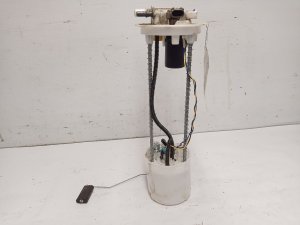
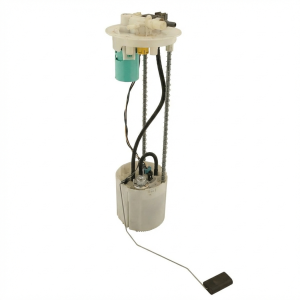
Aftermarket price range: $40-$90 - In-Tank Fuel Pump Module Assembly
(OEM #M10235)— A weak in-tank pump can fail to supply adequate pressure. On gasoline models, TSBs often require its replacement if the system is contaminated. On diesels, a failing lift pump can starve the CP4 and trigger pressure codes.
Trusted brands: ACDelco, Delphi
OEM price range: $300-$500
Aftermarket price range: $150-$300 - High-Pressure Fuel Pump (CP4)
(OEM #12641847 (Bosch))— Specific to the 6.6L LML Duramax, the CP4 pump is a known failure point that causes P0191 when it can no longer meet pressure demands. Failure often requires replacement of the entire fuel system.
Trusted brands: Bosch (OEM)
OEM price range: $800-$1200
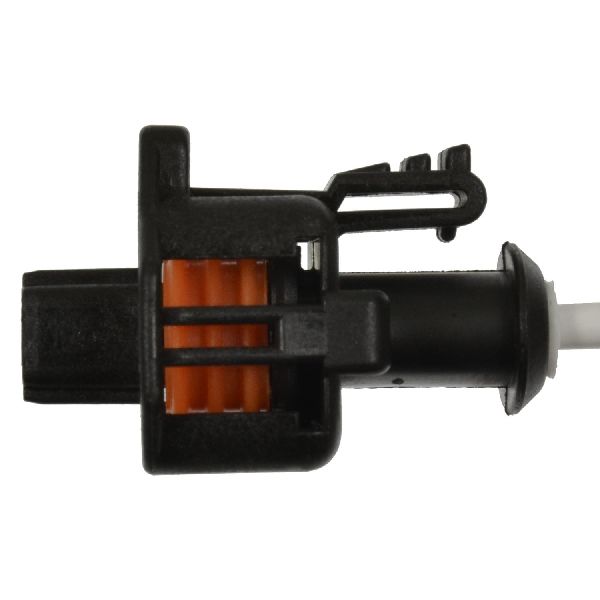
Aftermarket price range: N/A - Fuel Rail Pressure Sensor Connector Pigtail
(OEM #19367009)— As per TSB 20-NA-197, the connector itself can become corroded or lose terminal tension, causing an erratic signal. Replacing the pigtail is the official GM fix.
Trusted brands: ACDelco (GM Genuine)
OEM price range: $40-$70
Aftermarket price range: $20-$40
Related Codes That Often Appear With This One
- P0087 — Stands for 'Fuel Rail/System Pressure - Too Low,' which is a direct mechanical cause for the P0191 performance code. It is cited in all three provided TSBs and is a very common companion code.
- P0088 — Stands for 'Fuel Rail/System Pressure - Too High.' This can also trigger the P0191 performance code and is mentioned in the TSBs. [Bulletin #PIP5151F]
- P128E — This is a GM-specific code also related to fuel rail pressure performance, cited alongside P0191 in the TSBs for fuel contamination issues. [Bulletin #16-NA-102]
- P069E — This code relates to the Fuel Pump Control Module (FSCM) and can appear if the module is failing to command the correct fuel pressure, often pointing to the FSCM itself as the culprit.
Technical Service Bulletins (TSBs) & Recalls
- 16-NA-102: Hard start or no start condition with fuel system contamination (Gasoline).
- PIP5151F: Hard start, no start, rough running, low fuel pressure with contamination (Gasoline).
- PIP4949E: Hard start or no start with fuel pressure codes (Gasoline).
- 20-NA-197: Addresses corrosion or damage at the fuel pressure sensor electrical connector causing various fuel pressure DTCs, including P0191 (Diesel).
Platform-Specific Known Issues
- Duramax CP4 Pump Failure: A significant number of LML Duramax owners with P0191 eventually trace the issue to a failing CP4 high-pressure pump. A user on Reddit described a scenario where their father spent over $3000 on other parts (MAF, MAP, FRP sensor) before a mechanic diagnosed the weak high-pressure pump by monitoring pressure drop under load. This is a catastrophic and expensive failure if it contaminates the whole system.
- FRP Sensor vs. FPR on LML Duramax: A YouTube video by user 'wesley perkins' clarifies a common point of confusion on LML engines. He explains that for P0191, many people mistakenly change the fuel pressure regulator located on the CP4 pump itself. However, for idle pressure issues, the problem was the actual Fuel Rail Pressure Sensor located on the end of the fuel rail, which was a more expensive part but solved his problem.
- Connector Corrosion and Pigtail Replacement: TSB 20-NA-197 specifically calls out the FRP sensor connector as a weak point. This is corroborated by owner experiences, like a 3.0 Duramax owner who had the P0191 code resolved only after the dealer replaced both the connector pigtail (which had a visibly damaged terminal) and the ECM.
Mechanic-Grade Diagnostic Values

- 6.6L LML Duramax Fuel Rail Pressure (Scan Tool) — expected: At Idle: ~4,000-6,000 PSI, with actual pressure within 100 PSI of desired. At Wide-Open Throttle: ~26,000 PSI.. Failure: A consistent difference of >100 PSI at idle can trigger the code. A drop of >2,000 PSI from desired pressure under load indicates a weak high-pressure pump.
- 6.0L V8 Gasoline Fuel Pressure (Mechanical Gauge) — expected: 55-65 PSI with key on, engine off.. Failure: Pressure significantly below 55 PSI indicates a weak in-tank pump or clogged filter.
- LML Fuel Rail Pressure Sensor Signal Voltage — expected: Key On Engine Off: ~0.5V. At Idle: ~1.3V. Snap Acceleration: ~3.8V. The signal should operate between 0.5V and 4.8V.. Failure: Voltage stuck at 0V or 5V, or readings that do not correspond to engine load, indicate a sensor or wiring fault.
- FRP Sensor Circuit Continuity/Resistance — expected: Less than 1.0 ohm when testing continuity between the sensor connector and the ECM connector pins.. Failure: High resistance (OL or several ohms) indicates an open or corroded wire in the harness.
- LML Duramax Fuel Return Line Pressure — expected: A pressure retention valve maintains a constant pressure of approximately 70 PSI on the return side of the injectors.. Failure: Incorrect return line pressure can cause no-start or performance issues. Requires a special test port and a gauge capable of reading up to 200 PSI to diagnose.
Scan Tool Commands That Help
- GDS2 / Tech 2: Fuel Pressure Control / Fuel Pressure Regulator Command — Used to bidirectionally command the fuel pressure regulator(s) while observing actual fuel rail pressure. This helps determine if the regulator is responding to PCM commands, isolating a faulty regulator from a wiring or pump issue.
- GDS2 / Tech 2: Diesel Particulate Filter (DPF) Regeneration Enable — This must be performed after any service where the hydrocarbon injector (9th injector) or its lines are opened or replaced. It forces a DPF regeneration to purge any air that entered the injector's fuel supply line, preventing damage to the injector.
Wiring & Ground Locations
- Fuel Rail Pressure Sensor (FRP) — On the 6.6L LML Duramax, the primary sensor for this code is located on the driver's side fuel rail, near the brake fluid reservoir. A second regulator (FRPR1) is located on the high-pressure CP4 pump itself.. This sensor provides the actual fuel pressure reading to the PCM. A fault in the sensor or its connector is a very common cause of P0191, especially for issues at idle.
- G102 / G103 — G102 is on the driver's side of the engine block, above the pan rail. G103 is on the front of the passenger side cylinder head.. These are primary engine control device grounds. A poor connection at these points can cause erratic sensor readings and various electrical faults, including P0191.
- G300 — Located under the truck on a body outrigger, directly below the driver's door hinge area.. This is another critical ground for engine controls. Its location under the vehicle makes it highly susceptible to rust and corrosion, which can lead to intermittent and hard-to-diagnose electrical problems.
Real Owner Repair Stories
- YouTube user wesley perkins (2011 6.6L LML Duramax) — P0191 code setting at idle when desired and actual fuel pressure differed by more than 100 PSI.
❌ Tried (didn't work) Replacing the fuel pressure regulator on the high-pressure fuel pump (CP4).
✅ What actually fixed it Replacing the fuel rail pressure sensor located on the end of the fuel rail itself fixed the problem. - Reddit user r/Duramax (2015.5 GMC Sierra 3500HD 6.6L LML Duramax) — P0191 code and limp mode, but only when towing a heavy load uphill.
❌ Tried (didn't work) Replacing MAP sensor, Replacing MAF sensor, Replacing fuel rail pressure sensor, Adding an auxiliary lift pump
✅ What actually fixed it The diagnosis pointed to a weak high-pressure fuel pump (CP4). A mechanic monitored live data and found that under full throttle, the actual rail pressure dropped 1000 PSI below the desired value, indicating the pump could not keep up with demand. - DuramaxDiesels.com forum user (2013 6.6L LML Duramax with 88,000 miles) — P0191 code would only set at engine speeds below 1,700 RPM.
❌ Tried (didn't work) Replacing the main fuel rail pressure sensor., Verifying the electrical circuit was good.
✅ What actually fixed it The problem was the second fuel pressure regulator (FRPR2) located on the fuel rail, not the regulator on the injection pump.
"I Checked Everything" — The Actual Cause
- In the context of P0191, the equivalent of a 'smoke test clean' scenario is when electrical tests on the main sensor and wiring pass, but the code persists. In one documented case on a 2013 LML, the main FRP sensor was new and the circuit tested fine, yet the P0191 code continued to appear at low RPM. The actual, less obvious cause was the failure of the second fuel pressure regulator (FRPR2) located on the fuel rail, a component unique to the LML's dual-regulator system that is often overlooked.
When the Usual Fixes Don't Work
- While Pass 2 lists the Fuel Rail Pressure sensor as a 'medium' probability cause, real-world repair stories for the LML Duramax show it is a very frequent point of failure, particularly for P0191 codes that occur at idle. Furthermore, the Pass 2 mention of a 'Weak Fuel Pressure Relief Valve (FPRV)' being fixed with a 'race plug' is misleading for this specific vehicle. That fix applies to older Duramax engines; the 2013-2014 LML uses a different fuel rail design with a second electronic regulator, making that particular part and fix incompatible.
OEM Part Supersession History
12611873→12651990— Standard part revision and update by the manufacturer.
Heads up: None. The new part number (12651990) is the direct replacement for the original.
Model Year Variations Within This Range
- 2013-2014 (LML Engine): Compared to prior Duramax generations (LLY, LBZ, LMM), the LML engine uses a dual fuel pressure regulator system: one on the CP4 pump (FRPR1) and a second on the left fuel rail (FRPR2). This is a critical difference, as misdiagnosing which regulator is at fault is common. Fixes for older engines, like installing a 'race plug' to block the fuel pressure relief valve, are not applicable to the LML design.
Helpful Videos
Used OEM Parts in Stock



New Aftermarket Parts Available


The information in this article is provided for general reference and educational purposes only. Vehicle specifications, procedures, and part compatibility can vary by production date, trim level, and region. Always consult your vehicle's factory service manual and verify part numbers before purchasing or performing repairs. Safety-critical components such as airbags, seat belts, and braking systems should be installed by a qualified professional.
- Chevrolet SILVERADO 3500:
- 🎬 Helpful Videos
- 🛍️ Shop This Part
- What's Unique About the 2013-2014 Chevrolet SILVERADO 3500
- Diagnostic Flowchart
- Symptoms You May Notice
- Most Likely Causes
- Rare But Worth Checking
- Diagnosis Steps
- Parts You'll Likely Need
- Related Codes That Often Appear With This One
- Technical Service Bulletins (TSBs) & Recalls
- Platform-Specific Known Issues
- Mechanic-Grade Diagnostic Values
- Scan Tool Commands That Help
- Wiring & Ground Locations
- Real Owner Repair Stories
- "I Checked Everything" — The Actual Cause
- When the Usual Fixes Don't Work
- OEM Part Supersession History
- Model Year Variations Within This Range
- 🎟️ Get 5% Off