

P0191 on 2010 Chevrolet Silverado 2500: Fuel Pressure Sensor Causes & Fixes
On a 2010 Silverado 2500, P0191 usually points to a faulty Fuel Rail Pressure (FRP) sensor or, on gas models, a corroded Fuel Pump Control Module (FPCM) located on the frame crossmember above the spare tire. For diesel engines, it can also indicate issues with the high-pressure fuel pump (CP3) or the fuel pressure regulator (FCA). Always check the FPCM, its connector, and ground wire for corrosion first on gas engines.
- P0191 means the fuel rail pressure reading is out of the expected range.
- For the 6.0L gas engine, the most common fix is not the fuel pump, but the cheaper and more accessible Fuel Pump Control Module (FPCM) located near the spare tire, which is prone to corrosion.
- For the 6.6L Duramax diesel, this code often points to a more serious issue with the high-pressure fuel system, such as a weak injection pump or faulty regulator.
- Always verify actual fuel pressure with a mechanical gauge and compare it to your scan tool's reading to determine if the sensor is bad or if there's a real pressure problem.
- Check for related codes like P0087 (pressure too low) or P069E (FPCM fault) to help pinpoint the diagnosis.
What's Unique About the 2010-2010 Chevrolet SILVERADO 2500
The 2010 Silverado 2500 was available with two very different fuel systems: a port-injected 6.0L V8 gasoline engine and a common-rail 6.6L V8 Duramax diesel. While both can set a P0191 code, the causes and diagnostics differ significantly. For the gas engine, a very common culprit is the Fuel Pump Control Module (FPCM) located on a frame crossmember above the spare tire, which is highly susceptible to corrosion from road salt and moisture. For the LMM Duramax diesel, the code often points to issues within the high-pressure fuel system, including the CP3 injection pump or the Fuel Pressure Regulator (also called Fuel Control Actuator or MPROP) on the pump. GM has also issued service bulletins for these trucks related to fuel system contamination and starting issues, which can be linked to this code. [Bulletin #PIP4949E, Bulletin #PIP5151B]
Diagnostic Flowchart
Tap your situation to follow the diagnostic path that matches what you're seeing on this vehicle.
Symptoms You May Notice
- Hard starting or long crank times
- No-start condition
- Rough or erratic idle
- Engine stalling, especially at stops or idle
- Reduced engine power and sluggish acceleration ('falls on its face')
- Engine hesitation or surging
- Poor fuel economy
- Check Engine Light is on
- Replacing the fuel pump on a gas engine when the actual problem is the less expensive and more common Fuel Pump Control Module (FPCM) or its corroded wiring/ground.
- Replacing the fuel rail pressure sensor when the issue is a mechanical problem like a weak pump, a clogged filter, or a failing fuel pressure regulator on a diesel.
Most Likely Causes
- Failing Fuel Pump Control Module (FPCM) (Gas Engines) 🔴 High Probability The FPCM is mounted on a frame crossmember directly above the spare tire, making it highly susceptible to corrosion from road salt and moisture, which disrupts its ability to regulate fuel pump voltage. The ground wire for the module is also prone to corrosion.
How to confirm: Visually inspect the FPCM, its connector, and ground wire for heavy corrosion or damage. Use a scan tool to check for code P069E, which specifically points to an FPCM fault. A common DIY test for a no-start condition is to bypass the module with jumper wires; if the truck starts, the FPCM is bad. 🎬 Watch: How to bypass and test the fuel control module.
Typical fix: Replace the Fuel Pump Control Module. OEM replacements (like part #20877116) require programming to the vehicle's VIN. Some aftermarket modules (like Dorman 904-108) are advertised as not requiring programming.
Est. part cost: $70-$195 - Faulty Fuel Rail Pressure (FRP) Sensor 🔴 High Probability The sensor operates in a harsh environment and can fail electronically over time, sending incorrect voltage signals to the PCM. Corrosion can also develop in the sensor's electrical connector.
How to confirm: Use a scan tool to monitor the fuel rail pressure reading. Compare this to the pressure measured with a mechanical fuel gauge connected to the fuel rail's schrader valve. If the readings don't match, the sensor is bad. Also inspect the sensor's connector for any green or white corrosion.
Typical fix: Replace the fuel rail pressure sensor. It is often recommended to use an OEM part to avoid compatibility issues.
Est. part cost: $40-$125 - Weak or Failing In-Tank Fuel Pump (Gas Engines) 🟡 Medium Probability
How to confirm: If the FPCM and FRP sensor are confirmed good, but fuel pressure (verified with a mechanical gauge) is low or erratic (below 50-62 PSI), the in-tank pump is likely failing.
Typical fix: Replace the in-tank fuel pump module. The fuel filter is integrated into this assembly on these trucks and is not serviced separately.
Est. part cost: $250-$500 - Failing High-Pressure Fuel Pump (CP3) (Diesel Engines) 🟡 Medium Probability The LMM Duramax uses a Bosch CP3 high-pressure pump which can wear out over time, failing to generate the required rail pressure (up to 26,000 PSI) under load.
How to confirm: Using a diagnostic scan tool, monitor 'Desired Fuel Rail Pressure' vs 'Actual Fuel Rail Pressure' during a wide-open throttle run. If 'Actual' pressure cannot keep up and falls more than 2,000 PSI below 'Desired' pressure, the CP3 pump is likely weak.
Typical fix: Replace the high-pressure CP3 injection pump.
Est. part cost: $600-$1200 - Wiring or Connector Issues ⚪ Low Probability
How to confirm: Visually inspect the wiring harness and connector for the FRP sensor and FPCM for any signs of damage, chafing, corrosion, or loose pins. Perform a voltage drop test on the power and ground circuits. TSB 20-NA-197 specifically calls out checking the FRP sensor connector for corrosion.
Typical fix: Repair the damaged section of the wiring harness or clean/replace the connector pigtail.
Est. part cost: $10-$50
Rare But Worth Checking
- Fuel System Contamination: As cited in TSB #PIP5151B/D, contamination in the fuel system from water, debris, or other fluids can cause erratic fuel pressure and trigger this code. If contamination is found, the entire fuel system may need to be flushed and cleaned, which is a significant repair.
- Failing Fuel Pressure Regulator (Diesel Engines): The fuel pressure regulator on the high-pressure pump, also called the MPROP or Fuel Control Actuator (FCA), can fail or its screen can become clogged with debris, causing incorrect rail pressure and triggering P0191. This is a common failure point on the LMM Duramax.
- Powertrain Control Module (PCM) Fault: In very rare cases, the PCM itself can be the source of the problem, but all other possibilities should be exhausted before considering PCM replacement.
Diagnosis Steps
- Check for other stored diagnostic trouble codes that could provide more clues (e.g., P0087, P069E).
- Connect a scan tool and observe the live data for the Fuel Rail Pressure sensor. Note the reading with the key on/engine off and at idle.
- For gas engines, drop the spare tire and visually inspect the Fuel Pump Control Module (FPCM), its connector, and its ground wire on the frame rail for heavy corrosion or damage.
- For gas engines, compare the scan tool's pressure reading to a mechanical fuel pressure gauge connected to the fuel rail's test port. If the readings differ significantly, the FRP sensor is likely faulty. If they match but are low (under 50 PSI), suspect a fuel delivery issue.
- For diesel engines, use the scan tool to log 'Desired' vs 'Actual' fuel rail pressure during a test drive with a wide-open throttle pull. A significant lag in 'Actual' pressure points to a weak CP3 pump or a restriction.
- Inspect the FRP sensor's wiring and connector for any signs of damage, moisture, or corrosion, as noted in TSB 20-NA-197.
- For diesel engines, consider testing or replacing the Fuel Pressure Regulator (FCA/MPROP) on the CP3 pump, as it is a common failure item that can cause erratic pressure.
- As per TSB #PIP5151B, take a fuel sample in a clean glass jar and inspect for any signs of water, debris, or contamination.
Parts You'll Likely Need
- Fuel Pump Control Module (Gas Engine)
(OEM #20877116)— This module is a very common failure point on gas models due to its exposed location on the frame, leading to corrosion and erratic fuel pressure. Often appears with code P069E.
Trusted brands: ACDelco, Dorman (904-108)
OEM price range: $120-$180
Aftermarket price range: $70-$130 - Fuel Rail Pressure Sensor (Gas Engine)
(OEM #12635273 (replaces 12633417))— This sensor provides the critical pressure reading to the PCM and can fail over time or its connector can corrode, sending incorrect signals and triggering P0191.
Trusted brands: ACDelco
Related Codes That Often Appear With This One
- P0087 — Indicates 'Fuel Rail/System Pressure - Too Low', which is a common underlying mechanical fault that causes the P0191 performance code. They are frequently seen together.
- P0088 — Indicates 'Fuel Rail/System Pressure - Too High', another mechanical fault that can trigger the P0191 performance code.
- P069E — Indicates a fault detected by the Fuel Pump Control Module (FPCM). Seeing this code alongside P0191 on a gas engine strongly points to the FPCM or its circuit being the root cause.
- P128E — This is a GM-specific code related to fuel rail pressure performance that is often seen with P0191, as noted in manufacturer TSBs like PIP5151.
Technical Service Bulletins (TSBs) & Recalls
- PIP4949E: Addresses hard start or no start conditions with DTCs including P0191.
- PIP5151B: Addresses various starting and running issues and the procedure for cleaning a contaminated fuel system.
Platform-Specific Known Issues
- Gas Engine Owner Story: FPCM Bypass Test: An owner of a 2007 Silverado with P0191 and P069E experienced a no-start condition. After replacing the fuel pressure sensor and then the fuel pump with no success, the final fix was the Fuel Pump Control Module. The owner confirmed the FPCM was the culprit before buying the part by dropping the spare tire, unplugging the module's electrical connector, and using two jumper wires to bypass it. When the truck started immediately with the jumpers in place, it proved the module was faulty.
- Diesel Engine Owner Story: Desired vs. Actual Pressure Drop: A GMC Sierra 3500 owner with a Duramax engine reported getting P0191 and going into limp mode only when towing uphill. After replacing the fuel rail pressure sensor and other sensors without a fix, a mechanic monitored fuel rail pressure on a road test. Under full throttle, the 'actual' rail pressure dropped about 1000 PSI below the 'desired' value, confirming a weak high-pressure fuel pump was the cause.
- Diesel Engine Forum Finding: Regulator Screen Debris: On DuramaxDiesels.com, a user with a 2013 LML Duramax was getting a P0191 code only at low RPMs after already replacing the rail pressure sensor. Upon inspection, they found metallic-looking debris on the screens of the fuel pressure regulators, pointing towards a contamination issue or the beginning of a pump failure.
Mechanic-Grade Diagnostic Values
- Duramax (LMM) Fuel Rail Pressure (Key On, Engine Off) — expected: 1.0-1.8 MPa (145-261 PSI). Failure: A reading outside this range suggests a faulty Fuel Rail Pressure sensor.
- Duramax (LMM) Fuel Rail Pressure at Idle — expected: Approx. 4,000 - 6,000 PSI. Failure: Pressure that is erratic or significantly different from the 'Desired' value on a scan tool.
- Duramax (LMM) Fuel Rail Pressure at Wide Open Throttle — expected: Desired pressure is 23,000 - 26,000 PSI. Failure: If 'Actual' pressure falls more than 2,000 PSI below 'Desired' pressure, it indicates a weak CP3 pump, excessive injector return, or a fuel restriction.
- Duramax (LMM) Fuel Rail Pressure Sensor Signal Voltage — expected: 0.5V to 4.8V. Failure: Voltage that is stuck high, low, or does not change with engine load.
- Gas (6.0L) In-Tank Fuel Pump Pressure — expected: 50 - 62 PSI. Failure: Pressure below 50 PSI indicates a weak in-tank pump or a problem with the FPCM.
- Duramax (LMM) Low-Side Fuel System Vacuum — expected: No more than 5 inHg at WOT (parked) or 7-8 inHg under load.. Failure: Higher vacuum indicates a restriction (e.g., clogged filter, collapsed line). Less than 2 inHg can indicate an air leak into the system.
Scan Tool Commands That Help
- GDS2 / Tech2: Fuel System Test — Use this automated test to check for pressure leaks and the system's ability to hold pressure, which helps differentiate a mechanical fault (pump, leak) from an electrical one (sensor, wiring).
- GDS2 / Tech2: Fuel Pump On/Off Command — To manually activate the fuel pump to confirm the integrity of the FPCM, pump, and related wiring. If the pump runs when commanded, the issue is likely with the control side (PCM signal, sensor).
- GDS2 / Tech2: Command Rail Pressure (Diesel) — On a Duramax, command rail pressure to a high value (e.g., 21,000 PSI) at idle. If the pump cannot achieve this pressure, it strongly suggests a failing high-pressure pump or excessive injector return flow, rather than a sensor issue.
Wiring & Ground Locations
- FPCM Ground (Gas Engine) — On the frame crossmember, near the Fuel Pump Control Module, located above the spare tire.. This specific ground point is highly exposed to road salt and moisture, and corrosion here is a primary cause of FPCM malfunction, leading directly to P0191 and P069E codes.
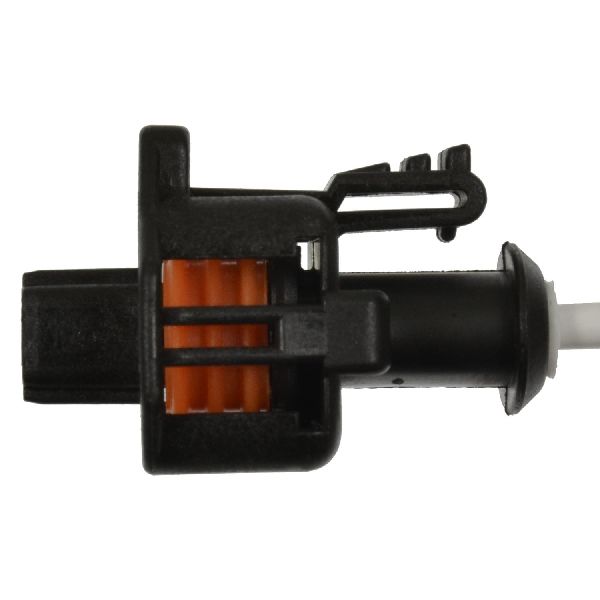
- FRP Sensor Connector (Diesel Engine) — On the fuel rail, passenger side of the engine compartment.. The connector can become brittle and crack from heat and vibration, allowing moisture to enter and corrode the terminals. This causes an erratic signal to the ECM, triggering P0191. Pigtail harnesses are available for repair.
- G102 / G103 (Diesel Engine) — G102 is on the rear of the left cylinder head; G103 is on the rear of the right cylinder head.. These are major engine-to-chassis grounds. While not exclusive to the fuel system, a poor connection at these points can introduce electrical noise and voltage discrepancies that affect sensor readings, including the FRP sensor.
Real Owner Repair Stories
- YouTube user 'Repairs from the Shed' (2007 Chevrolet Silverado (Gas, similar system)) — Codes P0191 and P069E, intermittent no-start.
❌ Tried (didn't work) Replacing the in-tank fuel pump (this corrected low pressure of 45 PSI, but the codes remained).
✅ What actually fixed it Replacing the heavily corroded Fuel Pump Control Module (FPCM) located on the frame above the spare tire. The video also demonstrated how to bypass the FPCM with jumper wires to confirm it was the faulty component. - Reddit user in r/Duramax (2010 Duramax LMM with a DPF delete and tune) — Low fuel rail pressure code after installing performance parts.
❌ Tried (didn't work) Installing a new lift pump, Replacing the fuel rail pressure relief valve with a race plug, Replacing the fuel pressure regulator (FCA/MPROP), Replacing the fuel filter
✅ What actually fixed it The community consensus pointed to high-mileage (over 200k miles) injectors with excessive return flow. The recommended diagnostic step, before replacing the expensive CP3 pump, was to perform an injector return rate test (bottle test) to confirm if the injectors were leaking excessively under load, causing the CP3 to be unable to maintain desired pressure.
"I Checked Everything" — The Actual Cause
- A common scenario on the Duramax diesel is that the fuel pressure will test perfectly fine at idle in a service bay, but the P0191 code and limp mode will only appear under heavy load, like towing up a grade. This is because a weak CP3 high-pressure pump or injectors with excessive return flow can often keep up with low fuel demand at idle, but cannot supply the volume needed for high-load conditions. The 'Actual' rail pressure falls significantly behind the 'Desired' pressure, triggering the code. This is why a wide-open throttle data log is a critical diagnostic step that is sometimes missed.
OEM Part Supersession History
20791899, 20791901, 20827745, 20850927→20877116— Standard part evolution and consolidation by the manufacturer.
Heads up: This Fuel Pump Control Module (FPCM) must be programmed to the vehicle's VIN using dealer software (GDS2/Tech2) to function correctly.12633417→12635273— Updated part design by the manufacturer.
Helpful Videos
We Have This Part in Stock


The information in this article is provided for general reference and educational purposes only. Vehicle specifications, procedures, and part compatibility can vary by production date, trim level, and region. Always consult your vehicle's factory service manual and verify part numbers before purchasing or performing repairs. Safety-critical components such as airbags, seat belts, and braking systems should be installed by a qualified professional.
- Chevrolet SILVERADO 2500:
- 🎬 Helpful Videos
- 🛍️ Shop This Part
- What's Unique About the 2010-2010 Chevrolet SILVERADO 2500
- Diagnostic Flowchart
- Symptoms You May Notice
- Most Likely Causes
- Rare But Worth Checking
- Diagnosis Steps
- Parts You'll Likely Need
- Related Codes That Often Appear With This One
- Technical Service Bulletins (TSBs) & Recalls
- Platform-Specific Known Issues
- Mechanic-Grade Diagnostic Values
- Scan Tool Commands That Help
- Wiring & Ground Locations
- Real Owner Repair Stories
- "I Checked Everything" — The Actual Cause
- OEM Part Supersession History
- 🎟️ Get 5% Off