

P0191 on 2010-2014 Chevrolet Express: Causes for Fuel Rail Pressure Sensor Issues
This code often points to a faulty fuel rail pressure sensor, a weak fuel pump, a failing Fuel Pump Control Module (FPCM), or fuel system contamination. The most common fix is replacing the fuel rail pressure sensor or the FPCM, but a full fuel system diagnosis is recommended due to known issues with contamination and control module failures on these vans.
- P0191 on a 2010-2014 Express indicates a problem with the fuel rail pressure sensor's performance, but it doesn't automatically mean the sensor is bad.
- Due to manufacturer TSBs, suspecting fuel system contamination is crucial. A hard start, no-start, or rough running strongly points to this as a root cause.
- Always diagnose before replacing parts. Use a mechanical gauge to verify actual fuel pressure against the sensor's reported data on a scan tool.
- The most likely parts to fix this are the fuel rail pressure sensor, the fuel pump, or a new fuel filter after a system cleaning.
- Check the sensor's electrical connector for corrosion, as this is a simple, low-cost check that can sometimes solve the problem.
What's Unique About the 2010-2014 Chevrolet EXPRESS

For the 2010-2014 Chevrolet Express and its platform mates, the P0191 code is frequently linked to broader fuel system problems, not just a simple sensor failure. Manufacturer Technical Service Bulletins (TSBs) for these vans specifically mention that fuel system contamination can cause this code, along with hard starting or no-start conditions. Furthermore, the externally frame-mounted Fuel Pump Control Module (FPCM) is a known failure point on related GM trucks, leading to erratic fuel pressure and triggering a P0191 code even if the pump and sensor are functional. This suggests that unlike in some vehicles where P0191 is almost always a bad sensor, on the Express, it can be a critical warning sign of a contaminated fuel system or a faulty control module.
Diagnostic Flowchart


Tap your situation to follow the diagnostic path that matches what you're seeing on this vehicle.
Symptoms You May Notice
- Check Engine Light is on
- Hard starting or long crank times
- No-start condition
- Rough idle and engine stalling, especially at stops
- Poor acceleration and loss of engine power
- Reduced fuel economy
- Engine hesitates or surges under load
- Replacing only the fuel rail pressure sensor without checking for underlying fuel delivery issues like a weak pump, a faulty FPCM, or system contamination. The TSBs for this vehicle strongly suggest that P0191 can be a symptom of a larger system problem.
- Replacing the fuel pump when the actual cause is a corroded and failing Fuel Pump Control Module (FPCM).
Most Likely Causes

- Fuel System Contamination 🔴 High Probability Multiple manufacturer TSBs (#16-NA-102, #PIP5151F) directly link P0191 on this platform to fuel system contamination from debris, causing hard starts and no-starts. Contamination can include rust from water in the fuel or other foreign material.
How to confirm: Inspect the fuel filter (if serviceable) and fuel tank for debris. A fuel pressure test may show erratic readings. The TSBs call for inspection of the entire fuel system if contamination is suspected.
Typical fix: Clean the entire fuel system, including the tank, lines, and fuel rail. Replace the fuel filter (or the entire fuel pump module if the filter is integrated) and any components found to be damaged by the debris.
Est. part cost: $20-$500+ - Faulty Fuel Rail Pressure (FRP) Sensor 🔴 High Probability
How to confirm: Use a scan tool to monitor the FRP sensor reading while the engine is running. Compare the reading to a manual fuel pressure gauge connected to the fuel rail. If the scan tool data is erratic or doesn't match the gauge, the sensor is likely bad.
Typical fix: Replace the fuel rail pressure sensor. It is often recommended to use an OEM part for sensors to avoid compatibility issues.
Est. part cost: $40-$125 - Failing Fuel Pump or Fuel Pump Control Module (FPCM) 🟡 Medium Probability The FPCM is mounted on the frame rail, often near the spare tire, making it highly susceptible to corrosion from road salt and moisture. This is a well-documented failure point on GM trucks from this era.
How to confirm: Perform a fuel pressure test. If pressure is low (e.g., below 50 PSI) or erratic, the pump is a suspect. If pressure is correct but the code persists, or if you also have a P069E code, inspect the FPCM and its connector for corrosion or damage. You can bypass the module with jumper wires to see if the vehicle starts, which would confirm a bad module.
Typical fix: Replace the in-tank fuel pump module or the frame-mounted Fuel Pump Control Module.
Est. part cost: $80-$450 - Wiring or Connector Issues ⚪ Low Probability The underbody harness for the FRP sensor is exposed to the elements. A GM TSB for similar powertrains (20-NA-197) notes that corrosion on the FRP sensor connector itself can cause this code.
How to confirm: Visually inspect the FRP sensor connector and harness for corrosion, damage, or loose pins. Check for a stable 5-volt reference signal at the connector with a multimeter.
Typical fix: Clean the connector with electrical contact cleaner and apply dielectric grease. Repair or replace any damaged wiring or the connector pigtail.
Est. part cost: $5-$50
Rare But Worth Checking
- Clogged Fuel Filter: While often overlooked, a severely clogged fuel filter can restrict flow enough to cause a pressure performance issue. Note that on many of these vans, the fuel filter is integrated into the in-tank fuel pump module and is not a separately serviceable part.
- Faulty Engine Control Module (ECM): This is extremely rare, but if all other components and wiring have been verified as good, the ECM's internal circuit for interpreting the sensor signal could be at fault.
Diagnosis Steps
- Check for other DTCs. Codes like P0087, P0088, or especially P069E can provide valuable diagnostic direction.
- Connect a mechanical fuel pressure gauge to the fuel rail's test port.
- Start the engine (if possible) and compare the gauge reading to the Fuel Rail Pressure (FRP) data on a live-data scan tool. The readings should be very close and stable, typically 55-62 PSI at idle.
- If the scan tool reading is erratic or incorrect but the mechanical gauge is steady and in spec, the FRP sensor or its wiring is likely the issue.
- If both the gauge and scan tool show low, high, or unstable pressure, you have a mechanical fuel delivery problem. Suspect the fuel pump or the Fuel Pump Control Module (FPCM).
- Locate and inspect the FPCM, typically mounted to the frame rail near the spare tire. Check the module and its electrical connector for heavy corrosion or physical damage.
- Inspect the FRP sensor's electrical connector and wiring for any signs of corrosion, damage, or looseness, as noted in TSB 20-NA-197.
- Determine if your vehicle has a serviceable in-line fuel filter. If so, inspect and replace it. If not, be aware the filter is part of the in-tank pump assembly.
- If fuel system contamination is suspected (based on TSBs or symptoms), inspect the fuel inside the tank for debris or water.
- If all other tests pass, the issue may lie with the ECM, though this is rare.
Parts You'll Likely Need
- Fuel Rail Pressure Sensor
(OEM #12611873)— This sensor is a common failure point for a P0191 code when there isn't an underlying mechanical fuel pressure issue. This part number is for the common gasoline V8 engines.
Trusted brands: ACDelco, Standard Ignition, Bosch
OEM price range: $100-$130
Aftermarket price range: $40-$80 - Fuel Pump Module
(OEM #86786771)— A weak or failing fuel pump causes low or erratic fuel pressure, which directly triggers the P0191 code. The fuel filter is typically integrated into this assembly.
Trusted brands: ACDelco, Delphi, Carter
OEM price range: $350-$500
Aftermarket price range: $200-$350 - Fuel Pump Control Module (FPCM) — A very common failure on GM trucks and vans of this era. Corrosion on this frame-mounted module can cause intermittent or total loss of fuel pressure, often throwing a P0191 code.
Trusted brands: ACDelco, Dorman
OEM price range: $100-$150
Aftermarket price range: $70-$120
Related Codes That Often Appear With This One
- P0087 — Indicates 'Fuel Rail/System Pressure - Too Low', which is a common mechanical cause for the P0191 performance code. This pairing is cited in TSBs #16-NA-102 and #PIP5151F.
- P069E — Indicates a fault with the Fuel Pump Control Module. This code appearing with P0191 is a strong indicator that the FPCM is the root cause of the fuel pressure issue, as documented in owner repair stories.
- P0088 — Indicates 'Fuel Rail/System Pressure - Too High', another mechanical fault that can trigger the P0191 performance code. This is also cited in the same TSBs.
- P128E — This is a manufacturer-specific code also related to fuel system performance, and it is listed alongside P0191 in the provided TSBs (#16-NA-102, #PIP5151F).
- P0192 — Indicates the 'Fuel Rail Pressure Sensor Circuit Low Input', pointing specifically to an electrical issue with the sensor circuit.
- P0193 — Indicates the 'Fuel Rail Pressure Sensor Circuit High Input', pointing specifically to an electrical issue with the sensor circuit.
Technical Service Bulletins (TSBs) & Recalls
- Bulletin #16-NA-102: Addresses hard/no start conditions and DTCs including P0191 caused by fuel system contamination.
- Bulletin #PIP5151F: Provides diagnostic tips for identifying fuel system contamination (rust, water, DEF) as a cause for P0191 and related codes.
- Bulletin #PIP4949E: Also references hard start/no start conditions with DTC P0191, directing technicians to follow standard diagnostic procedures.
- Bulletin #20-NA-197: While for newer models, it identifies a relevant issue of corrosion on the fuel pressure sensor's electrical connector causing P0191.
Platform-Specific Known Issues
- Fuel System Contamination: TSBs #16-NA-102 and #PIP5151F highlight a known issue where debris in the fuel system can cause hard starting, no-starts, and set codes P0191, P0087, P0088, and P128E. The fix requires a thorough cleaning of the entire fuel system.
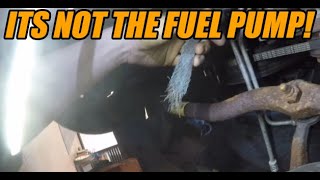
- Fuel Pump Control Module (FPCM) Corrosion: The FPCM is mounted on the frame rail, making it vulnerable to corrosion from road salt and moisture, a common failure point on these vans that directly causes fuel pressure problems and the P0191 code.
Mechanic-Grade Diagnostic Values
- Fuel Pressure (Key On, Engine Off prime pulse) — expected: 55-60 PSI. Failure: Pressure below this range indicates a weak in-tank fuel pump.
- Fuel Pressure (Idle) — expected: 55-62 PSI. Failure: Pressure that is low, high, or fluctuating erratically points to a fuel delivery problem (pump, FPCM, regulator).
- FRP Sensor 5V Reference Voltage — expected: 4.8 - 5.2 Volts. Failure: 0 volts indicates an open or short to ground in the reference circuit from the ECM.
- FRP Sensor Signal Voltage — expected: Varies between ~0.5V (low pressure) and ~4.5V (high pressure).. Failure: Voltage is stuck at 0V, 5V, or fluctuates erratically without relation to engine load or manual pressure readings.
- FPCM Fuel Pump Command Signal (Dark Green/White wire) — expected: 12V present for 2-6 seconds with key on, or constant 12V while cranking/running.. Failure: No voltage at this wire indicates a problem with the ECM or the wiring between the ECM and FPCM.
Scan Tool Commands That Help
- GDS2 / Tech2: Fuel Pump On/Off Command (or Fuel Pump Relay command) — This bidirectional control is used to manually turn the fuel pump on and off to verify the electrical circuit's integrity. If the pump runs when commanded, it confirms the FPCM, pump, and wiring are capable of functioning, pointing the diagnosis towards a sensor or control signal issue.
Wiring & Ground Locations
- G102 / G103 — G102 is on the left rear of the engine; G103 is on the right rear of the engine (for gasoline V8s).. These are the primary engine block grounds. A poor connection here can cause erratic behavior in various engine sensors, including the Fuel Rail Pressure sensor, which relies on a stable ground reference.
- G301 — Located behind the left kick panel, near the driver's feet.. This is a major body ground point. While less likely to be the primary cause, a corroded G301 can create intermittent electrical issues throughout the cabin and dash, potentially affecting modules that communicate with the ECM about fuel status.
- FPCM Connector — On the Fuel Pump Control Module, mounted to the frame rail, often near the spare tire.. This connector is highly exposed to weather and corrosion. Key pins to test are Pin 32 (Red/White) for battery power from the fuse box, Pin 1 (Black) for ground, and the Dark Green/White wire (Pin 13) for the command signal from the ECM.
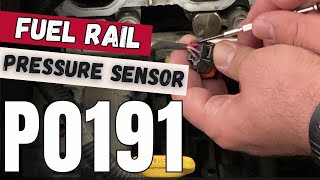
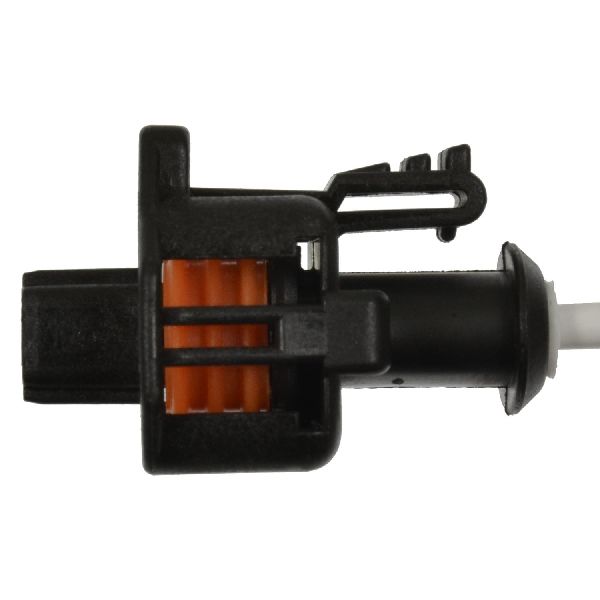
- FRP Sensor Connector — On the fuel rail, on top of the engine.. The connector itself can corrode as noted in TSB 20-NA-197. Testing here for the 5V reference, signal, and ground is a primary diagnostic step.
Real Owner Repair Stories
- YouTube channel '2012 Chevy Code P0191' (2012 Chevrolet Equinox (similar fuel system architecture)) — Check Engine Light with code P0191 after being driven for a number of miles.
❌ Tried (didn't work) A previous shop replaced the high-pressure fuel pump, but the code returned.
✅ What actually fixed it The low-pressure in-tank fuel pump was failing. A manual gauge showed the low-side pressure was unstable and dropping significantly, from a normal of ~60 PSI down to 30-38 PSI. Replacing the low-pressure fuel pump resolved the P0191 code. - GM Forum user 'Colt45' (2013 Buick Regal 2.0 Turbo (different vehicle, but demonstrates diagnostic path)) — Stabilitrak warning, 'engine performance reduced' message, and P0191 code. Scan tool showed fuel pressure dropping to 70 PSI when the code set.
❌ Tried (didn't work) Replacing the fuel pressure sensor., Replacing the high pressure fuel pump.
✅ What actually fixed it The user was still diagnosing, but the failure of common part replacements pointed towards a wiring or control module (ECM/FPCM) issue, which is a valuable lesson for this code.
OEM Part Supersession History
12611873→12651990— Standard part lifecycle update/revision.
Heads up: The newer part number (12651990) appears to be the correct service replacement for most 2013 and 2014 models, while the older number applies to earlier years. Always verify with VIN as there can be mid-year changes.
Helpful Videos
Used OEM Parts in Stock


New Aftermarket Parts Available


The information in this article is provided for general reference and educational purposes only. Vehicle specifications, procedures, and part compatibility can vary by production date, trim level, and region. Always consult your vehicle's factory service manual and verify part numbers before purchasing or performing repairs. Safety-critical components such as airbags, seat belts, and braking systems should be installed by a qualified professional.
- Chevrolet EXPRESS:
- 🎬 Helpful Videos
- 🛍️ Shop This Part
- What's Unique About the 2010-2014 Chevrolet EXPRESS
- Diagnostic Flowchart
- Symptoms You May Notice
- Most Likely Causes
- Rare But Worth Checking
- Diagnosis Steps
- Parts You'll Likely Need
- Related Codes That Often Appear With This One
- Technical Service Bulletins (TSBs) & Recalls
- Platform-Specific Known Issues
- Mechanic-Grade Diagnostic Values
- Scan Tool Commands That Help
- Wiring & Ground Locations
- Real Owner Repair Stories
- OEM Part Supersession History
- 🎟️ Get 5% Off