

P0191 on 2018-2019 Alfa Romeo Stelvio: Fuel Rail Pressure Sensor Guide
P0191 on a Stelvio usually points to a faulty fuel rail pressure sensor, but don't rule out a failing fuel pump or software issue. Replacing the sensor is a common fix and costs around $75 for the part, but diagnosis is key as a pump failure is also a known issue on this platform. A major recall (NHTSA Campaign 25V586) for low-pressure fuel pump failure affects these models, making it a critical item to check.
- P0191 on a 2018-2019 Stelvio means the fuel pressure is out of the expected range.
- The most common cause is a faulty fuel rail pressure sensor, but do not ignore the possibility of a failing fuel pump, which is a known issue for this vehicle.
- Due to a recall, check if your vehicle is affected by the low-pressure fuel pump issue, as this can cause the same code and symptoms.
- Diagnosis is critical. Simply replacing the sensor may not fix the problem, as wiring or the pumps themselves could be the root cause. [ODI #11728569]
- Driving with this code is not recommended due to the risk of stalling and reduced power.
What's Unique About the 2018-2019 Alfa Romeo STELVIO
On the Alfa Romeo Stelvio, which uses a high-pressure gasoline direct injection (GDI) system, the P0191 code is a frequent complaint. While the fuel rail pressure sensor is a common failure point, this platform has a documented history of fuel pump issues. An owner complaint filed with the NHTSA highlights a case where replacing the sensor did not fix the problem, pointing to a more complex underlying issue. [ODI #11728569] Furthermore, a major recall (NHTSA Campaign #25V586, FCA #93C) was issued for 2018-2019 Stelvios due to low-pressure fuel pump failures that can cause stalling. These pumps can fail without warning, cutting off fuel delivery and potentially causing a crash. It is critical to diagnose the entire fuel system, not just the sensor. A corroded main ground strap located under the vehicle is another known issue on this platform that can cause a no-start condition and complex electrical problems, sometimes mistaken for fuel system faults.
Diagnostic Flowchart
Tap your situation to follow the diagnostic path that matches what you're seeing on this vehicle.
Symptoms You May Notice
- Check Engine Light is on
- Engine hesitation or stumbling, especially during acceleration
- Reduced engine power or 'limp mode'
- Engine stalling, possibly without warning, and may not restart
- Rough or inconsistent idle
- Difficulty starting the engine
- Decrease in fuel economy
- Unusual smell from the exhaust
- Replacing the fuel rail pressure sensor when the actual fault is a failing low-pressure or high-pressure fuel pump. As noted in NHTSA complaint #11728569, a sensor replacement did not solve the issue. [ODI #11728569]
- Replacing the fuel pump without first verifying that the fuel rail pressure sensor and its wiring are functioning correctly.
- Replacing any hardware before checking for and applying available ECM software updates, which are a known fix for this code on Stelvios. [TSB #18-026-20, 8]
Most Likely Causes
- Faulty Fuel Rail Pressure Sensor 🔴 High Probability Sensors in high-pressure, high-heat environments are common failure items. It is a known weak point on modern Alfa Romeo models, with the ECM logging P0191 if the sensor's voltage stays outside the 0.5V–4.5V range for too long.
How to confirm: Monitor the 'Fuel Rail Pressure' and 'Desired Fuel Rail Pressure' PIDs on a diagnostic scan tool. If the value is erratic, stuck, or doesn't match the desired pressure, the sensor is likely bad. The sensor signal voltage should operate between 0.5V and 4.5V.
Typical fix: Replace the fuel rail pressure sensor located on the high-pressure fuel rail.
Est. part cost: $55-$150 - Failing Low-Pressure Fuel Pump (In-Tank) 🔴 High Probability A major recall (NHTSA #25V586, FCA #93C) was issued for 53,849 Giulia and Stelvio models from 2017-2019 due to low-pressure fuel pump failures. The pump components can warp from heat, starving the engine of fuel. This is a very common cause of stalling and can directly trigger P0191.
How to confirm: Check if your vehicle's VIN is part of the recall. A technician can test the low-pressure fuel system's output. Pressure should be stable and within the typical range of 40-75 PSI before it reaches the high-pressure pump.
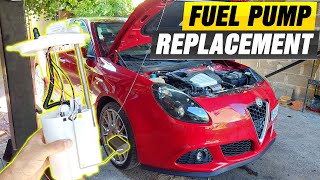
Typical fix: Have the recall service performed by an Alfa Romeo dealer, which involves replacing the low-pressure fuel pump. If not covered by recall, replace the in-tank low-pressure fuel pump assembly. 🎬 Watch: This video shows a typical Alfa Romeo fuel pump replacement.
Est. part cost: $0 (if under recall), $200-$400 (otherwise) - Outdated Engine Control Module (ECM) Software 🟡 Medium Probability Alfa Romeo has released multiple software updates to address overly sensitive sensor parameters that can falsely trigger P0191. TSB #18-026-20 specifically lists P0191 as a code addressed by a software update for the 2018 Stelvio. [TSB #18-026-20]
How to confirm: A dealership or a specialized shop with access to Alfa Romeo's service network can check if any software updates (like TSB 18-026-20) are available for your vehicle's VIN.
Typical fix: Update the ECM software. This should be a primary diagnostic step before replacing hardware.
Est. part cost: $0-$200 - Failing High-Pressure Fuel Pump (HPFP) 🟡 Medium Probability The HPFP is a mechanically driven pump that can wear out over time. Forum discussions mention failures on Stelvios and the related Giulia, sometimes at relatively low mileage. Its failure directly causes pressure deviations in the rail.
How to confirm: This is difficult to test directly without specialized equipment. Diagnosis often involves ruling out the low-pressure pump and the rail sensor first. A rattling noise from the pump area can be an indicator of mechanical failure.
Typical fix: Replace the high-pressure fuel pump. This is a labor-intensive job as the pump is often located at the back of the engine.
Est. part cost: $300-$1200 - Wiring or Connector Issue ⚪ Low Probability The engine bay's high heat can degrade the wiring harness insulation over time. The fuel rail pressure sensor connector is particularly susceptible.
How to confirm: Visually inspect the wiring harness and 4-wire pigtail connector for the fuel rail pressure sensor. Look for corrosion, bent pins, or frayed/melted wires. Use a multimeter to check for proper reference voltage (5V) and a good ground at the connector.
Typical fix: Repair the damaged wiring or replace the connector pigtail.
Est. part cost: $15-$50
Rare But Worth Checking
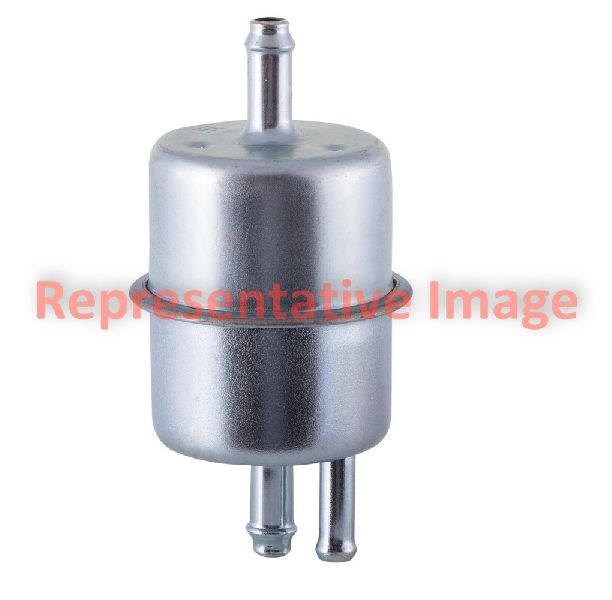
- Clogged Fuel Filter: The fuel filter is integrated with the low-pressure pump assembly in the tank. While not a separate part to replace, a severely clogged filter can restrict flow and cause low-pressure issues, leading to a P0191.
- Leaking Fuel Injector: A fuel injector stuck open can cause a drop in rail pressure, potentially triggering this code. This would typically be accompanied by other codes like misfires (P030x) or a rich condition (P0172).
- Corroded Main Ground Strap: A known issue on the Stelvio/Giulia platform is the corrosion of the main ground strap located on the underside of the vehicle, attached to the transmission. A faulty ground can cause a wide array of electrical issues, including no-start conditions and erroneous sensor readings that could potentially trigger a P0191 code as a secondary effect of system voltage instability.
Diagnosis Steps
- Connect an OBD-II scanner (like an iCarsoft CR MAX or MultiECUScan) and confirm P0191 is present. Check for any other fuel-related codes like P0087 or P0088.
- Check with an Alfa Romeo dealer if your VIN is affected by recall #93C for the low-pressure fuel pump or if any software updates (like TSB 18-026-20) are pending. This is a critical first step. [25, TSB #18-026-20]
- Using the scanner's live data function, monitor the 'Fuel Rail Pressure' and 'Desired Fuel Rail Pressure' PIDs while the engine is running. Note any large discrepancies, erratic fluctuations, or if the pressure is flat.
- Visually inspect the fuel rail pressure sensor and its electrical connector for any signs of damage, corrosion, or fuel leaks.
- If live data is suspect, test the sensor's circuit. With the key on and engine off, check for the correct reference voltage (usually 5V) and a good ground at the sensor connector. The signal voltage should be between 0.5V and 4.5V.
- Test the low-pressure fuel system. Connect a fuel pressure gauge to the low-pressure line to ensure the in-tank pump is supplying adequate and stable pressure (typically 40-75 PSI).
- If the low-pressure side is good and the sensor circuit checks out, the suspicion shifts to the high-pressure fuel pump (HPFP) or the sensor itself.
- If all other components are verified to be working, replace the fuel rail pressure sensor. After replacement, clear codes and test drive to see if the issue returns.
Parts You'll Likely Need
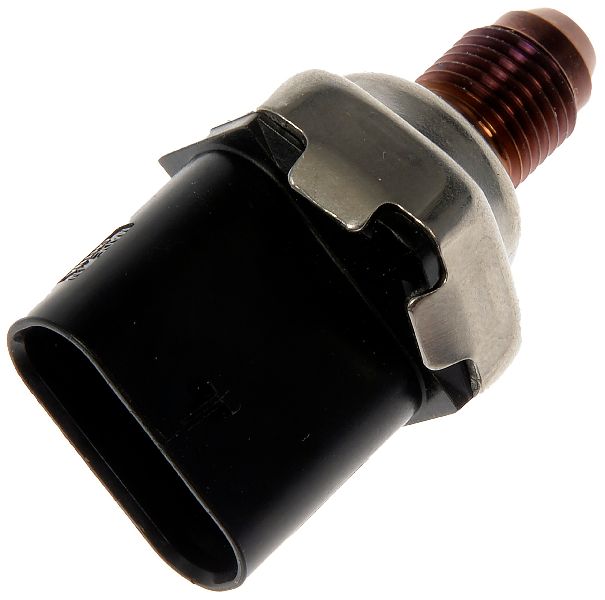
- Fuel Rail Pressure Sensor
(OEM #68212572AB)— This sensor is the most common point of failure for the P0191 code. It directly measures the pressure in the rail and is prone to failure from heat and pressure cycles.
Trusted brands: Mopar, Bosch (OEM supplier, part # 0 261 545 074)
OEM price range: $53-$80
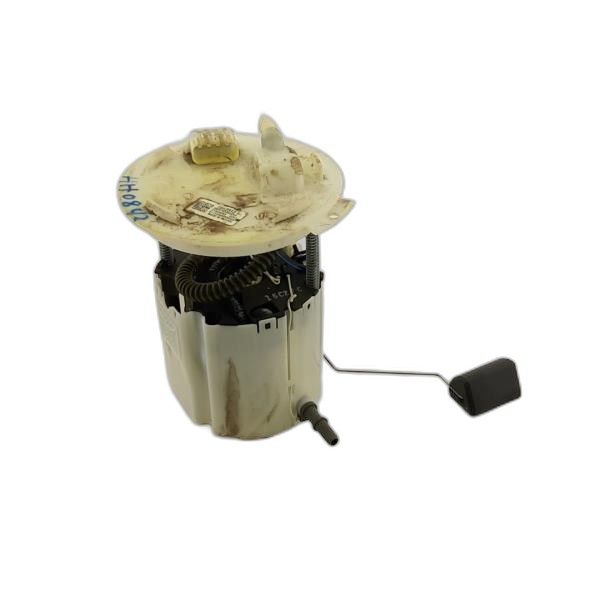
Aftermarket price range: $40-$70 - Low-Pressure Fuel Pump
(OEM #00505474790)— Subject to a major recall (NHTSA #25V586) for widespread failures causing stalling. If P0191 is present, especially with P0087, this pump is a primary suspect.
Trusted brands: Mopar
OEM price range: $450-$600
Aftermarket price range: $200-$400 - High-Pressure Fuel Pump (HPFP)
(OEM #0261520333)— If both the low-pressure pump and rail sensor are confirmed good, the mechanically-driven high-pressure pump is the next logical failure point.
Trusted brands: Bosch
OEM price range: $300-$1200
Aftermarket price range: $250-$800
Related Codes That Often Appear With This One
- P0087 — This code means 'Fuel Rail/System Pressure - Too Low' and is a direct mechanical confirmation of the performance issue detected by the P0191 circuit code.
- P0088 — The opposite of P0087, this code for 'Fuel Rail/System Pressure - Too High' can also accompany P0191 if the pressure is erratically spiking.
- P026E — This code for 'Charge Air Cooler Coolant Pump Performance' was listed alongside P0191 in TSB #18-026-20, suggesting they can appear together due to a shared electrical or software issue being addressed by the bulletin. [TSB #18-026-20]
- P2299 — Also listed in TSB #18-026-20, 'Brake Pedal Position/Accelerator Pedal Position Incompatible' can be triggered during certain fault conditions that put the vehicle into a limited power mode. [TSB #18-026-20]
Technical Service Bulletins (TSBs) & Recalls
- TSB #18-026-20: Released March 2020, this bulletin addresses multiple DTCs including P0191 for the 2018 Stelvio. The fix is a software update for the Powertrain Control Module (PCM).
- Recall #93C (NHTSA Campaign #25V586): Issued for 2017-2019 Giulia and 2018-2019 Stelvio models for low-pressure fuel pump failures that can cause stalling and loss of power. This is a critical check for any vehicle presenting with P0191 and stalling symptoms.
Platform-Specific Known Issues
- The Low-Pressure Fuel Pump Recall Nightmare: A significant issue for 2018-2019 Stelvio owners is the massive recall for the low-pressure fuel pump (NHTSA #25V586). Owners report sudden engine stalling without any prior warning, often at speed, creating a dangerous situation. The vehicle may not restart afterward. Because this failure starves the high-pressure system of fuel, it can directly lead to a P0191 code. Before spending any money on diagnosis, owners must check if their VIN is included in this recall.
- The 'Software First' Rule: As confirmed by TSB 18-026-20, a simple software reflash can be the entire fix for a P0191 code. Many owners and even some shops have wasted money replacing sensors and pumps when the root cause was overly sensitive diagnostic parameters in the original engine software. Experienced Alfa technicians often check for software updates as the very first step when diagnosing this code.
Mechanic-Grade Diagnostic Values
- Fuel Rail Pressure Sensor (FRP) Signal Voltage — expected: 0.5V - 4.5V. Failure: Voltage is stuck, erratic, or outside this range during engine operation.
- FRP Sensor Supply Voltage (at connector) — expected: ~5V (Key On, Engine Off). Failure: Significantly lower or no voltage indicates a wiring or ECU problem.
- FRP Sensor Signal Voltage (at connector, engine stationary) — expected: ~0.5V. Failure: Voltage significantly different from 0.5V with the engine off suggests a sensor or wiring issue.
- Low-Pressure Fuel System Pressure — expected: 40-75 PSI (275-517 kPa). Failure: Pressure is unstable, drops under load, or is below the minimum specification.
- FRP Sensor Maximum Pressure Rating — expected: 4350 PSI (300 Bar). Failure: This is the design limit of the sensor, not a direct test value. If live data approaches or exceeds this, it indicates a severe over-pressure condition, likely from a faulty high-pressure pump or regulator.
Scan Tool Commands That Help
- MultiECUScan / AlfaOBD: Live Data Monitoring (Fuel Rail Pressure vs. Desired Fuel Rail Pressure) — This is the primary diagnostic step to determine if the actual pressure reported by the sensor is deviating from what the ECU is commanding. A large, persistent mismatch points directly to a fault in the fuel system or sensor.
- MultiECUScan / AlfaOBD: Fuel Pump Activation Test — This bidirectional command allows the technician to manually activate the low-pressure fuel pump to check its operation and listen for auditory cues without starting the engine. It helps isolate a non-responsive pump.
Wiring & Ground Locations
- Fuel Rail Pressure Sensor Connector — On the high-pressure fuel rail, mounted to the engine.. This is a 4-wire oval connector that is the direct interface for the sensor. Corrosion, bent pins, or damaged wires at this pigtail are a common cause of P0191.
- Fuel Pump Driver Module (FPDM) / Fuel Pump Control Module — Located under the passenger side rear seat.. This module controls the voltage to the low-pressure fuel pump. While failure is less common than the pump itself, a fault here can cause low fuel pressure and trigger P0191. Its location is critical for testing power and ground to the pump circuit.
- Main Engine/Transmission Ground Strap — On the underside of the vehicle, connecting the transmission case to the chassis, often on the driver's side.. This strap is known to corrode and fail on Stelvios and Giulias, leading to severe electrical problems, including no-start conditions and smoke from other overloaded ground wires. A poor ground can cause unstable voltages across the entire engine management system, potentially leading to erroneous sensor readings and codes like P0191.
Real Owner Repair Stories
- Reddit user in r/AlfaRomeo (2018 Stelvio TI Sport) — Car acted like the battery was dying, would go to auxiliary mode but not start. After three start attempts, a large cloud of white smoke came from the driver's side wheel well.
❌ Tried (didn't work) Attempting to restart the vehicle multiple times.
✅ What actually fixed it The root cause was a corroded main ground strap under the car connected to the transmission. This failure overloaded a smaller ground wire in the wheel well, which melted sections of the main engine wiring harness. The fix required replacing the entire engine wiring harness and the faulty ground strap. - Reddit user in r/AlfaRomeo (2019 Stelvio, 51,000 miles) — Strong fuel smell.
✅ What actually fixed it The owner was diagnosed with a failing mechanical (high-pressure) fuel pump located at the back of the engine. The owner noted the high cost of repair due to labor intensity but found the part for a lower price online.
When the Usual Fixes Don't Work
- While the P0191 code directly points to the fuel rail pressure sensor circuit, real-world owner experiences on the Stelvio platform show that a sensor replacement is often not the final fix. In one NHTSA complaint, a new sensor did not resolve the issue. [ODI #11728569] In another documented case, a severe no-start condition with smoke was ultimately traced back to a corroded main ground strap, a failure completely unrelated to the fuel system itself but capable of causing widespread electrical faults that could trigger sensor codes. This highlights the need to diagnose beyond the code's definition and consider known platform weaknesses like the low-pressure fuel pump recall and chassis ground integrity before replacing the rail sensor.
OEM Part Supersession History
0 261 545 006, 0 261 545 053→Bosch 0 261 545 074 (Mopar 68212572AB)— Part evolution and consolidation for various manufacturer applications.
Heads up: While the Bosch 074 sensor is used across many brands (Ford, Mazda, Hyundai), it is critical to ensure the specific part purchased is cross-referenced for the Alfa Romeo application, as internal calibration could differ despite a physical fit.
Helpful Videos
Used OEM Parts in Stock
New Aftermarket Parts Available




The information in this article is provided for general reference and educational purposes only. Vehicle specifications, procedures, and part compatibility can vary by production date, trim level, and region. Always consult your vehicle's factory service manual and verify part numbers before purchasing or performing repairs. Safety-critical components such as airbags, seat belts, and braking systems should be installed by a qualified professional.
- Alfa Romeo STELVIO:
- 🎬 Helpful Videos
- 🛍️ Shop This Part
- What's Unique About the 2018-2019 Alfa Romeo STELVIO
- Diagnostic Flowchart
- Symptoms You May Notice
- Most Likely Causes
- Rare But Worth Checking
- Diagnosis Steps
- Parts You'll Likely Need
- Related Codes That Often Appear With This One
- Technical Service Bulletins (TSBs) & Recalls
- Platform-Specific Known Issues
- Mechanic-Grade Diagnostic Values
- Scan Tool Commands That Help
- Wiring & Ground Locations
- Real Owner Repair Stories
- When the Usual Fixes Don't Work
- OEM Part Supersession History
- 🎟️ Get 5% Off