

OBD-II Code P0177: Fuel Composition Sensor Circuit Range/Performance
The Ultimate Guide to Diagnosing and Fixing P0177
- P0177 triggers exclusively on flex-fuel vehicles when the Powertrain Control Module receives an erratic ethanol percentage signal from the fuel composition sensor.
- Corroded wiring connectors and failed frame-mounted sensors account for over 80% of P0177 failures, especially on 2007-2017 GM trucks.
- Driving more than 200 miles with an active P0177 code forces the engine to run excessively rich or lean, risking a $1,500+ catalytic converter replacement.
- Verify the sensor's live frequency data (50 Hz for regular gas, 150 Hz for E85) with an advanced OBD-II scanner before spending $200+ on replacement parts.
What Does P0177 Mean?

This code applies exclusively to flex-fuel vehicles running on regular gasoline or ethanol blends (like E85). P0177 triggers when the Powertrain Control Module (PCM) receives an erratic or illogical signal from the fuel composition sensor. This sensor sends a frequency signal (in Hz) corresponding to the fuel's ethanol percentage. Because the computer cannot determine the exact fuel mixture, it fails to adjust fuel delivery and ignition timing, ruining engine performance and fuel economy.
Technical definition: The SAE/OBD-II definition is "Fuel Composition Sensor Circuit Range/Performance." The PCM sets this code when the fuel composition sensor's digital square wave frequency signal fluctuates illogically or falls outside the expected performance range. The sensor typically outputs ~50 Hz for pure gasoline and ~150 Hz for E85. An output frequency between 180-190 Hz specifically indicates contaminated fuel.
Can I Drive With P0177?
Yes, But With Caution. You can drive short distances, but long trips are not recommended. The engine runs poorly, gets bad gas mileage, stalls, or struggles to start. Continuing to drive for more than 100-200 miles forces the engine to run excessively rich or lean, destroying the catalytic converter—a repair costing between $1,200 and $2,800.
Common Causes

- Faulty Fuel Composition Sensor (Very Common) — The flex-fuel sensor fails from heat, vibration, and age, sending incorrect frequency data to the PCM. This is the most frequent hardware failure for this code.
- Wiring or Connector Issues (Very Common) — Wires and plugs connected to the sensor corrode, fray, or loosen. This interrupts the signal and is the primary failure point on trucks where the sensor sits exposed on the frame rail.
- Contaminated Fuel (Common) — Water, debris, or improper ethanol concentrations interfere with accurate sensor readings. Some GM sensors output a specific 180-190 Hz signal to flag fuel contamination.
- Outdated PCM Software (Less Common) — Manufacturer software glitches cause false P0177 codes. Dealerships issue Technical Service Bulletins (TSBs) with PCM updates to fix this over-sensitive logic.
- Fuel Pressure Issues (Less Common) — A weak fuel pump, clogged filter, or failing pressure regulator causes erratic fuel flow, skewing the sensor's readings and triggering the code.
- Vacuum Leaks (Less Common) — Severe vacuum leaks from cracked hoses or bad intake gaskets throw off the air-fuel mixture enough to trigger P0177 alongside lean codes like P0171.
- Failing Powertrain Control Module (PCM) (Rare) — The vehicle's main computer misinterprets a perfectly good sensor signal. Check this only after exhausting all other electrical and mechanical options.
Symptoms
- Check Engine Light On — The PCM illuminates the malfunction indicator lamp immediately upon detecting the erratic signal.
- Poor Engine Performance — The engine idles roughly, hesitates during acceleration, and loses power because the PCM cannot command the correct air-fuel ratio.
- Decreased Fuel Economy — Gas mileage drops by 5-15% due to inefficient engine operation and incorrect fuel trims.
- Hard Starting — The vehicle cranks longer than usual, especially when cold, because the PCM guesses the startup fuel mixture.
- Stalling at Idle — The engine stalls at stops because the fuel mixture falls too far out of balance to maintain a steady RPM.
- Erratic Fuel Trim Values (scan-tool only — no driver-felt sign) — Short-Term and Long-Term Fuel Trims show extreme positive or negative values as the PCM overcompensates for incorrect ethanol readings.
Diagnostic Flowchart

Tap your situation to follow the diagnostic path that matches what you're seeing on this code.
Common Fixes & Costs
- Replacing the Fuel Composition Sensor
— Parts: $50-$250, Labor: $100-$200, ~1.5 hr book time
(DIY)
Chevrolet / GMC Trucks & SUVs: OEM - Repairing Wiring or Connectors
— Parts: $10-$50, Labor: $75-$150, ~1.2 hr book time
(Intermediate)
Universal GM: OEM - Updating the PCM Software — Parts: $0, Labor: $120-$200, ~1.0 hr book time (Professional)
- Draining and Replacing Contaminated Fuel — Parts: $60-$120, Labor: $150-$300, ~2.5 hr book time (Professional)
- Replacing a Clogged Fuel Filter — Parts: $20-$70, Labor: $50-$100, ~0.8 hr book time (DIY)
DIY vs Professional
- Replacing Fuel Composition Sensor (Frame Rail Mount) — Beginner:
Tools: Safety glasses, fuel line disconnect tool (3/8"), pick tool, basic socket set. - Replacing Fuel Composition Sensor (In-Tank Mount) — Beginner:
Tools: Fuel tank lock ring tool, floor jack, jack stands, fuel siphon, socket set. - Repairing Wiring or Connector — Beginner:
Tools: Multimeter, wire strippers, heat shrink tubing, soldering iron, electrical tape. - Draining Fuel Tank — Beginner:
Tools: Certified fuel transfer pump, approved storage containers, vehicle lift.
Used vs. New Parts: Buying Guide
When a used part is worth it: A used part makes sense for a frame-rail mounted sensor on a budget repair, provided the donor vehicle has low mileage and zero connector corrosion.
Donor-vehicle mileage cap: roughly under 60000 miles for the part to have meaningful remaining life.
Donor quality checklist:
- Verify the donor vehicle is not from a heavy rust-belt area.
- Match the part number exactly to ensure correct software calibration.
- Inspect the connector pins for any signs of green or white corrosion.
Decision logic:
- If The new OEM part costs under $150 → Buy new. The reliability and warranty outweigh the minor savings of a used part.
- If The sensor is integrated into the fuel pump assembly inside the tank → Always buy new. The labor to drop the tank is too high to risk a used part failing.
- If The vehicle is over 15 years old and this is a DIY repair → A used part is an acceptable risk. Test it with a multimeter before installation.
Warranty tradeoff: Salvage yard parts carry a 30-90 day warranty covering only the part. New OEM parts offer a 12-month/12,000-mile warranty covering parts and labor.
Worst-case if a used part fails: $200-$400 if a used part fails, representing repeated labor costs.
What Happens If You Wait — Timeline
- 0-2 weeks: Check Engine Light illuminates. You experience a slightly rough idle and a minor drop in fuel economy. (MPG impact: 0-5%% · Added cost: $0)
- 2 weeks - 3 months: MPG loss becomes severe. The engine hesitates during acceleration, struggles to start in cold weather, and stalls at idle. (MPG impact: 5-15%% · Added cost: $50-$150 in wasted fuel)
- 3-6 months: Constant incorrect fuel mixtures overheat the catalytic converter, reducing its efficiency and causing internal cracking. (MPG impact: 10-20%% · Added cost: $800-$2500)
- 6+ months: The catalytic converter substrate melts, creating a massive exhaust blockage. The vehicle loses power and refuses to restart. (MPG impact: 20-50%% · Added cost: $1500-$4000+)
Cost of Not Fixing It
- 0-1 month: Noticeable drop in fuel economy (5-15%), rough idling, and poor acceleration. (Added cost: $20-$60 in wasted fuel per month.)
- 1-6 months: The engine runs consistently rich, overheating and fouling the catalytic converter. This creates a partial exhaust clog. (Added cost: $1200-$2800)
- 6+ months: Complete catalytic converter meltdown. The vehicle loses all power, stalls, and suffers severe engine backpressure. (Added cost: $1500-$4000+)
Diagnosis Steps
- Read the Code and Freeze Frame Data
Use an OBD-II scanner to confirm P0177 is the active code. Examine the freeze-frame data to see engine conditions when the code triggered. Note if codes like P0171, P0174, or P2177 are present, as they point to the root cause. 🎬 Watch: A quick overview of P0177 and common diagnostic steps.
Tools: OBD-II Scanner (Beginner) - Check for Technical Service Bulletins (TSBs)
Search a repair database for TSBs related to P0177 for your specific VIN. The fix is often a simple PCM software update performed by a dealership to correct over-sensitive logic.
Tools: Internet access, VIN (Beginner) - Monitor Live Sensor Data PIDs
Use an advanced scanner to view the 'Fuel Composition Sensor Frequency' PID. The frequency must be stable: ~50 Hz for gasoline and ~150 Hz for E85. If the frequency is stuck, erratic, or reading 180-190 Hz (contamination), the sensor or circuit is faulty.
Tools: Advanced OBD-II Scanner (Intermediate) - Visually Inspect the Sensor and Wiring
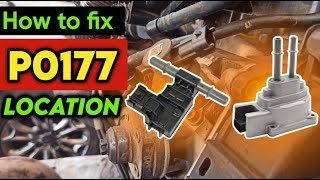
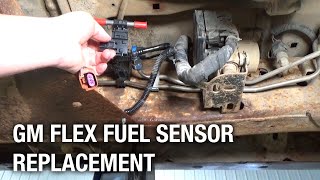
Locate the fuel composition sensor (often on the driver-side frame rail on GM trucks). Inspect the sensor, connector, and wiring harness for corrosion, cracks, rodent damage, or loose connections.
Tools: Flashlight (Beginner) - Test the Sensor Circuit
Back-probe the sensor connector with the key on. Verify 12V power, a solid ground (less than 0.1V), and a 5V reference on the signal wire. Missing power or ground indicates a wiring issue upstream of the sensor.
Tools: Multimeter, Vehicle-specific repair manual (Advanced) - Check Fuel Pressure and Quality
Connect a fuel pressure gauge to the fuel rail. Pressure must hold steady at the manufacturer's specification (typically 45-60 PSI). If the code appeared after refueling, take a fuel sample to check for water separation.
Tools: Fuel pressure gauge, Fuel sample container (Advanced) - Analyze Sensor Frequency with a Scope
Use an oscilloscope to view the sensor's output signal wire. A good sensor produces a clean, stable square wave between 50-150 Hz. A noisy or absent waveform confirms a failed sensor.
Tools: Oscilloscope, Repair manual (Advanced) - Perform a Fuel Composition Reset
After replacing the sensor or changing fuel types, reset the PCM's learned value using an advanced scan tool. Disconnecting the battery for 30 minutes forces a relearn on some older vehicles.
Tools: Advanced OBD-II Scanner (Intermediate)
When This Code Triggers (Freeze-Frame Conditions)
- Engine Coolant Temp: 175-210°F (Engine at normal operating temperature.)
- Engine RPM: 1200-3000 RPM (Steady cruise or light acceleration.)
- Calculated Engine Load: 20-70% (Vehicle is under moderate load, not idling or at full throttle.)
- Vehicle Speed: 40-65 mph (Highway or steady-speed driving.)
Related Codes
- P0176 — Indicates a generic 'Fuel Composition Sensor Circuit Malfunction' where the signal is completely lost, whereas P0177 means the signal is present but erratic.
- P0178 — Indicates 'Circuit Low Input' (frequency below 50 Hz). Points directly to a short to ground or an open signal wire.
- P0179 — Indicates 'Circuit High Input' (frequency above 150 Hz). Points directly to a short to power in the wiring harness.
- P0171 / P0174 — System Too Lean codes result directly from a P0177 fault. If the sensor falsely reads gasoline when E85 is present, the PCM commands less fuel, creating a severe lean condition.
Climate & Environmental Factors
- High Humidity and Road Salt: Accelerates corrosion on exposed frame-mounted sensors (common on GM trucks), leading directly to signal interruption and P0177 faults.
- Extreme Cold Weather: High-ethanol blends (E85) struggle to ignite below 32°F (0°C). Borderline sensors fail to compensate, causing hard starts often mistaken for total sensor failure.
How to Talk to a Mechanic About This Code
Say this: "I have a P0177 code. Before replacing the fuel composition sensor, please check the live data frequency and thoroughly inspect the wiring and connector for corrosion, as I know this is a common failure point."
Signals that you are an informed customer. It directs the shop to check for cheaper wiring issues before jumping to an expensive sensor replacement.
Avoid saying:
- 'Just fix whatever's wrong'
- 'My check engine light is on, can you look at it?'
- 'Replace the fuel sensor'
Questions to ask before authorizing the repair:
- What frequency (in Hz) was the sensor reading on your scan tool?
- Did you find any corrosion on the connector?
- Does your quote include performing the 'fuel composition reset' procedure?
- What is the warranty on the parts and labor?
Where to Take It: Dealer vs Independent vs Chain
- Dealer:
Recommended first stop for GM owners to check for free repairs. Necessary for software updates.
Best for: Vehicles under warranty, Checking for GM Special Coverage Adjustments, Repairs requiring a PCM software update
Downsides: Highest labor rate, May default to sensor replacement without checking wiring (Typical cost: +50% vs. baseline) - Independent Shop:
Best overall fit for out-of-warranty repairs, provided the shop has strong electrical diagnostic skills.
Best for: Out-of-warranty vehicles, Diagnosing and repairing wiring issues, Cost-effective sensor replacement
Downsides: Diagnostic capabilities vary widely, Cannot perform PCM software updates (Typical cost: +0% vs. baseline) - Chain Shop:
AVOID. The risk of paying for unnecessary parts is too high.
Best for: Tires and oil changes
Downsides: High likelihood of misdiagnosis, Technicians lack electrical diagnostic training (Typical cost: -10% vs. baseline)
When to Walk Away From the Repair
If the estimated repair cost exceeds 40% of the car's private-party value, consider selling the vehicle.
- Car worth $3000, fix is $900: Borderline. Get a second opinion, especially if the fix involves dropping the fuel tank.
- Car worth $15000, fix is $300: Fix it. This is a routine repair cost that preserves the vehicle's value.
- Car worth $2500, fix is $1200: Walk away. The repair cost is too high relative to the vehicle's value.
What Scan Tool You Need for This Code

Minimum: An OBD-II scanner that displays live data PIDs.
A $20 code reader cannot show the live frequency (Hz) data from the sensor. Without live data, you are guessing and will likely waste money replacing a good sensor.
Budget: BlueDriver Pro Scan Tool (~$100) — Connects to your smartphone to view and graph live fuel composition PIDs, allowing you to see if the sensor is stuck or erratic.
Mid-range: Foxwell NT510 Elite (~$150-200) — Offers manufacturer-specific diagnostics and includes the 'Fuel Composition Reset' function required after replacing the sensor.
Professional: Autel MaxiCOM MK808 (~$450-600) — Provides full bidirectional control, advanced live data graphing, and all special reset functions used by professional shops.
Rent vs buy: Borrow a scanner from an auto parts store for a one-time diagnosis. Buy a mid-range scanner if you perform regular DIY maintenance.
How to Clear the Code After You Fix It
- Use an OBD-II scan tool to clear the diagnostic trouble codes.
- Perform a 'Fuel Composition Reset' using an advanced scan tool.
- Perform a complete drive cycle to allow all readiness monitors to run.
Drive cycle (~30 minutes): Start the engine cold and idle for 3 minutes. Drive in city traffic for 10 minutes with gentle stops. Transition to a steady highway cruise at 55-65 mph for 15 minutes. Coast down without braking to set the EVAP monitor, then finish with 5 minutes of city driving.
Readiness monitors affected: Fuel System Monitor, Comprehensive Component Monitor, Catalyst Monitor, Oxygen (O2) Sensor Monitor
Before emissions retest: drive at least 50 miles to fully set monitors.
Watch out for:
- Disconnecting the battery clears the code but resets all readiness monitors to 'Not Ready', guaranteeing an emissions failure.
- Failing to perform the 'Fuel Composition Reset' causes the PCM to use old, incorrect data, triggering the code again.
Will This Fail Emissions / State Inspection?
Yes — this code typically fails an OBD-II emissions inspection.
- California: An active P0177 code is an automatic failure. All required readiness monitors must be set to 'Ready' before a retest.
- New York: A Check Engine Light on for P0177 results in an immediate safety/emissions inspection failure.
- Texas: Vehicles with P0177 fail the OBD portion of the test. The Check Engine Light must be off and monitors set.
Most Commonly Affected Vehicles
- Chevrolet / GMC Silverado, Sierra, Tahoe, Suburban, Yukon (2007-2017) — Extremely common. The frame-mounted sensor is highly susceptible to corrosion. Check GM Special Coverage Adjustment #14289.
- Ford F-150, Explorer, Expedition (2009-2017) — Prone to connector corrosion. On some models, the sensor is integrated into the in-tank fuel pump assembly, making replacement expensive.
- Dodge / Ram Ram 1500, Durango, Grand Caravan (2011-2018) — Pentastar V6 and Hemi V8 flex-fuel models experience sensor failure, frequently requiring full fuel pump module replacement.
- Nissan Titan, Armada (2012-2019) — Flex-fuel models experience internal sensor failure, triggering the code without obvious external wiring damage.
- Jeep Grand Cherokee (2011-2018) — Diagnosis often involves checking the wiring harness for abrasion damage near the transmission housing.
- Volkswagen / Audi Jetta, Passat, Q5 (2012-2018) — Sets this code alongside lean code P2177. Often triggered by a rapid, significant change in detected ethanol content after refueling.
Manufacturer-Specific Notes
- General Motors (Chevy/GMC): GM issued Special Coverage Program #14289 for faulty flex fuel sensors. Owners should contact a dealer with their VIN, as GM extends the warranty on this specific part to 10 years/150,000 miles.
- Ford: On certain F-series trucks, the sensor is integrated into the fuel pump module inside the fuel tank, increasing the labor cost of replacement by $300-$500.
- Audi / Volkswagen: A rapid change in ethanol content (e.g., switching from E85 to 91 octane) triggers a temporary P0177. Clear the code and drive to see if the system adapts before replacing parts.
Real Owner Stories
2014 Chevy Silverado 1500 at 110K miles
Check Engine Light came on with code P0177. Vehicle idled roughly and hesitated on acceleration.
Outcome: Spliced in a new pigtail (ACDelco PT2712) and replaced the sensor (GM #13577394), resolving the issue entirely.
Lesson: On GM trucks, inspect the exposed sensor and connector on the frame rail first. Corrosion is the most likely culprit.
2013 GMC Terrain at 85K miles
P0177 code disabled the remote start system. No other drivability symptoms were present.
Outcome: The dealership replaced the sensor for free under GM Special Coverage Adjustment #14289, despite the vehicle being out of standard warranty.
Lesson: Always check for TSBs and special warranty extensions for your VIN. Manufacturers frequently cover common failures outside the normal warranty period.
2011 Ford F-150 5.0L V8 at 130K miles
P0177 code present alongside P0171 and P0174 (System Too Lean). The truck suffered terrible fuel economy.
Outcome: A mechanic diagnosed a failed fuel composition sensor falsely reporting high ethanol content. The PCM leaned out the mixture to compensate, triggering the lean codes. Replacing the sensor fixed all three codes.
Lesson: A faulty fuel composition sensor causes lean or rich codes. Fix P0177 before chasing air-fuel mixture codes.
How to Prevent This Code From Triggering
- Apply dielectric grease to the connector pins (Whenever the connector is disconnected) — Seals out moisture and prevents oxygen from reaching the metal pins, stopping the corrosion that causes P0177.
- Use Top Tier certified gasoline (Every fill-up) — Top Tier fuels contain higher detergent levels, keeping the fuel system cleaner and reducing contaminants that foul the sensor.
- Secure the wiring harness (During inspection or repair) — Prevents the sensor's wiring from rubbing against frame components, avoiding shorts or open circuits.
Frequently Asked Questions
What are the most common mistakes when diagnosing P0177?
The biggest mistake is replacing the fuel composition sensor without testing the circuit. The actual cause is frequently a corroded connector, a bad ground wire, or water-contaminated fuel. Always verify wiring integrity and fuel quality before buying a $200 sensor.
Is P0177 for a fuel temperature sensor or a water-in-fuel sensor?
No, P0177 refers specifically to the Fuel Composition (Ethanol) Sensor on gasoline flex-fuel vehicles. While this sensor also measures fuel temperature, its primary job is calculating ethanol percentage. It is completely unrelated to diesel 'water-in-fuel' systems.
Can bad gas or the wrong fuel cause a P0177 code?
Yes. Fuel with high water content or improper ethanol blending causes the sensor to send erratic signals. If the code appears immediately after refueling, fuel contamination is the primary suspect.
What does the fuel composition sensor frequency (Hz) mean?
The sensor outputs a digital frequency measured in Hertz (Hz) to indicate ethanol percentage. A frequency of 50 Hz indicates pure gasoline, while 150 Hz indicates E85. P0177 sets when this frequency fluctuates illogically or falls outside that 50-150 Hz range.
Will this code cause me to fail an emissions test?
Yes. An active P0177 code illuminates the Check Engine Light, resulting in an automatic emissions test failure in all jurisdictions.
Why did this code appear right after I got gas?
Switching rapidly between E85 and regular gas causes a slow-to-respond sensor to trigger the code as it struggles to adapt. Alternatively, you pumped fuel contaminated with water, which immediately skews the sensor's readings.
Can I just use regular gas and ignore the code?
No. The faulty sensor continuously feeds bad data to the PCM, causing poor performance, terrible fuel economy, and eventual catalytic converter failure regardless of the fuel type used.
Will a fuel additive or injector cleaner fix P0177?
No. P0177 indicates an electrical circuit fault, a failed sensor, or a software issue. Pouring additives into the gas tank will not repair corroded wiring or a broken sensor.
How do you perform a fuel composition reset?
Use an advanced OBD-II scan tool equipped with a 'Fuel Composition Reset' or 'Alcohol Content Reset' function. If a scanner is unavailable, disconnecting the battery for 30 minutes forces a relearn on some vehicles.
What is a flex-fuel vehicle?
A flex-fuel vehicle (FFV) runs on regular gasoline, E85 (85% ethanol), or any mixture of the two. The fuel composition sensor calculates the exact mixture so the engine computer can adjust fuel delivery and timing.
Key Takeaways
- P0177 triggers exclusively on flex-fuel vehicles when the Powertrain Control Module receives an erratic ethanol percentage signal from the fuel composition sensor.
- Corroded wiring connectors and failed frame-mounted sensors account for over 80% of P0177 failures, especially on 2007-2017 GM trucks.
- Driving more than 200 miles with an active P0177 code forces the engine to run excessively rich or lean, risking a $1,500+ catalytic converter replacement.
- Verify the sensor's live frequency data (50 Hz for regular gas, 150 Hz for E85) with an advanced OBD-II scanner before spending $200+ on replacement parts.
Helpful Videos

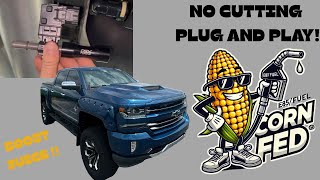

The information in this article is provided for general reference and educational purposes only. Vehicle specifications, procedures, and part compatibility can vary by production date, trim level, and region. Always consult your vehicle's factory service manual and verify part numbers before purchasing or performing repairs. Safety-critical components such as airbags, seat belts, and braking systems should be installed by a qualified professional.
- 🎬 Helpful Videos
- What Does P0177 Mean?
- Can I Drive With P0177?
- Common Causes
- Symptoms
- Diagnostic Flowchart
- Common Fixes & Costs
- DIY vs Professional
- Used vs. New Parts: Buying Guide
- What Happens If You Wait — Timeline
- Cost of Not Fixing It
- Diagnosis Steps
- When This Code Triggers (Freeze-Frame Conditions)
- Related Codes
- Climate & Environmental Factors
- How to Talk to a Mechanic About This Code
- Where to Take It: Dealer vs Independent vs Chain
- When to Walk Away From the Repair
- What Scan Tool You Need for This Code
- How to Clear the Code After You Fix It
- Will This Fail Emissions / State Inspection?
- Most Commonly Affected Vehicles
- Manufacturer-Specific Notes
- Real Owner Stories
- 2014 Chevy Silverado 1500 at 110K miles
- 2013 GMC Terrain at 85K miles
- 2011 Ford F-150 5.0L V8 at 130K miles
- How to Prevent This Code From Triggering
- Frequently Asked Questions
- What are the most common mistakes when diagnosing P0177?
- Is P0177 for a fuel temperature sensor or a water-in-fuel sensor?
- Can bad gas or the wrong fuel cause a P0177 code?
- What does the fuel composition sensor frequency (Hz) mean?
- Will this code cause me to fail an emissions test?
- Why did this code appear right after I got gas?
- Can I just use regular gas and ignore the code?
- Will a fuel additive or injector cleaner fix P0177?
- How do you perform a fuel composition reset?
- What is a flex-fuel vehicle?
- Key Takeaways
- 🎟️ Get 5% Off