

P0175 on 2017-2019 Toyota Tundra: System Too Rich Bank 2 Causes and Fixes
P0175 on a 2017-2019 Toyota Tundra means the engine is running too rich on Bank 2 (driver's side). For Flex Fuel models (3UR-FBE engine), the most frequent cause is an incorrect alcohol density reading in the ECU, which can be reset with a bidirectional scan tool. For all models, other common causes are a dirty Mass Airflow (MAF) sensor or a failing upstream Air/Fuel ratio sensor on the driver's side.
- P0175 means your Tundra's engine is getting too much fuel on the driver's side bank (Bank 2).
- If you have a Flex Fuel Tundra, the most likely cause is a software glitch related to alcohol content in the fuel, which can often be fixed with a scan tool reset.
- For all other models, the most common fixes are cleaning the Mass Airflow (MAF) sensor or replacing the upstream Air/Fuel Ratio sensor on the driver's side.
- Do not ignore this code. Driving for too long can lead to reduced fuel economy and potentially damage your expensive catalytic converter.
What's Unique About the 2017-2019 Toyota TUNDRA
The 2017-2019 Tundra, especially models with the 5.7L Flex Fuel V8 (engine code 3UR-FBE), has a well-documented issue where the ECU incorrectly calculates a high percentage of alcohol in the fuel, even when running on standard E10 gasoline. This false high reading (often showing 85%) causes the computer to inject excess fuel to compensate for the perceived ethanol content, leading directly to P0175 (Rich Bank 2) and often P0172 (Rich Bank 1). Toyota has issued Technical Service Bulletin T-SB-0166-19_Rev to address this specific problem, which may require an ECU reflash and/or fuel pump replacement in addition to resetting the value.
Diagnostic Flowchart
Tap your situation to follow the diagnostic path that matches what you're seeing on this vehicle.
Symptoms You May Notice
- Check Engine Light is on
- Poor fuel economy
- Strong smell of unburnt fuel from the exhaust
- Rough idling or stalling
- Hesitation or lack of power during acceleration
- Black smoke from the exhaust in severe cases
- Extended cranking on startup (especially on Flex Fuel models)
- Replacing the downstream (post-catalyst) oxygen sensor. The downstream sensor's primary role is to monitor catalytic converter efficiency, not control the primary air-fuel mixture.
Most Likely Causes
- Incorrect Alcohol Density Reading (Flex Fuel Models) 🔴 High Probability The ECU on 5.7L Flex Fuel (3UR-FBE) engines is known to miscalculate the alcohol percentage in the fuel, causing it to enrich the mixture unnecessarily. This is a widely known issue addressed by Toyota TSB T-SB-0166-19_Rev.
How to confirm: Use a scan tool to view the 'Alcohol Density' or 'Alcohol Fuel Density' live data PID. If the value is high (e.g., over 15-20%, often stuck at 85%) while using standard gasoline, this is the likely cause. Long-term fuel trims will also be highly negative, often -20% or more.
Typical fix: Perform a 'Fuel Density Learning Value Reset' using a capable bidirectional scan tool. 🎬 Watch: How to reset alcohol density using a scan tool. Owners have confirmed success using tools like the Launch CRP919E and XTOOL D7/D8. In some cases, the ECU may require a software update (reflash) from a Toyota dealer as per TSB T-SB-0166-19_Rev, which may also involve a fuel pump replacement.
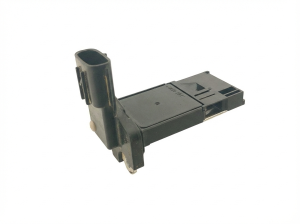
Est. part cost: $0 if using own scan tool, dealer costs for reflash can be $150-$300. - Dirty or Faulty Mass Airflow (MAF) Sensor 🔴 High Probability The MAF sensor measures the amount of air entering the engine. If it's dirty from dust or over-oiled air filters, it will under-report the airflow, causing the ECU to inject too much fuel. This is a very common issue on many vehicles, including the Tundra.
How to confirm: Inspect the sensor element for dirt or debris. A low MAF reading on a scan tool can indicate a problem. For the 5.7L V8, a healthy MAF should read approximately 5.0-6.5 g/s at a stable, warm idle. Readings significantly below this suggest a dirty or faulty sensor.
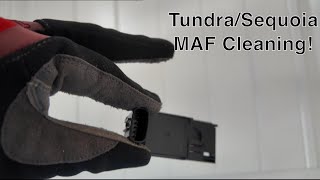
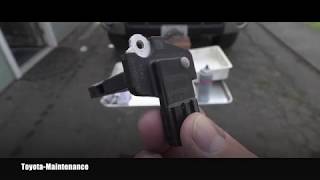
Typical fix: Clean the sensor using a dedicated MAF sensor cleaner spray. 🎬 See this walkthrough on cleaning your Tundra's MAF sensor. Do not touch the sensor wires. If cleaning doesn't resolve the issue, the sensor must be replaced. It's recommended to use the OEM Denso sensor, as owners report issues with aftermarket knockoffs.
Est. part cost: $10-$15 for cleaner, $70-$150 for a new Denso sensor - Faulty Air/Fuel Ratio Sensor (Bank 2, Sensor 1) 🟡 Medium Probability This sensor, also known as an upstream oxygen sensor, provides the primary feedback for the air-fuel mixture on Bank 2. If it becomes slow, biased, or fails, it can send incorrect rich signals to the ECU, causing it to reduce fuel unnecessarily.
How to confirm: Use a scan tool to graph the sensor's voltage. A healthy sensor will fluctuate rapidly. If it's stuck on a high voltage reading (e.g., above 3.4V for this A/F type sensor) or responds very slowly to throttle changes, it's likely faulty.
Typical fix: Replace the Bank 2, Sensor 1 Air/Fuel Ratio sensor. It is located on the driver's side exhaust manifold, before the catalytic converter. An O2 sensor socket is recommended 🎬 Watch: How to replace the Bank 2 Air/Fuel sensor. for removal.
Est. part cost: $100-$200 for a Denso sensor - Leaking Fuel Injector(s) on Bank 2 ⚪ Low Probability
How to confirm: Perform a fuel pressure leak-down test; a drop in pressure after the engine is off can indicate a leak. You can also pull the spark plugs on Bank 2 and check for one that is black, sooty, and smells of fuel, indicating a rich condition in that specific cylinder. A professional can perform a cylinder balance test using a scan tool's 'Control the Select Cylinder Fuel Cut' function to isolate the injector.
Typical fix: Replace the leaking fuel injector(s). It is often recommended to replace them as a set on the affected bank to ensure balanced flow.
Est. part cost: $50-$150 per injector
Rare But Worth Checking
- High Fuel Pressure: A faulty fuel pressure regulator or a restriction in the fuel return line can cause system-wide high fuel pressure, leading to rich codes on both banks.
- Clogged Air Filter: A severely clogged engine air filter can restrict airflow enough to cause a rich condition. It's a simple and inexpensive item to check first.
- Exhaust Leak Before A/F Sensor: An exhaust leak between the cylinder head and the upstream A/F sensor on Bank 2 can draw in outside air. This makes the sensor read a false lean condition, causing the ECU to add excessive fuel to compensate, which results in an actual rich condition.
Diagnosis Steps
- Check for other codes. If P0172 is also present, focus on causes common to both banks (MAF, fuel pressure, alcohol density).
- If you have a Flex Fuel model (3UR-FBE engine), use a scan tool to check the 'Alcohol Fuel Density' value. If it's high (e.g., >20%) and you're using regular gas, perform the 'Fuel Density Learning Value Reset'. This is the most likely fix.
- Inspect the air intake system for any blockages and check the engine air filter. Ensure the filter is not over-oiled.
- Using a scan tool, observe the MAF sensor reading at warm idle. It should be around 5.0-6.5 g/s. If it's significantly lower, remove and inspect the sensor. If it appears dirty, clean it with dedicated MAF cleaner and re-evaluate.
- Use a scan tool to graph the live data for the Bank 2, Sensor 1 (upstream) Air/Fuel Ratio sensor. If it's stuck rich (high voltage) or slow to respond to throttle changes, it likely needs replacement.
- Check for exhaust leaks before the Bank 2 A/F sensor. A ticking noise from the exhaust manifold area can be an indicator.
- Perform a fuel pressure test to ensure it is within specification. High pressure could indicate a faulty regulator.
- If all else fails, inspect the fuel injectors on Bank 2 for leaks, possibly requiring a professional balance test.
Parts You'll Likely Need
- Mass Airflow (MAF) Sensor Cleaner — Cleaning a dirty MAF sensor is the easiest and cheapest first step, and it frequently resolves the P0175 code, especially when P0172 is also present.
Trusted brands: CRC, WD-40 Specialist
Aftermarket price range: $10-$15 - Air/Fuel Ratio Sensor (Bank 2, Sensor 1)
(OEM #89467-0C050)— This is the primary sensor for controlling the air-fuel mixture on the driver's side bank. It is a common failure point that directly causes a P0175 code.
Trusted brands: Denso (OEM supplier, P/N 234-9144 is a common cross-reference)
OEM price range: $180-$250
Aftermarket price range: $100-$160 - Mass Airflow (MAF) Sensor
(OEM #22204-0V020)— If cleaning the MAF sensor doesn't work, the sensor itself may have failed and will need to be replaced. Using the OEM Denso part is highly recommended.
Trusted brands: Denso (OEM supplier, P/N VN197400-5380 is a cross-reference)
OEM price range: $120-$180
Aftermarket price range: $70-$120
Related Codes That Often Appear With This One
- P0172 — System Too Rich (Bank 1). If both P0172 and P0175 are present, it points to a problem affecting both engine banks, like a faulty MAF sensor, high fuel pressure, or the alcohol density issue on Flex Fuel models.
- P1604 — Startability Malfunction. Toyota TSB T-SB-0166-19_Rev specifically links this code with P0172/P0175 on Flex Fuel models due to the incorrect alcohol density reading causing extended crank times.
- P0430 — Catalyst System Efficiency Below Threshold (Bank 2). A prolonged rich condition can overheat and damage the catalytic converter, eventually leading to this code.
Technical Service Bulletins (TSBs) & Recalls
- T-SB-0166-19_Rev: Supersedes previous bulletins. For 2009-2019 Tundra/Sequoia with 3UR-FBE engines, it addresses hard starts and rich/lean codes (P0172/P0175). It outlines a procedure to reprogram the ECM, replace the fuel pump, and reset the fuel alcohol learn value. It notes this repair may be covered under the Toyota Federal Emission Warranty (96 months/80,000 miles).
- T-SB-0166-19: An earlier revision of the same bulletin, addressing the same set of DTCs including P0175.
- T-SB-0058-13: An older, now obsolete bulletin that was the predecessor to T-SB-0166-19, covering the same alcohol density issue on 2012-2015 models.
Platform-Specific Known Issues
- On Flex Fuel models (3UR-FBE engine), the ECU can misread the alcohol content of the fuel, causing it to run rich. This is a known issue addressed by Toyota TSB #T-SB-0166-19_Rev. The fix may require an ECU reflash and fuel pump replacement at a dealer, or for many owners, a simple reset of the 'Fuel Density Learning Value' using a bidirectional scan tool like a Launch CRP919E or XTOOL D7 is sufficient.
Mechanic-Grade Diagnostic Values
- Fuel Pressure (3UR-FBE Flex Fuel models) — expected: Low pressure setting: 270 to 330 kPa (39-48 psi). High pressure setting: 370 to 430 kPa (54-62 psi).. Failure: Pressure significantly outside the expected range for the current setting.
- Long-Term Fuel Trim (Bank 2) — expected: Typically between -10% and +10% on a healthy engine.. Failure: Sustained values more negative than -20% will trigger the code. Readings as low as -44% have been reported in severe cases.
- Mass Airflow (MAF) Sensor at warm idle — expected: Approximately 5.0 to 6.5 g/s.. Failure: Readings significantly below 5.0 g/s at idle suggest a dirty or faulty sensor.
Scan Tool Commands That Help
- Toyota Techstream, Launch, Autel, Xtool: Fuel Density Learning Value Reset — This is the primary diagnostic step and fix for Flex Fuel (3UR-FBE) models when the 'Alcohol Fuel Density' PID is erroneously high (e.g., >20%) while using standard gasoline. Performing this reset returns the value to zero and also resets fuel trims. The typical menu path is Diagnostics > System Selection > ECM/ECT > Special Functions > Fuel Density Learning Value Reset.
- Toyota Techstream: Control the Select Cylinder Fuel Cut — Use this active test to diagnose a potentially leaking fuel injector on Bank 2 after other common causes have been ruled out. By shutting off fuel to one cylinder at a time, you can observe changes in idle. If cutting fuel to a specific cylinder has little to no effect on idle smoothness, it indicates that cylinder was already running excessively rich, likely due to a leaking injector.
Real Owner Repair Stories
- Tundras.com forum user (1st Gen Tundra (demonstrates a relevant issue)) — P0172 and P0175 codes, truck running great.
❌ Tried (didn't work) Replacing various parts with components from Amazon/eBay which were suspected to be counterfeit or incorrect.
✅ What actually fixed it The user had an aftermarket Secondary Air Injection System (SAIS) bypass kit installed. A dealer diagnosed that the bypass kit itself was causing the rich condition. After disconnecting the bypass kit, the fuel trims returned to normal and the rich codes were resolved (though the original SAIS code returned, proving the bypass kit was the cause of the P0172/P0175). - Tundras.com forum user (2005 Tundra DC 4.7L) — Recurring P0172, P0175, and P0101 codes, surging and high idle on cold starts.
❌ Tried (didn't work) Clearing the codes repeatedly.
✅ What actually fixed it The user cleaned the throttle body and MAF sensor. Critically, they also discovered and tightened a very loose nut on the throttle body, sealing a likely unmetered air leak. The user confirmed months later that the codes had not returned, indicating this was the final fix.
"I Checked Everything" — The Actual Cause
- The primary cause on Flex Fuel models, an incorrect 'Alcohol Fuel Density' value, is a software issue within the ECU. A smoke test for vacuum leaks would come back clean, as there is no physical leak causing the rich condition.
- A faulty aftermarket Secondary Air Injection System (SAIS) bypass kit can electronically cause the ECU to command a rich mixture. This would not be found with a smoke test, as it is not a leak in the intake or exhaust path.
When the Usual Fixes Don't Work
- While the most common causes for P0175 are related to the fuel and air measurement systems (A/F sensor, MAF sensor, alcohol density), real-world cases show that unrelated aftermarket components can be the root cause. In one confirmed instance, a faulty Secondary Air Injection System (SAIS) bypass kit was causing the ECU to command a rich fuel mixture, triggering both P0172 and P0175. A technician following the standard diagnostic tree might replace multiple sensors without success, because the problem originated from a non-OEM electronic module that was interfering with the ECU's calculations. This highlights the importance of identifying and considering any aftermarket modifications during diagnosis.
OEM Part Supersession History
22204-0T020, 22204-0V010, 22204-0T040→22204-0V020— Standard part revision and consolidation by the manufacturer.
Model Year Variations Within This Range
- 2017-2019: No significant variations affecting the diagnosis or common causes of P0175 exist within this specific model year range. The 5.7L V8 engine and its fuel systems (both standard and Flex Fuel) remained consistent. The primary known issues, like the alcohol density calculation on 3UR-FBE engines, apply across this entire range and earlier models.
Helpful Videos
Used OEM Parts in Stock
New Aftermarket Parts Available


The information in this article is provided for general reference and educational purposes only. Vehicle specifications, procedures, and part compatibility can vary by production date, trim level, and region. Always consult your vehicle's factory service manual and verify part numbers before purchasing or performing repairs. Safety-critical components such as airbags, seat belts, and braking systems should be installed by a qualified professional.
- Toyota TUNDRA:
- 🎬 Helpful Videos
- 🛍️ Shop This Part
- What's Unique About the 2017-2019 Toyota TUNDRA
- Diagnostic Flowchart
- Symptoms You May Notice
- Most Likely Causes
- Rare But Worth Checking
- Diagnosis Steps
- Parts You'll Likely Need
- Related Codes That Often Appear With This One
- Technical Service Bulletins (TSBs) & Recalls
- Platform-Specific Known Issues
- Mechanic-Grade Diagnostic Values
- Scan Tool Commands That Help
- Real Owner Repair Stories
- "I Checked Everything" — The Actual Cause
- When the Usual Fixes Don't Work
- OEM Part Supersession History
- Model Year Variations Within This Range
- 🎟️ Get 5% Off