

P0175 on 2007-2016 Toyota Sienna: Causes and Fixes for Rich Fuel Condition
On the Toyota Sienna with the 3.5L V6, code P0175 is most often caused by a dirty or faulty Mass Airflow (MAF) sensor or a failing Bank 2 Air/Fuel Ratio sensor. Cleaning the MAF sensor is a common first step and may resolve the issue for under $20. Using a cheap aftermarket MAF sensor is a known cause of this code.
- P0175 means Bank 2 (front bank, near radiator) is running too rich.
- Before buying any parts, spend $15 on a can of MAF Sensor Cleaner and clean your MAF sensor; this is a very common fix.
- If you replace the MAF sensor, use a Denso (OEM) part. Cheap aftermarket sensors are a known cause of this problem on the 2GR-FE engine.
- If cleaning the MAF doesn't work, the next most likely culprit is the Bank 2 Air/Fuel Ratio sensor.
What's Unique About the 2007-2016 Toyota Sienna
The 2GR-FE engine in the Sienna is generally reliable, but it can be sensitive to the quality of its sensors, particularly the Mass Airflow (MAF) sensor. Owners and technicians have found that using cheap, poorly designed aftermarket MAF sensors can directly cause a P0175 code, sometimes in conjunction with P0172 (Bank 1 Rich). These incorrect sensors can have different internal housing designs that alter airflow, causing them to miscalculate airflow, especially at idle, leading the computer to inject the wrong amount of fuel. Sticking with a high-quality OEM brand like Denso for sensors is critical on this platform.
Generation note: This range covers the second generation (XL20, 2007-2010) and third generation (XL30, 2011-2016) Sienna. Both generations used the 3.5L 2GR-FE V6 engine, so the causes and diagnostic procedures for P0175 are virtually identical. However, specific part numbers for sensors may differ, so always verify by year and VIN.
Symptoms You May Notice
- Check Engine Light is on
- Reduced fuel economy
- A noticeable smell of gasoline from the exhaust
- Rough or stumbling idle
- Hesitation or lack of power during acceleration
- Black smoke from the exhaust in severe cases
- Failed emissions test
- Immediately replacing the Air/Fuel (O2) sensor without checking the MAF sensor first. The O2 sensor is often just reporting the problem, not causing it.
- Replacing a faulty MAF sensor with a cheap, low-quality aftermarket part, which may not fix the problem or could even make it worse due to incorrect calibration.
Most Likely Causes
- Dirty or Faulty Mass Airflow (MAF) Sensor 🔴 High Probability The MAF sensor wire can become contaminated with dirt and oil over time, causing it to inaccurately measure the air entering the engine. This engine is also extremely sensitive to low-quality aftermarket sensors which may not be calibrated correctly, directly causing rich codes.
How to confirm: With the engine off, unplug and remove the MAF sensor. Visually inspect the small wires inside for dirt or debris. A more advanced check involves monitoring the MAF sensor data (grams/second) with an OBD-II scan tool to see if it responds correctly to changes in engine RPM. At idle, a reading that is significantly higher than expected for the engine displacement would indicate a fault.
Typical fix: First, try cleaning the sensor with a dedicated MAF sensor cleaner spray. Do not touch the wires. If cleaning doesn't work, or if testing shows the sensor is faulty, it must be replaced. It is highly recommended to use an OEM (Denso) part to avoid further issues.
Est. part cost: $15-$25 for cleaner, $100-$200 for a quality replacement sensor. - Faulty Bank 2 Air/Fuel Ratio Sensor (Upstream O2 Sensor) 🟡 Medium Probability These sensors operate in a harsh exhaust environment and have a finite lifespan of around 80k-100k miles. As they age, they can become slow to respond or send incorrect voltage signals, tricking the ECU into thinking the engine is running rich when it isn't.
How to confirm: Use an OBD-II scan tool with live data capabilities to graph the voltage of the Bank 2, Sensor 1 (A/F sensor). A healthy sensor will show rapid fluctuations. A lazy or flat-lining sensor, or one that is biased high (indicating rich) even when the engine is forced lean, is a sign of failure. A resistance test can also be performed; a healthy sensor should have a resistance between 1.8 to 3.4 Ω at 20°C (68°F) between terminals 1 and 2.
Typical fix: Replace the Bank 2, Sensor 1 Air/Fuel Ratio sensor. Bank 2 is the cylinder bank closer to the front of the vehicle (radiator), making this sensor more accessible than Bank 1. 🎬 See this walkthrough for replacing the Bank 2 sensor
Est. part cost: $120-$250 for a quality Denso sensor. - Leaking Fuel Injector(s) ⚪ Low Probability Injectors can fail mechanically, getting stuck partially open or dripping fuel after the engine is shut off. This introduces uncommanded fuel into a cylinder on Bank 2.
How to confirm: This is more difficult to confirm. A professional may perform a fuel pressure leak-down test. If fuel pressure drops quickly after the engine is shut off, it can indicate a leaking injector. Another method is to remove the spark plugs on Bank 2 and inspect them; a plug that is black and sooty compared to the others indicates a rich condition in that specific cylinder, pointing to a specific injector. The resistance of an injector should be between 11.6 and 12.4 Ω at 20°C (68°F).
Typical fix: Replace the leaking fuel injector(s) on Bank 2. It is often recommended to replace them as a set for that bank to ensure balanced fueling.
Est. part cost: $70-$150 per injector.
Rare But Worth Checking
- High Fuel Pressure: A faulty fuel pressure regulator or a clogged fuel return line can cause excessive pressure, forcing too much fuel into the engine. This would typically affect both banks, also triggering a P0172 code. The correct fuel pressure for the 2GR-FE is 304 to 343 kPa (44 to 50 psi).
- Stuck-Open Thermostat or Faulty Engine Coolant Temperature (ECT) Sensor: If the engine fails to reach its proper operating temperature (around 180-200°F), the ECU will intentionally run a richer fuel mixture to compensate. This would likely be accompanied by a low temperature gauge reading or a specific thermostat/ECT code.
- Stuck-Open PCV Valve or Purge Solenoid: A Positive Crankcase Ventilation (PCV) valve or an EVAP purge solenoid that is stuck open can introduce unmetered fuel vapors into the intake manifold, causing a rich condition that can affect both banks. This can sometimes be diagnosed by monitoring EVAP data on a scan tool or by testing the solenoid's operation.
Diagnosis Steps
- Use an OBD-II scanner to confirm the P0175 code. Check and record the freeze frame data, which shows engine conditions when the code was set.
- Check for any other codes, like P0172. If both are present, focus on components common to both banks (MAF, fuel pressure).
- View live data on the scanner. Look at Short-Term (STFT) and Long-Term Fuel Trims (LTFT) for Bank 2. They will be highly negative (e.g., LTFT at -15% or lower). 🎬 Watch: How to test fuel trims for rich codes Compare with Bank 1 trims.
- Inspect the air intake system between the MAF sensor and the throttle body for any blockages or restrictions. Check the air filter.
- Turn off the engine. Locate and remove the MAF sensor. Carefully clean it using only dedicated MAF sensor cleaner. Do not touch the internal wires. Allow it to dry completely.
- Reinstall the MAF sensor, clear the codes, and perform a drive cycle. Many times, this is the fix. 🎬 Watch: Full diagnostic and repair guide for P0175
- If the code returns, use the scan tool to monitor the Bank 2, Sensor 1 (A/F sensor) voltage and response. A lazy or biased sensor needs replacement. A healthy sensor's voltage should fluctuate rapidly.
- If sensors appear to be working, suspect a fuel delivery issue. Check fuel pressure to ensure it's within specification (44-50 psi for the 2GR-FE). A high reading points to a regulator issue.
- If fuel pressure is normal, the issue may be a leaking fuel injector on Bank 2. Pull the spark plugs on Bank 2 and look for one that is significantly more fouled or wet with fuel than the others.
Parts You'll Likely Need
- Mass Airflow (MAF) Sensor
(OEM #22204-31020 (interchangeable with 22204-0V020))— This is the most common cause. It gets dirty or fails, providing incorrect air measurement to the ECU, leading to a rich condition. Using a quality part is critical.
Trusted brands: Denso (OEM)
OEM price range: $150-$210
Aftermarket price range: $50-$120 - Air/Fuel Ratio Sensor (Bank 2, Sensor 1)
(OEM #89467-08040 (supersedes 89467-08020))— This sensor detects the rich condition and is the second most likely part to have failed. It is located on the exhaust manifold of the cylinder bank closer to the radiator.
Trusted brands: Denso (OEM)
OEM price range: $180-$250
Aftermarket price range: $100-$160 - MAF Sensor Cleaner — A very common and inexpensive first step is to clean the existing MAF sensor, which can often resolve the issue without replacing parts.
Trusted brands: CRC, WD-40 Specialist
Aftermarket price range: $15-$25
Related Codes That Often Appear With This One
- P0172 — System Too Rich (Bank 1). If both P0172 and P0175 are present, it points to a problem common to both banks, such as the MAF sensor or fuel pressure regulator, rather than a single A/F sensor or injector.
- P1604 — Startability Malfunction. Manufacturer service bulletins, such as TSB Bulletin #T-SB-0166-19, note that P0175 may appear alongside P1604, where Techstream data list analysis may reveal negative fuel trims.
Platform-Specific Known Issues
- Aftermarket MAF Sensor Failure Case Study: A detailed diagnostic video on a 2014 Sienna with P0172 and P0175 codes traced the fault to a recently installed aftermarket MAF sensor. The sensor's physical design was different from the OEM Denso part, causing it to over-report airflow at idle (causing the rich condition) and under-report airflow at wide-open throttle. Replacing it with a genuine Denso sensor fixed the problem.
- Forum Experience: MAF Cleaning Success: A user on the SiennaChat forum with a 2011 Sienna reported getting P0172 and P0175 codes. Following advice, they cleaned the MAF sensor and the throttle body. This simple procedure resolved the codes and restored normal engine operation.
Technical Service Bulletins (TSBs) & Recalls
- TSB Bulletin #T-SB-0166-19_Rev: This manufacturer bulletin describes a condition where P0175 (System Too Rich Bank 2) may occur in conjunction with P1604. Analysis of the Techstream data list in these cases often reveals negative fuel trims and an elevated air-fuel ratio.
- TSB Bulletin #T-SB-0166-19: A similar manufacturer service bulletin notes that a rich condition triggering P0172 and/or P0175 may be accompanied by a startability malfunction (P1604), indicating the ECU is struggling to manage fuel delivery during ignition.
Mechanic-Grade Diagnostic Values
- Fuel Pressure — expected: 304 to 343 kPa (44 to 50 psi). Failure: Pressure significantly higher than 50 psi can cause a rich condition.
- Fuel Pressure Leak-Down — expected: 147 kPa (21 psi) or more after 5 minutes. Failure: Pressure dropping below 21 psi in 5 minutes suggests a leaking injector or faulty fuel pressure regulator.
- Air/Fuel Ratio Sensor Heater Resistance — expected: 1.8 to 3.4 Ω at 20°C (68°F). Failure: Resistance outside this range indicates a faulty sensor heater circuit.
- Fuel Injector Resistance — expected: 11.6 to 12.4 Ω at 20°C (68°F). Failure: Resistance outside this range indicates a faulty injector coil.
- Long Term Fuel Trim (LTFT) — expected: Between -10% and +10%. Failure: A consistent reading of -15% to -30% indicates the ECM is subtracting a large amount of fuel to compensate for a rich condition, triggering P0175.
- A/F Sensor Voltage (Live Data) — expected: Around 3.3V at 2,500 RPM (on Toyota Techstream). Failure: A voltage that is stuck high (lean) or low (rich) and does not fluctuate indicates a failed sensor. Note: A/F sensors operate opposite to traditional O2 sensors; lower voltage means richer.
Scan Tool Commands That Help
- Toyota Techstream: Active Test: Control the Injection Volume — This allows a technician to incrementally increase or decrease fuel injection volume for a specific bank to test the A/F sensor's response. If you command more fuel and the sensor doesn't respond accordingly, it points to a sensor issue.
- Toyota Techstream: Utility: Reset Memory — After replacing a major component like a MAF sensor or A/F sensor, this function should be used to clear the old, learned fuel trim values from the ECM. This forces the computer to relearn fuel strategy immediately with the new part.
- Toyota Techstream: Data List: A/FS B2 S1 — Used to monitor the live voltage output of the Bank 2 Air/Fuel sensor. A healthy sensor will show rapid fluctuations around a central voltage, while a failing one may be slow, stuck, or biased.
Wiring & Ground Locations
- Bank 2, Sensor 1 Connector — On the 2GR-FE, the Bank 2 (front) A/F sensor connector is typically clipped to a bracket near the upper radiator hose, easily accessible from the top of the engine bay.. Corrosion or damage at this connector can interrupt the sensor signal, causing incorrect readings and triggering a P0175 code. It's a key point for voltage and resistance testing.
- ECM Ground Points — Key engine ground points for the 2GR-FE are located on the cylinder heads and the engine block, typically near the starter and transmission bell housing. Specific ground distribution diagrams for a 2011 Sienna show multiple 'E' series ground points in the engine bay.. A poor ground connection for the ECM or its sensors can cause floating voltages and erratic signals, leading to incorrect fuel calculations and codes like P0175.
- ECM Pins for A/F Sensor (Bank 2) — On a common 2GR-FE ECM connector (e.g., A35), the pins for the Bank 2 Sensor 1 are designated for the heater (+B, HA1A) and sensor signal (A1A-, A1A+). Technicians can back-probe these pins to test the signal directly at the computer.. Allows for end-to-end testing of the sensor circuit. If the signal is good at the sensor connector but bad at the ECM, it indicates a wiring problem in between.
OEM Part Supersession History
22204-31010, 22204-0P010→22204-31020— Standard part revision and consolidation across multiple models.89467-08020→89467-08040— Updated sensor design for improved accuracy or durability.
Model Year Variations Within This Range
- 2011-2016: While the core 2GR-FE engine remained, some ECU software logic and connector types may have minor variations. The A/F sensor part number 89467-08040 is most associated with the XL30 (2011+) generation, superseding the earlier part used on the XL20.
Diagnostic Flowchart
Other Known Issues on This Vehicle
Issues unrelated to this code that are worth knowing about as an owner of this generation:
- Rupturing VVT-i Oil Line 🔴 High — Common on earlier 2GR-FE engines (approx. 2007-2010). The rubber portion of the Bank 1 VVT-i oil line can burst without warning, leading to catastrophic oil loss and engine seizure. (Ref: Toyota issued a Limited Service Campaign (LSC) to replace the rubber hose with an all-metal line (Part No. 15772-31030). Many vehicles may have missed this campaign.)
- Power Sliding Door Cable Failure 🟠 Medium — Extremely common across all years. The steel cable that pulls the door open and closed is prone to fraying and snapping, rendering the power function inoperative. (Ref: TSB-0141-18 and TSB-0085-09 address this. Toyota also initiated Customer Support Program ZKD, extending warranty coverage for this specific failure to 10 years from the date of first use.)
- Melting or Sticky Dashboard 🟡 Low — Widespread issue on 2004-2010 models, especially in hot, humid climates. The dashboard material degrades, becoming shiny, sticky to the touch, and emitting a chemical odor. (Ref: Toyota created Warranty Enhancement Program ZE6, which extended coverage for dashboard replacement for this issue.)
- Engine Oil Sludge Buildup 🟠 Medium — Can occur if oil change intervals are extended too far or if lower quality oil is used. A blocked PCV system can contribute to this issue by preventing the evacuation of crankcase gases.
Used vs. New Parts: Buying Guide for This Vehicle
When a used part is the smart pick: For this specific repair, buying used parts is generally not recommended. The primary culprits (MAF and A/F sensors) are wear items with a finite lifespan. A used sensor may have significant wear and could fail shortly after installation, or it may be the same low-quality aftermarket part that caused the problem on the donor car.
Donor-vehicle mileage cap: roughly under 50000 miles for the part to have meaningful remaining life.
What to inspect on the donor part:
- Verify the part is a genuine OEM Denso part by looking for the brand name stamped on the housing.
- Avoid sensors that show signs of physical damage, corrosion, or oil contamination.
- If possible, get the VIN of the donor car to check its service history and confirm it wasn't junked for a related engine problem.
OEM-only on this vehicle (don't cheap out):
- Mass Airflow (MAF) Sensor
- Air/Fuel Ratio (O2) Sensor
Aftermarket brands forum-validated for this vehicle:
- Denso (This is the Original Equipment Manufacturer, so it is the best choice even if purchased from a parts store instead of the dealer).
Brands owners have reported issues with on this vehicle:
- Unbranded or generic 'white-box' sensors from online marketplaces. These are widely reported on forums and in technician videos to have incorrect calibration that causes P0172/P0175 codes on the 2GR-FE engine.
Real Owner Stories
Aggregated from forums and TSBs cited above. Mileages and costs reflect what owners reported in those sources.
2014 Toyota Sienna 2GR-FE 3.5L V6
Symptoms: The vehicle was throwing P0172 and P0175 codes. The sensor was over-reporting airflow at idle and under-reporting airflow at wide-open throttle.
What fixed it: Replacing a recently installed aftermarket MAF sensor with a genuine Denso sensor.
Source hint: vehicle_specific_issues: Aftermarket MAF Sensor Failure Case Study
2011 Toyota Sienna 2GR-FE 3.5L V6
Symptoms: Check Engine light and TRAC OFF light came on with codes P0172 and P0175.
What fixed it: Cleaning the MAF sensor and the throttle body.
Source hint: SiennaChat Forum - 'Check Engine, TRAC OFF, P0172, P0175'
2007-2016 Toyota Sienna 2GR-FE 3.5L V6
Symptoms: Error code present; user inquired if cleaning the sensor was an effective fix.
What fixed it: Cleaning the MAF sensor resolved the error code.
Source hint: Reddit r/AskMechanics - 'Maf sensor cleaning'
Related OBD-II Codes
Frequently Asked Questions
I have both P0172 and P0175 on my 2GR-FE engine; which part should I check first?
Can I use a cheap aftermarket MAF sensor for my 2014 Sienna to fix P0175?
Where is the Bank 2 Air/Fuel Ratio sensor located on the Sienna 3.5L V6?
What is the correct resistance for the A/F sensor on a 2007-2016 Sienna?
My 2008 Sienna has P0175; could this be related to the VVT-i oil line issue?
How can I tell if a specific fuel injector is causing the rich condition on Bank 2?
Helpful Videos
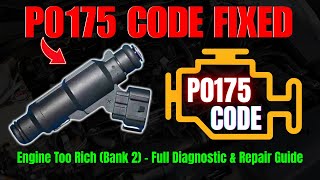
Used OEM Parts in Stock
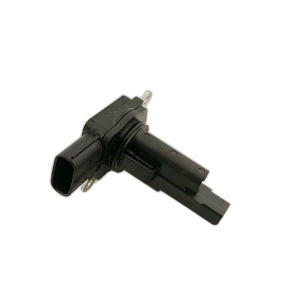

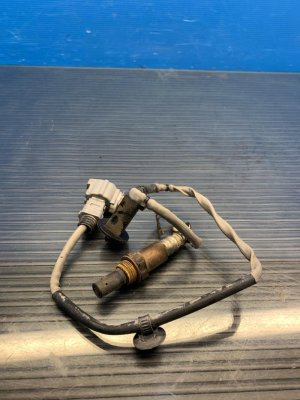
New Aftermarket Parts Available
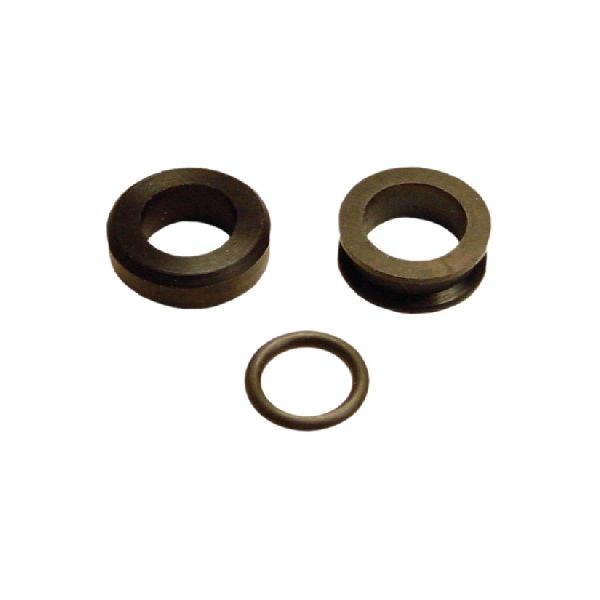


The information in this article is provided for general reference and educational purposes only. Vehicle specifications, procedures, and part compatibility can vary by production date, trim level, and region. Always consult your vehicle's factory service manual and verify part numbers before purchasing or performing repairs. Safety-critical components such as airbags, seat belts, and braking systems should be installed by a qualified professional.
- Toyota Sienna:
- 🎬 Helpful Videos
- 🛍️ Shop This Part
- What's Unique About the 2007-2016 Toyota Sienna
- Symptoms You May Notice
- Most Likely Causes
- Rare But Worth Checking
- Diagnosis Steps
- Parts You'll Likely Need
- Related Codes That Often Appear With This One
- Platform-Specific Known Issues
- Technical Service Bulletins (TSBs) & Recalls
- Mechanic-Grade Diagnostic Values
- Scan Tool Commands That Help
- Wiring & Ground Locations
- OEM Part Supersession History
- Model Year Variations Within This Range
- Diagnostic Flowchart
- Other Known Issues on This Vehicle
- Used vs. New Parts: Buying Guide for This Vehicle
- Real Owner Stories
- 2014 Toyota Sienna 2GR-FE 3.5L V6
- 2011 Toyota Sienna 2GR-FE 3.5L V6
- 2007-2016 Toyota Sienna 2GR-FE 3.5L V6
- Related OBD-II Codes
- Frequently Asked Questions
- 🎟️ Get 5% Off