

P0175 on 2017-2018 Toyota Sequoia: System Too Rich Bank 2 Causes and Fixes
On 2017-2018 Toyota Sequoias with the 5.7L Flex Fuel (3UR-FBE) engine, P0175 is most frequently caused by an incorrect alcohol density calculation in the ECU. This known issue, shared with the Tundra, requires a 'Fuel Density Learning Value Reset' with a scan tool or a dealer software update as outlined in Toyota TSB T-SB-0166-19_Rev. Other common causes are a faulty driver's side upstream Air/Fuel (A/F) sensor or a dirty Mass Airflow (MAF) sensor.
- For Flex Fuel (3UR-FBE) models, the first step should always be to check the 'Alcohol Density' value with a scan tool; an incorrect high reading is the most likely cause of P0175.
- For non-Flex Fuel models, or if the alcohol value is normal, the most probable causes are a faulty driver's side upstream Air/Fuel Ratio sensor or a dirty MAF sensor.
- Cleaning the MAF sensor is an inexpensive and easy first diagnostic step that can resolve the issue if it's affecting both engine banks.
- Do not replace any parts without confirming the diagnosis. A scan tool that can read live data is essential for troubleshooting this code effectively.
- Ignoring P0175 can lead to fouled spark plugs, poor performance, and costly damage to the catalytic converter.
What's Unique About the 2017-2018 Toyota SEQUOIA
The 2017-2018 Sequoia, particularly the Flex Fuel (FFV) models with the 3UR-FBE engine, is highly susceptible to an issue where the ECM incorrectly 'learns' a high percentage of alcohol in the fuel, even when running on standard E10 gasoline. This false high reading, which can sometimes get stuck at 85%, causes the computer to inject too much fuel to compensate for the perceived ethanol, leading directly to rich codes like P0175 and P0172. This specific problem is documented by Toyota in Technical Service Bulletin T-SB-0166-19_Rev and is often the root cause when P0175 appears, sometimes along with hard starting problems (P1604). This issue is widely discussed by owners of both Sequoias and the platform-mate Tundra.
Diagnostic Flowchart
Tap your situation to follow the diagnostic path that matches what you're seeing on this vehicle.
Symptoms You May Notice
- Check Engine Light is on
- Reduced fuel economy
- Rough or unstable idle
- Strong smell of unburnt fuel or gasoline from the exhaust
- Black smoke from the exhaust pipe
- Hesitation or stumbling on acceleration
- Extended engine cranking or hard starting, especially on a cold start (often with code P1604)
- Replacing the downstream (post-catalyst) oxygen sensor. The downstream sensor (Sensor 2) primarily monitors catalyst efficiency and has has minimal impact on fuel trim adjustments.
- Replacing fuel injectors before confirming the alcohol density value on Flex Fuel models, which is a much more common, less expensive, and well-documented fix.
- Replacing the A/F sensor when both P0172 and P0175 are present. Dual bank codes point towards a global issue like the MAF sensor or the alcohol density problem.
Most Likely Causes
- Incorrect Fuel Alcohol Density Value (Flex Fuel Models) 🔴 High Probability A known software sensitivity in the ECM on 3UR-FBE engines can cause it to misinterpret the ethanol content of gasoline, leading it to command an overly rich mixture. This is documented in TSB T-SB-0166-19_Rev and can sometimes be triggered after a battery disconnect or refueling.
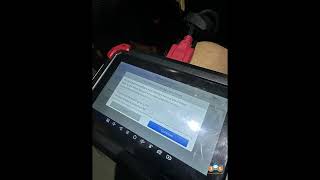
How to confirm: Use a capable OBD-II scanner (like Toyota's Techstream, Autel, or Launch) to view the 'Alcohol Density Estimate' or 'Alcohol Fuel Percentage' data PID. If the value is high (e.g., over 15-20%, sometimes stuck at 85%) while using standard E10 gasoline, this is the confirmed cause.
Typical fix: Perform a 'Fuel Density Learning Value Reset' using a bidirectional scan tool. This immediately resets the learned value to zero. If the problem returns, the ECM requires a software update (reflash) from a Toyota dealership per TSB T-SB-0166-19_Rev, which may also involve replacing the fuel pump.
Est. part cost: $0-$200 (for a scan tool reset or dealer diagnostic fee). Dealer reflash can be $150-$300 if not covered by the 8yr/80k mile federal emissions warranty. - Faulty Air/Fuel Ratio Sensor (Bank 2, Sensor 1) 🟡 Medium Probability The A/F sensor is the primary sensor used for fuel control. It operates in a high-temperature exhaust environment and can degrade over time, sending slow or inaccurate signals to the ECM, causing a rich condition on a single bank.
How to confirm: Use a scan tool to graph the voltage or lambda readings of the Bank 2, Sensor 1 (upstream) sensor. A healthy sensor fluctuates rapidly; a lazy, biased, or stuck reading indicates failure. Bank 2 is on the driver's side.
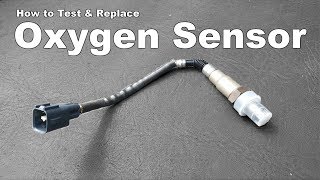
Typical fix: Replace the Bank 2, Sensor 1 Air/Fuel Ratio sensor. The sensor is located on the driver's side exhaust manifold, before the catalytic converter. An oxygen sensor socket (22mm) is recommended for removal. 🎬 See this walkthrough for replacing the upstream oxygen sensor.
Est. part cost: $120-$250 - Dirty or Faulty Mass Airflow (MAF) Sensor 🟡 Medium Probability Oiled aftermarket air filters are a common cause of contamination. Even with stock filters, dirt and debris can build up on the sensor element over time, causing it to under-report airflow and lead to a rich condition across both banks (P0172 & P0175).
How to confirm: Inspect the sensor wires for any grime or oil. A simple cleaning with dedicated MAF sensor cleaner is a good first step. Monitor the g/s reading on a scan tool at warm idle; for the 5.7L V8, it should be around 5-7 g/s. A significantly lower reading points to a bad sensor.
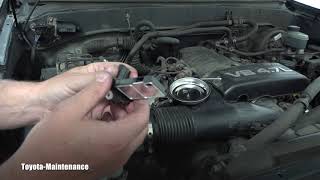
Typical fix: Clean the MAF sensor with a specialized cleaner spray (e.g., CRC MAF Sensor Cleaner). 🎬 Watch: How to safely inspect and clean your MAF sensor. Do not touch the sensor wires. If cleaning doesn't work, replace the sensor, preferably with an OEM Denso part.
Est. part cost: $10-$15 (cleaner) or $80-$150 (replacement sensor) - Leaking Fuel Injector(s) ⚪ Low Probability
How to confirm: After ruling out other causes, a fuel pressure leak-down test can indicate a leak. A more precise method is to use a scan tool's 'Cylinder Fuel Cut' active test to disable injectors on Bank 2 one by one; if disabling an injector causes little change to the idle, it was likely leaking. Pulling spark plugs on Bank 2 may also reveal one that is black and sooty.
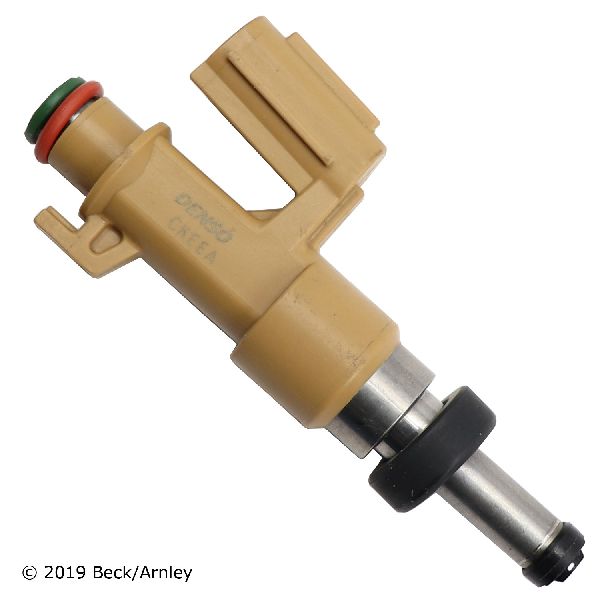
Typical fix: Replace the faulty fuel injector(s) on Bank 2. It is often recommended to replace them as a set on the affected bank.
Est. part cost: $100-$300 per injector
Rare But Worth Checking
- High Fuel Pressure: A faulty fuel pressure regulator or a clogged fuel return line can cause excessive pressure across the entire fuel rail, leading to rich conditions on both banks (P0172 and P0175). This is less common than sensor or ECM issues.
- Exhaust Leak Before A/F Sensor: A crack in the driver's side exhaust manifold can pull in fresh air during exhaust pulses, fooling the A/F sensor into thinking the engine is lean. The ECM then overcompensates by adding too much fuel, creating an actual rich condition.
- Stuck Open Purge Valve (EVAP): If the EVAP purge valve sticks open, it can allow unmetered fuel vapors from the charcoal canister to be drawn into the intake manifold at the wrong time, causing a rich condition that can affect one or both banks.
Diagnosis Steps
- Connect an OBD-II scanner and check for any other codes, especially P0172, P1604, or P0430. The presence of P0172 and P1604 strongly points to the Flex Fuel issue.
- If the vehicle is a Flex Fuel (3UR-FBE) model, use a capable scan tool to check the 'Alcohol Density Estimate' value. This is the #1 priority. If it is abnormally high (e.g., >20%) while using standard gasoline, this is the cause. Perform a 'Fuel Density Learning Value Reset'.
- If the alcohol value is normal, observe the live data for Short-Term (STFT) and Long-Term Fuel Trims (LTFT) for both banks. For P0175, you will see highly negative numbers on Bank 2 LTFT (typically -20% or more), while Bank 1 remains closer to normal.
- Inspect the air intake system for blockages and check the engine air filter. Ensure it is not over-oiled if it's a reusable type.
- Carefully remove and inspect the Mass Airflow (MAF) sensor. Clean it with dedicated MAF sensor cleaner spray and re-test. This is a cheap and easy step that often fixes dual-bank rich codes.
- Graph the Bank 2, Sensor 1 (upstream) Air/Fuel Ratio sensor's output on the scan tool. If it is slow to respond, stuck, or biased compared to the Bank 1 sensor, it has likely failed.
- Check fuel pressure using a fuel pressure gauge to ensure it is within the manufacturer's specification (typically 38-44 psi at idle for the 5.7L).
- If all other tests are inconclusive, suspect a leaking fuel injector on Bank 2. Perform a cylinder power balance test or inspect spark plugs for signs of a rich cylinder.
Parts You'll Likely Need
- Air/Fuel Ratio Sensor (Bank 2, Sensor 1)
(OEM #89467-0C050)— This is the primary upstream sensor on the driver's side that controls the air-fuel mixture. It is a common failure point that directly causes a single-bank rich code like P0175. Denso is the OEM manufacturer.
Trusted brands: Denso (OEM equivalent is 234-9051)
Related Codes That Often Appear With This One
- P0172 — System Too Rich (Bank 1). When both rich codes are present, it strongly suggests a problem affecting the whole engine, like the MAF sensor, high fuel pressure, or the alcohol density issue on FFV models.
- P1604 — Startability Malfunction. TSB T-SB-0166-19_Rev specifically links this code with P0172/P0175 on Flex Fuel models, as the incorrect alcohol reading causes extended cranking and hard starting.
- P0430 — Catalyst System Efficiency Below Threshold (Bank 2). A prolonged rich condition from P0175 can overheat and permanently damage the catalytic converter by melting its internal substrate, eventually triggering this code.
- P1605 — Rough Idling. Also mentioned in the older, related TSB T-SB-0058-13, this code can appear when the incorrect air-fuel mixture leads to an unstable idle.
Technical Service Bulletins (TSBs) & Recalls
- T-SB-0166-19_Rev: The primary bulletin for 2009-2018 Sequoias and 2009-2019 Tundras with the 3UR-FBE engine. Addresses hard starts and rich/lean codes (P0172/P0175) caused by an elevated alcohol density estimate. Recommends ECU reprogram, fuel density reset, and possible fuel pump replacement. Supersedes T-SB-0058-13.
- T-SB-0058-13: An older, now obsolete TSB that first identified the alcohol density calculation issue on 2012-2013 models. It was superseded by the above bulletin which covers more model years.
Platform-Specific Known Issues
- Flex Fuel ECM Logic: The most significant issue for this platform is the ECM's tendency on 3UR-FBE (Flex Fuel) engines to incorrectly calculate a high alcohol content in the fuel. This is documented in TSB T-SB-0166-19_Rev and is the primary cause of P0175, often paired with P0172 and P1604. The fix is an ECM software update and/or a reset of the learned alcohol value.
Mechanic-Grade Diagnostic Values
- Mass Airflow (MAF) Sensor Reading at Idle — expected: 5.6 to 7.0 g/s (grams per second) at warm idle with no load.. Failure: A reading significantly lower than 5 g/s can indicate a dirty or failing sensor, causing the ECM to calculate less air than is actually present, leading to a rich mixture.
- Air/Fuel (A/F) Ratio Sensor Heater Resistance — expected: 0.8 - 1.4 Ω at 68°F (20°C) between terminals +B and HT on the sensor connector.. Failure: Resistance outside this range indicates a failed heater element, which can slow down sensor response and affect fuel trim accuracy, especially during warm-up.
- Fuel Injector Pulse Width at Idle — expected: 1.0 to 3.0 ms (milliseconds) at warm idle.. Failure: While not a direct failure indicator on its own, observing a pulse width at the very low end of or below this range, combined with negative fuel trims, confirms the ECM is actively trying to reduce fuel to correct a rich condition.
- A/F Sensor Voltage (at ECM) — expected: A constant voltage of approximately 3.3V on one wire (AFL+) and 2.9-3.0V on the other (AFL-).. Failure: These are reference voltages from the ECM. Unlike traditional oxygen sensors, the A/F sensor is a current-based sensor and its output cannot be measured directly with a voltmeter at the sensor. The current is converted to voltage inside the ECM. Verifying these reference voltages at the ECM connector helps rule out wiring issues.
Scan Tool Commands That Help
- Toyota Techstream: Active Test: Control the Select Cylinder Fuel Cut — This is a highly effective method to isolate a leaking or stuck-open fuel injector after ruling out global fuel issues. By individually disabling injectors on Bank 2, a technician can observe the effect on idle. If disabling an injector causes little or no change in idle smoothness, it confirms that cylinder was already running extremely rich due to excess fuel from that injector.
- Toyota Techstream: Utility: Fuel Density Learning Value Reset — This is the primary fix for the common Flex Fuel (3UR-FBE) issue. It should be used when the 'Alcohol Density Estimate' PID is found to be incorrectly high (e.g., >20%) on a vehicle running standard gasoline. This command forces the ECM to reset its learned ethanol content value to zero.
- Toyota Techstream: Active Test: Control the Injection Volume for A/F sensor — This test allows a technician to command the fuel mixture rich or lean and observe the A/F sensor's response time and voltage change. A slow or non-responsive Bank 2 sensor compared to the Bank 1 sensor during this test confirms the Bank 2 sensor is faulty.
Wiring & Ground Locations
- A1 / A2 Ground Points — Located behind the left (driver's side) headlight assembly in the engine compartment.. These are primary chassis ground locations for the engine wiring harness. A corroded or loose ground at this point can create a floating ground for various sensors, including the Bank 2 A/F sensor, potentially causing erratic readings that could lead to an incorrect rich or lean code.
- ECM Connector D74 (Bank 2 A/F Sensor Pins) — At the Engine Control Module (ECM), typically located in the passenger cabin.. For advanced diagnosis, one can test for the A/F sensor's reference voltages and heater circuit continuity directly at the ECM. For the Bank 2 Sensor 1, the key pins are A2A+ and A2A- for the sensor signal, and +B / HA2A for the heater circuit. This allows a technician to differentiate between a bad sensor, a wiring problem, or a faulty ECM driver.
Real Owner Repair Stories
- Tundras.com forum user (2018 Toyota Tundra (platform mate) with 5.7L Flex Fuel engine) — P0172 and P0175 codes, poor fuel economy, rough idle.
❌ Tried (didn't work) Cleaning MAF sensor, Replacing both upstream A/F sensors, Performing the 'Fuel Density Learning Value Reset' multiple times (codes would return)
✅ What actually fixed it The owner took the truck to the dealer, who followed TSB T-SB-0166-19_Rev. The fix involved not only reflashing the ECM software but also replacing the entire fuel pump assembly, which was part of the TSB's repair procedure. The problem was resolved permanently after the fuel pump replacement.
OEM Part Supersession History
89467-22030→89467-0C050— Part number consolidation and potential minor internal revisions for improved durability or performance.
Heads up: Both parts are generally interchangeable for the specified model years, but it is always recommended to use the latest part number (89467-0C050) when replacing.
Model Year Variations Within This Range
- 2017-2018: There were no significant powertrain or engine management changes between the 2017 and 2018 model years for the Sequoia. A minor facelift for 2018 included standard LED headlights and more driver assists, but the 5.7L V8 engine and its control systems remained identical. Therefore, the causes and fixes for P0175 are the same for both years.
Helpful Videos

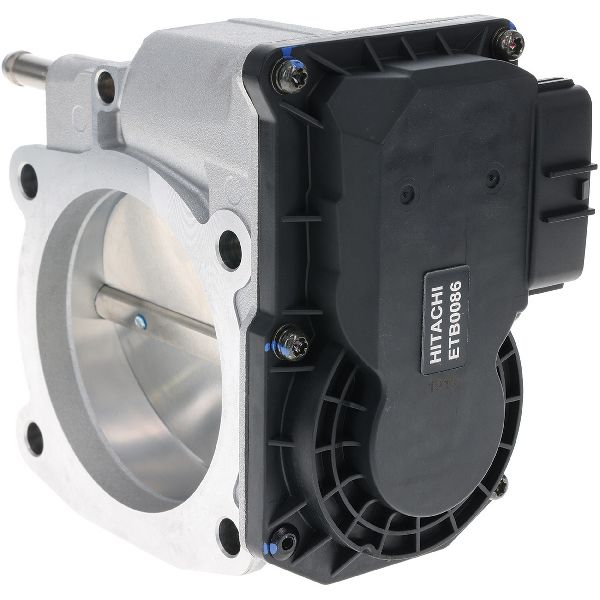
We Have This Part in Stock


The information in this article is provided for general reference and educational purposes only. Vehicle specifications, procedures, and part compatibility can vary by production date, trim level, and region. Always consult your vehicle's factory service manual and verify part numbers before purchasing or performing repairs. Safety-critical components such as airbags, seat belts, and braking systems should be installed by a qualified professional.
- Toyota SEQUOIA:
- 🎬 Helpful Videos
- 🛍️ Shop This Part
- What's Unique About the 2017-2018 Toyota SEQUOIA
- Diagnostic Flowchart
- Symptoms You May Notice
- Most Likely Causes
- Rare But Worth Checking
- Diagnosis Steps
- Parts You'll Likely Need
- Related Codes That Often Appear With This One
- Technical Service Bulletins (TSBs) & Recalls
- Platform-Specific Known Issues
- Mechanic-Grade Diagnostic Values
- Scan Tool Commands That Help
- Wiring & Ground Locations
- Real Owner Repair Stories
- OEM Part Supersession History
- Model Year Variations Within This Range
- 🎟️ Get 5% Off