

P0175 on 2020-2025 Kia Telluride: System Too Rich Bank 2 Causes and Fixes
P0175 on a Kia Telluride means the engine is running too rich on Bank 2. The most common causes are a faulty upstream oxygen sensor, a leaking fuel injector, or a dirty Mass Airflow (MAF) sensor. Expect to pay $150-$400 for a professional repair, depending on the cause.
- P0175 means your Telluride's engine has too much fuel in the cylinder bank closer to the radiator (Bank 2).
- The most likely culprits are a leaking fuel injector, a bad upstream oxygen sensor, or a dirty MAF sensor.
- Do not immediately replace the oxygen sensor; it is often just reporting a problem that started elsewhere in the fuel or air intake system.
- Driving for a long time with this code can cause expensive damage to your catalytic converter.
- A DIYer with a good OBD-II scanner can diagnose the issue by checking fuel trims and testing sensors, but confirming a leaking injector may require a professional.
What's Unique About the 2020-2025 Kia Telluride
For the Kia Telluride with the 3.8L GDI (Gasoline Direct Injection) engine, the fuel system operates at very high pressure. This makes components like the high-pressure fuel pump and direct injectors potential sources for rich conditions if they fail. While the causes are common to many V6 engines, the specific parts and diagnostic procedures are particular to this modern GDI system. The G6DN engine in the Telluride operates on an Atkinson cycle for efficiency, which has specific tuning parameters. No specific widespread issues causing P0175 were found in TSBs or recalls for this vehicle, though the Lambda II GDI engine family can be prone to carbon buildup on intake valves over time.
Symptoms You May Notice
- Check Engine Light is on
- Reduced fuel economy
- Strong smell of gasoline or fuel odor from the exhaust
- Rough idle
- Engine hesitation or lack of power during acceleration
- Black smoke from the exhaust pipe in severe cases
- Vehicle may enter "limp home mode" with reduced performance
- Replacing the oxygen sensor without testing it first. The O2 sensor is often reporting a problem that originates elsewhere (like a leaking injector), so replacing it won't fix the root cause.
Most Likely Causes
- Leaking Fuel Injector(s) 🔴 High Probability Direct injection systems operate under high pressure, which can lead to injector leaks over time. An injector can get stuck open or leak fuel into the cylinder, a known cause for this code.
How to confirm: A mechanic can perform a fuel injector balance test using a dealer-level scan tool. Another method is to check fuel pressure hold after the engine is off; a rapid drop can indicate a leak. Examining the spark plugs on Bank 2 can also help; a plug black with soot indicates a rich cylinder.
Typical fix: Replace the faulty fuel injector(s) on Bank 2. It's often recommended to replace them as a set for that bank. Single-use Teflon seals must be replaced anytime an injector is removed.
Est. part cost: $70-$150 per injector - Faulty Bank 2 Air-Fuel Ratio Sensor (Oxygen Sensor) 🟡 Medium Probability Oxygen sensors are wear-and-tear items that degrade over time, typically lasting up to 100,000 miles. A lazy or biased sensor can send incorrect signals to the PCM, causing it to enrich the fuel mixture unnecessarily.
How to confirm: Use a scan tool to monitor the live data from the Bank 2, Sensor 1 oxygen sensor. A healthy sensor will show rapidly fluctuating voltage. A sensor that is stuck or slow to respond is likely faulty.
Typical fix: Replace the Bank 2, Sensor 1 (upstream) oxygen sensor.
Est. part cost: $80-$200 - Dirty or Faulty Mass Airflow (MAF) Sensor 🟡 Medium Probability The MAF sensor can become contaminated with dirt, oil, or debris, causing it to inaccurately measure the amount of air entering the engine. This can lead the PCM to calculate an incorrect fuel mixture.
How to confirm: Inspect the MAF sensor for contamination. It can often be cleaned with a dedicated MAF sensor cleaner. If cleaning doesn't resolve the issue, the sensor may need replacement. A faulty MAF sensor will often set codes for both banks (P0172 and P0175).
Typical fix: Clean the MAF sensor with a specialized cleaner. If the problem persists, replace the sensor.
Est. part cost: $100-$250 - High Fuel Pressure ⚪ Low Probability A failing fuel pressure regulator or an issue with the high-pressure fuel pump can cause system-wide high fuel pressure, forcing too much fuel through the injectors.
How to confirm: Connect a fuel pressure gauge to the fuel rail and check if the pressure is within the manufacturer's specifications for the 3.8L GDI engine. This requires checking both low-side and high-side pressures, which can be complex on a GDI system.
Typical fix: Replace the faulty fuel pressure regulator or address the fuel pump issue.
Est. part cost: $150-$500+
Rare But Worth Checking
- Faulty Engine Coolant Temperature (ECT) Sensor: If the ECT sensor incorrectly tells the PCM that the engine is cold, the computer will command a richer fuel mixture, similar to a cold start. This is less common but can cause a P0175 code.
- Leaking EVAP Purge Valve: A stuck-open EVAP purge valve can allow unmetered fuel vapors from the charcoal canister to enter the intake manifold, creating a rich condition.
- Internal Engine Failure: In some Kia models, failing piston rings can allow oil into the combustion chamber, leading to misfires and rich codes. NHTSA ODI #11716567 describes a case where P0175 was present alongside misfire codes and internal engine failure.
- Wiring and Electrical Connections: Intermittent rich codes can sometimes be traced to electrical faults. NHTSA ODI #11390539 notes a situation where P0175 and other codes were triggered by a loose wire connection.
Diagnosis Steps
- Verify the code with an OBD-II scanner. Check for any other pending or active codes.
- Analyze freeze frame data to see the engine conditions (RPM, load, temperature) when the code was set.
- Monitor live data, specifically the Short-Term Fuel Trim (STFT) and Long-Term Fuel Trim (LTFT) for Bank 2. For a P0175 code, you will see significant negative numbers (e.g., -15% or more) as the PCM tries to subtract fuel.
- Inspect the air intake system for a severely clogged engine air filter or any obstructions.
- Inspect and clean the Mass Airflow (MAF) sensor using a dedicated cleaner.
- Inspect the Bank 2 spark plugs. Black, sooty plugs are a strong indicator of a rich condition in those cylinders.
- Test the Bank 2, Sensor 1 (upstream) oxygen sensor's response using the scanner's graphing function. A lazy or non-responsive sensor needs replacement.
- Perform a fuel pressure test to ensure it is within OEM specifications. This is a two-stage test for GDI systems, checking both the low-pressure feed and the high-pressure rail.
- If fuel pressure is normal, suspect a leaking fuel injector on Bank 2. A professional fuel injector balance test is the most accurate way to confirm this.
Parts You'll Likely Need
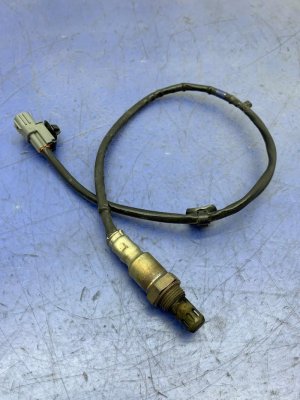
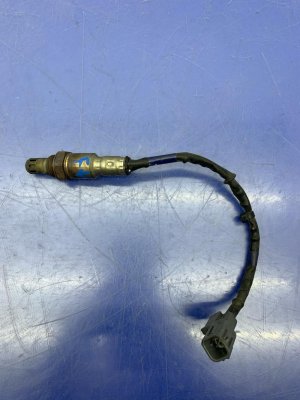
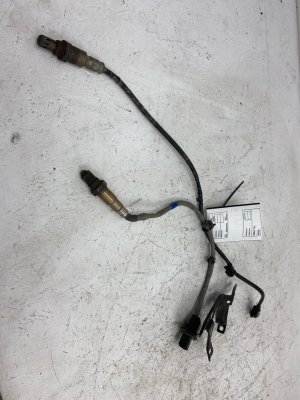
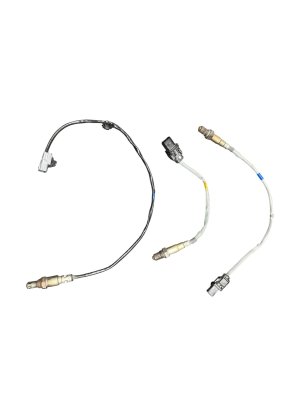
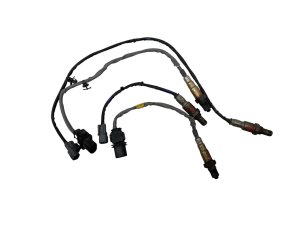
- Air-Fuel Ratio Sensor (Bank 2, Sensor 1)
(OEM #39210-3LNB0 (Downstream, Upstream may differ))— This upstream sensor is critical for fuel mixture monitoring and is a common failure point that directly causes a rich code for its respective bank.
Trusted brands: Bosch, Denso, NGK/NTK
OEM price range: $150-$250
Aftermarket price range: $80-$180 - Fuel Injector
(OEM #35310-3L200)— A leaking GDI injector is a very common cause of a single-bank rich condition like P0175.
Trusted brands: Bosch, Standard Motor Products
OEM price range: $100-$180
Aftermarket price range: $70-$120 - Mass Airflow (MAF) Sensor — A dirty or faulty MAF sensor can cause rich conditions, though it usually affects both banks. Cleaning is often a first step before replacement.
Trusted brands: Bosch, Delphi
OEM price range: $180-$300
Aftermarket price range: $100-$200
Related Codes That Often Appear With This One
- P0172 — System Too Rich (Bank 1). If both P0172 and P0175 are present, it strongly suggests a problem common to both banks, such as a faulty MAF sensor or a fuel pressure issue.
- P0300, P0304, P0305, P0306 — Random or specific cylinder misfire codes for Bank 2. An excessively rich mixture can foul spark plugs and cause misfires on the affected bank.
- P061B, P2180, P2178 — These codes may appear alongside P0175 during severe engine performance issues or electrical faults as seen in manufacturer reports.
Mechanic-Grade Diagnostic Values
- Long-Term Fuel Trim (LTFT) on Bank 2 — expected: Between -10% and +10%. Failure: Persistently between -15% and -30%, indicating the PCM is consistently removing fuel to compensate for a rich condition.
- Fuel Injector Resistance (OEM Part 35310-3L200) — expected: 12.5 - 13.5 Ohms. Failure: A reading significantly outside this range, or that differs by more than 0.5-1.0 Ohm from the other injectors, indicates a faulty injector coil.
- High-Pressure Fuel System (GDI) — expected: Idle: 400-600 PSI; Under Load: 1500-2500+ PSI (Typical values for GDI systems). Failure: Pressure that is excessively high at idle or does not respond correctly to engine load. Note: Requires a specialized gauge and knowledge of GDI systems.
- Low-Pressure Fuel Pump — expected: 45 - 75 PSI (Typical values). Failure: Pressure significantly above this range could indicate a faulty regulator, potentially overpowering the high-pressure system.
Scan Tool Commands That Help
- Kia GDS (Global Diagnostic System) or equivalent professional scanner: Fuel Injector Balance Test — To electronically measure the pressure drop from each individual injector to identify a leaking or clogged one without removing them.
- Kia GDS (Global Diagnostic System) or equivalent professional scanner: Fuel Pressure Control — To command the fuel pump and regulator to specific pressures to test their response and functionality.
- Kia GDS (Global Diagnostic System) or equivalent professional scanner: Reset Fuel Adaptations / Adaptive Values — After replacing a component like a fuel injector or MAF sensor, this command clears the old learned fuel trim values, forcing the PCM to relearn with the new part.
Wiring & Ground Locations
- Bank 2 Ground Pack — Typically located on the Bank 2 (front/radiator side) cylinder head or nearby on the engine block.. A poor ground connection for the Bank 2 oxygen sensor or fuel injectors can cause incorrect readings or erratic behavior, leading to a false rich code. The sensor's signal is a low voltage, making it very sensitive to ground issues.
- Bank 2, Sensor 1 Connector — On the exhaust manifold for Bank 2, before the catalytic converter. The connector will be attached to the wiring harness a short distance from the sensor itself.. This is the primary connector to inspect for corrosion, damage, or loose pins when diagnosing the upstream O2 sensor. Voltage and resistance tests are performed at this connector's pins.
Real Owner Repair Stories
- Reddit user Ronnieblaze07 (Kia Telluride with 103k miles) — Check Engine Light with code P0174 (System Too Lean), the opposite but related fuel trim code.
❌ Tried (didn't work) Replaced spark plugs, Cleaned the MAP sensor
✅ What actually fixed it The user reported the Check Engine Light turned off and stayed off after using a bottle of Redline SI-1 fuel system cleaner and running two tanks of premium fuel. This strongly suggests the initial problem was a partially clogged or dirty fuel injector that was causing an incorrect fuel spray pattern, which the cleaner resolved. - NHTSA ODI #11390539 — An owner reported that their vehicle went into limp home mode with multiple error codes including P0172 and P0175. The technician eventually identified the root cause as a loose wire connection.
- NHTSA ODI #11716567 — A report describes P0175 (Bank 2 rich) occurring alongside misfire codes (P0300, P0302, P0304, P0306) and a crank-cam correlation code (P0018). The diagnosis revealed an internal engine failure where failing piston rings were allowing oil into the combustion chamber.
OEM Part Supersession History
35310-3L200→35310-3L210— Standard part revision or change in manufacturer.
Heads up: The parts are reported to be interchangeable and compatible.
Model Year Variations Within This Range
- 2020-2025: While the Telluride received a significant cosmetic and interior technology refresh for the 2023 model year, the 3.8L GDI V6 (G6DN) engine and associated fuel/emissions systems remained the same. Therefore, the causes and diagnostic procedures for P0175 are consistent across the entire 2020-2025 range.
Diagnostic Flowchart
Other Known Issues on This Vehicle
Issues unrelated to this code that are worth knowing about as an owner of this generation:
- Spontaneous Windshield Cracking 🟠 Medium — Widespread complaints across all model years (2020-2025). Hundreds of NHTSA complaints filed, with some owners replacing windshields multiple times. (Ref: Kia issued a 'Customer Satisfaction Initiative' for some 2020 models but no formal recall.)
- Tow Hitch Harness Fire Risk 🔴 High — Affects 2020-2022 models with the genuine Kia 4-pin tow hitch harness. Over 36,000 vehicles were included in the recall. (Ref: Recall SC247 / NHTSA 22V626000. Owners advised to park outside until repaired due to fire risk while parked.)
- Halogen High-Beam Headlight Failure 🟠 Medium — Common on 2020 models equipped with halogen headlights. Heat from the bulb damages an internal mechanism, causing high beams to fail. (Ref: Recall SC299. Followed an NHTSA investigation and thousands of warranty claims.)
- Power Seat Motor Fire Risk 🔴 High — Affects over 460,000 Tellurides from 2020-2024 model years. A stuck power seat switch can cause the motor to overheat. (Ref: Recall SC316. A 'park outside' recall was issued due to the risk of fire while parked or driving.)
- Excessive Oil Consumption 🟠 Medium — Reported on the 3.8L GDI engine, can lead to low oil levels between changes. Can begin as early as 60,000 miles. Frequent oil changes (every 5,000 miles) are recommended.
Used vs. New Parts: Buying Guide for This Vehicle
When a used part is the smart pick: For expensive electronic components like a MAF sensor or even a set of fuel injectors, a used OEM part from a reputable salvage yard can be a cost-effective alternative to a new OEM part, and often more reliable than a cheap, new aftermarket clone.
Donor-vehicle mileage cap: roughly under 60000 miles for the part to have meaningful remaining life.
What to inspect on the donor part:
- For fuel injectors, inspect the nozzle tip for heavy carbon buildup or physical damage.
- Verify the OEM part number on the used part matches the original exactly (e.g., 35310-3L200).
- Ask for the donor vehicle's VIN to check for any accident history that could have damaged engine components.
- Prefer parts from vehicles in dry climates to minimize the risk of corrosion on electrical connectors.
OEM-only on this vehicle (don't cheap out):
- GDI Fuel Injector Teflon Seals: These are single-use, crush-to-fit seals that MUST be replaced with new OEM parts whenever an injector is removed to prevent high-pressure fuel leaks.
- PCV Valve: This is an inexpensive but critical emissions component. Given the low cost, always replace with a new OEM part rather than using a used one.
Aftermarket brands forum-validated for this vehicle:
- Air/Fuel (Oxygen) Sensors: Denso, Bosch, NGK/NTK
- Fuel Injectors: Bosch, Standard Motor Products (SMP)
Brands owners have reported issues with on this vehicle:
- Avoid unbranded, generic fuel injectors from online marketplaces. These often have inconsistent resistance values and spray patterns that can cause persistent performance issues or new trouble codes.
Related OBD-II Codes
Frequently Asked Questions
Can I use a used fuel injector from a salvage yard to fix the P0175 code on my Telluride?
Is there a recall for the 3.8L GDI engine's fuel system causing this rich condition?
My Telluride is over 60,000 miles and has P0175; could this be related to oil consumption?
Should I replace the Bank 2 oxygen sensor or just clean the MAF sensor first?
Does the Hyundai Palisade have the same P0175 issues as the Telluride?
Helpful Videos

We Have This Part in Stock


The information in this article is provided for general reference and educational purposes only. Vehicle specifications, procedures, and part compatibility can vary by production date, trim level, and region. Always consult your vehicle's factory service manual and verify part numbers before purchasing or performing repairs. Safety-critical components such as airbags, seat belts, and braking systems should be installed by a qualified professional.
- Kia Telluride:
- 🎬 Helpful Videos
- 🛍️ Shop This Part
- What's Unique About the 2020-2025 Kia Telluride
- Symptoms You May Notice
- Most Likely Causes
- Rare But Worth Checking
- Diagnosis Steps
- Parts You'll Likely Need
- Related Codes That Often Appear With This One
- Mechanic-Grade Diagnostic Values
- Scan Tool Commands That Help
- Wiring & Ground Locations
- Real Owner Repair Stories
- OEM Part Supersession History
- Model Year Variations Within This Range
- Diagnostic Flowchart
- Other Known Issues on This Vehicle
- Used vs. New Parts: Buying Guide for This Vehicle
- Related OBD-II Codes
- Frequently Asked Questions
- 🎟️ Get 5% Off