

P0175 on 2020-2025 Hyundai Palisade 3.8L V6: System Too Rich Bank 2 Causes and Fixes
This code means Bank 2 of your engine is running rich (too much fuel). The most likely causes on this GDI engine are a leaking fuel injector or a dirty Mass Airflow (MAF) sensor. A bad oxygen sensor is also possible.
- P0175 means your Palisade's engine has too much fuel in the exhaust on Bank 2 (the firewall side).
- Do not ignore this code. Continued driving can lead to poor performance, terrible gas mileage, and costly damage to your catalytic converter.
- The most likely culprits are a leaking fuel injector, a dirty MAF sensor, or a bad upstream O2 sensor.
- Start your diagnosis with the cheapest and easiest things: check the air filter and try cleaning the MAF sensor with the proper spray cleaner.
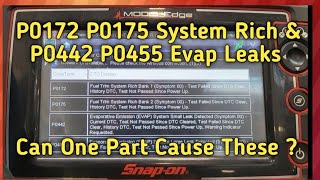
- If P0172 (Bank 1 Rich) is also present, the problem is almost certainly something that affects both banks, like the MAF sensor or fuel pressure.
What's Unique About the 2020-2025 Hyundai Palisade
While P0175 is a generic code, its causes on the Palisade's 3.8L Gasoline Direct Injection (GDI) engine can be specific. GDI engines operate under very high fuel pressure, making leaking fuel injectors a more common point of failure compared to older port-injection systems. An injector can stick open, dumping excess fuel. Problems with carbon buildup on intake valves, a known characteristic of GDI engines, can also indirectly affect engine performance, though leaking injectors are a more direct cause for a rich condition.
Symptoms You May Notice
- Illuminated Check Engine Light
- Reduced fuel economy
- Rough or unstable idle
- Hesitation or stumbling during acceleration
- Strong smell of gasoline from the exhaust
- Black smoke from the tailpipe in severe cases
- Engine stalling or hard starting
- Replacing the downstream (post-catalyst) O2 sensor instead of the upstream (pre-catalyst) one. The upstream sensor (Sensor 1) is the primary input for fuel trim.
- Replacing the catalytic converter. A rich condition can damage a converter, but the converter itself does not cause a rich condition.
Most Likely Causes
- Leaking Fuel Injector(s) on Bank 2 🔴 High Probability The G6DN is a Gasoline Direct Injection (GDI) engine, which uses high fuel pressure. Injectors can get stuck partially open, leaking fuel directly into a cylinder.
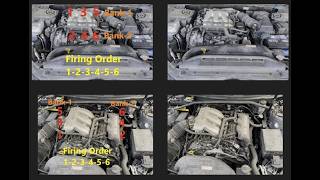
How to confirm: A mechanic can perform a fuel injector balance test using a scan tool. A DIY method is to pull the spark plugs on Bank 2 (cylinders near firewall) 🎬 Watch: Identify Bank 1 and Bank 2 cylinder locations after the engine has sat; a plug that is wet with fuel and black with soot points to a leaking injector in that cylinder. A fuel pressure leak-down test showing a rapid pressure drop after the engine is off also indicates a leak.
Typical fix: Replace the faulty fuel injector(s) on Bank 2. It is often recommended to replace all injectors on the affected bank at the same time for preventative maintenance.
Est. part cost: $70-$150 per injector (aftermarket), $155+ (OEM). - Dirty or Faulty Mass Airflow (MAF) Sensor 🟡 Medium Probability The MAF sensor can become contaminated with dirt, oil, or debris, causing it to under-report the amount of air entering the engine. The ECM then injects what it thinks is the right amount of fuel, but it's too much for the actual airflow, creating a rich condition that often affects both banks (P0172 & P0175).
How to confirm: Unplug the MAF sensor while the engine is idling. If the idle smooths out, the sensor is likely faulty. A more definitive test is to monitor MAF readings on a scan tool; the values should increase smoothly with RPM. Check for a dirty air filter first.
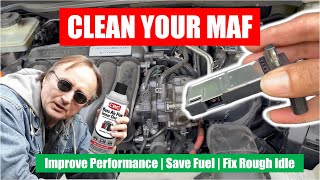
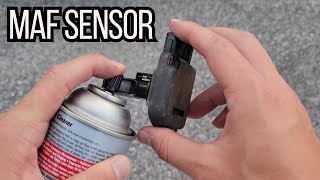
Typical fix: First, try cleaning the sensor with a dedicated MAF sensor cleaner spray. 🎬 See how to safely clean your MAF sensor Do not touch the delicate sensor wires. If cleaning doesn't work, replace the MAF sensor.
Est. part cost: $10 for cleaner, $100-$250 for a new sensor - Faulty Upstream Oxygen (O2) Sensor on Bank 2 🟡 Medium Probability The O2 sensor is what detects the rich condition. If the sensor itself is failing or contaminated, it can send a false 'rich' signal (high voltage) to the ECM, causing the computer to incorrectly lean out the mixture and set the code.
How to confirm: Use a scan tool to graph the Bank 2 Sensor 1 voltage. A healthy sensor should switch rapidly between high (~0.9V) and low (~0.1V). A sensor stuck at a high voltage indicates a problem.
Typical fix: Replace the Bank 2, Sensor 1 (upstream) oxygen sensor. Bank 2 is the rear bank, closer to the firewall.
Est. part cost: $80-$200 - High Fuel Pressure ⚪ Low Probability
How to confirm: Connect a fuel pressure gauge to the fuel rail's test port. Compare the reading to the manufacturer's specification. On GDI systems, this is complex and may require a scan tool to check both low and high-pressure sides. A faulty fuel pressure regulator or high-pressure fuel pump (HPFP) is a potential cause.
Typical fix: If pressure is too high, the cause is likely a faulty fuel pressure regulator or, on some systems, a failing high-pressure fuel pump.
Est. part cost: $150-$500+ - Clogged Air Filter or Restricted Air Intake ⚪ Low Probability
How to confirm: Visually inspect the engine air filter. If it is black and clogged with debris, it is restricting airflow and can cause a rich condition.
Typical fix: Replace the engine air filter.
Est. part cost: $20-$40
Rare But Worth Checking
- Stuck-Open EVAP Purge Valve: A purge valve stuck open can allow un-metered fuel vapors to be drawn into the intake manifold at the wrong time, potentially causing a rich condition. This would usually set an EVAP system code as well.
- Faulty Engine Coolant Temperature (ECT) Sensor: If the ECT sensor incorrectly tells the ECM the engine is cold, the computer will command a richer fuel mixture, similar to a cold start. This can trigger a rich code if the engine is actually at operating temperature.
Diagnosis Steps
- Scan for Codes: Use an OBD-II scanner to confirm P0175 and check for any other related codes, such as P0172 or misfire codes.
- Check Fuel Trims: View live data on the scanner. Look at Short Term (STFT) and Long Term (LTFT) fuel trims for Bank 2. With a P0175, you will see highly negative numbers (e.g., -15% to -30%) as the ECM tries to remove fuel.
- Inspect Air Intake System: Check the engine air filter for clogs. A severely dirty filter is a simple but possible cause. Inspect the entire air intake tract for any blockages.
- Clean/Test the MAF Sensor: If fuel trims for both banks are negative, suspect the MAF. Try cleaning it with dedicated MAF cleaner. If that fails, test its output with a scan tool or multimeter.
- Test the Oxygen Sensor: Graph the voltage for the Bank 2, Sensor 1 O2 sensor. If it is stuck high (above 0.8V) and not fluctuating rapidly, it may be faulty.
- Check Fuel Pressure: If possible, test the fuel pressure to ensure it is within Hyundai's specifications. This is more complex on a GDI engine and may point to a bad fuel pressure regulator or high-pressure fuel pump.
- Inspect for Leaking Injectors: If other tests are inconclusive, the focus should shift to the fuel injectors on Bank 2. This may require professional diagnosis but can sometimes be identified by checking the spark plugs for signs of excessive fuel (black, sooty, wet).
Parts You'll Likely Need
- Fuel Injector
(OEM #35310-3L200 (replaces 35310-3L210).)— A common failure point on GDI engines that directly causes a rich condition in a specific cylinder.
Trusted brands: Hyundai Genuine, Bosch, Beck Arnley
OEM price range: $150-$250
Aftermarket price range: $70-$150 - Mass Airflow (MAF) Sensor
(OEM #28164-3C500)— A dirty or failed MAF sensor is a very common cause for fuel trim-related codes affecting one or both banks.
Trusted brands: Hyundai Genuine, Denso, Delphi
OEM price range: $200-$300
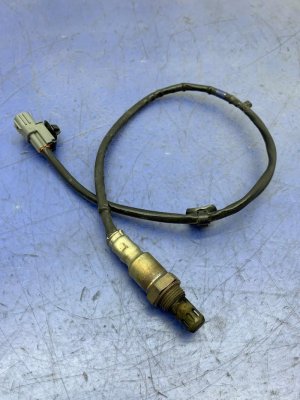
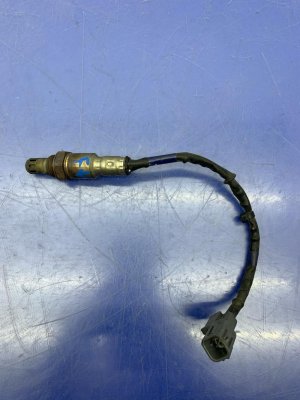
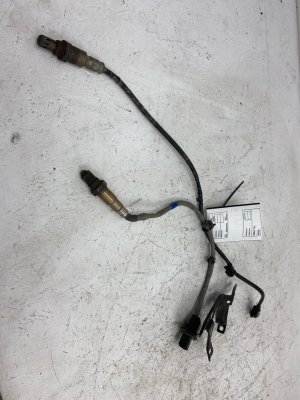
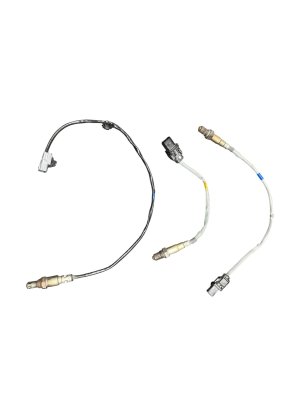
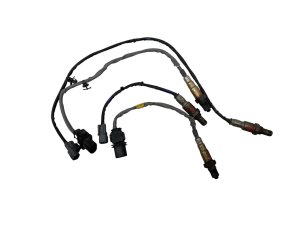
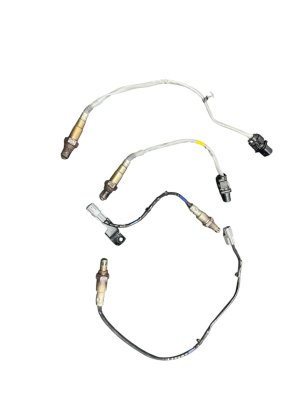
Aftermarket price range: $100-$180 - Upstream Oxygen Sensor (Bank 2, Sensor 1)
(OEM #39210-3L105 (This is often listed for Bank 1, confirm correct part for Bank 2). Note: Part numbers can be confusing. Bank 2 is Left Hand (LH) side. Downstream/Rear is Sensor 2.)— The primary sensor that detects the rich condition can fail and send erroneous signals to the ECM.
Trusted brands: Hyundai Genuine, NGK, Denso, Bosch
OEM price range: $180-$250
Aftermarket price range: $80-$180
Related Codes That Often Appear With This One
- P0172 — System Too Rich (Bank 1). If both P0172 and P0175 are present, it points to a problem common to both banks, like the MAF sensor, fuel pressure regulator, or a major air restriction.
- P0300, P0301, P0303, P0305 — Random or specific cylinder misfires. An excessively rich mixture can foul spark plugs and cause misfires on the affected bank (cylinders 1, 3, and 5 are on Bank 2).
Technical Service Bulletins (TSBs) & Recalls
- NHTSA 22V-633 / Hyundai Recall 235: Trailer Tow Hitch Harness Fire Risk.
- TSB 21-01-003H: Wind/Whistling Noise From Door Glass Area.
- TSB 21-EM-003H: Engine Oil Consumption Inspection and Repair Guidelines.
- TSB 21-BD-002H-1: Odor Emitting From Headrest(s).
Mechanic-Grade Diagnostic Values
- Low-Pressure Fuel System — expected: 40 - 75 PSI. Failure: Pressure below this range indicates a failing in-tank fuel pump, which can starve the high-pressure pump.
- High-Pressure Fuel System (GDI) — expected: Approx. 500 - 650 PSI at idle; 1,300 - 2,900 PSI under load.. Failure: Pressure significantly above this range can cause a rich condition. Pressure below this range would typically cause a lean code (P0174) or low-pressure code (P0087).
- Fuel Injector Resistance — expected: 12.5 - 13.5 Ohms. Failure: A resistance reading outside of this specific range indicates an electrical fault within the injector coil.
- Upstream O2 Sensor (Bank 2 Sensor 1) Voltage — expected: Rapidly fluctuating between ~0.1V (lean) and ~0.9V (rich).. Failure: A sensor that is stuck high (consistently >0.8V) is either correctly reading a rich condition or is faulty and sending a false rich signal.
- Long Term Fuel Trim (LTFT) - Bank 2 — expected: -10% to +10%. Failure: A value of -15% to -30% indicates the ECM is compensating for a severe rich condition by removing fuel, triggering the P0175 code.
Scan Tool Commands That Help
- Hyundai GDS or advanced bidirectional scanner (Autel, Snap-on, etc.): Injector Balance Test / Fuel Injector Kill — This is a primary test for isolating a leaking injector. The command allows you to shut off one injector at a time while monitoring engine RPM. If disabling an injector on Bank 2 causes little or no drop in RPM, that cylinder wasn't contributing much power, likely because it was already flooded with fuel from a leaking injector.
OEM Part Supersession History
35310-3L210→35310-3L200— Standard part revision or supplier change. Functionally identical.
Heads up: Aftermarket seller notes that mixing genuine and aftermarket injectors is not recommended due to potential differences in flow and atomization. It is best to replace all injectors on a bank as a set.
Model Year Variations Within This Range
- 2020-2025: The 2023 model year introduced a significant facelift, but multiple sources confirm the Lambda II 3.8L GDI V6 engine (G6DN) and 8-speed automatic transmission remained unchanged throughout the 2020-2025 model years. Therefore, the causes and diagnostics for P0175 are consistent across this range.
Diagnostic Flowchart
Other Known Issues on This Vehicle
Issues unrelated to this code that are worth knowing about as an owner of this generation:
- Trailer Hitch Wiring Harness Fire Risk 🔴 High — Affects 2020-2022 models with an OEM tow hitch. Widespread enough to trigger a major recall (NHTSA 22V-633). (Ref: Recall 235 / NHTSA 22V-633.)
- Wind/Whistling Noise from Driver's Side Window/Mirror 🟡 Low — Common complaint on 2020-2021 models at highway speeds. Multiple TSBs issued with evolving fixes. (Ref: TSB 21-01-003H, TSB 19-BD-010H.)
- Excessive Oil Consumption 🟠 Medium — Some owners report higher-than-expected oil consumption. Hyundai has issued a TSB for inspection and repair guidelines. (Ref: TSB 21-EM-003H.)
- Faulty Seatbelt Buckle Assemblies 🔴 High — A recall was issued for 2020-2025 models where front and second-row buckles may not latch correctly, especially in cold weather. (Ref: Recall announced September 2025 affecting over 568,000 vehicles.)
- Slight Coolant Leak at Radiator 🟡 Low — A known issue on 2020-2022 models where the radiator may develop a small leak. (Ref: TSB issued to guide dealers on inspection and replacement.)
- Foul Odor From Headrests 🟡 Low — An unusual but documented issue on 2021 models where the headrests could emit an unpleasant chemical smell. (Ref: TSB #21-BD-002H-1.)
Used vs. New Parts: Buying Guide for This Vehicle
When a used part is the smart pick: For this repair, buying used parts is generally not recommended for the key components. Fuel injectors, sensors, and fuel pumps are wear items with a finite lifespan. A used part may have significant wear or could fail shortly after installation. The only exception might be a major structural component like an intake manifold if it were cracked, which is highly unlikely for this code.
Donor-vehicle mileage cap: roughly under 50000 miles for the part to have meaningful remaining life.
What to inspect on the donor part:
- For any electronic part, verify the part number on the donor component matches your original part exactly.
- Avoid parts from vehicles with signs of flood damage, fire, or a major front-end collision.
- If considering a used High-Pressure Fuel Pump (HPFP), inspect the cam follower/tappet that rides on the camshaft; scoring or wear is a major red flag.
OEM-only on this vehicle (don't cheap out):
- High-Pressure Fuel Pump (HPFP): Given the high pressures and precision required for GDI systems, and the role of this part in engine safety, using a new OEM or OEM-supplier (like Bosch) part is strongly advised.
- Fuel Injectors: While some aftermarket options exist, OEM injectors ensure correct flow rates and spray patterns, which are critical on a GDI engine. Mismatched injectors can cause performance issues.
Aftermarket brands forum-validated for this vehicle:
- Oxygen Sensors: NTK, Denso, and Bosch are widely regarded as OEM suppliers and are excellent choices for replacement O2 sensors. They are known for their reliability and OE-level accuracy.
Brands owners have reported issues with on this vehicle:
- Unbranded or 'white-box' sensors and fuel injectors from online marketplaces. These parts often have inconsistent quality control, incorrect resistance values, or poor spray patterns that can fail to fix the code or cause new problems.
Related OBD-II Codes
Frequently Asked Questions
Does the Hyundai Palisade have a recall for the P0175 rich condition?
I have a 2021 Palisade with a P0175; could this be related to the oil consumption TSB?
Where is Bank 2 located on the 3.8L GDI V6 engine?
Can I use a used fuel injector from a donor Palisade to fix this?
Is the whistling noise from my driver's side window related to the P0175 code?
How can I tell if my GDI fuel injector is leaking without a scan tool?
Helpful Videos
We Have This Part in Stock

The information in this article is provided for general reference and educational purposes only. Vehicle specifications, procedures, and part compatibility can vary by production date, trim level, and region. Always consult your vehicle's factory service manual and verify part numbers before purchasing or performing repairs. Safety-critical components such as airbags, seat belts, and braking systems should be installed by a qualified professional.
- Hyundai Palisade:
- 🎬 Helpful Videos
- 🛍️ Shop This Part
- What's Unique About the 2020-2025 Hyundai Palisade
- Symptoms You May Notice
- Most Likely Causes
- Rare But Worth Checking
- Diagnosis Steps
- Parts You'll Likely Need
- Related Codes That Often Appear With This One
- Technical Service Bulletins (TSBs) & Recalls
- Mechanic-Grade Diagnostic Values
- Scan Tool Commands That Help
- OEM Part Supersession History
- Model Year Variations Within This Range
- Diagnostic Flowchart
- Other Known Issues on This Vehicle
- Used vs. New Parts: Buying Guide for This Vehicle
- Related OBD-II Codes
- Frequently Asked Questions
- 🎟️ Get 5% Off