

P0175 on 2009-2011 GMC Savana: Rich Fuel Trim Fixes & Causes
On a 2009-2011 GMC Savana, a P0175 code is most often caused by an incorrect fuel composition reading, where the van thinks it has high-ethanol fuel. The fix is usually a simple 'Fuel Composition Reset' using a professional scan tool, which a shop can do for a minimal diagnostic fee. This issue is common across many GM Flex Fuel vehicles of this era.
- For a 2009-2011 GMC Savana, P0175 is very likely caused by an incorrect fuel composition reading.
- The first diagnostic step should always be to check the 'Fuel Alcohol Content' with a scan tool before replacing any parts.
- The fix is often a simple 'Fuel Composition Reset' that takes minutes with the right tool.
- If the fuel composition is normal, then proceed with standard rich-condition diagnostics like checking fuel pressure and for leaking injectors.
- Driving with this code can damage your expensive catalytic converter over time.
What's Unique About the 2009-2011 Gmc SAVANA
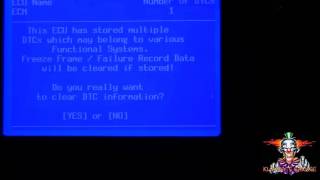
Many 2009-2011 Savana vans have Flex Fuel capability. For these specific vehicles, the P0175 code is very frequently caused by the engine's computer incorrectly 'learning' a high alcohol content in the fuel. The system then commands more fuel, expecting E85, but gets regular gasoline, causing a rich condition. This is often not a hardware failure but a software glitch that requires a specific scan tool reset, 🎬 Watch: How to fix a flex fuel rich condition. a unique first diagnostic step before replacing any parts. This is corroborated by GM Technical Service Bulletin #PIP4792D.
Diagnostic Flowchart
Tap your situation to follow the diagnostic path that matches what you're seeing on this vehicle.
Symptoms You May Notice
- Check Engine Light is on
- Poor fuel mileage
- Strong smell of gasoline from the exhaust
- Black smoke from the tailpipe, especially on a cold start
- Rough idling or stalling
- Hesitation or lack of engine power
- Extended crank on cold starts
- Engine may continue to sputter for a moment after being turned off
- Replacing the oxygen sensor first. While an O2 sensor can fail, it is often correctly reporting the rich condition caused by another component. On this vehicle, failing to check the fuel composition value first is the most common misdiagnosis.
Most Likely Causes
- Incorrect Fuel Composition Reading 🔴 High Probability As Flex Fuel vehicles, their software can incorrectly adapt to a high ethanol percentage over time, even with regular gasoline in the tank. This is a well-documented GM issue affecting many of their trucks and SUVs from this era. This can be triggered by running the tank very low before refueling.
How to confirm: Use a scan tool to view the 'Fuel Alcohol Content' or 'Fuel Composition' percentage in the live data stream. If the vehicle has standard gasoline (which is typically E10 or less) but the reading is high (e.g., 20-85%), this is the cause. TSB PIP4792D states that if the scanned value is 17% or more greater than the actual measured ethanol content, this procedure applies.
Typical fix: Perform a 'Fuel Composition Reset' using a bi-directional scan tool (like a Snap-on, Autel, or XTool). This function is found in the special functions or module setup menu. After resetting the composition, it is also critical to perform a 'Fuel Trim Reset' to clear the learned negative adjustments. In some cases, the TSB also recommends reprogramming the ECM with updated calibrations.
Est. part cost: $0 - Leaking Fuel Injector(s) 🟡 Medium Probability
How to confirm: Perform a fuel pressure leak-down test. After turning the engine off, the fuel rail pressure should hold steady. If it drops quickly, it may indicate one or more leaking injectors. You can also pull the spark plugs on Bank 2 and check for one that is black, sooty, and smells of raw fuel.
Typical fix: Replace the faulty fuel injector(s) on Bank 2. It's often recommended to replace them as a set on the affected bank.
Est. part cost: $50-$150 per injector - Faulty Fuel Pressure Regulator 🟡 Medium Probability The diaphragm inside the regulator can tear, allowing raw fuel to be sucked into the intake manifold through the vacuum line, causing a rich condition.
How to confirm: Connect a fuel pressure gauge to the fuel rail's service port. If the fuel pressure is significantly higher than the manufacturer's specification, the regulator is likely faulty. A simple check is to pull the vacuum hose off the regulator; if raw fuel is present in the hose, the regulator has failed.
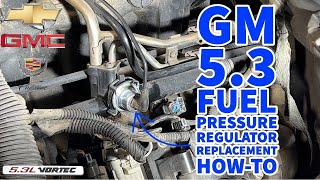
Typical fix: Replace the fuel pressure regulator. 🎬 Watch: Step-by-step fuel pressure regulator replacement guide.
Est. part cost: $60-$120 - Dirty or Faulty Mass Airflow (MAF) Sensor ⚪ Low Probability
How to confirm: A dirty MAF sensor typically under-reports airflow, causing a lean code. However, a failing sensor can send erratic data causing a rich condition. A diagnostic test involves unplugging the MAF sensor while the engine is running; if the fuel trims improve and move toward zero, the sensor is suspect.
Typical fix: First, try cleaning the sensor with dedicated MAF sensor cleaner. If that doesn't work, replace the sensor.
Est. part cost: $15 (cleaner), $80-$200 (sensor) - Faulty Upstream Oxygen Sensor (Bank 2, Sensor 1) ⚪ Low Probability
How to confirm: An O2 sensor stuck on a 'rich' reading (high voltage) will cause this code. A scan tool can graph the O2 sensor voltage; it should fluctuate rapidly between approximately 0.1V and 0.9V. If it's stuck high, it has likely failed.
Typical fix: Replace the Bank 2, Sensor 1 oxygen sensor.
Est. part cost: $50-$120
Rare But Worth Checking
- Leaking EVAP Purge Solenoid: If the EVAP purge solenoid sticks open, it can allow un-metered fuel vapors from the gas tank to be drawn into the intake manifold at idle, causing a rich condition.
- High-Pressure Fuel Pump Leak (Direct Injection Engines): While less common on these specific years/models which primarily used port injection, some later GM engines with direct injection can have the high-pressure fuel pump leak fuel into the crankcase. The PCV system then pulls these fuel vapors into the intake, causing a rich condition.
- Stuck-Open Thermostat: If the thermostat is stuck open, the engine may not reach its proper operating temperature. The ECU may command a richer fuel mixture to compensate, which can trigger a rich code over time.
Diagnosis Steps
- Connect a bi-directional scan tool.
- Check for any other stored trouble codes. Address those first if they are present.
- Navigate to the live data stream for the Engine Control Module (ECM).
- Find the 'Fuel Composition' or 'Alcohol Percentage' parameter.
- If the value is significantly above the actual ethanol content of your fuel (e.g., >20% when using E10 gasoline), this is the likely cause.
- In the scan tool's 'Special Functions' or 'Output Controls' menu, perform the 'Fuel Composition Reset'.
- Immediately after, perform the 'Fuel Trim Reset' to clear the old learned values.
- Clear the DTCs, start the engine, and monitor the fuel trims to ensure they are adjusting near 0%. Drive the vehicle to see if P0175 returns.
- If the code returns or the fuel composition was normal, check the long-term and short-term fuel trims for Bank 2. They will be highly negative (e.g., -25%).
- Test the fuel pressure at the fuel rail to ensure it is within OEM specifications. Check for a rapid drop in pressure after shutdown (leaking injector) or excessive pressure (faulty regulator).
- Inspect the vacuum line on the fuel pressure regulator for the presence of raw fuel.
- Inspect and clean the Mass Airflow (MAF) sensor using appropriate cleaner.
- Test the Bank 2, Sensor 1 oxygen sensor to ensure it is switching correctly and not stuck in a high-voltage (rich) state.
Parts You'll Likely Need
- No Parts Needed - Scan Tool Reset — The most common fix is a 'Fuel Composition Reset' which requires a capable scan tool but no physical parts.
OEM price range: $0
Aftermarket price range: $0 - Fuel Injector
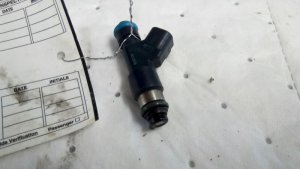
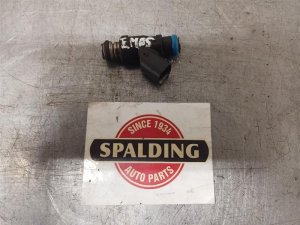
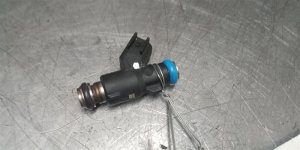
(OEM #12613411 (ACDelco/GM Genuine))— If the fuel composition is correct, a leaking fuel injector is a likely cause of a rich condition isolated to one bank. This part number fits many 2010+ GM V8s.
Trusted brands: ACDelco, Bosch, Standard Motor Products
OEM price range: $120-$200
Aftermarket price range: $50-$150 - Upstream Oxygen Sensor (Bank 2, Sensor 1)
(OEM #12599204 (ACDelco/GM Genuine - example, verify by VIN))— A failed oxygen sensor can get stuck reading rich, tricking the computer. It's a less common cause than the fuel composition issue but a possible point of failure.
Trusted brands: ACDelco, Denso, Bosch, TRQ
OEM price range: $80-$150
Aftermarket price range: $50-$120
Related Codes That Often Appear With This One
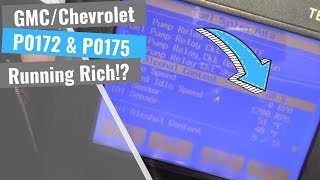
- P0172 — P0172 is the identical 'System Too Rich' code but for Bank 1. When both appear together, it strongly points to a problem affecting the entire engine, such as the fuel composition reading, fuel pressure, MAF sensor, or a stuck EVAP purge valve.
Technical Service Bulletins (TSBs) & Recalls
- PIP4792D: Mentions that for a P0172 and/or P0175 code, the technician should check the Fuel Alcohol Content parameter with a scan tool. If the scanned value is over 17% different from a physical fuel sample, the ECM may need reprogramming and the fuel composition and trim values must be reset.
Platform-Specific Known Issues
- As per TSB #PIP4792D, these vehicles can exhibit a P0175 code due to an incorrect learned fuel alcohol content, which requires checking this parameter first before any parts are replaced.
Mechanic-Grade Diagnostic Values
- Fuel Pressure (Key On, Engine Off) — expected: 55-65 PSI. Failure: Pressure below 55 PSI may indicate a weak pump or leak. Pressure above 65 PSI may indicate a faulty regulator or restricted return line.
- Fuel Pressure Leak-Down (Engine Off) — expected: Pressure should hold steady or drop very slowly.. Failure: A rapid drop in pressure indicates a leak, most commonly from one or more fuel injectors.
- Mass Airflow (MAF) Sensor at Idle — expected: Approximately 5-7 g/s for a 5.3L or 6.0L V8 at normal operating temperature.. Failure: A significantly higher reading (e.g., 8+ g/s) can indicate a faulty MAF sensor causing a rich condition. A significantly lower reading can indicate a vacuum leak.
- Fuel Injector Coil Resistance — expected: Typically 10-18 Ohms, but the most important factor is that all injectors are within 0.5 Ohms of each other.. Failure: An injector with a resistance reading that is significantly different from the others is faulty and should be replaced.
- EVAP Purge Solenoid Resistance — expected: Generally between 15 and 30 Ohms.. Failure: A reading far outside this range indicates an internal electrical failure of the solenoid.
Scan Tool Commands That Help
- GDS2 / Tech2 / Professional Scan Tool (e.g., XTool, Autel): Fuel Composition Reset / Fuel Compensation Reset — This is the primary step when a scan tool shows a high alcohol percentage in the fuel despite using regular gasoline. It resets the learned value to a baseline, correcting the false rich condition.
- GDS2 / Tech2 / Professional Scan Tool: Fuel Trim Reset — This should be performed immediately after a Fuel Composition Reset. It clears the long-term fuel trim adaptations that the ECM learned while trying to compensate for the false rich condition, allowing the system to re-learn faster.
- GDS2 / Tech2 / Professional Scan Tool: Injector Balance Test — If a leaking injector is suspected, this bidirectional test allows the technician to fire each injector individually while monitoring fuel pressure drop, helping to pinpoint a specific leaking injector without removal.
Wiring & Ground Locations
- G103 — Located on the rear of the left (driver's side) cylinder head. Some diagrams for similar V8 engines place it on the front of the passenger side cylinder head. Check both locations.. This is a critical engine ground. A TSB for other issues mentions ensuring this ground has a clean and tight connection for proper module operation. Poor grounding can cause erratic sensor readings and contribute to various engine management faults.
- G101 — Located at the lower front of the engine block.. This ground point is shared by the Engine Control Module (ECM) and the Mass Air Flow (MAF) sensor. A poor connection here could directly impact the signals from the MAF sensor and the ECM's ability to function correctly, potentially causing incorrect fuel calculations.
- ECM Harness Ground Wires — Within the main wiring harness leading to the ECM, any solid black wire is typically a ground.. These wires must have a solid connection to the engine block or cylinder head to ensure the ECM itself is properly grounded. All sensors and the ECM must share the same ground plane to prevent voltage differentials that can corrupt signals.
Real Owner Repair Stories
- YouTube channel 'Fix It Rich' (2007 Chevy Tahoe (same platform/engine family)) — P0175 (System Rich Bank 2), long crank time.
❌ Tried (didn't work) Checked MAF sensor - it was fine., Checked EVAP purge valve - it was not leaking.
✅ What actually fixed it The technician first performed a 'Fuel Composition Reset' because the scan tool showed an incorrect alcohol percentage. This fixed the P0175 rich code, but then the vehicle began setting LEAN codes. This revealed the true underlying problem: the fuel pressure was below spec due to a failing fuel pump. The incorrect alcohol reading was causing the ECM to command extra fuel, which masked the weak pump. Replacing the fuel pump ultimately resolved all issues.
"I Checked Everything" — The Actual Cause
- In one documented case involving a similar GM truck with P0175, the root cause was not an air leak or an overly rich component, but rather a failing fuel pump that was being masked by an incorrect, high fuel-alcohol reading in the ECM. A technician would normally associate a bad fuel pump with a lean code (P0171/P0174), not a rich code. Only after correcting the software glitch by performing a 'Fuel Composition Reset' did the true lean condition (and the failing pump) become apparent.
OEM Part Supersession History
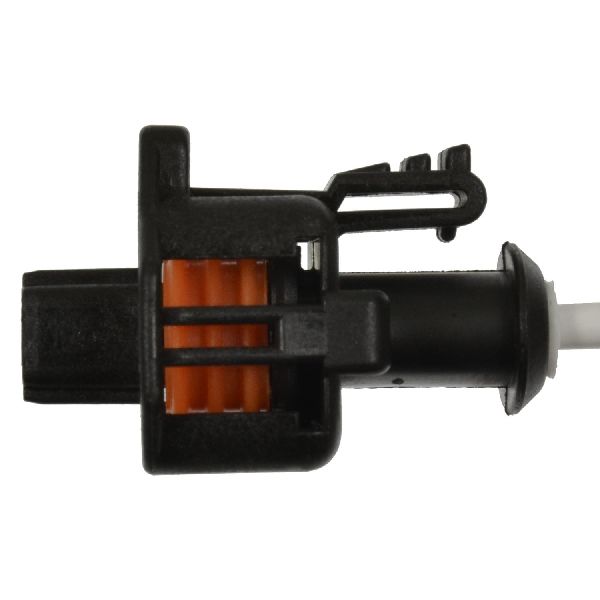
Varies (Multec 2 style)→Varies (USCAR / EV6 style)— Connector style change across the GM truck line.
Heads up: Early Gen IV truck engines (pre-2010) often used a Multec 2 connector for the fuel injectors. Around 2010, GM transitioned to the more common USCAR (EV6) style connector. When replacing injectors on a 2009-2011 Savana, it is critical to visually inspect the existing injector connector to ensure the replacement part matches. The injectors may be physically interchangeable but will have the wrong electrical plug.
Model Year Variations Within This Range
- 2009-2011: The electrical connector style on the fuel injectors may differ within this year range. 2009 models are more likely to have the older Multec 2 style connector, while 2010 and 2011 models are more likely to have the newer USCAR/EV6 style connector. Always verify the connector on the vehicle's harness before ordering parts.
Helpful Videos
Used OEM Parts in Stock

New Aftermarket Parts Available




The information in this article is provided for general reference and educational purposes only. Vehicle specifications, procedures, and part compatibility can vary by production date, trim level, and region. Always consult your vehicle's factory service manual and verify part numbers before purchasing or performing repairs. Safety-critical components such as airbags, seat belts, and braking systems should be installed by a qualified professional.
- Gmc SAVANA:
- 🎬 Helpful Videos
- 🛍️ Shop This Part
- What's Unique About the 2009-2011 Gmc SAVANA
- Diagnostic Flowchart
- Symptoms You May Notice
- Most Likely Causes
- Rare But Worth Checking
- Diagnosis Steps
- Parts You'll Likely Need
- Related Codes That Often Appear With This One
- Technical Service Bulletins (TSBs) & Recalls
- Platform-Specific Known Issues
- Mechanic-Grade Diagnostic Values
- Scan Tool Commands That Help
- Wiring & Ground Locations
- Real Owner Repair Stories
- "I Checked Everything" — The Actual Cause
- OEM Part Supersession History
- Model Year Variations Within This Range
- 🎟️ Get 5% Off