

P0175 on 2018-2021 Ford F-150: System Too Rich Bank 2 Causes and Fixes
On a 2018-2021 F-150, especially with the 5.0L V8, code P0175 is frequently caused by a powertrain control module (PCM) software glitch related to flex-fuel learning that requires a dealer reflash, as detailed in multiple Ford TSBs. Other likely causes include a leaking fuel injector, a dirty Mass Airflow (MAF) sensor, or an incorrect ethanol percentage reading that can be reset with tools like FORScan.
- For a 2018-2021 F-150, P0175 is very often a software issue, not a failed part.
- Before buying any parts, contact a Ford dealer with your VIN to see if a PCM reflash covered by a TSB is available for your truck.
- If a software update doesn't apply or doesn't fix the issue, the next most likely causes are a leaking fuel injector on Bank 2 or a dirty MAF sensor.
- Do not replace the oxygen sensor as a first step; it is usually reporting the problem correctly, not causing it.
What's Unique About the 2018-2021 Ford F-150

For this specific generation of F-150, particularly the 5.0L V8, the P0175 code is frequently a software-related issue. Ford has issued numerous Technical Service Bulletins (TSBs) advising dealers to reprogram the PCM. A key problem, outlined in TSB SSM 49050, is an 'incorrect flex fuel learning' issue where the PCM falsely believes the fuel has a high ethanol content (e.g., 77%) even when running on regular gasoline. This miscalculation causes the PCM to inject too much fuel. This can be triggered by refueling habits, like adding small amounts of gas at a time. This is a distinct issue not commonly seen on other vehicles where the code is almost always a mechanical or sensor failure.
Diagnostic Flowchart

Tap your situation to follow the diagnostic path that matches what you're seeing on this vehicle.
Generation note: This range covers the end of the 13th generation (2018-2020) and the start of the 14th generation (2021). The provided TSBs from Ford cover vehicles in both generations, indicating the software-related issues are present across this year span, especially for the 5.0L engine.
Symptoms You May Notice

- Check Engine Light is on
- Poor fuel economy
- Rough or unstable idle, sometimes flooding on cold starts
- Hesitation or lack of power during acceleration
- Strong smell of gasoline from the exhaust
- Black smoke from the exhaust pipe in severe cases
- Replacing the oxygen sensor without further diagnosis. The O2 sensor is what detects the problem, but it's often not the cause. A rich condition will quickly foul a new sensor if the root cause isn't fixed.
- Assuming a mechanical fault on a 5.0L engine without first checking for the flex-fuel learning software issue. Many owners and shops have chased hardware problems when a simple KAM reset or PCM reflash was the solution.
Most Likely Causes

- Powertrain Control Module (PCM) Software Calibration / Flex Fuel Learning Error 🔴 High Probability Ford TSBs SSM 49050 and 21-2443 directly address this. The PCM on 5.0L Flex Fuel models can misinterpret the ethanol content of the fuel, known as the FF_INF value. This can be caused by refueling habits (adding small amounts of fuel) or a software bug, leading the PCM to command a rich mixture.
How to confirm: Use a scan tool like FORScan to view the 'Inferred Flexible Fuel Percentage' (FF_INF) PID. If you are using regular gasoline but the value is high (e.g., over 20-30%), this is likely the cause.
Typical fix: First, try a 'Keep Alive Memory' (KAM) reset or a 'Reset All Adaptations' function using FORScan or a high-end scan tool. If that fails, a Ford dealer must reprogram the PCM to the latest software version per the relevant TSB.
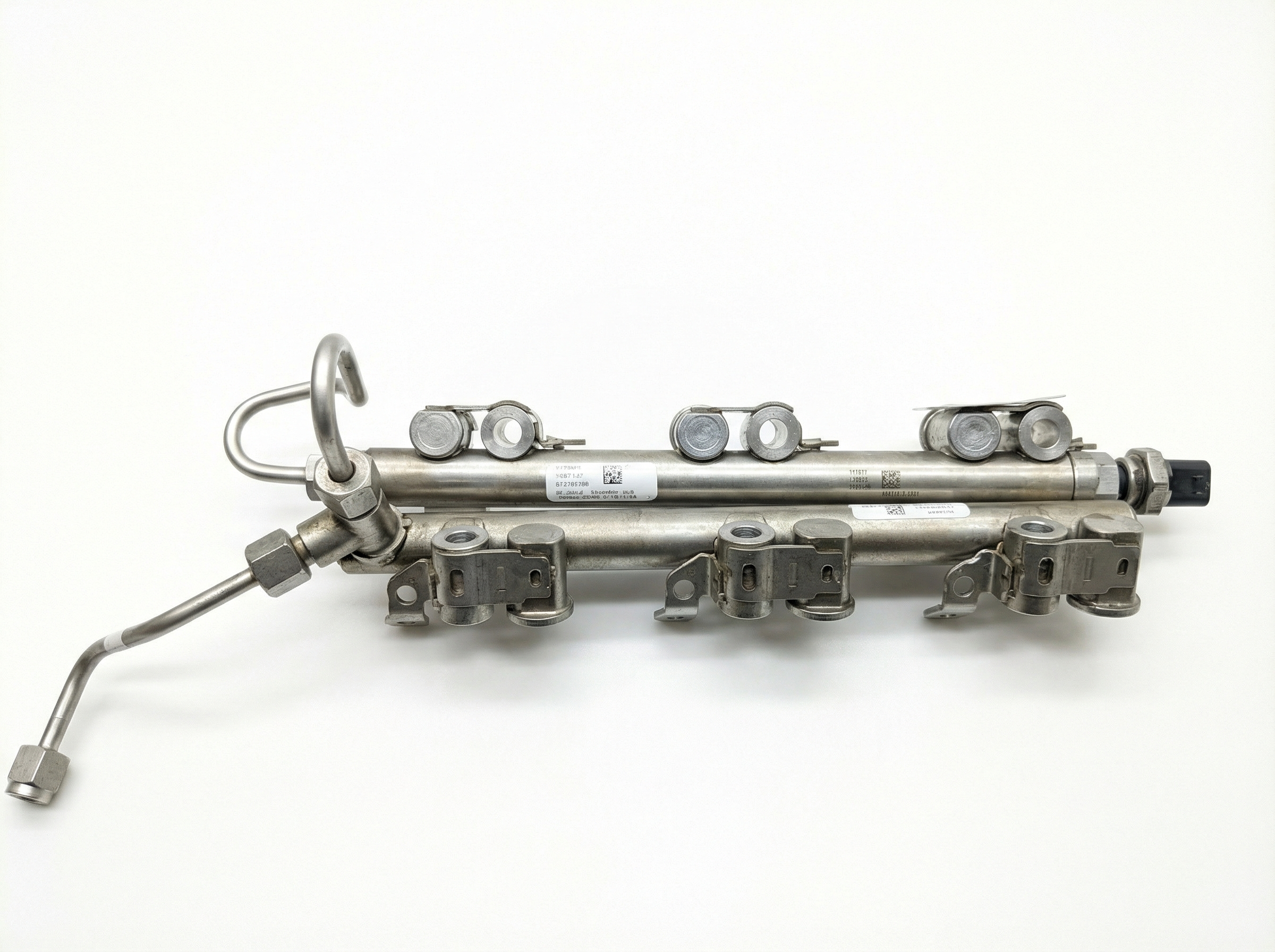
Est. part cost: $0 - Leaking or Stuck Fuel Injector 🟡 Medium Probability TSB 20-2324 specifically mentions direct injection (DI) fuel injectors as a potential hardware cause. The 5.0L V8 and EcoBoost engines use a dual-injection system (port and direct). A leaking injector dumps excess fuel into a cylinder, causing a rich condition on that bank.
How to confirm: A mechanic can perform a fuel injector balance test. A DIY method is to check spark plugs on the affected bank (Bank 2); a plug that is black and sooty compared to others indicates a rich cylinder. A fuel pressure gauge can also be used to see if pressure bleeds down quickly after shutdown, indicating a leak.
Typical fix: Replace the faulty fuel injector(s) on Bank 2. It is often recommended to replace all injectors on that bank at the same time.
Est. part cost: $50-$150 per injector - Dirty or Faulty Mass Airflow (MAF) Sensor 🟡 Medium Probability The MAF sensor can become contaminated, especially from over-oiled aftermarket air filters, causing it to under-report airflow. The PCM then injects too much fuel for the actual amount of air entering the engine, creating a rich condition that often affects both banks (P0172 & P0175).
How to confirm: Inspect the sensor wires for dirt or oil. Monitor MAF readings on a scan tool to see if they are rational. Cleaning with a dedicated MAF sensor cleaner is a common first step.
Typical fix: Clean the MAF sensor with a specialized cleaner or replace the sensor if cleaning doesn't work.
Est. part cost: $10-$20 for cleaner, $70-$200 for a new sensor - Faulty Upstream Oxygen (O2) Sensor ⚪ Low Probability While an O2 sensor can fail and get 'stuck' reading rich, it's more often a symptom of the rich condition (fouled by excess fuel) rather than the root cause. The PCM tests the sensor's rationality before setting a fuel trim code, making it an unlikely primary culprit.
How to confirm: A technician can graph the O2 sensor's voltage on a scan tool to see if it is responding correctly. A properly functioning sensor will fluctuate rapidly. A sensor stuck at a high voltage (e.g., >0.8v) may be faulty.
Typical fix: Replace the Bank 2, Sensor 1 (upstream) oxygen sensor.
Est. part cost: $50-$120
Rare But Worth Checking
- Leaking EVAP Purge Valve: If the evaporative emissions purge valve sticks open, it can allow un-metered fuel vapors from the gas tank to enter the intake manifold, creating a rich condition. This can sometimes affect one bank more than the other, triggering P0175. This is mentioned as a possible cause in TSB SSM 48573.
- High Fuel Pressure: A failing fuel pressure regulator or a restricted fuel return line can cause system-wide high fuel pressure, forcing too much fuel through the injectors. This usually triggers codes on both banks (P0172 and P0175) but can sometimes appear on just one initially.
Diagnosis Steps
- Scan the PCM for all trouble codes. Note if P0175 appears alone or with P0172 (both banks rich).
- Check for TSBs & Flex Fuel Reading (5.0L V8 especially): This is the most important first step for this platform. Use a scan tool (like FORScan) to check the 'Inferred Flexible Fuel Percentage' (FF_INF). If it's abnormally high and you use regular gas, this is your likely problem.
- Attempt a KAM Reset: Use a scan tool or disconnect the battery for 30 minutes to perform a Keep Alive Memory (KAM) reset. This can clear the learned fuel adaptations and the incorrect ethanol value. Drive the truck and see if the fuel trims normalize and the code stays away.
- Analyze Freeze Frame Data: Look at the engine conditions (RPM, load, temperature) when the code was set. This can provide clues to the cause.
- Monitor Fuel Trims: Use a scan tool to watch Short-Term (STFT) and Long-Term (LTFT) Fuel Trims for Bank 2. Large negative numbers (e.g., -15% or more) confirm the PCM is actively trying to correct a rich condition.
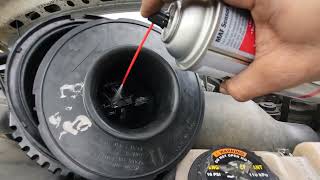
- Inspect and Clean the MAF Sensor: Visually inspect the MAF sensor wires for contamination. Clean it with dedicated MAF sensor cleaner and inspect the air filter.
- Test Fuel Pressure: Verify that fuel pressure is within the manufacturer's specifications. High pressure could indicate a faulty regulator.
- Test for Leaking Fuel Injectors: Perform a fuel pressure bleed-down test. If pressure drops quickly after turning the engine off, an injector may be leaking. Pulling the spark plugs on Bank 2 can also help identify a specific rich cylinder (the plug will be black and sooty).
Parts You'll Likely Need
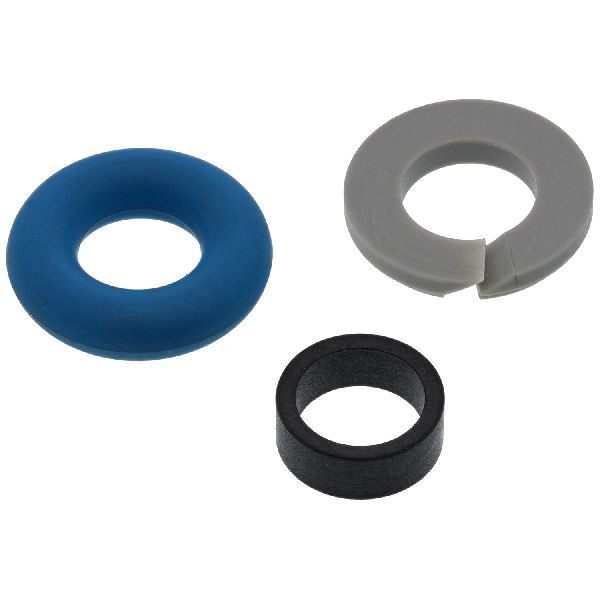
- Fuel Injector
(OEM #Motorcraft CM-5265 (DI, 5.0L), Motorcraft CM-5254 (DI, 3.5L/2.7L), Motorcraft CM-5262 (PFI, 3.3L))— A leaking or stuck-open injector is a documented cause for this code on these trucks, per TSB 20-2324. The 5.0L and EcoBoost engines have both Port (PFI) and Direct (DI) injectors.
Trusted brands: Motorcraft, Bosch
OEM price range: $80-$150
Aftermarket price range: $50-$100 - Mass Airflow (MAF) Sensor
(OEM #Motorcraft AFLS-195 (for 5.0L), Motorcraft AFLS-165 (for 3.0L Diesel, may cross-reference))— A dirty or faulty MAF sensor is a common cause of incorrect fuel mixture calculations. Contamination from oiled filters i
Related Codes That Often Appear With This One
- P0172 — This is the 'System Too Rich' code for Bank 1. If both P0172 and P0175 are present, it points to a problem common to both sides of the engine, like the MAF sensor, a fuel pressure issue, or the common flex-fuel learning error.
- P0171 / P0174 — These are 'System Too Lean' codes. Seeing them alongside a rich code is very common with the PCM software issues described in the TSBs, indicating an erratic or confused fuel calculation system.
- P060B, P164C, P2601, etc. — TSBs 21-2154 and 22-2393 list a large number of other DTCs that can appear with P0175, all related to the same underlying PCM software calibration issue needing a reflash.
Technical Service Bulletins (TSBs) & Recalls
- TSB 22-2393
- TSB 21-2443
- TSB 21-2154
- TSB 21-2083
- TSB 20-2324
- SSM 49050
Platform-Specific Known Issues
- Flex Fuel Learning Glitch (5.0L): The most prevalent issue. The PCM incorrectly learns a high ethanol content in the fuel, causing it to run rich. This is documented in TSB SSM 49050 and can often be fixed by a KAM reset or a dealer PCM reflash.
- Direct Injector Failures: TSB 20-2324 specifically identifies issues with direct injection fuel injectors as a hardware-related cause for this code, separate from the software problems.
Mechanic-Grade Diagnostic Values
- Long-Term Fuel Trim (LTFT) for Bank 2 — expected: Within +/- 10% at idle and steady cruise.. Failure: Sustained negative values beyond -15%, often maxing out at -25% to -30%, indicate the PCM is removing fuel to compensate for a rich condition.
- Upstream Oxygen Sensor (Wideband) Current — expected: On these newer models, the upstream sensors are often wideband and read current (mA) or Lambda, not just voltage. The reading should fluctuate around a central point.. Failure: A sustained negative current reading (e.g., -1.0 mA) indicates a rich condition. A positive current indicates lean. This is the inverse of traditional 0-1V sensors.
- Upstream Oxygen Sensor (Traditional) Voltage — expected: If equipped with traditional sensors, voltage should rapidly switch between approximately 0.2V (lean) and 0.8V (rich).. Failure: Voltage is stuck high, above 0.8V, confirming a rich mixture is being detected.
- Low-Pressure Fuel System Pressure (5.0L) — expected: 51 to 62 PSI with key on, engine running.. Failure: Pressure significantly above this range could indicate a faulty fuel pressure regulator, causing a rich condition. Pressure that bleeds off rapidly after shutdown can indicate a leaking injector.
- Inferred Flexible Fuel Percentage (FF_INF) PID — expected: Should be close to the actual ethanol content of the fuel in the tank (e.g., 10-15% for E10 gasoline).. Failure: A reading of 30%, 50%, or even 70%+ when using regular gasoline. This tricks the PCM into injecting far too much fuel.
Hidden / Shadow Codes Worth Checking
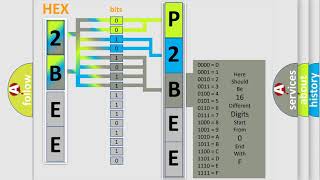
- P2BEC, P2BED, P2BEE, P2BEF, P2BF0, P2BF1, P2BF2, P2BF3: These are manufacturer-specific DTCs related to fuel control and PCM processing that Ford lists in conjunction with P0171/P0172/P0174/P0175. Their presence strongly suggests the root cause is the PCM software glitch addressed by TSB 22-2393. (see via A professional scan tool like Ford's IDS or some high-end aftermarket scanners. Basic OBD-II readers may not display these codes.)
Scan Tool Commands That Help
- FORScan, Ford IDS, high-end scan tools: Reset All Adaptations / Reset fuel adaptations — This is a critical first step when the 'Inferred Flexible Fuel Percentage' PID is found to be incorrectly high. This command can reset the learned ethanol value back to its baseline, often resolving the rich condition immediately without replacing parts.
- Ford IDS (Integrated Diagnostic Software): PCM Reprogramming / Module Programming — This is the dealer-level fix specified in TSB 22-2393. It should be performed when P0175 is present with other related codes and a KAM/Adaptation reset does not provide a permanent solution. This updates the faulty software parameters causing the issue.
- Ford IDS, FORScan: Keep Alive Memory (KAM) Reset — Used after a PCM reflash or as a diagnostic step to clear all learned fuel trim tables and adaptations. TSB 22-2393 explicitly requires this step after reprogramming the PCM.
Real Owner Repair Stories
- f150forum.com user (2019 Ford F-150 5.0L) — Check engine light with codes P0172 and P0175 (rich on both banks).
❌ Tried (didn't work) Cleaning the MAF sensor, Replacing spark plugs, Checking for vacuum leaks
✅ What actually fixed it The owner took the truck to a Ford dealer who performed a PCM reflash according to a Technical Service Bulletin. The software update corrected the fuel calculation error and the codes did not return. - Ford Truck Enthusiasts forum user (2016 Ford F-150 5.0L (pre-dates range but demonstrates identical issue)) — P0172 and P0175, no start when cold, detonation sound under light throttle.
❌ Tried (didn't work) Initial logging and data analysis.
✅ What actually fixed it The user discovered their scan tool was reporting an 'Ethanol Fuel %' of 77.6% despite only using regular gasoline. The community identified this as the root cause, and the fix is to reset this learned value using a capable scan tool like FORScan. This directly addresses the 'incorrect flex fuel learning' mentioned in Ford's TSBs.
"I Checked Everything" — The Actual Cause
- The most common scenario for this pattern on the 5.0L F-150 is the incorrect flex-fuel learning issue. A technician can run a smoke test and find no vacuum leaks, confirm fuel pressure is perfect, and even swap injectors with no change. The root cause is not a physical leak or hardware failure, but a software error in the PCM. The PCM falsely believes the fuel is E85, so it commands a much longer injector pulse width, causing the rich condition. A smoke test cannot detect a software bug.
Model Year Variations Within This Range
- 2018-2020: These years feature the 'Gen 3' 5.0L Coyote engine, which introduced a dual-fuel system (both port and direct injection) and raised the compression ratio to 12.0:1. These engines are the primary focus of the TSBs regarding PCM software and flex-fuel learning issues.
- 2021: The 2021 model year introduced the 'Gen 4' 5.0L Coyote, which added Variable Displacement Engine (VDE) technology for cylinder deactivation. While the PCM software issues from prior years can still affect early 2021 models (as noted in TSB 22-2393), the addition of VDE adds another layer of complexity to the engine management system.
Helpful Videos

Used OEM Parts in Stock


New Aftermarket Parts Available



The information in this article is provided for general reference and educational purposes only. Vehicle specifications, procedures, and part compatibility can vary by production date, trim level, and region. Always consult your vehicle's factory service manual and verify part numbers before purchasing or performing repairs. Safety-critical components such as airbags, seat belts, and braking systems should be installed by a qualified professional.
- Ford F-150:
- 🎬 Helpful Videos
- 🛍️ Shop This Part
- What's Unique About the 2018-2021 Ford F-150
- Diagnostic Flowchart
- Symptoms You May Notice
- Most Likely Causes
- Rare But Worth Checking
- Diagnosis Steps
- Parts You'll Likely Need
- Related Codes That Often Appear With This One
- Technical Service Bulletins (TSBs) & Recalls
- Platform-Specific Known Issues
- Mechanic-Grade Diagnostic Values
- Hidden / Shadow Codes Worth Checking
- Scan Tool Commands That Help
- Real Owner Repair Stories
- "I Checked Everything" — The Actual Cause
- Model Year Variations Within This Range
- 🎟️ Get 5% Off