

P0175 on 2007-2014 Ford Edge 3.5L: Causes and Fixes for 'System Too Rich (Bank 2)'
This code means your engine is running with too much fuel on Bank 2. The most common causes are a leaking fuel injector, a faulty EVAP purge valve, or a dirty Mass Airflow (MAF) sensor. A leaking injector is a high-probability cause on this engine.
- P0175 means the engine is getting too much fuel on Bank 2 (the cylinder bank near the radiator).
- Do not immediately replace the oxygen sensor; it's usually just reporting the problem.
- The most likely culprits are a leaking fuel injector, a stuck-open EVAP purge valve, or a dirty MAF sensor.
- Check for other codes. If P0172 (Bank 1 Rich) is also present, focus on components that affect the whole engine, like the MAF sensor or fuel pressure.
- Driving for too long with this code can damage your catalytic converter, leading to a much more expensive repair.
What's Unique About the 2007-2014 Ford Edge
The 3.5L Cyclone V6 engine family can be susceptible to issues that cause rich conditions. While not unique to the Edge, problems like leaking fuel injectors and faulty EVAP purge valves are frequently reported by owners of vehicles with this engine. It's important to follow a logical diagnostic path, as simply replacing the oxygen sensor often fails to fix the root cause. The location of Bank 2 near the radiator makes accessing its components, like the O2 sensor and fuel injectors, slightly easier than Bank 1, which is against the firewall.
Generation note: The 2007-2014 year range covers the entire first generation of the Ford Edge, including the 2011-2014 facelift. The 3.5L V6 engine was used throughout this period, and the common causes and fixes for P0175 are generally consistent across these model years.
Symptoms You May Notice
- Check Engine Light is on
- Reduced fuel economy
- Rough or unstable idle
- Hesitation or lack of power during acceleration
- Strong smell of raw fuel from the exhaust
- Black smoke from the tailpipe in severe cases
- Replacing the oxygen sensor first. The O2 sensor is often just the messenger reporting the problem. The actual cause is usually a component that is adding too much fuel or restricting air, like a leaking injector or faulty purge valve.
Most Likely Causes
- Leaking Fuel Injector(s) on Bank 2 🔴 High Probability Fuel injectors can fail internally, getting stuck partially open and leaking excess fuel into a cylinder. This is a commonly reported issue leading to rich codes on this engine family, as documented in owner forums. Manufacturer service bulletin TSB 20-2324 notes that P0175 can be caused by direct injection fuel injectors or PCM software issues.
How to confirm: After turning the engine off, perform a fuel pressure test. If the pressure bleeds down quickly, it may indicate a leaking injector. Another method is to remove the spark plugs on Bank 2 (cylinders 4, 5, 6) and inspect them. A plug that is black, sooty, and smells of fuel compared to the others points to the leaking injector's cylinder.
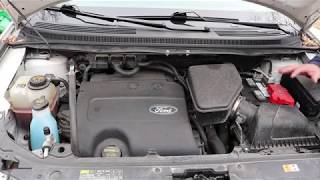
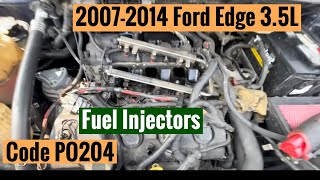
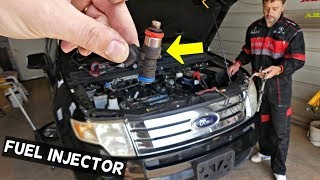
Typical fix: Replace the faulty fuel injector. 🎬 Watch: Step-by-step guide to replacing your Bank 2 fuel injectors. It is often recommended to replace all three injectors on Bank 2 at the same time for preventative maintenance. The OEM Motorcraft part is CM-5138 for 2011-2014 models.
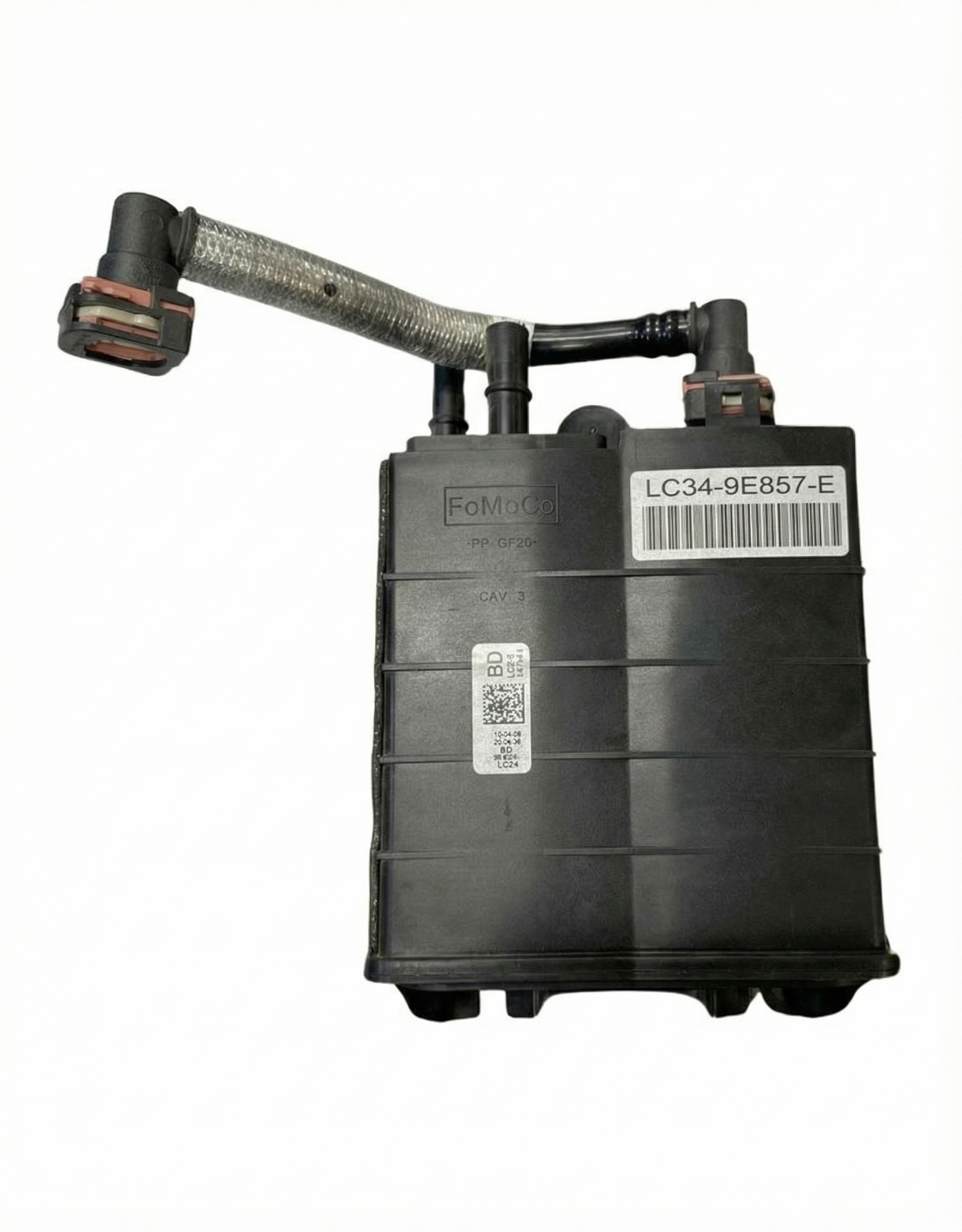
Est. part cost: $40-$100 per injector - Faulty EVAP Purge Valve 🟡 Medium Probability The evaporative emissions (EVAP) purge valve is a very common failure item on many Ford vehicles. If it sticks open, it allows un-metered fuel vapors from the charcoal canister to be constantly drawn into the engine, creating a rich condition that can affect one or both banks.
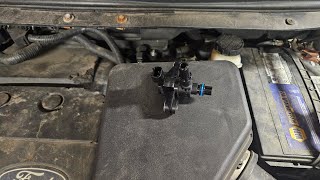
How to confirm: With the engine idling, disconnect the electrical connector and the vapor line from the purge valve. Place your finger over the port on the valve itself. If you feel any vacuum or suction, the valve is stuck open and needs to be replaced.
Typical fix: Replace the EVAP purge solenoid valve. The OEM Motorcraft part number is 9U5Z-9C915-H, which has been superseded by 9U5Z-9C915-J.
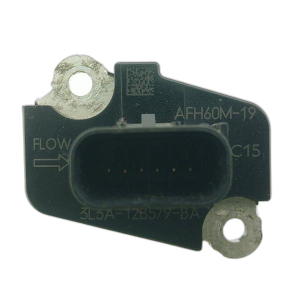
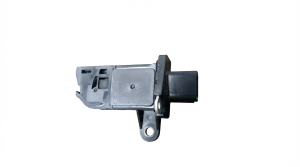
Est. part cost: $30-$70 - Dirty or Faulty Mass Airflow (MAF) Sensor 🟡 Medium Probability The MAF sensor measures the amount of air entering the engine. If it's dirty (often from over-oiled air filters) or faulty, it can under-report the amount of air, causing the PCM to inject too much fuel.
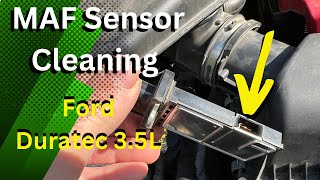
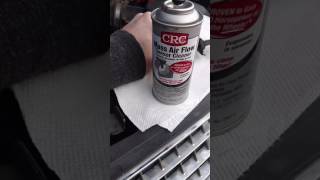
How to confirm: First, try cleaning the sensor using a dedicated MAF sensor cleaner spray. 🎬 Watch: How to safely clean the MAF sensor on this engine. Do not touch the delicate wires inside. If cleaning doesn't help, monitor the MAF reading on a scan tool to see if it's rational. A faulty sensor may need to be replaced.
Typical fix: Clean or replace the MAF sensor.
Est. part cost: $20 (cleaner) or $70-$150 (new sensor) - Faulty Bank 2 Upstream Oxygen (O2) Sensor ⚪ Low Probability While the O2 sensor is what reports the rich condition, it can sometimes fail and send a false signal. However, the PCM often runs self-tests on the sensor, making it a less common cause than the items that actually create the rich mixture.
How to confirm: Use a scan tool to graph the voltage of the Bank 2, Sensor 1 O2 sensor. A healthy sensor's voltage should fluctuate rapidly. If it's stuck high or sluggish, it may have failed.
Typical fix: Replace the Bank 2, Sensor 1 (upstream) oxygen sensor. The Motorcraft part number varies by specific year and configuration but is often DY-1178 or similar.
Est. part cost: $50-$120
Rare But Worth Checking
- High Fuel Pressure: An issue with the fuel pressure regulator or a restriction in the fuel return line can cause system-wide high fuel pressure, forcing too much fuel through the injectors. This would typically cause P0172 (Bank 1 Rich) to appear alongside P0175.
- Failed PCV System: On some Ford 3.5L/3.7L engines, the PCV valve is integrated into the valve cover. When it fails, it can cause high crankcase vacuum, pulling oil into the intake which can foul sensors and contribute to a rich reading. This is more commonly associated with lean codes but can be a factor.
- Environmental Contamination: TSB 19-2091, while for a different model, highlights that P0175 can sometimes be triggered by undesired water entry into the engine compartment directly over engine components.
- PCM Software Parameters: Manufacturer bulletins TSB 21-2154 and TSB 22-2393 indicate that P0175 may be stored in the powertrain control module due to various software parameters within the PCM.
Diagnosis Steps
- Use an OBD-II scanner to confirm P0175 and check for any other codes. Note if P0172 is also present.
- View live data on the scanner, paying attention to Short-Term Fuel Trim (STFT) and Long-Term Fuel Trim (LTFT) for Bank 2. For a rich code, you will see highly negative numbers (e.g., -15% to -30%) as the PCM tries to remove fuel.
- Inspect the air intake system for any blockages and check that the engine air filter is clean.
- Locate the EVAP purge valve on top of the engine. With the engine running, disconnect the vapor line and check for vacuum at the valve's port. There should be no vacuum at idle. If there is, 🎬 See this quick walkthrough for replacing the EVAP purge valve. the valve is faulty.
- Inspect and clean the Mass Airflow (MAF) sensor using a dedicated cleaner. Allow it to dry completely before reinstalling.
- If the above steps don't resolve the issue, investigate for a leaking fuel injector on Bank 2. Check fuel pressure bleed-down or inspect the spark plugs for signs of one cylinder running richer than the others.
- As a final step, if all else checks out, test the Bank 2, Sensor 1 oxygen sensor for proper operation by observing its voltage graph on a scan tool.
Parts You'll Likely Need
- Fuel Injector
(OEM #Motorcraft CM-5138)— A leaking fuel injector is a high-probability cause for a single-bank rich condition on this engine.
Trusted brands: Motorcraft, Bosch
OEM price range: $70-$120
Aftermarket price range: $40-$80 - Vapor Canister Purge Valve
(OEM #Motorcraft 9U5Z-9C915-H (superseded by 9U5Z-9C915-J))— This is a very common failure part on Fords that can stick open, causing a rich condition. It's relatively inexpensive and easy to replace.
Trusted brands: Motorcraft, Dorman
OEM price range: $50-$80
Aftermarket price range: $30-$50 - Mass Airflow (MAF) Sensor — A dirty or faulty MAF sensor can cause incorrect fuel calculations for both banks. Cleaning is often sufficient, but replacement is sometimes necessary.
Trusted brands: Motorcraft, Hitachi
OEM price range: $70-$150
Aftermarket price range: $50-$100 - Oxygen Sensor (Bank 2, Sensor 1)
(OEM #Motorcraft DY-1178 (Varies by year))— While less common, a failed O2 sensor can send false rich signals. It's the primary sensor for Bank 2 fuel trim.
Trusted brands: Motorcraft, Bosch, Denso
OEM price range: $60-$120
Aftermarket price range: $40-$80
Related Codes That Often Appear With This One
- P0172 — System Too Rich, Bank 1. If both P0172 and P0175 are present, it points to a problem affecting both engine banks, such as the MAF sensor, fuel pressure regulator, or EVAP purge valve.
- P0304, P0305, P0306 — Cylinder misfire codes for Bank 2. An excessively rich mixture can foul the spark plug in a specific cylinder, leading to a misfire on that cylinder.
- P2198 — O2 Sensor Signal Biased/Stuck Rich (Bank 2, Sensor 1). This is a more specific code indicating the sensor signal itself is stuck, which could be the sensor or a persistent rich condition causing it to read that way.
Technical Service Bulletins (TSBs) & Recalls
- TSB 15-0131: While specifically for the 3.5L EcoBoost F-150, this TSB addresses a cold-start rattle and involves replacing timing components. It is relevant as it shows Ford's approach to complex timing-related issues and has been superseded by TSB 16-0027. Its principles regarding engine noise and component replacement are broadly applicable.
- TSB 20-2324: This bulletin notes that P0175 can be stored in the PCM due to software issues or problems with direct injection fuel injectors.
- TSB 21-2154: Identifies that an illuminated MIL with code P0175 may be due to various software parameters within the powertrain control module.
- TSB 22-2393: Confirms that P0175, among other codes, can be triggered by PCM software parameters on certain Ford engine configurations.
- TSB 19-2091: Mentions that rich codes like P0175 can be caused by undesired water entry into the engine compartment.
Mechanic-Grade Diagnostic Values
- Long-Term Fuel Trim (LTFT) for Bank 2 — expected: -10% to +10% at idle on a warm engine.. Failure: A P0175 code is typically set when LTFT becomes excessively negative, often exceeding -20% to -25%, as the PCM removes fuel to compensate for the rich condition.
- Fuel Injector Resistance — expected: 11 to 14 Ohms.. Failure: A reading of infinity (open circuit) or near zero (short circuit) indicates a failed injector coil.
- EVAP Canister Purge Valve Resistance — expected: Approximately 20 to 30 Ohms.. Failure: A reading of infinite resistance (open circuit) or significantly outside the expected range suggests a failed solenoid coil.
- Mass Airflow (MAF) Sensor Reading at Idle — expected: Approximately 3.5 to 6.0 grams/second (g/s) for a 3.5L V6 at normal operating temperature with no load.. Failure: A significantly lower reading can cause the PCM to calculate less air is entering the engine, leading it to command a richer fuel mixture. Readings that are stuck or do not increase linearly with RPM also indicate a fault.
- Fuel Pressure (Key On, Engine Running) — expected: Approximately 65 psi (448 kPa) for the 3.5L Cyclone engine.. Failure: Sustained pressure significantly higher than 65 psi could indicate a faulty fuel pressure regulator or a restriction in the return system, forcing a rich condition.
Scan Tool Commands That Help
- Ford IDS / FORScan: Injector Balance Test — This function allows the technician to disable one injector at a time and observe the drop in RPMs. If disabling an injector on Bank 2 causes little or no change in RPM, it suggests that cylinder was already running poorly, possibly due to being flooded by a leaking injector.
- Ford IDS / FORScan: EVAP Purge Valve Command (EGR_PCT) — While the most common failure is being stuck open (testable by hand), this command allows you to cycle the valve electronically to check for intermittent sticking or a failure to open/close on command, which can be monitored by watching fuel trims for a response.
Wiring & Ground Locations
- Main Engine Ground — On the side of the engine block, near the front of the vehicle.. A poor engine ground can cause erratic voltage readings from various sensors, including the O2 sensors and MAF sensor, potentially leading to incorrect fuel calculations by the PCM.
- PCM Ground — The main wiring harness contains ground circuits that ultimately connect to the chassis. One key grounding point is located on the body behind the front bumper cover.. The Powertrain Control Module (PCM) relies on a stable ground reference to accurately interpret sensor data. A compromised ground can lead to a host of intermittent electrical issues, including false rich/lean codes.
- Harness Chafe Points — Visually inspect the wiring harness where it routes around the engine and near sensor connectors, particularly for the Bank 2 O2 sensor and fuel injectors.. Vibrations can cause wires to rub through their insulation, creating intermittent shorts to ground or other wires. A short in an O2 sensor heater circuit or injector control wire could potentially contribute to a rich code.
Real Owner Repair Stories
- Ford Edge Forum, user 'madmedic446' (2010 Ford Edge Limited 3.5L) — Check Engine Light with P0172 (Bank 1 Rich) and P0175 (Bank 2 Rich) after replacing injectors for a different code.
❌ Tried (didn't work) Replaced all 6 fuel injectors with new Bosch parts., Replaced spark plugs and coils., Replaced the MAF sensor., Replaced the EVAP purge valve., Replaced all 4 O2 sensors.
✅ What actually fixed it The user noted a large amount of oil in the intake manifold and planned to replace the PCV valve next. The thread implies that either the new aftermarket injectors had incorrect flow rates for the vehicle, or the PCV system was the underlying issue causing oil contamination and rich readings on both banks. The final resolution was not posted, but highlights a critical pitfall: aftermarket parts (injectors in this case) can sometimes introduce new problems. - NHTSA ODI #11098402 — An owner reported that their vehicle had to be towed from a gas station; a technician found P0175 among a long list of other codes and performed a power balance test to diagnose the issue.
OEM Part Supersession History
Motorcraft 9U5Z-9C915-H→Motorcraft 9U5Z-9C915-J— Standard part revision and update by the manufacturer.
Heads up: The new part number (9U5Z-9C915-J) is the correct and direct replacement for the older -H and -D revisions.Motorcraft CM-5165 (for 2007-2010)→N/A— Part specific to pre-facelift models.
Heads up: The 2011-2014 models use a different fuel injector, Motorcraft CM-5188 (also cross-referenced as Bosch 0280158191). While they may appear physically similar, using the wrong injector for the model year can cause incorrect fuel flow rates and lead to fuel trim codes like P0175.
Model Year Variations Within This Range
- 2011-2014: The 2011 model year facelift included an updated 3.5L V6 with Ti-VCT, increasing power from 265 hp to 285 hp. This change also corresponds with a different fuel injector part number (CM-5188) compared to the 2007-2010 models (CM-5165).
- 2007-2010 vs 2011-2014: The interior and exterior were significantly redesigned for 2011, including the introduction of the MyFord Touch infotainment system. While this doesn't directly affect the P0175 code, it's a key differentiator when sourcing parts or consulting repair guides.
Diagnostic Flowchart
Other Known Issues on This Vehicle
Issues unrelated to this code that are worth knowing about as an owner of this generation:
- Internal Water Pump Failure 🔴 High — A notorious and widespread issue. Can occur anywhere from 60,000 to 150,000+ miles. Failure allows coolant to mix with engine oil, leading to catastrophic engine damage if not caught immediately. (Ref: No recall, but it is a well-documented failure. Early signs include unexplained coolant loss and a milky/foamy substance on the oil cap or dipstick.)
- Power Transfer Unit (PTU) Failure (AWD Models) 🔴 High — Common on AWD models, often occurring between 70,000 and 120,000 miles. The unit is located near the hot exhaust, causing the gear oil to break down. Ford claimed it was a 'lifetime' fluid with no drain plug, leading to frequent failures. (Ref: No recall, but the subject of widespread owner complaints and at least one petition. The fix is an expensive replacement of the PTU.)
- Faulty Door Ajar Sensor 🟡 Low — Extremely common across many Ford models of this era, including the Edge. The sensor, located inside the door latch mechanism, fails and incorrectly reports a door is open. This can drain the battery via the dome light and prevent doors from locking. (Ref: No recall, but numerous owner-generated fixes are available, ranging from cleaning the latch mechanism to bypassing the sensor wiring.)
- Faulty Brake Booster 🟠 Medium — A tear can develop in the brake booster's internal diaphragm, leading to a hard brake pedal and a hissing noise when the brake is applied. This was common enough for Ford to issue an extended warranty program (13N02) for this specific part. (Ref: Customer Satisfaction Program 13N02, Recall 23S12 for some model years.)
Used vs. New Parts: Buying Guide for This Vehicle
When a used part is the smart pick: Structural or simple electronic components like intake manifolds, sensor brackets, or wiring harness connectors are generally safe to source from a junkyard. A used EVAP purge valve can be a cost-effective gamble if tested for function (holding vacuum when unpowered) before purchase.
Donor-vehicle mileage cap: roughly under 100000 miles for the part to have meaningful remaining life.
What to inspect on the donor part:
- For electronic parts like sensors, look for a donor vehicle with lower mileage and no signs of front-end collision or fire.
- Check the part for physical damage, corrosion on connectors, or brittleness in plastic components.
- When possible, check the donor vehicle's history for flood or fire damage.
OEM-only on this vehicle (don't cheap out):
- Fuel Injectors: As seen in forum posts, aftermarket injectors can have inconsistent flow rates that cause new fuel trim problems. It is strongly recommended to use OEM Motorcraft or a top-tier OE supplier like Bosch.
- Mass Airflow (MAF) Sensor: While some aftermarket brands work, many are poorly calibrated and can cause persistent performance issues. Sticking with Motorcraft or Hitachi is the safest bet.
Aftermarket brands forum-validated for this vehicle:
- Bosch or Denso for Oxygen Sensors
- Dorman for EVAP Purge Valve (often a cost-effective alternative to Motorcraft)
Brands owners have reported issues with on this vehicle:
- Unbranded or 'white-box' electronic sensors (MAF, O2) and fuel injectors from online marketplaces are a significant risk and often fail quickly or are dead-on-arrival.
Real Owner Stories
Aggregated from forums and TSBs cited above. Mileages and costs reflect what owners reported in those sources.
Ford Edge 3.5L Cyclone V6
Symptoms: Running rich after replacing bad injectors; owner observed both P0172 and P0175 codes appearing simultaneously.
What fixed it: The owner engaged in a diagnostic process for rich codes affecting both banks after an initial injector replacement.
Source hint: fordedgeforum.com: 'Running rich after replacing bad injectors.'
Related OBD-II Codes
Frequently Asked Questions
What is the specific Motorcraft part number for the EVAP purge valve on my 2011-2014 Ford Edge?
I have a P0175 on Bank 2; which cylinders should I inspect for a leaking fuel injector?
Does TSB 15-0131 apply to my 3.5L Ford Edge?
Is there a specific fuel injector recommended for the 2011-2014 3.5L engine models?
Can a faulty door ajar sensor or brake booster cause my P0175 code?
Which oxygen sensor should I test if I only have a P0175 code?
Helpful Videos

Used OEM Parts in Stock


New Aftermarket Parts Available



The information in this article is provided for general reference and educational purposes only. Vehicle specifications, procedures, and part compatibility can vary by production date, trim level, and region. Always consult your vehicle's factory service manual and verify part numbers before purchasing or performing repairs. Safety-critical components such as airbags, seat belts, and braking systems should be installed by a qualified professional.
- Ford Edge:
- 🎬 Helpful Videos
- 🛍️ Shop This Part
- What's Unique About the 2007-2014 Ford Edge
- Symptoms You May Notice
- Most Likely Causes
- Rare But Worth Checking
- Diagnosis Steps
- Parts You'll Likely Need
- Related Codes That Often Appear With This One
- Technical Service Bulletins (TSBs) & Recalls
- Mechanic-Grade Diagnostic Values
- Scan Tool Commands That Help
- Wiring & Ground Locations
- Real Owner Repair Stories
- OEM Part Supersession History
- Model Year Variations Within This Range
- Diagnostic Flowchart
- Other Known Issues on This Vehicle
- Used vs. New Parts: Buying Guide for This Vehicle
- Real Owner Stories
- Ford Edge 3.5L Cyclone V6
- Related OBD-II Codes
- Frequently Asked Questions
- 🎟️ Get 5% Off