

P0175 on 2009-2016 Chevrolet Tahoe: System Too Rich (Bank 2) Causes and Fixes
On a 2009-2016 Chevy Tahoe, P0175 is most often caused by an incorrect fuel alcohol content reading on Flex Fuel models or a dirty/obstructed Mass Airflow (MAF) sensor. A simple scan tool reset or cleaning the MAF sensor often resolves the issue without replacing parts. For 2015+ models, a leaking high-pressure fuel pump is also a primary suspect.
- Before buying any parts for a P0175 code, use a scan tool to check the 'Fuel Alcohol Content' reading; a simple reset may fix the problem for free.
- Thoroughly inspect the air filter housing for plastic flashing near the MAF sensor, as this is a known factory defect.
- If both P0172 and P0175 codes are present, focus on issues that affect the whole engine, not just one bank.
- On 2015+ models, a strong smell of gas in the engine oil is a major clue that the high-pressure fuel pump is leaking and causing the rich condition.
- Do not automatically replace the O2 sensor; it is usually the messenger, not the cause of the problem.
What's Unique About the 2009-2016 Chevrolet TAHOE

The 2009-2016 Tahoe and its platform mates are particularly susceptible to two unique issues that cause rich conditions. First, many are Flex Fuel vehicles, and the software-based system that determines the ethanol content in the fuel can become skewed, causing the computer to inject too much gasoline. This is a widely documented issue in owner forums. Second, TSB #PIP5446A specifically identifies 🎬 Watch: Diagnostic steps for these specific GM rich condition TSBs a manufacturing defect involving plastic flashing in the air filter housing that can disrupt airflow and trick the computer into adding excess fuel. These two issues are often the root cause, rather than more traditional failures like O2 sensors.
Diagnostic Flowchart
Tap your situation to follow the diagnostic path that matches what you're seeing on this vehicle.
Generation note: This range covers the end of the GMT900 generation (2009-2014) and the start of the K2XX generation (2015-2016). GMT900 models use Vortec engines, while K2XX models introduced direct-injected EcoTec3 engines. A leaking high-pressure fuel pump (HPFP) is a known and common cause for rich codes specifically on the 2015+ direct-injection engines, often presenting with both P0172 and P0175.
Symptoms You May Notice
- Check Engine Light is on
- Poor fuel economy
- Rough or unstable idle, especially after long idles
- Hesitation or sputtering when accelerating
- Black smoke from the exhaust, especially on a cold start
- Strong smell of fuel from the exhaust or in the engine oil
- Engine 'dieseling' or sputtering for a few seconds after being turned off
- Replacing the Bank 2 oxygen (O2) sensor immediately. The O2 sensor is usually just accurately reporting the rich condition caused by another component. Always diagnose fuel delivery (injectors, pressure, fuel composition) and air metering (MAF) first.
Most Likely Causes

- Incorrect Fuel Alcohol Content Reading (Flex Fuel models) 🔴 High Probability GM's software-based ethanol detection system can miscalculate the alcohol percentage, especially after battery disconnects, refueling events, or even with no clear cause. It commands a richer fuel mixture for E85 even when running on regular gasoline. This is widely documented in TSBs and owner forums.
How to confirm: Use a scan tool to view the 'Fuel Alcohol Content' or 'Fuel Composition' parameter. If the vehicle contains regular gasoline (typically 0-10% ethanol), but the reading is significantly higher (e.g., 30%, 57%, or more), this is the cause. Fuel trims will be highly negative, often -20% or worse.
Typical fix: Use a capable scan tool to perform a 'Fuel Composition Reset' or 'Fuel Trim Reset'. This clears the incorrect value and allows the system to re-learn, often resolving the issue instantly. No parts are required.
Est. part cost: $0 - Dirty or Obstructed Mass Air Flow (MAF) Sensor 🟡 Medium Probability TSB #PIP5446A specifically identifies 'excessive casting flash' (a piece of plastic molding) in the air filter housing lid near the MAF sensor that can disrupt airflow, causing rich or lean codes. Oiled aftermarket air filters are also a known cause of MAF contamination.
How to confirm: Visually inspect the inside of the air filter housing and intake tube for any plastic flashing, debris, or signs of oil film. Unplug and remove the MAF sensor and inspect the hot wires for contamination.
Typical fix: Carefully trim or sand down any plastic flashing found. Clean the MAF sensor using only dedicated MAF sensor spray cleaner. Replace the air filter housing lid if the flashing is severe.
Est. part cost: $10-$20 for cleaner - Leaking High-Pressure Fuel Pump (2015+ EcoTec3) 🟡 Medium Probability On direct-injection engines, the camshaft-driven high-pressure fuel pump (HPFP) can develop an internal seal leak. This allows raw gasoline to enter the crankcase, contaminating the engine oil. The fuel-laden oil vapor is then drawn into the intake via the PCV system, causing a rich condition across both banks.
How to confirm: Check the engine oil dipstick for a level that is overfull and for a strong smell of gasoline. This is the most definitive symptom. The issue often triggers codes after extended idling. A definitive test is to disconnect the PCV hose from the intake manifold, plug the intake port, and watch fuel trims; if they improve toward 0, it confirms fuel vapor from the crankcase is the cause.
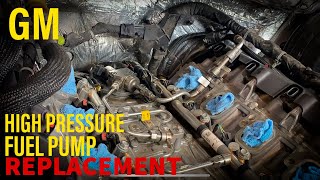
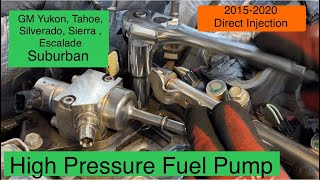
Typical fix: Replace the high-pressure fuel pump and the associated one-time-use fuel lines. 🎬 See this step-by-step high-pressure fuel pump replacement guide An oil and filter change is mandatory to remove the contaminated oil.
Est. part cost: $300-$600 - Leaking Fuel Injector(s) Low-medium Probability Injectors can wear over time, becoming stuck open or leaking fuel into a cylinder after the engine is shut off. This creates a rich condition on startup and during operation on a specific bank.
How to confirm: Perform a fuel pressure leak-down test. With a gauge attached, turn the engine off; a rapid pressure drop suggests a leak. A more advanced method is to watch the fuel rail pressure on a scan tool after shutdown; if it holds steady or rises slightly due to heat soak, injectors are likely not leaking. A steady drop indicates a leak.
Typical fix: Replace the faulty fuel injector(s) on Bank 2. It is often recommended to replace them as a set for that bank.
Est. part cost: $50-$150 per injector
Rare But Worth Checking
- Faulty EVAP Purge Solenoid: If the purge solenoid sticks open, it can allow un-metered fuel vapor from the gas tank to enter the engine at idle, causing a rich condition. This can be diagnosed by disconnecting and plugging the EVAP line to the intake manifold and observing if fuel trims improve. This typically does not cause fuel trims as negative as a skewed alcohol reading or leaking HPFP.
- Failing Fuel Pressure Regulator: On pre-2014 models without a direct injection system, a failing vacuum-operated fuel pressure regulator can cause excessive fuel pressure, leading to a system-wide rich condition. A symptom can be fuel found in the vacuum line connected to the regulator.
Diagnosis Steps

- Use an OBD-II scanner to confirm P0175 and check for any other codes, like P0172 (very common) or P0101.
- (Flex Fuel Vehicles) Check the 'Fuel Alcohol Content' percentage in live data. If it reads high (e.g., over 15%) and you only use regular gasoline, perform a 'Fuel Composition Reset'. This is the most common fix for pre-2015 models.
- Monitor Short-Term (STFT) and Long-Term (LTFT) Fuel Trims. For P0175, Bank 2 LTFT will be highly negative, often -20% to -30%. If Bank 1 is also negative (P0172), the problem affects the whole engine.
- (2015+ Models) Check the engine oil dipstick. If the oil level is high and smells strongly of gasoline, the high-pressure fuel pump (HPFP) is the primary suspect.
- Inspect the air intake tube and air filter box for obstructions, paying close attention to the area around the MAF sensor for plastic 'casting flash' as noted in TSB #PIP5446A.
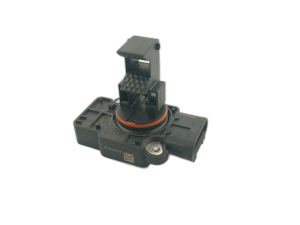
- Remove and clean the MAF sensor with dedicated cleaner. Do not touch the sensor wires. 🎬 Watch: How to safely clean your Tahoe's MAF sensor Re-evaluate fuel trims after cleaning.
- To rule out the EVAP system, disconnect the purge line from the intake manifold and temporarily cap the port on the manifold. If fuel trims at idle improve toward zero, the purge solenoid is likely stuck open.
- If the issue persists on Bank 2 only, suspect a leaking fuel injector. Perform a fuel pressure leak-down test after shutting the engine off. The pressure should hold steady.
Parts You'll Likely Need

- Mass Air Flow Sensor Cleaner — Often, the MAF sensor is simply dirty or contaminated by an over-oiled filter. Cleaning it is the cheapest and easiest first physical step.
Trusted brands: CRC, WD-40 Specialist
Aftermarket price range: $10-$20 - High-Pressure Fuel Pump
(OEM #ACDelco HPM1006 (GM 12642287))— For 2015 and newer models with direct injection, an internally leaking high-pressure fuel pump is a very common cause of P0172/P0175 codes and fuel in the oil.
Trusted brands: ACDelco (OEM), Bosch, Delphi
OEM price range: $450-$600
Aftermarket price range: $250-$400 - Fuel Injector
(OEM #ACDelco 12679525 (Varies by engine))— A single leaking injector on Bank 2 can cause a P0175 code. This is a likely cause if the code is not accompanied by P0172 and other causes are ruled out.
Trusted brands: ACDelco (OEM), Bosch
OEM price range: $80-$150 per injector
Aftermarket price range: $50-$100 per injector
Related Codes That Often Appear With This One
- P0172 — This is the 'System Too Rich' code for Bank 1. When P0172 and P0175 appear together, it strongly suggests a problem affecting the entire engine, such as the MAF sensor, fuel composition reading, high fuel pressure, or a leaking HPFP on 2015+ models.
- P0101 — This code for 'Mass Air Flow (MAF) Circuit Range/Performance' often accompanies P0175 when the cause is the casting flash issue described in TSB #PIP5446A, as the flash creates turbulent, un-metered airflow.
Technical Service Bulletins (TSBs) & Recalls
- PIP5446A: Addresses rough idle and rich/lean codes (P0171, P0172, P0174, P0175) caused by excessive casting flash in the air filter housing near the MAF sensor.
- PIP4792D: Pertains to rich codes (P0172, P0175) on cold starts with black smoke, pointing to the need to check and reset the Fuel Alcohol Content parameter.
Platform-Specific Known Issues
- TSB #PIP4792D: Addresses P0172 and P0175 codes caused by the vehicle's computer incorrectly learning a high ethanol content in the fuel. The fix is to check the reading with a scan tool and perform a 'Fuel Composition Reset' if the value is skewed.
Mechanic-Grade Diagnostic Values

- Long-Term Fuel Trim (LTFT) for Bank 2 — expected: -10% to +10%. Failure: Consistently more negative than -20% (e.g., -25%, -30%).
- Fuel Alcohol Content (Flex Fuel models) — expected: 0-10% when using regular gasoline.. Failure: A reading significantly higher than 15% (e.g., 30%, 67%) when the tank contains regular gasoline.
- High-Pressure Fuel System Leak-Down (2015+) — expected: Pressure should hold steady or rise slightly after engine-off due to heat soak.. Failure: A steady drop in fuel rail pressure after the engine is shut off, viewed on a scan tool.
- Engine Oil Condition (2015+) — expected: Normal oil level and smell.. Failure: Oil level is overfull and/or smells strongly of raw gasoline.
Scan Tool Commands That Help
- GDS2, Tech2, or capable aftermarket scanner: Fuel Composition Reset — This is the primary fix when the 'Fuel Alcohol Content' PID is incorrectly high on pre-2015 Flex Fuel models, causing a rich condition.
- GDS2, Tech2, or capable aftermarket scanner: Fuel Trim Reset — After performing a repair (like cleaning a MAF or fixing a leak), this command clears the long-term learned values and forces the ECM to relearn the fuel strategy more quickly.
- GDS2, Tech2, or capable aftermarket scanner: Injector Balance Test — To help diagnose a single leaking injector. The tool pulses individual injectors while monitoring fuel rail pressure drop (requires a mechanical gauge as well).
- GDS2, Tech2, or capable aftermarket scanner: Crankshaft Position Variation Relearn — This is one of the reset procedures recommended after a major repair like replacing the high-pressure fuel pump.
Wiring & Ground Locations
- G101 — Located at the lower front of the engine block (GMT900 platform).. This ground is for the Engine Control Module (ECM), Transmission Control Module (TCM), and the Mass Air Flow (MAF) Sensor. A poor connection here could cause erratic sensor readings and incorrect fuel calculations.
- G103 — Located on the cowl in the left rear of the engine compartment, above the brake booster (GMT900 platform).. This grounds the Body Control Module (BCM) and the Data Link Connector (DLC). While less likely to cause a rich code directly, a poor ground here can cause communication issues during diagnosis.
- G104 / G108 — A ground strap running from the back of the left cylinder head (G104) to the firewall (G108) on GMT900 models.. This is a primary engine-to-chassis ground. Corrosion or looseness can cause a wide range of difficult-to-diagnose electrical issues, including sensor reference problems that could affect fuel trims.
Real Owner Repair Stories
- Tahoe Yukon Forum user (2015 Tahoe LT, 113k miles) — P0172 & P0175, fuel in oil, dieseling/run-on after shutoff.
❌ Tried (didn't work) Cleaned MAF sensor, checked air filter and intake hoses.
✅ What actually fixed it The diagnosis pointed directly to a failed High-Pressure Fuel Pump (HPFP) leaking fuel into the crankcase, which is the #1 cause for these symptoms on the 2015+ direct injection engines. - YouTube video by 'dannyascoli' (2007 Chevrolet Tahoe) — P0175 (System Rich Bank 2), long crank time, LTFT at -20%.
❌ Tried (didn't work) Checked MAF sensor for contamination (it was clean)., Checked EVAP purge valve (it was not leaking).
✅ What actually fixed it The technician found the 'Fuel Alcohol Content' was learned incorrectly. Using a scan tool to perform a 'Fuel Composition Reset' instantly corrected the rich condition. The fix for P0175 required no parts.
"I Checked Everything" — The Actual Cause
- On 2015+ models with P0172/P0175, a smoke test for vacuum leaks is often irrelevant. The definitive test is to isolate the PCV system. A technician will disconnect the PCV hose that runs from the crankcase to the intake manifold and will cap the port on the intake. With the engine running, if the long-term fuel trims rapidly improve (move from -25% toward 0%), it proves the engine was sucking in fuel vapor from the crankcase. This confirms the root cause is an internally leaking high-pressure fuel pump contaminating the oil.
When the Usual Fixes Don't Work
- While replacing the High-Pressure Fuel Pump (HPFP) is the most common fix for P0172/P0175 on 2015+ models, it is not a guaranteed solution. One owner of a 2015 Tahoe with 105k miles reported that replacing the HPFP did not resolve the -30% fuel trims. They also replaced a cracked intake tube and cleaned the MAF sensor without success. This highlights that even with a very common cause, other underlying issues can exist, and further diagnosis is required if the primary fix fails.
Model Year Variations Within This Range
- 2009-2014 (GMT900 / Vortec): The most common vehicle-specific cause is an incorrectly learned high 'Fuel Alcohol Content' value in the ECM, especially on Flex Fuel models. The primary fix is a 'Fuel Composition Reset' with a scan tool, not parts replacement.
- 2015-2016 (K2XX / EcoTec3): The introduction of direct injection makes an internally leaking High-Pressure Fuel Pump (HPFP) the most common cause for rich codes on both banks. Diagnosis focuses on checking for fuel in the engine oil and isolating the PCV system. The fuel line connecting to the HPFP is typically a one-time-use part and must be replaced with the pump.
Helpful Videos
Used OEM Parts in Stock




New Aftermarket Parts Available


The information in this article is provided for general reference and educational purposes only. Vehicle specifications, procedures, and part compatibility can vary by production date, trim level, and region. Always consult your vehicle's factory service manual and verify part numbers before purchasing or performing repairs. Safety-critical components such as airbags, seat belts, and braking systems should be installed by a qualified professional.
- Chevrolet TAHOE:
- 🎬 Helpful Videos
- 🛍️ Shop This Part
- What's Unique About the 2009-2016 Chevrolet TAHOE
- Diagnostic Flowchart
- Symptoms You May Notice
- Most Likely Causes
- Rare But Worth Checking
- Diagnosis Steps
- Parts You'll Likely Need
- Related Codes That Often Appear With This One
- Technical Service Bulletins (TSBs) & Recalls
- Platform-Specific Known Issues
- Mechanic-Grade Diagnostic Values
- Scan Tool Commands That Help
- Wiring & Ground Locations
- Real Owner Repair Stories
- "I Checked Everything" — The Actual Cause
- When the Usual Fixes Don't Work
- Model Year Variations Within This Range
- 🎟️ Get 5% Off