

P0175 on 2006-2013 Chevrolet Impala: System Too Rich Bank 2 Causes and Fixes
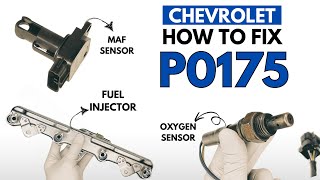
On a 2006-2013 Impala, especially Flex Fuel models, P0175 is often caused by an incorrect fuel alcohol percentage reading in the computer. Resetting this value with a capable scan tool is the most common fix. Other likely causes include a dirty MAF sensor or a faulty Bank 2 oxygen sensor.
- For Flex Fuel Impalas, the first step should always be to check the learned fuel alcohol percentage with a scan tool before replacing any parts.
- If the fuel alcohol reading is correct, the next most likely causes are a dirty MAF sensor or a failing Bank 2 upstream O2 sensor.
- If both P0175 and P0172 are present, the cause is almost certainly something that affects the whole engine, reinforcing the likelihood of a fuel alcohol or MAF sensor issue.
- Driving with a rich condition can damage your catalytic converter, turning a relatively simple fix into a very expensive repair.
What's Unique About the 2006-2013 Chevrolet Impala
For the 2006-2013 Impala, particularly models with the 3.5L LZE or 3.9L LGD Flex Fuel engines, a very common cause for P0175 (and its Bank 1 counterpart, P0172) is an incorrect fuel composition reading. These engines use a 'virtual' flex fuel sensor that estimates the ethanol percentage in the fuel based on oxygen sensor readings and fuel level changes. After refueling, especially if the tank was run very low, the system can incorrectly 'learn' a high ethanol content, causing the ECM to inject too much fuel and trigger a rich code. This issue is often resolved without replacing any parts by performing a reset with a scan tool.
Symptoms You May Notice
- Check Engine Light is on
- Significantly reduced fuel economy
- Rough idle or stalling
- Strong smell of gasoline or rotten eggs from the exhaust
- Black smoke from the tailpipe, especially on acceleration
- Hesitation or lack of power
- Engine 'dieseling' or running on for a few seconds after shutoff
- Replacing the oxygen sensor when the actual problem is a dirty MAF sensor or an incorrect fuel alcohol reading.
- Replacing fuel injectors when the issue is high fuel pressure or a skewed fuel composition value.
Most Likely Causes
- Incorrect Fuel Alcohol Content Reading (Flex Fuel models) 🔴 High Probability These engines lack a physical fuel composition sensor and instead calculate the ethanol percentage. This algorithm can learn an incorrect, high value, causing the ECM to command a rich mixture. This is a widely documented issue.
How to confirm: Use a scan tool capable of reading GM-specific data to view the "Fuel Alcohol Content" or "Fuel Composition" percentage. If you have only used regular gasoline (E10/E15), the reading should be below 15%. A reading of 20% or higher indicates a learned error. This is a primary step recommended by technicians.
Typical fix: Use a bidirectional scan tool to perform a "Fuel Composition Reset" followed by a "Fuel Trim Reset". This function resets the learned value back to a baseline (often around 3%), resolving the rich condition. This procedure is detailed in GM TSB PIP4715B for similar vehicles.
Est. part cost: $0 - Dirty Mass Airflow (MAF) Sensor 🟡 Medium Probability Oil from aftermarket air filters or general grime can contaminate the MAF sensor's delicate wires, causing it to under-report airflow and leading the ECM to inject too much fuel.
How to confirm: Visually inspect the sensor wires for dirt or oil residue. With a scan tool at idle, observe the MAF reading; it should be stable and within the manufacturer's specified range (typically 3-5 g/s for these engines at idle). An incorrect reading will cause the computer to miscalculate the fuel needed.
Typical fix: Carefully remove the MAF sensor and clean it using only dedicated MAF sensor cleaner spray. Do not touch the sensor wires. Allow it to dry completely before reinstalling.
Est. part cost: $10-$15 for cleaner - Faulty Upstream Oxygen Sensor (Bank 2, Sensor 1) 🟡 Medium Probability
How to confirm: A failing O2 sensor can become 'lazy' or biased, sending a false rich signal to the ECM. Use a scan tool to graph the Bank 2 Sensor 1 voltage. A healthy sensor will switch rapidly between approximately 0.1V and 0.9V. A sensor stuck high (above 0.8V) or switching slowly is likely faulty.
Typical fix: Replace the Bank 2, Sensor 1 oxygen sensor. Bank 2 is the front bank, closer to the radiator.
Est. part cost: $40-$80 - Leaking Fuel Injector(s) on Bank 2 ⚪ Low Probability
How to confirm: Perform a fuel pressure leak-down test. Attach a fuel pressure gauge, prime the system, and turn the key off. The pressure should hold steady. A rapid drop indicates a leak, possibly from an injector. You can also pull the spark plugs on Bank 2 (front bank) and check for one that is black and sooty, indicating a rich cylinder.
Typical fix: Replace the leaking fuel injector. It is often recommended to replace all injectors on that bank as a set.
Est. part cost: $50-$100 per injector - High Fuel Pressure ⚪ Low Probability
How to confirm: Connect a fuel pressure gauge to the fuel rail's service port. Check the pressure at idle and compare it to the manufacturer's specification (typically 49-58 PSI for these systems). Excessively high pressure points to a faulty fuel pressure regulator. These models do not have an easily replaceable external regulator; it is often part of the fuel pump module in the tank.
Typical fix: Replacement of the fuel pump module is typically required if the integrated regulator fails.
Est. part cost: $200-$400 for a fuel pump module
Rare But Worth Checking
- Stuck Open EVAP Purge Solenoid: If the purge valve sticks open, it can allow un-commanded fuel vapors from the charcoal canister to enter the intake manifold, creating a rich condition. This usually affects both banks, setting P0172 and P0175.
- Leaking Fuel Pressure Regulator Diaphragm: On older models with a vacuum-operated fuel pressure regulator, the internal diaphragm can rupture, allowing raw fuel to be sucked into the intake manifold through the vacuum hose. However, the 2006-2013 Impala uses a returnless system with the regulator in the tank, making this specific failure mode not applicable.
- Stuck-Open Thermostat / Faulty Coolant Temp Sensor: If the engine fails to reach normal operating temperature, the ECM will intentionally enrich the fuel mixture, which can eventually trigger a rich code over time.
- Air Intake Obstructions: Manufacturer service bulletin #PIP4813C notes that a rich condition and P0175 can occur if the hydrocarbon absorber pad inside the air cleaner lid becomes unsecured, potentially obstructing airflow.
- MAF Sensor Housing Flashing: According to TSB #PIP5446A, technicians should inspect for cast flashing near the Mass Air Flow sensor, which can cause turbulence and trigger codes including P0175.
Diagnosis Steps
- Check for other DTCs. If P0172 is also present, focus on causes that affect both banks.
- If you have a Flex Fuel model, use a scan tool to check the 'Fuel Alcohol Content' percentage. This is the most critical first step. If it's abnormally high (e.g., >15%) and you use regular gas, perform a 'Fuel Composition Reset'.
- After a composition reset, also perform a 'Fuel Trim Reset' to clear the old learned values.
- Use a scan tool to monitor live data. Check the Short-Term and Long-Term Fuel Trims for Bank 2. They will be highly negative (e.g., -20% or more). After a fix, they should return to near 0% (+/- 10%).
- Inspect the air intake system for any blockages and check the engine air filter. A clogged filter can restrict air and cause a rich condition.
- Remove and inspect the Mass Airflow (MAF) sensor. Clean it with dedicated MAF cleaner if it appears dirty.
- Test the Bank 2, Sensor 1 (upstream) oxygen sensor. Ensure its voltage is fluctuating correctly and not stuck high.
- Perform a fuel pressure test to check for high fuel pressure. The spec is generally 49-58 PSI.
- Check for leaking fuel injectors by performing a fuel pressure leak-down test or by inspecting the spark plugs on Bank 2 for signs of excessive fuel (black, sooty appearance).
Parts You'll Likely Need
- Upstream Oxygen Sensor (Bank 2, Sensor 1)
(OEM #ACDelco 213-4229 (GM 12609457))— This sensor provides the primary reading for the air-fuel mixture on Bank 2. If it fails and reads rich, it will directly cause a P0175 code. Bank 2 is the front bank, closer to the radiator.
Trusted brands: ACDelco, Delphi, Denso, Bosch
OEM price range: $60-$100
Aftermarket price range: $40-$80 - Mass Airflow (MAF) Sensor
(OEM #ACDelco 213-3641 (for 3.5L/3.9L))— A dirty or failing MAF sensor is a common cause of rich conditions on many vehicles, including this Impala. It under-reports airflow, causing an over-fueling condition.
Trusted brands: ACDelco, Delphi, Hitachi
OEM price range: $100-$180
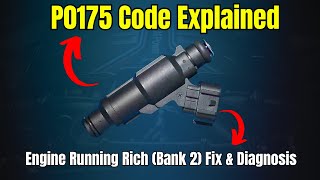
Aftermarket price range: $50-$120 - Fuel Injector — Less common, but a fuel injector stuck open or leaking on Bank 2 will dump excess fuel into a cylinder, causing this code.
Trusted brands: ACDelco, Standard Motor Products (SMP), Bosch
OEM price range: $70-$120
Aftermarket price range: $40-$90
Related Codes That Often Appear With This One
- P0172 — This is the same 'System Too Rich' code, but for Bank 1. When both P0172 and P0175 are present, it strongly indicates a problem affecting the entire engine, such as the MAF sensor, fuel pressure, or, most commonly on these vehicles, the fuel alcohol content reading.
Technical Service Bulletins (TSBs) & Recalls
- GM TSB PIP4715B: Addresses P0172/P0175 on Flex Fuel vehicles. The primary fix is to check the fuel composition value and perform a reset if it's
- TSB Bulletin #PIP4792D: Notes that a rich condition, black exhaust, and P0175 can be caused by an incorrect Fuel Alcohol Content parameter; technicians are instructed to verify this via the scan tool's Fuel Trim Data List.
- TSB Bulletin #PIP5446A: Highlights that cast flashing near the MAF sensor can lead to DTCs P0101, P0171, P0172, P0174, and P0175, along with a rough idle.
- TSB Bulletin #PIP4813C: Mentions that P0175 can be triggered by a loose hydrocarbon absorber pad inside the air cleaner lid, which may cause rough running or a lack of power.
Platform-Specific Known Issues
- The 'virtual' flex fuel sensor system can incorrectly learn a high ethanol content, especially after refueling from a near-empty tank or after a battery disconnect. This is a well-documented issue that causes P0172 and P0175. Many owners and technicians report fixing the code simply by performing a 'Fuel Composition Reset' with a capable scan tool, requiring no parts.
Mechanic-Grade Diagnostic Values
- Mass Airflow (MAF) Sensor Reading at Idle — expected: Approximately equal to the engine displacement in liters (e.g., a 3.5L engine should read ~3.5 g/s). A general range is 3-7 g/s at warm idle.. Failure: A reading significantly lower than expected (e.g., 0.6-0.8 g/s as seen in one case) suggests a dirty or failing sensor, or a vacuum leak.
- Long-Term Fuel Trim (LTFT) at Idle — expected: Within +/- 10%.. Failure: Highly negative values, such as -25% to -32%, indicate the ECM is compensating for a severe rich condition and has reached its limit.
- Fuel Injector Pulse Width at Idle — expected: Typically 2.5 ms to 4.0 ms on a warm engine.. Failure: Consistently high pulse width (>5 ms) when fuel trims are already negative suggests the ECM is still commanding too much fuel due to a faulty primary sensor input (like MAF or O2).
- Fuel Pressure (Key On, Engine Off) — expected: 49-58 PSI.. Failure: Pressure significantly above this range indicates a faulty fuel pressure regulator (part of the in-tank fuel pump module). Pressure that drops rapidly after the pump primes indicates a leak, possibly from an injector.
- Fuel Alcohol Content Percentage (Flex Fuel Models) — expected: Should be <15% if running on standard E10/E15 gasoline.. Failure: A reading of 20% or higher (e.g., 26%) when using regular gasoline is a definitive sign of a learned error causing the rich condition.
Scan Tool Commands That Help
- GM Tech2 or equivalent professional scanner: Fuel Composition Reset — This is the primary fix for P0175/P0172 on Flex Fuel models when the 'Fuel Alcohol Content' PID is incorrectly showing a high percentage. It resets the learned value to a baseline.
- GM Tech2 or equivalent professional scanner: Fuel Trim Reset — Should be performed immediately after a 'Fuel Composition Reset' to clear the old, skewed long-term fuel trim adjustments from the ECM's memory, allowing it to relearn faster with the corrected alcohol value.
Wiring & Ground Locations
- G101 — On the lower front of the engine block, also described as being behind the left headlamp on the frame.. This is a primary ground for the Engine Control Module (ECM) and the Mass Air Flow (MAF) sensor. A poor connection here can cause erratic sensor readings, leading to incorrect fuel calculations.
- G111 (3.5L & 3.9L) — Located on a transmission-to-engine bolt, above the starter.. As a major powertrain ground, corrosion or looseness at this point can affect various engine and transmission control functions, potentially impacting sensor data sent to the ECM.
- G103 — Located on the cowl at the left rear of the engine compartment, above the brake booster.. This grounds the Body Control Module (BCM) and Data Link Connector (DLC). While not a direct cause of a rich code, a poor ground here can interfere with scan tool communication during diagnosis.
- Bank 2 O2 Sensor Connector — The Bank 2 (front) upstream O2 sensor is located on the exhaust manifold closer to the radiator. The connector is typically accessible from the top of the engine bay, following the wire up from the sensor.. Corrosion or damage to this connector or its wiring can cause a false rich signal, directly leading to a P0175 code.
Real Owner Repair Stories
- YouTube video by 'hisclancys garage' (2007 Chevrolet Impala with 3.5L Flex Fuel engine) — Check Engine Light with a rich condition code (P0172 was shown, but the fix applies to P0175 as well).
❌ Tried (didn't work) The owner had already checked for vacuum leaks, injector leaks, high fuel pressure, and cleaned the MAF sensor.
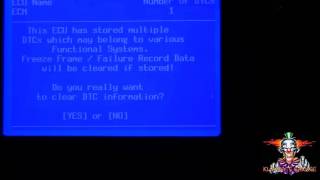
✅ What actually fixed it The scan tool showed a 'Fuel Alcohol Content' of 26% despite using regular gasoline. The technician used a GM Tech2 scan tool to perform a 'Fuel Composition Reset' under the 'Special Functions' menu. This reset the value to a baseline, and after clearing the codes, the fuel trims returned to normal and the problem was solved. The cause was attributed to running the gas tank near empty before refueling, which can trigger an incorrect relearn. - Chevrolet Forum user 'jeremyinkc' (Chevrolet vehicle with P0172 and P0175 codes (model not specified but symptoms match Impala issue)) — Check Engine Light with P0172 and P0175 after idling for a long time. Long Term Fuel Trims were at -32.0%.
❌ Tried (didn't work) Replacing the air filter., Cleaning the MAF sensor.
✅ What actually fixed it The confirmed fix was not posted in the thread, but another user strongly advised the owner to check the fuel alcohol content percentage with a scan tool, stating that if it's over 10% on a non-flex fuel vehicle (or one running gasoline), it needs to be reset. This highlights the commonality of the issue.
OEM Part Supersession History
GM 12609457→ACDelco 213-4229— Standard part lifecycle update. ACDelco is the GM Genuine Parts brand.
Heads up: This part number is for a downstream sensor on many applications, but is listed as the upstream sensor in the Pass 2 data. It's critical to verify the correct upstream vs. downstream part for the specific engine, as they are calibrated differently. The ACDelco part is often cross-referenced to aftermarket numbers like Denso 234-4256 and Bosch 15698.
Model Year Variations Within This Range
- 2006-2011: These model years were equipped with the 3.5L LZE and 3.9L LZ9/LGD V6 engines, which are the primary focus of this article and are known for the 'virtual' flex fuel sensor issue.
- 2012-2013: For the 2012 model year, the standard Impala engine was changed to the 3.6L LFX V6, which uses a different engine architecture (DOHC vs. pushrod) and fuel system. While the P0175 code can still occur, the causes and diagnostics may differ, and the 'virtual' flex fuel sensor issue is less prevalent compared to the earlier engines. A 2013 Impala with P0175 is more likely related to a high-pressure fuel pump issue if it has the LFX engine.
Diagnostic Flowchart
Other Known Issues on This Vehicle
Issues unrelated to this code that are worth knowing about as an owner of this generation:
- 4T65-E Transmission Failure / Erratic Shifting 🔴 High — Common across all model years, particularly the 2006 model. Problems include harsh shifting (often setting a P1811 code), transmission slippage, and complete failure. Average repair costs can be very high.
- Intermediate Steering Shaft Clunk 🟠 Medium — A very common issue where a clunking noise is heard and felt in the steering wheel, especially during low-speed turns. The cause is a stick-slip condition in the intermediate shaft. While annoying, it is not typically a safety failure. (Ref: GM TSB #00-02-35-003N (and many subsequent revisions like #01-02-32-001P) details replacing the shaft.)
- Excessive Oil Consumption 🟠 Medium — Some owners report higher-than-normal oil consumption, which can be caused by worn piston rings or valve seals. This requires regular monitoring of the oil level to prevent engine damage.
- Leaking Power Steering Hoses/Rack 🟠 Medium — Leaks from the high-pressure power steering hose are common. The steering rack itself can also develop internal leaks into the boots, which won't leave a puddle on the ground but will cause a whining noise and loss of fluid.
- Intake Manifold Gasket Leaks (3.5L) 🔴 High — The 3.5L V6 engine has a "wet" intake design, making it prone to intake manifold gasket failure. This can cause external coolant leaks (orange Dex-Cool) or, in severe cases, internal leaks that contaminate the engine oil ('milky' oil). The 3.9L V6 has a "dry" intake and is not prone to this specific failure. Upgraded metal-frame gaskets are recommended for the repair.
- EVAP Purge Solenoid Failure 🟡 Low — A common failure part that can get stuck open, causing a Check Engine Light (often for EVAP codes like P0449, but can contribute to rich/lean conditions). It is generally an easy and inexpensive part to replace.
Used vs. New Parts: Buying Guide for This Vehicle
When a used part is the smart pick: For this vehicle and code, used parts are generally not recommended for the key electronic components. The cost of new, reliable aftermarket sensors (MAF, O2) is low enough that the risk of getting a faulty used part from a junkyard isn't worth the small savings. The primary fix (Fuel Composition Reset) requires no parts at all.
Donor-vehicle mileage cap: roughly under 100000 miles for the part to have meaningful remaining life.
What to inspect on the donor part:
- For any electronic sensor, check for physical damage, corrosion on pins, or cut wires.
- If considering a larger component like an intake manifold, ensure all ports are clean and there are no visible cracks.
OEM-only on this vehicle (don't cheap out):
- Engine Control Module (ECM): Used ECMs will require professional programming to match the vehicle's VIN and options, often costing as much as a new unit.
Aftermarket brands forum-validated for this vehicle:
- Oxygen Sensors: Denso, NTK, and Bosch are reputable OEM suppliers and trusted aftermarket brands.
- MAF Sensor: Hitachi, Delphi, and ACDelco (GM's own brand) are reliable choices.
Brands owners have reported issues with on this vehicle:
- Avoid unbranded, 'white-box' electronic sensors (O2, MAF) from online marketplaces. Failure rates are high, and they can introduce new diagnostic problems.
Real Owner Stories
Aggregated from forums and TSBs cited above. Mileages and costs reflect what owners reported in those sources.
2007 Chevrolet Impala 3.5L
Symptoms: The car was throwing rich codes. A scan tool showed a 26% alcohol reading despite the owner using regular gasoline.
What fixed it: A 'Fuel Composition Reset' was performed using a Tech 2 scanner to return the alcohol content reading to a normal level.
Source hint: YouTube video by 'Klown's Garage' titled '2007 Impala 3.5L'
2015 Chevrolet Silverado (Similar Flex Fuel System)
Symptoms: Hard shifting and engine run-on (dieseling) after long periods of idling, accompanied by P0172 and P0175.
What fixed it: Checking and resetting the flex fuel alcohol content reading as suggested by a moderator.
Source hint: https://www.chevroletforum.com/forum/impala-14/p0172-p0175-102905/
2006-2013 Chevrolet Impala (Flex Fuel)
Symptoms: Rich codes P0172/P0175 present without any mechanical parts failing.
What fixed it: Used a scan tool to perform both a 'Fuel Compensation Reset' and a 'Fuel Trim Reset' to resolve the issue without replacing parts.
Source hint: YouTube video by 'Flat Rate Mechanic'
Related OBD-II Codes
Frequently Asked Questions
My 2007 Impala 3.5L is showing P0175 and I only use regular gasoline. Why does my scan tool say I have 26% alcohol in my fuel?
Does GM TSB PIP4715B apply to my rich condition code?
I'm getting a P0175 on Bank 2. Which side of the engine should I check for leaking injectors or a bad O2 sensor?
Can a dirty air filter or MAF sensor cause the engine to 'run on' after I turn the key off?
How much does it cost to fix the 'virtual' flex fuel sensor error on a Chevy Impala?
Helpful Videos



Used OEM Parts in Stock


New Aftermarket Parts Available


The information in this article is provided for general reference and educational purposes only. Vehicle specifications, procedures, and part compatibility can vary by production date, trim level, and region. Always consult your vehicle's factory service manual and verify part numbers before purchasing or performing repairs. Safety-critical components such as airbags, seat belts, and braking systems should be installed by a qualified professional.
- Chevrolet Impala:
- 🎬 Helpful Videos
- 🛍️ Shop This Part
- What's Unique About the 2006-2013 Chevrolet Impala
- Symptoms You May Notice
- Most Likely Causes
- Rare But Worth Checking
- Diagnosis Steps
- Parts You'll Likely Need
- Related Codes That Often Appear With This One
- Technical Service Bulletins (TSBs) & Recalls
- Platform-Specific Known Issues
- Mechanic-Grade Diagnostic Values
- Scan Tool Commands That Help
- Wiring & Ground Locations
- Real Owner Repair Stories
- OEM Part Supersession History
- Model Year Variations Within This Range
- Diagnostic Flowchart
- Other Known Issues on This Vehicle
- Used vs. New Parts: Buying Guide for This Vehicle
- Real Owner Stories
- 2007 Chevrolet Impala 3.5L
- 2015 Chevrolet Silverado (Similar Flex Fuel System)
- 2006-2013 Chevrolet Impala (Flex Fuel)
- Related OBD-II Codes
- Frequently Asked Questions
- 🎟️ Get 5% Off