

P0174 on 2017-2020 Toyota Tundra: Causes for System Too Lean Bank 2
P0174 on a 2017-2020 Tundra means Bank 2 (passenger side) is running lean. The most common causes are a dirty Mass Air Flow (MAF) sensor, vacuum leaks from cracked hoses or bad intake gaskets, or a failing oxygen sensor. For Flex Fuel (3UR-FBE) models, a known ECU glitch documented in TSB T-SB-0166-19_Rev can also be the culprit, often requiring a dealer software update. [TSB #T-SB-0166-19_Rev, 3]
- P0174 on a 2017-2020 Tundra means the passenger side of the engine is running lean (too much air, not enough fuel).
- Start your diagnosis by cleaning the Mass Air Flow (MAF) sensor with dedicated cleaner; this is a very common and inexpensive fix.
- Thoroughly inspect for vacuum leaks, especially cracked hoses and intake gaskets, before replacing any parts.
- If you have a Flex Fuel (FFV) model, be aware of the specific TSB (T-SB-0166-19_Rev) that may require a dealer to update your ECU.
- Only replace the Air-Fuel Ratio (oxygen) sensor after ruling out the MAF and vacuum leaks.
What's Unique About the 2017-2020 Toyota TUNDRA

For the second-generation Tundra, particularly those with the 5.7L V8, a dirty Mass Air Flow (MAF) sensor is a very frequent cause of lean codes, often from over-oiled aftermarket air filters. Additionally, models with the Flex Fuel (3UR-FBE) engine are subject to specific Technical Service Bulletins (TSBs) where the ECM can miscalculate the fuel's alcohol content, leading to lean conditions and hard starting. [TSB #T-SB-0166-19_Rev, 3] This issue often requires a dealer to perform an ECU recalibration and reset the alcohol fuel density learning values as per TSB T-SB-0166-19_Rev. A major fuel pump safety recall (NHTSA Campaign 20V012000) also affects 2018-2020 models, making fuel delivery a critical check.
Diagnostic Flowchart

Tap your situation to follow the diagnostic path that matches what you're seeing on this vehicle.
Symptoms You May Notice
- Check Engine Light is on
- Rough or unstable idle
- Hesitation or lack of power during acceleration
- Reduced fuel economy
- Hard starting, especially on Flex Fuel models [TSB #TSB000923, TSB #T-SB-0166-19_Rev]
- Other warning lights may appear, such as VSC OFF, TRAC OFF, and a flashing 4LO light, as the system enters a fail-safe mode.
- Replacing the oxygen sensor without first checking for vacuum leaks or cleaning the MAF sensor. The O2 sensor is often just accurately reporting a problem that exists elsewhere.
- Assuming a Flex Fuel model has a hardware problem when the TSB for an ECU reflash is the actual required fix.
Most Likely Causes


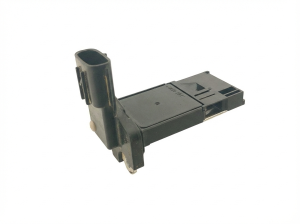
- Dirty or Faulty Mass Air Flow (MAF) Sensor 🔴 High Probability The MAF sensor measures the air entering the engine. Over time, it can get contaminated with dirt, debris, or oil (especially from over-oiled aftermarket air filters), causing it to send inaccurate low airflow readings to the ECU. The ECU then injects too little fuel, creating a lean condition. This is one of the most common fixes reported by owners.
How to confirm: Inspect the sensor's delicate wires for contamination. A scan tool can show MAF readings in grams/second; compare these to known-good values at idle (approx. 5.0-6.5 g/s for a warm 5.7L) and various RPMs. Often, cleaning the sensor is the easiest and cheapest diagnostic step. If cleaning fails, the sensor itself may be faulty, as confirmed in multiple owner reports.
Typical fix: Carefully clean the MAF sensor using only dedicated MAF sensor cleaner spray. Do not touch the sensor wires. Let it dry completely before reinstalling. If cleaning doesn't resolve the issue, the sensor may need to be replaced with an OEM Denso part.
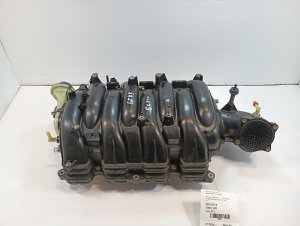
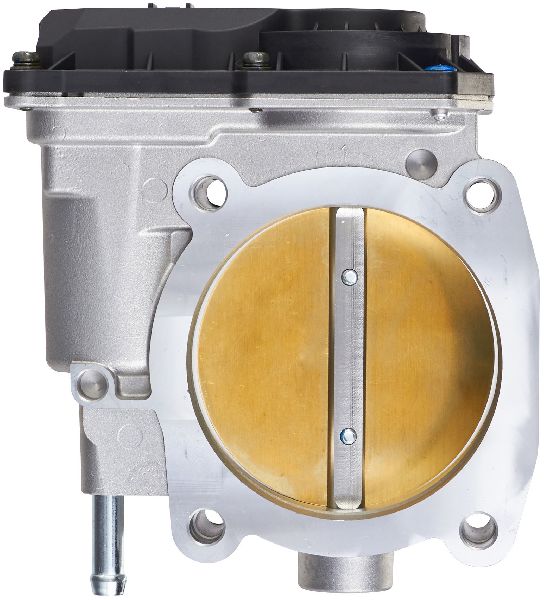
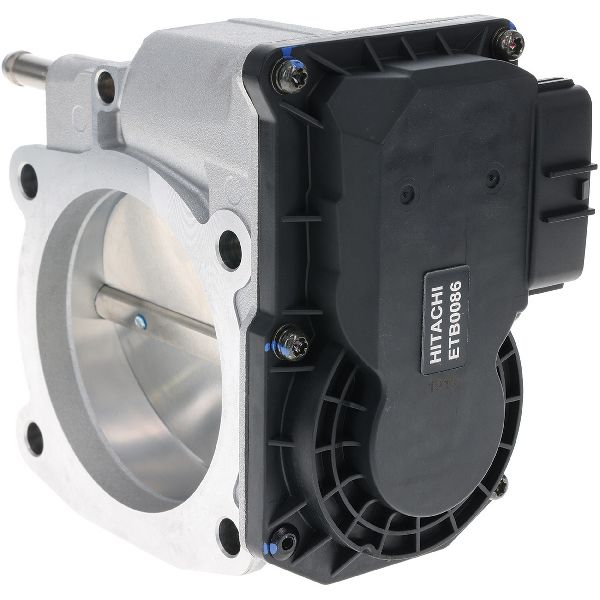
Est. part cost: $10-$20 for cleaner, $100-$250 for a new Denso sensor - Vacuum Leak 🟡 Medium Probability Cracked or disconnected vacuum hoses, a leaking intake manifold gasket, or a loose throttle body gasket can allow unmetered air to enter the engine after the MAF sensor, disrupting the air-fuel ratio. A specific hose to check is the vacuum line going to the fuel pressure regulator on Bank 2 (passenger side). The intake manifold gaskets themselves are a known failure point on the 3UR-FE engine as they become brittle.
How to confirm: Perform a visual inspection of all vacuum lines and intake components for obvious cracks or loose connections. A smoke test is the most effective method to find hard-to-see leaks by feeding smoke into the intake and watching where it escapes. You can also carefully spray carburetor cleaner around suspected leak points with the engine running; a change in idle RPM indicates a leak.
Typical fix: Replace the cracked hose or faulty gasket. Intake manifold gaskets are more labor-intensive. Ensure all intake components are properly sealed. The OEM part number for the intake manifold gasket is 17176-0P021 (two are required).
Est. part cost: $5-$150 depending on the specific hose or gasket - Failing Air-Fuel Ratio (Oxygen) Sensor 🟡 Medium Probability The upstream oxygen sensor (called an Air-Fuel Ratio Sensor on Toyotas) for Bank 2 provides the primary data for fuel mixture. If it becomes slow, contaminated, or fails, it can send incorrect lean signals to the ECU. However, this part is often replaced unnecessarily when the real issue is a vacuum leak or dirty MAF.
How to confirm: Use a scan tool to monitor the voltage and response time of the Bank 2, Sensor 1 (B2S1) A/F sensor. A healthy sensor will fluctuate rapidly around a 3.3V baseline. A lazy or stuck sensor needs replacement. A diagnostic trick is to swap the Bank 1 and Bank 2 upstream sensors; if the code changes to P0171 (Bank 1 Lean), the sensor is confirmed bad.
Typical fix: Replace the Bank 2 (passenger side), upstream (before the catalytic converter) Air-Fuel Ratio sensor. It is highly recommended to use an OEM brand like Denso. The OEM part number is 89467-0C050.
Est. part cost: $150-$220 - Fuel Delivery Issue (Flex Fuel Models) ⚪ Low Probability Toyota issued TSB T-SB-0166-19_Rev for 3UR-FBE (Flex Fuel) engines where the ECM incorrectly calculates the fuel's alcohol density, leading to lean codes (P0171/P0174), rich codes (P0172/P0175), and hard starts (P1604). This happens because the computer applies the wrong fuel mixture for the actual ethanol content in the gas.
How to confirm: This issue is difficult to confirm without a Toyota Techstream scan tool or equivalent. A dealer or advanced user can check the 'Alcohol Density Estimate' value. If it's high (e.g., over 15%) while using standard E10 gasoline, the TSB applies. This is a strong possibility if you have a Flex Fuel Tundra and have ruled out other causes.
Typical fix: A Toyota dealership needs to perform an ECU recalibration (reflash) and reset the alcohol fuel density learning values as per TSB T-SB-0166-19_Rev. In some cases, the TSB also calls for a fuel pump replacement (OEM Part #77020-0C170).
Est. part cost: $0-$1000+ (ECU flash may be covered under emissions warranty [80k miles/8 years], but the fuel pump is costly).
Rare But Worth Checking
- Exhaust Leak: An exhaust leak before the upstream O2 sensor, such as from a cracked exhaust manifold or a bad flange gasket, can draw in outside air. This makes the sensor falsely report a lean condition.
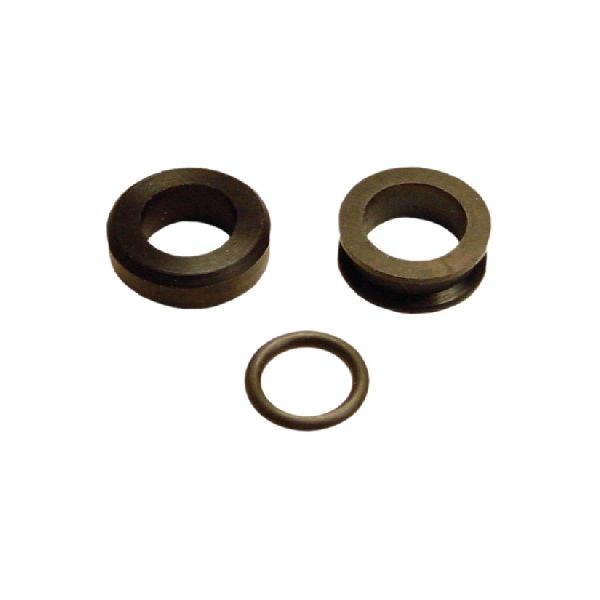
- Clogged Fuel Injector on Bank 2: If one or more injectors on the passenger side bank are restricted or clogged, they won't deliver enough fuel, causing a lean condition isolated to that bank. This can sometimes be resolved with a quality fuel system cleaner, but may require professional cleaning or replacement of injector seals.
- Failing Fuel Pump: While low fuel pressure usually causes lean codes on both banks (P0171 and P0174), some owners have reported it as the root cause after other fixes failed. A major recall (20V012000) for failing fuel pumps on 2018-2020 models makes this a higher probability cause. One owner on a forum noted Toyota replaced their pump for free out of warranty as a known 'short life' part.
- Faulty PCV Valve or Hose: A stuck-open Positive Crankcase Ventilation (PCV) valve or a cracked PCV hose can create a significant vacuum leak, leading to lean codes. The PCV valve on the 5.7L is located under the intake manifold and can be difficult to access. The OEM part number is 12204-38030.
Diagnosis Steps
- Read the codes with an OBD-II scanner and note any other codes present. Freeze frame data can show engine conditions when the code was set.
- Inspect the air intake system between the MAF sensor and the throttle body for any cracks or loose connections.
- Remove and inspect the Mass Air Flow (MAF) sensor. Even if it looks clean, clean it with dedicated MAF sensor cleaner spray and let it dry completely before reinstalling. Do not touch the wires.
- Check for vacuum leaks. Visually inspect all vacuum hoses for cracks, especially the PCV hose and the line to the Bank 2 fuel pressure regulator. A smoke test is the most reliable method to find hidden leaks, particularly at the intake manifold gaskets.
- Use a scan tool to observe long-term and short-term fuel trims for both banks at idle and at 2500 RPM. High positive numbers (+10% or more) confirm a lean condition.
- Test the Bank 2, Sensor 1 Air-Fuel Ratio sensor using the scan tool. If its readings are slow, stuck, or do not respond to changes in engine load, it may be faulty. Consider swapping with the Bank 1 sensor to confirm failure if the code moves to P0171.
- If you have a Flex Fuel (3UR-FBE) model and other causes are ruled out, consult a dealer regarding TSB T-SB-0166-19_Rev for a potential ECU recalibration.
- Check fuel pressure at the fuel rail to rule out a weak fuel pump or clogged filter. Pressure should meet spec (approx. 38-44 PSI for non-flex fuel) and not drop significantly under load.
Parts You'll Likely Need
- Mass Air Flow (MAF) Sensor Cleaner — This is the cheapest and most common first step, as a dirty MAF sensor is a frequent cause of P0174 on Tundras.
Trusted brands: CRC, WD-40 Specialist
OEM price range: N/A
Aftermarket price range: $10-$20 - Air-Fuel Ratio Sensor (Bank 2, Sensor 1)
(OEM #89467-0C050)— If the sensor itself has failed, it will send incorrect lean readings. This is the upstream sensor on the passenger side. Denso is the OEM supplier. The direct fit aftermarket part is Denso 234-9145.
Trusted brands: Denso
OEM price range: $200-$280
Aftermarket price range: $150-$220 - Intake Manifold Gasket
(OEM #17176-0P021 (x2))— A common source of vacuum leaks that can cause lean codes on one or both banks. Two are required for the V8 engine.
Trusted brands: Fel-Pro, Mahle, Toyota (OEM)
OEM price range: $20-$40 per gasket
Aftermarket price range: $15-$30 per gasket
Related Codes That Often Appear With This One
- P0171 — System Too Lean (Bank 1). When both P0171 and P0174 appear together, it strongly indicates a problem affecting the entire engine, like a dirty MAF sensor, a large vacuum leak (e.g., intake manifold gasket), or low fuel pressure from a weak fuel pump.
- P0087 — Fuel Rail / System Pressure – Too Low. This code, mentioned in a Toyota TSB, points directly to a fuel delivery problem like a weak fuel pump, which can cause lean conditions. [TSB #TSB000923]
- P1604 — Startability Malfunction. This code is specifically linked with P0171/P0174 in TSB T-SB-0166-19_Rev for Flex Fuel Tundras, indicating the ECM fuel calculation issue is the likely cause. [TSB #T-SB-0166-19_Rev, 17]
Technical Service Bulletins (TSBs) & Recalls

- T-SB-0166-19_Rev
- TSB000923
Platform-Specific Known Issues
- Flex Fuel (3UR-FBE) models may require an ECU software update at a dealership to correct an issue where the computer miscalculates the alcohol content in the fuel, causing lean codes and hard starts, as documented in TSB T-SB-0166-19_Rev.
Mechanic-Grade Diagnostic Values
- Mass Airflow (MAF) Sensor Reading at Idle — expected: Approximately 5.0 to 6.5 g/s for a warmed-up 5.7L engine.. Failure: A significantly lower reading can indicate a dirty sensor, while a reading that doesn't increase with RPM suggests a faulty sensor.
- Fuel Pressure (Key On, Engine Off) — expected: Standard Engine: ~38-44 PSI. Flex Fuel (3UR-FBE) models: 270 to 330 kPa (39-48 PSI) on low setting, 370 to 430 kPa (54-62 PSI) on high setting.. Failure: Pressure below specification indicates a weak fuel pump, clogged filter, or leak. Pressure should not drop significantly after the pump primes.
- A/F Ratio Sensor Voltage (Scan Tool PID) — expected: Fluctuates around a 3.3V baseline, which represents a stoichiometric mixture.. Failure: A voltage stuck high (e.g., > 3.4V) indicates a lean reading. During a commanded rich condition with a scan tool, voltage should drop below 3.0V; during a commanded lean condition, it should rise above 3.35V. A slow or non-responsive sensor is faulty.
- A/F Ratio Sensor Harness Voltage (KOEO) — expected: With sensor unplugged and testing the vehicle-side harness connector: 3.0 volts on the AF+ wire (often white) and 3.3 volts on the AF- wire (often blue), measured to ground.. Failure: If these reference voltages from the ECM are missing, the wiring or the ECM itself is suspect.
Scan Tool Commands That Help
- Toyota Techstream / Advanced Scanners (Autel): Fuel Density Learning Value Reset — This is a required step when addressing lean/rich codes on Flex Fuel (3UR-FBE) models per TSB T-SB-0166-19_Rev. It resets the ECM's learned ethanol content back to zero after it has falsely risen.
- Toyota Techstream: A/F Control Active Test — To functionally test an Air-Fuel Ratio sensor. This command allows the technician to manually force a rich or lean condition (-12.5% or +25% fuel) and observe if the sensor voltage responds correctly and quickly, confirming if the sensor is lazy or biased.
- Toyota Techstream: Control the Select Cylinder Fuel Cut — This function can help diagnose a single problematic fuel injector by deactivating injectors one by one and observing the effect on fuel trims.
Wiring & Ground Locations
- Main Engine Grounds — At the rear of each cylinder head, near where the engine mates to the transmission.. A poor engine ground can cause erratic sensor readings for components grounded to the block, including A/F sensors, potentially leading to false lean codes.
- Fender Apron Ground — On the passenger side fender, near the air filter box.. This is a common and accessible ground point for various engine bay components. Verifying it is clean and tight is good practice when diagnosing any electrical issue.
- Coil Pack Ground — The bolt that holds each ignition coil pack to the valve cover also serves as a ground point.. While not a direct cause of a lean code, a bad ground here can cause misfires, which can sometimes be confused with or accompany fuel mixture issues.
Real Owner Repair Stories
- Tundras.com Forum User 'Weagle' ('06 Tundra V8 (similar 2nd Gen platform)) — Check Engine Light with P0171 and P0174.
❌ Tried (didn't work) Cleaning the Mass Airflow sensor.
✅ What actually fixed it Replacing the Mass Airflow (MAF) sensor. The fuel pump was also tested and confirmed to be working properly, isolating the MAF as the culprit. - Tundras.com Forum User 'TundraDave218' (2015 Tundra SR5 5.7L, 103,000 miles) — P0171 and P0174, whining noise from engine bay, poor fuel economy.
❌ Tried (didn't work) Replacing a cracked vacuum hose found during initial inspection.
✅ What actually fixed it The throttle body had come loose and the gasket was torn, creating a large vacuum leak. The bolts had backed out following an aftermarket throttle body spacer installation. Tightening the bolts and replacing the gasket resolved the codes and the whine. - Tundras.com Forum User 'HotRodMatt' (Toyota Sequoia (similar 5.7L powertrain)) — P0171 and P0174.
❌ Tried (didn't work) MAF cleaning, PCV valve change, Fuel filter change, Replacing minorly cracked hoses
✅ What actually fixed it Replacing all of the fuel injector seals was the final fix after all other less labor-intensive options were exhausted.
"I Checked Everything" — The Actual Cause
- In one documented case, a smoke test revealed no vacuum leaks and a fuel pump replacement did not fix the P0171/P0174 codes. The actual cause was a severely dirty throttle body, which restricted and disturbed airflow enough to trigger the lean condition.
- A common scenario is a weak fuel pump that only fails under load. It may provide adequate pressure at idle (passing a basic test) and a smoke test will be negative, but it cannot supply enough fuel during acceleration, causing lean codes to set.
- After passing a smoke test, the root cause for one owner was found to be clogged fuel injectors. This highlights that a fuel delivery issue can be isolated to the injectors themselves, even with a healthy pump and no vacuum leaks.
When the Usual Fixes Don't Work
- While cleaning the MAF sensor is a very common first step, multiple owner-confirmed repairs show that if cleaning does not work, a full replacement of the MAF sensor is often the correct fix, even if the part doesn't appear faulty. In another case where both P0171 and P0174 were present, a user with 70,000 miles had the fuel pump replaced by Toyota free of charge, as the dealer acknowledged it as a 'short life' part, which resolved the codes. This suggests that for dual-bank lean codes, the fuel pump should be a primary suspect alongside the MAF sensor.
OEM Part Supersession History
17176-0P020, 17176-31040, 17176-31090→17176-0P021— Standard part revision and consolidation by Toyota.
Heads up: The new part number (17176-0P021) is the correct replacement for the older numbers for this application.
Model Year Variations Within This Range
- 2018-2020: These model years are covered by NHTSA Safety Recall 20V012000 for a faulty Denso fuel pump that can fail while driving, causing stalling. This makes a fuel pressure issue a more probable cause for P0174 on these specific years.
- 2020: The 4.6L V8 engine was discontinued. All 2020 Tundras came standard with the 5.7L V8 engine.
- 2018: Toyota Safety Sense (TSS) became standard on all Tundra models. The instrument gauge cluster was also updated.
Helpful Videos

Used OEM Parts in Stock

New Aftermarket Parts Available


The information in this article is provided for general reference and educational purposes only. Vehicle specifications, procedures, and part compatibility can vary by production date, trim level, and region. Always consult your vehicle's factory service manual and verify part numbers before purchasing or performing repairs. Safety-critical components such as airbags, seat belts, and braking systems should be installed by a qualified professional.
- Toyota TUNDRA:
- 🎬 Helpful Videos
- 🛍️ Shop This Part
- What's Unique About the 2017-2020 Toyota TUNDRA
- Diagnostic Flowchart
- Symptoms You May Notice
- Most Likely Causes
- Rare But Worth Checking
- Diagnosis Steps
- Parts You'll Likely Need
- Related Codes That Often Appear With This One
- Technical Service Bulletins (TSBs) & Recalls
- Platform-Specific Known Issues
- Mechanic-Grade Diagnostic Values
- Scan Tool Commands That Help
- Wiring & Ground Locations
- Real Owner Repair Stories
- "I Checked Everything" — The Actual Cause
- When the Usual Fixes Don't Work
- OEM Part Supersession History
- Model Year Variations Within This Range
- 🎟️ Get 5% Off