

P0174 on 2009-2016 Toyota Sequoia: System Too Lean Bank 2 Causes and Fixes
On a 2009-2016 Toyota Sequoia, code P0174 is most often caused by a vacuum leak from a failed intake manifold gasket or a dirty Mass Airflow (MAF) sensor. Cleaning the MAF sensor is a simple first step, but a smoke test is the best way to confirm a vacuum leak. For flex-fuel models, check for relevant TSBs regarding an ECU update.
- P0174 means the engine is running lean (too much air, not enough fuel) on the driver's side (Bank 2).
- The most common causes on the Sequoia are vacuum leaks from failed intake manifold gaskets and a dirty Mass Airflow (MAF) sensor.
- Always clean the MAF sensor with a dedicated cleaner as a first, inexpensive step.
- A smoke test is the most effective method to confirm and locate a vacuum leak.
- If you have a Flex Fuel (3UR-FBE) model and also see codes like P1604, consult a dealer about potential TSBs related to an ECU software update.
What's Unique About the 2009-2016 Toyota SEQUOIA

The Toyota Sequoia's 5.7L V8 engines (3UR-FE/FBE) are known for their reliability, but they are prone to intake manifold gasket leaks, which is a primary physical cause of this code. Critically, for the flex-fuel (3UR-FBE) models, Toyota issued Technical Service Bulletins (TSBs) indicating that a combination of lean codes (P0171/P0174) and startability codes (P1604) could be caused by the engine computer's software miscalculating the alcohol content in the fuel, requiring an ECM reflash to fix, not a mechanical repair.
Diagnostic Flowchart
Tap your situation to follow the diagnostic path that matches what you're seeing on this vehicle.
Symptoms You May Notice
- Check Engine Light is on
- Rough idle
- Hesitation or lack of power during acceleration
- Reduced fuel economy
- Hard starting (especially on flex-fuel models, see TSBs)
- Hissing or whistling noises from the engine bay, particularly around the intake manifold
- Replacing the Air/Fuel Ratio (O2) sensor when the actual problem is a vacuum leak or a dirty MAF sensor. Always diagnose for vacuum leaks (preferably with a smoke test) and clean the MAF before replacing expensive sensors.
Most Likely Causes


- Vacuum Leak (Intake Manifold Gasket) 🔴 High Probability The intake manifold gaskets on the 3UR-FE and 1UR-FE engines are a well-documented failure point. Over time, they harden from heat cycles, shrink, and fail to seal, allowing unmetered air to enter the engine and cause a lean condition.
How to confirm: Perform a smoke test on the intake system. Smoke will visibly escape from the leaking gasket area, often at the front or rear corners of the manifold. You may also hear a hissing sound near the intake manifold at idle.
Typical fix: Replace the intake manifold gaskets for both banks. The V8 engine requires two separate gaskets.
Est. part cost: $40-$100 - Dirty or Faulty Mass Airflow (MAF) Sensor 🔴 High Probability Oil from aftermarket air filters or fine dust can coat the MAF sensor's delicate wire, causing it to under-report the amount of air entering the engine. The ECU then injects too little fuel, creating a lean condition that often affects both banks (P0171 and P0174).
How to confirm: Unplug the MAF sensor while the engine is idling; if the idle smooths out, the sensor is likely faulty. A more precise method is to monitor MAF readings with a scan tool. Cleaning with a dedicated MAF sensor cleaner is a common and inexpensive first step.
Typical fix: Clean the MAF sensor with a dedicated MAF sensor cleaner spray. 🎬 Watch: How to clean the MAF sensor on your 5.7L engine. Do not touch the wires or use other chemicals. If cleaning doesn't resolve the issue, replace the sensor, preferably with an OEM Denso part.
Est. part cost: $10-$15 (cleaner), $70-$150 (sensor) - Failing Air/Fuel Ratio Sensor (Bank 2, Sensor 1) 🟡 Medium Probability This sensor, also known as the upstream oxygen sensor, can become slow or biased with age, sending inaccurate lean signals to the computer even when the air/fuel mixture is correct. It is often misdiagnosed as the primary cause.
How to confirm: Use a scan tool to graph the sensor's voltage. A healthy sensor will switch rapidly between rich and lean. A lazy or flat-lined sensor needs replacement. Always rule out vacuum leaks first, as they are more common.
Typical fix: Replace the Bank 2, Sensor 1 Air/Fuel Ratio sensor. Bank 2 is the driver's side on the Sequoia V8. Denso is the OEM supplier.
Est. part cost: $100-$200 - Vacuum Leak (PCV Hose or other vacuum lines) 🟡 Medium Probability Rubber hoses in the engine bay become brittle and crack over time due to heat and age, allowing unmetered air to enter the intake system. The PCV hose is a common culprit.
How to confirm: Visually inspect all vacuum hoses connected to the intake manifold for cracks or disconnections. A smoke test is the most effective way to find small leaks.
Typical fix: Replace the cracked or broken vacuum hose.
Est. part cost: $15-$50
Rare But Worth Checking
- Weak Fuel Pump: If the code appears with P0171 (lean on both banks) and the vehicle struggles under load or has a hard time starting, low fuel pressure from a failing pump could be the cause. This is less common than vacuum leaks but should be considered if other fixes fail. 🎬 Watch: Step-by-step instructions for replacing a failing fuel pump.
- Clogged Fuel Injectors: If the lean condition is isolated to one bank and other causes are ruled out, one or more dirty injectors on Bank 2 could be restricting fuel flow. This is an uncommon but possible cause.
- Exhaust Leak: A crack or leak in the exhaust manifold or flange before the Bank 2 upstream A/F sensor can pull in outside air, making the sensor read a false lean condition.
Diagnosis Steps

- Scan for any other trouble codes. Codes like P0171 or P1604 provide important context.
- Visually inspect the engine bay. Check the air intake tube for cracks between the MAF sensor and throttle body. Inspect all visible vacuum hoses for cracks or disconnections.
- Clean the Mass Airflow (MAF) sensor using a dedicated cleaner. Let it dry completely before reinstalling. Do not touch the sensor wires.
- If you have a flex-fuel (3UR-FBE) engine, check if TSB-0166-19 or TSB-0058-13 apply to your vehicle's year. An ECU reflash may be the required fix.
- Perform a smoke test. This is the most reliable way to find vacuum leaks, especially from the intake manifold gaskets.
- Use a scan tool to monitor long-term fuel trims (LTFT) for Bank 1 and Bank 2 at idle and at 2500 RPM. High positive numbers (e.g., >15%) confirm a lean condition. If trims decrease at higher RPM, a vacuum leak is likely. If they stay high, suspect a fuel delivery or MAF issue.
- Test fuel pressure. If both banks are lean and the vehicle hesitates under load, check if the fuel pressure is within the manufacturer's specification.
- Graph the Bank 2, Sensor 1 (A/F sensor) voltage. If it's slow to respond or stuck, it may need replacement, but only after all other causes have been ruled out.
Parts You'll Likely Need
- Intake Manifold Gasket
(OEM #17176-0P021 (Requires 2))— This is a very common failure point on the 5.7L & 4.6L V8 engines leading to vacuum leaks that cause lean codes. The V8 requires two gaskets, one for each bank.
Trusted brands: Toyota OE, Fel-Pro, Mahle
OEM price range: $25-$40 each
Aftermarket price range: $15-$30 each - Mass Airflow (MAF) Sensor
(OEM #22204-0P020)— Often gets dirty and causes incorrect air readings. Cleaning is the first step, but replacement is necessary if it's faulty. Denso is the OEM supplier.
Trusted brands: Denso (OEM), Hitachi
OEM price range: $120-$180
Aftermarket price range: $60-$120 - Air/Fuel Ratio Sensor (Bank 2, Sensor 1)
(OEM #89467-0C020)— This upstream sensor is critical for fuel trim adjustments. It can fail and send false lean signals. Bank 2 is the driver's side. Denso is the OEM supplier.
Trusted brands: Denso (OEM)
OEM price range: $150-$220
Aftermarket price range: $90-$160 - MAF Sensor Cleaner — A cheap and effective first diagnostic step before replacing the expensive MAF sensor.
Trusted brands: CRC, WD-40 Specialist
Aftermarket price range: $10-$15
Related Codes That Often Appear With This One
- P0171 — System Too Lean Bank 1. This code is very common with P0174 because issues like a dirty MAF sensor or a major vacuum leak from the intake gaskets affect both engine banks equally.
- P1604 — Startability Malfunction. Toyota TSBs specifically link this code with P0171/P0174 on flex-fuel (3UR-FBE) models, suggesting a potential ECU logic issue related to fuel alcohol content calculation.
- P1605 — Rough Idling. Also mentioned in Toyota TSBs alongside lean codes, pointing to a common underlying software issue on flex-fuel models that can be corrected with an ECM update.
Technical Service Bulletins (TSBs) & Recalls

- T-SB-0166-19_Rev
- T-SB-0058-13 Rev
Platform-Specific Known Issues
- The most prevalent issue for P0174 on this platform is a physical vacuum leak from the intake manifold gaskets. This affects all engine variants. A smoke test is the definitive diagnostic tool.
- A separate, distinct issue affects only the 3UR-FBE (Flex-Fuel) models. TSBs T-SB-0166-19 and T-SB-0058-13 detail a software flaw where the ECM incorrectly calculates the alcohol content of the fuel, leading to lean or rich codes (P0171/P0174, P0172/P0175) and starting problems (P1604). The fix is an ECU reflash performed by a dealer, not a parts replacement.
Mechanic-Grade Diagnostic Values
- Long-Term Fuel Trim (LTFT) — expected: Close to 0% (ideally within +/- 5%).. Failure: Sustained positive values greater than +15% to +20% confirm a lean condition that the ECU is trying to correct.
- Mass Airflow (MAF) Sensor Reading at Idle — expected: Approximately 4.0 to 6.0 g/s for a fully warmed-up 5.7L V8 engine.. Failure: A significantly lower reading (e.g., <3.5 g/s) suggests a dirty or failing sensor that is under-reporting airflow, causing the ECU to command too little fuel.
- Fuel Pressure (at fuel rail) — expected: Approximately 44-50 PSI at idle.. Failure: Pressure that is significantly below specification (e.g., <40 PSI) or that drops during acceleration indicates a weak fuel pump or clogged filter.
- Fuel Trim Response to RPM Change — expected: If a vacuum leak is present, high positive fuel trims at idle will decrease and move closer to 0% as engine RPM is raised to ~2500 RPM.. Failure: If fuel trims remain high and do not improve with increased RPM, the problem is more likely related to fuel delivery (weak pump) or a faulty MAF sensor.
Scan Tool Commands That Help
- Toyota Techstream: Fuel Density Learning Value Reset — For 3UR-FBE (Flex-Fuel) models only. Use this function after an ECU reflash per TSB-0058-13 or if you suspect the ECU has a faulty high reading for fuel alcohol content, which can cause persistent lean or rich codes and starting issues. This command is found under 'Powertrain / Engine and ECT / Utility'.
Wiring & Ground Locations
- Engine Block/Cylinder Head Grounds — Main grounding straps are typically bolted from the cylinder heads or engine block directly to the vehicle's frame/chassis, often near the engine mounts or on the firewall.. A poor engine ground can cause erratic voltage signals from critical sensors like the A/F ratio sensors and MAF sensor, leading to incorrect readings and false trouble codes.
- A1/A2 Ground Points — On some Sequoia models, ground points designated A1 and A2 are located in the engine compartment behind the left (driver's side) headlight assembly.. These are chassis ground locations for various components in the engine bay. Ensuring they are clean and tight is part of good diagnostic practice when chasing electrical faults.
Real Owner Repair Stories
- Tundras.com forum user (2010 Toyota Tundra 5.7L (same powertrain as Sequoia)) — P0171 and P0174 codes, poor fuel economy.
❌ Tried (didn't work) Cleaning the MAF sensor, Replacing the MAF sensor, Replacing Air/Fuel ratio sensors
✅ What actually fixed it The owner performed a smoke test which revealed no vacuum leaks. The final fix was replacing the fuel pump, which resolved the lean codes and improved fuel economy. - Reddit user /u/clickyspinny (Lexus GX470 (similar V8 fuel system principles)) — P0171 and P0174 codes, terrible gas mileage (10-11 MPG).
❌ Tried (didn't work) Initial diagnosis pointed towards vacuum leaks, which are the most common cause.
✅ What actually fixed it Replacing the fuel pump. After replacement, highway MPG improved to 15-16 MPG and the codes were resolved.
"I Checked Everything" — The Actual Cause
- A known, but rare, cause for lean codes on these trucks when a smoke test on the intake is clean is a cracked plastic flange on the top of the fuel pump assembly inside the fuel tank. This creates a small leak in the fuel system itself, preventing it from holding pressure perfectly and causing a lean condition under load that mimics a weak fuel pump. The issue is not an engine vacuum leak, so an intake smoke test will not find it.
When the Usual Fixes Don't Work
- While intake manifold gaskets are the most common cause, multiple owner-documented cases show that after extensive diagnosis, including a smoke test that found no leaks, the root cause was a weak fuel pump. If fuel trims do not improve when RPMs are raised, suspicion should shift from a vacuum leak to a fuel delivery problem.
OEM Part Supersession History
17176-0P020, 17176-31090, 17176-31040→17176-0P021— Part consolidation and potential material/design improvements for the intake manifold gasket.
Model Year Variations Within This Range
- 2012-2016 (Flex-Fuel models): Flex-Fuel (3UR-FBE) engines are subject to TSBs T-SB-0166-19 and T-SB-0058-13, which identify a software issue where the ECM miscalculates fuel alcohol content, causing lean/rich codes and starting problems. Non-flex-fuel models are not affected by this specific software issue. The fix is an ECU reflash.
Helpful Videos
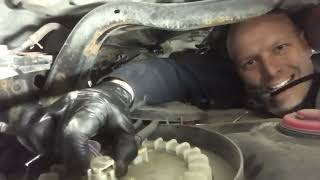
Used OEM Parts in Stock
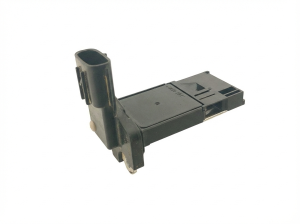

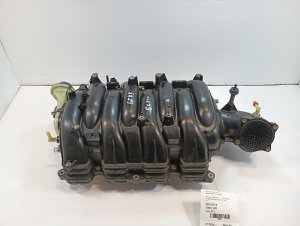
New Aftermarket Parts Available

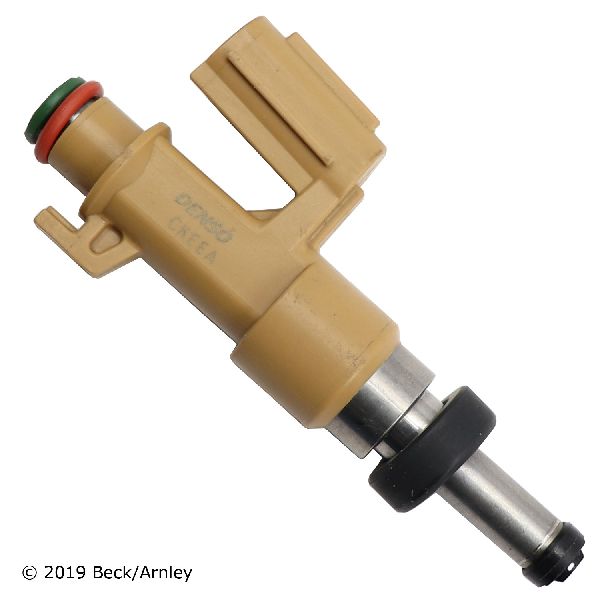

The information in this article is provided for general reference and educational purposes only. Vehicle specifications, procedures, and part compatibility can vary by production date, trim level, and region. Always consult your vehicle's factory service manual and verify part numbers before purchasing or performing repairs. Safety-critical components such as airbags, seat belts, and braking systems should be installed by a qualified professional.
- Toyota SEQUOIA:
- 🎬 Helpful Videos
- 🛍️ Shop This Part
- What's Unique About the 2009-2016 Toyota SEQUOIA
- Diagnostic Flowchart
- Symptoms You May Notice
- Most Likely Causes
- Rare But Worth Checking
- Diagnosis Steps
- Parts You'll Likely Need
- Related Codes That Often Appear With This One
- Technical Service Bulletins (TSBs) & Recalls
- Platform-Specific Known Issues
- Mechanic-Grade Diagnostic Values
- Scan Tool Commands That Help
- Wiring & Ground Locations
- Real Owner Repair Stories
- "I Checked Everything" — The Actual Cause
- When the Usual Fixes Don't Work
- OEM Part Supersession History
- Model Year Variations Within This Range
- 🎟️ Get 5% Off