

P0174 on 2017-2020 Lexus RX350: Lean Condition Causes and Fixes
P0174 (System Too Lean, Bank 2) on a 2017-2020 Lexus RX350 is most often caused by a dirty Mass Airflow (MAF) sensor or a vacuum leak. Cleaning the MAF sensor is a common, effective first step. A less common but documented cause is low fuel pressure, as noted in a TSB. In some cases on the 2GR-FKS engine, heavily clogged direct fuel injectors can be the culprit.
- P0174 on your RX350 means Bank 2 (the front cylinder bank) is running lean.
- Start your diagnosis with the simplest and cheapest fixes: inspect for vacuum leaks and clean the Mass Airflow (MAF) sensor.
- If both P0171 and P0174 are present, the cause is likely something that affects the whole engine, like the MAF sensor or fuel pressure.
- Pay attention to other codes; a P0087 code alongside P0174 strongly points to a fuel delivery issue, as noted in a Lexus TSB.
- Don't immediately replace the oxygen (A/F) sensor; it's often just doing its job by reporting a problem that exists elsewhere.
What's Unique About the 2017-2020 Lexus RX350
The 2017-2020 RX350 uses the 2GR-FKS engine, which features both direct and port fuel injection (D-4S). While common lean code culprits like vacuum leaks and dirty MAF sensors are still primary suspects, this dual-injection system can also lead to significant carbon buildup on the direct injectors, restricting fuel flow and causing lean conditions. A video documenting a fix for P0174 on this engine showed heavily clogged direct and port injectors. Furthermore, Lexus issued a Technical Service Bulletin (TSB LSB000523) for this model year range that specifically links lean codes P0171/P0174 with a low fuel pressure code (P0087), pointing towards potential fuel pump issues.
Diagnostic Flowchart
Tap your situation to follow the diagnostic path that matches what you're seeing on this vehicle.
Symptoms You May Notice
- Check Engine Light is on
- Rough or unstable idle
- Hesitation or stumbling during acceleration
- Reduced fuel economy
- Hard starting
- Engine misfires
- Hissing or whistling noise from the engine bay, indicating a vacuum leak
- Replacing the oxygen sensor (A/F sensor) first without confirming it's faulty. Often, the sensor is correctly reporting a problem caused by something else, like a vacuum leak or dirty MAF sensor.
- Assuming a major component has failed before performing simple, inexpensive steps like cleaning the MAF sensor or checking for obvious vacuum leaks.
Most Likely Causes
- Dirty or Faulty Mass Airflow (MAF) Sensor 🔴 High Probability The MAF sensor measures the air entering the engine. If its delicate hot wire is contaminated with dirt, oil, or debris, it can under-report airflow, causing the ECM to inject too little fuel and create a lean condition. This is a very frequent cause for lean codes on many vehicles, including Lexus.
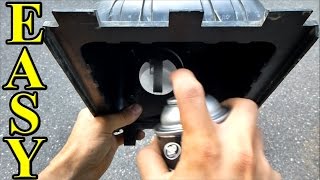
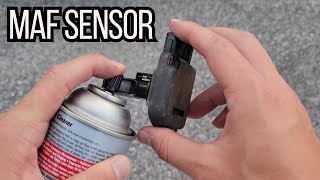
How to confirm: Inspect the sensor for dirt or debris. A simple and highly recommended first step is to clean the sensor with a dedicated MAF sensor cleaner. 🎬 Watch this in-depth guide on cleaning your MAF sensor properly. Do not touch the internal wires. Monitor MAF readings with a scan tool; if readings are erratic or do not change with RPM, it may be faulty. Unplugging the sensor to see if the engine runs better is an old diagnostic trick, but cleaning is a more definitive initial test.
Typical fix: Clean the MAF sensor with a dedicated electronic cleaner (e.g., CRC Mass Air Flow Sensor Cleaner). If cleaning doesn't resolve the issue, the sensor may need to be replaced. The OEM part is Lexus P/N 22204-75040.
Est. part cost: $10-$15 for cleaner, $150-$225 for an OEM sensor. - Vacuum Leak 🔴 High Probability Rubber and plastic hoses, as well as intake manifold gaskets, can degrade, crack, or become dislodged over time, allowing unmetered air to enter the intake manifold after the MAF sensor. This unmetered air throws off the air-fuel ratio.
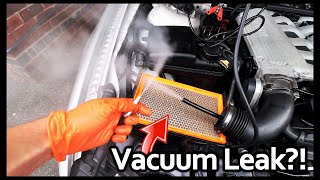
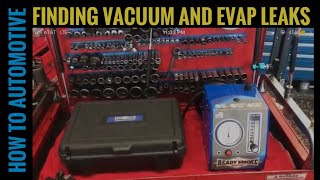
How to confirm: Visually inspect all vacuum hoses, the PCV hose, and the air intake tube between the MAF and throttle body for cracks or loose connections. Listen for a hissing sound with the engine running. A smoke test is the most effective professional method to pinpoint the exact location of a leak. 🎬 See how to use a smoke tester to find leaks. A DIY method involves carefully spraying short bursts of brake cleaner or propane around suspected areas (like gasket seams and hose connections); a change in engine RPM indicates the leak's location.
Typical fix: Replace the cracked hose or faulty gasket. A common, but harder to spot, leak on the 2GR engine family can be the intake manifold itself or its gaskets.
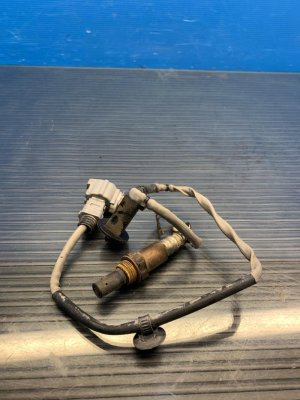
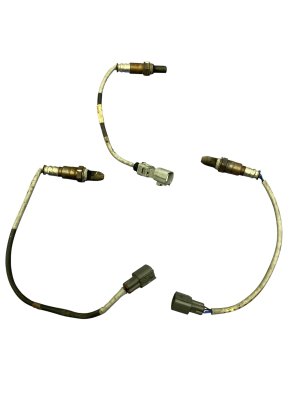
Est. part cost: $10-$150 depending on the specific hose or gasket set - Faulty Air/Fuel Ratio Sensor (Bank 2, Sensor 1) 🟡 Medium Probability This sensor, also known as an upstream oxygen sensor, provides the primary feedback for air-fuel mixture control. If it becomes slow, biased, or fails, it can send inaccurate 'lean' signals to the ECM, even if the mixture is correct. However, it is often misdiagnosed; the sensor is frequently just accurately reporting a lean condition caused by something else.
How to confirm: Use a scan tool to graph the sensor's voltage. A healthy sensor will fluctuate rapidly. A slow or flat-lining sensor is faulty. Bank 2 Sensor 1 is located on the exhaust manifold of the cylinder bank closer to the radiator (front bank).
Typical fix: Replace the Bank 2, Sensor 1 Air/Fuel Ratio sensor. Using an OEM or Denso-branded sensor is highly recommended for Toyota/Lexus vehicles. The Denso equivalent part is often cited as Denso P/N 234-9155.
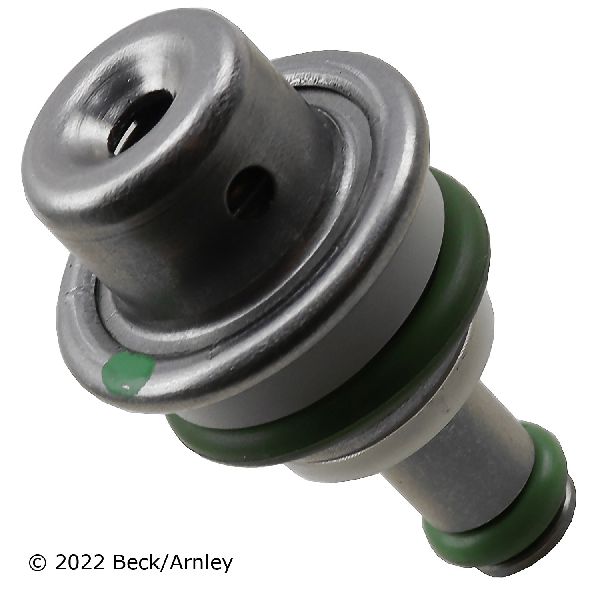
Est. part cost: $100-$250 - Low Fuel Pressure ⚪ Low Probability A weak fuel pump or clogged fuel filter can fail to deliver enough fuel to the engine. A TSB for this vehicle (LSB000523, an update to LSB-0052-17) specifically mentions lean codes P0171/P0174 appearing with a P0087 (Fuel Rail / System Pressure – Too Low) code, indicating a known potential issue with fuel delivery.
How to confirm: Check fuel pressure using a fuel pressure gauge connected to the fuel rail. Compare the reading to the manufacturer's specification. Monitor fuel trims; if both banks are lean (P0171 and P0174), it points to a systemic issue like fuel pressure. The presence of code P0087 is a strong indicator.
Typical fix: Follow the repair procedure outlined in the TSB, which may involve replacing the fuel pump assembly if pressure is confirmed to be low.
Est. part cost: $200-$500 for a fuel pump assembly
Rare But Worth Checking
- Clogged or Dirty Fuel Injectors: The 2GR-FKS engine has both port and direct injectors. A YouTube video specifically addressing P0174 and P117B on this engine showed significant carbon buildup on both sets of injectors, restricting fuel flow. Cleaning or replacing the injectors on the affected bank (Bank 2) resolved the issue. This is a more involved repair but is a confirmed cause for this platform.
- Exhaust Leak: A crack or leak in the exhaust manifold or piping before the Bank 2 Air/Fuel Ratio sensor can draw in outside air, making the sensor incorrectly read a lean condition. This will cause the computer to enrich the fuel mixture on that bank, potentially leading to other issues.
- Stuck Open PCV Valve: If the Positive Crankcase Ventilation (PCV) valve is stuck open, it can create a significant vacuum leak, allowing unmetered air into the intake manifold and causing lean codes.
Diagnosis Steps
- Check for other DTCs. The presence of codes like P0171, P0087, or misfire codes provides important diagnostic clues.
- Use a scan tool to observe Long Term Fuel Trim (LTFT) and Short Term Fuel Trim (STFT) for both banks. For P0174, Bank 2 LTFT will be significantly positive (typically >15-20%). If Bank 1 is also high, suspect a global issue (MAF, fuel pressure, large vacuum leak).
- Inspect the air intake system from the air filter to the 🎬 Watch: How to clean the throttle body on this Lexus. throttle body for any cracks, loose clamps, or disconnected hoses. Ensure the air filter box is properly sealed.
- Carefully remove and inspect the Mass Airflow (MAF) sensor. Clean it with dedicated MAF sensor cleaner and allow it to dry completely before reinstalling. Do not touch the sensor wires with your hands or any tools.
- With the engine running, listen for hissing sounds that indicate a vacuum leak. You can carefully spray short bursts of brake cleaner or propane around the intake manifold gaskets and vacuum lines; a change in engine RPM indicates you've found the leak.
- For a definitive leak test, perform a smoke test on the intake system. This is the most reliable way to find small or hard-to-see leaks.
- If no vacuum leaks are found and the MAF is clean, test the Bank 2, Sensor 1 (Air/Fuel Ratio) sensor by graphing its output on a scan tool. A healthy sensor's voltage should fluctuate rapidly.
- If P0087 is also present, or if both banks are lean, perform a fuel pressure test to check for a weak fuel pump or clogged filter, referencing TSB LSB000523.
- If all else fails, especially if misfire codes are also present, consider inspecting the Bank 2 fuel injectors for clogging, particularly the direct injectors which are prone to carbon buildup.
Parts You'll Likely Need
- Mass Airflow (MAF) Sensor Cleaner — This is the cheapest and easiest first step, as a dirty MAF is a very common cause of lean codes.
Trusted brands: CRC, WD-40
Aftermarket price range: $10-$15 - Mass Airflow (MAF) Sensor
(OEM #22204-75040)— If cleaning the sensor does not work, the sensor itself may have failed and requires replacement.
Trusted brands: Denso (OEM), CLOUD PROGRAM
OEM price range: $160-$225
Aftermarket price range: $50-$120 - Air/Fuel Ratio Sensor (Bank 2, Sensor 1)
(OEM #89467-48290)— If the sensor itself has failed, it will need to be replaced to resolve the code. This is the upstream sensor on the front cylinder bank. Denso is the OEM supplier.
Trusted brands: Denso (P/N: 234-9155)
OEM price range: $200-$280
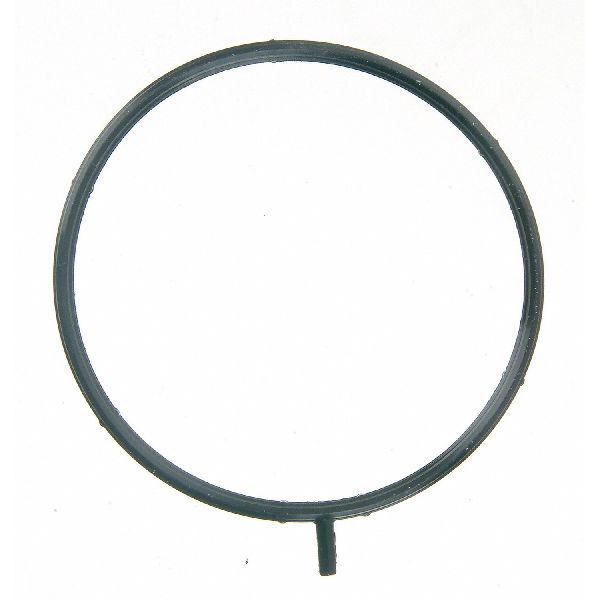
Aftermarket price range: $100-$180 - Intake Manifold Gasket Set — If a vacuum leak is traced to the intake manifold, the gaskets will need to be replaced. This is a common leak point on V-engines as they age.
Trusted brands: Fel-Pro, Mahle
OEM price range: $50-$80
Aftermarket price range: $25-$50
Related Codes That Often Appear With This One
- P0171 — System Too Lean, Bank 1. If both P0171 and P0174 are present, it strongly suggests a problem common to the entire engine, such as a faulty MAF sensor, a major vacuum leak near the throttle body, or low fuel pressure.
- P0087 — Fuel Rail / System Pressure – Too Low. As per TSB #LSB000523, this code can appear with P0174, indicating a fuel delivery problem is the root cause.
- P0300, P0302, P0304, P0306 — Misfire codes for the cylinders in Bank 2 (Cylinders 2, 4, 6). A severe lean condition can prevent proper combustion, leading to misfires on the affected bank.
- P117B — Direct Injection High-Pressure Fuel System Performance. A video of a 2GR-FKS engine with a P0174 code also had a P117B, which was resolved by cleaning the heavily carboned-up direct injectors.
Technical Service Bulletins (TSBs) & Recalls
- LSB000523: '...exus vehicles may exhibit a hard start and/or MIL ON condition with one or more of the following Diagnostic Trouble Codes (DTCs): ?DTC P0171 and/or P0174 (System Too Lean Bank 1/Bank 2) ?DTC P0087 Fuel Rail / System Pressure ? Too Low...'
Platform-Specific Known Issues
- Lexus Technical Service Bulletin #LSB000523 (updated from LSB-0052-17) notes that some 2017-2020 vehicles may exhibit a hard start and MIL ON with DTCs P0171/P0174 and P0087 (Fuel Rail / System Pressure – Too Low). This TSB points directly to a fuel delivery issue as a potential cause for the lean code on this specific vehicle range.
- The D-4S dual injection system on the 2GR-FKS engine makes it susceptible to carbon buildup on the direct injectors, which can lead to lean conditions and misfires on specific cylinders, triggering a bank-specific code like P0174.
Mechanic-Grade Diagnostic Values
- Low-Pressure Fuel System Pressure — expected: 196 to 833 kPa (28 to 121 psi) with engine running.. Failure: Pressure below 196 kPa (28 psi) indicates a potential issue with the in-tank fuel pump or filter. Often accompanied by DTC P0087.
- High-Pressure Fuel System Pressure — expected: 2,400 to 19,500 kPa (348 to 2828 psi) at 3000 rpm with engine warmed up.. Failure: Pressure significantly below the target range under load can indicate a failing high-pressure fuel pump.
- Mass Airflow (MAF) Sensor Reading — expected: 2 to 7 g/s at idle; 15 to 25 g/s at 2500 RPM. Real-world examples for a 3.5L V6 show around 2.0-3.5 g/s at a stable, warm idle.. Failure: Readings that are significantly lower than expected at idle (e.g., <2.0 g/s) can indicate a dirty sensor or a vacuum leak downstream. Readings should increase smoothly and linearly with RPM.
- Air/Fuel Ratio Sensor Heater Resistance — expected: 1.8 to 3.4 Ω at 20°C (68°F) between terminals +B and HA1A on the sensor connector.. Failure: Resistance outside of this range indicates a faulty heater element within the A/F sensor, requiring replacement of the sensor.
- Downstream Oxygen (O2) Sensor Voltage — expected: After warm-up, voltage should fluctuate constantly between 0.1 and 0.9 volts.. Failure: A sensor that takes more than four minutes to begin fluctuating, or whose voltage stays fixed (e.g., stuck at 0.1V or 0.9V), is likely faulty.
Scan Tool Commands That Help
- Toyota Techstream: Data List Monitoring (A/FS B1 S1, A/FS B2 S1) — This is the primary method for observing the live voltage/current output of the Air/Fuel ratio sensors to determine if they are functioning correctly or are biased/slow, which could cause a false lean code.
- Toyota Techstream / High-End Scan Tool: Active Test: Control the Fuel Pump / Speed — Used to command the fuel pump on to verify its operation and to make it easier to perform a fuel pressure test without the engine running.
- Toyota Techstream / High-End Scan Tool: Utility: Reset Memory — After a repair is completed, this function should be used to clear the learned fuel trim values (adaptive memory). This forces the ECM to relearn the base fuel strategy immediately, confirming the fix if short-term fuel trims remain near zero.
Wiring & Ground Locations
- Engine Harness Grounds — The 2GR engine family has critical ground points on top of the valve covers that connect to the chassis near the strut towers. There is another important harness ground on the side of the cylinder head, underneath the throttle body area.. A poor ground connection at these points can cause incorrect readings from sensors like the A/F sensors and MAF sensor, leading to false lean or rich codes.
- Main Battery Ground — The main ground cable runs from the battery's negative terminal to a point on the right inner fender/chassis.. Corrosion or a loose connection at the main chassis ground can cause a variety of electrical issues, including erratic sensor behavior and ECU problems.
- EFI & ECU Fuses/Relays — Located in the main engine bay fuse/relay box on the driver's side.. These fuses and relays power the Electronic Fuel Injection system and the Engine Control Unit. A fault here would typically cause more severe issues than just a P0174 code, but they are part of the primary circuit for the fuel and engine management systems.
Real Owner Repair Stories
- ClubLexus Forum User (Lexus (model not specified, but behavior is relevant)) — Consistent P0174 code, CEL and VSC lights on.
❌ Tried (didn't work) Replacing gas cap, Considering MAF and O2 sensor replacement
✅ What actually fixed it The user noticed an oil leak from the valve cover gasket, specifically around the high-pressure fuel pump area. The oil was dripping directly onto the Bank 2 A/F (O2) sensor and its wiring. Replacing the leaking valve cover gasket and the oil-fouled A/F sensor resolved the code. - YouTube Video (already in Pass 2) (Toyota/Lexus with 2GR-FKS engine) — P0174 and P117B codes.
✅ What actually fixed it The root cause was extremely heavy carbon buildup on both the port fuel injectors and the direct fuel injectors for Bank 2. A thorough cleaning of both sets of injectors for the affected bank resolved the lean condition. - YouTube Video (Toyota/Lexus with dual P0171/P0174 codes) — Check engine light, severe hesitation during acceleration, poor fuel economy.
❌ Tried (didn't work) Initially suspected O2 sensors or fuel pump.
✅ What actually fixed it A visual inspection revealed a large tear in the flexible rubber air intake hose, located between the MAF sensor and the throttle body. Replacing this hose fixed the massive unmetered air leak and cleared the codes.
"I Checked Everything" — The Actual Cause
- A smoke test is designed to find vacuum leaks in the intake system. It would not have identified the cause in a documented case where a P0174 was triggered by a leaking valve cover gasket dripping oil onto the Bank 2 A/F sensor, causing it to send incorrect signals.
- In cases where P0174 is caused by heavily clogged direct fuel injectors, a smoke test on the intake manifold would come back clean, as the fault lies with fuel delivery restriction, not an unmetered air leak.
When the Usual Fixes Don't Work
- While the most common causes for P0174 are vacuum leaks and dirty MAF sensors, there are confirmed owner reports where the actual fix was something a standard diagnostic procedure would miss. In one instance, a persistent P0174 was finally resolved by discovering a valve cover gasket leak that was dripping oil onto the Bank 2 A/F sensor, causing it to malfunction. The owner had already considered the usual culprits without success. This highlights the need to perform a thorough visual inspection for anything unusual around the affected bank, not just focusing on intake hoses.
OEM Part Supersession History
23101-31080→23101-0P010— Part update or manufacturer change for the low-pressure fuel pump sub-assembly.
Model Year Variations Within This Range
- 2017-2020: The Lexus RX350 received a facelift for the 2020 model year which included cosmetic updates and significant infotainment changes (new touchscreen, Apple CarPlay/Android Auto). However, the powertrain, including the 3.5L 2GR-FKS V6 engine and 8-speed transmission, remained unchanged. Therefore, the diagnostic procedures and potential causes for code P0174 are consistent across the entire 2017-2020 range.
Helpful Videos
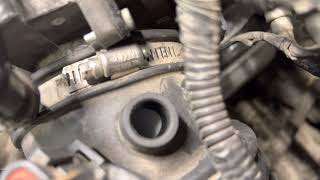
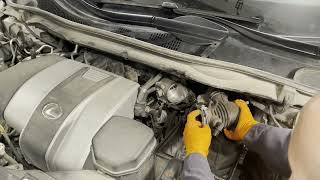
Used OEM Parts in Stock


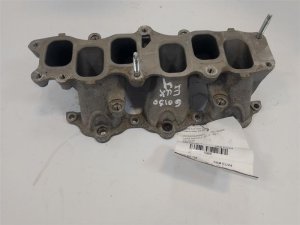
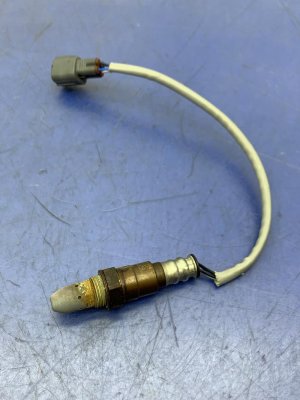
New Aftermarket Parts Available


The information in this article is provided for general reference and educational purposes only. Vehicle specifications, procedures, and part compatibility can vary by production date, trim level, and region. Always consult your vehicle's factory service manual and verify part numbers before purchasing or performing repairs. Safety-critical components such as airbags, seat belts, and braking systems should be installed by a qualified professional.
- Lexus RX350:
- 🎬 Helpful Videos
- 🛍️ Shop This Part
- What's Unique About the 2017-2020 Lexus RX350
- Diagnostic Flowchart
- Symptoms You May Notice
- Most Likely Causes
- Rare But Worth Checking
- Diagnosis Steps
- Parts You'll Likely Need
- Related Codes That Often Appear With This One
- Technical Service Bulletins (TSBs) & Recalls
- Platform-Specific Known Issues
- Mechanic-Grade Diagnostic Values
- Scan Tool Commands That Help
- Wiring & Ground Locations
- Real Owner Repair Stories
- "I Checked Everything" — The Actual Cause
- When the Usual Fixes Don't Work
- OEM Part Supersession History
- Model Year Variations Within This Range
- 🎟️ Get 5% Off