

P0174 on 2015-2019 Lexus RC 350: System Too Lean Bank 2 Causes and Fixes
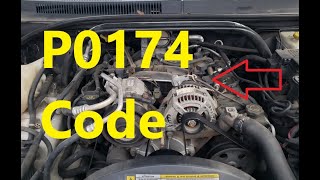
The P0174 code on a Lexus RC 350 most often points to a dirty Mass Airflow (MAF) sensor or a vacuum leak, typically from a cracked air intake hose (Part No. ~17881-31190) or bad intake manifold gaskets. Cleaning the MAF sensor with a dedicated cleaner is a simple, low-cost first step that often resolves the issue.
- Start your diagnosis by cleaning the Mass Airflow (MAF) sensor; it's easy, inexpensive, and a very common fix.
- Thoroughly inspect for vacuum leaks, especially the large rubber air intake hose between the air filter and the engine.
- If P0171 (Bank 1) is also present, the problem is likely something that affects the whole engine, like the MAF sensor or a fuel pump.
- Don't immediately replace the oxygen (A/F) sensor, as it is often correctly reporting a problem caused by something else.
- Be aware of the TSB linking this code to low fuel pressure, especially if you also experience hard starting.
What's Unique About the 2015-2019 Lexus RC 350
The Lexus RC 350 from this period uses two versions of the reliable 3.5L V6 engine: the 2GR-FSE (2015-2017) and the updated 2GR-FKS (2018-2019). While both are robust, they are sensitive to unmetered air entering the intake system. A common failure point on these and similar Toyota/Lexus V6 engines is a cracked rubber air intake hose between the air filter box and the throttle body 🎬 Watch: How to diagnose and repair a cracked intake hose., which allows unmetered air to bypass the MAF sensor, directly causing a lean condition. Additionally, TSB #LSB000523 was issued for a wide range of Lexus models including the RC, linking lean codes with low fuel pressure, indicating that fuel delivery issues should not be overlooked.
Diagnostic Flowchart
Tap your situation to follow the diagnostic path that matches what you're seeing on this vehicle.
Generation note: While the 2015-2019 Lexus RC 350 is part of the same generation (XC10), it uses two different engines. Models from 2015-2017 have the 3.5L 2GR-FSE V6, while 2018-2019 models feature the updated 3.5L 2GR-FKS V6. The fundamental causes for P0174 are the same for both engines, but specific part numbers for sensors or gaskets may differ slightly. Always verify with your VIN.
Symptoms You May Notice
- Check Engine Light is on
- VSC/Traction Control lights may also illuminate
- Rough idle
- Engine hesitation or stumbling on acceleration
- Reduced power and performance
- Decreased fuel economy
- Hard starting condition
- Sulfur or 'rotten egg' smell from the exhaust under heavy acceleration
- Replacing the Air/Fuel Ratio (O2) sensor immediately without first checking for vacuum leaks or cleaning the MAF sensor. A vacuum leak from a cracked intake hose or a dirty MAF are very common and much cheaper fixes.
Most Likely Causes
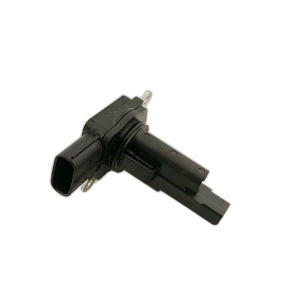
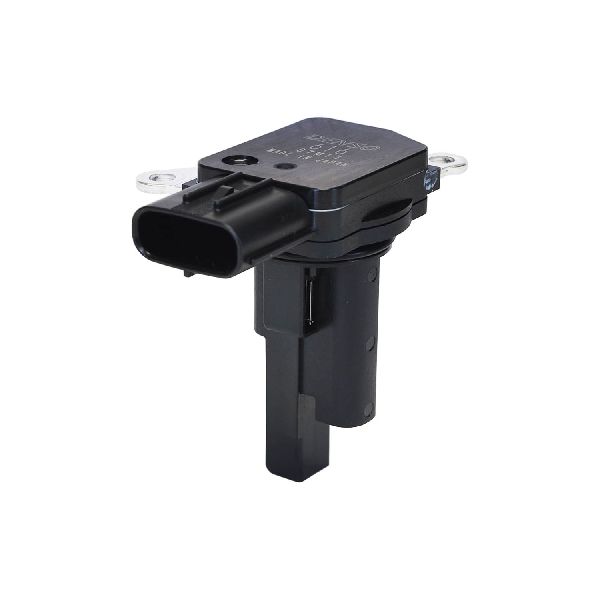
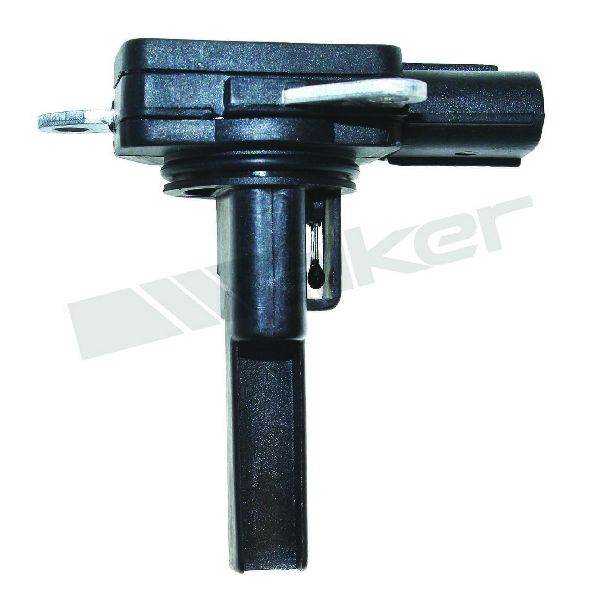
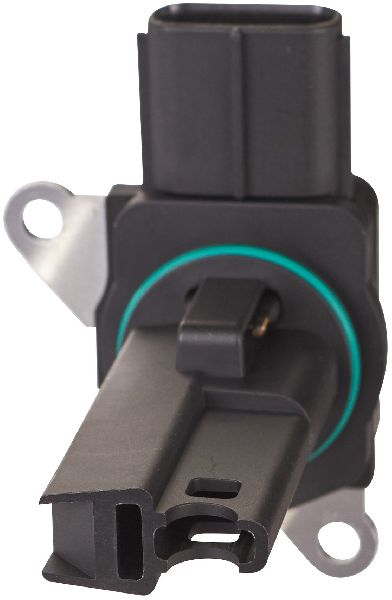
- Dirty or Faulty Mass Airflow (MAF) Sensor 🔴 High Probability The MAF sensor is sensitive and can become contaminated by dirt or oil, especially from aftermarket oiled air filters that are over-oiled. This contamination insulates the sensor wire, causing it to send inaccurate (lower) airflow readings to the ECM, which then fails to command enough fuel.
How to confirm: Remove the sensor and visually inspect the hot wires for contamination. Monitor live data with a scan tool to see if airflow readings are erratic or don't increase smoothly with RPM. A rule of thumb is that at idle, the MAF reading in grams/second should be roughly equal to the engine displacement in liters (e.g., ~3.5 g/s for the 3.5L V6). Cleaning the sensor is a diagnostic step in itself.
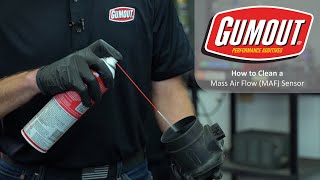
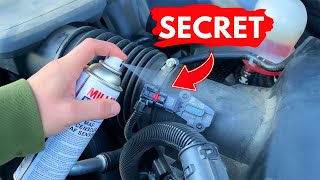
Typical fix: Clean the sensor using a dedicated MAF sensor cleaner spray. Do not touch the wires. Allow it to dry completely before reinstalling. 🎬 See this step-by-step guide on cleaning your MAF sensor safely. If cleaning doesn't resolve the issue, the sensor may need to be replaced. Denso is the OEM manufacturer.
Est. part cost: $10-$15 for cleaner, $75-$150 for a new Denso sensor. - Vacuum Leak 🔴 High Probability Rubber and plastic components in the engine bay degrade over time from heat cycles. The most common vacuum leak source is a cracked air intake hose (the large ribbed tube between the MAF sensor and throttle body). Failed intake manifold gaskets are another, more involved, common cause.
How to confirm: Visually inspect all vacuum hoses and the air intake tube for cracks, especially in the accordion sections. A smoke test is the most effective way to pinpoint the source of a leak that isn't obvious.
Typical fix: Replace the cracked hose or faulty gasket. The intake hose is a simple DIY job, while intake manifold gasket replacement is more involved.
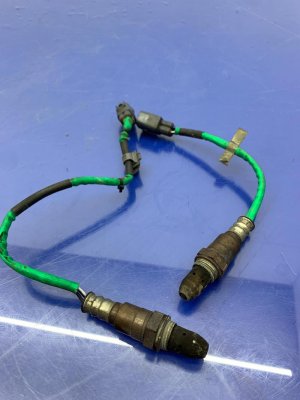
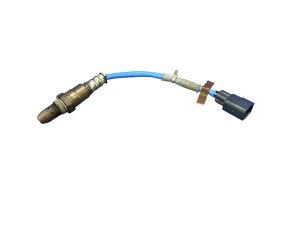
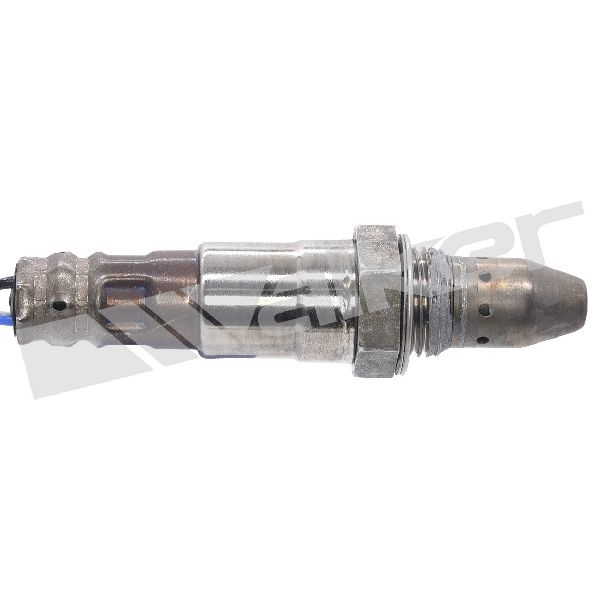
Est. part cost: $50-$150 for an intake hose (OEM Part No. for 2GR-FSE is approx. 17881-31190), $40-$160 for intake manifold gaskets. - Failing Air/Fuel Ratio Sensor (Bank 2, Sensor 1) 🟡 Medium Probability This sensor, also known as an upstream oxygen sensor, measures the oxygen in the exhaust. It can degrade over time and send slow or inaccurate signals, leading the ECM to believe there's a lean condition. Oil leaks from valve cover gaskets can also drip onto and contaminate the sensor, causing it to fail.
How to confirm: Use a scan tool to graph the sensor's voltage. A healthy sensor will show rapid fluctuations. A slow, biased, or flat-lining sensor is likely faulty. A healthy sensor should cycle between approximately 0.1V (lean) and 0.9V (rich) multiple times within a 10-second window at idle when in closed loop.
Typical fix: Replace the Bank 2, Sensor 1 Air/Fuel Ratio Sensor. Bank 2 is the driver's side. Denso is the original equipment manufacturer (OEM), and using an OEM sensor is highly recommended.
Est. part cost: $150-$250 - Low Fuel Pressure ⚪ Low Probability As noted in TSB #LSB000523, low fuel pressure can cause lean codes across multiple Lexus models of this era. This could be due to a weak in-tank fuel pump or a clogged fuel filter. This is more likely if both P0171 and P0174 are present.
How to confirm: Connect a fuel pressure gauge to the fuel rail and check if the pressure is within the manufacturer's specifications. For the 2GR-FSE, low-side pressure should be 28-85 psi with the engine running. This is often best left to a professional.
Typical fix: Replace the failing fuel pump assembly or clogged fuel filter.
Est. part cost: $200-$500+ for a fuel pump assembly.
Rare But Worth Checking
- Clogged Fuel Injector on Bank 2: If the lean condition is isolated to a single bank and other causes are ruled out, a clogged injector could be restricting fuel flow to one or more cylinders on that bank. This might also be accompanied by a misfire code for a specific cylinder.
- Exhaust Leak: An exhaust leak before the Bank 2 Air/Fuel Ratio sensor can allow outside oxygen to enter the exhaust stream, making the sensor report a false lean condition. This is less common than intake-side leaks.
- Leaking Valve Cover Gasket: As documented by one owner on ClubLexus, a leaking valve cover gasket on Bank 2 can drip oil onto the A/F sensor connector or body, causing it to short out or report incorrectly, leading to a P0174 code.
- Faulty PCV Valve: A Positive Crankcase Ventilation (PCV) valve that is stuck open can create a vacuum leak, allowing unmetered air into the intake manifold and causing a lean condition. This is often accompanied by a rough or high idle.
Diagnosis Steps
- Read the code with an OBD-II scanner and check for any other pending or stored codes.
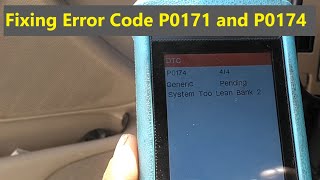
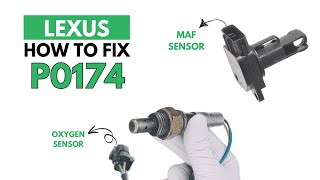
- Check live data on the scanner, focusing on Short-Term Fuel Trim (STFT) and Long-Term Fuel Trim (LTFT) for Bank 2. LTFT consistently above +15% to +20% confirms 🎬 Watch: A complete breakdown of P0174 causes and fixes. the ECM is compensating for a lean condition.
- Visually inspect the entire air intake system, from the air filter box to the throttle body. Pay close attention to the flexible, ribbed sections of the main intake hose for cracks.
- Remove and clean the Mass Airflow (MAF) sensor with a dedicated cleaner. Spray the small wires inside but do not touch them. Allow it to dry completely before reinstalling.
- Reset the codes by disconnecting the battery for 15 minutes or using the scanner. Drive the vehicle for a full drive cycle to see if the code returns. If fuel trims return to normal (ideally under 10%), the dirty MAF was the issue.
- If the code persists, perform a smoke test to find any vacuum leaks that are not visually apparent. Common leak points are the intake manifold gaskets and PCV hoses.
- If no vacuum leaks are found, test the fuel pressure to ensure it meets OEM specifications, ruling out a weak fuel pump or clogged filter as per TSB #LSB000523. For the 2GR-FSE, expect 28-85 psi at the low-pressure rail.
- If fuel pressure is normal, inspect the Bank 2, Sensor 1 Air/Fuel Ratio sensor. Check for oil contamination from above. Test its voltage readings on a scan tool; replace if it responds slowly or is stuck.
- As a final step, inspect for exhaust leaks before the primary sensor and check for clogged fuel injectors on Bank 2.
Parts You'll Likely Need
- Mass Airflow (MAF) Sensor Cleaner — This is the cheapest and easiest first step. A dirty MAF sensor is a very common cause of lean codes on Lexus vehicles.
Trusted brands: CRC, Liqui Moly
OEM price range: N/A
Aftermarket price range: $10-$15 - Air Intake Hose
(OEM #17881-31190 (for 2GR-FSE, verify with VIN))— This rubber hose is a frequent failure point, cracking with age and causing a significant vacuum leak.
Trusted brands: Genuine Lexus, Aftermarket replacements
OEM price range: $100-$150
Aftermarket price range: $50-$80 - Air/Fuel Ratio Sensor (Bank 2, Sensor 1)
(OEM #89467-53080 (Verify with VIN))— This is the primary sensor that detects the lean condition. If it fails, it can send incorrect data. Bank 2 is the driver's side.
Trusted brands: Denso (OEM)
OEM price range: $230-$320
Aftermarket price range: $150-$210 - Intake Manifold Gasket Set — If a vacuum leak is suspected but not found in the intake hose, the intake manifold gaskets are the next most likely culprit. Part numbers differ between 2GR-FSE and 2GR-FKS engines.
Trusted brands: Genuine Lexus, Fel-Pro
OEM price range: $60-$100
Aftermarket price range: $40-$80
Related Codes That Often Appear With This One
- P0171 — System Too Lean (Bank 1). If both P0171 and P0174 are present, it strongly points to a problem common to both engine banks, such as a faulty MAF sensor, a large vacuum leak at the intake manifold, or low fuel pressure.
- P0087 — Fuel Rail / System Pressure – Too Low. This code directly supports the possibility of a fuel delivery issue, as mentioned in TSB #LSB000523.
- P1170 — Fuel Performance/Port Injector. This code can appear alongside lean codes on some Lexus models, pointing more specifically towards a fuel delivery or injector issue.
Technical Service Bulletins (TSBs) & Recalls
- LSB000523: Notes that many 2013-2020 Lexus vehicles, including the RC series, may exhibit a hard start and/or MIL ON with lean codes P0171/P0174, potentially accompanied by P0087 (Fuel Rail Pressure Too Low). It advises technicians to follow a specific repair procedure to address these conditions, pointing towards a fuel delivery problem.
Platform-Specific Known Issues
- A known issue documented in Technical Service Bulletin #LSB000523 involves a potential hard start and lean codes (P0171/P0174) being caused by low fuel pressure (P0087). This TSB applies to a wide range of 2013-2020 Lexus vehicles, including the RC 350, and suggests the fuel pump should be a key diagnostic point if simple fixes do not work.
- The rubber air intake hose on the 2GR engine family is a well-documented failure point across many Toyota and Lexus models. The accordion-style flex sections are prone to developing cracks that can be difficult to see without removing the hose for inspection.
Mechanic-Grade Diagnostic Values
- Low-Pressure Fuel Rail (2GR-FSE) — expected: 196 to 588 kPa (28 to 85 psi) at idle.. Failure: Pressure below 28 psi indicates a potential fuel delivery issue (pump or filter).
- Low-Pressure Fuel System Bleed Down (2GR-FSE) — expected: Pressure should remain at or above 147 kPa (21 psi) for 5 minutes after the engine is stopped.. Failure: A rapid drop in pressure indicates a leak in the fuel line or a faulty check valve in the pump.
- High-Pressure Fuel Rail (2GR-FSE) — expected: 3.5 to 4.5 MPa (508 to 653 psi) at idle.. Failure: Pressure outside this range points to an issue with the high-pressure fuel pump or its controller.
- Port Fuel Injector Resistance (2GR-FSE) — expected: 11.6 to 12.4 Ω at 20°C (68°F).. Failure: Resistance outside this range indicates a faulty injector coil.
- Mass Airflow (MAF) Sensor Reading at Idle — expected: Approximately 3.5 grams/second for the 3.5L engine.. Failure: A significantly lower reading (e.g., 2.0 g/s) suggests a dirty or failing MAF sensor, while a significantly higher reading could indicate a vacuum leak after the sensor.
- Long Term Fuel Trim (LTFT) — expected: Ideally close to 0%, but acceptable within +/- 10%.. Failure: A value consistently at or above +15% to +25% confirms the ECM is compensating for a significant lean condition and is near its limit.
Scan Tool Commands That Help
- Toyota Techstream: Active Test: A/F CONTROL — After confirming high fuel trims, use this test to manually alter the fuel injection volume by +25% or -12.5%. This allows a technician to directly observe the A/F and O2 sensor responses on the live data graph to confirm if the sensors are reacting correctly and quickly to commanded changes in fuel mixture.
Real Owner Repair Stories
- ClubLexus user 'Tofubento' (Lexus GS430 (similar V8 logic, demonstrates diagnostic path)) — Intermittent P0174 code, slightly rough idle before CEL illuminates. Car runs smoothly after resetting the code, but it returns.
❌ Tried (didn't work) Replaced all vacuum lines., Cleaned throttle body., Cleaned MAF sensor., Replaced MAF sensor with a new part.
✅ What actually fixed it The thread concludes with the user observing extremely high long-term fuel trims (+25%) and other users strongly suggesting the upstream O2 (A/F) sensor was faulty, as it was the only remaining component that could cause a single-bank lean code after all shared components (MAF, intake, etc.) were addressed. The intermittent nature pointed to a failing sensor rather than a constant vacuum leak.
Model Year Variations Within This Range
- 2015-2017 vs 2018-2019: The engine changed from the 2GR-FSE (2015-2017) to the 2GR-FKS (2018-2019). While fundamentally similar, they have different intake manifolds, and gaskets are not interchangeable. The 2GR-FKS also incorporates VVT-iW technology, allowing for Atkinson cycle operation, which involves more complex ECU logic. Any intake modifications or part swaps must be specific to the engine type.
Helpful Videos
Used OEM Parts in Stock
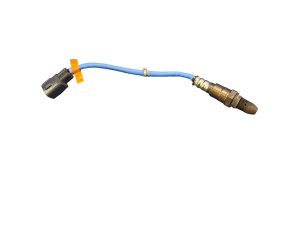
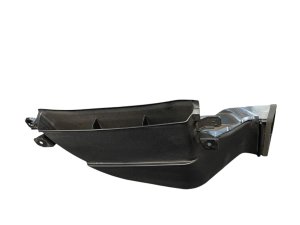
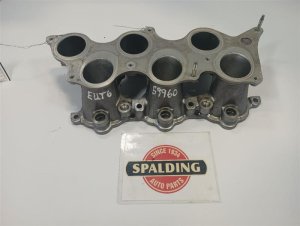
New Aftermarket Parts Available


The information in this article is provided for general reference and educational purposes only. Vehicle specifications, procedures, and part compatibility can vary by production date, trim level, and region. Always consult your vehicle's factory service manual and verify part numbers before purchasing or performing repairs. Safety-critical components such as airbags, seat belts, and braking systems should be installed by a qualified professional.
- Lexus RC 350:
- 🎬 Helpful Videos
- 🛍️ Shop This Part
- What's Unique About the 2015-2019 Lexus RC 350
- Diagnostic Flowchart
- Symptoms You May Notice
- Most Likely Causes
- Rare But Worth Checking
- Diagnosis Steps
- Parts You'll Likely Need
- Related Codes That Often Appear With This One
- Technical Service Bulletins (TSBs) & Recalls
- Platform-Specific Known Issues
- Mechanic-Grade Diagnostic Values
- Scan Tool Commands That Help
- Real Owner Repair Stories
- Model Year Variations Within This Range
- 🎟️ Get 5% Off