

P0174 on 2014-2018 Lexus IS 350: System Too Lean Bank 2 Causes and Fixes
P0174 on a Lexus IS 350 means the engine is running lean on Bank 2 (the driver's side). The most common causes are a dirty Mass Airflow (MAF) sensor or a vacuum leak from a cracked intake hose, failed PCV valve, or failed intake manifold gasket. Cleaning the MAF sensor and inspecting for obvious vacuum leaks are easy and effective first steps.
- P0174 means your IS 350's engine is getting too much air or not enough fuel on the driver's side (Bank 2).
- Start your diagnosis by cleaning the Mass Air Flow (MAF) sensor; it's easy, cheap, and a very common fix.
- The second most likely cause is a vacuum leak from a cracked hose or a failed intake manifold gasket. A smoke test is the best way to confirm.
- If P0171 (Bank 1) is also present, the problem is almost certainly the MAF sensor or a vacuum leak affecting the whole engine.
- If the issue persists, the upstream Air/Fuel ratio sensor on the driver's side is the next most likely part to have failed.
What's Unique About the 2014-2018 Lexus IS 350
The Lexus IS 350's 2GR engine family is generally very reliable but is sensitive to unmetered air entering the intake system after the MAF sensor. While vacuum leaks and dirty MAF sensors are common culprits on many cars, a notable issue for this platform is the potential for intake manifold gasket leaks, as discussed in owner forums. Additionally, a Technical Service Bulletin (TSB LSB000523) for the 2014 model year points to a potential fuel delivery problem, linking this lean code with a low fuel pressure code (P0087) and hard starting, which is a less common but important vehicle-specific issue to consider.
Diagnostic Flowchart
Tap your situation to follow the diagnostic path that matches what you're seeing on this vehicle.
Generation note: The 2014-2018 model years cover the third generation (XE30) of the Lexus IS. A significant engine update occurred for the 2018 model year, which switched from the 2GR-FSE to the 2GR-FKS engine. While the fundamental causes for a lean code are similar, the 2GR-FKS has a more complex D-4S fuel system with both direct and port injectors, which can introduce additional diagnostic steps if a fuel delivery issue is suspected. Both engines are known for their reliability.
Symptoms You May Notice
- Check Engine Light is on
- Rough idle
- Engine hesitation or stumbling on acceleration
- Reduced engine power
- Hard starting (as noted in TSB LSB000523)
- Decreased fuel economy
- Rotten egg smell from the exhaust under heavy acceleration, indicating an issue with the catalytic converters which can be exacerbated by a lean condition.
- Replacing the downstream (post-catalyst) O2 sensor instead of the upstream (pre-catalyst) Air/Fuel Ratio sensor. The upstream sensor is what the ECM uses for fuel trim adjustments.
- Replacing the A/F sensor without checking for oil or coolant leaks that may have contaminated it. One owner fixed their P0174 by replacing a leaking valve cover gasket that was dripping oil onto the sensor.
Most Likely Causes
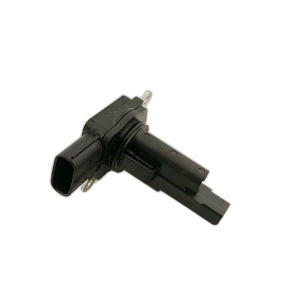
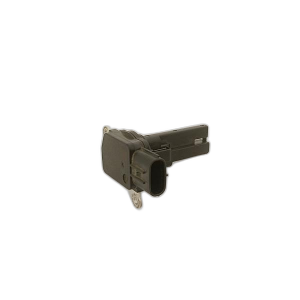
- Dirty or Faulty Mass Air Flow (MAF) Sensor 🔴 High Probability The MAF sensor measures the air entering the engine. If its sensitive wires are contaminated with dirt or oil (sometimes from over-oiled aftermarket air filters), it can under-report the amount of air, causing the ECM to inject too little fuel.
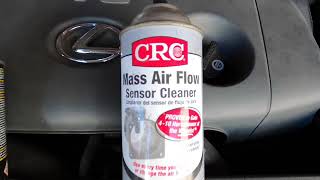
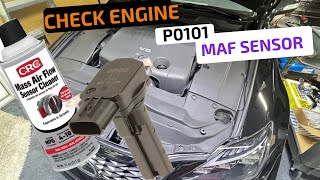
How to confirm: Inspect the sensor for dirt. Monitor MAF readings with a scan tool. A very common and often successful first step is to clean the sensor with a dedicated MAF sensor cleaner. 🎬 Watch: A quick guide to cleaning your Lexus MAF sensor. Do not use brake cleaner or carb cleaner.
Typical fix: Clean the MAF sensor with a specialized cleaner. If cleaning doesn't resolve the issue, the sensor may need to be replaced. Always use a high-quality OEM or Denso replacement, as cheap aftermarket sensors are known to cause issues.
Est. part cost: $10-$20 for cleaner, $70-$250 for a new Denso sensor. - Vacuum Leak 🔴 High Probability Cracked or disconnected vacuum hoses, a faulty PCV valve, or leaking intake manifold gaskets can allow unmetered air to enter the engine after the MAF sensor, leading to a lean mixture. The intake air boot and PCV system hoses are common places for cracks to develop. Aftermarket intakes or improperly installed oil catch cans are also frequent sources of leaks.
How to confirm: Visually inspect all vacuum and intake hoses for cracks or loose connections. Listen for a hissing sound with the engine running. A smoke test is the most effective way to find hard-to-see leaks. 🎬 See how to perform a simple smoke test for leaks. Spraying a small amount of brake or carb cleaner near suspected leak areas and listening for a change in engine idle can also help pinpoint a leak.
Typical fix: Replace the cracked hose or faulty gasket. The PCV valve is an inexpensive and relatively easy part to replace as preventative maintenance.
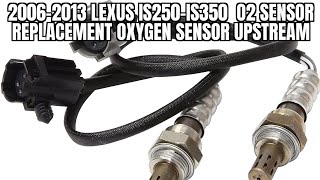
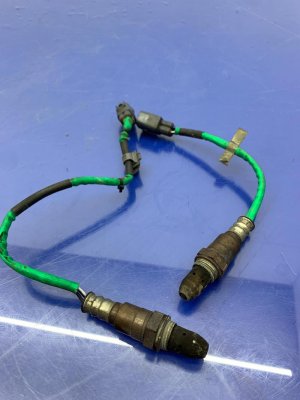
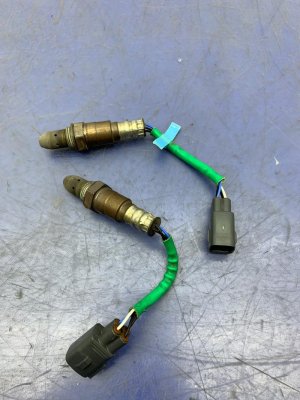
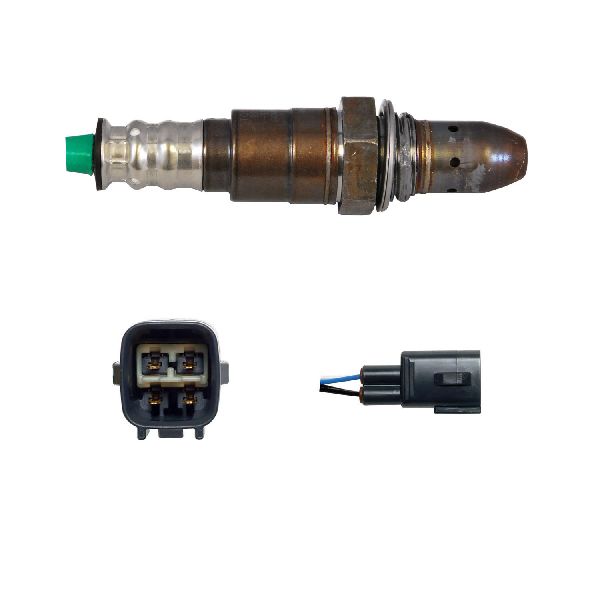
Est. part cost: $10-$50 for hoses, $20-$40 for a PCV valve, $40-$80 for intake manifold gaskets. - Failing Air/Fuel Ratio Sensor (Upstream O2 Sensor) 🟡 Medium Probability The A/F sensor for Bank 2 (Sensor 1) measures the oxygen in the exhaust. If it becomes slow, contaminated by leaks (like a leaking valve cover gasket), or fails, it can send incorrect lean signals to the ECM.
How to confirm: Use a scan tool to monitor the voltage of the Bank 2 Sensor 1. A healthy sensor's voltage should fluctuate rapidly. A sensor that is slow to respond or has a fixed low voltage reading is likely faulty. In one forum post, an owner found an oil leak from the high-pressure fuel pump gasket was dripping onto the Bank 2 sensor, causing the code.
Typical fix: Replace the Bank 2, Sensor 1 Air/Fuel Ratio sensor. This sensor is located on the driver's side exhaust manifold, before the catalytic converter. 🎬 Watch: How to replace the upstream O2 sensors on your Lexus. Denso is the OEM supplier.
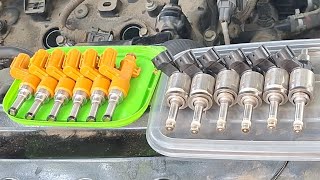
Est. part cost: $100-$250 - Low Fuel Pressure / Fuel Delivery Issue ⚪ Low Probability As cited in TSB LSB000523, a failing fuel pump can cause low fuel pressure, leading to a lean condition and hard starts. This could also be caused by a clogged fuel filter or dirty injectors. One owner ultimately traced P0171/P0174 to a failing high-pressure fuel pump after other common causes were eliminated.
How to confirm: Check for the presence of code P0087 (Fuel Rail / System Pressure – Too Low). Perform a fuel pressure test using a mechanical gauge and compare the readings to the manufacturer's specifications. The high-pressure side on the 2GR-FSE should be between 4 to 13 MPa (580 to 1,885 psi).
Typical fix: Replace the failing fuel pump or clogged fuel filter. The fuel pump is located in the fuel tank. In some cases, cleaning the fuel injectors may be necessary.
Est. part cost: $200-$500 for a fuel pump assembly.
Rare But Worth Checking
- Exhaust Leak: An exhaust leak before the Bank 2 A/F sensor can draw in outside air, causing the sensor to read a false lean condition.
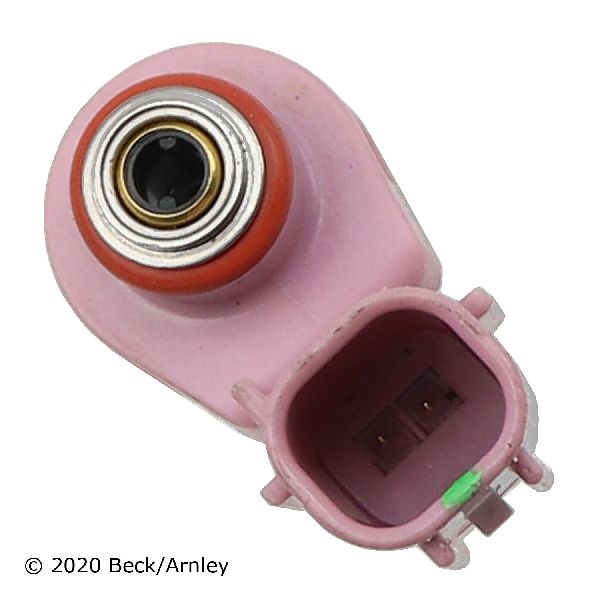
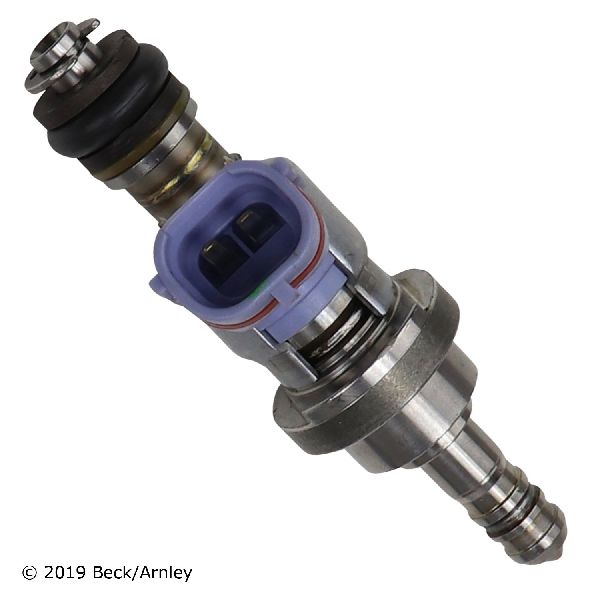
- Clogged Fuel Injectors on Bank 2: If only the injectors on Bank 2 are clogged, it can cause a lean condition isolated to that bank. This is less common than issues affecting both banks.
Diagnosis Steps
- Check for other DTCs. If P0171 is also present, suspect a cause common to both banks (MAF, large vacuum leak). If P0087 is present, focus on the fuel system.
- Using a scan tool, observe Long Term Fuel Trim (LTFT) and Short Term Fuel Trim (STFT) for both banks. For P0174, Bank 2 fuel trims will be high (e.g., LTFT adding over 20-25%). If both banks are high, the problem is global.
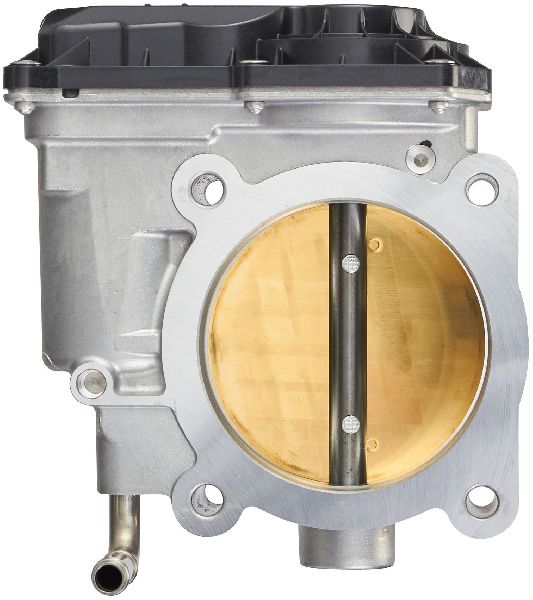
- Visually inspect the entire air intake system, from the air filter box to the throttle body. Look for cracks in the flexible boot, loose clamps, or disconnected hoses. Pay special attention to aftermarket intakes.
- Inspect all accessible vacuum hoses and the PCV hose/valve for cracks, brittleness, or disconnection. The PCV system is a common source of unmetered air.
- Remove and clean the MAF sensor using a dedicated MAF sensor cleaner. Allow it to dry completely before reinstalling. Do not touch the sensor wires.
- If leaks are not obvious, perform a smoke test to identify the source of any unmetered air leaks. Pay close attention to the intake manifold gaskets, as they are a known potential leak point.
- If no vacuum leaks are found, test the Bank 2, Sensor 1 (A/F sensor) by monitoring its voltage with a scan tool. It should fluctuate rapidly. A lazy or stuck sensor needs replacement. Check for any fluid leaks from above that could be contaminating the sensor.
- If fuel delivery is suspected (especially with code P0087), perform a fuel pressure test to ensure the fuel pump is operating within specification.
Parts You'll Likely Need
- Mass Air Flow (MAF) Sensor Cleaner — Often, the sensor is just dirty and cleaning it is the cheapest and easiest first step. Many owners have fixed lean codes with just a cleaning.
Trusted brands: CRC, Liqui Moly
OEM price range: N/A
Aftermarket price range: $10-$20 - Air/Fuel Ratio Sensor (Bank 2, Sensor 1)
(OEM #89467-30010)— This is the upstream oxygen sensor on the driver's side. It is a common failure point that directly causes a lean code for its respective bank. Denso is the original equipment manufacturer.
Trusted brands: Denso (OEM), NTK
OEM price range: $200-$280
Aftermarket price range: $100-$180 - Intake Manifold Gasket
(OEM #17176-31050)— These gaskets can become brittle and leak, causing a vacuum leak that is a very common source of lean codes on this engine family.
Trusted brands: Lexus (OEM), Fel-Pro
OEM price range: $40-$60
Aftermarket price range: $20-$40
Related Codes That Often Appear With This One
- P0171 — System Too Lean (Bank 1). If both P0171 and P0174 are present, it strongly points to a problem affecting both engine banks, such as a faulty MAF sensor or a major vacuum leak at the intake manifold or air intake tube.
- P0087 — Fuel Rail / System Pressure – Too Low. As mentioned in TSB LSB000523, this code can accompany P0174 if the root cause is a failing fuel pump or other fuel delivery issue.
Technical Service Bulletins (TSBs) & Recalls
- LSB000523: Notes that 2013-2020 Lexus vehicles may exhibit a hard start and/or MIL ON with P0171/P0174 and P0087. It outlines a diagnostic procedure for this specific combination of symptoms and codes.
Platform-Specific Known Issues
- TSB LSB000523: Some 2014 model year vehicles may experience a hard start and/or MIL ON with codes P0171/P0174 and P0087, pointing to a potential fuel delivery problem requiring diagnosis per the bulletin.
- Oil Leaks Contaminating O2 Sensor: A ClubLexus forum member reported that their persistent P0174 was caused by an oil leak from the high-pressure fuel pump gasket on the valve cover, which dripped down onto the Bank 2 A/F sensor and caused it to malfunction. Replacing the gasket and the sensor fixed the issue.
Mechanic-Grade Diagnostic Values
- High-Pressure Fuel System (2GR-FSE) — expected: 4 to 13 MPa (580 to 1,885 psi) depending on operating conditions.. Failure: Pressure consistently below the lower end of the range, especially under load. May be accompanied by DTC P0087.
- Mass Air Flow (MAF) Sensor Reading at Idle — expected: ~2.7 g/s for a fully warm 3.5L 2GR engine.. Failure: Readings significantly lower than expected (e.g., <2.0 g/s) may indicate a vacuum leak after the sensor. Readings that are stuck or don't increase with RPM suggest a faulty sensor.
- Mass Air Flow (MAF) Sensor Reading at 2500 RPM — expected: 15 to 25 g/s.. Failure: Failure to reach this range when holding RPM steady indicates a potential sensor or airflow restriction issue.
- Average Fuel Trim Learning Value (ECM Malfunction Threshold) — expected: Within +/- 35% of the base fuel map.. Failure: If the ECM has to adjust the long-term fuel trim beyond +35% to maintain stoichiometry, it will register a system malfunction and set the DTC.
Hidden / Shadow Codes Worth Checking
- Mode 6 Data: While not a 'shadow code,' reviewing Mode 6 data with an advanced scan tool like Techstream provides non-continuous monitor test results. This can show if a component, like an A/F sensor, is on the verge of failing a test even before a DTC is set. (see via Advanced scan tool (e.g., Toyota Techstream) under 'Non-Continuous Monitors' or 'Mode 6'.)
Scan Tool Commands That Help
- Toyota Techstream: Active Test: A/F CONTROL — Use this to confirm the functionality of the Bank 2 A/F sensor. The command allows you to manually make the fuel mixture richer (+25%) or leaner (-12.5%) and watch the sensor's voltage output on the live data screen to see if it responds correctly and quickly. A lazy or non-responsive sensor will be revealed during this test.
Wiring & Ground Locations
- Ground J/C 1 (A73) — Located at the left rear of the engine compartment (for 2021 IS350 2GR-FKS).. This is a junction connector for multiple grounds in the engine bay. A poor connection here could affect the Engine Control Module or its sensors, leading to erratic readings and fault codes.
- Ground Point J1 — Located at the left kick panel inside the cabin.. This ground point serves multiple ECUs in the CAN network, including the Gateway ECU which communicates with the ECM. A fault here can cause a wide range of communication and sensor issues.
Real Owner Repair Stories
- ClubLexus Forum user (2008 Lexus IS250 AWD (similar PCV system and codes)) — P0171 and P0174 codes, rotten egg smell under acceleration.
❌ Tried (didn't work) Fixing exhaust leaks, Replacing PCV valve
✅ What actually fixed it The car had an aftermarket cold air intake with a small breather filter on the valve cover. This breather was an unmetered air leak into the PCV system. The final fix was removing the aftermarket intake and reinstalling the complete factory air box and intake tube, which properly routes the crankcase vent hose. - ClubLexus Forum user (Lexus GS350 (2GR-FSE engine)) — P0171 and P0174 codes with high long-term fuel trims (+25%).
❌ Tried (didn't work) Replacing all four O2 sensors, Replacing PCV valve, Replacing MAF sensor, Replacing numerous vacuum lines, Replacing intake manifold gaskets, plenum gaskets, valve cover gaskets, Cleaning fuel injectors and replacing seals, Dealer smoke test (found no leaks)
✅ What actually fixed it After exhausting all common causes for vacuum leaks and sensor issues, the problem was finally solved by replacing the high-pressure fuel pump.
"I Checked Everything" — The Actual Cause
- In one documented case for a 2GR-FSE engine, a vehicle owner replaced nearly every gasket and vacuum hose trying to solve P0171/P0174. A dealership performed a smoke test and found no leaks. The codes persisted until the high-pressure fuel pump was replaced, which was the actual root cause of the lean condition.
When the Usual Fixes Don't Work
- While Pass 2 correctly lists 'Low Fuel Pressure' as a low-probability cause, a real-world repair story demonstrates its significance as a 'last resort' diagnosis. An owner with a 2GR-FSE engine fixed persistent P0171/P0174 codes by replacing the high-pressure fuel pump after a dealer smoke test found no vacuum leaks and numerous other parts (MAF, O2 sensors, gaskets) had already been replaced without success. This suggests that if common vacuum and sensor issues are thoroughly ruled out, a fuel delivery problem should be considered a primary suspect, not just a low-probability cause.
Model Year Variations Within This Range
- 2014-2018: The engine wiring harness is different for Rear-Wheel Drive (RWD) and All-Wheel Drive (AWD) models. They are not interchangeable. For example, the harness for a 2015 IS350 RWD is a different part than for a 2015 IS350 AWD. This is critical if diagnosing wiring issues or replacing the harness.
- 2014-2017 vs 2018: As noted in Pass 2, the engine changed from the 2GR-FSE to the 2GR-FKS in 2018. The 2GR-FSE was used in various Lexus/Toyota models from 2004-2020. The 2GR-FKS features a more advanced D-4S system, which may alter diagnostic paths for fuel-related issues compared to the earlier 2GR-FSE.
Helpful Videos
Used OEM Parts in Stock
New Aftermarket Parts Available


The information in this article is provided for general reference and educational purposes only. Vehicle specifications, procedures, and part compatibility can vary by production date, trim level, and region. Always consult your vehicle's factory service manual and verify part numbers before purchasing or performing repairs. Safety-critical components such as airbags, seat belts, and braking systems should be installed by a qualified professional.
- Lexus IS 350:
- 🎬 Helpful Videos
- 🛍️ Shop This Part
- What's Unique About the 2014-2018 Lexus IS 350
- Diagnostic Flowchart
- Symptoms You May Notice
- Most Likely Causes
- Rare But Worth Checking
- Diagnosis Steps
- Parts You'll Likely Need
- Related Codes That Often Appear With This One
- Technical Service Bulletins (TSBs) & Recalls
- Platform-Specific Known Issues
- Mechanic-Grade Diagnostic Values
- Hidden / Shadow Codes Worth Checking
- Scan Tool Commands That Help
- Wiring & Ground Locations
- Real Owner Repair Stories
- "I Checked Everything" — The Actual Cause
- When the Usual Fixes Don't Work
- Model Year Variations Within This Range
- 🎟️ Get 5% Off