

P0174 on 2013-2017 Lexus GS 350: System Too Lean (Bank 2) Causes and Fixes
P0174 on a Lexus GS 350 most often means there is a vacuum leak from a cracked plastic air intake component or a dirty Mass Airflow (MAF) sensor. Start by cleaning the MAF sensor, a simple 15-minute job. If that doesn't work, a smoke test is needed to find the air leak, with the intake resonator being a prime suspect.
- P0174 on your GS 350 means the driver's side of the engine is running lean (too much air or not enough fuel).
- Before buying any parts, spend $10 on MAF sensor cleaner and clean the sensor. This is a very common and easy fix.
- If you hear a whistling noise, the plastic air intake resonator has likely cracked and is the source of your vacuum leak.
- A smoke test is the best way to confirm a vacuum leak if it's not visually obvious.
- Only replace the expensive Air/Fuel Ratio (O2) sensor after you have ruled out vacuum leaks and a dirty MAF sensor.
What's Unique About the 2013-2017 Lexus GS 350
The 3.5L V6 in the GS 350 is a reliable engine, but like many modern engines, it uses a significant amount of plastic in its air intake system. These components can become brittle over time from engine heat, leading to cracks that cause vacuum leaks. A known issue is the plastic air intake resonator cracking, which creates a tell-tale whistling noise along with lean codes. Additionally, a Technical Service Bulletin (TSB) exists that links this code to potential low fuel pressure issues, a less common but important consideration for this specific vehicle.
Diagnostic Flowchart
Tap your situation to follow the diagnostic path that matches what you're seeing on this vehicle.
Symptoms You May Notice
- Check Engine Light is on
- Rough or unstable idle
- Hesitation or stumbling during acceleration
- Reduced fuel economy
- A whistling or hissing sound from the engine bay
- Hard starting (mentioned in TSB LSB000523)
- Replacing the Air/Fuel ratio (O2) sensor before checking for vacuum leaks or cleaning the MAF sensor. The sensor is often correctly reporting a problem that exists elsewhere.
- Replacing fuel injectors when the actual problem is a simple vacuum leak or dirty MAF sensor.
Most Likely Causes
- Cracked Air Intake Components (Vacuum Leak) 🔴 High Probability The plastic air intake tube or, more specifically, the intake resonator can develop cracks from heat and age. Since these parts are after the MAF sensor, any leak introduces unmetered air, causing a lean condition.
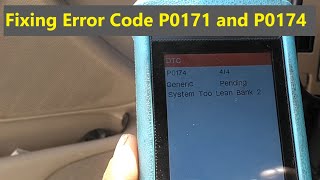
How to confirm: Visually inspect the entire air intake path from the air filter box to the throttle body for cracks. A professional smoke test is the most effective way to pinpoint the exact location of a leak. 🎬 See this walkthrough on fixing P0171 and P0174 lean codes A loud whistling noise that changes with engine RPM is a strong indicator.
Typical fix: Replace the cracked intake component. The intake resonator is a common culprit and can sometimes be repaired with high-temp epoxy like JB Weld as a temporary fix.
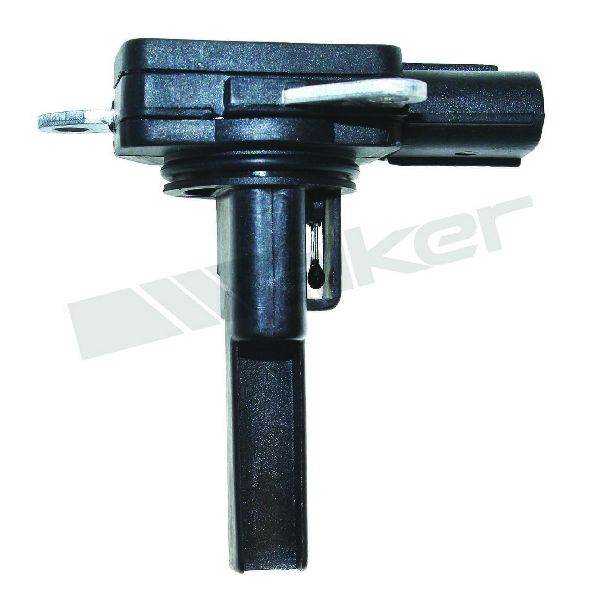
Est. part cost: $50-$180 - Dirty or Faulty Mass Airflow (MAF) Sensor 🔴 High Probability The MAF sensor's hot wire can get contaminated with dust and oil particles, causing it to under-report the amount of air entering the engine. The ECM then injects too little fuel, creating a lean condition. Using cheap, non-OEM aftermarket sensors is also a known cause of persistent lean codes.
How to confirm: This is often diagnosed by exclusion. Cleaning the MAF is a simple, low-cost first step. If cleaning resolves the issue, the sensor was dirty. If the code returns, the sensor may be faulty, especially if it is an aftermarket brand.
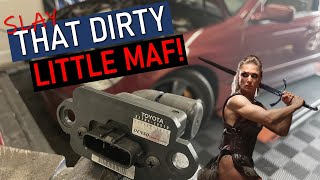
Typical fix: Remove the sensor and clean it carefully with a dedicated MAF sensor cleaner spray. Do not touch the internal wires. 🎬 Watch: Simple steps to clean your Lexus MAF sensor If cleaning doesn't work, replace the sensor with an OEM brand like Denso.
Est. part cost: $10 for cleaner, $70-$160 for a new OEM sensor - Faulty Air/Fuel Ratio Sensor (Bank 2, Sensor 1) 🟡 Medium Probability This sensor, also known as the upstream oxygen sensor, is located in the driver's side exhaust manifold. It can degrade over time and send inaccurate (false lean) signals to the ECM.
How to confirm: This should be considered after ruling out vacuum leaks and MAF sensor issues. A technician can use a scan tool to observe the sensor's live voltage readings to confirm if it is responding slowly or is stuck.
Typical fix: Replace the Bank 2, Sensor 1 Air/Fuel Ratio sensor.
Est. part cost: $120-$200 - Low Fuel Pressure ⚪ Low Probability TSB #LSB000523 specifically notes that P0174 can appear with P0087 (Fuel Rail / System Pressure – Too Low), indicating a potential issue with the fuel pump or its control system.
How to confirm: Check for code P0087. A technician must perform a fuel pressure test to compare the actual pressure against the manufacturer's specifications.
Typical fix: Diagnose and repair the fuel system, which may involve replacing the low-pressure fuel pump or filter.
Est. part cost: $200-$500
Rare But Worth Checking
- Leaking Intake Manifold Gasket: While less common than a cracked plastic intake part, a leak at the intake manifold gasket on the driver's side bank can cause a P0174. This is more likely on higher-mileage vehicles and is best confirmed with a smoke test.
- Clogged Fuel Injector on Bank 2: If one or more injectors on the driver's side are clogged, they won't deliver enough fuel, leading to a lean code. This is uncommon and often misdiagnosed.
- Improperly Installed Aftermarket Air Intake: Aftermarket 'cold air' intakes that are installed incorrectly, particularly those with breather ports that create a post-MAF vacuum leak, can be a direct cause of P0171 and P0174 codes. Reverting to the stock airbox often solves the issue.
- Leaking or Stuck-Open PCV Valve: A faulty Positive Crankcase Ventilation (PCV) valve can get stuck open, creating a constant vacuum leak that the ECM cannot compensate for, leading to lean codes.
- Exhaust Leak Before A/F Sensor: A crack or bad gasket in the exhaust manifold or downpipe before the primary A/F (oxygen) sensor can pull in outside air. This extra oxygen causes the sensor to read a false lean condition, triggering the P0174 code.
Diagnosis Steps
- Read all fault codes with an OBD-II scanner. Note if P0171 or P0087 are also present.
- Use the scanner to view live data. Check the Long Term Fuel Trims (LTFT) for Bank 1 and Bank 2. Values consistently above +20% indicate a significant lean condition that the ECU is trying to correct.
- Visually inspect the air intake hose and resonator chamber between the air filter box and the engine for any obvious cracks or loose connections. Listen for a whistling sound.
- Inspect all vacuum lines, including the PCV hose and its connections, for cracks and brittleness.
- Remove and clean the Mass Airflow (MAF) sensor using a dedicated MAF sensor cleaner. Allow it to dry completely before reinstalling.
- Reset the codes (by disconnecting the battery for 10 minutes or using a scanner) and drive the vehicle to see if the code returns. If it does not, the problem was likely a dirty MAF sensor.
- If the code returns, perform a smoke test to check for vacuum leaks. Pay close attention to the intake tube, resonator, PCV hoses, and the intake manifold gaskets.
- If no vacuum leaks are found, use a scan tool to monitor the live data from the Bank 2 Air/Fuel Ratio sensor. If it appears stuck or responds slowly compared to Bank 1, it is likely faulty.
- If fuel delivery is suspected (especially with code P0087), test the fuel pressure at the rail to ensure it meets specifications.
Parts You'll Likely Need
- Mass Airflow (MAF) Sensor Cleaner — This is the cheapest and easiest first step. A dirty MAF sensor is a very common cause of lean codes.
Trusted brands: CRC, Liqui Moly
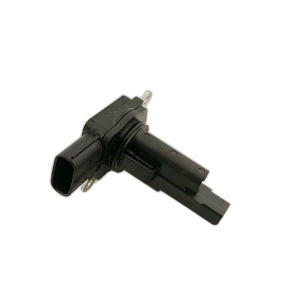
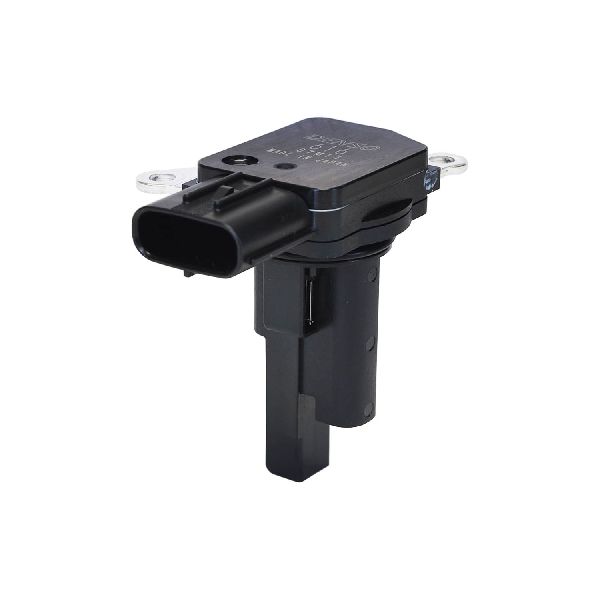
Aftermarket price range: $10-$15 - Mass Airflow (MAF) Sensor
(OEM #22204-31020)— If cleaning the sensor doesn't work, it may be faulty. It is highly recommended to use an OEM (Denso) part, as aftermarket sensors are known to cause issues.
Trusted brands: Denso (OEM Supplier), Lexus (OEM)
OEM price range: $150-$220
Aftermarket price range: $40-$90 - Engine Air Intake Resonator
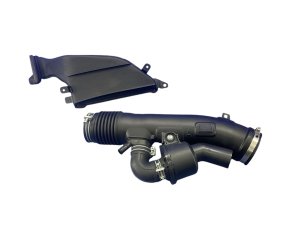
(OEM #17898-31010)— This plastic chamber is a known failure point. It can crack from heat and age, causing a significant vacuum leak often identified by a whistling sound. 🎬 Watch: How to diagnose and repair a cracked intake hose
Trusted brands: Lexus (OEM)
OEM price range: $110-$180 - Air/Fuel Ratio Sensor (Bank 2, Sensor 1)
(OEM #89467-30050)— This is the upstream oxygen sensor for the driver's side. It measures the air-fuel mixture and is a common failure point after vacuum leaks and MAF issues are ruled out.
Trusted brands: Denso (OEM supplier, part #234-9143)
OEM price range: $180-$250
Aftermarket price range: $120-$170
Related Codes That Often Appear With This One
- P0171 — System Too Lean (Bank 1). If both P0171 and P0174 are present, the cause is likely a component common to both engine banks, such as the MAF sensor or a vacuum leak near the throttle body or main intake tube.
- P0087 — Fuel Rail / System Pressure – Too Low. The presence of this code alongside P0174 strongly points to a fuel delivery issue, as highlighted in TSB LSB000523.
Technical Service Bulletins (TSBs) & Recalls
- LSB000523: Notes that vehicles may exhibit a hard start and/or MIL ON with P0171/P0174 and P0087, pointing to a fuel delivery issue.
Platform-Specific Known Issues
- A cracked plastic intake resonator is a known cause of P0174 on this platform, often accompanied by a distinct whistling noise under acceleration. Owners have reported this part cracking at the seams or developing holes.
- TSB LSB000523 indicates that a hard start condition accompanied by P0174 and/or P0171 could be caused by low fuel system pressure, pointing towards a fuel delivery problem.
- Using non-OEM Mass Airflow sensors has been reported by owners to cause persistent lean codes even after replacement. Sticking to the Denso brand is recommended for this part.
Mechanic-Grade Diagnostic Values
- Long Term Fuel Trim (LTFT) — expected: Close to 0%, ideally within +/- 10%. Failure: Consistently at or above +20% to +25% indicates the ECM is adding maximum fuel to compensate for a lean condition, triggering the code.
- Low-Pressure Fuel System at Idle (2GR-FSE) — expected: Approximately 38-44 PSI (262-304 kPa). Failure: Pressure significantly below this range indicates a weak low-pressure fuel pump or clogged filter. Pressure dropping significantly under load is also a failure indicator.
- High-Pressure Fuel System at Idle (2GR-FSE) — expected: 4.0 - 5.0 MPa (580 - 725 psi). Failure: Pressure outside this range points to issues with the high-pressure mechanical fuel pump or its sensor.
Scan Tool Commands That Help
- Techstream: Active Test: Control the Fuel Pump / Speed — This command allows a technician to directly operate the low-pressure fuel pump to verify its function and to perform a fuel pressure test without starting the engine. This is critical when diagnosing a potential fuel delivery issue as suggested by TSB LSB000523.
Wiring & Ground Locations
- MAF Sensor Connector — In the air intake duct, between the air filter box and the throttle body.. A damaged connector or corroded pins can cause incorrect readings from the MAF sensor, leading to lean codes. The 5 wires typically include power, ground, sensor signal, and intake air temperature.
- Engine Ground Points (e.g., A2) — Various points on the engine block and cylinder heads. For example, on a similar chassis, ground point 'A2' is located at the left rear corner of the engine compartment.. A poor engine ground can cause electrical noise and incorrect readings from critical sensors like the A/F ratio sensors and MAF sensor, potentially leading to false lean codes.
Real Owner Repair Stories
- ClubLexus user 'Kinggs350' (2013 GS 350, 159,000 miles) — Check engine light with codes P0171, P0174, and P1170. Sluggish performance. Long Term Fuel Trims were at +25%.
❌ Tried (didn't work) Performed a smoke test which found no leaks., Replaced gas cap with OEM part., Replaced spark plugs.
✅ What actually fixed it The owner had replaced the MAF sensor 9 months prior with a cheap part from AutoZone. After swapping the aftermarket MAF sensor with another one (presumably OEM or a known good brand), the check engine light went off and the issue was resolved. - ClubLexus user 'gofast13' (2008 IS250 (similar 2GR engine and PCV system)) — P0171 and P0174 codes, rotten egg smell, LTFT at +20%.
❌ Tried (didn't work) Fixed exhaust leaks., Replaced PCV valve., Searched for vacuum leaks but couldn't find any.
✅ What actually fixed it The vehicle had an aftermarket cold air intake with a small breather filter on the valve cover, venting the PCV fresh air inlet to the atmosphere. This was introducing unmetered air. The owner confirmed there was vacuum at the breather port. Installing a used factory air box and intake tube, which properly routes the PCV fresh air hose, resolved the lean codes and corrected the fuel trims. - ClubLexus user 'jhernandez30' (Unknown year Lexus (likely GS or IS with 2GR-FSE)) — P0171 and P0174 codes after replacing many parts.
❌ Tried (didn't work) Replaced intake manifold gaskets, vacuum hoses, PCV hoses., Cleaned injectors, intake, and throttle body., Had fuel pressure tested (was normal)., Dealer performed a smoke test and found no leaks.
✅ What actually fixed it After 8 months of fighting the codes, the owner discovered a leak at the seal for the ACIS (Acoustic Control Induction System) valve actuator on the side of the intake manifold. Pressing on the actuator mechanism caused the engine RPM to change, revealing the hidden vacuum leak that a smoke test missed.
"I Checked Everything" — The Actual Cause
- A user on ClubLexus fought P0171/P0174 for months. Multiple smoke tests (including one at a Lexus dealer) showed no leaks. The actual cause was a worn seal on the ACIS intake runner control valve actuator, located on the side of the plastic intake manifold. This type of leak is often missed because smoke tests are performed with the engine off and no vacuum applied to the actuator itself. The owner found it by physically pressing on the actuator linkage while the engine was running and noticing a change in idle.
When the Usual Fixes Don't Work
- While vacuum leaks and dirty MAF sensors are the most common culprits, several owner reports highlight the importance of using only OEM Denso MAF sensors. In one documented case for a 2013 GS 350, a smoke test was clean and other parts were checked, but the lean codes (P0171/P0174) persisted. The final fix was replacing a 9-month-old aftermarket MAF sensor, which had failed and was causing the issue.
Model Year Variations Within This Range
- 2013-2015: These models use the 2GR-FSE engine, which features D-4S dual (direct and port) injection.
- 2016-2017: These models use the updated 2GR-FKS engine. While still a 3.5L V6 with D-4S, it adds VVT-iW (Variable Valve Timing-intelligent Wide) on the intake cams, allowing it to run in a more fuel-efficient simulated Atkinson cycle under light load. This adds complexity to the valve timing and engine control systems.
Helpful Videos
Used OEM Parts in Stock


New Aftermarket Parts Available


The information in this article is provided for general reference and educational purposes only. Vehicle specifications, procedures, and part compatibility can vary by production date, trim level, and region. Always consult your vehicle's factory service manual and verify part numbers before purchasing or performing repairs. Safety-critical components such as airbags, seat belts, and braking systems should be installed by a qualified professional.
- Lexus GS 350:
- 🎬 Helpful Videos
- 🛍️ Shop This Part
- What's Unique About the 2013-2017 Lexus GS 350
- Diagnostic Flowchart
- Symptoms You May Notice
- Most Likely Causes
- Rare But Worth Checking
- Diagnosis Steps
- Parts You'll Likely Need
- Related Codes That Often Appear With This One
- Technical Service Bulletins (TSBs) & Recalls
- Platform-Specific Known Issues
- Mechanic-Grade Diagnostic Values
- Scan Tool Commands That Help
- Wiring & Ground Locations
- Real Owner Repair Stories
- "I Checked Everything" — The Actual Cause
- When the Usual Fixes Don't Work
- Model Year Variations Within This Range
- 🎟️ Get 5% Off