

P0174 on 2002-2005 Land Rover Freelander: Lean Bank 2 Causes and Fixes
P0174 on a Freelander KV6 almost always points to a vacuum leak, most commonly from failed intake manifold plenum gaskets (Part No. LKJ100992L). A smoke test is the best diagnostic step before replacing any parts like O2 sensors. Also check for brittle PCV hoses and ensure the oil cap/dipstick are sealed.
- Code P0174 on a 2002-2005 Freelander means the rear cylinder bank (Bank 2) is running too lean.
- The most likely cause is a vacuum leak from the intake manifold gaskets, a known weak point on the 2.5L KV6 engine.
- Before replacing any parts, perform a smoke test to accurately diagnose the source of any vacuum leaks.
- Do not immediately replace the O2 sensor; it is often just reporting the symptom (a lean condition) caused by a vacuum leak.
- If your Freelander is a North American model, cleaning the MAF sensor is a worthwhile and easy diagnostic step.
What's Unique About the 2002-2005 Land Rover FREELANDER
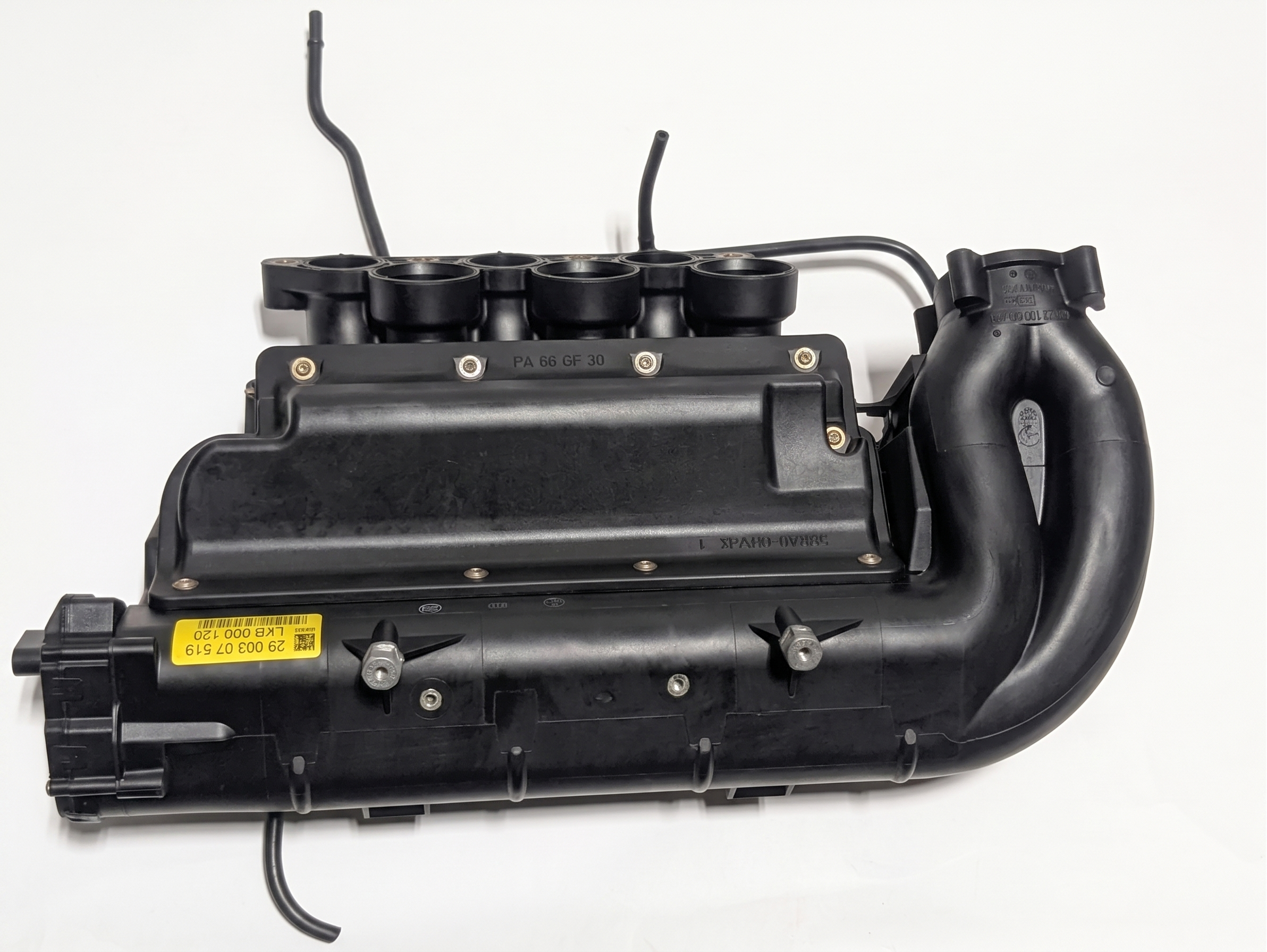
The 2.5L KV6 engine in the Freelander has a notorious weak point: its complex plastic intake manifold system. This system uses several gaskets to seal the plenums to the engine, and they are very prone to drying out, cracking, and causing vacuum leaks. These leaks are the most frequent cause of P0174 on this specific vehicle, often leading to misdiagnosis where owners replace expensive sensors first. This issue is also common on its platform mates, the Rover 75 and MG ZT, which use the same engine.
🎬 See this detailed maintenance guide for the KV6 engine platform.Diagnostic Flowchart
Tap your situation to follow the diagnostic path that matches what you're seeing on this vehicle.
Symptoms You May Notice
- Check Engine Light is on
- Engine hesitation or stumbling during acceleration.
- Rough or unstable idle
- Engine may stall, especially when warm or at a stop.
- Reduced fuel economy
- Loss of power.
- Replacing the O2 sensor before thoroughly checking for vacuum leaks. Vacuum leaks are far more common on the KV6 engine and will cause the O2 sensor to report a lean condition, even if the sensor itself is working perfectly.
Most Likely Causes
- Leaking Intake Manifold Gaskets (Plenum Gaskets) 🔴 High Probability The KV6 engine's intake manifold design uses multiple green rubber gaskets that are known to degrade and fail over time, creating vacuum leaks. This is the most common cause of P0174.
How to confirm: Perform a smoke test. Introduce smoke into the intake system via a vacuum hose and look for smoke escaping from the intake manifold area where it meets the cylinder heads.
Typical fix: Replace all upper and lower intake manifold gaskets. The OEM part number is LKJ100992L, and a full set of six is required. This is a labor-intensive job but is the definitive fix. No additional sealant is recommended on the new gaskets. Manifold bolts should be torqued to 10 Nm for M6 bolts and 15 Nm for M7 bolts/nuts.
Est. part cost: $50-$100 - Cracked or Disconnected Vacuum Hoses 🟡 Medium Probability The PCV (Positive Crankcase Ventilation) hoses and other small vacuum lines on the KV6 become brittle with age and heat, leading to cracks and leaks. The small-diameter hoses connecting to the intake plenums are particularly suspect.
How to confirm: Visually inspect all vacuum hoses connected to the intake manifold for cracks, splits, or loose connections. A smoke test will also definitively reveal these leaks.
Typical fix: Replace the damaged hose(s).
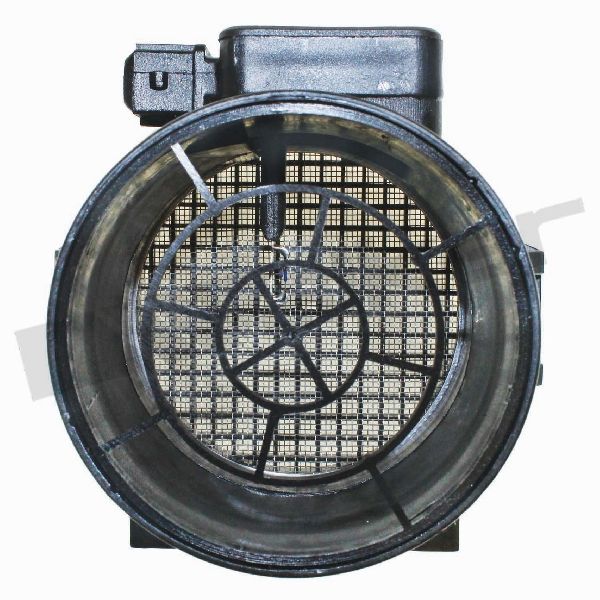
Est. part cost: $10-$50 - Faulty Mass Airflow (MAF) Sensor 🟡 Medium Probability North American Specification (NAS) Freelanders with the KV6 use a Siemens MS43 ECM which utilizes a MAF sensor. If it becomes dirty or fails, it can under-report the amount of air entering the engine, causing the computer to command too little fuel. Note: European (EU) spec models may not have a MAF sensor.
How to confirm: First, try cleaning the sensor with a dedicated MAF sensor cleaner. If the code returns, monitor the sensor's readings with a scan tool or swap with a known good sensor. A faulty MAF can cause lean codes without setting a specific MAF code.
Typical fix: Clean or replace the MAF sensor. The part number MHK100800 is often cited but is primarily for Land Rover V8s; confirm the correct part for your V6 with your VIN before ordering.
Est. part cost: $70-$150 - Failed Upstream Oxygen (O2) Sensor ⚪ Low Probability A failing O2 sensor can send an incorrect 'lean' signal to the computer, but it's less common than vacuum leaks on this engine and should not be replaced without confirming the leak-free integrity of the intake system first.
How to confirm: Use a scan tool to observe the voltage of the Bank 2, Sensor 1 O2 sensor. It should fluctuate rapidly. A stuck or slow-to-respond sensor is faulty. Bank 2 Sensor 1 is located on the exhaust manifold of the cylinder bank closer to the firewall, before the catalytic converter.
Typical fix: Replace the Bank 2, Sensor 1 O2 sensor.
Est. part cost: $60-$120
Rare But Worth Checking
- Low Fuel Pressure: A weak fuel pump or clogged fuel filter can restrict fuel flow, causing lean conditions. The NHTSA TSB SWA09013 specifically links P0174 to potential fuel system issues causing stumbling and stalling. Check fuel pressure at the fuel rail test port; it should be approximately 4.5 Bar (65 PSI).
- Clogged Fuel Injectors: If one or more injectors on Bank 2 are dirty or clogged, they won't deliver enough fuel to their respective cylinders, contributing to a lean condition on that bank.
- Leaking Oil Filler Cap or Dipstick O-ring: The crankcase is part of the engine's sealed air system via the PCV. A missing or degraded O-ring on the oil dipstick or a poorly sealed oil filler cap can introduce unmetered air, causing a vacuum leak that the system cannot account for, leading to lean codes.
Diagnosis Steps
- Check for other stored trouble codes to get more context.
- Inspect the simple things first: ensure the oil filler cap is tight and the dipstick is fully seated with a good O-ring.
- Visually inspect the intake air tube between the air filter box and the throttle body for any cracks or loose clamps.
- Inspect all accessible vacuum and PCV hoses for cracks, brittleness, or disconnection. Pay special attention to the small hoses connected to the intake manifold plenums, as highlighted in forum guides.
- The most effective step: 🎬 Watch: How to perform a smoke test for vacuum leaks. perform a smoke test to find vacuum leaks. Introduce smoke into a vacuum line and watch for smoke escaping from the intake manifold gaskets, throttle body gasket, PCV hoses, or even the oil dipstick tube.
- If you have a North American model, locate and clean the Mass Airflow (MAF) sensor using a dedicated MAF sensor cleaner. Do not touch the sensor wires. Let it dry completely before reinstalling.
- Using a scan tool, monitor short-term and long-term fuel trims at idle and at 2500 RPM. High positive numbers (e.g., >15%) confirm the computer is adding fuel to correct a lean condition.
- Test fuel pressure at the fuel rail. It should be approximately 4.5 Bar (65 PSI).
- If all else fails, test the Bank 2, Sensor 1 (upstream) O2 sensor by watching its voltage on a scan tool. A healthy sensor will show rapidly fluctuating voltage. A slow or steady voltage indicates a problem.
Parts You'll Likely Need
- Intake Manifold Gasket Set
(OEM #LKJ100992L)— This is the most common failure point on the 2.5L KV6 engine leading to vacuum leaks that cause code P0174. A set of 6 is required for the job.
Trusted brands: Genuine Land Rover, Victor Reinz, Mahle
OEM price range: $80-$120
Aftermarket price range: $40-$70 - Mass Airflow (MAF) Sensor
(OEM #MHK100800)— A dirty or failed MAF sensor is a common cause for lean codes on North American models by providing incorrect airflow data to the ECU. Note: This part number is more common on V8 models; verify with VIN.
Trusted brands: Bosch, Delphi, Standard Motor Products
OEM price range: $200-$300
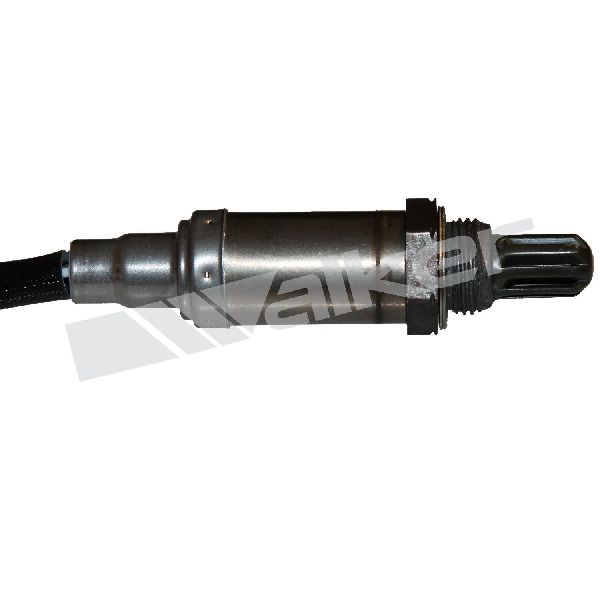
Aftermarket price range: $70-$150 - Upstream Oxygen Sensor (Bank 2, Sensor 1) — While often replaced unnecessarily, a genuinely failed O2 sensor can cause this code. Bank 2 is the rear bank (near firewall).
Trusted brands: Denso, Bosch, NTK
OEM price range: $150-$200
Aftermarket price range: $60-$120 - PCV and Vacuum Hoses — The various vacuum and crankcase ventilation hoses become brittle and crack over time, creating hard-to-find vacuum leaks.
Trusted brands: Genuine Land Rover, Aftermarket kits
OEM price range: $30-$80
Aftermarket price range: $15-$40
Related Codes That Often Appear With This One
- P0171 — System Too Lean (Bank 1). If both P0171 and P0174 are present, it strongly suggests a problem that affects both cylinder banks, such as a faulty MAF sensor, a major vacuum leak (e.g., intake gaskets, PCV system), or low fuel pressure.
- P0300, P0301-P0306 — Random or specific cylinder misfire codes. A lean air-fuel mixture can fail to ignite properly, leading to misfires. The TSB SWA09013 explicitly lists these codes appearing with P0174.
- P1471, P1472 — Variable Intake System (VIS) motor codes. Problems with the intake manifold, such as internal broken butterfly valves, can sometimes manifest with both lean codes and VIS-specific codes.
Technical Service Bulletins (TSBs) & Recalls
- SWA09013: Mentions that engine stumble, hesitation, or stalling can be accompanied by DTC P0174, along with P0171 and various misfire codes (P0301-P0306, P0316).
Platform-Specific Known Issues
- The plastic Variable Intake System (VIS) motors on the side of the intake manifold can be a source of vacuum leaks or performance issues. In some cases, the internal plastic butterfly valves within the manifold itself can break, causing rattles, VIS-related codes, and potential lean conditions.
Mechanic-Grade Diagnostic Values
- Fuel Injector Resistance — expected: 14.5 ± 0.7 ohms at 20°C (68°F). Failure: A reading significantly different from the others, or outside the specified range.
- Long Term Fuel Trim (LTFT) — expected: Close to 1-2%. Failure: When the value exceeds 15% to 28%, the ECM determines the mixture is too lean and sets the code.
- Fuel Pressure — expected: 55 PSI (approximately 3.8 Bar). Failure: Significantly lower pressure indicates a weak pump or clogged filter.
Scan Tool Commands That Help
- TestBook/T4: Read Fault Codes & Live Data — This is the dealer-level tool used to interrogate the Siemens MS43 ECM for specific fault data and to monitor live sensor inputs, which is crucial for diagnosing lean conditions beyond generic OBD-II scanners.
- TestBook/T4: Reset Power Train Adaptations — After replacing components like intake gaskets or PCV valves, resetting the fuel trim adaptations is necessary to force the ECM to relearn the new baseline and confirm the fix.
Wiring & Ground Locations
- Engine Ground Strap — Goes between the chassis rail under the battery tray and the gearbox.. A poor engine ground can cause erratic behavior from sensors like the O2 sensors and MAF, leading to incorrect readings and phantom lean codes. Ensuring this connection is clean and tight is a critical, often overlooked, step.
- Battery Negative to Body Ground — Connects the battery negative terminal to the body, near the environmental protection housing by the inner fender.. This is the primary ground for the vehicle's electrical system. Corrosion or a loose connection here can affect the ECM and all related sensors, causing a wide range of electrical issues including fuel trim problems.
Real Owner Repair Stories
- landroverforums.com user (Land Rover (model not specified, but V8 with similar PCV design)) — Rough idle and persistent P0171 and P0174 codes for two years.
❌ Tried (didn't work) Replacing a broken breather tube.
✅ What actually fixed it The user built a DIY smoke machine which revealed leaks from the PCV valve diaphragms located in the valve cover. Replacing the two PCV diaphragm kits (which included new caps, springs, and diaphragms) and resetting adaptations resolved the rough idle and cleared the codes. - Reddit user r/LS430 (2006 Lexus LS430 (different vehicle, but same codes and a relevant vacuum leak cause)) — Check VSC light, P0171/P0174 codes, and RPMs pulsating with brake application.
❌ Tried (didn't work) Replacing the brake booster (though it was failing separately)., A smoke test that showed no visible leaks in the vacuum lines.
✅ What actually fixed it The root cause was found to be rotted lower intake manifold gaskets and vacuum lines located underneath the intake manifold, which were not visible during a standard smoke test. Replacing these gaskets and lines fixed the vacuum leak and codes.
"I Checked Everything" — The Actual Cause
- In some cases, a smoke test may not reveal a leak if it is internal. The PCV system on some Land Rover engines uses diaphragms inside the valve covers. When these tear, they create an internal vacuum leak where unmetered air is pulled from the intake into the crankcase. This will not show up as external smoke but will cause lean codes.
- A leak in the brake booster or its vacuum line can cause lean codes. Since the booster is a large sealed component, a smoke test might not easily reveal a small diaphragm leak within it, yet it can be a significant source of unmetered air.
OEM Part Supersession History
ERR5595→MHK100800— Change in engine management system from GEMS to Bosch Motronic.
Heads up: The MAF sensors for GEMS and Bosch systems are not interchangeable. Using the wrong sensor will cause significant performance issues. While MHK100800 is often cited for the Freelander V6, it's critical to verify the correct part number by VIN as it was primarily a V8 part.
Model Year Variations Within This Range
- 2004-2005: The 2004 model year received a facelift with new front styling and a revised interior, including modified instruments and controls. While the core 2.5L KV6 engine remained the same, there could be minor variations in wiring or sensor locations compared to the 2002-2003 models.
- All (Region Dependent): North American Specification (NAS) models use the Siemens MS43 engine management system which includes a MAF sensor. Some European (EU) or other market models may use a different engine management setup that does not include a MAF sensor, relying on a MAP sensor instead. This is a critical diagnostic difference.
Helpful Videos
Used OEM Parts in Stock


New Aftermarket Parts Available


The information in this article is provided for general reference and educational purposes only. Vehicle specifications, procedures, and part compatibility can vary by production date, trim level, and region. Always consult your vehicle's factory service manual and verify part numbers before purchasing or performing repairs. Safety-critical components such as airbags, seat belts, and braking systems should be installed by a qualified professional.
- Land Rover FREELANDER:
- 🎬 Helpful Videos
- 🛍️ Shop This Part
- What's Unique About the 2002-2005 Land Rover FREELANDER
- Diagnostic Flowchart
- Symptoms You May Notice
- Most Likely Causes
- Rare But Worth Checking
- Diagnosis Steps
- Parts You'll Likely Need
- Related Codes That Often Appear With This One
- Technical Service Bulletins (TSBs) & Recalls
- Platform-Specific Known Issues
- Mechanic-Grade Diagnostic Values
- Scan Tool Commands That Help
- Wiring & Ground Locations
- Real Owner Repair Stories
- "I Checked Everything" — The Actual Cause
- OEM Part Supersession History
- Model Year Variations Within This Range
- 🎟️ Get 5% Off