

P0174 on 2016-2019 Infiniti QX60: Causes of 'System Too Lean' and Fixes
On a 2016-2019 Infiniti QX60, the P0174 code is most often caused by a vacuum leak from a torn flexible intake air duct or a cracked PCV/breather hose. A smoke test is the most definitive way to confirm the leak. Cleaning the Mass Airflow (MAF) sensor is a common and easy second step, but the root cause is frequently unmetered air entering the engine.
- P0174 on your QX60 almost always points to unmetered air entering the engine after the MAF sensor.
- Before buying any parts, thoroughly inspect the large rubber air intake hose for tears and all smaller vacuum hoses for cracks.
- A can of MAF sensor cleaner is a cheap and wise investment as a first-line attempt to fix the issue.
- If you can't find the leak visually, a smoke test performed by you or a shop is the fastest way to a definitive diagnosis.
- Do not immediately replace the oxygen (A/F) sensor; it is usually just doing its job of reporting the leak.
What's Unique About the 2016-2019 Infiniti QX60
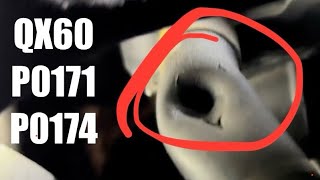
The VQ35DE engine used in the QX60 is known for its reliability, but its intake system's plastic and rubber components are susceptible to heat-induced degradation. The most frequently reported cause for P0174 on this platform and its Nissan Pathfinder sibling is a simple vacuum leak from a cracked PCV hose or a torn flexible air intake duct between the air filter box and the throttle body. A YouTube video demonstrates a smoke test on a QX60, clearly showing a leak from a small, cracked "hose blowby" as the culprit for both P0171 and P0174 codes. 🎬 Watch: This video shows the common cracked hose fix. Infiniti has also issued Technical Service Bulletins (TSBs) that revise the diagnostic procedure for this specific code, indicating it's a known issue that requires a specific diagnostic approach, prioritizing A/F sensor function tests under certain conditions.
Diagnostic Flowchart
Tap your situation to follow the diagnostic path that matches what you're seeing on this vehicle.
Symptoms You May Notice
- Check Engine Light is on
- Rough or unstable idle
- Hesitation or stumbling during acceleration
- Reduced engine power
- Worse than normal fuel economy
- A whistling or sucking sound from the engine bay at idle
- Replacing the oxygen (A/F) sensor without first checking for vacuum leaks. Vacuum leaks are more common and cheaper to fix. The O2 sensor is often just accurately reporting the lean condition caused by the leak. A mechanic on a forum replaced an A/F sensor for P0174 only to have the code return, later finding the issue was elsewhere.
Most Likely Causes
- Vacuum Leak (Cracked Hoses or Intake Duct) 🔴 High Probability The rubber and plastic components in the engine bay are exposed to constant heat cycles, causing them to become brittle and crack. The flexible intake duct and smaller PCV/breather hoses are extremely common failure points, as documented in numerous owner forums and repair videos.
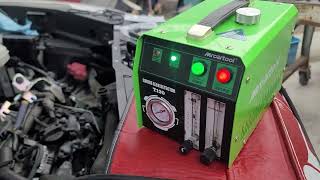
How to confirm: Perform a visual inspection of all hoses connected to the intake manifold, especially the large accordion-style intake duct for tears in its folds. A smoke test is the most effective method to find small, hidden leaks. A YouTube video specifically shows a smoke machine identifying a leak in a small PCV hose on a QX60 with P0171/P0174 codes.
Typical fix: Replace the cracked hose or torn intake duct. This is often a straightforward DIY repair.
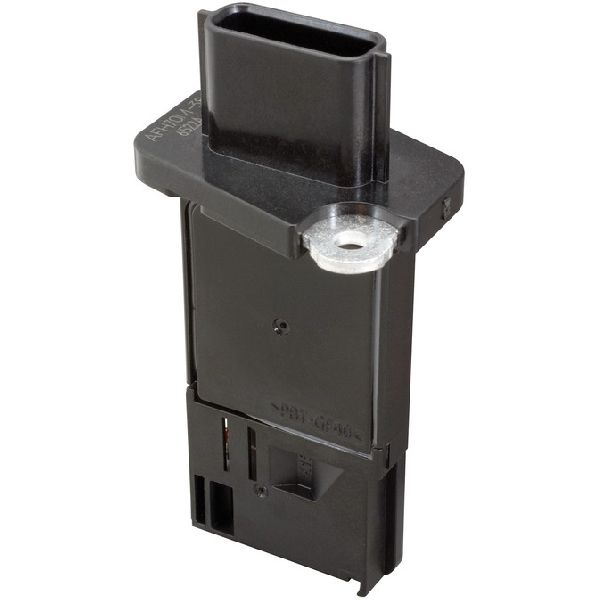
Est. part cost: $20 - $150 - Dirty or Faulty Mass Airflow (MAF) Sensor 🟡 Medium Probability The MAF sensor measures the volume of air entering the engine. Oil from aftermarket air filters or fine dust can contaminate the sensor's delicate wire, causing it to send inaccurate (low) readings to the computer. Ill-fitting aftermarket engine air filters have also been reported to cause this issue on the platform mate Nissan Pathfinder by allowing unfiltered air to bypass the filter and contaminate the sensor.
How to confirm: Remove the sensor and inspect it for contamination. Cleaning it with a dedicated MAF sensor cleaner is a good first step. If the problem persists, the sensor's output can be monitored with a scan tool; at idle, it should read around 2-6 gm/sec. A Reddit user noted their issue started after replacing spark plugs and coils, eventually tracing it back to the MAF and an EVAP valve.
Typical fix: Clean the MAF sensor with a specialized cleaner. If cleaning doesn't resolve the issue, replace the sensor with an OEM or high-quality aftermarket unit. The OEM part is often made by Hitachi.
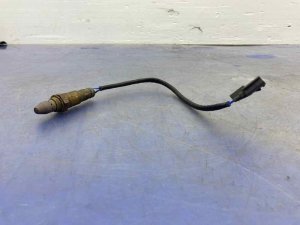
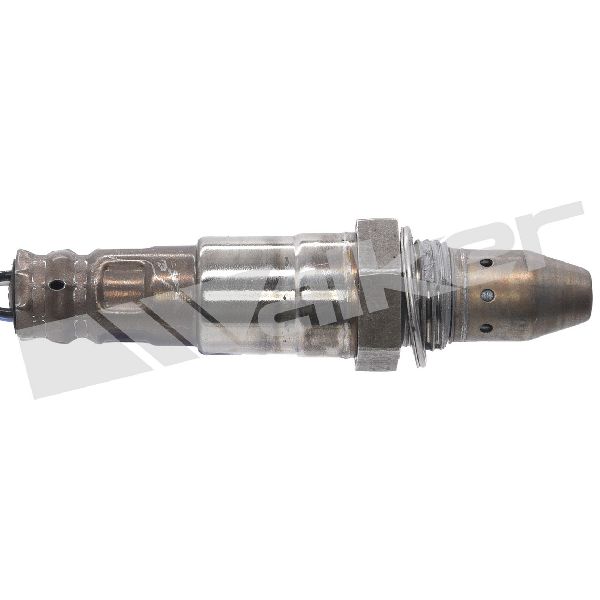
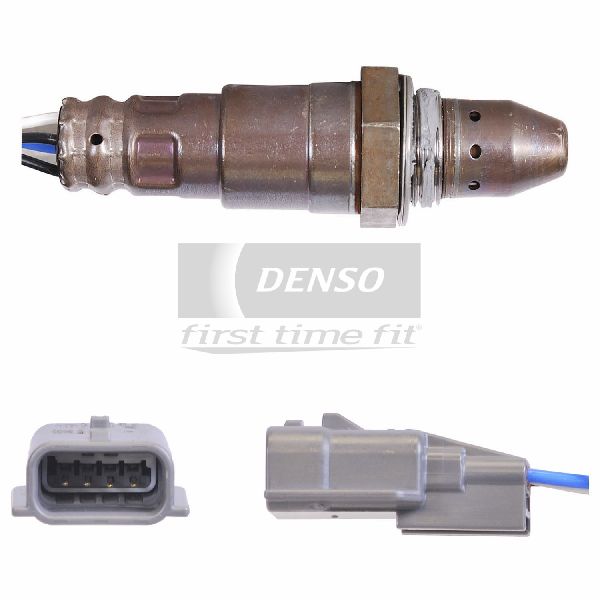
Est. part cost: $10 (cleaner) - $250 (new sensor) - Faulty Air/Fuel Ratio Sensor (Front O2 Sensor) ⚪ Low Probability O2 sensors are wear items and have a finite lifespan. They can become lazy or fail, sending incorrect information about the oxygen content in the exhaust to the ECM. However, this is often misdiagnosed when the real problem is a vacuum leak.
How to confirm: This is best diagnosed with a scan tool that can graph the sensor's voltage activity. A healthy sensor will switch rapidly, while a failing one may be slow or stuck. Infiniti TSB ITB19-007 outlines a specific procedure to test A/F sensor function by checking for related post-catalyst codes (P2097/P2099) after a specific drive cycle.
Typical fix: Replace the Bank 2 Air/Fuel Ratio Sensor (Sensor 1). This is the sensor located on the front exhaust manifold before the catalytic converter.
Est. part cost: $80 - $250 - Low Fuel Pressure ⚪ Low Probability A weak fuel pump or a clogged fuel filter can prevent the engine from receiving the amount of fuel commanded by the ECM, leading to a lean condition across both banks.
How to confirm: Connect a fuel pressure gauge to the fuel system and verify the pressure is within the manufacturer's specifications. A Reddit user on an Infiniti forum mentioned the spec is around 55+ psi. High positive fuel trims at higher RPMs (under load) can also point towards a fuel delivery issue.
Typical fix: Replace the failing fuel pump or clogged fuel filter.
Est. part cost: $200 - $600+
Rare But Worth Checking
- Leaking Intake Manifold Gaskets: While less common than hoses, the gaskets between the upper and lower intake plenums can fail, creating a vacuum leak that is difficult to detect without a smoke test. A forum user on a Nissan Pathfinder with the same engine found a small intake manifold leak via smoke test after replacing other parts.
- Clogged Fuel Injector on Bank 2: An injector on one of the Bank 2 cylinders may become restricted, preventing enough fuel from entering that cylinder. This is less likely to be the cause if the lean condition appears consistent across the entire bank, but can be a factor.
- Exhaust Leak: A crack or leak in the exhaust manifold or piping before the Bank 2 A/F sensor can draw in outside air, causing the sensor to incorrectly read a lean condition.
Diagnosis Steps
- Read Codes: Use an OBD-II scanner to confirm P0174 is present and check for any other codes, especially P0171.
- Check Freeze Frame & Fuel Trims: Observe the Short-Term (STFT) and Long-Term (LTFT) fuel trim values. High positive numbers (e.g., LTFT > +15%) on Bank 2 confirm the lean condition. Note if the trims are high at idle (suggesting a vacuum leak) or under load (suggesting a fuel delivery issue).
- Visual Inspection: Carefully inspect the accordion-style air intake duct (boot) between the air filter and throttle body for tears or cracks, especially in the folds. Check all visible vacuum hoses, like the PCV hoses, for cracks, disconnection, or brittleness.
- Smoke Test: This is the most reliable way to find hidden vacuum leaks. Introduce smoke into the intake system post-MAF sensor and look for smoke escaping from gaskets, hoses, or the intake manifold itself. This is a common professional step that DIYers can also perform with the right tool. 🎬 Watch: A mechanic explains how to diagnose lean codes.
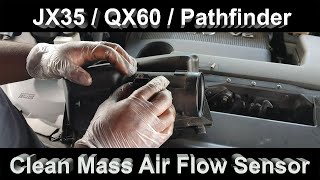
- Clean MAF Sensor: Disconnect the battery, remove the MAF sensor, and spray it thoroughly with a dedicated MAF sensor cleaner. 🎬 See this walkthrough on how to clean your MAF sensor. Let it dry completely before reinstalling. Do not touch the sensor wires.
- Follow TSB ITB19-007 (for 2017-2019 models): If no vacuum leaks are found, this TSB provides a specific procedure. It involves clearing self-learning values, performing a specific drive cycle, and then checking if post-catalyst codes (P2097/P2099) have appeared. If they have, the A/F sensor is the likely culprit. If not, the TSB advises continuing diagnosis for P0174 *excluding* the A/F sensor.
- Test Fuel Pressure: If no vacuum leaks are found and the TSB procedure doesn't point to the A/F sensor, test the fuel pressure to rule out a weak fuel pump or clogged filter. The pressure should be around 51-55 psi.
- Test A/F Sensor: If all else fails, use a scan tool to monitor the Bank 2, Sensor 1 (A/F sensor) voltage to determine if it is responding correctly. A lazy or biased sensor could be the cause, but it should be the last part replaced after ruling out more common issues.
Parts You'll Likely Need
- Intake Air Duct / Hose
(OEM #16576-3JA0A (for 2013-2016 models))— This flexible rubber part is a very common failure point, developing tears in its accordion folds that create a significant, unmetered air leak.
Trusted brands: Infiniti OE, Dorman (e.g., 696-724), Gates
OEM price range: $90-$150
Aftermarket price range: $40-$80 - PCV / Breather Hose
(OEM #11826-JA10B (Blow By Gas Hose))— These smaller rubber hoses become brittle from engine heat and can easily crack, causing hard-to-find vacuum leaks. A YouTube repair video for P0171/P0174 on a QX60 identified a cracked 'hose blowby' as the specific cause.
Trusted brands: Infiniti OE, Gates
OEM price range: $15-$40
Aftermarket price range: $10-$30 - Mass Airflow (MAF) Sensor
(OEM #22680-5RB0A (replaces 22680-BV80B))— If cleaning the original sensor doesn't work, replacement may be necessary. Contamination from dust or oil is the primary reason for failure.
Trusted brands: Infiniti OE (Hitachi), Denso, Bosch
OEM price range: $220-$350
Aftermarket price range: $70-$150 - Air/Fuel Ratio Sensor (Bank 2, Sensor 1)
(OEM #22693-9HP0A)— This sensor is replaced when it is confirmed to be faulty, often after following the diagnostic procedure in TSB ITB19-007. It is less commonly the cause than vacuum leaks.
Trusted brands: Infiniti OE (Denso), Denso, NTK
OEM price range: $230-$360
Aftermarket price range: $90-$180 - Mass Airflow (MAF) Sensor Cleaner — Often, the MAF sensor is just dirty, not broken. Cleaning it is a cheap and effective diagnostic and repair step that should be performed before considering replacement.
Trusted brands: CRC, Liqui Moly, WD-40 Specialist
Aftermarket price range: $10-$15
Related Codes That Often Appear With This One
- P0171 — P0171 is the same 'System Too Lean' code but for Bank 1. When both P0171 and P0174 appear together, it strongly suggests a problem that affects the entire engine, such as a faulty MAF sensor, low fuel pressure, or a large vacuum leak near the throttle body, like a torn intake duct.
- P2097 / P2099 — These codes relate to 'Post Catalyst Fuel Trim System Too Rich'. TSB ITB19-010 mentions them in conjunction with P0171/P0174, indicating a complex diagnostic relationship. TSB ITB19-007 specifically uses the presence (or absence) of these codes after a drive cycle to determine if the A/F sensor is faulty or if the diagnosis should continue to other areas like vacuum leaks.
- P0300 — A 'Random Misfire' code can be triggered by a severe lean condition, as the air/fuel mixture may fail to ignite properly in one or more cylinders. A forum user with a modified Infiniti reported P0300 alongside P0171 and P0174.
Technical Service Bulletins (TSBs) & Recalls
- ITB19-007: INFINITI; P0171 AND P0174 SERVICE INFORMATION
- ITB19-010: 2016-2018 QX60; MIL ON WITH DTC P2097, P2099, P0171 AND/OR P0174
Platform-Specific Known Issues
- Infiniti issued Technical Service Bulletin ITB19-007, which revised the official diagnostic procedure for P0171 and P0174 codes on 2017-2019 QX60 models. It instructs technicians to first perform a specific drive cycle to test the A/F sensor's function. If post-catalyst codes (like P2097) appear, the A/F sensor should be replaced. If not, the diagnosis should continue, ruling out the A/F sensor.
- TSB ITB19-010 applies to 2016-2018 models with the VQ35DE engine, linking P0174 with other codes like P2097 and P2099, suggesting a known pattern of related faults that the manufacturer has a specific diagnostic path for.
- The flexible intake air duct (boot) is a particularly high-failure item on this platform and its Nissan Pathfinder twin, frequently tearing in the accordion folds and causing lean codes for both banks.
Mechanic-Grade Diagnostic Values
- Fuel Pressure — expected: 51-55+ psi. Failure: Pressure below 51 psi at idle or under load suggests a weak fuel pump or clogged filter.
- Mass Airflow (MAF) Sensor Reading at Idle — expected: 2 to 6 gm/sec at idle. Failure: Readings outside this range, or readings that do not increase with RPM, suggest a faulty sensor.
- A/F Ratio Sensor 1 Reference Voltage — expected: ~2.2 V (Key On, Engine Off). Failure: No voltage or significantly different voltage indicates a wiring or ECM issue.
- A/F Ratio Sensor 1 Signal Voltage — expected: ~1.8 V at idle. Failure: Voltage that is stuck or does not respond to changes in air/fuel mixture.
- Battery Voltage for Diagnostics — expected: More than 12.9 V (at idle). Failure: Low voltage can cause diagnostic procedures like the Idle Air Volume Learn to fail.
Scan Tool Commands That Help
- Infiniti CONSULT / Advanced Scan Tool: Idle Air Volume Learning — Must be performed after cleaning or replacing the throttle body or disconnecting the battery to prevent high or unstable idle. This resets the ECM's learned value for the throttle plate's closed position.
- Infiniti CONSULT / Advanced Scan Tool: A/F Sensor Function Test (per TSB ITB19-007) — Used to definitively test the Air/Fuel sensor after clearing self-learning values and performing a specific drive cycle. The appearance of P2097/P2099 codes after the test confirms a faulty A/F sensor.
- Infiniti CONSULT / Advanced Scan Tool: Clear Mixture Ratio Self-Learning — This should be done after any repair that affects the air/fuel ratio (e.g., fixing a vacuum leak, replacing a sensor) to force the ECM to relearn fuel trims from a clean slate.
Wiring & Ground Locations
- E15 / E9 — Located at the left rear of the engine compartment.. These are primary ground distribution points in the engine bay. A poor connection at these locations can affect multiple sensors and the ECM, potentially causing erroneous sensor readings.
- ECM Ground — The ECM itself, located on the left side of the engine compartment, has a critical ground connection. The ground for the A/F sensor shields also ties into this circuit.. A bad ground for the ECM or the shielded wiring for the A/F sensors can introduce electrical noise or voltage offsets, leading to incorrect sensor readings and false lean codes.
Real Owner Repair Stories
- YouTube video by 'Repairs and Reviews' (2015 Infiniti QX60 3.5L) — P0171 and P0174 codes with very high fuel trims (almost +30%).
❌ Tried (didn't work) Revving the engine did not significantly improve the fuel trims, which initially cast doubt on a vacuum leak.
✅ What actually fixed it A small, ripped vacuum hose in the back of the engine was the culprit. The owner replaced the small hose with a more durable 3/16" fuel line, which resolved both lean codes. - Reddit user 'Specific-Tower8990' (2017 Infiniti QX60) — P0171 and P0174, misfires, and lean conditions that started after replacing spark plugs and coils.
❌ Tried (didn't work) Smoke test was negative. Cleaning and then replacing the MAF sensor did not help. Replacing most vacuum hoses, throttle body gasket, and intake plenum gasket did not fully resolve the issue.
✅ What actually fixed it The user found the EVAP Purge Valve was not closing all the way, causing a hidden vacuum leak. Replacing the EVAP purge valve caused the Long Term Fuel Trims to return to 0% at idle, indicating the primary leak was fixed. - Reddit mechanic 'u/throwawaymycareer' (2015 Infiniti QX60) — Initially P0174, later P0171 and P0174 appeared together.
❌ Tried (didn't work) Found and fixed a large tear in the intake air duct via smoke test. The code returned. Replaced the Bank 2 A/F sensor. The code still returned. Fuel trims were near zero on a test drive but shot up to +25% at idle after a restart.
✅ What actually fixed it The story was unresolved but highlights a critical point: even after fixing a confirmed vacuum leak and replacing the primary sensor, the problem persisted, pointing to a more complex underlying issue or a second, less obvious leak that was missed. This demonstrates the difficulty of this diagnosis.
"I Checked Everything" — The Actual Cause
- A Reddit user reported that their smoke test came back negative for leaks, but they continued to have P0171/P0174 codes. The actual cause was a faulty EVAP Purge Valve that was stuck partially open, creating a vacuum leak that the smoke test did not reveal. Replacing the valve corrected the fuel trims at idle.
Model Year Variations Within This Range
- 2017-2019: For these model years, Infiniti issued TSB ITB19-007, which revised the official diagnostic procedure for P0171/P0174. It requires a specific A/F sensor function test before other diagnostic paths are explored, suggesting a known issue with either the sensors or their diagnosis.
- 2017: The 3.5L V6 engine received a power increase of 30 horsepower starting in the 2017 model year, from 265 to 295 hp. While the fundamental design is the same VQ35DE, this may involve slight changes to engine tuning and components, though the common causes for P0174 remain consistent.
Helpful Videos
Used OEM Parts in Stock


New Aftermarket Parts Available


The information in this article is provided for general reference and educational purposes only. Vehicle specifications, procedures, and part compatibility can vary by production date, trim level, and region. Always consult your vehicle's factory service manual and verify part numbers before purchasing or performing repairs. Safety-critical components such as airbags, seat belts, and braking systems should be installed by a qualified professional.
- Infiniti QX60:
- 🎬 Helpful Videos
- 🛍️ Shop This Part
- What's Unique About the 2016-2019 Infiniti QX60
- Diagnostic Flowchart
- Symptoms You May Notice
- Most Likely Causes
- Rare But Worth Checking
- Diagnosis Steps
- Parts You'll Likely Need
- Related Codes That Often Appear With This One
- Technical Service Bulletins (TSBs) & Recalls
- Platform-Specific Known Issues
- Mechanic-Grade Diagnostic Values
- Scan Tool Commands That Help
- Wiring & Ground Locations
- Real Owner Repair Stories
- "I Checked Everything" — The Actual Cause
- Model Year Variations Within This Range
- 🎟️ Get 5% Off