

P0174 on 2012-2016 GMC Yukon Denali: Causes for Lean Code (Bank 2) and Fixes
On a 2012-2016 GMC Yukon Denali, code P0174 is most often caused by a vacuum leak. The two most likely sources, backed by GM Technical Service Bulletins, are a cracked PCV tube on the driver's side of the engine or an issue near the Mass Airflow (MAF) sensor. Inspecting these two areas first will solve the majority of cases.
- P0174 on your Yukon Denali means the passenger side of the engine has too much air or too little fuel.
- Do not replace the oxygen sensor first. It is almost always reporting a real problem, not causing it.
- Start your diagnosis by inspecting for vacuum leaks, specifically the PCV tube on the driver's side (per TSB #PIP5341) and the air intake hose.
- Cleaning the Mass Airflow (MAF) sensor is a cheap and easy diagnostic step that often fixes the problem.
- If P0171 (Bank 1 Lean) is also present, the cause is almost certainly a system-wide vacuum leak (like intake gaskets) or a faulty MAF sensor.
What's Unique About the 2012-2016 Gmc YUKON DENALI
On this generation of GMC V8 engines, the P0174 code is frequently tied to specific, well-documented issues. GM issued TSBs that point directly to a cracked Positive Crankcase Ventilation (PCV) tube and potential casting flash (excess plastic) near the Mass Airflow (MAF) sensor as known causes. The PCV tube, in particular, is known to be rubbed through by the engine cover. Additionally, the intake manifold gaskets on these engines are a known failure point that can become brittle and cause vacuum leaks, especially in cold weather.
Diagnostic Flowchart
Tap your situation to follow the diagnostic path that matches what you're seeing on this vehicle.
Generation note: The 2012-2016 year range covers two generations of the GMC Yukon. The 2012-2014 models are part of the GMT900 platform, while the 2015-2016 models belong to the newer K2XX platform which introduced the direct-injected L86 6.2L V8. While the causes for P0174 are very similar across these generations (vacuum leaks, MAF issues), specific part numbers for items like PCV tubes and MAF sensors will differ. The TSB regarding casting flash near the MAF sensor (PIP5446A) specifically applies to the 2015 and newer K2XX models.
Symptoms You May Notice
- Check Engine Light is on
- Rough or unstable idle, sometimes worse in cold weather
- Hesitation or sputtering when accelerating
- Reduced engine power
- Poor fuel economy
- Engine misfires, which may trigger a P0300 code
- Hissing sound from the engine bay indicating a vacuum leak
- Replacing the oxygen (O2) sensor first. The O2 sensor is usually just doing its job by accurately reporting the lean condition. The root cause is almost always a vacuum leak or fuel delivery issue, not the sensor itself.
Most Likely Causes
- Cracked or Disconnected PCV Tube 🔴 High Probability This is a well-documented issue cited in GM TSB #PIP5341. The PCV tube, especially the 'dirty air' tube on the driver's side valve cover, can become brittle, crack, or get rubbed through by the engine cover, creating a significant vacuum leak that affects both engine banks. This is often the first place to check. 🎬 Watch: How to replace the PCV tube on your GMC V8.
How to confirm: Visually inspect the PCV hoses that run from the valve covers to the intake manifold. Pay close attention to the bend at the left rear of the intake manifold, just above the fuel line connection, for cracks, softness, or signs of collapse. A smoke test will definitively show a leak.
Typical fix: Replace the damaged PCV tube. It's a low-cost part and relatively easy to access. Some owners recommend covering the new tube with a conduit to protect it from future damage.
Est. part cost: $20-$50 - Dirty or Faulty Mass Airflow (MAF) Sensor 🔴 High Probability For 2015-2016 models, GM TSB #PIP5446A notes that casting flash (excess plastic) from the manufacturing process in the air filter housing can disrupt airflow and trigger P0174, often with P0101. More commonly on all years, the sensor's delicate wires can become contaminated with dirt and oil, causing it to under-report airflow to the computer.
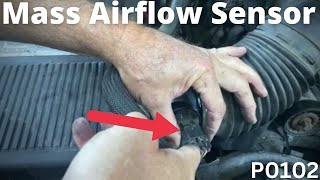
How to confirm: Inspect the air filter housing for any obstructions or flashing near the MAF sensor. Remove and inspect the sensor wires for contamination. Cleaning the sensor with a dedicated MAF cleaner is a common first step. 🎬 See this walkthrough on cleaning or replacing your MAF sensor. On a scan tool, observe the MAF reading at idle; a value significantly lower than 5-8 g/s on a warm engine may indicate a problem.
Typical fix: Clean the MAF sensor with a dedicated cleaner spray. If the problem persists or TSB #PIP5446A applies, the air filter housing lid or the sensor itself may need replacement.
Est. part cost: $10 (cleaner) - $195 (sensor) - Leaking Intake Manifold Gaskets 🟡 Medium Probability The original plastic-carrier intake manifold gaskets are a known failure point on these GM V8 engines. They become brittle with age and heat cycles, leading to vacuum leaks that often become more apparent in cold weather as the plastic contracts. This is a very common cause for P0171 and P0174 codes appearing together.
How to confirm: A smoke test is the most effective method. Alternatively, with the engine running, you can carefully spray short bursts of brake cleaner or an unlit propane torch around the gasket area where the intake meets the cylinder heads; a change in engine idle (RPMs rise or stumble) indicates a leak.
Typical fix: Replace the intake manifold gaskets as a set. It is highly recommended to use updated gaskets with a metal frame, such as Fel-Pro part number MS 96587, for improved durability.
Est. part cost: $50-$150 - Weak Fuel Pump or Clogged Fuel Filter ⚪ Low Probability While not specific to this platform, fuel delivery issues can cause lean codes. The 2015-2016 models with the L86 engine use a direct injection system with both a low-pressure in-tank pump and a high-pressure mechanical pump, adding complexity. A failing Fuel Pump Control Module (FPCM) is also a possibility on newer models.
How to confirm: Check the fuel pressure at the fuel rail using a fuel pressure gauge. Compare the reading to the manufacturer's specifications. For GMT900 models (2012-2014), expect 55-62 PSI with Key On, Engine Off (non-Flex Fuel). For K2XX models (2015-2016), the system is more complex, with high pressure readings over 2,000 psi, and may require a specialized scan tool to diagnose the high and low pressure sides independently. Low pressure indicates a fuel delivery problem.
Typical fix: Replace the weak fuel pump or clogged fuel filter. On direct injection models, diagnosis can be more complex and may involve the FPCM or high-pressure pump.
Est. part cost: $200-$500
Rare But Worth Checking
- Exhaust Leak Before the Oxygen Sensor: A crack in the exhaust manifold or a leaking manifold-to-head gasket can allow outside air to enter the exhaust stream. The O2 sensor reads this extra air and incorrectly reports a lean condition to the computer, causing it to add unnecessary fuel.
- Clogged Fuel Injector(s) on Bank 2: If only Bank 2 is running lean and all vacuum leaks have been ruled out, one or more fuel injectors on the passenger side may be clogged or failing, preventing enough fuel from being delivered to those cylinders.
Diagnosis Steps
- Check for other stored trouble codes with an OBD-II scanner.
- Observe Long-Term Fuel Trim (LTFT) data. Consistently high positive values (e.g., >15-20%) on Bank 2 confirm the computer is adding fuel to correct a lean condition. If Bank 1 is also high, suspect a system-wide leak.
- Perform a thorough visual inspection of the engine bay. Look for cracked, disconnected, or collapsed vacuum hoses, paying special attention to the PCV tube on the driver's side valve cover as per TSB #PIP5341.
- Inspect the air intake duct between the MAF sensor and the throttle body for any cracks or loose clamps. Ensure the air filter box is properly sealed.
- Remove, inspect, and clean the Mass Airflow (MAF) sensor using a dedicated MAF sensor cleaner. For 2015+ models, check the air filter housing for any 'casting flash' per TSB #PIP5446A.
- If a vacuum leak is suspected but not visible, perform a smoke test to pinpoint the source. This is the most effective way to find leaks at the intake manifold gaskets.
- If no vacuum leaks are found, test the fuel pressure to rule out a weak fuel pump or clogged filter. This is a key step before suspecting more complex issues.
Parts You'll Likely Need
- PCV Tube / Hose
(OEM #19435538)— This is a documented common failure point in GM TSB #PIP5341 for causing this exact code. The plastic becomes brittle and cracks or is rubbed through by the engine cover, creating a vacuum leak.
Trusted brands: ACDelco, Dorman
OEM price range: $20-$50
Aftermarket price range: $10-$30 - Intake Manifold Gasket Set
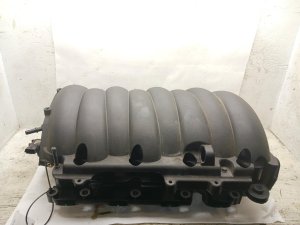
(OEM #89060413 (for GMT900))— The original gaskets are a known weak point on this platform that leads to vacuum leaks and lean codes, especially in cold weather. Upgrading to a metal-framed gasket like the Fel-Pro MS 96587 is a common, durable repair.
Trusted brands: ACDelco, Fel-Pro (MS 96587)
OEM price range: $80-$150
Aftermarket price range: $50-$100 - Mass Airflow (MAF) Sensor
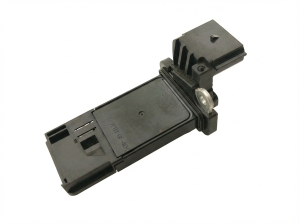
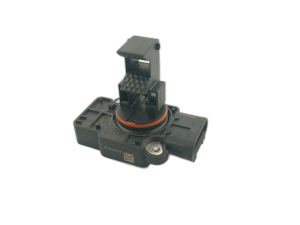
(OEM #23256991 (ACDelco, for K2XX models))— A contaminated or faulty MAF sensor is a frequent cause of lean codes. It may under-report airflow, causing the computer to command too little fuel. Cleaning often works, but replacement is sometimes necessary.
Related Codes That Often Appear With This One
- P0171 — System Too Lean (Bank 1). This is the most common companion code. When both are present, it strongly points to a problem affecting the entire engine, like a MAF sensor issue, a large vacuum leak (PCV, intake gaskets), or a fuel delivery problem.
- P0101 — Mass Air Flow (MAF) Circuit Range/Performance. This code can appear with P0174 as described in TSB #PIP5446A, pointing to an issue with the MAF sensor or casting flash in the air filter housing on 2015+ models.
- P0300 — Random/Multiple Cylinder Misfire. A severe lean condition can cause the air/fuel mixture to fail to ignite properly, leading to misfires.
Technical Service Bulletins (TSBs) & Recalls
- PIP5446A: Harsh Shift 1/2 and 2/3 and Sputter Applying Throttle Between 0 and 30%, Rough idle. Technician may find Diagnostic Trouble Codes P0101, P0171, P0172, P0174, and or P0175. Technician should inspect for cast flashing near the Mass Air Flow sensor.
- PIP5341: Engine runs and idles rough. Technician will find P0171 and or P0174. Technician will need to inspect the positive crankcase ventilation tube for a vacuum leak on the left side of the engine.
Platform-Specific Known Issues
- TSB #PIP5341: PCV Tube Rub-Through: GM specifically identifies that the engine cover can rub a hole in the PCV 'dirty air' tube located at the left rear of the intake manifold. The official fix involves replacing the tube and covering the new one with a protective conduit to prevent a repeat failure. This is a primary check for any P0171/P0174 diagnosis on these vehicles.
- TSB #PIP5446A: Air Filter Housing Casting Flash (2015+): On 2015 and newer models, excess plastic molding (casting flash) inside the air filter housing near the MAF sensor can disrupt airflow, causing erratic sensor readings and triggering lean or rich codes (P0171/P0174/P0172/P0175) along with a MAF code (P0101). The fix is to inspect for and, if found, replace the air filter housing lid.
Mechanic-Grade Diagnostic Values
- Long-Term Fuel Trim (LTFT) at Idle — expected: -10% to +10%. Failure: Sustained values approaching or exceeding +25%, which indicates the PCM is at its limit for adding fuel.
- Fuel Pressure (Key On, Engine Off) - 2012-2014 GMT900 Non-Flex Fuel — expected: 55-62 PSI. Failure: Pressure below 55 PSI, or pressure that bleeds off quickly after the pump primes.
- Mass Airflow (MAF) Sensor Reading at Idle (Warm Engine) — expected: 5.0 - 8.5 g/s (grams per second). Failure: A reading significantly lower than 5.0 g/s, or a reading that is stuck and does not change with RPM.
- Upstream O2 Sensor (Bank 2, Sensor 1) Voltage — expected: Rapidly fluctuating between ~0.1V and ~0.9V. Failure: Voltage is stuck low (e.g., below 0.2V), indicating it is constantly reading a lean condition, or is very slow to respond.
Scan Tool Commands That Help
- GDS2 / Tech2 or equivalent professional scanner: Fuel Trim Reset — After a repair (like replacing a MAF sensor or fixing a vacuum leak), this command resets the learned long-term fuel trim values to zero, allowing for immediate verification of the fix. Without a reset, it can take many drive cycles for the LTFT to relearn.
- GDS2 / Tech2 or equivalent professional scanner: EVAP Purge/Seal — To test the EVAP purge solenoid. A technician can command the valve open and closed to see if it is functioning correctly or is stuck, which would cause a vacuum leak.
- GDS2 / Tech2 or equivalent professional scanner: Fuel Injector Balance Test — If a single bank is lean (P0174 only) and vacuum leaks are ruled out, this test can help identify a clogged or weak injector on Bank 2 by measuring the pressure drop for each injector individually.
Wiring & Ground Locations
- G104 — On the left rear of the driver's side cylinder head (applies to 2012-2014 GMT900 models).. This is a primary engine-to-chassis ground. A poor connection here can cause erratic sensor readings for components grounded to the engine block, including the ECM and its sensors, potentially leading to incorrect fuel calculations.
- MAF Sensor Connector — On the air intake tube, immediately following the air filter box.. Corrosion or a loose connection at the MAF sensor harness can cause incorrect airflow readings, directly leading to lean codes. It's a critical point to inspect for physical integrity.
Real Owner Repair Stories
- Tahoe Yukon Forum (2007-2014 generation Yukon/Tahoe) — Check Engine Light with P0171 and P0174, especially after a cold snap. One owner noted the truck could barely idle when cold.
❌ Tried (didn't work) Directly proceeded to the likely cause based on symptoms.
✅ What actually fixed it Replacing the intake manifold gaskets. One owner also replaced the oil pressure sensor and knock sensors at the same time since the intake was off. The codes were resolved and the engine ran well afterward. - YouTube - 'Chevy / GM P0171 or P0174 System To Lean Bank 1 Bank 2' (GMC Yukon) — P0174 code present, but scan tool showed both banks running lean (LTFT at +21% and +23%).
❌ Tried (didn't work) Visual inspection for vacuum leaks using brake clean showed no change in idle., Fuel pressure test was good (55-60 PSI and held pressure)., PCV system and brake booster checked out okay.
✅ What actually fixed it Replacing the Mass Airflow (MAF) sensor. After replacement and a fuel trim reset, the short-term fuel trims went negative to immediately begin correcting the high positive long-term trims, confirming the fix.
"I Checked Everything" — The Actual Cause
- A common scenario is a smoke test showing no leaks, yet the P0174 code persists. The cause can be an internal leak in the brake booster. A smoke test pressurizes the intake, but the check valve on the booster's vacuum line prevents smoke from entering the booster itself. However, when the engine is running (creating vacuum), a ruptured internal diaphragm in the booster will suck in unmetered air, causing a lean condition that the smoke test cannot reveal.
OEM Part Supersession History
GM OEM Intake Gaskets (e.g., 89060413 for GMT900)→Fel-Pro MS 96587 (Community-accepted upgrade)— The original GM gaskets use a plastic carrier that becomes brittle and cracks from heat cycles, leading to vacuum leaks. The Fel-Pro MS 96587 uses a more durable metal frame and improved sealing material, making it a common preventative and corrective upgrade.
Model Year Variations Within This Range
- 2015-2016 (K2XX Platform): These models use the L86 6.2L engine with direct injection. This adds a camshaft-driven high-pressure fuel pump and a Fuel Pump Control Module (FPCM). Diagnosing fuel-related lean codes is more complex as it requires checking both low-pressure (in-tank) and high-pressure (at the rail, >2000 PSI) systems. A failing FPCM is a potential cause not present on earlier models.
- 2015-2016 (K2XX Platform): TSB #PIP5446A is specific to these years, warning that excess plastic 'casting flash' in the air filter housing can disrupt airflow across the MAF sensor, causing P0174 and often P0101. The fix is to inspect and physically remove the excess material.
Helpful Videos
We Have This Part in Stock



The information in this article is provided for general reference and educational purposes only. Vehicle specifications, procedures, and part compatibility can vary by production date, trim level, and region. Always consult your vehicle's factory service manual and verify part numbers before purchasing or performing repairs. Safety-critical components such as airbags, seat belts, and braking systems should be installed by a qualified professional.
- Gmc YUKON DENALI:
- 🎬 Helpful Videos
- 🛍️ Shop This Part
- What's Unique About the 2012-2016 Gmc YUKON DENALI
- Diagnostic Flowchart
- Symptoms You May Notice
- Most Likely Causes
- Rare But Worth Checking
- Diagnosis Steps
- Parts You'll Likely Need
- Related Codes That Often Appear With This One
- Technical Service Bulletins (TSBs) & Recalls
- Platform-Specific Known Issues
- Mechanic-Grade Diagnostic Values
- Scan Tool Commands That Help
- Wiring & Ground Locations
- Real Owner Repair Stories
- "I Checked Everything" — The Actual Cause
- OEM Part Supersession History
- Model Year Variations Within This Range
- 🎟️ Get 5% Off