

P0174 on 2014-2020 GMC Sierra 1500: System Too Lean (Bank 2) Causes and Fixes
On 2014-2020 GMC Sierra 1500s, the P0174 code is most often caused by a cracked or disconnected PCV tube creating a vacuum leak. This is a simple, low-cost repair, often under $50 for the part. Leaking intake manifold gaskets are another very common cause, especially in colder weather.
- P0174 on a 2014-2020 Sierra almost always points to unmetered air entering the engine (a vacuum leak).
- Before buying any parts, carefully inspect the PCV hoses and the entire air intake system for cracks or loose connections.
- Cleaning the MAF sensor with a dedicated cleaner is a low-cost, high-reward diagnostic step.
- Do not replace the oxygen sensor unless all other possibilities, especially vacuum leaks, have been thoroughly ruled out.
- If both P0171 and P0174 are present, the leak is likely in a central location like the intake manifold gaskets or MAF sensor area.
What's Unique About the 2014-2020 Gmc SIERRA 1500

The 2014-2020 GMC Sierra 1500, particularly with the 4.3L, 5.3L, and 6.2L engines, is known for specific vacuum leak issues documented in multiple GM Technical Service Bulletins (TSBs). The PCV (Positive Crankcase Ventilation) system is a frequent culprit, with plastic tubes becoming brittle and cracking. Additionally, the original intake manifold gaskets are prone to shrinking in cold weather and failing over time, causing vacuum leaks that trigger P0171 and P0174. Some models also have issues with casting flash near the MAF sensor, making vacuum leaks a higher-than-average probability for this code compared to other vehicles.
Diagnostic Flowchart

Tap your situation to follow the diagnostic path that matches what you're seeing on this vehicle.
Generation note: This year range covers two generations of the Sierra 1500: the third generation (K2XX, 2014-2018) and the fourth generation (T1XX, 2019-2020). The TSBs provided apply to years in both generations, indicating that the common causes, such as PCV tubes, MAF sensor obstructions, and intake manifold gaskets, are relevant across these models.
Symptoms You May Notice
- Check Engine Light is on
- Rough or unstable idle, especially at startup
- Engine hesitation or stumbling during acceleration
- Reduced fuel economy
- A hissing or whistling noise from the engine bay, indicating a vacuum leak
- Engine running rougher in cold weather
- Replacing the Bank 2 Oxygen Sensor without first checking for vacuum leaks. The O2 sensor is usually the messenger, not the cause. A vacuum leak from a PCV tube or intake gasket is the most probable culprit on this platform.
Most Likely Causes

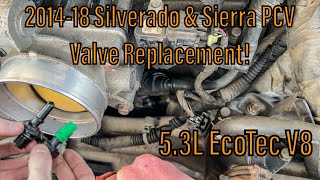
- Cracked or Disconnected PCV Tube 🔴 High Probability This is a well-documented issue. TSB #PIP5686A and #PIP5341 specifically cite a damaged or incorrectly installed PCV 'foul air' tube as a direct cause for P0171/P0174. The plastic becomes brittle from heat cycles and cracks, creating a significant vacuum leak.
How to confirm: Visually inspect all PCV hoses on the valve covers and intake manifold for cracks, brittleness, or disconnection. The driver-side tube running to the intake manifold is a common failure point. Listen for a hissing sound with the engine running. A smoke test is the most definitive way to find a leak.
Typical fix: Replace the damaged PCV tube or hose assembly. This is often a tool-free, 5-minute job.
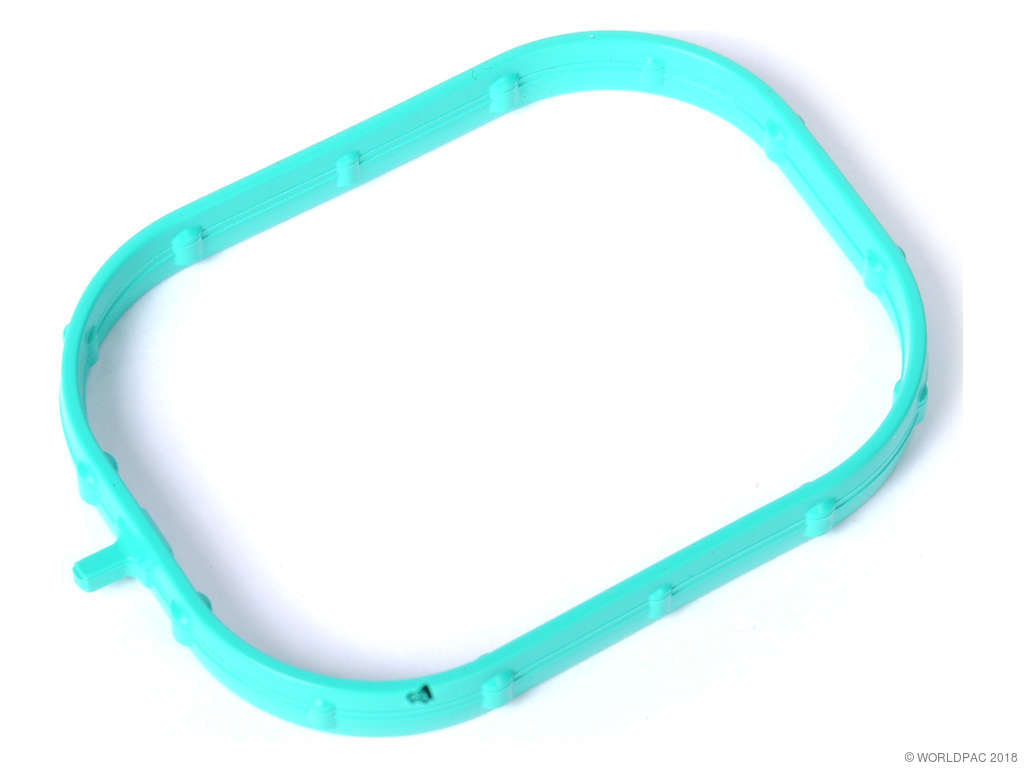
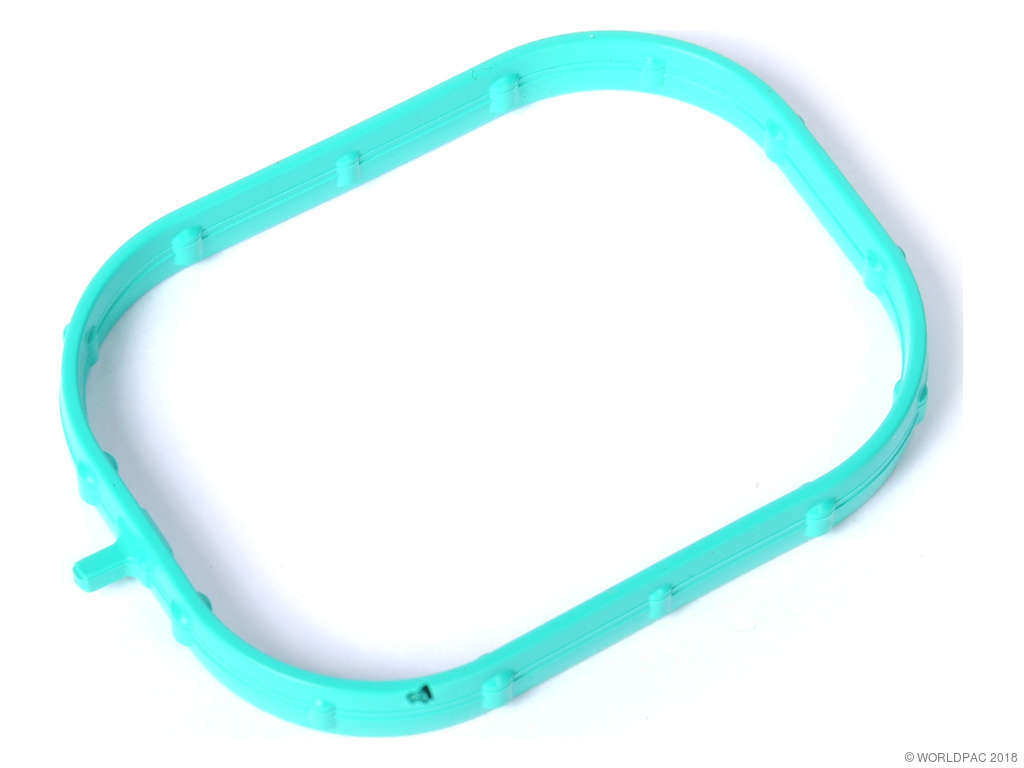
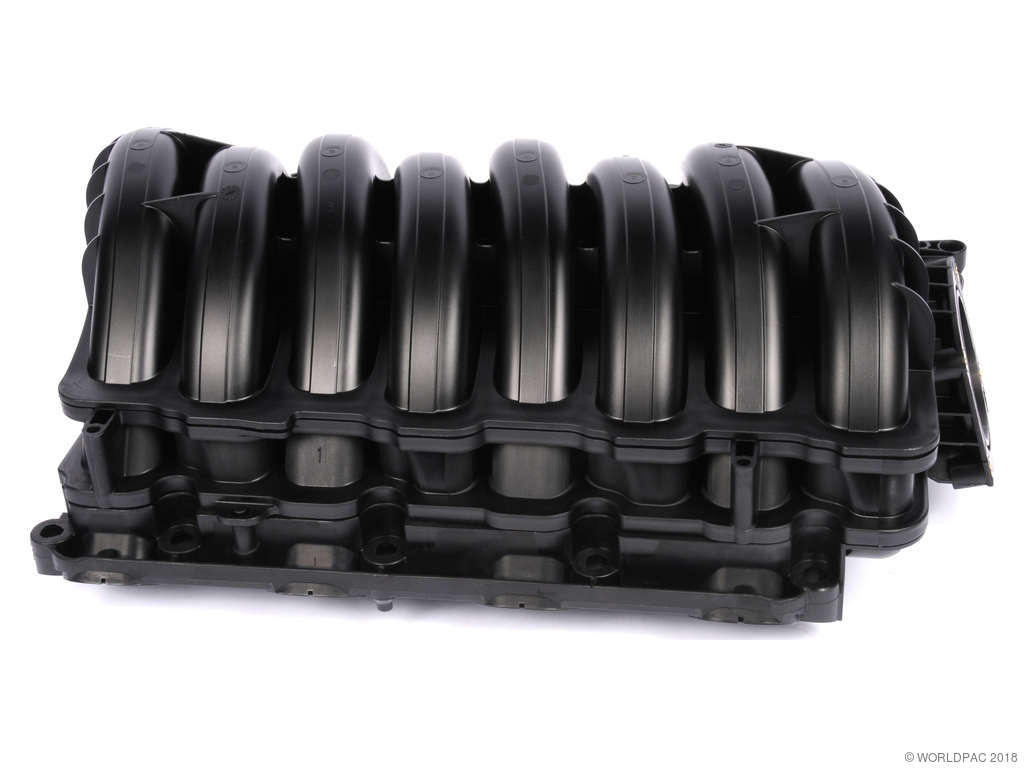
Est. part cost: $25-$75 - Leaking Intake Manifold Gaskets 🔴 High Probability The intake manifold gaskets on GM's V8 engines are a known failure point. The original design can degrade, shrink, and fail, causing a vacuum leak that often triggers lean codes P0171 and P0174, particularly when the weather turns cold.
How to confirm: With the engine running, spray short bursts of brake cleaner or a propane torch (unlit) around the area where the intake manifold meets the cylinder heads. If the engine RPM changes, a leak is present. A smoke test is a safer and more effective method. Fuel trims will often be highest at idle and decrease with RPM.
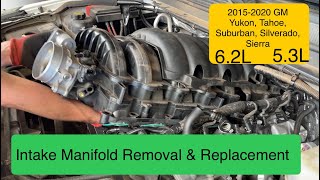
Typical fix: Replace the intake manifold gaskets. Many owners and shops opt for upgraded Fel-Pro gaskets with a metal carrier instead of the OEM plastic design for improved longevity. 🎬 See this step-by-step intake manifold replacement walkthrough
Est. part cost: $40-$100 - Dirty or Faulty Mass Air Flow (MAF) Sensor 🟡 Medium Probability TSB #PIP5446A mentions that excess plastic 'casting flash' in the air filter housing near the MAF sensor can disrupt airflow and cause this code. More commonly, the sensor's delicate wires get dirty from airborne contaminants or aftermarket oiled air filters, leading to inaccurate (low) airflow readings.
How to confirm: Remove the sensor and inspect it for debris. Clean it carefully using only dedicated MAF sensor cleaner. Do not touch the sensor wires. A scan tool can monitor MAF readings; abnormally low grams/second at idle can indicate a problem. Inspect the air filter housing for the casting flash mentioned in the TSB.
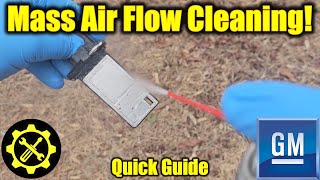
Typical fix: Clean the MAF sensor. If cleaning doesn't resolve the issue, replace the sensor. If casting flash is present, the air filter housing lid must be replaced. 🎬 Watch: How to safely clean your MAF sensor
Est. part cost: $10 (cleaner) - $150 (sensor) - Exhaust Leak (before the O2 sensor) ⚪ Low Probability Exhaust manifold bolts can break, leading to a leak at the gasket. This allows outside oxygen into the exhaust stream, which the O2 sensor interprets as a lean condition, even if the engine's air/fuel mixture is correct.
How to confirm: Listen for a ticking or puffing sound from the exhaust manifolds, especially when the engine is cold. Visually inspect the exhaust manifolds and gaskets for cracks or black soot trails indicating a leak.
Typical fix: Replace the leaking exhaust manifold gasket and any broken bolts. In some cases, a cracked manifold may need replacement.
Est. part cost: $20 (gasket) - $300+ (manifold)
Rare But Worth Checking
- Low Fuel Pressure: A weak fuel pump or clogged fuel filter can starve the engine of fuel, causing a lean condition on both banks. This is less likely if only P0174 is present, but more likely if accompanied by P0171.
- Faulty Fuel Pump Control Module (FPCM): These trucks are known to have issues with the FPCM, which regulates voltage to the fuel pump. A failing module can cause low fuel pressure, leading to lean codes. This often occurs with P0171 as well.
- Clogged Fuel Injector on Bank 2: If a single injector on the passenger side is restricted, it can cause a lean condition isolated to that bank. This is uncommon but possible, and may be accompanied by a misfire code for a specific cylinder.
- Failing Oxygen Sensor: The O2 sensor itself can fail, but it's more often correctly reporting a problem elsewhere. It should only be replaced after all other potential causes (especially vacuum leaks) have been ruled out.
- ECM Software Anomaly: TSB #PIP5779A (which supersedes PIP5779) notes that on very low mileage vehicles, a software anomaly can cause P0171 and P0174 to set simultaneously. The fix is a dealer-performed ECM calibration update.
Diagnosis Steps

- Read the codes with an OBD-II scanner. Note any other codes present, especially P0171 or P0101.
- With the engine running, listen for audible hissing sounds around the engine, which indicate a vacuum leak. Pay close attention to the PCV tubes and the base of the intake manifold.
- Thoroughly inspect the PCV system, including the rigid 'foul air' tube running from the driver-side valve cover to the intake manifold, as highlighted in TSBs #PIP5686A and #PIP5341.
- Inspect the air intake tube between the air filter box and the throttle body for cracks or loose connections.
- If no obvious leaks are found, perform a smoke test to precisely locate any unmetered air leaks from gaskets or hoses. This is the most effective way to find intake gasket leaks.
- Remove and clean the Mass Air Flow (MAF) sensor using only dedicated MAF sensor cleaner. Inspect the air filter housing for any obstructions or casting flash as noted in TSB #PIP5446A.
- Use a scan tool to monitor long-term and short-term fuel trims. High positive numbers (+10% or more) confirm the computer is adding fuel to compensate for a lean condition. Note if trims improve at higher RPMs, which strongly suggests a vacuum leak.
- If no vacuum leaks are found and the MAF is clean, check fuel pressure to rule out a weak fuel pump, clogged filter, or failing FPCM.
- As a final step, test the Bank 2, Sensor 1 oxygen sensor's response using a scan tool to ensure it is not faulty or slow to respond.
Parts You'll Likely Need

- PCV Foul Air Tube (Driver Side)
(OEM #12670791 (replaces 12619982))— This is the most frequently cited cause in GM TSBs for the P0174 code on this platform. The plastic becomes brittle and cracks, especially at the connection points.
Trusted brands: ACDelco, Dorman
OEM price range: $40-$80
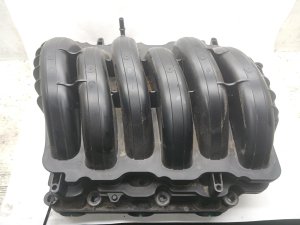
Aftermarket price range: $25-$50 - Intake Manifold Gasket Set
(OEM #12627449 (OEM))— A very common failure point on these engines that causes a vacuum leak affecting one or both banks, often triggered by cold weather.
Trusted brands: Fel-Pro (MS 96918), ACDelco
OEM price range: $60-$100
Aftermarket price range: $40-$80 - PCV Fresh Air Tube (Passenger Side)
(OEM #12700664 (replaces 12669838))— While less common than the driver-side tube, this hose can also crack and cause a vacuum leak. It's wise to inspect it when diagnosing P0174.
Related Codes That Often Appear With This One
- P0171 — System Too Lean (Bank 1). When both P0171 and P0174 are present, it strongly indicates a vacuum leak that affects the entire engine, such as leaking intake manifold gaskets, a major PCV system leak, or a faulty MAF sensor.
- P0101 — Mass Air Flow (MAF) Circuit Range/Performance. This code often appears alongside P0174 when the MAF sensor is dirty, faulty, or affected by an air leak between the sensor and the throttle body. TSB #PIP5446A explicitly links these codes.
Technical Service Bulletins (TSBs) & Recalls
- PIP5686A: Engine runs rough with DTCs P0171 and/or P0174 due to a damaged or incorrectly installed foul air PCV tube.
- PIP5446A: Multiple codes including P0174 may be caused by cast flashing near the Mass Air Flow sensor.
- PIP5341: Rough idle with P0171 and/or P0174 caused by a vacuum leak from the positive crankcase ventilation tube.
Platform-Specific Known Issues
- TSB #PIP5686A: Points to a damaged or incorrectly installed foul air PCV tube (driver side) causing a vacuum leak and setting P0171/P0174.
- TSB #PIP5446A: Identifies potential for 'casting flash' (excess plastic from manufacturing) inside the air filter housing near the MAF sensor. This disrupts airflow readings and can trigger lean codes P0171/P0174 and MAF code P0101. The fix is to replace the air filter housing lid.
- TSB #PIP5341: Specifically calls for inspection of the PCV tube on the left side (driver side) of the engine for a vacuum leak when P0171 and/or P0174 are present.
- Cold Weather Gasket Leaks: Many owners report that codes P0171 and P0174 first appear during cold weather snaps, as the aging plastic and rubber intake manifold gaskets contract and lose their seal, creating a vacuum leak that may partially reseal in warmer weather.
Mechanic-Grade Diagnostic Values
- Mass Air Flow (MAF) Sensor Reading at Hot Idle — expected: Should be approximately equal to the engine displacement in liters (e.g., a 5.3L engine should read around 5.3 g/s). A general range is 2-7 g/s at idle.. Failure: A reading significantly lower than the engine's displacement (e.g., 3 g/s on a 5.3L engine) indicates the sensor is under-reporting airflow, causing the ECM to incorrectly add fuel and set lean codes.
- Mass Air Flow (MAF) Sensor Reading at 2500 RPM — expected: Should rise to between 15 to 25 g/s.. Failure: A reading that lags or fails to increase proportionally with RPM suggests a faulty MAF sensor.
- Fuel Trim (Long Term and Short Term) — expected: Ideally, the sum of STFT and LTFT should be close to 0%, with an acceptable range up to +/- 10%.. Failure: Sustained positive fuel trims of +20% or higher on one or both banks confirm the ECM is compensating for a significant lean condition.
- Low-Side Fuel Pressure (Key On, Engine Off) — expected: Should jump to 55-60 PSI and hold steady.. Failure: Pressure that is below specification or drops quickly after the key is turned off can indicate a weak fuel pump or a bad check valve in the pump assembly.
- High-Side Fuel Pressure (Direct Injection models, while cranking) — expected: Should be around 300-400 PSI while cranking.. Failure: Low fuel rail pressure during cranking may set code P00C6 and indicate issues with the high-pressure fuel system or cam timing.
Scan Tool Commands That Help
- GDS2: Camshaft Position Actuator Solenoid Valve Control — As per TSB PIP5130C, if the truck cranks but won't start and has set a low fuel pressure code like P00C6 alongside lean codes, cycling the cam phaser solenoid 4-5 times can un-stick a faulty actuator that is affecting valve timing and preventing startup.
Wiring & Ground Locations
- G101 — Located at the front of the engine, lower block. It may jumper to G106 on the frame cross rail under the crank pulley.. This ground serves the Engine Control Module (ECM), Transmission Control Module (TCM), and the Mass Air Flow (MAF) Sensor. A poor connection here can cause erratic sensor readings and incorrect data for the ECM, potentially leading to lean codes.
- G102 — Located at the left rear of the engine.. This is the ground point for all 8 ignition coils. While not a direct cause of a lean code, a faulty ground here can cause misfires, which can sometimes be misinterpreted or accompany lean conditions.
- G103 — Located at the left rear of the engine compartment on the cowl, above the brake booster.. This ground serves the Body Control Module (BCM) and the Data Link Connector (DLC). A poor connection here can interfere with scan tool communication when trying to diagnose the P0174 code.
- G218 — Located under the driver's side dash, behind the kick panel.. This is an interior ground point for the Body Control Module. Issues here can cause a wide range of seemingly unrelated electrical problems, including communication issues with the ECM.
Real Owner Repair Stories
- YouTube channel 'SuperMarioDiagnostics' (2015 GM Truck 5.3L) — Rough idle and MIL on with codes P0171 and P0174.
❌ Tried (didn't work) Initial diagnosis pointed towards common vacuum leaks or a bad MAF sensor.
✅ What actually fixed it A small piece of tissue paper, likely from rodent activity in the air filter housing, was found stuck in the MAF sensor. This insulated the hot wire, causing it to under-report airflow. Removing the debris and cleaning the sensor resolved the high fuel trims and fixed the codes. - YouTube channel 'Flat Rate Mechanic' (2013 GMC Sierra 1500 (commenter on a P0171/P0174 video)) — Persistent P0171 and P0174 codes.
❌ Tried (didn't work) Diagnosing vacuum leaks and other common causes.
✅ What actually fixed it The root cause was a dirty throttle body affecting the throttle position sensor. The fix required cleaning the throttle body, replacing the sensor, and performing a throttle position relearn procedure.
"I Checked Everything" — The Actual Cause
- In some cases, a smoke test may not reveal a leak if it is intermittent or only occurs under specific conditions (e.g., cold weather shrinking an intake gasket). Another overlooked source of unmetered air that a smoke test might miss is a leaking brake booster or its check valve. A hard brake pedal or a pedal that becomes hard to press after the engine is off are symptoms of a bad booster or check valve.
OEM Part Supersession History
12619985→12670791— GM regularly updates service parts to integrate new materials and technologies for improved durability. This PCV tube is a known failure point, and the updated part is intended to be more resilient to heat and age.
Model Year Variations Within This Range
- 2014-2020: The 2014-2018 (K2XX) and 2019-2020 (T1XX) models may have different engine management software versions. An ECM software anomaly on very low mileage vehicles can cause P0171/P0174, requiring a dealer calibration update as per TSB #PIP5779A.
Helpful Videos
Used OEM Parts in Stock
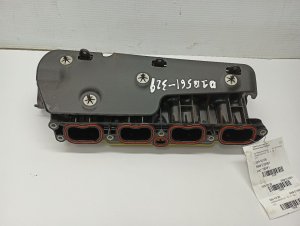

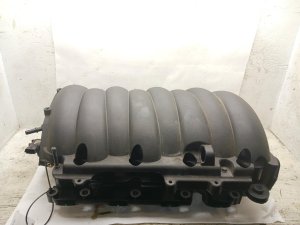
New Aftermarket Parts Available
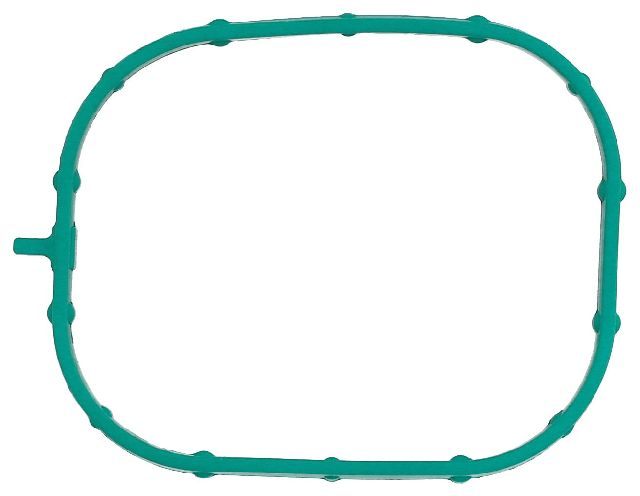

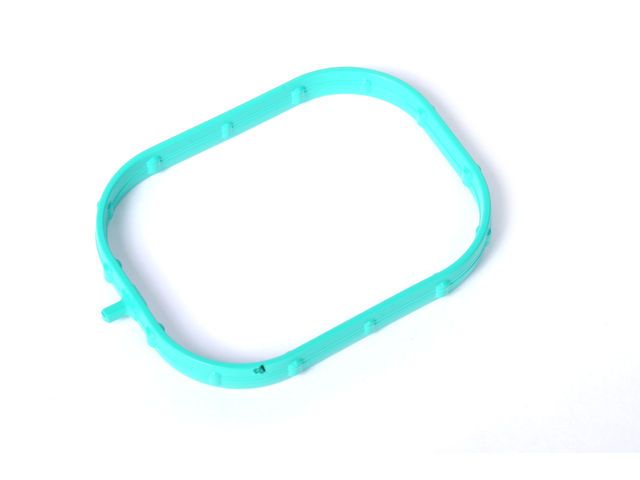

The information in this article is provided for general reference and educational purposes only. Vehicle specifications, procedures, and part compatibility can vary by production date, trim level, and region. Always consult your vehicle's factory service manual and verify part numbers before purchasing or performing repairs. Safety-critical components such as airbags, seat belts, and braking systems should be installed by a qualified professional.
- Gmc SIERRA 1500:
- 🎬 Helpful Videos
- 🛍️ Shop This Part
- What's Unique About the 2014-2020 Gmc SIERRA 1500
- Diagnostic Flowchart
- Symptoms You May Notice
- Most Likely Causes
- Rare But Worth Checking
- Diagnosis Steps
- Parts You'll Likely Need
- Related Codes That Often Appear With This One
- Technical Service Bulletins (TSBs) & Recalls
- Platform-Specific Known Issues
- Mechanic-Grade Diagnostic Values
- Scan Tool Commands That Help
- Wiring & Ground Locations
- Real Owner Repair Stories
- "I Checked Everything" — The Actual Cause
- OEM Part Supersession History
- Model Year Variations Within This Range
- 🎟️ Get 5% Off