

P0174 on 2017-2022 Genesis G90 3.3T: Causes and Fixes for Lean Bank 2
For a P0174 code on a Genesis G90 3.3T, the most common causes are unmetered air leaks from cracked intake/vacuum hoses or a dirty Mass Airflow (MAF) sensor. Start by inspecting all air intake tubing, especially the plastic air resonator, for cracks and cleaning the MAF sensor with a dedicated cleaner.
- P0174 means Bank 2 is running lean (too much air or not enough fuel).
- The most likely culprits on the G90 3.3T are vacuum leaks from cracked hoses or a dirty MAF sensor.
- Start your diagnosis with the cheapest and easiest steps: a visual inspection for leaks and cleaning the MAF sensor.
- Do not replace the oxygen sensor unless you have ruled out all other possibilities, as it is usually just reporting the problem.
- If you have a 2022-2023 model, be aware of the fuel pump recall which can cause lean conditions.
What's Unique About the 2017-2022 Genesis G90
The G6DP twin-turbo engine's complex intake plumbing, with numerous hoses and two turbochargers, presents more opportunities for hard-to-find vacuum or boost leaks compared to a naturally-aspirated engine. While the code itself is generic, the diagnostic process must account for platform-specific components like the twin electronic wastegate actuators and diverter valves, which can also influence air management and potentially contribute to lean conditions if they fail. The plastic air intake resonator is a known weak point that can crack and cause a significant vacuum leak.
Symptoms You May Notice
- Check Engine Light is on
- Rough or unstable idle
- Hesitation or stumbling during acceleration
- Reduced engine power
- Decreased fuel economy
- A whistling or hissing sound from the engine bay, indicating a vacuum leak
- Replacing the oxygen sensor first. The O2 sensor is often just the messenger, accurately reporting a lean condition caused by something else. Always rule out vacuum leaks and MAF sensor issues before replacing the O2 sensor.
Most Likely Causes
- Vacuum Leak (Cracked Hoses or Gaskets) 🔴 High Probability The complex network of hoses for the PCV and twin-turbo intake system can become brittle from heat and age, leading to cracks. The plastic air intake resonator, in particular, is a known failure point on these platforms that can cause P0171 and P0174 codes.
How to confirm: Visually inspect all hoses connected to the intake manifold and air ducts for cracks or loose connections. Listen for a hissing sound at idle. The most effective method is to use a smoke machine to introduce smoke into the intake and see where it escapes.
Typical fix: Replace the cracked hose, gasket, or intake component.
Est. part cost: $20-$150 - Dirty or Faulty Mass Airflow (MAF) Sensor 🔴 High Probability The MAF sensor can become contaminated with oil vapor from the PCV system or dirt, causing it to under-report the amount of air entering the engine. This is a very common cause for lean codes across many vehicles.
How to confirm: Remove the MAF sensor from the intake tube. Visually inspect the small wires for contamination. A scan tool can also be used to monitor MAF readings for erratic behavior. With the engine at operating temperature, the MAF should read around 3.5-5.0 g/s at idle.
Typical fix: First, attempt to clean the sensor using only a dedicated MAF sensor cleaner spray. Do not touch the delicate wires. If cleaning does not resolve the issue, the sensor must be replaced.
Est. part cost: $10-$15 (cleaner), $80-$200 (sensor) - Low Fuel Pressure 🟡 Medium Probability A recall (NHTSA 24V282000 / Hyundai 022G) was issued for the low-pressure fuel pump on 2022-2023 models, which can fail and cause a loss of power. While this would typically affect both banks (P0171 & P0174), a weak pump could initially present on one bank. A failing high-pressure fuel pump (HPFP), a component of the GDI system, 🎬 See how to properly clean and maintain your GDI engine. can also cause fuel delivery issues, though this might also trigger codes like P0088.
How to confirm: Connect a fuel pressure gauge to the fuel rail and check that the pressure is within the manufacturer's specifications at idle and under load. A scan tool can monitor both low and high pressure fuel rail data.
Typical fix: Replace the failing fuel pump or clogged fuel filter. Check for recall applicability on affected model years.
Est. part cost: $200-$700 - Faulty Upstream Oxygen (O2) Sensor ⚪ Low Probability O2 sensors are wear items that degrade over time. However, they are more likely to accurately report a lean condition than to be the cause of it. A faulty sensor may become 'lazy' or biased, sending a false lean signal.
How to confirm: Use a scan tool to graph the voltage of the Bank 2 Sensor 1. It should fluctuate rapidly between approximately 0.1V and 0.9V. A sensor that is slow to respond or has a fixed voltage is likely faulty. This should be checked after confirming no vacuum leaks or fuel delivery issues exist.
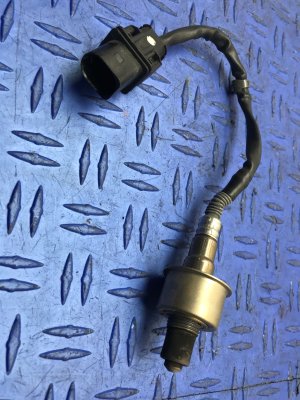
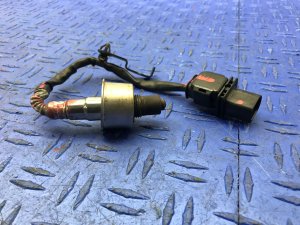
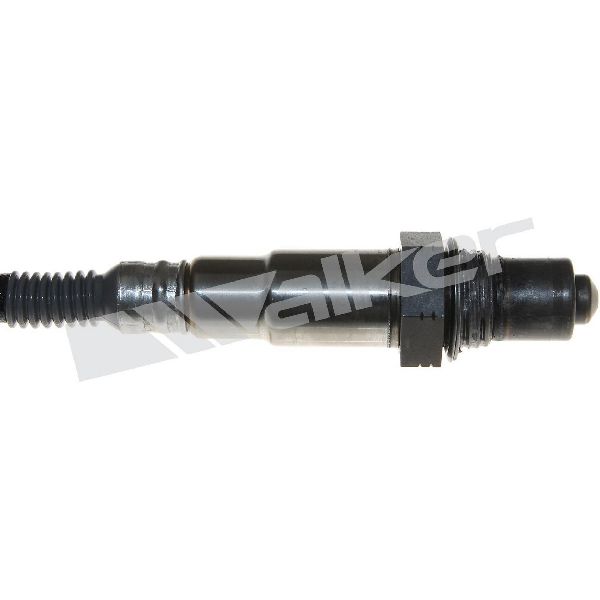
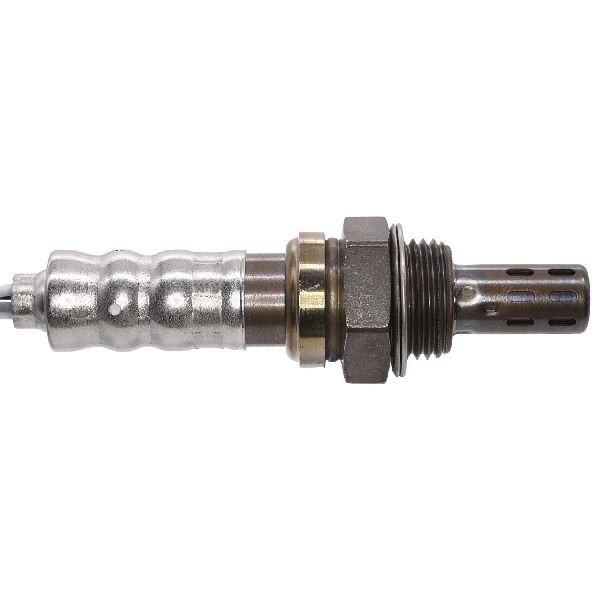
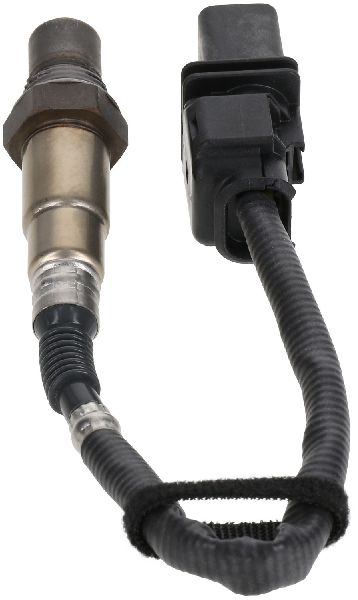
Typical fix: Replace the Bank 2, Sensor 1 (upstream) oxygen sensor. The OEM part number is 39210-3L010.
Est. part cost: $70-$180
Rare But Worth Checking
- Clogged Fuel Injectors on Bank 2: If one or more injectors on Bank 2 are partially clogged, they won't deliver enough fuel, leading to a lean condition isolated to that bank. This is less common than vacuum leaks or MAF issues, but can be diagnosed via an injector balance test.
- Exhaust Leak Before the O2 Sensor: A crack in the exhaust manifold or a leaking gasket between the cylinder head and turbo, or between the turbo and downpipe (before the upstream O2 sensor), can allow outside air to be drawn into the exhaust stream. This fools the O2 sensor into reading a false lean condition and commanding the ECM to add unnecessary fuel.
Diagnosis Steps
- Check for other stored trouble codes. If P0171 is also present, focus on causes common to both banks (MAF, fuel pump, large vacuum leak post-throttle body).
- Using a scan tool, observe Short-Term Fuel Trim (STFT) and Long-Term Fuel Trim (LTFT) for both banks. For P0174, you will see high positive numbers (typically LTFT > +15% and STFT also adding fuel) for Bank 2, indicating the ECM is adding fuel to correct a lean state.
- Perform a thorough visual inspection of the engine bay. Look for cracked, disconnected, or collapsed vacuum hoses, especially around the PCV system and the air intake ducts after the MAF sensor. Pay close attention to the plastic air intake resonator.
- Listen for an audible hissing or whistling sound at idle, which is a tell-tale sign of a vacuum leak.
- Remove and clean the Mass Airflow (MAF) sensor using only dedicated MAF sensor cleaner. Allow it to dry completely before reinstalling.
- If no obvious leaks are found, perform a smoke test on the intake system. This is the most reliable way to find small, hidden leaks.
- If no leaks are found, test the fuel pressure (both low and high pressure rails) to ensure the fuel pumps and regulator are functioning correctly.
- If fuel pressure is normal and no leaks are present, inspect the Bank 2 upstream O2 sensor's operation via a scan tool. If it appears lazy or biased, it may be the culprit.
- As a final step, consider testing the fuel injectors on Bank 2 for proper flow and spray pattern. 🎬 Watch this step-by-step guide to diagnosing and fixing P0174.
Parts You'll Likely Need
- Mass Airflow (MAF) Sensor Cleaner — This is the first and cheapest diagnostic/repair step for a suspected dirty MAF sensor, which is a high-probability cause.
Trusted brands: CRC, Liqui Moly
Aftermarket price range: $10-$15 - Vacuum or PCV Hose — Rubber hoses become brittle and crack with age and heat, causing vacuum leaks which are a primary cause of lean codes. The air intake resonator is a specific plastic part prone to cracking.
Trusted brands: Genuine Genesis/Hyundai
OEM price range: $25-$150
Aftermarket price range: $15-$60 - Upstream Oxygen Sensor (Bank 2)
(OEM #39210-3L010)— If all other causes are ruled out, a failing O2 sensor may be sending incorrect lean signals to the ECM. Bank 2 is the driver's side.
Trusted brands: Bosch, Denso, NGK/NTK, Genuine Genesis
OEM price range: $150-$220
Aftermarket price range: $70-$180
Related Codes That Often Appear With This One
- P0171 — System Too Lean (Bank 1). If both P0171 and P0174 are present, it strongly suggests a problem that affects the entire engine, such as a faulty MAF sensor, a large vacuum leak near the throttle body (like a cracked intake resonator), or low fuel pressure.
- P0300, P0302, P0304, P0306 — Random or specific cylinder misfires on Bank 2. A severe lean condition can prevent proper combustion, leading to misfires on the affected bank.
- P0101 — Mass Air Flow (MAF) Sensor Circuit Range/Performance. This code can be set if a large vacuum leak occurs after the MAF sensor, causing a discrepancy between the air measured by the MAF and the air measured by the MAP sensor.
Technical Service Bulletins (TSBs) & Recalls
- Hyundai TSB 19-FL-002H: Describes the Idle Stop and Go (ISG) system operations and battery sensor recalibration. Relevant for diagnosing idle-related issues that could be confused with or contribute to lean code symptoms.
Platform-Specific Known Issues
- A recall was issued for the left turbocharger oil feed pipe on 2017-2022 G90 models with the 3.3T engine (Recall 019G / NHTSA 24V191000), which could leak oil and cause a fire. While not a direct cause of P0174, it highlights the high-heat environment and potential for component degradation in the engine bay.
- A recall for the low-pressure fuel pump on 2022-2023 models (Recall 022G) can cause fuel starvation, leading to lean conditions and potential stalling.
Mechanic-Grade Diagnostic Values
- Long-Term Fuel Trim (LTFT) — expected: Close to 0%, ideally within +/- 5%. Failure: Consistently positive values greater than +15% to +25% on Bank 2 indicate the computer is adding significant fuel to compensate for a lean condition, triggering P0174.
- Upstream O2 Sensor (Bank 2, Sensor 1) Voltage — expected: Rapidly fluctuating between ~0.1V (lean) and ~0.9V (rich) on a healthy engine.. Failure: A sensor that is stuck low (e.g., below 0.45V) or responds very slowly suggests a faulty sensor or a persistent lean condition. If fuel trims are high and the O2 voltage is stuck low, it's likely reporting a true lean condition.
Scan Tool Commands That Help
- Genesis GDS (or equivalent high-level bidirectional scanner): Fuel Pump Active Test — To command the low-pressure fuel pump on and off to verify its operation and check fuel pressure without the engine running. This helps isolate a weak or failing pump.
- Genesis GDS (or equivalent high-level bidirectional scanner): Injector Balance Test / Actuation Test — To individually fire each fuel injector on Bank 2 and measure the corresponding drop in fuel pressure. A smaller drop for a specific injector indicates it is clogged or failing, causing a lean condition on that cylinder.
- Genesis GDS (or equivalent high-level bidirectional scanner): Purge Control Solenoid Valve (PCSV) Actuation Test — To command the PCSV open and closed to check for mechanical sticking. A valve stuck open can create a vacuum leak, while a valve stuck closed can affect fuel tank vapor management. This is useful if a vacuum leak is suspected but not found with a smoke test.
Wiring & Ground Locations
- Primary Engine Bay Ground — On the driver's side of the engine bay, located on the chassis frame rail, sometimes covered by a small black plastic cap.. A poor main ground can cause erratic voltage readings for multiple sensors, including the MAF and O2 sensors, potentially leading to incorrect fuel calculations and lean codes. Verifying this connection is clean and tight is a fundamental electrical diagnostic step.
Real Owner Repair Stories
- Kia Stinger Forum (kiastinger.org) (Kia Stinger GT (with the same 3.3T G6DP engine)) — Check engine light with codes P0171 and P0174 (lean on both banks).
❌ Tried (didn't work) Smoke test (no leaks found), Cleaning MAF sensors
✅ What actually fixed it Replacement of the Purge Control Solenoid Valve (PCSV). The valve was reportedly sticking, creating an intermittent and un-smoke-testable vacuum leak that caused the lean condition.
"I Checked Everything" — The Actual Cause
- In a case involving the mechanically identical Kia Stinger 3.3T, lean codes P0171/P0174 persisted even after a smoke test showed no leaks. The root cause was a faulty Purge Control Solenoid Valve (PCSV) that was sticking intermittently, creating a vacuum leak that was not present during the static smoke test. Replacing the PCSV resolved the codes.
OEM Part Supersession History
Not specified→39210-3L010— Standard part lifecycle updates and revisions.
Heads up: Part number 39210-3L010 is specified for the 3.3L V6 engine in the G70, G80, and G90. Be aware that the 3.8L V6 uses a different part number (e.g., 39210-3L210), so ensure the correct part is ordered for the 3.3T engine.
Model Year Variations Within This Range
- 2020-2022: The 2020 model year introduced a significant facelift with new exterior styling and updated interior technology, including a larger 12.3-inch touchscreen and over-the-air update capability. However, the 3.3T V6 engine and its core components related to the fuel and air systems remained unchanged from the 2017-2019 models. Therefore, the causes and diagnostic procedures for P0174 are identical across the 2017-2022 range.
Diagnostic Flowchart
Other Known Issues on This Vehicle
Issues unrelated to this code that are worth knowing about as an owner of this generation:
- Left Turbocharger Oil Feed Pipe Leak 🔴 High — Common enough to warrant a major safety recall (NHTSA 24V191000 / Genesis Recall 019G). Affects vehicles built before August 2021. (Ref: Recall 019G (NHTSA 24V191000), superseding 19V-538.)
- Intake Valve Carbon Buildup 🟠 Medium — A common long-term issue for all Gasoline Direct Injection (GDI) engines, as fuel does not wash over the intake valves. Typically becomes noticeable after 40,000-80,000 miles, causing rough idle and misfires.
- Failing Engine Oil Pressure Sensor 🟠 Medium — A widely reported failure. The sensor is located in a high-heat area in the engine valley, leading to premature failure. Symptoms include a flickering oil light at warm idle.
- Electronic Wastegate Actuator Failure 🟠 Medium — Common on the 3.3T platform, often signaled by a distinct squeaking or rattling noise on shutdown or light acceleration. Can lead to underboost (P0299) or other air management codes.
- Stretched Timing Chain / Tensioner Failure 🔴 High — Less common, but severe. Often preceded by a 1-3 second rattle on cold starts as the hydraulic tensioner bleeds down. Can lead to catastrophic engine damage if ignored.
Used vs. New Parts: Buying Guide for This Vehicle
When a used part is the smart pick: Used parts like intake air boxes, resonators, and non-critical hoses can be a cost-effective option, provided they are sourced from a low-mileage, non-crashed donor vehicle. Visual inspection for cracks, brittleness, and warping is essential.
Donor-vehicle mileage cap: roughly under 60000 miles for the part to have meaningful remaining life.
What to inspect on the donor part:
- Check for date codes on plastic/rubber parts; newer is better.
- Inspect rubber hoses for pliability; avoid any that are hard or stiff.
- For electronic sensors, ensure connectors are free of corrosion and locking tabs are intact.
- Source parts from dry, non-salt-belt states to minimize corrosion and material degradation.
OEM-only on this vehicle (don't cheap out):
- Mass Airflow (MAF) Sensor: Aftermarket MAF sensors are notoriously unreliable and can cause persistent performance issues. Always use a Genuine Genesis/Hyundai part.
- High-Pressure Fuel Pump (HPFP): Given the complexity of the GDI system and recalls on related platforms, using a new OEM pump is critical for safety and reliability.
- Low-Pressure Fuel Pump: Due to the major recall affecting 2022-2023 models, do not buy a used pump from this era. Only a new OEM part ensures you have the corrected design.
Aftermarket brands forum-validated for this vehicle:
- NTK / NGK for Oxygen Sensors: NTK is a leading OEM supplier and is widely regarded as a reliable aftermarket choice for O2 sensors on Hyundai/Genesis vehicles.
- Bosch or Denso for Oxygen Sensors: These are also reputable OEM suppliers with a strong track record for quality and compatibility.
Brands owners have reported issues with on this vehicle:
- No-name or unbranded 'cheap' oxygen sensors and MAF sensors from online marketplaces. These often have high failure rates, use incorrect calibration, and can make diagnosis more difficult.
Real Owner Stories
Aggregated from forums and TSBs cited above. Mileages and costs reflect what owners reported in those sources.
2019 Genesis G70 3.3T
Symptoms: The owner experienced a failure of the Bank 2 upstream oxygen sensor, which is a known issue on this 3.3T platform shared with the G90.
What fixed it: Replacement of the Bank 2 Upstream Oxygen Sensor (Part #39210-3L010).
Source hint: Go-Parts Article on Platform Mate (G70) O2 Sensor
2022 Genesis G90 3.3T
Symptoms: Loss of power and potential stalling due to fuel starvation.
What fixed it: Replacement of the low-pressure fuel pump under recall 022G.
Source hint: Recall 022G / NHTSA 24V282000
2018 Kia Stinger GT 3.3T
Symptoms: Check engine light with P0171 and P0174 codes and rough idle.
What fixed it: Cleaning the Mass Airflow (MAF) sensor and inspecting for vacuum leaks in the intake plumbing.
Source hint: 2018-2023 Kia Stinger GT (3.3T) Platform Mate description
Related OBD-II Codes
Frequently Asked Questions
Is there a recall for the fuel system on my 2022 Genesis G90 that could cause a lean condition?
I hear a whistling sound from my 3.3L Twin-Turbo engine; could this be related to P0174?
What is the specific replacement part number for the Bank 2 oxygen sensor on the G90 3.3T?
Can I clean the MAF sensor on my G90 instead of replacing it?
Does TSB 19-FL-002H relate to my P0174 lean code symptoms?
Are there any other recalls for the 3.3T engine I should be aware of while fixing this?
Helpful Videos
![How to Fix P0174 Engine Code in 2 Minutes [2 DIY Methods / Only $8.99]](https://img.youtube.com/vi/Mc4ajz3DM7s/mqdefault.jpg)

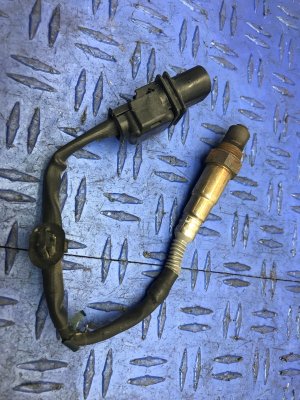
Used OEM Parts in Stock

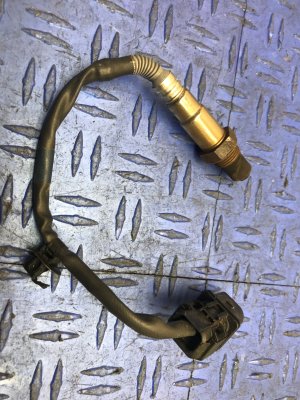
New Aftermarket Parts Available

The information in this article is provided for general reference and educational purposes only. Vehicle specifications, procedures, and part compatibility can vary by production date, trim level, and region. Always consult your vehicle's factory service manual and verify part numbers before purchasing or performing repairs. Safety-critical components such as airbags, seat belts, and braking systems should be installed by a qualified professional.
- Genesis G90:
- 🎬 Helpful Videos
- 🛍️ Shop This Part
- What's Unique About the 2017-2022 Genesis G90
- Symptoms You May Notice
- Most Likely Causes
- Rare But Worth Checking
- Diagnosis Steps
- Parts You'll Likely Need
- Related Codes That Often Appear With This One
- Technical Service Bulletins (TSBs) & Recalls
- Platform-Specific Known Issues
- Mechanic-Grade Diagnostic Values
- Scan Tool Commands That Help
- Wiring & Ground Locations
- Real Owner Repair Stories
- "I Checked Everything" — The Actual Cause
- OEM Part Supersession History
- Model Year Variations Within This Range
- Diagnostic Flowchart
- Other Known Issues on This Vehicle
- Used vs. New Parts: Buying Guide for This Vehicle
- Real Owner Stories
- 2019 Genesis G70 3.3T
- 2022 Genesis G90 3.3T
- 2018 Kia Stinger GT 3.3T
- Related OBD-II Codes
- Frequently Asked Questions
- 🎟️ Get 5% Off