

P0174 on 2015-2019 Ford Transit: Lean Bank 2 Causes and Fixes
P0174 on a Ford Transit V6 means the driver's side of the engine is running lean. Before replacing parts, check for the specific issues in Ford's Technical Service Bulletins (TSBs), such as water leaking into the engine bay or a kinked EVAP hose. Otherwise, unmetered vacuum leaks, especially from intake manifold gaskets that contract in cold weather, are the most common cause.
- P0174 means the driver's side of your Transit's V6 engine is getting too much air or not enough fuel.
- Before buying parts, check for the specific issues in Ford TSBs: a kinked EVAP hose near the canister and water leak evidence around the air filter box.
- The most common general causes are unmetered air from vacuum leaks (like a bad intake gasket) or a dirty MAF sensor.
- Do not automatically replace the O2 sensor; it is usually doing its job by reporting the lean condition.
- If both P0171 (Bank 1) and P0174 (Bank 2) are present, focus on causes that affect the whole engine, not just one side.
What's Unique About the 2015-2019 Ford TRANSIT
While lean codes are common on many vehicles, the 2015-2019 Ford Transit is subject to several specific Technical Service Bulletins (TSBs) that point to unique root causes. Ford has documented that water intrusion into the engine bay can cause this and other codes, requiring updated water management hardware. 🎬 Watch: How to stop water leaks into the engine compartment. Another TSB points to a kinked evaporative emissions (EVAP) hose as a direct cause for P0174. These manufacturer-identified issues make it critical to check for vehicle-specific problems before assuming more common causes like a bad oxygen sensor.
Diagnostic Flowchart
Tap your situation to follow the diagnostic path that matches what you're seeing on this vehicle.
Symptoms You May Notice
- Check Engine Light is on
- Rough or unstable idle
- Hesitation or stumbling during acceleration
- Reduced engine power
- Engine misfires (may be accompanied by misfire codes like P0300, P0302, P0316)
- Whistling or hissing noise from the engine bay, especially when cold, indicating a vacuum leak.
- Replacing the oxygen sensor first. The O2 sensor is often just the messenger reporting the lean condition. The actual cause is usually an unmetered air leak or a fuel delivery issue. Always diagnose before replacing this part.
- Ignoring a dirty MAF sensor. Many will replace the O2 sensor when simply cleaning the MAF sensor for $10 would have solved the problem.
Most Likely Causes
- Water Intrusion in Engine Compartment 🔴 High Probability Ford issued TSBs 19-2091 and 17-0014 specifically for this issue on Transit vans, where water can enter the engine bay and affect powertrain components, including saturating the air filter and damaging sensors, leading to lean codes.
How to confirm: Inspect the air filter for signs of water, ice, or saturation. Check for moisture or corrosion around sensors and connectors on the driver's side of the engine. The TSB outlines a procedure to reseal the cowl area and install updated water deflectors.
Typical fix: Follow TSB 19-2091 procedure. This involves sealing the cowl panel with Motorcraft Silicone Sealant (TA-30), installing a new water deflector (CK4Z-6102408-AA), and replacing any damaged components like the air filter (CK4Z-9601-A) or a revised air cleaner cover if needed.
Est. part cost: $50-$250 for seals, deflectors, a new air filter, and potentially a new air cleaner cover. - Kinked Evaporator Emissions (EVAP) Fresh Air Vent Line 🔴 High Probability TSB 21-2106 identifies that on some 2017-2021 Transit vehicles, the EVAP fresh air line near the carbon canister can become kinked, causing EVAP system codes and lean codes P0171/P0174.
How to confirm: Visually inspect the EVAP fresh air vent line near the charcoal canister for any kinks or sharp bends as shown in the TSB. The issue often presents with difficulty filling the fuel tank.
Typical fix: Reroute the hose to remove the kink and secure it with a zip tie to prevent it from happening again, as per the TSB instructions.
Est. part cost: $0-$5 for a zip tie. - Vacuum Leak from Intake Manifold Gaskets 🟡 Medium Probability Vacuum leaks are a common cause for lean codes on many V6 engines as gaskets age and compress. The issue is often more pronounced in cold weather, causing a temporary hissing sound and rough idle on startup that may disappear as the engine warms up and materials expand.
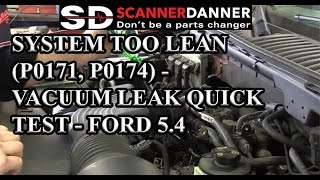
How to confirm: With the engine running, listen for hissing sounds around the intake manifold. A smoke machine test is the most effective way to pinpoint the leak. You can also carefully spray brake cleaner around the gasket area; a change in engine idle RPM will indicate a leak.
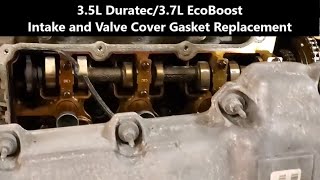
Typical fix: Replace the upper and lower intake manifold gaskets. On the 3.7L, this may also be a good time to inspect the thermostat housing O-ring which is a known leak point.
Est. part cost: $25-$60 for aftermarket gasket sets (e.g., Fel-Pro MS 97118-1), $50-$100 for OEM. - Dirty or Faulty Mass Airflow (MAF) Sensor 🟡 Medium Probability A dirty MAF sensor is a frequent cause of lean codes on many Ford vehicles. Oil from aftermarket air filters or fine dust bypassing the filter can coat the sensor's hot wire, causing it to under-report airflow and leading the PCM to command less fuel than needed.
How to confirm: Remove the MAF sensor from the air intake tube and inspect the small sensor wires for dirt or contamination. A scan tool can also show abnormal MAF readings (g/s). Cleaning is a good first step, but a skewed sensor may not improve.
Typical fix: Clean the sensor wires carefully with a dedicated MAF sensor cleaner spray (like CRC 05110) and let it air dry completely. Do not touch the wires or use harsh cleaners like brake cleaner. If cleaning doesn't resolve the issue or fuel trims remain high, replace the sensor with an OEM Motorcraft part.
Est. part cost: $10-$15 for cleaner, $120-$200 for a new Motorcraft sensor (e.g., AFLS-165). - Failing Upstream Oxygen Sensor (Bank 2, Sensor 1) ⚪ Low Probability While the O2 sensor is what triggers the code, it's often correctly reporting a problem caused by something else. However, an old, worn-out, or slow-to-respond sensor can send false lean signals.
How to confirm: Use a scan tool to monitor the live voltage data from the Bank 2 Sensor 1 O2 sensor. A healthy sensor's voltage should switch rapidly between approximately 0.1V and 0.9V. A sensor that is slow to switch or has a steady low voltage may be faulty.
Typical fix: Replace the Bank 2, Sensor 1 (Upstream, Driver's Side) oxygen sensor. The Motorcraft part number for the 3.7L is often DY-1292 or similar, and for the 3.5L is DY-1301.
Est. part cost: $50-$150.
Rare But Worth Checking
- Low Fuel Pressure: If you also have code P0171 (Bank 1 Lean), a fuel delivery issue affecting the whole engine is more likely. This could be a weak fuel pump or a clogged fuel filter. Check fuel pressure at the rail with a gauge.
- Chafed O2 Sensor Wiring Harness: For 2015 models with the 3.7L engine, TSB 15-0160 notes that the O2 sensor harness can rub against the transmission, causing a short and triggering various sensor codes.
- Leaking PCV System / Hoses: A cracked or disconnected PCV hose can create a significant vacuum leak. This includes the hose itself and any grommets or fittings connected to the intake manifold or valve covers.
Diagnosis Steps
- Scan for Codes & Review Freeze Frame: Use an OBD-II scanner to confirm P0174 and check for any other codes. Note the engine conditions (RPM, load, temp) when the code was set from the freeze frame data.
- Check TSBs: Visually inspect for the top two vehicle-specific issues. Check for a kinked EVAP hose near the canister (TSB 21-2106) and signs of water entry/damage in the engine bay, especially a wet air filter (TSB 19-2091).
- Analyze Fuel Trims: Use a scan tool to view Short Term (STFT) and Long Term (LTFT) fuel trims for Bank 2. High positive numbers (LTFT > 15-20%) confirm the PCM is adding fuel to correct a lean condition. If LTFT is high at idle but improves (moves toward 0) with RPM, suspect a vacuum leak. If it gets worse with RPM, suspect a fuel delivery or MAF issue.
- Inspect for Vacuum Leaks: A smoke test is the most effective way to find hard-to-see leaks from intake gaskets, PCV hoses, or the air intake tube. Listen for hissing sounds. A temporary whistle at cold start is a strong sign of a leaking intake gasket.
- Clean and Test the MAF Sensor: Remove, inspect, and clean the Mass Airflow sensor with dedicated MAF cleaner spray. Re-install and check if fuel trims improve. A dirty MAF is a very common cause on Fords.
- Check Fuel Pressure: If a vacuum leak or MAF issue isn't found, test the fuel pressure at the fuel rail to rule out a weak fuel pump or clogged filter.
- Test the Oxygen Sensor: As a final step, use a scan tool to graph the Bank 2, Sensor 1 oxygen sensor voltage. It should switch rapidly from below 0.2V to above 0.8V. If it's stuck low or switches slowly, it may have failed, but only after ruling out all other causes.
Parts You'll Likely Need
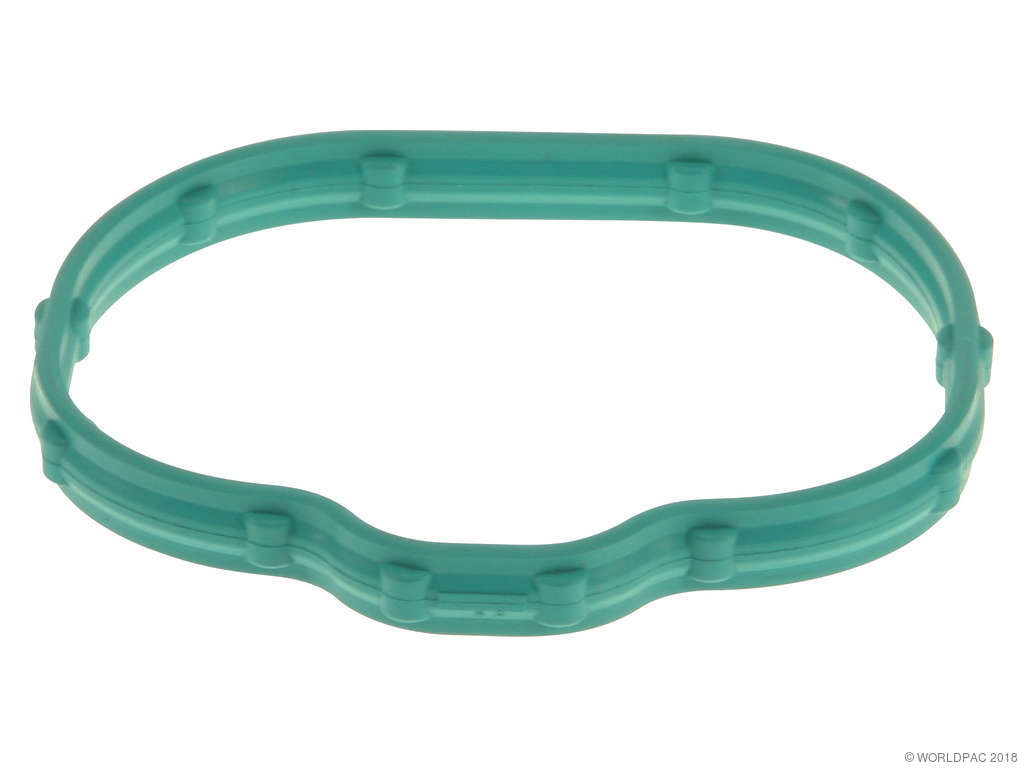
- Intake Manifold Gaskets (Upper & Lower)
(OEM #BR3E-9424-PC (Manifold part number, for reference))— A common source of vacuum leaks that can cause a lean condition on one or both banks, especially when the engine is cold.
Related Codes That Often Appear With This One
- P0171 — System Too Lean (Bank 1). If both P0171 and P0174 are present, it points to a problem affecting the entire engine, such as a MAF sensor issue, a major vacuum leak in the intake plenum (e.g. intake gaskets), or a fuel delivery problem.
- P0451, P0455, P0456, P0496, P1450 — These are EVAP system codes. Their presence with P0174 strongly suggests the kinked EVAP vent line issue described in TSB 21-2106.
- P00BD, P2196, P2198 — These are other codes related to air flow and fuel mixture. Their presence alongside P0174 points towards the water intrusion issue described in TSB 19-2091 and TSB 17-0014.
Technical Service Bulletins (TSBs) & Recalls
- TSB 21-2106: Addresses a kinked evaporator emissions fresh air vent line causing lean and EVAP codes.
- TSB 19-2091: Details issues from undesired water entry into the engine compartment, causing various DTCs including P0174.
- TSB 17-0014: An earlier version of the TSB for water entry into the engine compartment on 2015 models.
Platform-Specific Known Issues
- TSB 21-2106: Some 2017-2021 Transits may have a kinked EVAP fresh air vent line, causing P0174 and other EVAP codes. The fix is to reroute the line and secure it.
- TSB 19-2091 & 17-0014: Some 2015-2018 Transits are prone to water leaking from the cowl area into the engine bay, which can saturate the air filter and damage sensors, leading to a host of drivability codes including P0174.
Mechanic-Grade Diagnostic Values
- Long Term Fuel Trim (LTFT) at Idle — expected: ~0% +/- 5%. Failure: Sustained positive values greater than +15% at idle that decrease when RPM is raised to ~2500 RPM strongly suggest a vacuum leak.
- Long Term Fuel Trim (LTFT) under Load — expected: ~0% +/- 5%. Failure: Values are normal at idle but become increasingly positive as RPM and load increase, suggesting a fuel delivery issue (weak pump, clogged filter) or a dirty MAF sensor.
- Mass Airflow (MAF) Sensor Reading at Idle — expected: Approximately 4-7 g/s for a 3.5L/3.7L V6 engine. A common rule of thumb is roughly double the engine displacement in liters.. Failure: Significantly lower readings can indicate a dirty sensor or a vacuum leak downstream. Readings that don't increase smoothly with RPM can indicate a faulty sensor.
- Fuel Pressure (Key On, Engine Running) — expected: Approximately 55 PSI +/- 5 PSI for the port-injected 3.7L V6.. Failure: Pressure significantly below specification indicates a failing fuel pump, clogged filter, or faulty fuel pressure regulator.
Wiring & Ground Locations
- Engine/Gearbox to Chassis Ground Strap — On many Transit models, a primary ground strap runs from the gearbox to the inner wing area, often below the underhood fuse box.. A corroded or loose main engine ground can cause erratic sensor readings, including from the O2 sensors and MAF sensor, leading to incorrect fuel trim adjustments and lean codes.
- B-Pillar Ground Point — A common and accessible ground point is located at the base of the B-pillar, often near the D-ring for seatbelts or cargo.. While not a primary engine ground, this is a known chassis ground location. Ensuring all chassis grounds are clean and tight is a crucial step in resolving persistent, hard-to-diagnose electrical issues that could manifest as lean codes.
Real Owner Repair Stories
- SVTPerformance.com forum user (Ford vehicle with P0171/P0174 codes) — Hesitation under acceleration, falling flat on its face.
❌ Tried (didn't work) Clearing codes
✅ What actually fixed it The user found a vacuum hose that ran from the back of the supercharger had a collapsed and cracked elbow, causing a significant unmetered air leak. Replacing the bent hose resolved the codes and drivability issues. - Blazer Forum user (similar V6 engine logic) (GM V6 with P0171/P0174) — Rough idle, hesitation/surging on acceleration, strong fuel smell from exhaust.
❌ Tried (didn't work) Replacing intake manifold gaskets, Replacing fuel pressure regulator
✅ What actually fixed it The actual cause was a deteriorated PCV system. The PCV valve elbow was cracked and the grommets for the PCV valve and fresh air tube were worn, creating a vacuum leak. Replacing the PCV valve, elbow, and grommets for $35 fixed the lean codes.
Model Year Variations Within This Range
- 2015-2017: Early production Transits within this range are more commonly cited for transmission issues like rough shifting. While not directly causing P0174, being aware of early-model quirks is important during diagnosis.
- 2018-2019: Later models in this range are noted to have improved engines and fewer electronic complaints, suggesting some running changes were made to enhance reliability. The TSB for water intrusion (TSB 19-2091) specifically covers up to 2018 models, implying a potential design change for 2019.
Helpful Videos
![How to Fix P0174 Engine Code in 2 Minutes [2 DIY Methods / Only $8.99]](https://img.youtube.com/vi/Mc4ajz3DM7s/mqdefault.jpg)

Used OEM Parts in Stock




New Aftermarket Parts Available



The information in this article is provided for general reference and educational purposes only. Vehicle specifications, procedures, and part compatibility can vary by production date, trim level, and region. Always consult your vehicle's factory service manual and verify part numbers before purchasing or performing repairs. Safety-critical components such as airbags, seat belts, and braking systems should be installed by a qualified professional.
- Ford TRANSIT:
- 🎬 Helpful Videos
- 🛍️ Shop This Part
- What's Unique About the 2015-2019 Ford TRANSIT
- Diagnostic Flowchart
- Symptoms You May Notice
- Most Likely Causes
- Rare But Worth Checking
- Diagnosis Steps
- Parts You'll Likely Need
- Related Codes That Often Appear With This One
- Technical Service Bulletins (TSBs) & Recalls
- Platform-Specific Known Issues
- Mechanic-Grade Diagnostic Values
- Wiring & Ground Locations
- Real Owner Repair Stories
- Model Year Variations Within This Range
- 🎟️ Get 5% Off