

P0174 on 2017 Chrysler Pacifica: "System Too Lean Bank 2" Causes and Fixes
P0174 on a 2017 Pacifica most often means there is a vacuum leak, typically from a failed upper and/or lower intake manifold gasket. This allows unmetered air into the engine, causing a lean condition that the PCM cannot correct. A Reddit user confirmed this exact fix on their 2017 Pacifica. Expect to pay $250-$750 for a professional repair, which often includes replacing spark plugs as a 'while you're in there' job.
- P0174 on a 2017 Pacifica means the engine is running lean on the rear cylinder bank (Bank 2).
- This is very often seen with P0171 (lean on Bank 1), and together they strongly point to a vacuum leak.
- The most common cause of a vacuum leak on this specific engine is a failed intake manifold gasket.
- The most reliable way to diagnose the leak is with a smoke test.
- Simply replacing the O2 sensor is usually not the correct fix and can be a waste of money.
What's Unique About the 2017-2017 Chrysler PACIFICA
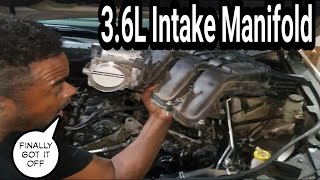
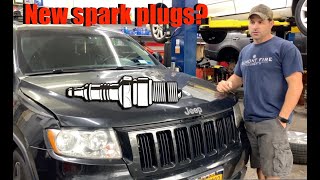
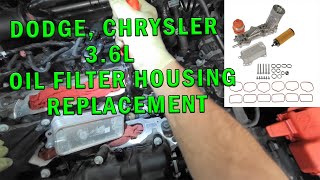
The 3.6L Pentastar V6 in the 2017 Pacifica is known for developing vacuum leaks at the upper and lower intake manifold gaskets. 🎬 See this walkthrough on replacing intake gaskets and spark plugs. A Reddit user with a 2017 Pacifica running P0171 and P0174 confirmed their fuel trims were highly positive (LTFT B1 +20.3%, LTFT B2 +21.1%) and that the fix was replacing cracked upper intake gaskets. This is a more common failure point on this engine than on many others. While issues like a dirty MAP sensor or bad O2 sensors can cause this code on any vehicle, on the Pacifica, the intake gaskets should be a primary suspect, especially when both P0171 and P0174 are present. Another common failure point on this engine, located under the intake manifold, is the oil filter housing, which is known to crack and leak oil. It is often inspected or replaced at the same time as the intake gaskets.
Diagnostic Flowchart
Tap your situation to follow the diagnostic path that matches what you're seeing on this vehicle.
Symptoms You May Notice
- Check Engine Light is on
- Rough or unstable idle
- Engine hesitation or stumbling during acceleration
- Engine stalling, especially at low speeds
- Reduced fuel economy
- A hissing or whistling sound from the engine bay, indicating a vacuum leak
- Replacing the oxygen sensor first. While an O2 sensor can fail, it's often correctly reporting a lean condition caused by a vacuum leak. When both P0171 and P0174 are present, a vacuum leak affecting both banks is the most likely culprit.
Most Likely Causes
- Leaking Intake Manifold Gaskets 🔴 High Probability The plastic intake manifold and its gaskets on the 3.6L Pentastar engine can become brittle and crack over time due to heat cycles, leading to unmetered air entering the engine. This is a widely documented issue for this engine family.
How to confirm: Perform a smoke test by injecting smoke into the intake system and watch for smoke escaping from the upper or lower intake manifold sealing areas. Alternatively, with the engine running, carefully spray short bursts of brake cleaner or an unlit propane torch around the intake manifold gaskets and listen for a change in engine RPM. High positive long-term fuel trims (>15%) on a scan tool for both banks strongly suggest a vacuum leak.
Typical fix: Replace the upper and lower intake manifold gaskets. While the manifold is off, it's a good time to clean the throttle body, replace spark plugs, and inspect the oil filter housing underneath for cracks or leaks.
Est. part cost: $40-$100 - Leaking PCV Valve or Hoses 🟡 Medium Probability Rubber and plastic hoses in the Positive Crankcase Ventilation (PCV) system can crack or become disconnected, creating a vacuum leak.
How to confirm: Visually inspect all PCV hoses for cracks, swelling, or loose connections. A smoke test will also quickly reveal leaks in the PCV system. A stuck-open PCV valve will act as a significant vacuum leak.
Typical fix: Replace the faulty PCV valve or hose. The PCV valve is often replaced preventatively during an intake manifold gasket job.
Est. part cost: $15-$50 - Low Fuel Pressure ⚪ Low Probability
How to confirm: Connect a fuel pressure gauge to the fuel rail's service port. For the 2017 Pacifica, pressure should be around 58 PSI. If pressure is low, suspect a weak fuel pump or a clogged fuel filter.
Typical fix: Replace the fuel pump module, which is located inside the fuel tank.
Est. part cost: $200-$400 - Faulty Upstream Oxygen (O2) Sensor ⚪ Low Probability
How to confirm: A failing O2 sensor can get 'lazy' and send a biased, incorrect signal to the PCM. This is less likely if both P0171 and P0174 are present, as that points to a shared cause affecting both banks. Use a scan tool to monitor the live voltage of the Bank 2, Sensor 1 O2 sensor. It should fluctuate rapidly between approximately 0.1V and 0.9V. A slow or stuck reading indicates a problem.
Typical fix: Replace the Bank 2 (rear) upstream O2 sensor.
Est. part cost: $50-$120
Rare But Worth Checking
- Dirty or Faulty Mass Airflow (MAF) Sensor: The 3.6L Pentastar uses a MAP (Manifold Absolute Pressure) sensor, not a MAF sensor. However, a dirty MAP sensor can provide incorrect readings, contributing to a lean condition. Cleaning it with a dedicated sensor cleaner is a simple and inexpensive diagnostic step.
- Exhaust Leak: A crack or leak in the exhaust manifold or pipe before the upstream O2 sensor can draw in outside air, tricking the sensor into thinking the engine is running lean.
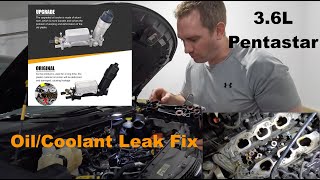
- Cracked Oil Filter Housing: While this typically causes an oil leak, a crack in the housing (Part #68105583AF) located under 🎬 Watch: How to replace a leaking oil filter housing. the intake manifold can sometimes create a vacuum leak as well. It is a very common failure point on the 3.6L Pentastar and should always be inspected when the intake manifold is removed.
Diagnosis Steps
- Check for other stored trouble codes. Codes P0171 and P1D73 are particularly relevant.
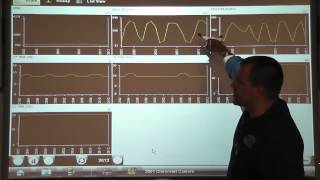
- Using a scan tool, observe the short-term (STFT) and long-term (LTFT) fuel trims for both banks at idle and at 2500 RPM. 🎬 Watch: How to use fuel trims to diagnose lean codes. High positive numbers (e.g., >15-20%) confirm a lean condition. If trims decrease at higher RPM, a vacuum leak is highly likely.
- Perform a thorough visual inspection of the engine bay. Look for any cracked, disconnected, or deteriorated vacuum hoses, especially around the PCV system and intake air ducting.
- Perform a smoke test. This is the most effective way to find vacuum leaks. Introduce smoke into the intake system via a vacuum line and look for smoke escaping from gaskets (especially the upper and lower intake manifold) or hoses.
- If no vacuum leaks are found, test the fuel pressure to ensure the fuel pump is supplying adequate pressure (around 58 PSI).
- Inspect and clean the MAP sensor. A contaminated sensor can send false data to the PCM.
- If all else fails, inspect the Bank 2 upstream O2 sensor for lazy operation using a scan tool's live data function.
Parts You'll Likely Need
- Intake Manifold Gasket Set (Upper and Lower)
(OEM #Lower: 5184331AC (6 required), Upper: 68217514AB (Set of 6) or 5281823AA (Set of 6))— This is the most frequent failure point on the 3.6L Pentastar engine leading to P0171 and P0174 codes.
Trusted brands: Mopar, Fel-Pro, Mahle
OEM price range: $60-$100
Aftermarket price range: $40-$70 - PCV Valve
(OEM #04727392AB)— A stuck-open PCV valve acts as a constant vacuum leak, which can cause a lean condition. It's inexpensive and often replaced with the intake gaskets.
Trusted brands: Mopar, Standard Motor Products
OEM price range: $20-$40
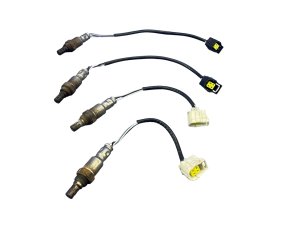
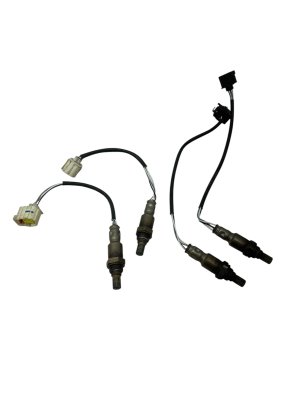
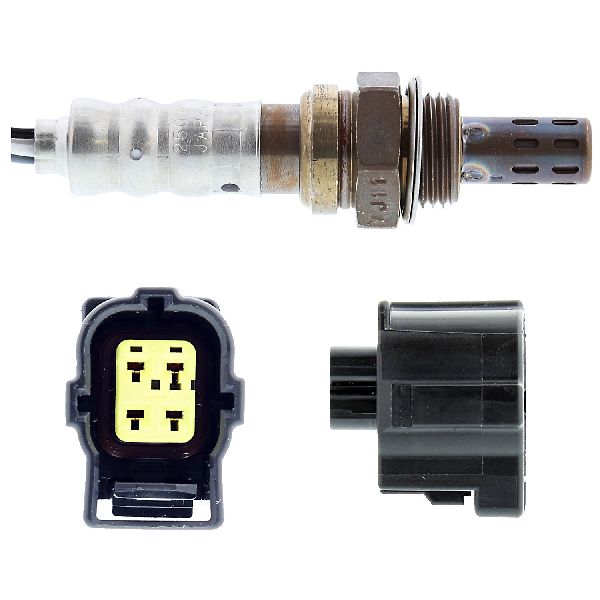
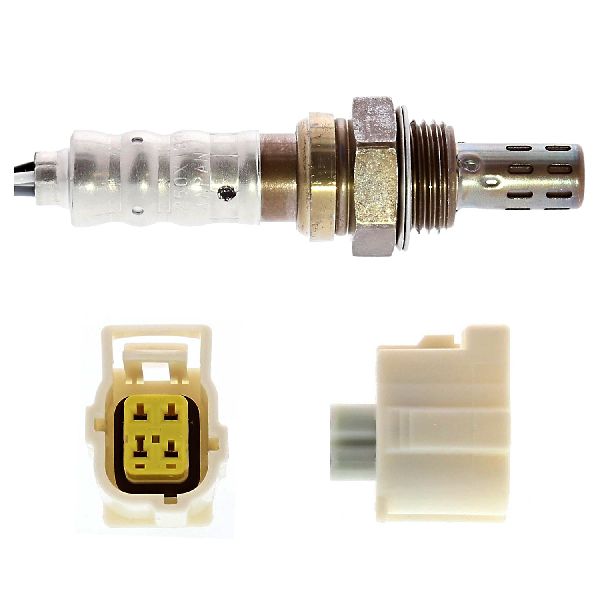
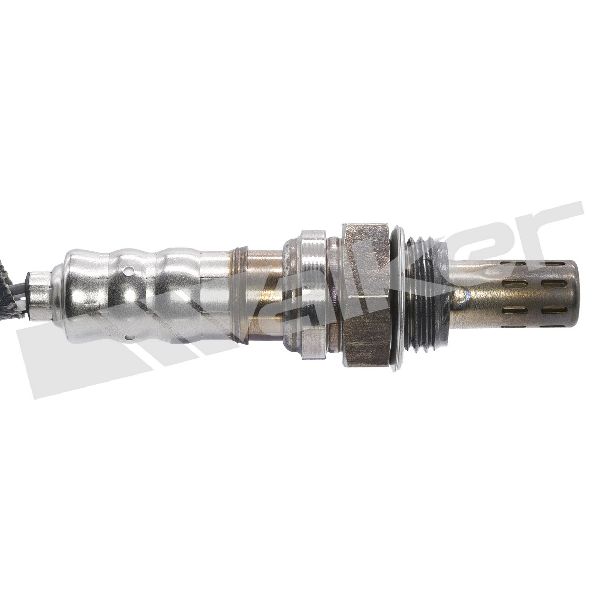
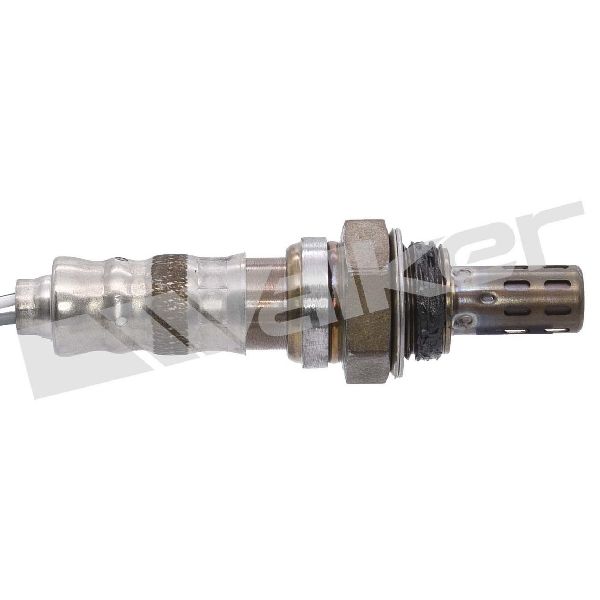
Aftermarket price range: $10-$25 - Upstream Oxygen Sensor (Bank 2, Sensor 1)
(OEM #5149171AA or 5149171AB)— If the sensor itself is faulty and sending an incorrect lean signal, it will need to be replaced. This is less common than a vacuum leak when both banks are lean.
Trusted brands: Mopar, Denso, Bosch
OEM price range: $80-$150
Aftermarket price range: $50-$120
Related Codes That Often Appear With This One
- P0171 — This is the lean code for Bank 1. When both appear together, it strongly suggests a problem that affects the entire engine, such as a vacuum leak at the intake manifold or a fuel delivery issue.
- P1D73 — This code for the Active Grill Shutter (AGS) performance is mentioned alongside P0171 and P0174 in several Chrysler TSBs. While not directly causing the lean condition, it suggests a potential software update may be available from the dealer that addresses how these codes are set. [Bulletin #18-002-19 REV A, Bulletin #1806917]
- P0300 — A random/multiple cylinder misfire code can occur alongside P0174 because a severe lean condition can prevent proper combustion.
Technical Service Bulletins (TSBs) & Recalls
- 18-002-19 REV A: PCM software update related to MIL illumination for various codes, including P0174.
- 1806917: PCM software update for various DTCs, including P0174, changing them to two-trip faults.
- 18-057-16 REV. A: PCM software update for P0171, P0174, and P1D73 (AGS Performance).
Platform-Specific Known Issues
- An owner complaint filed with the NHTSA mentions intermittent stalling with stored (not active) P0171 and P0174 codes, indicating the issue can be intermittent and severe enough to cause the engine to die. [ODI #11481965]
- Chrysler issued several TSBs that mention P0174 in conjunction with P0171 and other codes. These bulletins primarily involve a software update to change the fault-setting criteria from a single trip to a two-trip fault, which helps prevent the Check Engine Light from illuminating due to transient conditions. [Bulletin #18-002-19 REV A, Bulletin #1806917, Bulletin #18-057-16 REV. A]
- A Reddit user with a 2017 Pacifica documented their diagnosis of P0171/P0174, showing fuel trims over +20% and confirming the fix was replacing two cracked upper intake gaskets.
Mechanic-Grade Diagnostic Values
- Fuel Injector Resistance — expected: 12.0 - 12.5 Ohms. Failure: Significantly higher resistance (e.g., double the normal value) or an open/short circuit. Readings slightly out of spec (e.g., 11.4 Ohms) may also indicate a problem.
- MAP Sensor Voltage (Key On, Engine Off) — expected: ~4.5 Volts. Failure: Voltage that is significantly different from the expected value at atmospheric pressure.
- MAP Sensor Voltage (Engine Idling) — expected: 1.0 - 2.0 Volts. Failure: Voltage that does not drop from the KOEO reading or does not fluctuate when the throttle is applied.
- Upstream O2 Sensor Voltage — expected: Rapidly fluctuating between ~0.1V (lean) and ~0.9V (rich). Failure: A slow, lazy, or stuck voltage reading.
- Fuel Pressure — expected: ~58 PSI. Failure: Pressure significantly below the specified value indicates a weak fuel pump or clogged filter.
Wiring & Ground Locations
- PCM (Powertrain Control Module) — At the back of the engine compartment on the driver's side, visible after removing the main air intake ducting.. The PCM is the central computer that receives data from all sensors (O2, MAP, etc.) and controls the fuel injectors. A faulty PCM or bad connection can cause a wide range of issues, though it is a rare cause for this code.
- Main Engine Bay Ground Points — One ground strap is located on the front of the engine connecting to the manifold. Another is on the top/rear of the engine, also connecting to the manifold. A key ground from the battery negative terminal connects to the chassis.. A poor ground connection for the PCM or its sensors can introduce electrical noise and cause incorrect sensor readings, potentially leading to lean codes.
Real Owner Repair Stories
- Reddit user InternationalScene75 (2017 Chrysler Pacifica) — P0171 and P0174 codes present. High positive long-term fuel trims (LTFT B1 +20.3%, LTFT B2 +21.1%).
❌ Tried (didn't work) Checked fuel pressure (was good at 58 psi)., Sprayed engine bay with cleaner to find vacuum leaks (no change in RPM was heard).
✅ What actually fixed it Replacing the upper intake manifold gaskets. The user found two of the gaskets were cracked.
Helpful Videos
Used OEM Parts in Stock


New Aftermarket Parts Available


The information in this article is provided for general reference and educational purposes only. Vehicle specifications, procedures, and part compatibility can vary by production date, trim level, and region. Always consult your vehicle's factory service manual and verify part numbers before purchasing or performing repairs. Safety-critical components such as airbags, seat belts, and braking systems should be installed by a qualified professional.
- Chrysler PACIFICA:
- 🎬 Helpful Videos
- 🛍️ Shop This Part
- What's Unique About the 2017-2017 Chrysler PACIFICA
- Diagnostic Flowchart
- Symptoms You May Notice
- Most Likely Causes
- Rare But Worth Checking
- Diagnosis Steps
- Parts You'll Likely Need
- Related Codes That Often Appear With This One
- Technical Service Bulletins (TSBs) & Recalls
- Platform-Specific Known Issues
- Mechanic-Grade Diagnostic Values
- Wiring & Ground Locations
- Real Owner Repair Stories
- 🎟️ Get 5% Off