

P0174 on 2007-2014 Chevrolet Suburban: System Too Lean (Bank 2) Causes and Fixes
Code P0174 on a 2007-2014 Suburban most often means there is a vacuum leak from a failed intake manifold gasket or a cracked PCV tube. The original plastic intake gaskets are a known failure point, and upgrading to a metal-carrier gasket like the Fel-Pro MS98016T is a common, permanent fix. Cleaning the MAF sensor is another common, easy first step. Expect to pay $30-$100 for gaskets or a PCV hose.
- Code P0174 on your Suburban means the passenger side of the engine is running lean (too much air, not enough fuel).
- Before buying any parts, inspect for vacuum leaks. The most likely culprits are the intake manifold gaskets and the PCV tube assembly.
- A smoke test is the most effective way to find a vacuum leak.
- Cleaning the Mass Airflow (MAF) sensor with a dedicated cleaner is a cheap and easy diagnostic step that often solves the problem, especially if you also have a P0171 code.
- Don't immediately replace the O2 sensor; it's usually just doing its job by reporting the lean condition.
What's Unique About the 2007-2014 Chevrolet SUBURBAN

The GMT900 generation of Suburbans, equipped with Vortec V8 engines, is particularly known for two common issues that cause the P0174 code. The first is the failure of the original plastic-frame intake manifold gaskets, which become brittle and crack over time, creating a significant vacuum leak. This issue is so common that many owners consider the upgraded Fel-Pro (MS98016T) metal-frame gasket a necessary reliability improvement. The second, highlighted in GM Technical Service Bulletin #PIP5341, is a cracked Positive Crankcase Ventilation (PCV) tube, which also introduces unmetered air into the engine. This tube, often the one running from the driver's side valve cover to the intake manifold, can develop cracks that are difficult to see but result in a significant vacuum leak.
Diagnostic Flowchart
Tap your situation to follow the diagnostic path that matches what you're seeing on this vehicle.
Symptoms You May Notice
- Check Engine Light is on
- Rough or high idle, especially on a cold start
- Engine hesitation or surging during acceleration
- Reduced engine power
- Engine misfires (may be accompanied by a P0300 code)
- Decreased fuel economy
- Audible hissing or sucking sound from the engine bay
- Replacing the oxygen sensor immediately. O2 sensors often correctly report a lean condition caused by another component, like a vacuum leak. Always diagnose for leaks and fuel pressure issues before replacing sensors.
- Replacing the fuel pump without confirming low pressure and volume. A fuel pressure test is a critical step that is sometimes skipped.
Most Likely Causes

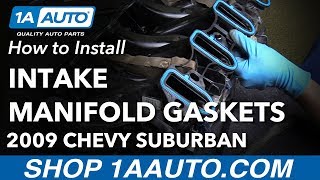
- Leaking Intake Manifold Gaskets 🔴 High Probability The original intake manifold gaskets on the 5.3L and 6.0L Vortec engines use a plastic carrier that becomes hard and brittle with age and heat cycles, causing it to crack and lose its seal. This is a very well-documented failure. The leak is often worse on a cold engine and may seem to improve as the engine warms up and the parts expand.
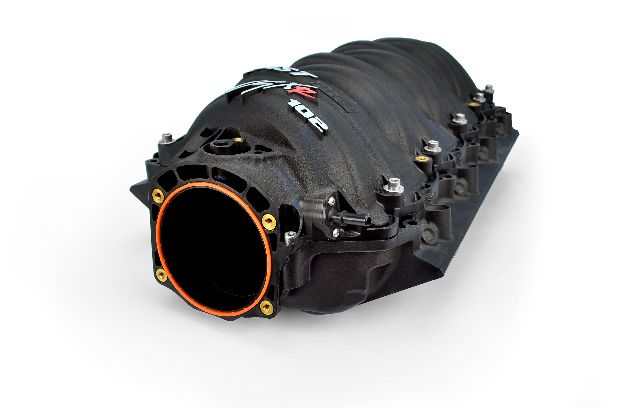
How to confirm: With the engine running, spray short bursts of brake cleaner or a propane torch (unlit) around the edge of the intake manifold where it meets the cylinder head. If the engine's idle speed changes or stumbles, a leak is present. A smoke test is the most definitive and safest way to confirm the leak, as smoke will visibly exit from the failed gasket area.
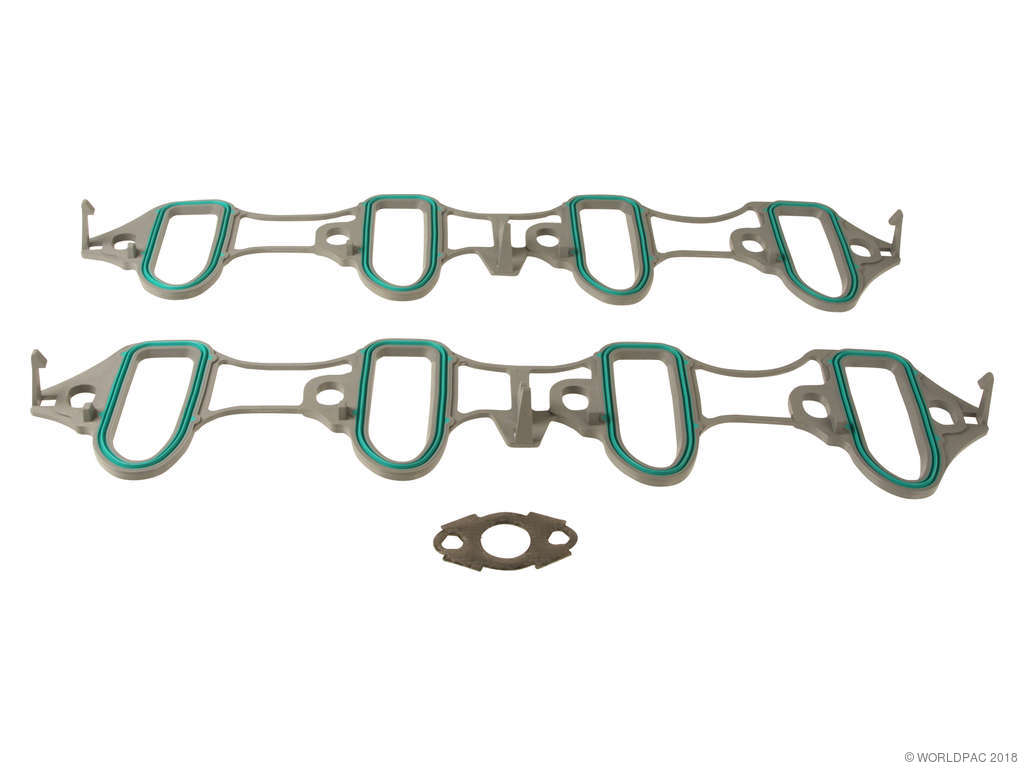
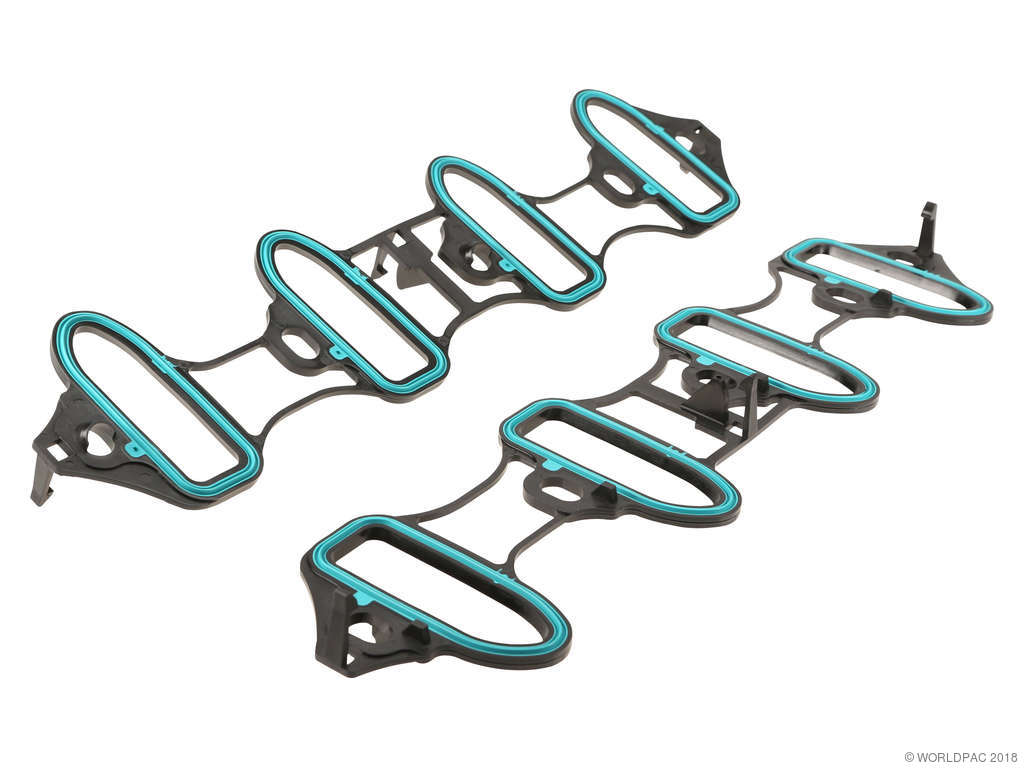
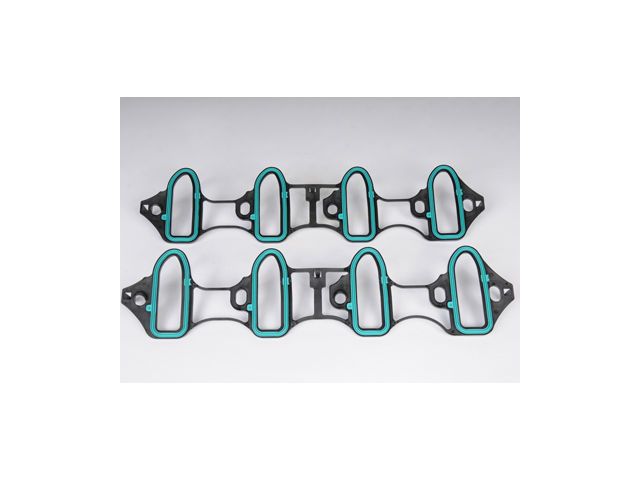
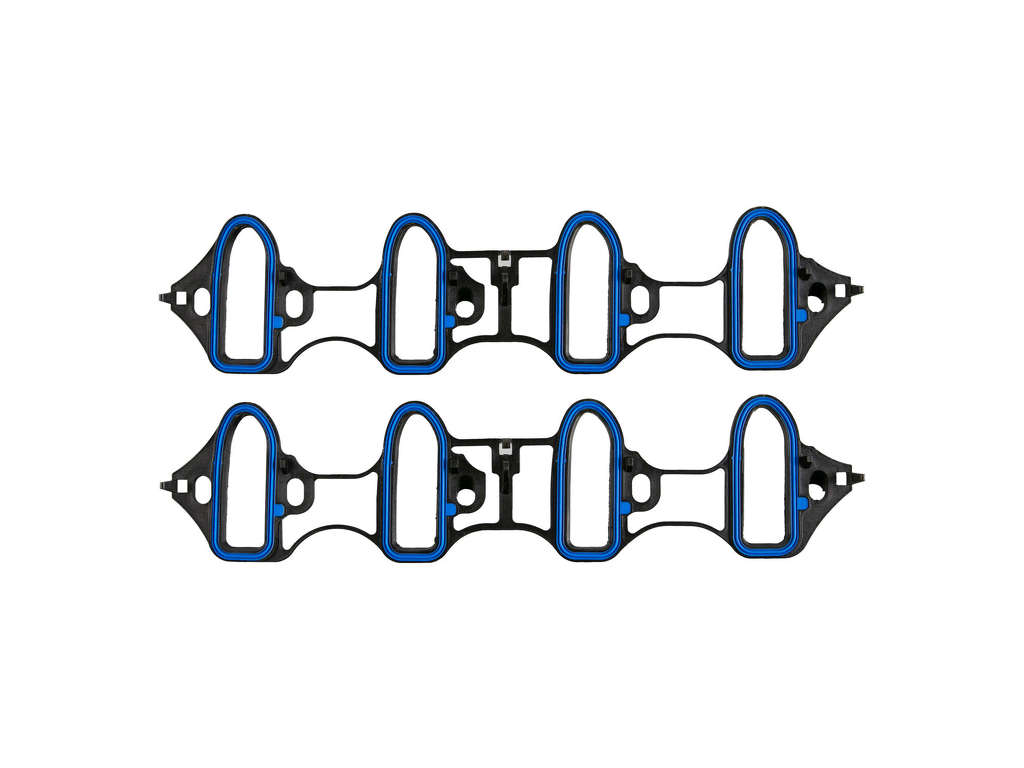
Typical fix: Replace the intake manifold gaskets. It is highly recommended to use an upgraded aftermarket set with a metal carrier, such as the Fel-Pro MS98016T, which resists cracking and provides a more durable seal. Many owners perform this repair while also replacing knock sensors and the oil pressure sensor, which are located under the intake manifold.
Est. part cost: $30-$80 - Cracked or Disconnected PCV Tube/Hose 🔴 High Probability As cited in GM TSB #PIP5341, the PCV tube assembly, particularly the section connecting the driver's side valve cover to the intake manifold port, can develop cracks or breaks, creating a significant vacuum leak. The plastic becomes brittle from heat and vibration.
How to confirm: Visually inspect the PCV hoses for any obvious cracks, splits, or loose connections. A hissing sound may be audible near the leak. A smoke test will quickly reveal a leak in this hose. The crack is often on the underside of a bend, making it difficult to see without removing the hose.
Typical fix: Replace the faulty PCV tube assembly. Use an OEM part like ACDelco 12597774 for a direct fit.
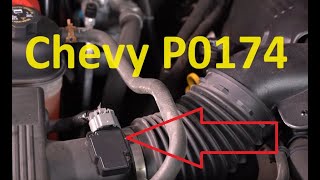
Est. part cost: $25-$75 - Dirty or Faulty Mass Airflow (MAF) Sensor 🟡 Medium Probability The MAF sensor can become contaminated with dirt, debris, or oil (especially from aftermarket oiled air filters), causing it to under-report the amount of air entering the engine. This leads the computer to inject too little fuel. If both P0171 and P0174 are present, a MAF issue is a more likely suspect.
How to confirm: Remove the sensor and inspect the delicate wires for contamination. Often, cleaning the sensor is enough. A key diagnostic step is to watch fuel trims; if cleaning the MAF causes the short-term and long-term fuel trims to decrease towards zero, the sensor was the issue. A 5.3L engine should read approximately 5.3 g/s on a scan tool at idle; a significantly lower reading (e.g., 4.3 g/s) indicates an under-reporting MAF sensor.
Typical fix: Clean the MAF sensor with a dedicated MAF sensor cleaner spray. Do not touch the sensor wires. If cleaning doesn't work, replace the sensor.
Est. part cost: $15 (cleaner) - $150 (new sensor) - Weak Fuel Pump or Clogged Fuel Filter 🟡 Medium Probability While not specific to this platform, fuel pump weakness can cause lean codes. On these trucks, a failing Fuel Pump Driver Module (FPDM), which controls pump voltage, can also be a cause, leading to low fuel pressure under load.
How to confirm: Connect a fuel pressure gauge to the fuel rail's Schrader valve. Compare the reading to the manufacturer's specification (typically 55-62 PSI for these trucks with key on, engine off). Pressure should hold steady under load. If pressure drops significantly when revving the engine or driving, it points to a fuel delivery problem.
Typical fix: Replace the fuel pump module and/or fuel filter. If the FPDM is diagnosed as faulty, it must be replaced. The FPDM is a separate module, often mounted on the frame rail.
Est. part cost: $200-$400 (Pump), $70-$150 (FPDM)
Rare But Worth Checking
- Failing Bank 2 Oxygen (O2) Sensor: While often replaced, the O2 sensor is less commonly the root cause than vacuum leaks or fuel delivery issues. A lazy or failed sensor can send incorrect lean signals, but this should be confirmed by graphing the sensor's voltage with a scan tool before replacement. A healthy sensor should switch rapidly.
- Exhaust Leak: A crack or leak in the exhaust manifold or pipe before the Bank 2 upstream O2 sensor can allow outside air to be drawn in, making the sensor falsely report a lean condition. This can be diagnosed by a visual inspection for soot trails or by using a smoke machine on the exhaust.
- Clogged Fuel Injectors on Bank 2: If only the injectors on the passenger side are restricted, it can cause a lean condition isolated to Bank 2. This is less common than a system-wide fuel pressure issue. A professional fuel system cleaning or injector flow test can confirm this.
Diagnosis Steps

- Check for other stored trouble codes. If P0171 is also present, focus on causes that affect both banks (MAF, main PCV connection, fuel pressure).
- Use a scan tool to monitor short-term (STFT) and long-term (LTFT) fuel trims at idle and at 2500 RPM. High positive numbers (e.g., LTFT > +10%) confirm the lean condition. If trims are high at idle but improve (move closer to 0) at 2500 RPM, this strongly indicates a vacuum leak.
- Visually inspect the engine bay for obvious issues like cracked or disconnected vacuum hoses, especially the PCV tube assembly running from the driver's valve cover to the intake.
- Perform a vacuum leak test. The most reliable method is with a smoke machine. Introduce smoke into the intake system via a vacuum port and look for smoke escaping from the intake manifold gaskets, PCV hoses, or brake booster line.
- If a vacuum leak is not found, remove and clean the Mass Airflow (MAF) sensor using dedicated MAF sensor cleaner. Re-check fuel trims after cleaning.
- Test fuel pressure at the fuel rail's Schrader valve. Ensure it is within the 55-62 PSI spec and does not drop under load (revving the engine).
- If all else fails, inspect for exhaust leaks before the Bank 2 O2 sensor and test the Bank 2, Sensor 1 oxygen sensor to ensure it is functioning correctly and not stuck in a lean reading.
Parts You'll Likely Need

- Intake Manifold Gasket Set
(OEM #MS98016T (Fel-Pro example))— This is one of the most common failure points leading to a vacuum leak and a P0174 code on this platform. The Fel-Pro MS98016T is a widely recommended upgrade over the OEM plastic design due to its durable metal carrier.
Trusted brands: ACDelco, Fel-Pro
Related Codes That Often Appear With This One
- P0171 — System Too Lean (Bank 1). When both P0171 and P0174 are present, it strongly suggests a problem that affects the entire engine, such as a faulty MAF sensor, a large vacuum leak at the intake manifold, or low fuel pressure.
- P0300 — Random/Multiple Cylinder Misfire Detected. A severe lean condition can prevent proper combustion, leading to misfires across one or more cylinders. A flashing check engine light often accompanies this code, indicating a severe misfire.
- C0561 — System Disabled Information Stored Invalid. As seen in some cases, a significant engine performance issue (like a large vacuum leak causing lean codes) can provide invalid data to the traction control module, causing it to disable itself and set this code.
Technical Service Bulletins (TSBs) & Recalls
- PIP5341: Notes that a rough idle with codes P0171 and/or P0174 can be caused by a vacuum leak from the PCV tube. This bulletin applies to a wide range of 2007-2016 GM trucks and SUVs with V8 engines, including the Suburban, Tahoe, Silverado, Sierra, Yukon, and Escalade.
Platform-Specific Known Issues
- The intake manifold gaskets are a very common failure item. The original design uses gaskets with a plastic carrier that can flatten and crack, while many aftermarket replacements (like Fel-Pro MS98016T) feature an improved aluminized steel carrier for better longevity and resistance to heat and fuel.
- A cracked PCV tube on the driver's side valve cover that connects to the intake manifold is a specific issue noted in TSB #PIP5341 for causing lean codes P0171 and/or P0174. The crack is often on the underside of the hose and can be hard to spot without a smoke test or close inspection.
- The issue of intake gaskets failing is often more pronounced in cold weather. Owners report that the Check Engine Light for P0171/P0174 may appear on the first cold snap of the season, as the contracting materials open up a previously minor leak.
Mechanic-Grade Diagnostic Values

- Fuel Injector Coil Resistance — expected: 11 - 14 ohms (when engine temp is 50-90°F). Failure: A reading significantly outside this range, or a variance of more than 3 ohms between injectors, indicates a faulty injector.
- Upstream O2 Sensor (Bank 2, Sensor 1) Voltage — expected: Rapidly fluctuating between 0.1V (lean) and 0.9V (rich). Failure: A sensor that is stuck at a specific voltage (e.g., stuck low < 0.3V) or responds very slowly ('lazy') is likely faulty.
- Mass Airflow (MAF) Sensor Reading at Idle — expected: Approximately 5.3 grams/second (g/s) for a 5.3L engine.. Failure: A significantly lower reading (e.g., 4.0-4.5 g/s) at a stable, warm idle suggests the sensor is under-reporting airflow, causing a lean condition.
- Fuel Pressure (Key On, Engine Off) — expected: 55 - 62 PSI. Failure: Pressure below 55 PSI indicates a fuel delivery problem (weak pump, clogged filter). Pressure should not drop significantly when the engine is running or under load.
- Long Term Fuel Trim (LTFT) at Idle vs. 2500 RPM — expected: Within +/- 10%. Failure: High positive trims at idle (e.g., +20%) that decrease significantly at higher RPM (e.g., drop to +10%) is a classic sign of a vacuum leak.
Scan Tool Commands That Help
- GM Tech 2 / GDS2: Fuel Injector Balance Test — Used to isolate a single faulty or clogged injector when a lean code is present on only one bank. The test measures the fuel pressure drop caused by firing each injector individually. All injectors should have a similar pressure drop, typically within 3 PSI (20 kPa) of each other.
- GM Tech 2 / GDS2 or other professional scanner: Reset Fuel Trims — After performing a repair for a lean condition (like replacing intake gaskets or a MAF sensor), the learned long-term fuel trim values must be reset. This forces the ECM to relearn the fuel strategy immediately with the new, correct parts, confirming the fix and preventing the code from returning during the relearn period.
Wiring & Ground Locations
- PCV Tube Routing — The PCV tube cited in TSB #PIP5341 as a common failure point runs from the driver's side (Bank 1) valve cover, across the back of the engine, to a port on the top of the intake manifold.. A crack in this tube creates a significant unmetered air (vacuum) leak. While it affects the entire engine, it can sometimes trigger a code on only one bank initially depending on airflow dynamics within the intake manifold.
Real Owner Repair Stories
- YouTube channel 'Newb's Automotive Repair' (2007 Chevrolet Suburban) — Check Engine Light with lean codes P0171 and P0174.
✅ What actually fixed it The original plastic intake manifold gaskets had become brittle and cracked. Replacing them with upgraded metal-carrier Fel-Pro gaskets and cleaning the throttle body resolved the lean codes. The post-repair scan tool data showed fuel trims returning to near-zero values. - YouTube channel 'Gerard Burke' (VE Commodore (uses a similar GM V-engine architecture)) — Check Engine Light with P0171 and P0174, especially when idling for long periods.
❌ Tried (didn't work) Initial diagnosis focused on common vacuum leaks.
✅ What actually fixed it The EVAP purge solenoid was stuck open, creating a constant vacuum leak from the fuel tank vapor system into the intake manifold. The mechanic confirmed the failure by removing the solenoid and testing it with a hand-held vacuum pump; the faulty part would not hold a vacuum. Replacing the solenoid fixed the issue.
"I Checked Everything" — The Actual Cause
- A common scenario is performing a smoke test and finding no vacuum leaks, leading to a misdiagnosis. If the smoke test is clean, the next most likely cause for lean codes on both banks is a fuel delivery issue. A weak fuel pump may provide enough pressure at idle to seem okay, but it fails to deliver adequate volume under load, starving the engine for fuel. This is confirmed by a fuel pressure test that shows pressure dropping significantly when the engine is revved, even if the initial key-on pressure is acceptable.
OEM Part Supersession History
GM OEM Plastic Carrier Intake Gasket (e.g., 89017465)→Fel-Pro MS98016T (Aftermarket Upgrade)— The original GM gaskets use a plastic frame that becomes brittle and cracks from engine heat cycles, leading to vacuum leaks. The Fel-Pro part uses a more durable steel carrier that resists this failure mode.
Model Year Variations Within This Range
- 2007-2014: The 5.3L V8 engine came in several versions during this period (LY5, LMG, LC9). The LMG and LC9 variants are Flex Fuel (E85) compatible. All versions feature Active Fuel Management (AFM), also known as Displacement on Demand (DoD). While AFM itself doesn't directly cause P0174, the location of its components (like the VLOM) under the intake manifold means that an intake gasket replacement job is often combined with preventative maintenance or repair of the AFM system.
Helpful Videos
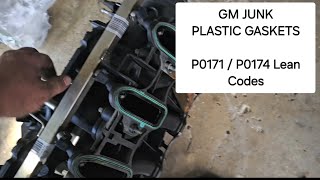
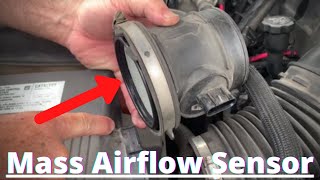
Used OEM Parts in Stock


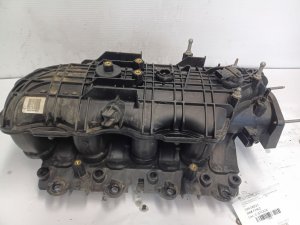
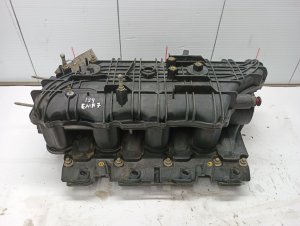
New Aftermarket Parts Available


The information in this article is provided for general reference and educational purposes only. Vehicle specifications, procedures, and part compatibility can vary by production date, trim level, and region. Always consult your vehicle's factory service manual and verify part numbers before purchasing or performing repairs. Safety-critical components such as airbags, seat belts, and braking systems should be installed by a qualified professional.
- Chevrolet SUBURBAN:
- 🎬 Helpful Videos
- 🛍️ Shop This Part
- What's Unique About the 2007-2014 Chevrolet SUBURBAN
- Diagnostic Flowchart
- Symptoms You May Notice
- Most Likely Causes
- Rare But Worth Checking
- Diagnosis Steps
- Parts You'll Likely Need
- Related Codes That Often Appear With This One
- Technical Service Bulletins (TSBs) & Recalls
- Platform-Specific Known Issues
- Mechanic-Grade Diagnostic Values
- Scan Tool Commands That Help
- Wiring & Ground Locations
- Real Owner Repair Stories
- "I Checked Everything" — The Actual Cause
- OEM Part Supersession History
- Model Year Variations Within This Range
- 🎟️ Get 5% Off