

P0174 on 2007-2010 Chevrolet Silverado 2500: Lean Code Causes and Fixes
P0174 on a 2007-2010 Silverado 2500 almost always means there's a vacuum leak. The most common culprits are a cracked PCV tube on the driver's side valve cover, as noted in GM service bulletin #PIP5341, or failed intake manifold gaskets. A new PCV tube costs around $40, while intake gaskets can range from $50 for parts to over $500 for a shop repair. Cleaning the MAF sensor is another easy, common fix.
- P0174 on this truck is almost always a vacuum leak.
- Before buying any parts, carefully inspect the PCV tube on the driver's side valve cover for cracks or holes, as this is a known issue (TSB PIP5341).
- The second most likely cause is leaking intake manifold gaskets. A smoke test is the best way to confirm this.
- Do not replace the oxygen sensor unless it has been properly tested and confirmed as faulty; it is usually just doing its job by reporting the lean condition.
- If both P0171 and P0174 are present, it strongly points to a vacuum leak affecting the entire engine.
What's Unique About the 2007-2010 Chevrolet SILVERADO 2500
The GMT900 platform (2007-2013), which includes this Silverado generation, is known for specific issues that cause the P0174 code. A primary cause, documented in GM Technical Service Bulletin #PIP5341, is a cracked Positive Crankcase Ventilation (PCV) tube that allows unmetered air into the engine. The bulletin notes the engine cover can rub a hole in the tube located at the left rear of the intake manifold. Additionally, the original intake manifold gaskets on the 6.0L Vortec V8 use a plastic carrier that becomes brittle from heat cycles and exposure to ethanol in fuel, leading to cracks and vacuum leaks that are a very common source of this code.
Diagnostic Flowchart
Tap your situation to follow the diagnostic path that matches what you're seeing on this vehicle.
Symptoms You May Notice
- Check Engine Light is on
- Rough or unstable idle, especially when cold
- Hesitation or stumbling during acceleration
- Reduced engine power
- A hissing sound from the engine bay due to a vacuum leak
- Stalling or near-stalling at idle
- Stabilitrak warning light may illuminate on the dash
- Replacing the Bank 2 oxygen (O2) sensor. The O2 sensor is usually just accurately reporting the lean condition caused by another component. Unless the sensor is tested and confirmed to be faulty (e.g., stuck, slow response), it is likely not the root cause and replacing it will not fix the code.
Most Likely Causes
- Cracked or Disconnected PCV Tube 🔴 High Probability As documented in GM TSB #PIP5341, the PCV tube on the driver-side valve cover is known to crack, collapse, or get a hole rubbed in it by the engine cover. This creates a significant vacuum leak that affects both engine banks, often triggering P0171 and P0174 together.
How to confirm: Visually inspect the PCV hose running from the driver-side valve cover to the intake manifold, especially at the rear near the firewall. Check for cracks, soft spots, or visible holes. A smoke test will definitively show a leak from this hose. Often the plastic clips on the connectors become brittle and break, preventing a good seal.
Typical fix: Replace the damaged PCV tube assembly. It is recommended to cover the new tube with protective conduit to prevent future rubbing.
Est. part cost: $30-$50 - Leaking Intake Manifold Gaskets 🔴 High Probability The original intake manifold gaskets use a plastic carrier that becomes brittle from heat cycles and exposure to corrosive fuels, leading to cracks and vacuum leaks. This is particularly noticeable when the engine is cold and the materials have contracted. Upgraded gaskets use a metal carrier to solve this problem.
How to confirm: With the engine idling, spray short bursts of carburetor cleaner or brake cleaner around the area where the intake manifold meets the cylinder heads. If the engine idle changes or stumbles, a leak is present. A smoke test is a more definitive and safer method.
Typical fix: Replace the intake manifold gaskets with an updated design, such as the Fel-Pro MS98016T, which uses a more durable metal carrier. This is a more involved repair, typically taking 3-5 hours. 🎬 See this step-by-step intake manifold gasket replacement walkthrough
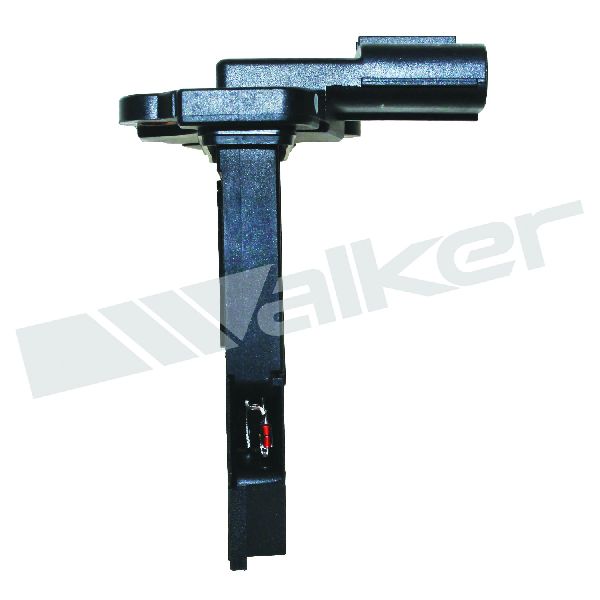
Est. part cost: $40-$90 - Dirty or Faulty Mass Airflow (MAF) Sensor 🟡 Medium Probability Oil from aftermarket 'cold air' intake filters or general dirt and debris can contaminate the MAF sensor's hot wire, causing it to under-report the amount of air entering the engine. The ECM then commands too little fuel, creating a lean condition across both banks.
How to confirm: Remove the MAF sensor from the intake tube and visually inspect the small wires for dirt, debris, or an oily film. You can monitor MAF readings with a scan tool to see if they are erratic or out of specification. A dirty sensor can cause issues without setting a specific MAF code.
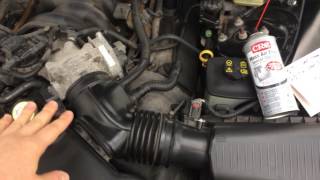
Typical fix: Clean the sensor with a dedicated MAF sensor cleaner. 🎬 Watch: How to properly clean your Mass Airflow sensor Do not use other chemicals like brake or carb cleaner. If cleaning does not resolve the issue, the sensor may need to be replaced.
Est. part cost: $10 (cleaner) - $150 (sensor) - Other Vacuum Leaks ⚪ Low Probability Rubber vacuum hoses, such as the brake booster hose or EVAP purge valve lines, can become dry and cracked over time, creating smaller vacuum leaks.
How to confirm: Perform a visual inspection of all vacuum lines connected to the intake manifold. Listen for hissing sounds with the engine running. A smoke test is the most effective way to find small, hidden leaks.
Typical fix: Replace the cracked or broken vacuum hose.
Est. part cost: $5-$30
Rare But Worth Checking
- Low Fuel Pressure: A weak fuel pump or clogged fuel filter can restrict fuel flow, causing a lean condition. This usually affects both banks and may be accompanied by code P0171. Check fuel pressure at the fuel rail to confirm; it should be between 55-65 PSI with the key on, engine off. A pressure of 42 PSI, for example, is too low and indicates a problem.
- Exhaust Leak: An exhaust leak from a cracked exhaust manifold or a bad flange gasket before the upstream O2 sensor on Bank 2 can draw in outside air. This causes the sensor to send a false lean signal to the computer, which then unnecessarily enriches the fuel mixture on that bank.
Diagnosis Steps
- Check for other stored trouble codes. If P0171 is also present, the cause is almost certainly a component affecting the whole engine (a 'global' vacuum leak or MAF sensor issue).
- Visually inspect the engine bay for obvious issues like a crumpled air intake boot, disconnected vacuum hoses, or cracked intake components.
- Specifically inspect the PCV tube that runs from the driver-side valve cover to the intake manifold, as mentioned in TSB PIP5341. Look for cracks, soft spots, or holes, especially where it might rub against the engine cover.
- With the engine running, listen for hissing sounds that indicate a vacuum leak.
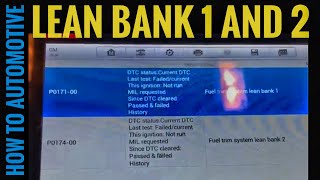
- If a leak isn't obvious, perform a 'poor man's smoke test' by spraying short bursts of carb cleaner or brake cleaner around the intake manifold gaskets and vacuum lines. Listen for any change in engine RPM. For a definitive diagnosis, use a smoke machine to introduce smoke into the intake system. 🎬 Watch: How to diagnose P0171 and P0174 on your Silverado Smoke will escape from any leak point.
- If no vacuum leaks are found, remove and clean the Mass Airflow (MAF) sensor using a dedicated MAF sensor cleaner. Inspect it for contamination from aftermarket air filters.
- If the code persists, check fuel pressure using a gauge connected to the fuel rail to rule out a weak fuel pump or clogged filter. Pressure should be 55-65 PSI with the key on, engine off.
- Inspect the exhaust manifolds and flanges for cracks or black soot trails, which indicate an exhaust leak upstream of the O2 sensor.
- As a last resort, test the Bank 2 upstream O2 sensor to ensure it is functioning correctly, but do not replace it unless it fails testing.
Parts You'll Likely Need
- PCV Tube / Hose Assembly
(OEM #12597774)— This is a known failure point documented in GM TSB #PIP5341. The hose becomes brittle and cracks or is rubbed through by the engine cover, causing a major vacuum leak.
Trusted brands: ACDelco, GM Genuine Parts
OEM price range: $35-$50
Aftermarket price range: $20-$40 - Intake Manifold Gasket Set — The original plastic-carrier gaskets are prone to cracking with age and heat, causing vacuum leaks that trigger lean codes. Upgraded metal-carrier gaskets are recommended.
Trusted brands: Fel-Pro (MS98016T is the popular upgraded part), ACDelco
OEM price range: $60-$90
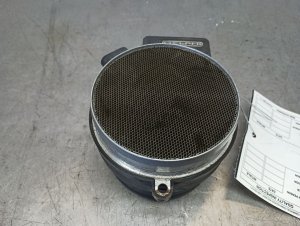
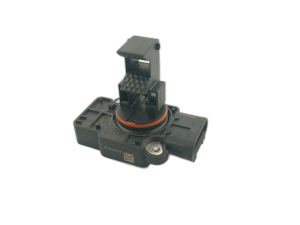
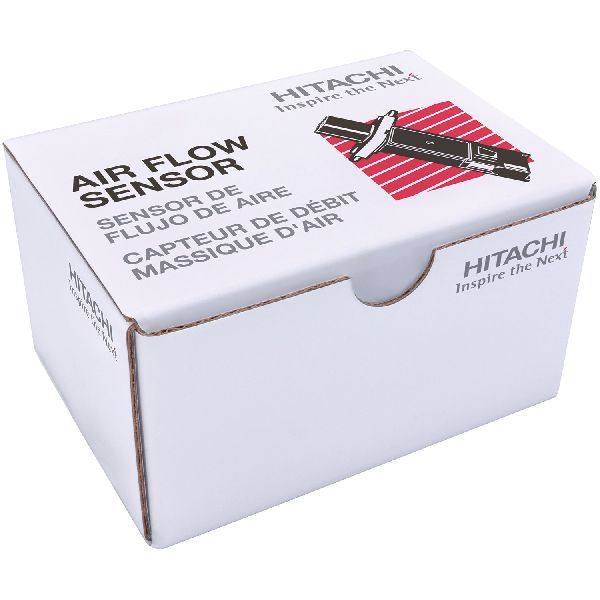
Aftermarket price range: $40-$70 - Mass Airflow (MAF) Sensor
(OEM #19179715)— Often becomes contaminated and misreports airflow, leading to incorrect fuel mixture. Cleaning is often sufficient, but replacement is sometimes necessary if it's faulty.
Trusted brands: ACDelco, Delphi, Bosch
OEM price range: $120-$180
Aftermarket price range: $60-$120
Related Codes That Often Appear With This One
- P0171 — System Too Lean (Bank 1). This code often appears with P0174 because common causes like a cracked PCV tube, bad intake gaskets, or a faulty MAF sensor are vacuum leaks that affect the entire engine, not just one bank.
- P0300 — Random/Multiple Cylinder Misfire Detected. A severe lean condition prevents proper combustion by creating a mixture that is difficult to ignite, leading to misfires across multiple cylinders.
Technical Service Bulletins (TSBs) & Recalls
- PIP5341: Notes that a rough running engine with codes P0171 and/or P0174 can be caused by a vacuum leak from the PCV tube on the left side of the engine, which can be rubbed through by the engine cover. Recommends replacing the tube and covering it with conduit.
Platform-Specific Known Issues
- TSB #PIP5341 directly addresses P0171 and/or P0174 codes caused by a vacuum leak from the positive crankcase ventilation (PCV) tube, noting that the engine cover can rub a hole in the tube.
Mechanic-Grade Diagnostic Values
- Long-Term Fuel Trim (LTFT) at Idle — expected: Within +/- 10%. Failure: Sustained positive values above +10%, especially approaching +25%, indicate the ECM is compensating for a vacuum leak or lack of fuel.
- Mass Airflow (MAF) Sensor Reading at Idle — expected: Approximately 5.0-7.0 grams/second (g/s) for a warm 6.0L V8 engine. A common rule of thumb is for the g/s value to be close to the engine's displacement in liters.. Failure: Significantly lower readings (e.g., 4.82 g/s) can indicate unmetered air entering after the sensor, while erratic readings can suggest a contaminated or failing sensor.
- Fuel Pressure (Key On, Engine Off) — expected: 55-65 PSI. Failure: Pressure below 55 PSI, such as 40-42 PSI, points to a weak fuel pump, clogged filter, or faulty fuel pressure regulator.
- Upstream O2 Sensor Voltage — expected: Fluctuating rapidly between approximately 0.1V (lean) and 0.9V (rich) on a healthy engine.. Failure: A sensor that is stuck low (e.g., below 0.450V) is reading a lean condition, which is what triggers the P0174 code. This is typically a correct reading of a problem elsewhere, not a faulty sensor itself.
Scan Tool Commands That Help
- GDS2/Tech2 or equivalent professional scan tool: Fuel Trim Reset — After performing a repair for a vacuum leak or fuel system fault, resetting the fuel trims will clear the learned long-term adjustments. This allows the ECM to relearn values with the new parts, providing immediate feedback on whether the repair was successful.
- GDS2/Tech2 or equivalent professional scan tool: EVAP Purge/Seal — To test the EVAP purge solenoid. A technician can command the valve to open and close to see if it is functioning correctly or stuck open, which would create a vacuum leak.
- GDS2/Tech2 or equivalent professional scan tool: Fuel Pump Control Module (FPCM) output control — To diagnose a fuel delivery issue. A technician can command a specific fuel pressure to see if the FPCM and fuel pump can achieve and maintain it, helping to isolate faults in the fuel delivery system.
Wiring & Ground Locations
- G101 / G106 — G101 is located on the lower front of the engine block. It jumpers to G106 on the front center of the frame cross rail under the crank pulley.. This ground point serves the Engine Control Module (ECM), Mass Air Flow (MAF) Sensor, and Intake Air Temperature (IAT) Sensor. A poor connection here can cause erratic sensor readings, leading the ECM to miscalculate the air-fuel ratio.
- G103 — Located at the left rear of the engine compartment on the cowl, above the brake booster.. This is a major ground point for the Body Control Module (BCM) and the Data Link Connector (DLC). While not a direct cause of a lean code, a poor connection can create various electrical issues and communication problems during diagnosis.
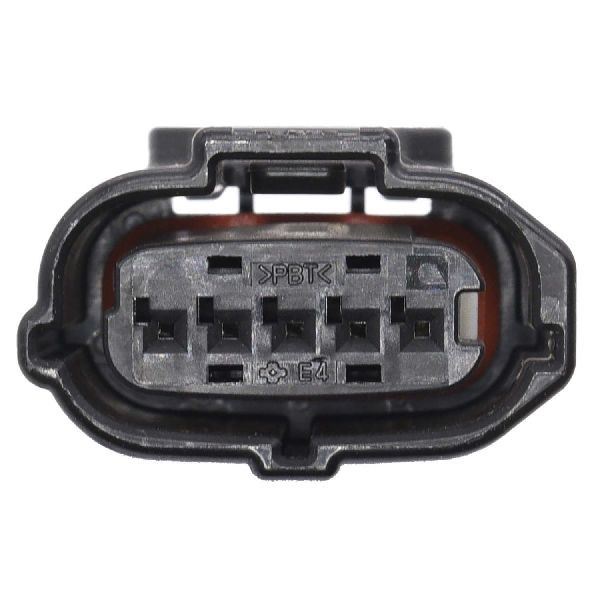
- ECM Connector X2, Pin 50 — On the 80-pin ECM connector (often black), Pin 50 is for the MAF sensor signal.. This is the specific pin where the MAF sensor sends its airflow data to the ECM. Technicians can back-probe this pin to check for a correct voltage signal from the sensor, helping to diagnose a faulty sensor or wiring issue.
- Chassis to Block Ground Strap — A braided ground strap often runs from the firewall/chassis to the back of the cylinder head or engine block on the driver's side.. This is a primary engine ground. Over time, it can corrode or break, leading to a host of seemingly unrelated electrical problems, including incorrect sensor readings that can contribute to lean codes.
Real Owner Repair Stories
- Reddit user /u/Chahtanagual (2009 Silverado 1500 5.3L (similar architecture)) — P0171 and P0174 codes present.
❌ Tried (didn't work) Initial diagnosis focused on common vacuum leaks and MAF sensor.
✅ What actually fixed it The user noted that a leaking brake booster was the cause. A neighbor heard a vacuum leak sound coming from inside the cab, which led to the discovery of the faulty booster. - ScannerDanner Forum user (2008 Silverado 2500 6.0L) — P0171 and P0174, rough idle, LTFTs stuck at +24%.
❌ Tried (didn't work) Smoke test (passed), New injectors, New fuel pump, New MAP and MAF sensors, New intake gaskets, New O2 sensors (twice)
✅ What actually fixed it The final diagnosis pointed towards a fuel quality issue, specifically the possibility of E85 (or a high ethanol content) being in the tank instead of regular gasoline, which would cause the system to run lean without an alcohol sensor to compensate.
"I Checked Everything" — The Actual Cause
- In several documented cases, a smoke test of the intake manifold revealed no leaks, yet the engine still had high positive fuel trims. The cause was later found to be a weak fuel pump delivering low pressure (e.g., 40-42 PSI instead of the required 55-65 PSI). A smoke test cannot detect a fuel delivery problem.
- A leaking power brake booster can cause a significant vacuum leak that may not be easily found with a smoke test, as the leak is often internal to the booster or at the firewall connection. The symptom can be a hissing sound heard from inside the cab.
- A stuck-open EVAP purge solenoid can cause a vacuum leak that is sometimes missed during a smoke test if the system isn't sealed correctly for the test. This can be diagnosed by commanding the valve shut with a scan tool and observing fuel trims.
OEM Part Supersession History
Unknown→12597774— GM regularly updates service parts to integrate new materials and technologies. This PCV tube assembly is a common replacement for multiple GM trucks with V8 engines in this era.
Heads up: While this part number is listed for many GM trucks, including applications up to 2014, always verify fitment with the specific vehicle's VIN before purchasing.
Model Year Variations Within This Range
- 2007-2010: The 6.0L V8 came in two main variants: the LY6 (iron block) and the L76 (aluminum block). The L76 was often equipped with Active Fuel Management (AFM), while the LY6 was not. While the root causes for P0174 are largely the same, diagnostics on an L76 could potentially involve AFM components if other issues are present.
- 2007: In 2007, Chevrolet sold both the new GMT900 body style and the previous generation GMT800, branded as the 'Classic'. The GMT800 trucks have different common failure points, and while they can suffer from lean codes, the specific TSB for the PCV tube and the prevalence of intake gasket failure are more characteristic of the GMT900 platform.
- 2009-2010: Some later models in this range, particularly those with the L96 engine (a successor to the LY6), were Flex-Fuel capable from the factory. These vehicles have an alcohol composition sensor that can fail, leading to incorrect fuel calculations and potentially causing lean or rich codes. A non-Flex-Fuel truck running on fuel with high ethanol content can also trigger lean codes.
Helpful Videos
Used OEM Parts in Stock



New Aftermarket Parts Available


The information in this article is provided for general reference and educational purposes only. Vehicle specifications, procedures, and part compatibility can vary by production date, trim level, and region. Always consult your vehicle's factory service manual and verify part numbers before purchasing or performing repairs. Safety-critical components such as airbags, seat belts, and braking systems should be installed by a qualified professional.
- Chevrolet SILVERADO 2500:
- 🎬 Helpful Videos
- 🛍️ Shop This Part
- What's Unique About the 2007-2010 Chevrolet SILVERADO 2500
- Diagnostic Flowchart
- Symptoms You May Notice
- Most Likely Causes
- Rare But Worth Checking
- Diagnosis Steps
- Parts You'll Likely Need
- Related Codes That Often Appear With This One
- Technical Service Bulletins (TSBs) & Recalls
- Platform-Specific Known Issues
- Mechanic-Grade Diagnostic Values
- Scan Tool Commands That Help
- Wiring & Ground Locations
- Real Owner Repair Stories
- "I Checked Everything" — The Actual Cause
- OEM Part Supersession History
- Model Year Variations Within This Range
- 🎟️ Get 5% Off