

P0174 on 2011-2018 Chevrolet Camaro: Causes and Fixes for Lean Condition (Bank 2)
P0174 on a 2011-2018 Camaro indicates a lean fuel mixture on Bank 2. Before replacing parts, inspect the air intake system thoroughly. GM Technical Service Bulletins point to specific, common issues like a loose hydrocarbon pad in the air filter lid or plastic flashing near the MAF sensor disrupting airflow. Also, check for common vacuum leaks, particularly around the intake manifold gaskets and PCV system, which are frequent culprits.
- P0174 means Bank 2 is running lean (too much air, not enough fuel).
- Before buying parts, perform a thorough visual inspection of the entire air intake system for leaks or blockages.
- Specifically check for the two issues noted in GM's TSBs: plastic flashing near the MAF sensor and a loose hydrocarbon pad in the air filter lid.
- A smoke test is the most effective way to find vacuum leaks, which are a very common cause.
- Do not replace the O2 sensor unless it is proven to be faulty with specific tests; it is usually just reporting the lean condition.
What's Unique About the 2011-2018 Chevrolet CAMARO

While many issues can cause a lean code, the 2011-2018 Camaro is subject to specific problems documented by General Motors in Technical Service Bulletins (TSBs). These bulletins highlight that unmetered air can enter the system due to manufacturing defects or component degradation within the air intake assembly itself. Specifically, TSB #PIP5446A points to excess casting flash near the MAF sensor, and TSB #PIP4813C addresses issues with the hydrocarbon absorber pad inside the air cleaner lid. These are not typical vacuum leaks and represent known issues for this platform that should be checked early in the diagnostic process. Additionally, aftermarket modifications like cold air intakes are very popular on Camaros and can cause lean codes if not installed correctly or if they introduce unmetered air.
Diagnostic Flowchart

Tap your situation to follow the diagnostic path that matches what you're seeing on this vehicle.
Generation note: This year range covers two Camaro generations: the 5th generation (2011-2015) and the 6th generation (2016-2018). The cited TSBs apply to years in both generations, indicating that the documented air intake issues can affect V6 and V8 models across this entire period. For example, TSB PIP5446A explicitly lists 2016-2018 Camaros with 6.2L LT1/LT4 engines. Forum discussions confirm owners of both V6 and V8 models in both generations experience this code from similar causes.
Symptoms You May Notice

- Check Engine Light is on
- Rough idle
- Engine hesitation or stumbling on acceleration
- Reduced engine power
- Engine misfires, which may trigger additional codes like P0300-P0308
- A whistling or hissing sound from the engine bay, indicating a vacuum leak
- Poor fuel economy
- Backfiring during acceleration, especially if the condition is severe
- Replacing the oxygen (O2) sensor. The P0174 code means the O2 sensor is doing its job correctly by detecting a lean condition. Unless there are specific O2 sensor codes (like for a heater circuit failure), the sensor itself is rarely the problem. An owner on Camaro6 forums confirmed their issue was not the O2 sensor despite the code.
Most Likely Causes

- Air Intake System Anomalies 🔴 High Probability This is a documented issue in GM Technical Service Bulletins. TSB #PIP4813C points to the hydrocarbon absorber pad inside the air cleaner lid coming loose, and TSB #PIP5446A notes that casting flash (excess plastic) near the MAF sensor can disrupt airflow, causing turbulence and incorrect readings. Aftermarket cold air intakes are also a frequent source of leaks if not sealed properly.
How to confirm: Visually inspect the inside of the air cleaner lid for a loose or deteriorating black foam pad. Inspect the air intake tube, especially around the MAF sensor mount, for any rough plastic edges or debris as shown in TSB images. If an aftermarket intake is installed, check all connections between the filter and the throttle body for tightness.
Typical fix: If the hydrocarbon pad is loose, the air cleaner lid assembly must be replaced. If flashing is found, it should be carefully removed without damaging the housing, though the TSB officially recommends replacing the air filter housing lid.
Est. part cost: $50-$200 for an air cleaner housing assembly or lid. - Vacuum Leaks 🔴 High Probability Hoses and gaskets degrade over time with heat and age. Common leak points on Camaro engines include the PCV system hoses (especially the line at the back of the intake manifold on V6 models), intake manifold gaskets, and even the oil filler cap if the seal is missing or not tightened properly.
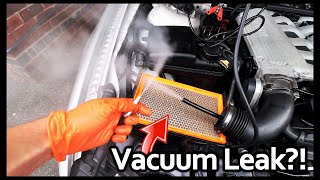
How to confirm: Perform a smoke test by introducing smoke into the intake manifold and watching for where it escapes. Alternatively, with the engine running, carefully spray short bursts of brake cleaner or propane around suspected leak areas; a change in engine idle indicates a leak. Monitoring fuel trims with a scan tool can also help; if trims are high at idle but improve (move closer to zero) at higher RPM, a vacuum leak is very likely.
Typical fix: Replace the cracked hose or failed gasket. A common repair seen in forums is replacing a cracked PCV hose or intake manifold gaskets.
Est. part cost: $10-$200 depending on the specific hose or gasket. - Dirty or Faulty Mass Airflow (MAF) Sensor 🟡 Medium Probability Oiled aftermarket air filters can contaminate the MAF sensor's delicate wire, causing incorrect airflow readings. Even with stock filters, dirt and debris can accumulate over time. A faulty MAF sensor is a very common cause for lean codes on many vehicles.
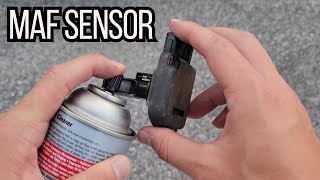
How to confirm: Remove the sensor and clean it using a dedicated MAF sensor cleaner spray; never touch the sensor elements. Inspect the live data on a scan tool; if the g/s reading is erratic or doesn't increase smoothly with RPM, it may be faulty. If cleaning doesn't resolve the issue, the sensor may need replacement.
Typical fix: Clean or replace the MAF sensor.
Est. part cost: $70-$150 for a new sensor. - Low Fuel Pressure ⚪ Low Probability
How to confirm: Check the fuel pressure using a fuel pressure gauge connected to the fuel rail's Schrader valve. Compare the reading to the manufacturer's specification (e.g., around 58 PSI for many Camaro models). Some 6th gen models have both a low-pressure and high-pressure fuel pump; a dealer-level scan tool may be needed for full diagnosis.
Typical fix: If pressure is low, the cause could be a weak fuel pump, a clogged fuel filter, or a faulty fuel pressure regulator. Diagnosis is required to pinpoint the failed component.
Est. part cost: $50-$400+ depending on the part, with high-pressure pumps being more expensive. - Exhaust Leak Before the Oxygen Sensor ⚪ Low Probability
How to confirm: Listen for ticking or hissing sounds from the exhaust manifold area, especially when the engine is cold. Look for black soot marks around exhaust flanges or gaskets. An exhaust leak can allow outside oxygen to be pulled into the exhaust stream, causing the O2 sensor to report a false lean condition.
Typical fix: Replace the failed exhaust manifold gasket or tighten loose bolts. One owner on Camaro5 forums resolved P0171/P0174 codes by replacing the exhaust manifold gaskets.
Est. part cost: $20-$100 for gaskets and hardware.
Rare But Worth Checking
- Clogged Fuel Injector on Bank 2: While less common to cause a bank-wide lean code without a specific misfire code, a partially clogged injector can contribute to a lean condition. This was suspected by an owner on the Camaro6 forum after experiencing misfires along with the P0174 code.
- Collapsed Intake Manifold Runner: A user on the Camaro5 forum discovered a collapsed intake manifold runner after removing the engine cover to diagnose a P0174 code. This is a rare mechanical failure but can cause significant airflow disruption.
Diagnosis Steps
- Check for other stored trouble codes that could provide more clues.
- Using a scan tool, monitor short-term (STFT) and long-term (LTFT) fuel trims at idle and at 2500 RPM. High positive numbers (e.g., >10%) confirm the lean condition. If trims are high at idle but decrease significantly at 2500 RPM, a vacuum leak is highly likely.
- Visually inspect the entire air intake tract from the air filter box to the throttle body for loose clamps, disconnected hoses, or obvious cracks. Pay special attention to aftermarket intake connections.
- Following TSB #PIP4813C, open the air filter housing and inspect the hydrocarbon absorber pad on the inside of the lid to ensure it is secure and not deteriorating.
- Following TSB #PIP5446A, inspect the area around the MAF sensor for any plastic casting flash that could be disrupting airflow.
- With the engine running, listen for whistling sounds that indicate a vacuum leak. Use a smoke machine to precisely locate any leaks in the intake manifold, vacuum hoses, or PCV system. A common leak spot is the PCV hose connection at the rear of the intake manifold.
- Remove and clean the MAF sensor using a dedicated cleaner. Allow it to dry completely before reinstalling. Do not use brake or carb cleaner.
- Check for exhaust leaks between the cylinder head and the upstream O2 sensor by listening for ticks and looking for soot.
- Test fuel pressure at the fuel rail's Schrader valve to rule out a fuel delivery problem.
Parts You'll Likely Need
- Mass Airflow (MAF) Sensor
(OEM #ACDelco 23262343 (fits many 2012-2018+ V6 models))— A dirty or faulty MAF is a common cause of incorrect airflow readings and is implicated in several TSBs for this platform.
Related Codes That Often Appear With This One
- P0171 — System Too Lean (Bank 1). If both P0171 and P0174 are present, it strongly suggests a problem affecting the entire engine, such as a faulty MAF sensor, a major vacuum leak (e.g., intake manifold gasket), or a fuel delivery issue.
- P0101 — Mass Air Flow (MAF) Circuit Range/Performance. This code often appears with P0174, as noted in TSBs #PIP5446A and #PIP4813C, pointing directly to issues with the MAF sensor or the airflow around it.
Technical Service Bulletins (TSBs) & Recalls
- PIP5446A: Harsh Shift 1/2 and 2/3 and Sputter Applying Throttle Between 0 and 30%, Rough idle. Technician may find Diagnostic Trouble Codes P0101, P0171, P0172, P0174, and or P0175. Technician should inspect for cast flashing near the Mass Air Flow sensor.
- PIE0413A: Bulletin ends the need for information from the field on vehicles that have the condition of Malfunction Indicator Lamp Illuminated with DTC P0171 and/or P0174.
- PIP4813C: Service Engine Soon Malfunction Indicator Lamp, rough running, and/or lack of power. Technician may find Diagnostic Trouble Codes P0101, P0171, P0172, P0174, and/or P0175 set. Technician will need to inspect the hydrocarbon absorber pad that is on the inside of the air cleaner lid.
Platform-Specific Known Issues
- Aftermarket Cold Air Intakes: The Camaro is a heavily modified platform. Aftermarket cold air intakes (CAI) are a very common modification. If not installed with perfect seals, they can easily introduce unmetered air after the MAF sensor, immediately triggering P0171/P0174 codes. Oiling a reusable filter improperly can also contaminate and ruin the MAF sensor.
- Intake Manifold Runner Collapse (V6): In a documented case on a Camaro5 forum, a user with a V6 engine found a collapsed plastic intake runner inside the intake manifold was the cause of their P0174 code. This is a rare but possible point of mechanical failure that would cause a severe, isolated lean condition.
- PCV Hose Location (V6 LFX/LLT): On the 3.6L V6 engines (LFX/LLT), a key PCV hose connects to the back of the intake manifold in a hard-to-see location. This hose and its connections are a frequent source of vacuum leaks as they become brittle with age and heat cycles.
Mechanic-Grade Diagnostic Values
- Fuel Pressure (Port Injected V8: LS3/L99) — expected: ~58 PSI at idle, tapering down to ~48 PSI at high RPM.. Failure: Pressure significantly below 58 PSI at idle or not holding pressure may indicate a weak pump or leak.
- Fuel Pressure (Direct Injected: LFX/LGX V6, LT1 V8) — expected: Low-pressure side: 35-75 PSI. High-pressure side: 500-2,900 PSI depending on engine load.. Failure: Readings outside the expected range on a capable scan tool. Requires advanced diagnostics.
- Mass Air Flow (MAF) Sensor Reading at Idle — expected: Approximately 3-7 g/s for a warm V6/V8 engine. A common rule of thumb is the g/s value should be close to the engine's displacement in liters.. Failure: Readings are erratic, do not increase smoothly with RPM, or are significantly lower/higher than expected.
- Mass Air Flow (MAF) Sensor Reading at 2500 RPM — expected: Should rise to between 15-25 g/s.. Failure: Reading does not increase significantly from idle or is erratic.
- Long-Term Fuel Trim (LTFT) at Idle vs. 2500 RPM — expected: Ideally within +/- 5%. Values creeping towards +10% or higher indicate a problem.. Failure: High positive trims (>+10%) at idle that drop significantly (closer to 0%) at 2500 RPM strongly suggest a vacuum leak. High trims at all RPMs point more towards a MAF or fuel delivery issue.
- MAF Sensor Connector - Ignition Voltage — expected: The Pink (PK) wire should show a steady 12V (battery voltage) with the key in the 'ON' position.. Failure: No voltage or fluctuating voltage indicates a wiring or fuse issue.
Scan Tool Commands That Help
- GDS2 / Tech2 / Advanced Scan Tools: Fuel Trim Reset — After performing a repair for a lean condition (like fixing a vacuum leak or replacing a MAF sensor), resetting fuel trims will clear the learned compensation values and allow the ECM to relearn based on the corrected state.
- GDS2 / HP Tuners / Advanced Scan Tools: Fuel Injector Balance Test — If a single bank is lean and a vacuum leak is ruled out, this test can help identify a clogged or failing injector on Bank 2 by measuring the pressure drop for each injector individually.
- GDS2 / HP Tuners: Fuel Pump Command / FPCM Control — For diagnosing fuel delivery issues, especially on direct injection models. A technician can command the low-pressure pump to a specific duty cycle or pressure to verify its function independently of the high-pressure pump.
Wiring & Ground Locations
- MAF Sensor Connector (V8: L99/LS3) — On the Mass Airflow Sensor, part of the air intake tube after the air filter housing.. Incorrect voltage or signal from this connector is a direct cause of lean codes. Pinout: A(YE)-Signal, B(BK/WH)-Ground, C(PK)-Ignition Voltage, D(TN)-Low Reference, E(L-BU)-IAT Signal.
- MAF Sensor Connector (V6: LLT) — On the Mass Airflow Sensor, part of the air intake tube after the air filter housing.. Incorrect voltage or signal from this connector is a direct cause of lean codes. Pinout: 1(TN)-Low Reference, 2(BK/WH)-Ground, 3(L-BU)-IAT Signal, 4(PK)-Ignition Voltage, 5(YE)-MAF Signal.
- G110 / G112 — Attached to the rear of the left (driver's side) cylinder head.. A poor ground connection at the cylinder head can cause erratic sensor readings and drivability issues. One owner found this ground loose while diagnosing a P0174 code.
- G102 — Located at the left rear of the engine; grounds the ignition coils.. While not a direct cause of a lean code, a poor ground for the ignition system can lead to weak spark and incomplete combustion, which can indirectly affect O2 sensor readings and fuel trims.
Real Owner Repair Stories
- Camaro5 Forums, user DavidH (5th Gen Camaro) — P0171 and P0174 codes appearing after WOT pulls, idle hanging at 1500-1800 RPM when coasting.
❌ Tried (didn't work) Cleaning MAF sensor, Replacing fuel injector o-rings, Replacing intake manifold gaskets, Replacing exhaust manifold gaskets
✅ What actually fixed it Replacing the entire OEM air intake box assembly with a new one, which finally resolved the persistent lean codes and high fuel trims. - Camaro5 Forums, user 10ssgunner (2010 SS 6-speed) — P0174, rough idle, idle surges to 2500 RPM when moving in neutral.
❌ Tried (didn't work) Tightening a loose ground on the driver's side cylinder head, Replacing the MAF sensor
✅ What actually fixed it Discovered a collapsed intake manifold runner after removing the decorative engine cover. Replacing the intake manifold was the required fix. - Camaro6 Forums, user Megahurtz (Camaro ZL1) — P0174 and P0151 codes appeared after performing exhaust work.
❌ Tried (didn't work) Initial diagnosis pointed towards a bad O2 sensor or exhaust leak.
✅ What actually fixed it Found a sheared wire with damaged insulation for the driver's side O2 sensor. The wire was located above the catalytic converter near the firewall and was likely grounding out. Repairing the wire fixed the codes. - Camaro5 Forums, user JCTX (2012 II SS) — P0171 and P0174 codes, rough idle jumping between 600-1000 RPM.
❌ Tried (didn't work) Replacing the Mass Airflow Sensor based on a parts store scan.
✅ What actually fixed it A visual inspection under the engine cover revealed a cracked plastic PCV vacuum line. The user suggests replacing the brittle stock line with a more durable 3/8-inch fuel injector hose and spring clamps.
"I Checked Everything" — The Actual Cause
- In one documented case on the Camaro5 forums, a user battled P0171 and P0174 codes despite having a clean smoke test and correct fuel pressure. After replacing multiple gaskets without success, the final solution was to replace the entire OEM air intake assembly. This suggests a hairline crack or warped sealing surface in the plastic housing that only allowed unmetered air to enter under specific engine vacuum or vibration conditions not replicated by a static smoke test.
When the Usual Fixes Don't Work
- While replacing the O2 sensor is a common misdiagnosis, there are cases where the issue is not unmetered air but a faulty electrical signal to the ECM. In a documented repair, a P0174 code was ultimately traced to a damaged O2 sensor wire that was grounding out on the chassis after exhaust work. In this scenario, the sensor and the engine's air/fuel mixture were fine, but the signal the ECM received was corrupted, leading it to incorrectly diagnose a lean condition.
OEM Part Supersession History
20787043, 23118170→ACDelco 23262343— Standard part evolution, integrating design or material updates by the manufacturer.
Heads up: The new part number (23262343) is the correct service replacement for the older numbers.
Model Year Variations Within This Range
- 2011-2015 (5th Gen) vs 2016-2018 (6th Gen): The primary engines changed between generations. 5th Gen used the 3.6L LFX V6 and 6.2L LS3/L99 V8s. 6th Gen introduced the 3.6L LGX V6 and 6.2L LT1 V8. These engines have different intake manifold designs, PCV systems, and fuel systems.
- 2012+ V6 and 2016+ V8 models: These models largely use Direct Injection (DI), which features both a low-pressure in-tank fuel pump (35-75 PSI) and a high-pressure mechanical fuel pump (500-2900+ PSI). Diagnosing fuel delivery requires an advanced scan tool capable of reading both pressures, unlike the port-injected 5th Gen V8s which only have a single low-pressure system (~58 PSI).
- 2016-2018 (6th Gen): TSB #PIP5446A specifically calls out potential casting flash near the MAF sensor as a cause for P0174 on 2016-2018 models, indicating a known manufacturing issue for this generation.
Helpful Videos
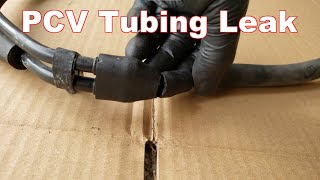
We Have This Part in Stock



The information in this article is provided for general reference and educational purposes only. Vehicle specifications, procedures, and part compatibility can vary by production date, trim level, and region. Always consult your vehicle's factory service manual and verify part numbers before purchasing or performing repairs. Safety-critical components such as airbags, seat belts, and braking systems should be installed by a qualified professional.
- Chevrolet CAMARO:
- 🎬 Helpful Videos
- 🛍️ Shop This Part
- What's Unique About the 2011-2018 Chevrolet CAMARO
- Diagnostic Flowchart
- Symptoms You May Notice
- Most Likely Causes
- Rare But Worth Checking
- Diagnosis Steps
- Parts You'll Likely Need
- Related Codes That Often Appear With This One
- Technical Service Bulletins (TSBs) & Recalls
- Platform-Specific Known Issues
- Mechanic-Grade Diagnostic Values
- Scan Tool Commands That Help
- Wiring & Ground Locations
- Real Owner Repair Stories
- "I Checked Everything" — The Actual Cause
- When the Usual Fixes Don't Work
- OEM Part Supersession History
- Model Year Variations Within This Range
- 🎟️ Get 5% Off