

P0174 on 2007-2013 Chevrolet Avalanche: Lean Bank 2 Causes and Fixes
On a 2007-2013 Avalanche, P0174 is most often caused by a vacuum leak. Check the PCV tube that connects to the intake manifold and the intake manifold gaskets themselves. A dirty Mass Airflow (MAF) sensor is also a very common culprit. The code indicates the passenger side of the engine has too much air or not enough fuel.
- P0174 on a 2007-2013 Avalanche means the passenger side of the engine is running lean (too much air, not enough fuel).
- The most likely cause is unmetered air entering the engine from a vacuum leak. Start by inspecting the PCV tube and the intake manifold gaskets.
- If P0171 (Bank 1 Lean) is also present, it confirms the problem affects the whole engine, reinforcing vacuum leaks or a faulty MAF sensor as the top culprits.
- Using a scan tool to watch fuel trims is a powerful diagnostic step. If fuel trims are high at idle but improve with more throttle, a vacuum leak is almost certain.
- Do not immediately replace the O2 sensor; it is most likely doing its job correctly by reporting the problem.
What's Unique About the 2007-2013 Chevrolet AVALANCHE
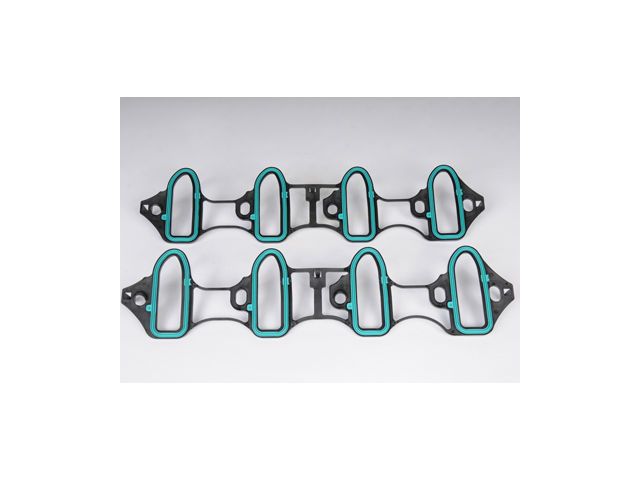
The V8 engines in this generation of GM trucks (GMT900 platform) are well-known for a few specific issues that directly cause the P0174 code. A technical service bulletin (TSB) was issued specifically for a vacuum leak from the PCV tube causing this code. Furthermore, the original plastic-carrier intake manifold gaskets are a very common failure point, cracking and flattening over time, allowing unmetered air to enter the engine and disrupt the air-fuel ratio. Many owners upgrade to aftermarket gaskets with a metal carrier for a more durable repair.
Diagnostic Flowchart
Tap your situation to follow the diagnostic path that matches what you're seeing on this vehicle.
Symptoms You May Notice
- Check Engine Light is on
- Rough or unstable idle
- Engine hesitation or stumbling during acceleration
- Reduced fuel economy
- Loss of power
- A distinct 'ticking' noise from the engine bay when cold, which may quiet down as the engine warms up (indicative of an exhaust manifold leak).
- A hissing or whistling sound at idle.
- Replacing the Bank 2 oxygen (O2) sensor first. The O2 sensor is usually functioning correctly by reporting the lean condition. The code means the sensor is working; the problem lies elsewhere in the air, fuel, or exhaust system.
Most Likely Causes
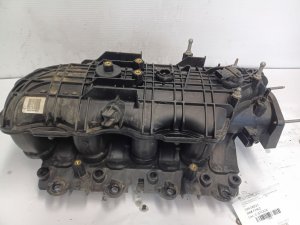
- Vacuum Leak (Intake Manifold Gaskets) 🔴 High Probability The original intake manifold gaskets on these GM V8 engines use a plastic frame that is prone to deteriorating, cracking, and compressing over time, causing a significant vacuum leak. This is arguably the most common cause for P0171/P0174 on the GMT900 platform.
How to confirm: With the engine running, spray short bursts of brake cleaner or propane around the area where the intake manifold meets the cylinder heads. If the engine RPM changes or the fuel trims on a scan tool react, a leak is present. A smoke test is the safest and most definitive method.
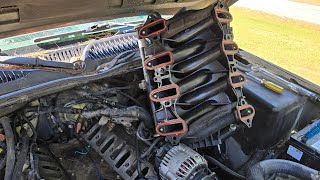
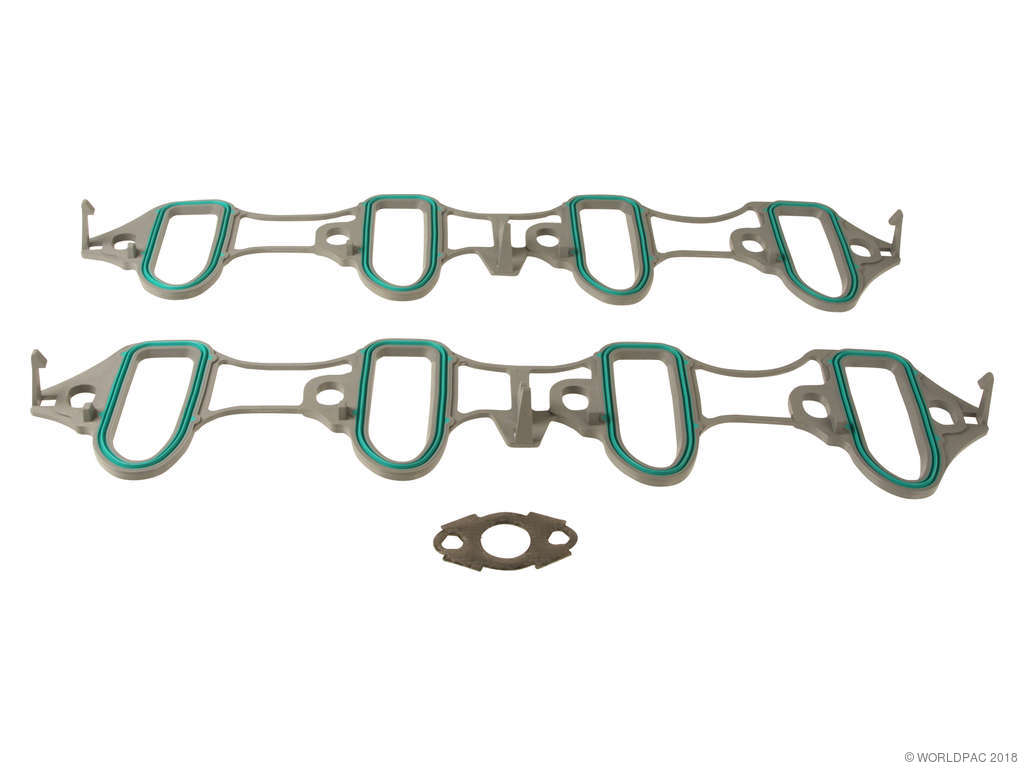
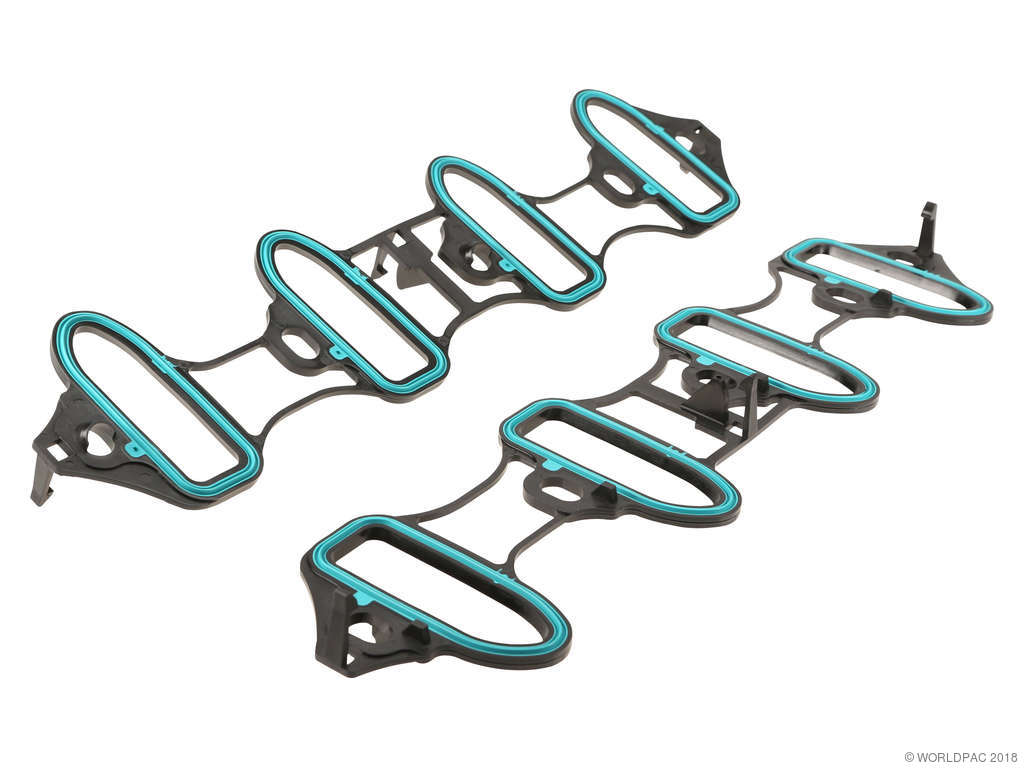
Typical fix: Replace the intake manifold gaskets. It is highly recommended to use an upgraded aftermarket set like the Fel-Pro MS98016T 🎬 Watch: Step-by-step guide to replacing your intake manifold gaskets., which features a more durable metal carrier instead of the OEM plastic one.
Est. part cost: $40-$100 - Vacuum Leak (PCV System) 🔴 High Probability A known issue documented by GM. TSB #PIP5341 directly points to a vacuum leak at the PCV tube connection on the left (driver's) side of the engine causing P0171 and/or P0174. The plastic tube can become brittle and crack.
How to confirm: Visually inspect the PCV hose and its connections to the valve cover and intake manifold for cracks, brittleness, or a loose fit. A smoke test will definitively show a leak here.
Typical fix: Replace the faulty PCV tube. The genuine GM part is often listed as ACDelco 12597774.
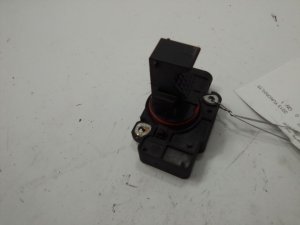
Est. part cost: $20-$50 - Dirty or Faulty Mass Airflow (MAF) Sensor 🟡 Medium Probability The MAF sensor measures the air entering the engine. If the sensing element is contaminated with dirt or oil, it will under-report airflow, causing the computer to command too little fuel, leading to a lean condition.
How to confirm: Remove the sensor and inspect it. If the small wires inside are dirty, they need cleaning. A scan tool can also show erratic or out-of-spec MAF readings. A healthy MAF on a 5.3L should read around 4-6 g/s at idle.
Typical fix: Clean the sensor with dedicated MAF sensor cleaner. Do NOT use brake or carb cleaner. 🎬 See how to safely clean or replace your MAF sensor. If cleaning doesn't work, replace the sensor. The OEM part is typically ACDelco 23262343.
Est. part cost: $10-$15 for cleaner, $70-$150 for a new sensor - Low Fuel Pressure / Weak Fuel Pump ⚪ Low Probability
How to confirm: Connect a fuel pressure gauge to the fuel rail's Schrader valve. With the key on and engine off (KOEO), the pressure should be within the manufacturer's specification. For 2007-2008 models, this is typically 50-60 PSI. For 2009-2013 models with a fuel pressure control module, the spec is wider at 50-100 PSI. If the pressure is low or bleeds off quickly, the fuel pump module or fuel filter may be at fault.
Typical fix: Replace the clogged fuel filter (if separate) or the failing fuel pump module. The fuel pressure regulator is typically part of the in-tank pump assembly on these models.
Est. part cost: $20-$50 for a filter, $250-$500 for a fuel pump module
Rare But Worth Checking
- Exhaust Leak (Broken Manifold Bolts): An exhaust leak before the upstream O2 sensor can pull in outside air, making the sensor read a false lean condition. These GM V8s are notorious for the front and rear exhaust manifold bolts breaking off in the cylinder head, causing a leak typically heard as a 'ticking' noise when the engine is cold.
- Clogged Fuel Injectors: If one or more injectors on Bank 2 are clogged, they won't deliver enough fuel. This is less common than a vacuum leak that affects the whole bank, and would more likely be accompanied by a misfire code for a specific cylinder.
- Leaking Brake Booster: The brake booster uses engine vacuum to operate. A leak in its internal diaphragm can create a large, unmetered vacuum leak, causing lean codes on both banks.
Diagnosis Steps
- Check for other stored trouble codes. If P0171 is also present, focus on causes that affect both banks, like the MAF sensor or a large vacuum leak (intake gaskets, PCV tube, brake booster).
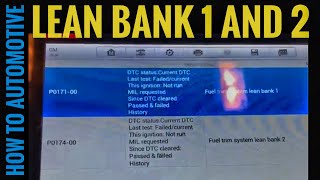
- Use a scan tool to observe Long-Term Fuel Trim (LTFT) for both banks at idle. High positive numbers (e.g., +15% to +25%) confirm the lean condition. If LTFT numbers decrease significantly 🎬 Watch: A professional diagnostic walkthrough for P0171 and P0174 codes. when RPMs are raised to ~2500, this strongly indicates a vacuum leak.
- Visually inspect the engine bay for any obvious vacuum leaks, such as cracked, disconnected, or brittle hoses.
- Pay close attention to the PCV tube that connects from the driver's side valve cover to the intake manifold, as noted in TSB #PIP5341.
- Clean the Mass Airflow (MAF) sensor using a dedicated MAF sensor cleaner. Allow it to dry completely before reinstalling and clear the codes.
- If the code persists, perform a smoke test. This involves feeding low-pressure smoke into the intake system to easily and accurately pinpoint the source of any vacuum leaks, especially from the intake manifold gaskets.
- Listen for a cold-start 'ticking' from the exhaust manifolds, which would indicate broken manifold bolts causing a pre-O2 sensor exhaust leak.
- If no vacuum or exhaust leaks are found, test the fuel pressure at the fuel rail to ensure it is within the correct specification for your model year (50-60 PSI for 2007-2008, 50-100 PSI for 2009-2013).
Parts You'll Likely Need
- Intake Manifold Gasket Set
(OEM #89060413 (ACDelco - Original Plastic Design))— This is one of the most common failure points on this engine platform leading to vacuum leaks that cause P0174. The aftermarket Fel-Pro version is a popular upgrade.
Trusted brands: ACDelco, Fel-Pro (MS98016T)
OEM price range: $60-$100
Aftermarket price range: $40-$80 - PCV Hose (Dirty Air Side)
(OEM #12597774 (ACDelco))— Specifically cited in a GM Technical Service Bulletin as a cause for P0174 due to vacuum leaks from cracking.
Trusted brands: ACDelco, Dorman
OEM price range: $25-$50
Aftermarket price range: $20-$40 - Mass Airflow Sensor Cleaner — A dirty MAF sensor is a frequent cause, and cleaning it is a cheap and easy first diagnostic step.
Trusted brands: CRC, WD-40
Aftermarket price range: $10-$15 - Mass Airflow (MAF) Sensor
(OEM #23262343 (ACDelco))— If cleaning the sensor does not resolve the issue, the sensor itself may have failed.
Trusted brands: ACDelco, Delphi, Bosch
OEM price range: $120-$200
Aftermarket price range: $70-$150
Related Codes That Often Appear With This One
- P0171 — System Too Lean (Bank 1). If you have both P0171 and P0174, it strongly suggests a vacuum leak or MAF sensor issue that is affecting the entire engine, not just one bank.
- P0101 — Mass Air Flow (MAF) Circuit Range/Performance. This code often appears with lean codes when a large vacuum leak is present, as the unmetered air entering the engine causes a discrepancy between what the MAF sensor reports and what the O2 sensors see.
Technical Service Bulletins (TSBs) & Recalls
- PIP5341: Addresses rough running and idling with codes P0171 and/or P0174, pointing to a vacuum leak from the PCV tube.
Platform-Specific Known Issues
- TSB #PIP5341 indicates that on vehicles with rough idle and codes P0171/P0174, technicians should inspect the positive crankcase ventilation (PCV) tube for a vacuum leak on the left side of the engine and replace it if necessary.
- The original plastic-framed intake manifold gaskets are a known weak point. Many owners on forums report permanently fixing their P0171/P0174 codes by replacing these gaskets, often opting for the upgraded metal-framed Fel-Pro MS98016T set.
- Broken exhaust manifold bolts, especially the front-most and rear-most bolts on both banks, are extremely common. This causes an exhaust leak before the O2 sensor, tricking it into reporting a lean condition.
Mechanic-Grade Diagnostic Values
- Fuel Pressure (Key On, Engine Off) — expected: 2007-2008 models: 50-60 PSI. 2009-2013 models (with Fuel Pressure Control Module): 50-100 PSI. A GM recall bulletin notes readings at or above 73 PSI (500 kPa) are considered good.. Failure: Pressure below the specified range for the model year, or pressure that bleeds off quickly after the pump primes.
- Mass Airflow (MAF) Sensor Reading at Idle — expected: A common rule of thumb is that the reading in grams/second (g/s) should be roughly equal to the engine's displacement in liters. For a 5.3L V8, a reading of 4-6 g/s at a stable, warm idle is expected.. Failure: A reading significantly lower than the engine's displacement (e.g., 2-3 g/s on a 5.3L) suggests a dirty sensor or a vacuum leak downstream.
- Long Term Fuel Trim (LTFT) at Idle — expected: Ideally between -10% and +10% on a healthy engine.. Failure: Sustained readings above +20% to +25% will trigger the P0174 code.
Scan Tool Commands That Help
- Tech2 / GDS2 or equivalent professional scan tool: Fuel Composition Reset / Alcohol Content Reset — On Flex Fuel models (LC9 engine), if the stored ethanol percentage is high (e.g., >10%) but the tank contains regular gasoline. An incorrect reading forces the ECM to add too much fuel, which can paradoxically be interpreted as a lean condition by the O2 sensors relative to the expected outcome, or cause other fuel trim issues.
Real Owner Repair Stories
- ScannerDanner Forum (2011 Chevrolet Silverado 5.3L) — P0300 and significant negative fuel trims (running rich), but diagnostic steps are highly relevant to P0174 fuel trim issues.
❌ Tried (didn't work) Tightening a loose O2 sensor, tightening all loose spark plugs, swapping coil/plug/wire.
✅ What actually fixed it A critical diagnostic step was discovering the Fuel Composition was reading 16% ethanol when none was in the tank. Using a scan tool to reset the alcohol content to 3% immediately brought the fuel trims back toward a normal range. This highlights the importance of checking the flex fuel sensor data on applicable models. - Reddit r/ChevyTrucks (2005 Chevrolet Tahoe Z71 (similar GMT800 platform)) — Persistent P0171 code (Bank 1 Lean, often has same root cause as P0174).
❌ Tried (didn't work) Replacing the intake manifold gaskets with upgraded metal Fel-Pro set.
✅ What actually fixed it The user reported that even after replacing the most common cause (intake gaskets) and performing a smoke test that was 'completely air tight,' the code would still intermittently appear and disappear. The final cause was not found, but the story serves as a valuable warning that even the most common fixes are not guaranteed and a smoke test can sometimes be inconclusive or miss certain types of leaks.
"I Checked Everything" — The Actual Cause
- A cracked fuel pump module flange. This allows air to be drawn into the fuel system from inside the fuel tank, creating a lean condition that an intake smoke test cannot detect.
- A faulty canister purge (EVAP) solenoid that is stuck partially open. This creates a vacuum leak that introduces fuel vapor into the intake at the wrong time. If not commanded closed by a scan tool during a smoke test, the leak may not be identified correctly.
- As documented in a real-world example, sometimes the leak is so intermittent or hard to find that even a smoke test comes back clean while the problem persists, suggesting a non-vacuum related issue or a very elusive leak.
When the Usual Fixes Don't Work
- While replacing the intake manifold gaskets is the most cited fix for P0174 on this platform, there are documented cases where owners have performed this repair using high-quality aftermarket parts and have verified the absence of vacuum leaks with a smoke machine, yet the code persists. This indicates that while common, the intake gaskets are not the universal cause, and technicians should be prepared to diagnose other possibilities like fuel delivery, flex-fuel sensor errors, or elusive exhaust leaks.
Model Year Variations Within This Range
- 2007-2013: Multiple 5.3L V8 engines were used, including the iron-block LY5/LMG and the aluminum-block, flex-fuel capable LC9. The presence of the LC9 engine makes the flexible fuel sensor a potential cause for the P0174 code.
- 2009-2013: A fuel-pressure control-module was introduced around the 2009 model year. This changed the fuel pressure specification from 50-60 PSI (on 2007-2008 models) to a much wider range of 50-100 PSI, which alters the diagnostic procedure for fuel pressure testing.
- 2010-2013: Variable Valve Timing (VVT) was standardized on the 5.3L LC9 engine for the 2010 model year. This can affect expected MAF sensor readings under load.
Helpful Videos
Used OEM Parts in Stock



New Aftermarket Parts Available


The information in this article is provided for general reference and educational purposes only. Vehicle specifications, procedures, and part compatibility can vary by production date, trim level, and region. Always consult your vehicle's factory service manual and verify part numbers before purchasing or performing repairs. Safety-critical components such as airbags, seat belts, and braking systems should be installed by a qualified professional.
- Chevrolet AVALANCHE:
- 🎬 Helpful Videos
- 🛍️ Shop This Part
- What's Unique About the 2007-2013 Chevrolet AVALANCHE
- Diagnostic Flowchart
- Symptoms You May Notice
- Most Likely Causes
- Rare But Worth Checking
- Diagnosis Steps
- Parts You'll Likely Need
- Related Codes That Often Appear With This One
- Technical Service Bulletins (TSBs) & Recalls
- Platform-Specific Known Issues
- Mechanic-Grade Diagnostic Values
- Scan Tool Commands That Help
- Real Owner Repair Stories
- "I Checked Everything" — The Actual Cause
- When the Usual Fixes Don't Work
- Model Year Variations Within This Range
- 🎟️ Get 5% Off