

P0174 on 2009-2012 Audi Q5 3.2L V6: Lean Code Causes and Fixes
P0174 on the Audi Q5 3.2L V6 is most often caused by a failed PCV valve (oil separator), creating a large vacuum leak. A loud whistle at idle is the classic symptom. Expect to pay around $150-$250 for an OEM replacement part (Part No. 06E103547 series), with DIY difficulty at 3/5 due to the need to remove the intake manifold.
- P0174 on your Audi Q5 3.2L is almost always caused by a failed PCV valve.
- A loud whistling noise that stops when you remove the oil cap is the tell-tale sign of a bad PCV.
- When replacing the PCV valve, you must also replace the intake manifold gaskets.
- Do not replace the O2 sensors; they are almost certainly not the problem.
- If you have both P0174 and P0171 codes, the PCV valve is the most probable culprit.
What's Unique About the 2009-2017 Audi Q5

The Audi Q5 3.2L V6 (engine code CALB) was only offered from 2009-2012. This direct-injection engine is well-known for a specific, high-probability failure that causes this code: the PCV valve diaphragm. Unlike many other cars where a lean code might point to a simple vacuum hose, on this engine, the PCV valve (oil separator) is a complex assembly located in the 'V' of the engine under the intake manifold. Its internal rubber diaphragm is notorious for tearing from heat and age, creating a massive, unmetered air leak that the system cannot compensate for. This issue is so common between 60,000 and 100,000 miles that it should be the first suspect in any P0174 diagnosis.
Generation note: The specified vehicle range 2009-2017 covers the entire first generation (Typ 8R) of the Audi Q5. However, the 3.2L V6 CALB engine was only available in the 2009, 2010, 2011, and 2012 model years in North America. This guide is specific to those years and that engine.
Symptoms You May Notice
- Check Engine Light is on
- Loud, high-pitched whistling or sucking noise from the engine bay, especially at idle
- Rough or unstable idle, sometimes hunting for RPM
- Hesitation or stumbling during acceleration
- Reduced fuel economy
- Engine misfires, which may trigger other codes like P0300-P0306
- Strong suction when trying to remove the oil filler cap while the engine is running
- Replacing the oxygen (O2) sensors. The O2 sensors are usually just doing their job by correctly reporting the lean condition. Unless there is a specific code for an O2 sensor heater or circuit fault (e.g., P015x series), it is rarely the cause of a P0174.
Most Likely Causes

- Failed PCV Valve / Oil Separator 🔴 High Probability The thin rubber diaphragm inside the PCV valve, which is integrated into the oil separator module, becomes brittle from constant exposure to heat and oil vapor and tears. This is an extremely common failure on Audi/VW 3.0T and 3.2L engines, typically occurring between 60,000 and 100,000 miles. The torn diaphragm creates a direct, unmetered path for air to be sucked from the crankcase into the intake manifold.
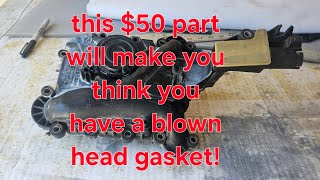
How to confirm: A loud whistling or hissing noise at idle is the classic sign. The definitive test is to remove the oil filler cap while the engine is running. If the noise immediately stops and the idle stumbles or changes, the PCV diaphragm is torn. You will also feel very strong suction holding the cap down. 🎬 Watch: See how a failed PCV sounds and behaves.
Typical fix: Replace the entire PCV valve assembly (oil separator). While some vendors sell diaphragm-only repair kits, the surrounding plastic housing and integrated hoses are often brittle and prone to cracking during the repair, making a full assembly replacement the more reliable and recommended solution.
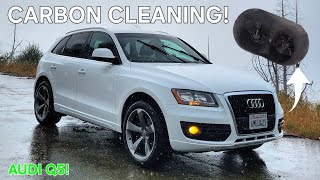
Est. part cost: $150 - $250 - Vacuum Leak (Other) 🟡 Medium Probability Aging plastic and rubber hoses in the engine bay become brittle and crack. Common culprits include the brake booster vacuum line, small check valves, and the intake air duct itself. Gaskets for the intake manifold can also fail and leak, which may be discovered during a PCV valve replacement. 🎬 Watch: How to perform carbon cleaning while the intake is off.
How to confirm: A smoke test is the most effective way to find leaks. With the engine off, a smoke machine fills the intake system with visible vapor, which will escape from any cracks or bad seals. Visually inspect all accessible hoses for obvious cracks or deterioration, especially at connection points.
Typical fix: Replace the specific cracked hose, intake boot, or gasket that is leaking.
Est. part cost: $20 - $150 - Dirty or Faulty Mass Airflow (MAF) Sensor ⚪ Low Probability The MAF sensor can become contaminated with oil from the crankcase ventilation system or dirt, causing it to under-report the amount of air entering the engine. This leads the ECM to inject too little fuel, creating a lean condition.
How to confirm: First, try cleaning the sensor with a dedicated MAF sensor cleaner spray; never touch the delicate sensor wires. If the problem persists, monitor the MAF readings on a scan tool. The readings should increase smoothly with RPM. If they are erratic, stuck, or implausible for the engine load, the sensor is likely faulty. An implausible signal may also set code P0101.
Typical fix: Clean the sensor first. If cleaning doesn't work, replace the MAF sensor.
Est. part cost: $100 - $200
Rare But Worth Checking
- Weak Fuel Pump or Clogged Fuel Filter: If both P0171 (Bank 1) and P0174 (Bank 2) are present, a fuel delivery issue is more likely. A failing low-pressure or high-pressure fuel pump or a clogged filter can't supply enough fuel to meet the engine's demand, causing a lean condition across both banks.
- Exhaust Leak: A leak in the exhaust manifold or downpipe before the upstream O2 sensor can allow outside air to be drawn in. The O2 sensor will read this extra oxygen and incorrectly report a lean condition to the ECM. This is less common than intake-side leaks.
- Leaking Intake Manifold Runner Shaft Seals: The intake manifold has internal flaps to control airflow. The shafts for these flaps have seals that can wear out, creating a small vacuum leak. This may also be accompanied by intake runner-specific codes like P2019.
Diagnosis Steps

- Scan for all stored trouble codes. If P0171 is also present, this strongly suggests a major vacuum leak affecting the entire engine, like the PCV valve.
- With the engine running at idle, listen for a distinct, loud whistling or sucking sound from the engine bay, particularly from the center 'V' area.
- Perform the definitive PCV test: While the engine is idling, carefully try to remove the engine oil cap. If there is strong suction holding the cap down and the whistling noise stops when the cap is removed, the PCV valve diaphragm is torn and must be replaced.
- If the PCV test is negative, perform a smoke test. This involves injecting smoke into the intake system to visually identify any leaks from cracked hoses, bad gaskets, or other seals.
- Inspect the air intake tube between the air filter box and the throttle body for any cracks or loose connections.
- If no vacuum leaks are found, remove and clean the Mass Airflow (MAF) sensor using a dedicated MAF sensor cleaner. Let it dry completely before reinstalling. Do not touch the sensor wires.
- If the issue persists, use a scan tool to monitor long-term and short-term fuel trims (LTFT/STFT) and MAF sensor readings at idle and under load to check for anomalies.
- As a final step, check fuel pressure from both the low-pressure and high-pressure pumps to rule out a fuel delivery issue. This is less common for a single-bank lean code.
Parts You'll Likely Need

- PCV Valve / Oil Separator
(OEM #06E103547P (or F, H, Q). Part numbers are often superseded; verify the latest revision.)— This is the most common failure point on the 3.2L V6 engine leading to a P0174 code. The internal diaphragm tears, creating a massive vacuum leak.
Trusted brands: Genuine Audi/VW, Vaico, URO Parts
OEM price range: $180-$250
Aftermarket price range: $50-$150 - Intake Manifold Gasket Set
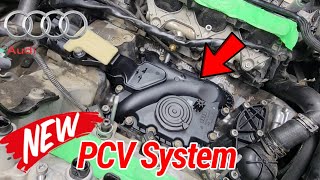
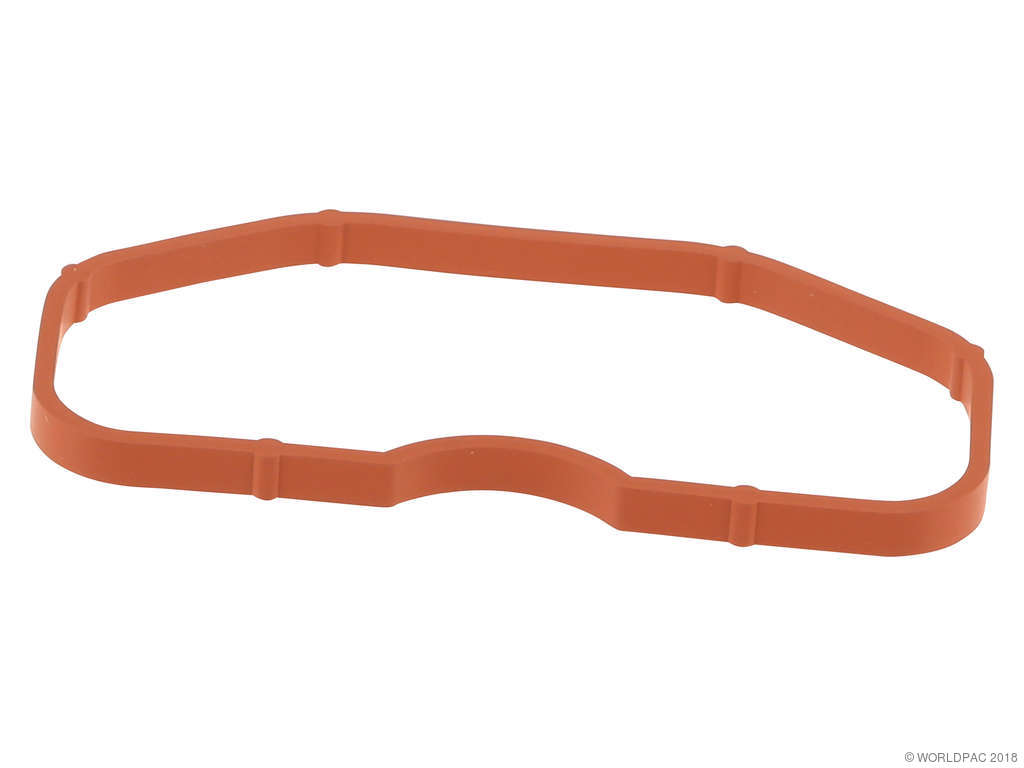
(OEM #06E129717 (Upper) & 079129717B (Lower))— These gaskets are single-use and must be replaced whenever the intake manifold is removed, which is required to access and replace the PCV valve. 🎬 See this walkthrough for removing the intake and PCV.
Trusted brands: Victor Reinz, Elring
OEM price range: $40-$60
Aftermarket price range: $20-$40
Related Codes That Often Appear With This One
- P0171 — System Too Lean (Bank 1). This code is the counterpart for the other engine bank (passenger side). If both P0171 and P0174 are present, it strongly points to a large vacuum leak common to both banks, such as a failed PCV valve or a faulty MAF sensor.
- P0300, P0301-P0306 — Random or specific cylinder misfire codes. A lean air-fuel mixture can fail to ignite properly, leading to misfires, especially at idle or under load.
- P0507 — Idle Control System RPM Higher than Expected. A large vacuum leak allows unmetered air into the engine, causing the idle speed to be higher than the ECM's target.
Technical Service Bulletins (TSBs) & Recalls
- TSB 01 16 69 / 2033001/8: While not for P0174, this TSB addresses a related issue of clogged secondary air injection ports due to carbon buildup, a common problem on this engine.
Platform-Specific Known Issues
- The PCV valve (oil separator) on the 3.2L CALB engine is a known high-failure item. Its diaphragm tears, causing a significant unmetered air leak that manifests as a loud whistle and lean codes P0171/P0174.
- The 3.2L FSI engine is also known for significant carbon buildup on the intake valves due to its direct injection design. This restricts airflow and can cause misfires, rough idle, and general performance degradation. This issue typically requires manual cleaning (e.g., walnut blasting) every 60,000-80,000 miles and is often performed at the same time as a PCV valve replacement since the intake manifold is already removed.
Mechanic-Grade Diagnostic Values
- Long-Term Fuel Trim (LTFT) for Bank 2 — expected: Using VCDS or a capable scan tool, the value in Measuring Block 032 should be between -10% and +10%.. Failure: A value consistently above +10% indicates the ECM is adding significant fuel to correct a lean condition. The P0174 code is typically set when the value approaches or exceeds +25%.
- Mass Airflow (MAF) Sensor Reading at Idle — expected: A healthy MAF sensor should read approximately 1.0 gram/second per liter of engine displacement. For the 3.2L engine, the expected reading at a stable, warm idle is ~3.2 g/s. Voltage should be around 1.0V.. Failure: A reading significantly lower than 2.8-3.5 g/s at idle suggests the sensor is dirty or failing, causing it to under-report airflow and leading to a lean mixture. Readings that are erratic or do not increase smoothly with RPM also indicate a fault.
- High-Pressure Fuel Rail Pressure (HPFP) — expected: Using a scan tool (VCDS Measuring Blocks), pressure should be a minimum of 40 bar (580 PSI) at idle, and should rise quickly under load. Some sources report normal idle pressure as high as 80-125 bar (1160-1812 PSI).. Failure: If the fuel rail pressure drops below 40 bar at idle or fails to increase substantially when revving the engine, it points to a failing HPFP or an issue with the in-tank low-pressure pump that feeds it.
- Low-Pressure Fuel System Pressure — expected: The in-tank fuel pump should supply a pressure of approximately 4 bar (~58 PSI) to the high-pressure pump.. Failure: Pressure significantly below this level indicates a failing in-tank pump or a clogged fuel filter, which will starve the HPFP and cause lean codes.
Scan Tool Commands That Help
- VCDS (VAG-COM): Throttle Body Adaptation (TBA) — This procedure is mandatory after cleaning or replacing the throttle body. It resets the ECM's learned values for the throttle plate's open and closed positions. Navigate to [01-Engine] -> [Basic Settings - 04] -> Select Group 060 -> [Go!]. The status should change to 'ADP OK'. Failure to perform this can cause idle issues and other fault codes.
- VCDS (VAG-COM) or equivalent: Clear Fault Codes / Reset Fuel Trims — After a repair is completed (e.g., replacing the PCV valve), clearing the fault codes will also reset the long-term fuel trim adaptations to zero. This allows you to immediately see if the fix was successful by monitoring the short-term and long-term fuel trims on a subsequent test drive. If they remain close to 0%, the lean condition is resolved.
- VCDS (VAG-COM): Monitor Measuring Blocks — To diagnose the P0174 code, monitor live data from key measuring blocks. Block 032 shows long-term fuel trims for idle (additive) and partial load (multiplicative). Block 002 shows MAF sensor readings. Blocks for fuel pressure (e.g., 140, 230) show requested vs. actual rail pressure.
Wiring & Ground Locations
- J623 — The Engine Control Module (ECM) is located in the plenum chamber (the area under the windshield wipers) on the driver's side.. This is the central computer processing all sensor inputs. Water ingress into the plenum chamber can damage the ECM or its connectors, leading to erratic sensor readings and faults.
- (12) & (615) — Primary engine ground points. (12) is in the engine compartment on the left side frame rail. (615) is on the left suspension strut tower.. A corroded or loose ground at these locations can cause incorrect readings from critical sensors like the MAF and O2 sensors, potentially leading to a false lean code.
- (600) — Ground connection on the right-side cylinder head.. This ground is critical for the ignition coils and other sensors located on the engine itself. A poor connection can cause misfires and erratic sensor data.
- Fuse Panel B (SB) — Located in the driver's side plenum chamber, inside the electronics box.. Fuse 3 (5A) on this panel provides power to the Mass Air Flow (MAF) Sensor (G70). A blown fuse will cause the MAF to stop working, likely triggering multiple codes including P0174.
Real Owner Repair Stories
- AliExpress Review / Owner Story (2011 Audi Q5 3.2L V6, 120,000 miles) — Persistent blue smoke during cold starts, gradual loss of power, and high oil consumption.
❌ Tried (didn't work) Initial diagnosis pointed towards general age-related issues.
✅ What actually fixed it The mechanic diagnosed a failing oil separator. The owner replaced the PCV/oil separator assembly (related to part 06E 103 217 AC), and within two weeks, the smoke, power loss, and associated lean condition symptoms vanished. - AudiWorld Forum User / AliExpress Review (2007 Audi A6 3.2 FSI (same engine family)) — Intermittent rough idle at cold start, Check Engine Light with codes P0171 and P0174.
❌ Tried (didn't work) The owner was likely suspecting the common PCV failure.
✅ What actually fixed it The owner discovered a cracked vacuum hose near the intake manifold flange (OEM part number family 06E 133 773). Replacing this specific hose resolved the lean codes and rough idle.
"I Checked Everything" — The Actual Cause
- If a comprehensive smoke test reveals no vacuum leaks, the cause is likely not unmetered air. In this scenario, the P0174 code is often caused by the system providing insufficient fuel. The next steps should be to test the MAF sensor's output to ensure it's not under-reporting airflow, and to verify fuel pressure from both the low-pressure and high-pressure pumps to rule out a fuel delivery problem.
OEM Part Supersession History
06E103547F, 06E103547H→06E103547P, 06E103547Q, and others.— The PCV / Oil Separator for this engine has been revised multiple times by Audi to improve the durability of the internal diaphragm and address the high failure rate.
Heads up: While many revisions may physically fit, there can be subtle differences. It is critical to use a VIN lookup or consult a dealer to get the absolute latest, correct part number for the specific vehicle. Using an older, failure-prone revision will lead to the same problem recurring prematurely. Some known recent part numbers in this family include 06E103547N and 06E103547AF.
Model Year Variations Within This Range
- 2009-2012: No significant variations affecting the diagnosis of P0174 are documented within the 2009-2012 model years for the 3.2L CALB engine. The primary failure mode (PCV valve) and diagnostic approach are consistent across this range.
Diagnostic Flowchart
Other Known Issues on This Vehicle
Issues unrelated to this code that are worth knowing about as an owner of this generation:
- Intake Valve Carbon Buildup 🔴 High — Extremely common on all 3.2L FSI engines, often requiring cleaning every 60,000-80,000 miles to prevent misfires, rough idle, and performance loss.
- Upper Timing Chain Tensioner Wear 🔴 High — The upper timing chain tensioners can wear or fail, causing a distinct 'rattle' noise for a few seconds on a cold start. If ignored, this can lead to jumped timing and catastrophic engine damage. The issue is less prevalent than on the 2.0T engine but still a significant concern.
- Clogged Secondary Air Injection Ports 🟠 Medium — Carbon can also clog the secondary air injection passages in the cylinder heads, triggering fault codes P0491 and P0492. This requires significant labor to clean, often involving removal of the front bumper and other components. Audi issued a TSB (01 16 69 / 2033001/8) for this issue. (Ref: TSB 2033001/8)
- Leaking Oil Filter Housing Gasket 🟠 Medium — The gasket for the oil filter housing, located in the 'V' of the engine, is known to become brittle and leak oil. This is a common leak point mentioned by owners.
- Plastic Coolant Pipe Failure 🟠 Medium — Like many Audis of this era, the 3.2L uses numerous plastic cooling components, such as the thermostat housing and crossover pipes, which can become brittle and crack, leading to coolant leaks.
Used vs. New Parts: Buying Guide for This Vehicle
When a used part is the smart pick: For this repair, buying a used part is generally not recommended for the PCV valve itself due to the high failure rate from heat and age. However, for larger, less failure-prone components like a throttle body or intake manifold that might be needed in a complex diagnosis, a used part from a reputable salvage yard is a reasonable choice.
Donor-vehicle mileage cap: roughly under 50000 miles for the part to have meaningful remaining life.
What to inspect on the donor part:
- For a PCV valve, avoid any part that shows signs of oil residue, as it may have come from a leaking engine.
- Check all plastic components and hose connections for brittleness or visible cracks.
- Verify the part number on the used component is one of the later, improved revisions if possible.
OEM-only on this vehicle (don't cheap out):
- PCV Valve / Oil Separator: Aftermarket versions are widely reported by owners and shops to have extremely high premature failure rates, sometimes within weeks. The cost savings are not worth the repeated labor to replace it.
Aftermarket brands forum-validated for this vehicle:
- Victor Reinz (for gaskets)
- Elring (for gaskets)
Brands owners have reported issues with on this vehicle:
- Unbranded or 'white-box' PCV valve assemblies from online marketplaces are a significant gamble and should be avoided.
Real Owner Stories
Aggregated from forums and TSBs cited above. Mileages and costs reflect what owners reported in those sources.
2012 Audi Q5 3.2L V6 — ~80000 miles
Symptoms: Loud whistling noise at idle and the engine was 'hunting' for RPM with an unstable idle.
What fixed it: Replacement of the entire PCV valve assembly (oil separator).
Source hint: Article context section 'common_causes' and 'symptoms' regarding PCV failure
Audi Q5 3.2L FSI — 202000 miles
Symptoms: Owner of a high-mileage 3.2L reported concerns about PCV failure, intake runner flaps, and various oil leaks.
What fixed it: The 3.2 is considered a stout engine but requires watching for PCV and intake runner flap issues at high mileage.
Source hint: Reddit r/Audi - '202k miles so far and no signs of slowing down. The 3.2 is a stout engine, but what should I start watching out for?'
Audi Q5 3.2L V6 — ~70000 miles
Symptoms: Misfires and general performance degradation; intake valves were restricted by carbon.
What fixed it: Manual cleaning of the intake valves (walnut blasting), often performed alongside PCV valve replacement.
Source hint: Article context section 'vehicle_specific_issues'
Related OBD-II Codes
Frequently Asked Questions
I hear a loud whistling noise from my 3.2L engine at idle. Is this related to code P0174?
How can I tell if my PCV valve is the cause of the P0174 code without a smoke machine?
Should I just replace the PCV diaphragm or the whole assembly on my Q5?
Does TSB 01 16 69 apply to my P0174 lean code issue?
My Audi Q5 has a rough idle and P0174; could this be carbon buildup?
Is the P0174 code common on other Audi models with the 3.2L engine?
Helpful Videos
Used OEM Parts in Stock

New Aftermarket Parts Available



The information in this article is provided for general reference and educational purposes only. Vehicle specifications, procedures, and part compatibility can vary by production date, trim level, and region. Always consult your vehicle's factory service manual and verify part numbers before purchasing or performing repairs. Safety-critical components such as airbags, seat belts, and braking systems should be installed by a qualified professional.
- Audi Q5:
- 🎬 Helpful Videos
- 🛍️ Shop This Part
- What's Unique About the 2009-2017 Audi Q5
- Symptoms You May Notice
- Most Likely Causes
- Rare But Worth Checking
- Diagnosis Steps
- Parts You'll Likely Need
- Related Codes That Often Appear With This One
- Technical Service Bulletins (TSBs) & Recalls
- Platform-Specific Known Issues
- Mechanic-Grade Diagnostic Values
- Scan Tool Commands That Help
- Wiring & Ground Locations
- Real Owner Repair Stories
- "I Checked Everything" — The Actual Cause
- OEM Part Supersession History
- Model Year Variations Within This Range
- Diagnostic Flowchart
- Other Known Issues on This Vehicle
- Used vs. New Parts: Buying Guide for This Vehicle
- Real Owner Stories
- 2012 Audi Q5 3.2L V6 — ~80000 miles
- Audi Q5 3.2L FSI — 202000 miles
- Audi Q5 3.2L V6 — ~70000 miles
- Related OBD-II Codes
- Frequently Asked Questions
- 🎟️ Get 5% Off