

OBD-II Code P0173: Fuel Trim Malfunction (Bank 2)
The Ultimate 2026 Guide: What P0173 Means, Why It Triggers, and How to Fix It—For Good.
- Code P0173 triggers when your engine's computer maxes out its fuel adjustments (typically +/- 25%) on Bank 2 but still cannot achieve the correct 14.7:1 air-fuel ratio.
- Check for vacuum leaks and clean your Mass Air Flow (MAF) sensor first; these two issues cause over 70% of P0173 codes and cost under $20 to fix DIY.
- Never replace the oxygen sensor without testing it first; the O2 sensor is usually just accurately reporting a lean or rich condition caused by a vacuum leak.
- Driving more than 100 miles with an active P0173 code drops fuel economy by up to 25% and risks melting your catalytic converter, turning a $50 repair into a $2,000+ replacement.
What Does P0173 Mean?

The Engine Control Module (ECM) constantly adjusts the air-to-fuel ratio on Bank 2 to maintain the ideal 14.7:1 mixture. Code P0173 means the computer hit its absolute maximum adjustment limit (typically +/- 25%) but still cannot fix the mixture. The ECM is either dumping maximum fuel to combat a lean condition (too much air) or cutting maximum fuel to combat a rich condition (too much fuel).
Technical definition: The SAE/OBD-II definition is "Fuel Trim Malfunction (Bank 2)". The Powertrain Control Module (PCM) sets this code when long-term fuel trim (LTFT) and short-term fuel trim (STFT) adjustments for engine bank 2 exceed the manufacturer's calibrated limits, failing to maintain stoichiometry.
Can I Drive With P0173?

Yes, But With Caution. You can drive short distances, but fix the issue immediately. Ignoring P0173 drops fuel economy by up to 25% and causes rough idling. Driving over 100 miles with a severe fuel imbalance overheats the catalytic converter, creating a fire hazard and turning a minor repair into a $2,500+ replacement.
Common Causes

- Vacuum Leaks (Including PCV System) (Very Common) — Cracked vacuum hoses, leaking intake manifold gaskets, torn air intake boots, or a stuck-open PCV valve allow unmetered air into the engine. This is the most frequent cause, especially on aging European models.
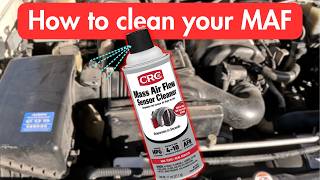
- Dirty or Faulty Mass Air Flow (MAF) Sensor (Very Common) — Contaminated with oil or dirt, the MAF sensor under-reports airflow, causing the ECM to miscalculate fuel delivery. This is a top cause on Mercedes-Benz and VW/Audi vehicles. 🎬 Watch: How to clean your MAF sensor the right way.
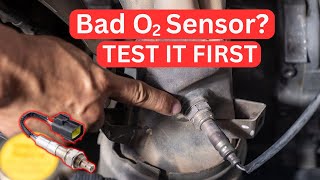
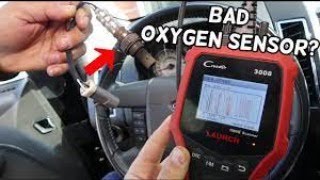
- Faulty Oxygen (O2) Sensor (Common) — An aging or contaminated Bank 2 upstream (Sensor 1) O2 sensor provides false data to the ECM. However, O2 sensors are often misdiagnosed and replaced when they are actually just reporting a valid vacuum leak. 🎬 See this step-by-step guide on testing your O2 sensors.
- Fuel Delivery Problems (Common) — A weak fuel pump, clogged fuel filter, failing pressure regulator, or dirty fuel injectors disrupt fuel delivery, creating a lean or rich condition.
- Exhaust Leaks (Less Common) — Cracks in the exhaust manifold before the upstream O2 sensor draw in outside air, tricking the sensor into reporting a false lean condition.
- Clogged Catalytic Converter (Rare) — Excessive exhaust backpressure from a clogged converter traps gases, skewing O2 sensor readings and forcing incorrect fuel trims.
- Leaking Camshaft Adjuster Solenoids (Rare) — On specific Mercedes-Benz engines, oil leaks from camshaft adjusters into the wiring harness, contaminating O2 sensor connectors and causing erroneous signals.
- Faulty Engine Coolant Temperature (ECT) Sensor (Rare) — An ECT sensor stuck reading 'cold' forces the ECM to maintain a rich fuel mixture, maxing out fuel trim adjustments.
Symptoms
- Check Engine Light On — The ECM illuminates the Malfunction Indicator Lamp (MIL) immediately after fuel trim limits are exceeded.
- Reduced Fuel Economy — Gas mileage drops by 10-25% as the ECM dumps extra fuel to compensate for a lean condition or runs inefficiently rich.
- Rough Idle and Hesitation — The engine shakes or stumbles at a stop, with noticeable hesitation during acceleration.
- Loss of Engine Power — The vehicle feels sluggish and struggles to accelerate due to highly inefficient combustion.
- Black Smoke or Strong Fuel Smell — Excessively rich conditions produce black tailpipe smoke, raw gasoline odors, or a 'rotten egg' smell indicating catalytic converter stress.
- Failed Emissions Test — An active P0173 code guarantees failure during state emissions or smog inspections.
Diagnostic Flowchart
Tap your situation to follow the diagnostic path that matches what you're seeing on this code.
Common Fixes & Costs
- Repairing a Vacuum Leak (e.g., PCV hose, intake gasket) — Parts: $10-$150, Labor: $125-$300, ~1.5 hr book time (DIY)
- Cleaning or Replacing the Mass Air Flow (MAF) Sensor
— Parts: $10-$250, Labor: $50-$150, ~0.7 hr book time
(DIY)
Mercedes-Benz C-Class (W204): OEM - Replacing the Bank 2, Sensor 1 Oxygen (O2) Sensor
— Parts: $60-$200, Labor: $100-$250, ~1.2 hr book time
(Intermediate)
BMW 3 Series (E90): OEM - Replacing the Fuel Pressure Regulator
— Parts: $70-$250, Labor: $100-$250, ~1.5 hr book time
(Intermediate)
Ford F-150 (2011-2014, 5.0L): OEM - Replacing Clogged or Leaking Fuel Injectors on Bank 2
— Parts: $150-$400, Labor: $200-$500, ~3.5 hr book time
(Advanced)
Ford F-150 (2011-2017, 5.0L): OEM - Replacing Engine Coolant Temperature (ECT) Sensor — Parts: $25-$80, Labor: $75-$150, ~0.8 hr book time (DIY)
DIY vs Professional
- Repairing a Vacuum Leak — Beginner: yes
- Cleaning or Replacing the MAF Sensor — Beginner: yes
- Replacing the O2 Sensor — Beginner: no
- Replacing the Fuel Pressure Regulator — Beginner: no
- Replacing Fuel Injectors — Beginner: no
Used vs. New Parts: Buying Guide
When a used part is worth it: Buy used for expensive, non-wear mechanical items like an intake manifold. Never buy used electronic sensors (MAF, O2) or fuel pumps.
Donor-vehicle mileage cap: roughly under 80000 miles for the part to have meaningful remaining life.
Donor quality checklist:
- Verify the donor vehicle was not scrapped for engine or emissions failures.
- Choose donors from salt-free regions to avoid corrosion.
- Match OEM part numbers exactly.
Decision logic:
- If The part is an electronic sensor (MAF, O2) or fuel system component. → Buy new OEM or reputable aftermarket (Bosch, Denso). Used parts carry too high a failure risk.
- If The part is a major mechanical component (intake manifold) for a high-mileage vehicle. → Buy used from a verified low-mileage donor to save money.
- If A new OEM part costs less than $150. → Buy new. The minor savings aren't worth the lack of warranty.
Warranty tradeoff: Salvage yards offer 30-90 day part-only warranties. New aftermarket parts offer 1-year to lifetime warranties. New OEM parts carry 1-2 year warranties.
Worst-case if a used part fails: $300-$800 in repeat labor and replacement parts if a used component fails.
What Happens If You Wait — Timeline
- 0-2 weeks: Check Engine Light illuminates. The computer compensates successfully, so symptoms are unnoticeable. (MPG impact: 0-5%% · Added cost: $0-25 in wasted fuel)
- 2 weeks - 3 months: Fuel economy drops noticeably. The driver experiences rough idling on cold starts and minor hesitation during acceleration. (MPG impact: 10-20%% · Added cost: $50-150 in wasted fuel)
- 3-6 months: A rich condition fouls spark plugs. A lean condition increases combustion temperatures, beginning to crack the catalytic converter's ceramic substrate. (MPG impact: 15-25%% · Added cost: $200-600 for fouled plugs/sensors and early catalyst damage.)
- 6+ months: Catastrophic catalytic converter failure. The converter clogs (rich) or melts down (lean), causing massive power loss and rendering the car undrivable. (MPG impact: >25%% · Added cost: $1,500-3,000+ for catalytic converter replacement.)
Cost of Not Fixing It
- 0-1 Month: 10-25% drop in fuel economy, rough idle, hesitation, and automatic emissions test failure. (Added cost: $50-$150 in wasted fuel.)
- 1-6 Months: A rich condition fouls spark plugs and O2 sensors. A lean condition overheats exhaust valves and damages the catalytic converter substrate. (Added cost: $200-$600 for new plugs and sensors.)
- 6+ Months: Complete catalytic converter failure (melted or clogged). High risk of burned exhaust valves or piston damage. (Added cost: $1,500-$3,000+ for catalytic converter and engine repairs.)
Diagnosis Steps

- Check Codes & Freeze Frame Data
Use an OBD-II scanner to read all codes. P0174 (Lean) or P0175 (Rich) specifies the fault direction. Codes for MAF, O2 sensors, or misfires pinpoint the root cause. Review freeze frame data to see exact engine conditions when the code triggered.
Tools: OBD-II Scanner (Beginner) - Analyze Live Fuel Trim Data (Pro Tip)
Monitor Short-Term (STFT) and Long-Term (LTFT) fuel trims for Bank 2 at idle and 2500 RPM. If LTFT is maxed out (+25%) at idle but drops near 0% at 2500 RPM, you have a vacuum leak. If trims remain high across all RPMs, suspect a faulty MAF sensor or fuel delivery issue.
Tools: OBD-II Scanner with Live Data (Advanced) - Perform a Visual Inspection
Inspect the engine bay for cracked, disconnected, or mushy vacuum hoses, especially around the PCV system. Check the large air intake boot for tears. On Mercedes models, inspect crankcase vent hoses under the intake manifold.
Tools: Flashlight, Mirror (Beginner) - Check for Vacuum Leaks with a Smoke Test
Force low-pressure smoke into the intake system using an automotive smoke machine. Smoke will escape from invisible cracks in hoses, gaskets, or seals. This is the only definitive way to rule out vacuum leaks.
Tools: Automotive Smoke Machine (Intermediate) - Clean the Mass Air Flow (MAF) Sensor
Remove the MAF sensor and spray the delicate hot wires with dedicated MAF sensor cleaner. Never touch the wires or use brake cleaner. Let it air dry completely before reinstalling.
Tools: Screwdriver/Torx bit, MAF Sensor Cleaner (Beginner) - Analyze O2 Sensor Live Data
Watch the live data for the Bank 2, Sensor 1 (upstream) O2 sensor. Voltage should fluctuate rapidly between 0.1V and 0.9V. A sensor stuck at high (>0.8V) or low (<0.2V) voltage, or responding sluggishly, is faulty.
Tools: OBD-II Scanner with Live Data (Advanced) - Test Fuel Pressure
Connect a fuel pressure gauge to the fuel rail Schrader valve. Compare idle pressure to factory specs (typically 35-65 PSI). Low pressure indicates a weak pump or clogged filter; high pressure points to a faulty regulator.
Tools: Fuel Pressure Gauge (Intermediate) - Perform Injector Balance & Resistance Test
Use a professional scan tool to perform an injector balance test measuring pressure drops. Alternatively, use a multimeter to check injector resistance (typically 11.0-16.0 Ohms). Readings outside this range or significant deviations between injectors indicate a fault.
Tools: Professional Scan Tool or Multimeter (Advanced)
When This Code Triggers (Freeze-Frame Conditions)
- Engine Coolant Temp: 180-210°F (82-99°C) (The engine must be fully warmed up and operating in closed-loop mode.)
- RPM: 1500-2500 RPM (Sets during steady-state cruising, rarely at idle or heavy acceleration.)
- Engine Load: 20-60% (Occurs under light to moderate engine load during highway or suburban driving.)
- Vehicle Speed: 45-65 mph (72-105 kph) (Triggers while maintaining a constant highway speed.)
Related Codes
- P0170 — The identical 'Fuel Trim Malfunction' code for Bank 1. Seeing both P0170 and P0173 guarantees a system-wide issue, such as a bad MAF sensor, weak fuel pump, or major intake vacuum leak.
- P0174 — Means 'System Too Lean (Bank 2)'. Seeing P0173 and P0174 together confirms the ECM is adding maximum fuel (+25% trim) to compensate for a vacuum leak or lack of fuel.
- P0175 — Means 'System Too Rich (Bank 2)'. Seeing P0173 and P0175 together confirms the ECM is cutting maximum fuel (-25% trim) due to a leaking injector, high fuel pressure, or a false lean O2 signal.
- P0171 / P0172 — The Lean (P0171) and Rich (P0172) codes for Bank 1. Pairing P0173 with an opposite bank code suggests a systemic issue where banks compensate differently.
Climate & Environmental Factors
- Cold Weather: Freezing temperatures cause plastic and rubber vacuum hoses to turn brittle and crack, making vacuum leaks the dominant cause of P0173 in winter.
- High Altitude: Thinner air at high altitudes pushes borderline components (like a slightly dirty MAF sensor) past their compensation limits, triggering the code.
- High Humidity: Extreme humidity slightly skews mass airflow sensor readings, contributing to minor fuel trim deviations, though rarely acting as the sole root cause.
How to Talk to a Mechanic About This Code
Say this: "I have a P0173 code on my car. Can you please start by checking for vacuum leaks with a smoke test and inspecting the MAF sensor before recommending any part replacements?"
Signals you understand the most common, cheapest causes. It directs the shop to perform specific diagnostics rather than blindly replacing expensive O2 sensors.
Avoid saying:
- 'My check engine light is on, can you just fix it?' (Invites unnecessary diagnostic time and parts).
- 'I think it's the oxygen sensor, can you replace it?' (You are asking them to replace the messenger, not the cause).
- 'Just do whatever you think is best.' (Gives up consumer power and leads to upselling).
Questions to ask before authorizing the repair:
- Can you show me the smoke test results or the live data from the MAF and O2 sensors?
- Can you provide the freeze-frame data stored when the P0173 code set?
- What specific tests did you perform to condemn the old part?
- What is the warranty on both parts and labor?
Where to Take It: Dealer vs Independent vs Chain
- Dealer:
Use only if under warranty or for known TSBs. Too expensive for out-of-warranty P0173 diagnosis.
Best for: Vehicles under powertrain or emissions warranty., Complex, manufacturer-specific issues on German brands., Repairs requiring ECU software updates.
Downsides: Labor rates and parts cost 50-100% more than independent shops., Defaults to replacing entire assemblies rather than faulty components. (Typical cost: +50% vs. baseline) - Independent Shop:
Best fit. A good independent shop with a smoke machine effectively diagnoses P0173 at a reasonable cost.
Best for: Out-of-warranty vehicles where cost matters., Diagnosing common codes like P0173 with well-understood causes.
Downsides: Diagnostic skill varies; verify ASE/I-Car certification and reviews. (Typical cost: +0% vs. baseline) - Chain Shop:
Avoid for initial P0173 diagnosis. Acceptable only for straightforward sensor swaps if you diagnosed it yourself.
Best for: Simple, routine maintenance like oil changes.
Downsides: High pressure to upsell unnecessary services like fuel injector flushes., Lacks advanced diagnostic tools, leading to misdiagnosis. (Typical cost: -10% vs. baseline)
When to Walk Away From the Repair
If the estimated repair cost exceeds 40-50% of your car's private-party value, consider selling or trading it in.
- Car worth $4000, fix is $2000: Borderline. The repair is 50% of the car's value. Get a second opinion before authorizing.
- Car worth $12000, fix is $1800: Fix it. The repair is only 15% of the vehicle's value.
- Car worth $2500, fix is $1500: Walk away. The repair is 60% of the car's value. Do not invest this much into an aging vehicle.
What Scan Tool You Need for This Code
Minimum: A scanner that reads and graphs live data for O2 sensors and fuel trims (STFT and LTFT).
A $20 code reader only provides the P0173 code. Without live data, you cannot determine if the cause is a vacuum leak, bad MAF, or failing O2 sensor, leading to wasted money on wrong parts.
Budget: BlueDriver Pro (~$100) — Connects via Bluetooth to provide excellent live data graphing for fuel trims and O2 sensors. Reads crucial freeze frame data.
Mid-range: Foxwell NT510 Elite / Innova 5610 (~$180) — Offers manufacturer-specific codes and bi-directional controls to test components like fuel pumps directly, pinpointing fuel delivery issues.
Professional: Autel MaxiCOM MK808 / XTOOL D7 (~$450-600) — Professional-level tools with full bidirectional capabilities. Allows you to command injector balance tests to diagnose faulty injectors on Bank 2.
Rent vs buy: Auto parts stores lend basic readers for free, but P0173 requires live data. Buying a tool like the BlueDriver Pro is mandatory for DIY diagnosis.
How to Clear the Code After You Fix It
- Use an OBD-II scan tool to clear the P0173 code.
- Ensure the fuel tank is between 15% and 85% full for EVAP monitor testing.
- Perform a complete drive cycle to run all readiness monitors.
Drive cycle (~30 minutes): Start with a cold engine (off for 8+ hours). Idle for 3 minutes with A/C and defroster on. Drive a mix of city and highway speeds, including 5 minutes of steady driving at 55-60 mph. Let the vehicle cool down completely.
Readiness monitors affected: Catalyst Monitor, O2 Sensor Monitor, EVAP System Monitor, O2 Heater Monitor
Before emissions retest: drive at least 100 miles to fully set monitors.
Watch out for:
- Disconnecting the battery clears the code but resets all readiness monitors, guaranteeing an automatic emissions test failure.
- The code returns immediately if the root cause (e.g., vacuum leak) remains unfixed.
Will This Fail Emissions / State Inspection?
Yes — this code typically fails an OBD-II emissions inspection.
- California: An active P0173 is an automatic failure. The vehicle must complete a drive cycle to set all OBD-II readiness monitors before a STAR station re-test.
- New York: An illuminated Check Engine Light for P0173 causes immediate failure. Readiness monitors must read 'Ready' to proceed.
- Texas: In the 17 emissions-testing counties, P0173 results in failure. Drive 50-100 miles after clearing the code to reset monitors.
Most Commonly Affected Vehicles
- Mercedes-Benz C-Class (W204), E-Class (W211/W212), ML-Class (W164) (2005-2014) — Frequently caused by a failing MAF sensor (use only OEM Bosch parts) or cracked crankcase vent hoses under the intake manifold.
- BMW 3 Series (E90), 5 Series (E60), X3 (E83), X5 (E70) (2004-2013) — Highly prone to vacuum leaks from brittle plastic components, specifically the PCV system, air intake boot, and valve cover gasket.
- Volkswagen / Audi Touareg, Phaeton, A6, A8 (2003-2015) — Commonly associated with failing MAF sensors and vacuum leaks from aging plastic intake components.
- Toyota Camry (V6), Tundra, Sienna (2012-2019) — Camry 3.5L V6 models often suffer Bank 2 intake manifold vacuum leaks. Tundras frequently experience clogged Bank 2 fuel injectors.
- Ford F-150, Explorer, Mustang (2005-2015) — Often triggered by a faulty upstream O2 sensor on Bank 2. Vacuum leaks from aged PCV hoses are also prevalent.
- Chevrolet / GMC Silverado, Tahoe, Sierra (2007-2014) — The 5.3L V8 suffers from leaking intake manifold gaskets or failing fuel injectors, particularly on Active Fuel Management (AFM) models.
- Hyundai Tucson (V6), Santa Fe (2005-2009) — Underlying mechanical issues or intermittent sensor failures often mimic fuel trim problems, requiring deep diagnosis.
- Honda Accord (V6), Odyssey, Pilot (2012-2015) — Triggered by ethanol-blend fuels clogging fuel filters or altering fuel pressure, though vacuum leaks should be checked first.
Manufacturer-Specific Notes

- Mercedes-Benz: P0173 is overwhelmingly caused by a bad MAF sensor. Non-OEM sensors fail to fix the issue. Cracked crankcase vent hoses (TSB Campaign 2008020002) are the second most common culprit.
- BMW: M54 and N52 engines develop severe vacuum leaks from brittle plastic PCV systems, air intake boots, and valve cover gaskets, triggering P0173 earlier than other makes.
- Ford: On F-150 V8/V6 models, the Bank 2 upstream O2 sensor is a highly common failure point. Outdated PCM software can also misinterpret data, requiring a dealer update.
- European Vehicles (General): BMW, Mercedes, and VW use general P0170/P0173 'malfunction' codes more frequently than Japanese/American brands, which default directly to specific lean (P0171/P0174) or rich (P0172/P0175) codes.
Real Owner Stories
2008 Mercedes E350 (W211) at 115K miles with P0170 & P0173
Check Engine Light on, slight RPM fluctuation at idle. Codes P0170 and P0173 present.
What they tried:
- Cleaned the MAF sensor with CRC MAF cleaner, but the light returned after 10 minutes.
- Inspected all vacuum hoses for cracks.
Outcome: Replaced the MAF sensor with a new OEM Bosch unit ($168). This resolved the issue permanently. The owner noted forum wisdom heavily advised against using non-OEM MAF sensors for Mercedes.
Lesson: On European vehicles, P0170/P0173 is frequently caused by a faulty MAF sensor. While cleaning is a good first step, replacement with an OEM part is often the ultimate fix.
2011 Ford F-150 with P0173
Truck had a rough idle and hesitation on acceleration. Check Engine Light was on.
What they tried:
- Suspected a vacuum leak but found no obvious issues.
- Replaced the Bank 2, Sensor 1 oxygen sensor based on vehicle-specific forums.
Outcome: Replacing the upstream O2 sensor on Bank 2 resolved all symptoms and cleared the code. This is a highly common failure point on this F-150 generation.
Lesson: Sometimes the 'messenger' (the O2 sensor) is actually the problem. For high-volume models like the F-150, checking owner forums points to highly probable causes, saving diagnostic time.
2007 BMW 328i (E90) with lean codes
Car presented with P0173 and P0170, indicating a dual-bank problem. The owner experienced a rough idle.
What they tried:
- Replaced the MAF sensor without success.
- Replaced O2 sensors without success.
- Performed a smoke test.
Outcome: A smoke test revealed a massive leak in the crankcase ventilation (PCV) system hose, a notorious failure point on this engine. Replacing the PCV system ($150 in parts) resolved the codes.
Lesson: When both banks show a fault, the problem is systemic. A smoke test is the most effective way to find hidden vacuum leaks and avoid wasting money on unneeded sensors.
How to Prevent This Code From Triggering
- Use Top-Tier certified gasoline (Every fill-up) — Top-Tier gas contains detergents that prevent carbon deposits on fuel injectors, stopping the clogs that cause fuel trim imbalances.
- Clean the MAF sensor (Every 15,000-30,000 miles (with air filter change)) — Removes dust and oil vapor from the sensor wire, preventing it from under-reporting airflow and triggering codes.
- Replace upstream O2 sensors (Every 100,000 miles) — Aging O2 sensors become sluggish, providing delayed data to the computer and causing inefficient fuel adjustments that stress the catalytic converter.
- Inspect vacuum hoses (During every oil change) — Feeling for soft/mushy or hard/brittle spots catches developing vacuum leaks before they trigger a code.
Frequently Asked Questions
What is 'Bank 2'?
On a V-shaped engine (V6 or V8), cylinders are split into two banks. Bank 1 contains cylinder #1, making Bank 2 the opposite side. Inline engines only have one bank and cannot trigger a P0173 code.
What is the difference between P0173 and P0174?
P0173 is a general 'Fuel Trim Malfunction' indicating the computer hit its adjustment limit. P0174 specifically means 'System Too Lean' on Bank 2. P0174 often accompanies P0173, confirming the engine has too much air or insufficient fuel.
What is the difference between short-term and long-term fuel trim?
Short-term fuel trim (STFT) makes immediate adjustments based on real-time O2 sensor readings. Long-term fuel trim (LTFT) is a learned, permanent correction based on STFT trends. P0173 sets when combined STFT and LTFT exceed the system's +/- 25% limit.
What are the most common misdiagnosis mistakes for P0173?
The most common mistake is immediately replacing the oxygen (O2) sensor without testing it. The O2 sensor usually just accurately reports a problem existing elsewhere, like a vacuum leak. Always perform a smoke test before replacing expensive sensors.
Can a P0173 code cause engine damage?
Yes, driving with a severe air-fuel imbalance increases engine temperatures, fouls spark plugs, and ultimately destroys the catalytic converter.
Will a P0173 code clear itself?
No, you must repair the underlying mechanical or electrical fault first. After repair, clear the code with a scanner or wait for it to turn off after 3-5 successful drive cycles.
Why did my P0173 code come back after replacing a part?
The replaced part was likely not the root cause, or a secondary issue exists. For example, replacing an O2 sensor will not fix a hidden vacuum leak from a cracked PCV hose. Systematic diagnosis prevents this parts-cannon approach.
Will my car fail an emissions test with a P0173 code?
Yes, an active P0173 code and illuminated Check Engine Light automatically fail emissions inspections in all jurisdictions.
What is the first thing to check for a P0173 code?
Start with the simplest, cheapest fixes by visually inspecting all air intake and vacuum hoses on Bank 2. Next, clean the Mass Air Flow (MAF) sensor with a dedicated cleaner. These two steps resolve the majority of P0173 issues.
How do I find Bank 2 on my engine?
Look up a cylinder location diagram for your specific vehicle. Bank 1 always contains cylinder #1. Once you locate cylinder #1, the opposite side is Bank 2.
Can a bad gas cap cause a P0173 code?
No. A loose gas cap causes evaporative emission (EVAP) codes like P0442 or P0455, but it does not affect the engine's air-fuel mixture calculation.
Key Takeaways
- Code P0173 triggers when your engine's computer maxes out its fuel adjustments (typically +/- 25%) on Bank 2 but still cannot achieve the correct 14.7:1 air-fuel ratio.
- Check for vacuum leaks and clean your Mass Air Flow (MAF) sensor first; these two issues cause over 70% of P0173 codes and cost under $20 to fix DIY.
- Never replace the oxygen sensor without testing it first; the O2 sensor is usually just accurately reporting a lean or rich condition caused by a vacuum leak.
- Driving more than 100 miles with an active P0173 code drops fuel economy by up to 25% and risks melting your catalytic converter, turning a $50 repair into a $2,000+ replacement.
Helpful Videos

The information in this article is provided for general reference and educational purposes only. Vehicle specifications, procedures, and part compatibility can vary by production date, trim level, and region. Always consult your vehicle's factory service manual and verify part numbers before purchasing or performing repairs. Safety-critical components such as airbags, seat belts, and braking systems should be installed by a qualified professional.
- 🎬 Helpful Videos
- What Does P0173 Mean?
- Can I Drive With P0173?
- Common Causes
- Symptoms
- Diagnostic Flowchart
- Common Fixes & Costs
- DIY vs Professional
- Used vs. New Parts: Buying Guide
- What Happens If You Wait — Timeline
- Cost of Not Fixing It
- Diagnosis Steps
- When This Code Triggers (Freeze-Frame Conditions)
- Related Codes
- Climate & Environmental Factors
- How to Talk to a Mechanic About This Code
- Where to Take It: Dealer vs Independent vs Chain
- When to Walk Away From the Repair
- What Scan Tool You Need for This Code
- How to Clear the Code After You Fix It
- Will This Fail Emissions / State Inspection?
- Most Commonly Affected Vehicles
- Manufacturer-Specific Notes
- Real Owner Stories
- 2008 Mercedes E350 (W211) at 115K miles with P0170 & P0173
- 2011 Ford F-150 with P0173
- 2007 BMW 328i (E90) with lean codes
- How to Prevent This Code From Triggering
- Frequently Asked Questions
- What is 'Bank 2'?
- What is the difference between P0173 and P0174?
- What is the difference between short-term and long-term fuel trim?
- What are the most common misdiagnosis mistakes for P0173?
- Can a P0173 code cause engine damage?
- Will a P0173 code clear itself?
- Why did my P0173 code come back after replacing a part?
- Will my car fail an emissions test with a P0173 code?
- What is the first thing to check for a P0173 code?
- How do I find Bank 2 on my engine?
- Can a bad gas cap cause a P0173 code?
- Key Takeaways
- 🎟️ Get 5% Off