

GMC Yukon P0172 (2017-2024): System Too Rich Causes and Fixes
On 2017-2024 GMC Yukons with direct injection, code P0172 almost always points to a failing high-pressure fuel pump (HPFP) leaking fuel into the crankcase. Other common causes include a contaminated Mass Air Flow (MAF) sensor or a stuck EVAP purge valve. Checking the engine oil for a strong gasoline smell is the most critical first step.
- P0172 on a 2017-2024 Yukon means Bank 1 is running too rich.
- The most likely vehicle-specific causes are a leaking high-pressure fuel pump or a contaminated MAF sensor.
- Diagnosis should start with a scan tool to check fuel trims and then move to physical inspections of the MAF, PCV system, and engine oil.
- Do not immediately replace the oxygen sensor; it is often just reporting the problem correctly.
- An oil change is crucial after repairing a leaking high-pressure fuel pump or injector to remove fuel-contaminated oil.
What's Unique About the 2017-2024 Gmc YUKON
For this generation of GMC Yukon with direct injection Gen V V8 engines (5.3L L83/L84 and 6.2L L86/L87), P0172 is very frequently linked to a pattern failure of the high-pressure fuel pump (HPFP). The HPFP is driven by the camshaft, and when its internal seals fail, it leaks gasoline directly into the engine crankcase. This fuel contaminates the oil and the resulting fuel-rich vapors are drawn into the intake manifold through the Positive Crankcase Ventilation (PCV) system, creating a rich condition that the ECM cannot correct. This issue is well-documented across GM trucks and SUVs sharing this platform. Additionally, TSB #PIP5446A points to casting flash 🎬 Watch: Diagnostic steps for these specific GM rich condition TSBs near the MAF sensor on 2017-2018 models, which can disrupt airflow readings and cause incorrect fuel calculations.
Diagnostic Flowchart
Tap your situation to follow the diagnostic path that matches what you're seeing on this vehicle.
Generation note: This range covers the end of the fourth generation (2017-2020, K2XX platform) and the beginning of the fifth generation (2021-2024, T1XX platform). The primary cause, a failing high-pressure fuel pump, is a known issue across all years in this range due to the shared direct-injection engine architecture. TSB #PIP5446A regarding MAF sensor casting flash applies to 2017-2018 models. TSB #22-NA-128, which outlines a rare intake manifold leak scenario, applies to 2022-2025 models.
Symptoms You May Notice
- Check Engine Light is on
- Rough or unstable idle, especially after sitting for a while.
- Sputtering or hesitation when accelerating, particularly between 0-30% throttle.
- Harsh shifting between gears.
- Reduced fuel economy.
- Strong smell of gasoline from the exhaust, sometimes described as an 'acetone-like' smell.
- Black smoke from the exhaust pipe.
- Engine oil level on the dipstick is rising or smells strongly of raw fuel.
- Immediately replacing oxygen sensors. The O2 sensor is usually the messenger, accurately reporting the rich condition caused by another component like the HPFP. Always check for fuel in the oil and verify fuel trims before replacing O2 sensors.
- Replacing the MAF sensor without cleaning it first or checking for the casting flash defect described in TSB #PIP5446A.
Most Likely Causes
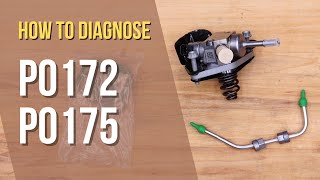
- Leaking High-Pressure Fuel Pump (HPFP) 🔴 High Probability This is the most common cause for P0172/P0175 on these direct-injection GM V8s. The camshaft-driven pump's internal seals fail, leaking fuel directly into the crankcase and contaminating the engine oil. This is a well-documented pattern failure.
How to confirm: The most definitive sign is engine oil that smells strongly of gasoline. A diagnostic procedure involves using a scan tool to monitor fuel trims, disconnecting the 'dirty side' PCV line from the intake manifold, and plugging the intake port. If the highly negative fuel trims quickly return toward 0% 🎬 Watch: How to troubleshoot fuel trim issues on GM engines, it confirms that fuel vapor from the crankcase was the source of the rich condition, pointing to a bad HPFP.
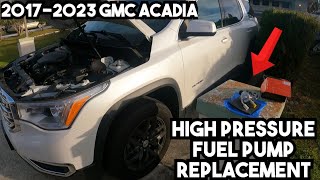
Typical fix: Replacement of the high-pressure fuel pump, the high-pressure fuel line (which is one-time use), and performing an engine oil and filter change to remove the contaminated oil. Failing to change the oil will cause the code to return immediately.
Est. part cost: $250-$550 - Dirty or Faulty Mass Air Flow (MAF) Sensor 🟡 Medium Probability TSB #PIP5446A specifically mentions inspecting for 'casting flash' (excess plastic) in the air filter housing near the MAF sensor on 2017-2018 models, which creates turbulence and incorrect readings. Oiled aftermarket air filters or general contamination can also coat the sensor element, causing it to under-report airflow and leading the ECM to command a rich mixture.
How to confirm: Visually inspect the MAF sensor housing for any physical obstructions or casting flash. Remove and clean the sensor element carefully with dedicated MAF sensor cleaner spray. 🎬 See this quick guide on cleaning your MAF sensor properly Monitor the MAF reading (g/s) on a scan tool; a faulty sensor may read unusually low for a given RPM.
Typical fix: Cleaning the MAF sensor and clearing the codes. If TSB-related casting flash is found, the air filter housing lid must be replaced. If cleaning doesn't help, replace the sensor with a quality OEM or reputable aftermarket part.
Est. part cost: $70-$150 - Stuck Open EVAP Purge Valve 🟡 Medium Probability The EVAP purge valve controls the flow of fuel vapors from the charcoal canister to the engine intake to be burned. If it sticks open, it can allow un-metered fuel vapor to be drawn into the engine at idle, when it should be closed, causing a rich condition.
How to confirm: With the engine running at idle, disconnect the electrical connector and the vapor line leading from the valve to the intake manifold. Place your finger over the port on the valve; there should be no vacuum felt. If suction is present, the valve is stuck open and is faulty.
Typical fix: Replacement of the EVAP purge valve/solenoid.
Est. part cost: $25-$60 - Faulty Upstream Oxygen Sensor (Bank 1, Sensor 1) ⚪ Low Probability While O2 sensors can fail, they are more often correctly reporting a rich condition rather than causing it. A sensor can degrade over time and send slow or biased signals, potentially getting stuck on a high voltage (rich) reading.
How to confirm: Use a scan tool to graph the voltage of the Bank 1 Sensor 1. A healthy sensor should fluctuate rapidly between approximately 0.1 and 0.9 volts (100-900 mV). If it's stuck high (above 0.8v) or responds sluggishly compared to the sensor on Bank 2, it may be faulty. This should be one of the last checks after ruling out fuel system issues.
Typical fix: Replace the Bank 1, Sensor 1 oxygen sensor.
Est. part cost: $50-$120 - Leaking Fuel Injector(s) ⚪ Low Probability A direct fuel injector can leak or get stuck open, dumping excess fuel into a cylinder. While less common than the HPFP failure, it can cause a rich condition isolated to one bank or cylinder.
How to confirm: After shutting off the engine, monitor the fuel rail pressure with a scan tool. A rapid drop in pressure can indicate a leaking injector. A more definitive test is to have a professional perform an injector balance test. Pulling spark plugs on Bank 1 may also reveal one that is wet with fuel or significantly more fouled than the others.
Typical fix: Replace the faulty fuel injector. It is often recommended to replace injectors as a balanced set.
Est. part cost: $80-$200 per injector
Rare But Worth Checking
- Intake Manifold Leak: While an intake leak typically causes a lean code (P0171/P0174), TSB #22-NA-128 for 2022-2025 models specifically lists P0172 as a possible result of an intake manifold leak. This is a counter-intuitive but manufacturer-documented possibility that may confuse diagnosis.
- Incorrect Fuel Alcohol Content Reading: On Flex Fuel-capable models, the ECM estimates the percentage of ethanol in the fuel. If this learned value becomes corrupted and reads artificially high, the ECM will command more fuel, causing a rich condition. A capable scan tool can be used to view this percentage and reset it to a baseline value, often fixing the issue without replacing parts.
Diagnosis Steps
- Read all stored fault codes with an OBD-II scanner. Note if P0175 (Bank 2 Rich) is also present, which strongly suggests a systemic issue.
- Check the Engine Oil: This is the most important step. Remove the dipstick and smell the oil. If it has a strong, unmistakable odor of raw gasoline, the high-pressure fuel pump has almost certainly failed. Do not proceed with other tests until this is confirmed.
- Analyze Live Data: With a scan tool, observe the long-term fuel trims (LTFT) for both banks at idle. For P0172/P0175, you will see highly negative numbers (e.g., -20% to -35%), confirming the ECM is subtracting large amounts of fuel.
- Isolate the PCV System: If fuel-in-oil is confirmed, perform the PCV isolation test. Disconnect the PCV hose from the intake manifold, plug the port on the manifold, and watch the LTFT data. If the values climb back towards 0%, you have 100% confirmed a failed HPFP.
- Inspect MAF Sensor and Air Intake: If there is no fuel smell in the oil, inspect the air intake system. Check for a dirty air filter. On 2017-2018 models, remove the air filter housing lid and inspect the area around the MAF sensor for plastic 'casting flash' as per TSB #PIP5446A. Clean the MAF sensor with appropriate cleaner.
Parts You'll Likely Need
- High-Pressure Fuel Pump
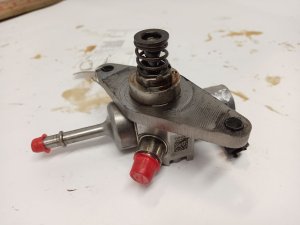
(OEM #12694328, 12677329, 12688607 (Verify by VIN))— The #1 cause of P0172/P0175 on these engines due to a pattern failure of internal seals leaking fuel into the crankcase.
Trusted brands: ACDelco (GM Original Equipment)
OEM price range: $350-$550
Aftermarket price range: $250-$450 - Mass Air Flow (MAF) Sensor
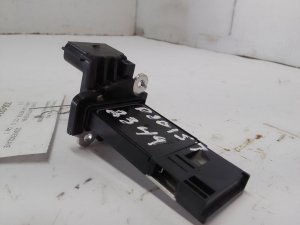
(OEM #23262343 (for 2017-2020 models, verify by VIN).)— Can become contaminated or be affected by manufacturing defects (casting flash), leading to incorrect air measurement and rich codes.
Trusted brands: ACDelco, Delphi, Hitachi
OEM price range: $95-$150
Aftermarket price range: $45-$80 - EVAP Canister Purge Valve
(OEM #214-1680 (Verify by VIN))— A common failure item that can stick open, allowing unmetered fuel vapors into the intake at idle and causing a rich condition.
Trusted brands: ACDelco
OEM price range: $30-$50
Aftermarket price range: $20-$40
Related Codes That Often Appear With This One
- P0175 — System Too Rich (Bank 2). This code is almost always present with P0172 because the most common causes (leaking HPFP, faulty MAF sensor, stuck EVAP purge valve) affect the entire engine, not just one bank.
- P0101 — Mass Air Flow (MAF) Sensor Circuit Range/Performance. This code directly points to a problem with the MAF sensor and is specifically mentioned in TSB #PIP5446A alongside the rich codes.
- P0300 — Random/Multiple Cylinder Misfire. An excessively rich mixture can foul spark plugs and cause incomplete combustion, leading to misfires across one or more cylinders.
Technical Service Bulletins (TSBs) & Recalls
- PIP5446A
- 22-NA-128
- 18-NA-246
Platform-Specific Known Issues
- TSB #PIP5446: For 2017 models, this bulletin points to harsh shifting and sputtering associated with P0172, advising technicians to inspect for cast flashing near the Mass Air Flow sensor.
- TSB #22-NA-128: For 2022 models, this bulletin provides a procedure to test the intake manifold for leaks that could potentially cause a P0172 code.
- High-Pressure Fuel Pump Failure: A known issue on 2015-2018 models with 5.3L and 6.2L engines where the pump leaks fuel into the crankcase, causing rich conditions (P0172/P0175).
Mechanic-Grade Diagnostic Values
- Mass Air Flow (MAF) Sensor Reading at Idle — expected: Approximately equal to engine displacement (e.g., 5.3 g/s for 5.3L engine, 6.2 g/s for 6.2L engine). Readings can range from 2-7 g/s depending on conditions.. Failure: A reading significantly lower than the engine's displacement may indicate a dirty sensor or vacuum leak. A significantly higher reading can indicate a faulty sensor causing a rich condition.
- Upstream Oxygen Sensor (Sensor 1) Voltage — expected: Rapidly fluctuating between ~0.1V (100mV) and ~0.9V (900mV) in closed loop.. Failure: Stuck high (above 0.8V) indicates a persistent rich reading. A slow or non-fluctuating signal can indicate a faulty sensor.
- Long Term Fuel Trim (LTFT) — expected: Between -10% and +10% at idle and under steady load.. Failure: Consistently more negative than -15% to -20% indicates the ECM is constantly removing fuel to compensate for a rich condition, triggering P0172/P0175.
- High-Pressure Fuel System Pressure (Key On, Engine Off) — expected: Pressure should hold steady or rise slightly as temperature builds.. Failure: A continual drop in pressure after the engine is shut off can indicate one or more leaking fuel injectors.
Scan Tool Commands That Help
- GDS2 or equivalent professional scan tool: Fuel Composition Reset — Use on Flex Fuel vehicles if the alcohol percentage reading is suspected to be corrupted and inaccurate, causing the ECM to command excessive fuel. This can resolve a rich condition without replacing parts.
- GDS2 or equivalent professional scan tool: PCV System Isolation / Fuel Trim Analysis — Used to definitively diagnose a leaking high-pressure fuel pump. By blocking the PCV inlet to the intake manifold and observing if the negative fuel trims correct themselves toward zero, you confirm that fuel-contaminated crankcase vapors were the source of the rich condition.
Wiring & Ground Locations
- Frame Grounds — Located on the frame right behind both front wheels.. These grounds are in a terrible location and are subject to corrosion from tire splash. Poor grounding for engine sensors can cause erratic readings, potentially contributing to incorrect fuel calculations.
- BCM Ground — Inside the cab, beside the front left A-pillar speaker. Requires removing pillar and dash trim to access.. While not a direct engine control ground, a poor BCM ground can cause a cascade of difficult-to-diagnose electrical issues that could indirectly affect systems monitored by the ECM.
- Engine Block Grounds — A primary ground strap runs from the negative battery cable to the passenger side cylinder head. Another runs from the body to the driver's side cylinder head.. The ECM and its critical sensors (like O2 and MAF sensors) rely on a solid engine ground reference. Corrosion or looseness at these points can cause voltage offsets and incorrect sensor readings.
- Underhood Fuse Block — Engine bay, typically on the driver's side.. For a 2019 model, Fuse #87 powers the MAF/IAT/Humidity sensor, Fuse #88 powers odd-bank injectors, and Fuse #89 powers even-bank injectors. A problem with these fuses or their circuits would be critical for fuel system diagnosis.
Real Owner Repair Stories
- Tahoe Yukon Forum (Vehicle year not specified, but within the modern GM truck/SUV family.) — P0172 and P0175 codes consistently appearing. Long Term Fuel Trims were floored at -19.5% for both banks.
❌ Tried (didn't work) Cleaning the MAF sensor had no real effect on the fuel trims.
✅ What actually fixed it The user had recently replaced the EVAP Purge and Vent Valve solenoids for other codes (P0455, P0449). The P0172/P0175 codes began immediately after this repair, suggesting a potential issue with the new EVAP components or installation causing an un-commanded flow of fuel vapors.
OEM Part Supersession History
Varies by year/engine→Varies— The high-pressure fuel pump (HPFP) is a common failure item. GM has likely released updated part numbers over the years to improve reliability. For example, part number 12744840 is listed for 2014-2020 models. It is critical to use a VIN-lookup to get the latest correct part for the specific vehicle.
Heads up: Using an incorrect or outdated pump part number can lead to premature failure or improper fuel pressure delivery for the specific engine calibration.
Model Year Variations Within This Range
- 2017-2019 (approx.): Engines in this period (5.3L L83, 6.2L L86) primarily use Active Fuel Management (AFM), which deactivates 4 of the 8 cylinders under light load.
- 2019-2024 (approx.): Newer engines (5.3L L84, 6.2L L87) use the more advanced Dynamic Fuel Management (DFM), which can deactivate any number of cylinders in 17 different firing patterns for greater efficiency. The L84 also added auto start/stop technology. These changes involve different lifters, valley covers, and engine calibrations, though the core direct injection system and its related P0172 causes remain similar.
Helpful Videos
Used OEM Parts in Stock


New Aftermarket Parts Available


The information in this article is provided for general reference and educational purposes only. Vehicle specifications, procedures, and part compatibility can vary by production date, trim level, and region. Always consult your vehicle's factory service manual and verify part numbers before purchasing or performing repairs. Safety-critical components such as airbags, seat belts, and braking systems should be installed by a qualified professional.
- Gmc YUKON:
- 🎬 Helpful Videos
- 🛍️ Shop This Part
- What's Unique About the 2017-2024 Gmc YUKON
- Diagnostic Flowchart
- Symptoms You May Notice
- Most Likely Causes
- Rare But Worth Checking
- Diagnosis Steps
- Parts You'll Likely Need
- Related Codes That Often Appear With This One
- Technical Service Bulletins (TSBs) & Recalls
- Platform-Specific Known Issues
- Mechanic-Grade Diagnostic Values
- Scan Tool Commands That Help
- Wiring & Ground Locations
- Real Owner Repair Stories
- OEM Part Supersession History
- Model Year Variations Within This Range
- 🎟️ Get 5% Off