

P0172 on 2009-2016 GMC Yukon: Causes and Fixes for a Rich Fuel Condition
For a 2009-2016 GMC Yukon, a P0172 code is most often caused by an incorrect fuel alcohol percentage stored in the engine's computer, especially on FlexFuel models. This can be fixed with a capable scan tool by resetting the fuel composition. Another common cause is a dirty or faulty Mass Air Flow (MAF) sensor. For 2015 and newer models with direct injection, a leaking high-pressure fuel pump is also a primary suspect.
- Before replacing any parts, use a scan tool to check the 'Fuel Alcohol Content'. If it's high and you're using regular gas, resetting this value is the most likely and cheapest fix.
- The second most common cause is a dirty or faulty Mass Air Flow (MAF) sensor. Cleaning it is a simple first step before considering replacement.
- For 2015 and newer models with direct injection, a leaking high-pressure fuel pump is a known issue that causes this code.
- Do not immediately replace the oxygen sensor; it is usually doing its job by correctly reporting a rich condition caused by another component.
What's Unique About the 2009-2016 Gmc YUKON
On these GM trucks and SUVs, two issues are exceptionally common for causing a P0172 code. Many are FlexFuel capable but don't use a physical sensor to measure ethanol content; instead, the computer 'learns' the percentage based on oxygen sensor readings after refueling. This system can incorrectly learn a high alcohol content, causing it to inject too much fuel. Additionally, a specific manufacturing defect involving casting flash in the air filter housing near the MAF sensor has been identified in Technical Service Bulletin (TSB) #PIP5446A as a cause for this code, as it disrupts airflow readings. [⭐ MANUFACTURER TSB — highest authority] Bulletin #PIP5446 (2015 POWER TRAIN, dated 2016-11-30)
Diagnostic Flowchart
Tap your situation to follow the diagnostic path that matches what you're seeing on this vehicle.
Generation note: This range covers the end of the third generation (2009-2014, GMT900 platform) and the start of the fourth generation (2015-2016, K2XX platform). Third-gen models use Vortec port-injected engines, while fourth-gen models use EcoTec3 direct-injected engines. Direct-injected engines (2015+) can also suffer from leaking high-pressure fuel pumps, which can cause this code.
Symptoms You May Notice
- Check Engine Light is on
- Rough idle, especially on cold start [⭐ MANUFACTURER TSB — highest authority] Bulletin #PIP5446 (2015 POWER TRAIN, dated 2016-11-30), [⭐ MANUFACTURER TSB — highest authority] Bulletin #PIP4792D (2009 FUEL SYSTEM, GASOLINE, dated 2014-01-30)
- Sputtering or hesitation when accelerating, particularly between 0-30% throttle [⭐ MANUFACTURER TSB — highest authority] Bulletin #PIP5446 (2015 POWER TRAIN, dated 2016-11-30)
- Black smoke from the exhaust [27, ⭐ MANUFACTURER TSB — highest authority] Bulletin #PIP4792D (2009 FUEL SYSTEM, GASOLINE, dated 2014-01-30)
- Strong smell of fuel
- Poor fuel economy
- Hard starting or extended crank, especially when cold [14, 21, ⭐ MANUFACTURER TSB — highest authority] Bulletin #PIP4792D (2009 FUEL SYSTEM, GASOLINE, dated 2014-01-30)
- Engine 'dieseling' or running on for a moment after shutoff
- Replacing the oxygen sensor immediately. The O2 sensor is often just accurately reporting the rich condition, not causing it. The root cause is usually related to fuel delivery or air measurement.
Most Likely Causes
- Incorrect Fuel Alcohol Content Reading 🔴 High Probability Many of these Yukons are FlexFuel compatible but do not have a physical sensor to measure the ethanol in the fuel. The computer infers the alcohol percentage based on oxygen sensor readings after refueling, especially after running the tank low. This system can falsely determine a high alcohol content (e.g., 25% to 73%) even when running on regular gasoline, causing the computer to command excessive fuel delivery. [21, ⭐ MANUFACTURER TSB — highest authority] Bulletin #PIP4792D (2009 FUEL SYSTEM, GASOLINE, dated 2014-01-30)
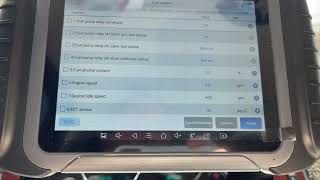
How to confirm: Use a scan tool to view the 'Fuel Alcohol Content' or 'Fuel Composition' parameter in the engine data. If the vehicle has regular gasoline in the tank but the reading is high (e.g., over 15%), this is the likely cause. TSB PIP4792D notes that if the scan tool value is 17% or more greater than the actual measured ethanol content, this is the confirmed cause.
Typical fix: Use a capable bidirectional scan tool (like a Tech 2, Autel, or Foxwell) to perform a 'Fuel Composition Reset' or 'Fuel Alcohol Reset'. This will reset the learned value to a default low percentage. After the reset, the fuel trims should also be reset. Some owners report this needs to be done periodically if the issue returns. In some cases, an ECM software update from the dealer may be required to permanently fix the learning algorithm.
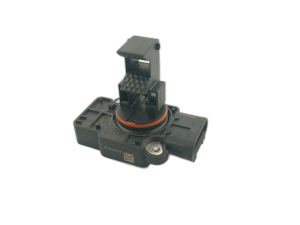
Est. part cost: $0 - Dirty or Faulty Mass Air Flow (MAF) Sensor 🔴 High Probability The MAF sensor measures the amount of air entering the engine. If it's dirty (especially from over-oiled aftermarket air filters) or faulty, it can under-report airflow, causing the ECM to inject too much fuel. A TSB also notes that manufacturing defects like plastic 'casting flash' near the sensor can disrupt airflow and cause this code. [⭐ MANUFACTURER TSB — highest authority] Bulletin #PIP5446 (2015 POWER TRAIN, dated 2016-11-30)
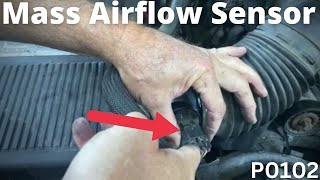
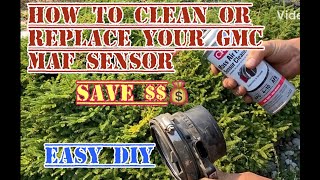
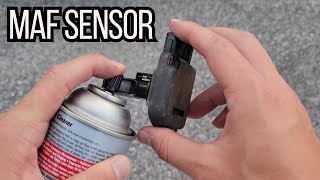
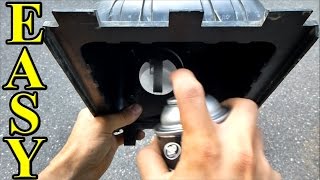
How to confirm: Inspect the MAF sensor element for dirt or debris. It can be carefully cleaned with a dedicated MAF sensor cleaner 🎬 See this detailed guide on cleaning your MAF sensor properly.; never use brake or carb cleaner. If cleaning doesn't help, monitoring the sensor's readings on a scan tool can confirm if it's reporting inaccurate data. Unplugging the MAF sensor and seeing if the fuel trims improve during a test drive can also point to a bad sensor.
Typical fix: First, try cleaning the sensor with dedicated MAF sensor cleaner. If the problem persists or the internal wire is broken, replace the MAF sensor. Inspect the air intake tube for casting flash as noted in TSB #PIP5446A and replace the air filter housing lid if found.
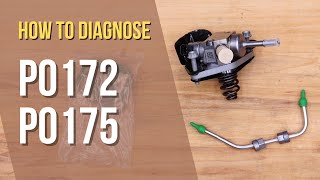
Est. part cost: $70-$150 - Leaking High-Pressure Fuel Pump (2015+ EcoTec3) 🟡 Medium Probability On direct-injection engines (2015-2016 models), the high-pressure fuel pump is driven by the camshaft and can leak fuel internally into the crankcase. These fuel vapors are then drawn into the intake through the PCV system, creating a rich condition that isn't measured by the MAF sensor. This also contaminates the engine oil.
How to confirm: A primary symptom is a strong smell of gasoline in the engine oil and a rising oil level on the dipstick. A diagnostic procedure involves disconnecting the PCV line from the intake manifold, capping the manifold port, and watching the fuel trim values on a scan tool. If the fuel trims return to normal, it confirms that unmetered fuel vapor was entering the engine, pointing to a leaking high-pressure pump.
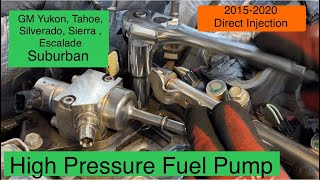
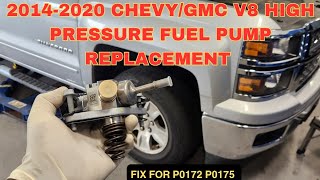
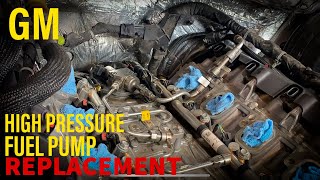
Typical fix: Replacement of the high-pressure fuel pump, which is located under the intake manifold. 🎬 Watch: Complete walkthrough for replacing the high-pressure fuel pump. An oil and filter change is mandatory after replacement to remove the fuel-contaminated oil.
Est. part cost: $300-$600 - Leaking Fuel Injector(s) 🟡 Medium Probability An injector can leak fuel into a cylinder even when it's supposed to be closed, leading to a rich condition on that bank. This can be a mechanical failure or due to dirt.
How to confirm: A fuel pressure gauge can be used to check if the pressure holds after the engine is turned off; a rapid drop can indicate a leak. Another method is to remove the spark plugs on Bank 1 and check for one that is wet with fuel or excessively black and sooty. A professional injector balance test is the most definitive method.
Typical fix: Replace the faulty fuel injector. It's often recommended to replace all injectors on that bank or all eight at the same time, especially on higher mileage vehicles.
Est. part cost: $50-$120 per injector
Rare But Worth Checking
- Faulty Fuel Pressure Regulator: A failing regulator can cause excessive fuel pressure across the entire fuel rail, leading to rich conditions.
- Stuck Open EVAP Purge Solenoid: If the purge solenoid sticks open, it can continuously draw fuel vapors from the charcoal canister into the intake manifold at the wrong time, causing a rich mixture. This can be tested by disconnecting and plugging the vacuum line to the solenoid to see if fuel trims improve.
- Biased Upstream Oxygen Sensor: While O2 sensors often fail in a way that causes lean codes, it is possible for one to fail and incorrectly read a lean condition, causing the ECM to over-fuel the engine in response. However, this is less common, and the O2 sensor is usually just reporting the problem correctly.
Diagnosis Steps
- Connect a scan tool and check for any other codes. Note the freeze frame data to see the engine conditions when the code was set.
- View live data, paying close attention to Short-Term (STFT) and Long-Term (LTFT) Fuel Trims for Bank 1. Persistently negative numbers (e.g., -10% or more) confirm the ECM is reducing fuel. LTFT values approaching -25% are a strong indicator of a significant issue.
- Check the 'Fuel Alcohol Content' parameter. If it's above 15% and you are using standard gasoline, perform a 'Fuel Composition Reset' using a capable scan tool, then reset fuel trims.
- If alcohol content is normal, inspect the air intake system for obstructions and check the engine air filter.
- Remove and inspect the Mass Air Flow (MAF) sensor. Clean it with dedicated MAF cleaner and inspect the air filter housing for any casting flash or debris that could disrupt airflow.
- For 2015+ models, check the engine oil for a strong fuel smell, which points towards a leaking high-pressure fuel pump.
- Test fuel pressure to ensure it is within specification. A pressure that is too high can indicate a faulty fuel pressure regulator.
- Perform a fuel injector leak-down test by monitoring fuel pressure after the engine is shut off. A rapid drop indicates a leaking injector.
- Inspect the EVAP purge solenoid to ensure it is not stuck open, which would create a constant vacuum leak of fuel vapors.
- If all else fails, inspect the upstream oxygen sensor on Bank 1 for contamination or failure, though it is more likely to be reporting an issue than causing it.
Parts You'll Likely Need
- Mass Air Flow (MAF) Sensor — A dirty or failed MAF sensor is a primary cause of incorrect air-fuel ratio calculations on these vehicles.
Trusted brands: ACDelco, Delphi, Hitachi
OEM price range: $120-$180
Aftermarket price range: $70-$150 - High-Pressure Fuel Pump (2015-2016) — For direct-injection models, this pump can leak internally, causing a rich condition as documented in GM service information.
Trusted brands: ACDelco, Bosch
OEM price range: $400-$600
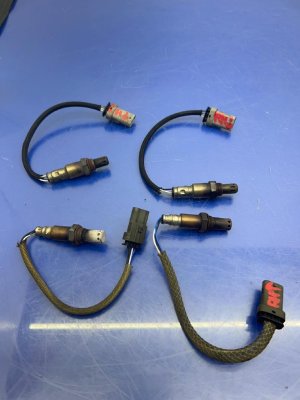
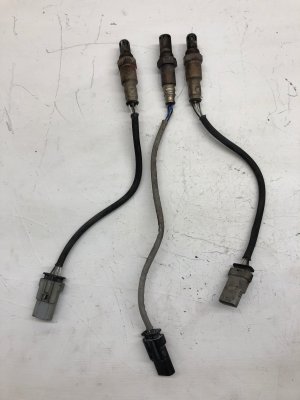
Aftermarket price range: $250-$450 - Upstream Oxygen Sensor (Bank 1) — If the sensor itself is faulty and sending incorrect (biased) signals, it can cause the computer to enrich the fuel mixture unnecessarily.
Trusted brands: ACDelco, Denso, Bosch
OEM price range: $60-$100
Aftermarket price range: $40-$80
Related Codes That Often Appear With This One
- P0175 — This is the identical 'System Too Rich' code but for Bank 2. When both appear together, it strongly suggests a problem affecting the entire engine, such as the MAF sensor, fuel pressure, incorrect alcohol content, or a leaking high-pressure fuel pump.
- P0101 — This code indicates a problem with the MAF sensor circuit performance. It often appears with P0172 if the MAF sensor is the root cause, especially if the casting flash issue from TSB PIP5446 is present. [1, ⭐ MANUFACTURER TSB — highest authority] Bulletin #PIP5446 (2015 POWER TRAIN, dated 2016-11-30)
Technical Service Bulletins (TSBs) & Recalls
- PIP5446A: Harsh Shift, Sputter, Rough Idle, and various codes including P0172. Points to casting flash in the air filter housing near the MAF sensor.
- PIP4792D: Cold extended crank, rough running, and P0172/P0175. Caused by the ECM incorrectly learning a high fuel alcohol content. Recommends checking the value and performing a reset and possibly an ECM reprogram.
- 18-NA-246: Addresses P0172 caused by fuel-enriched engine oil from frequent short-trip driving, which is a separate issue from a leaking HPFP but has similar symptoms. The fix involves an oil change and potentially a revised PCV valve.
Platform-Specific Known Issues
- TSB #PIP4792D: Addresses rough running and P0172/P0175 due to an incorrectly learned high fuel alcohol content, requiring a scan tool reset. [⭐ MANUFACTURER TSB — highest authority] Bulletin #PIP4792D (2009 FUEL SYSTEM, GASOLINE, dated 2014-01-30)
- TSB #PIP5446: Points to harsh shifting and sputtering with multiple fuel trim codes (including P0172) caused by casting flash near the MAF sensor, disrupting airflow. [⭐ MANUFACTURER TSB — highest authority] Bulletin #PIP5446 (2015 POWER TRAIN, dated 2016-11-30)
- TSB #18-NA-246: While for a slightly later model year and different engine, it notes that short-trip driving can cause fuel to accumulate in the crankcase, leading to a P0172 code. An oil change and PCV valve replacement may be needed.
Mechanic-Grade Diagnostic Values
- Long-Term Fuel Trim (LTFT) — expected: Around 0% to +/- 8%. Failure: A value between -20% and -25% will likely set the P0172 code.
- Low-Side Fuel Pressure (2015+ EcoTec3) — expected: Holds steady, may rise slightly after hot shut-off. A video showed a healthy system rising to 64 PSI.. Failure: A continual drop in pressure after the engine is off can indicate leaking fuel injectors.
- Fuel Alcohol Content (FlexFuel models) — expected: Should be low (e.g., under 10%) when running on standard gasoline.. Failure: A reading of 17% or more greater than the actual measured ethanol content is a confirmed failure per TSB PIP4792D. Some owners see false readings of 42% to 62%.
Hidden / Shadow Codes Worth Checking
- Mode $06, Monitor ID $01, Test ID $82: This test relates to the Rich-Lean to Lean-Rich Response Ratio of the Bank 1 Sensor 1 oxygen sensor. A failing value here could indicate a slow or biased sensor that is contributing to or causing the rich condition. (see via A scan tool capable of displaying Mode $06 data.)
Scan Tool Commands That Help
- GDS2 (GM Global Diagnostic System): Output Control Functions — GDS2 allows technicians to command specific components on and off to test their function, such as the EVAP purge solenoid, fuel pump, and individual fuel injectors, which is crucial for isolating the cause of a rich condition.
- GDS2 (or other capable bidirectional scanner): Fuel Composition Reset — This is the primary fix when the onboard computer has incorrectly learned a high percentage of ethanol in the fuel, causing it to command a rich mixture. This function resets the value to a default low percentage.
- GDS2 (or other capable bidirectional scanner): Fuel Trim Reset — After performing a repair, such as replacing a MAF sensor or resetting the fuel composition, the fuel trims should be reset. This clears the long-term learned adjustments and allows the ECM to build a new fuel map based on the corrected inputs.
Wiring & Ground Locations
- G103 / G104 / G105 — Typically located on the engine block, often near the front of the cylinder heads. Specific locations vary slightly by year and engine.. These are the primary engine-to-chassis grounds. Poor contact at these points can create voltage offsets and electrical noise, affecting the readings of critical sensors like the MAF, O2 sensors, and ECT sensor, potentially leading to an incorrect rich command.
- G402 — Located on the right rear "D" pillar on models with a one-piece liftgate.. This ground is associated with the Fuel Pump Flow Control Module (FSCM). Corrosion or a loose connection here can affect fuel pump operation and pressure, potentially causing fuel delivery issues.
- Harness near front driveshaft (4WD models) — On 4WD models, the wiring harness that includes circuits for the downstream O2 sensors and fuel composition sensor (if equipped) can rub against the front driveshaft if not properly secured.. Chafing can short sensor wires, leading to erratic signals. A short in the O2 sensor heater circuit, which shares power with other components, can cause multiple seemingly unrelated codes along with P0172.
Real Owner Repair Stories
- Tahoe Yukon Forum (2015 Tahoe LT, 113k miles) — P0172 & P0175, fuel in oil, engine dieseling on shutoff.
❌ Tried (didn't work) Cleaning MAF sensor, Checking air filter and intake
✅ What actually fixed it The user suspected a leaking high-pressure fuel pump (HPFP). Another user in the same thread confirmed a similar issue on a '16 Silverado was a malfunctioning injector that was stuck almost wide open, found by a shop using an advanced scanner. The original poster's final fix was confirmed to be the high-pressure fuel pump. - YouTube - "Wrenching With Kenny" (2007-2013 GM Truck/SUV (specific vehicle not stated, but applies to generation)) — P0172 & P0175, hard starting.
❌ Tried (didn't work) Initial diagnosis pointed to common issues.
✅ What actually fixed it The fuel composition sensor was reading 53% alcohol content when the fuel was actually standard gasoline. Using a scan tool to perform a "Fuel Composition Reset" and a "Fuel Trim Reset" corrected the issue. The fuel trims returned to normal ranges after the reset.
"I Checked Everything" — The Actual Cause
- On 2015+ models with direct injection, a smoke test for vacuum leaks will often come back clean. The source of the unmetered air/fuel is internal: the high-pressure fuel pump leaks fuel into the crankcase. These fuel vapors are then ingested by the engine via the PCV system, creating a rich condition that a smoke test cannot detect. The confirming test is to disconnect and cap the PCV port on the intake manifold and observe if the fuel trims return to normal.
OEM Part Supersession History
12677329→HPM1029 (ACDelco), 12691016, 12733943 (GM)— Standard part evolution and supplier changes for the high-pressure fuel pump on 2015+ EcoTec3 engines.
Heads up: When replacing the high-pressure fuel pump, GM also recommends replacing the single-use high-pressure fuel line that connects the pump to the fuel rail, as well as the intake manifold gaskets.
Model Year Variations Within This Range
- 2009-2014: These models use port-injected Vortec engines. The most common non-standard causes for P0172 are an incorrect fuel alcohol reading on FlexFuel models and a dirty/faulty MAF sensor. Fuel pressure issues are related to the in-tank pump or regulator.
- 2015-2016: These models use direct-injected EcoTec3 engines. This introduces the high-pressure fuel pump (HPFP) as a primary and common cause for P0172/P0175 when it leaks internally into the crankcase. Diagnosis for these years must include checking for fuel in the oil and potentially isolating the PCV system.
Helpful Videos
Used OEM Parts in Stock



New Aftermarket Parts Available


The information in this article is provided for general reference and educational purposes only. Vehicle specifications, procedures, and part compatibility can vary by production date, trim level, and region. Always consult your vehicle's factory service manual and verify part numbers before purchasing or performing repairs. Safety-critical components such as airbags, seat belts, and braking systems should be installed by a qualified professional.
- Gmc YUKON:
- 🎬 Helpful Videos
- 🛍️ Shop This Part
- What's Unique About the 2009-2016 Gmc YUKON
- Diagnostic Flowchart
- Symptoms You May Notice
- Most Likely Causes
- Rare But Worth Checking
- Diagnosis Steps
- Parts You'll Likely Need
- Related Codes That Often Appear With This One
- Technical Service Bulletins (TSBs) & Recalls
- Platform-Specific Known Issues
- Mechanic-Grade Diagnostic Values
- Hidden / Shadow Codes Worth Checking
- Scan Tool Commands That Help
- Wiring & Ground Locations
- Real Owner Repair Stories
- "I Checked Everything" — The Actual Cause
- OEM Part Supersession History
- Model Year Variations Within This Range
- 🎟️ Get 5% Off