

P0172 on 2010-2017 GMC Terrain: Rich Fuel System Causes and Fixes
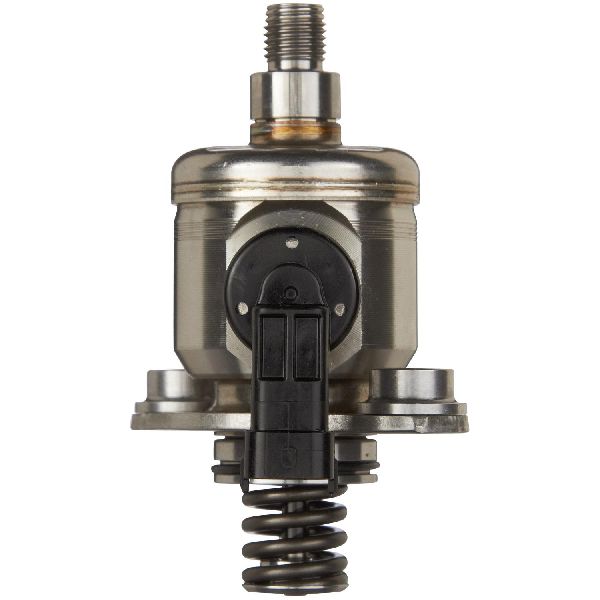
On a 2010-2017 GMC Terrain with the 2.4L engine, code P0172 is most often caused by a failing high-pressure fuel pump that leaks fuel into the engine oil. This issue is also common on its sibling, the Chevrolet Equinox. The fix is to replace the pump and change the contaminated oil. Expect to pay $150-$250 for an OEM pump and do it yourself, or $450-$700 at a shop.
- For a 2010-2017 GMC Terrain with a 2.4L engine, P0172 almost always means the high-pressure fuel pump is failing.
- The easiest and most reliable diagnostic step is to check the engine oil for a strong smell of gasoline.
- The repair requires replacing the high-pressure fuel pump (Part No. 12641847) and the one-time-use fuel line (Part No. 12608374).
- An oil and filter change is a critical part of the repair to remove fuel-contaminated oil and prevent engine damage.
What's Unique About the 2010-2017 Gmc TERRAIN

The first-generation GMC Terrain and its platform-mate, the Chevy Equinox, with the 2.4L direct-injected engine have a well-documented issue with the high-pressure fuel pump (HPFP). Unlike many cars where P0172 might point to a bad oxygen sensor or MAF sensor, on this specific vehicle, the primary suspect is the HPFP. Its internal seals can fail, allowing raw fuel to leak directly into the engine crankcase, contaminating the oil and causing a severe rich condition. This specific failure is so common that GM issued technical service bulletins acknowledging the problem.
Diagnostic Flowchart

Tap your situation to follow the diagnostic path that matches what you're seeing on this vehicle.
Symptoms You May Notice

- Check Engine Light is on
- Strong smell of gasoline in the engine oil (the most telling symptom)
- Engine running rough or idling poorly
- Engine continues to run, sputter, or 'chug' for a few seconds after being shut off (dieseling)
- Reduced fuel economy
- Black smoke from the exhaust
- Engine misfires or sputters, sometimes accompanied by a flashing check engine light
- Vehicle may enter 'Reduced Power Mode'
- Replacing the oxygen sensor first. While an O2 sensor can cause a P0172 code, on this specific vehicle, the high-pressure fuel pump is a far more likely culprit. Always check for fuel in the oil before replacing other parts.
- Replacing fuel injectors or cleaning the MAF sensor without checking for fuel in the oil first. These are common causes on other vehicles but are secondary on the 2.4L Terrain/Equinox.
Most Likely Causes

- Failing High-Pressure Fuel Pump (HPFP) 🔴 High Probability The plunger shaft seal inside the pump is known to wear out, allowing fuel to leak into the crankcase. This was acknowledged by GM in TSBs like #G-176360 and #PIP5094C. This is the most common cause for P0172 on this platform by a wide margin.
How to confirm: Remove the oil filler cap or pull the oil dipstick and smell for a strong gasoline odor. The oil level may also appear overfull and diluted. Fuel trims on a scan tool will show extremely negative numbers (e.g., -25% to -49%) as the ECM tries to compensate for the extra, un-metered fuel entering via the crankcase ventilation system.
Typical fix: Replace the high-pressure fuel pump, the associated fuel feed pipe, and the fuel pump tappet (follower). An engine oil and filter change is mandatory to remove the fuel-contaminated oil. Using an OEM/ACDelco pump is strongly recommended, as some aftermarket pumps have been reported to cause a P0191 code and drivability issues.
Est. part cost: $180-$300 - Faulty or Stuck-Open EVAP Purge Valve ⚪ Low Probability
How to confirm: A purge valve that is stuck open will continuously draw fuel vapors from the charcoal canister into the intake manifold, creating a rich condition. This can be tested by removing the valve and trying to blow through it; if air passes, it has failed. A scan tool can also command the valve to close and monitor fuel trims for a change.
Typical fix: Replace the EVAP canister purge valve/solenoid.
Est. part cost: $25-$50 - Faulty Oxygen (O2) Sensor ⚪ Low Probability
How to confirm: Use a scan tool to monitor the O2 sensor voltage. A sensor that is stuck reading lean (low voltage) can trick the computer into adding too much fuel. However, this is much less common than the HPFP failure and should be considered a secondary possibility.
Typical fix: Replace the upstream O2 sensor (Bank 1, Sensor 1).
Est. part cost: $40-$80 - Leaking Fuel Injector(s) ⚪ Low Probability
How to confirm: Perform a fuel injector balance test with a capable scan tool. A leaking injector can also cause misfires on a specific cylinder (e.g., P0301-P0304) and cause the corresponding spark plug to be black and sooty.
Typical fix: Replace the faulty fuel injector(s).
Est. part cost: $50-$100 per injector - Dirty or Faulty Mass Airflow (MAF) Sensor ⚪ Low Probability
How to confirm: A dirty MAF sensor can under-report the amount of air entering the engine, causing the computer to inject too much fuel. Check the MAF sensor for contamination. Cleaning it with a dedicated MAF sensor cleaner may resolve the issue. This is often tried first due to low cost but is rarely the root cause on this vehicle.
Typical fix: Clean the MAF sensor. If cleaning doesn't work, replace the sensor.
Est. part cost: $15-$25 (cleaner), $70-$120 (new sensor)
Rare But Worth Checking
- In TSB 18-NA-246, GM notes that for some vehicles, very frequent short-trip driving can cause fuel to accumulate in the crankcase, setting a P0172 without a hard part failure. This is less likely than HPFP failure but is a documented possibility that may be resolved with an oil change and updated ECM calibration.
Diagnosis Steps
- Check for other stored trouble codes with an OBD-II scanner.
- The most important step: Remove the engine oil cap and dipstick. Smell for a strong odor of raw gasoline. If present, the high-pressure fuel pump has almost certainly failed.
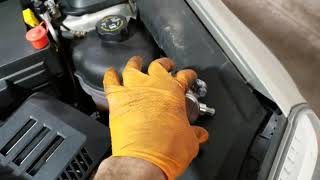
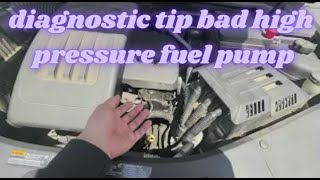
- If no fuel smell is present, use a scan tool to observe short-term and long-term fuel trims for Bank 1. Large negative values (e.g., -20% or more, with owners reporting as high as -49%) confirm the rich condition. 🎬 Watch: How to locate and diagnose the high pressure fuel pump
- Inspect the air intake system for any blockages or a severely clogged air filter.
- Test the EVAP purge valve. Disconnect the line from the valve to the intake manifold and check for vacuum at idle. There should be none. Alternatively, remove the valve and see if you can blow air through it; if you can, it's stuck open and needs replacement.
- Inspect the Mass Airflow (MAF) sensor for dirt or debris and clean if necessary.
- If the above steps do not identify the cause, further diagnosis of the oxygen sensors and fuel injectors may be needed, but this is unlikely given the prevalence of the HPFP issue.
Parts You'll Likely Need
- High-Pressure Fuel Pump
(OEM #12641847 (may be superseded by 12677329 or 12669595))— This is the most common failure point causing a P0172 code on the 2.4L Terrain. The internal seal fails, leaking fuel into the engine oil.
Trusted brands: GM Genuine Parts, ACDelco (HPM1005 or EP1028)
OEM price range: $200-$260
Aftermarket price range: $120-$180 - Fuel Feed Intermediate Pipe
(OEM #12608374)— This is a one-time-use fuel line that connects to the high-pressure fuel pump. It must be replaced whenever the pump is replaced to ensure a proper seal.
Trusted brands: GM Genuine Parts, ACDelco
OEM price range: $20-$40
Aftermarket price range: $15-$30 - Fuel Pump Camshaft Follower (Tappet)
(OEM #12645725 or 12590679)— This small 'bucket' lifter sits between the camshaft and the fuel pump plunger. It is highly recommended to replace it with the pump as it can also wear out.
Trusted brands: GM Genuine Parts, Dorman
OEM price range: $30-$50
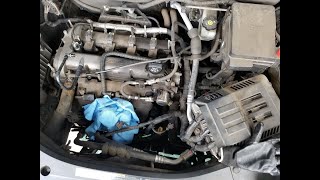
Aftermarket price range: $20-$40 - Engine Oil and Filter — The engine oil becomes contaminated with gasoline when the high-pressure fuel pump fails. It loses its lubricating properties and must be changed to prevent engine damage. 🎬 See this start to finish fuel pump replacement walkthrough
Trusted brands: ACDelco, Mobil 1, Castrol
OEM price range: $40-$70
Aftermarket price range: $30-$50
Related Codes That Often Appear With This One
- P0300-P0304 — Misfire codes (P0300 for random, P0301-P0304 for specific cylinders) can occur because the excessively rich mixture fouls the spark plugs and causes incomplete combustion.
- P0191 — This code for 'Fuel Rail Pressure Sensor Performance' has been known to appear *after* replacing the HPFP with a non-OEM, aftermarket part. It indicates the new pump is not regulating pressure correctly, reinforcing the need to use a genuine GM/ACDelco part.
Technical Service Bulletins (TSBs) & Recalls
- G-176360: Notes that the fuel pump plunger shaft seal may wear, allowing fuel into the crankcase and setting a P0172 code.
- G-171837: Repeats the information from TSB G-176360 regarding the fuel pump seal failure leading to a P0172 code.
- PIP5094C: A technical service b
Platform-Specific Known Issues
- While not a formal recall for all years, GM acknowledged the HPFP issue in multiple TSBs. For some early models, Special Coverage Adjustment #14421 extended the warranty on the HPFP to 10 years or 120,000 miles due to this exact issue, though this program has likely expired for most vehicles.
- TSB #G-176360 and #G-171837 document this exact failure mode: a worn fuel pump plunger shaft seal allowing fuel into the crankcase, setting a P0172 DTC.
- TSB #PIP5094C also addresses P0172 and other codes, pointing towards the HPFP as a primary cause of fuel-in-oil conditions.
Mechanic-Grade Diagnostic Values
- Low-Pressure Fuel System (in-tank pump) — expected: 50-100 psi (345-690 kPa) with pump commanded on, engine off. Should be 43-58 psi (300-400 kPa) at idle.. Failure: Pressure below the specified range indicates a weak in-tank pump or supply issue; pressure above indicates a restriction or regulator problem.
- High-Pressure Fuel System (engine-mounted pump) — expected: Around 470-500 psi at idle, increasing with RPM.. Failure: Inability to build or maintain pressure, or erratic readings, points to a failing HPFP. When the internal seal fails causing P0172, pressure readings may still appear normal while fuel leaks into the crankcase.
- Short-Term Fuel Trim (STFT) on Scan Tool — expected: Should hover around 0% to +/-10% at idle on a healthy engine.. Failure: A large, sustained negative value (e.g., -25% to -49%) indicates the ECM is aggressively removing fuel to counteract a severe rich condition, strongly suggesting the HPFP is leaking fuel into the oil.
- Mass Airflow (MAF) Sensor Reading at Idle — expected: Approximately 2-7 g/s at a stable, warm idle. The value should be proportional to engine displacement; for the 2.4L, expect the lower end of this range, around 2-4 g/s.. Failure: Readings significantly lower than expected can indicate a dirty sensor or an air leak downstream, while unusually high readings could point to a sensor fault.
Scan Tool Commands That Help
- GM GDS2 / Professional Scan Tool: Fuel Trim Reset — After replacing a component like the HPFP or O2 sensor, resetting fuel trims forces the ECM to relearn the fuel strategy from a baseline of zero, which is critical for verifying the repair was successful.
- GM GDS2 / Professional Scan Tool: Fuel Composition Reset — On Flex Fuel-capable versions of this engine, the ECM can incorrectly 'learn' a high ethanol content, causing a rich condition. If P0172 occurs without mechanical fault, resetting the fuel composition can resolve the issue.
- GM GDS2 / Professional Scan Tool: Fuel Pump Enable — This command allows a technician to run the low-pressure in-tank fuel pump with the engine off to test for correct fuel pressure and check for leaks in the low-pressure side of the system.
Wiring & Ground Locations
- G112 — On the engine block, near the transmission bell housing area.. This is a primary ground point for the Engine Control Module (ECM). A poor connection at G112 can cause erratic behavior from multiple sensors and actuators, including those in the fuel system, potentially leading to incorrect fuel calculations and codes like P0172. Verifying this ground is clean and tight is a crucial step in diagnosing complex electrical issues.
- ECM Connector X1 and X2 — The main connectors on the Engine Control Module.. The two main grounds for the PCM are large black-and-white wires located at the same pin position in connectors X1 (gray) and X2 (black). Testing for resistance between these pins and the battery negative terminal can quickly validate the entire ground circuit for the ECM.
Real Owner Repair Stories
- YouTube Commenter on 'Auto Repair champs' video (2013 Chevrolet Equinox 2.4L Ecotec) — P0172 code
❌ Tried (didn't work) Not specified, but the comment implies they were experiencing the same issue shown in the video.
✅ What actually fixed it Replaced the high-pressure fuel pump with an OEM GM part. After replacement, the vehicle ran fine with no codes.
OEM Part Supersession History
12608371, 12633115, 12633423, 12639694→12641847— Standard part evolution, likely for improved reliability of the internal seal that is prone to failure.
Heads up: While many aftermarket pumps are available, some have been reported to cause a P0191 (Fuel Rail Pressure Sensor Performance) code shortly after installation, even if they resolve the P0172. Sticking with a genuine GM or ACDelco pump (12641847 or equivalent) is strongly recommended to avoid this secondary issue.
Model Year Variations Within This Range
- 2010-2011 vs 2012-2017: The 2.4L engine changed from the LAF version to the LEA version around the 2012 model year. While they share the same core architecture and HPFP failure, some parts, like the intake camshaft and phasers, are different. The LEA engine is also typically Flex Fuel (E85) capable, making it susceptible to the 'Incorrectly Learned Fuel Composition' edge case failure.
Helpful Videos
Used OEM Parts in Stock



New Aftermarket Parts Available


The information in this article is provided for general reference and educational purposes only. Vehicle specifications, procedures, and part compatibility can vary by production date, trim level, and region. Always consult your vehicle's factory service manual and verify part numbers before purchasing or performing repairs. Safety-critical components such as airbags, seat belts, and braking systems should be installed by a qualified professional.
- Gmc TERRAIN:
- 🎬 Helpful Videos
- 🛍️ Shop This Part
- What's Unique About the 2010-2017 Gmc TERRAIN
- Diagnostic Flowchart
- Symptoms You May Notice
- Most Likely Causes
- Rare But Worth Checking
- Diagnosis Steps
- Parts You'll Likely Need
- Related Codes That Often Appear With This One
- Technical Service Bulletins (TSBs) & Recalls
- Platform-Specific Known Issues
- Mechanic-Grade Diagnostic Values
- Scan Tool Commands That Help
- Wiring & Ground Locations
- Real Owner Repair Stories
- OEM Part Supersession History
- Model Year Variations Within This Range
- 🎟️ Get 5% Off