

P0172 on 2018-2021 Ford F-150: System Too Rich Causes and Fixes
On the 2018-2021 Ford F-150, especially with the 5.0L V8, P0172 (System Too Rich Bank 1) is most frequently caused by a powertrain software issue that requires a dealer update, as noted in multiple Ford TSBs. Other common causes include a faulty upstream oxygen sensor, leaking fuel injectors, or a stuck EVAP purge valve. In many cases, the issue is a false code caused by software or incorrect flex-fuel learning rather than a mechanical fault.
- For a 2018-2021 F-150 with code P0172, especially a 5.0L, the first step should always be to check for available PCM software updates with a Ford dealer.
- The code means Bank 1 is running too rich, which can hurt fuel economy and damage your catalytic converter over time.
- If a software update doesn't fix it or isn't available, the most likely hardware culprits are a faulty upstream oxygen sensor, a leaking fuel injector, or a dirty MAF sensor.
- Do not be surprised if this code appears with its counterpart P0175 (Bank 2 rich) or even the opposite lean codes (P0171/P0174), as the root software issue can be erratic.
- For 5.0L flex-fuel models, having a shop check and reset the inferred ethanol fuel mixture value can be a quick fix.
What's Unique About the 2018-2021 Ford F-150
For the 2018-2021 F-150, particularly those with the 5.0L V8 engine, the P0172 code is uniquely tied to software and flex-fuel learning issues. Ford has issued multiple Technical Service Bulletins (TSBs) stating that incorrect software parameters in the PCM can cause false rich (or lean) codes to be set. In many cases, the truck isn't actually running rich; the computer just thinks it is, and a simple parts replacement won't fix it. Another documented issue is the flex-fuel system miscalculating the ethanol content of the fuel, leading to improper fuel adjustments. This can be triggered by refueling habits, such as frequently adding only small amounts of fuel, which confuses the ethanol percentage learning process.
Diagnostic Flowchart
Tap your situation to follow the diagnostic path that matches what you're seeing on this vehicle.
Generation note: This year range covers the end of the 13th generation (2018-2020) and the start of the 14th generation (2021) F-150. The software-related issues documented in TSBs are known to affect vehicles in both generations, particularly models with the 5.0L engine built before mid-2021.
Symptoms You May Notice
- Check Engine Light (MIL) is on
- Reduced fuel economy
- Rough or unstable idle
- Strong smell of fuel from the exhaust
- Black smoke from the exhaust (in severe cases)
- Engine may be difficult to start, especially after refueling
- Engine hesitation or stumbling on acceleration
- Replacing oxygen sensors when the root cause is a PCM software issue that requires a dealer reflash.
- Replacing the MAF sensor when the issue is a leaking fuel injector or a flex-fuel learning error.
Most Likely Causes
- Powertrain Control Module (PCM) Software Issue 🔴 High Probability Multiple Ford TSBs (including 21-2443, 22-2393, and others) explicitly state that software parameters are a known cause for this code on 5.0L engines, sometimes due to incorrect flex-fuel learning. TSB 22-2393 is a primary example for 2019-2021 models. These are often false codes where the engine isn't mechanically faulty.
How to confirm: A Ford dealer or a properly equipped independent shop can check the vehicle's PCM software version against the latest version specified in the TSBs. The dealer procedure involves checking for codes, updating the PCM, and resetting the Keep Alive Memory (KAM).
Typical fix: Reprogramming the PCM to the latest software version. This must be done by a dealer or a qualified shop with a Ford-specific scan tool (IDS). In some cases, a flex-fuel learning reset is also required.
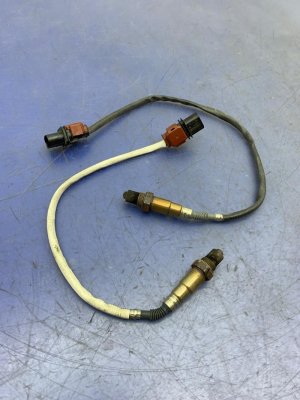
Est. part cost: $0-$200 - Faulty Upstream Oxygen (O2) Sensor 🟡 Medium Probability The O2 sensor is a wearable component that measures oxygen in the exhaust. A lazy or biased sensor can send incorrect signals, tricking the PCM into thinking the engine is rich when it is not.
How to confirm: Use a scan tool to monitor the O2 sensor voltage. A healthy upstream sensor should switch its voltage rapidly between approximately 0.1V and 0.9V. If it's stuck high or switching slowly, it's likely faulty.
Typical fix: Replace the Bank 1, Sensor 1 (upstream) oxygen sensor. For the 5.0L V8, Bank 1 is the passenger side.
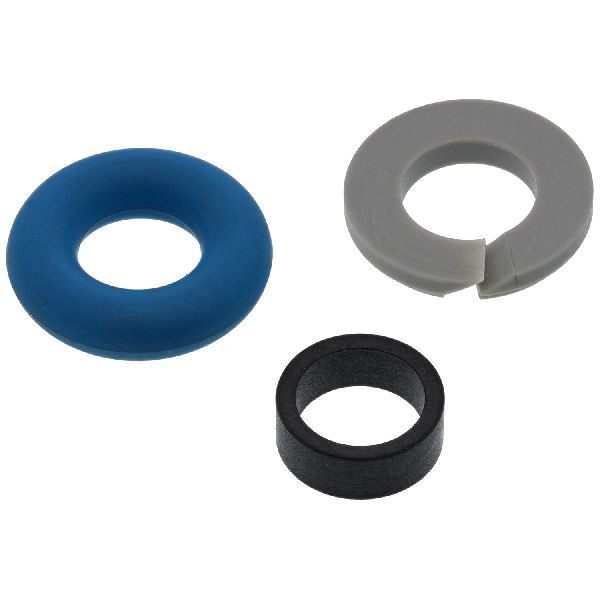
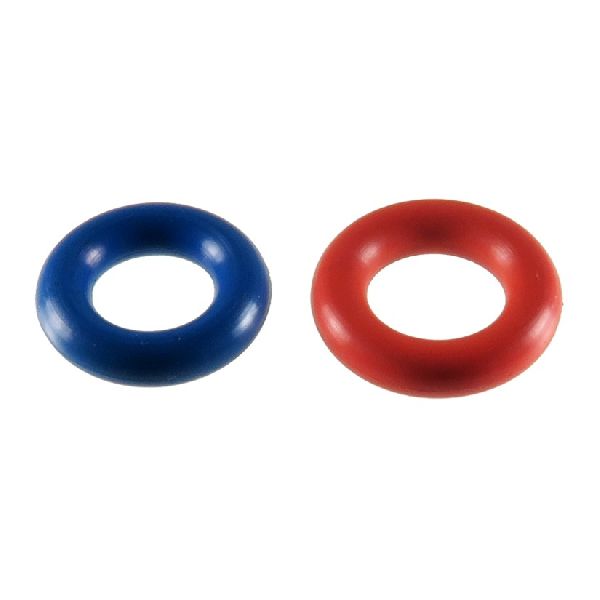
Est. part cost: $50-$150 - Leaking Fuel Injector(s) 🟡 Medium Probability TSB 20-2324 mentions direct injection fuel injectors as a potential cause. The 5.0L V8 uses a dual-injection system (port and direct). An injector can leak fuel into the cylinder even when it's supposed to be closed, creating a rich condition on that specific bank.
How to confirm: This is more difficult to diagnose. One method is to check spark plugs on Bank 1; a plug that is black and sooty compared to others indicates a rich condition in that cylinder. A professional can perform a fuel injector balance test or monitor fuel pressure bleed-down after shutdown.
Typical fix: Replace the faulty fuel injector(s) on Bank 1. Due to the labor involved, it's often recommended to replace all injectors on the affected bank or the entire set on high-mileage vehicles.
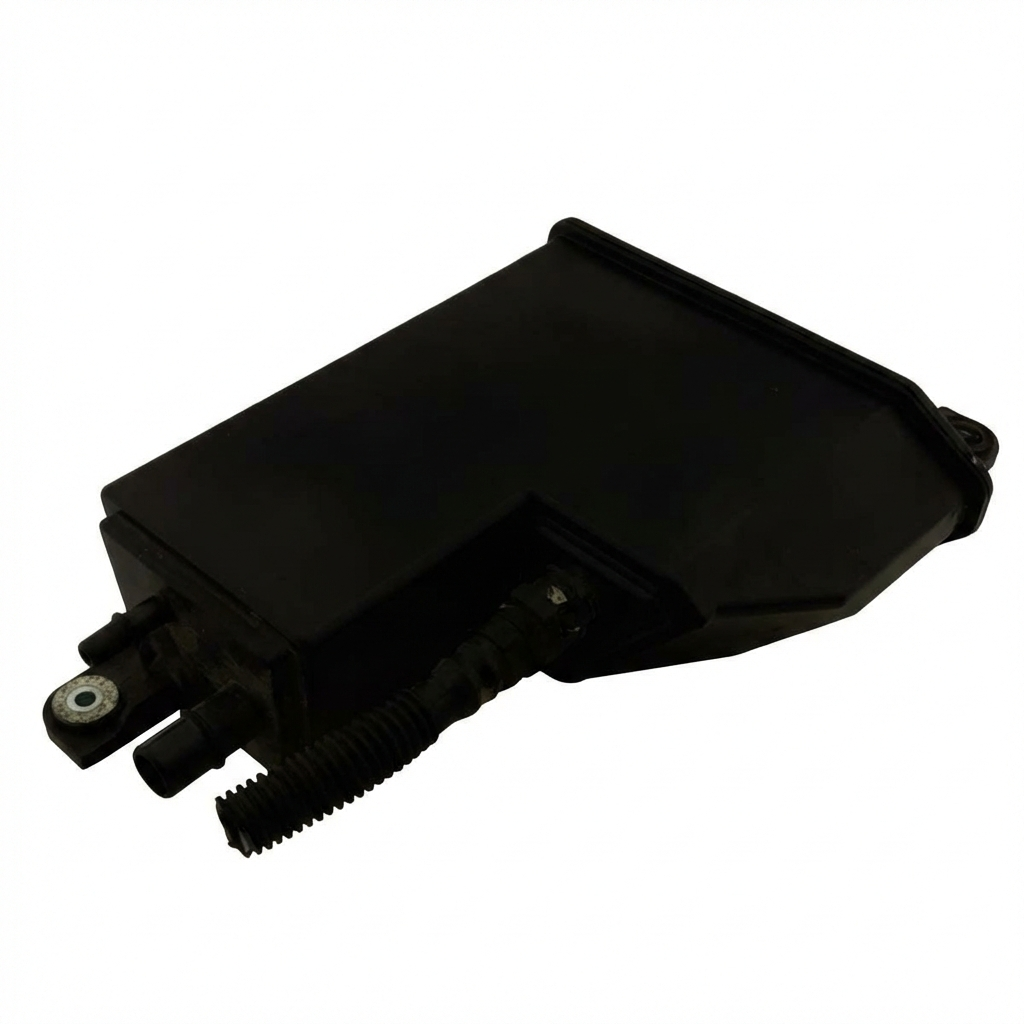
Est. part cost: $70-$250 per injector - Stuck Open EVAP Purge Valve 🟡 Medium Probability A stuck open purge valve can allow un-commanded fuel vapors from the charcoal canister to enter the intake manifold, creating a rich condition. This was noted in Ford document SSM 48573. Symptoms can include a rough idle and difficulty starting after getting gas.
How to confirm: Disconnect the vapor line from the purge valve and start the engine. With the valve's electrical connector unplugged, place a finger over the port; if any vacuum is felt, the valve is stuck open and faulty.
Typical fix: Replace the EVAP purge valve solenoid.
Est. part cost: $30-$80
Rare But Worth Checking
- Dirty or Faulty Mass Airflow (MAF) Sensor: While less common for a single-bank code, a dirty MAF sensor can under-report airflow, causing the PCM to inject too much fuel. This typically triggers codes on both banks (P0172 and P0175). Cleaning with a dedicated MAF cleaner is a simple first step.
- High Fuel Pressure: A failing fuel pressure regulator or a restriction in the fuel return line can cause system-wide high fuel pressure, forcing too much fuel through the injectors. This usually affects both banks.
Diagnosis Steps
- Use an OBD-II scanner to confirm the P0172 code and check for any other codes, especially P0175 (both banks rich) or misfire codes.
- Check for TSBs: Before any other step, check for applicable Technical Service Bulletins for your truck's VIN. A PCM reflash is a very common fix for false codes per TSBs like 22-2393.
- Analyze Freeze Frame Data: Look at the engine conditions (RPM, speed, load) and especially the inferred ethanol percentage (FF_INF) when the code was set. A high ethanol reading when you only use regular gasoline is a strong clue for a flex-fuel learning issue.
- Monitor Live Data: Use a scan tool to watch the Short-Term Fuel Trim (STFT) and Long-Term Fuel Trim (LTFT) for both banks. For P0172, you will see significant negative numbers on Bank 1 (e.g., -10% or more), indicating the PCM is removing fuel. Compare Bank 1 to Bank 2; if Bank 2 is normal, the problem is isolated to Bank 1.
- Test EVAP Purge Valve: Perform a vacuum test on the purge valve as described in the 'Common Causes' section. This is a frequent and easy-to-check cause.
- Inspect for Rich Cylinder: Pull the spark plugs on Bank 1 (passenger side). If one or more plugs are black and sooty, it points towards a leaking fuel injector in that cylinder.
- Test Oxygen Sensors: Graph the Bank 1 Sensor 1 voltage. It should fluctuate rapidly. If it's stuck high (above 0.8V) or slow to respond, it may be faulty.
- Inspect Air Intake System: Check the engine air filter and intake tube for any blockages or restrictions. A clogged filter can reduce airflow and cause a rich condition.
- Check Fuel Pressure: Test the fuel pressure to ensure it is within the manufacturer's specifications. This is more likely to be the cause if both banks are rich.
Parts You'll Likely Need
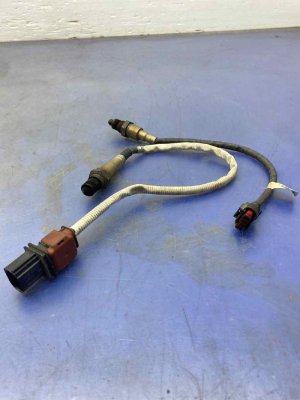
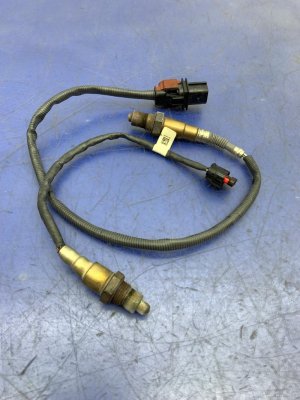
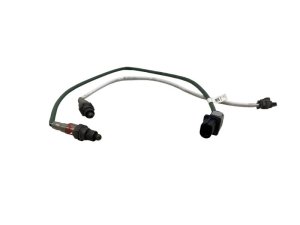
- Upstream Oxygen Sensor (Bank 1, Sensor 1)
(OEM #JL3Z-9F472-A (Motorcraft DY-1417) for 5.0L V8, Bank 1 (Right/Passenger Side))— This sensor is critical for fuel mixture adjustments and is a common failure point that directly causes rich or lean conditions.
Trusted brands: Motorcraft, Bosch, Denso
OEM price range: $80-$150
Aftermarket price range: $50-$100 - Fuel Injector (Direct Injection)
(OEM #JR3Z-9F593-A (Motorcraft CM5265) for 5.0L V8)— A mechanically leaking direct fuel injector will continuously drip fuel, directly causing a rich condition on the affected cylinder's bank. TSB 20-2324 points to this as a cause.
Trusted brands: Motorcraft, Bosch
OEM price range: $150-$250
Aftermarket price range: $70-$150 - EVAP Canister Purge Valve — A common failure item that can stick open, allowing fuel vapors into the intake at the wrong time, as noted in Ford's own service documents (SSM 48573).
Trusted brands: Motorcraft, Standard Motor Products
OEM price range: $40-
Related Codes That Often Appear With This One
- P0175 — This is the 'System Too Rich' code for Bank 2. If both P0172 and P0175 are present, it points to a problem affecting both engine banks, such as a MAF sensor, fuel pressure issue, EVAP purge valve, or a PCM software/flex-fuel problem.
- P0171 — This is the 'System Too Lean' code for Bank 1. It's common to see both lean and rich codes listed in the same TSBs for these trucks, as the underlying PCM software or flex-fuel learning issue can cause erratic fuel trim adjustments in either direction.
- P0301, P0302, P0303, P0304 — These are misfire codes for cylinders on Bank 1. A leaking fuel injector can cause a rich condition severe enough to foul the spark plug and create a misfire on a specific cylinder.
Technical Service Bulletins (TSBs) & Recalls
- TSB 22-2393
- TSB 21-2443
- TSB 21-2154
- TSB 21-2083
- TSB 20-2324
- SSM 49050
- SSM 48573
Platform-Specific Known Issues
- PCM Software Glitches: As documented in TSBs 21-2154, 22-2393, 20-2324, 21-2083, and 21-2443, the most significant vehicle-specific issue is the PCM software causing erroneous fuel trim codes. A dealer update is often the first and only required step.
- Incorrect Flex-Fuel Learning: On 5.0L models, the system can incorrectly 'learn' a high ethanol content in the fuel, causing it to command a richer mixture. SSM 49050 states this can be caused by 'customer refueling habits when adding only small amounts of fuel'. A reset of the flex-fuel tables may be needed.
Mechanic-Grade Diagnostic Values
- Long Term Fuel Trim (LTFT) — expected: Close to 0%, not exceeding +/- 10%.. Failure: Sustained negative values of -20% or more, with -25% being the typical trigger point for a P0172 code.
- Low-Side Fuel Pressure (Key On, Engine Off) — expected: Around 60-80 PSI.. Failure: Significantly lower pressure may indicate a weak in-tank fuel pump.
- High-Side Fuel Pressure (Engine Idling) — expected: Varies widely, but can be between 800 and 3000 PSI depending on demand.. Failure: Pressure that does not respond to engine load or bleeds off quickly after shutdown can indicate a failing High-Pressure Fuel Pump (HPFP) or leaking injector.
- Mass Airflow (MAF) Sensor Reading at Idle — expected: Approximately 4-5 grams/second (g/s) for a 5.0L V8 at normal idle.. Failure: Readings significantly lower than expected can cause the PCM to command less fuel, while higher readings can cause a rich condition. However, a dirty MAF sensor more commonly causes a lean code.
- Inferred Flex Fuel Percentage (FF_INF PID) — expected: Should be close to the actual ethanol content of the fuel in the tank (e.g., 0-10% for regular gasoline).. Failure: A reading of 70-80% when only regular gasoline has been used is a definitive sign of a flex-fuel learning error, as described in SSM 49050.
Hidden / Shadow Codes Worth Checking
- P2BEC, P2BED, P2BEE, P2BEF: These are manufacturer-specific DTCs that often accompany standard rich/lean codes like P0172. TSB 22-2393 and TSB 20-2324 list these as being potentially caused by PCM software issues on the 5.0L engine. They generally relate to fuel trim limits being reached. (see via These codes are typically visible with professional-grade scan tools or Ford-specific software like FORScan or IDS.)
Scan Tool Commands That Help
- Ford IDS (or FORScan): PCM Reprogramming — This is the primary fix when a TSB (like TSB 22-2393) indicates the P0172 code is caused by a software glitch. It updates the PCM to the latest calibration.
- Ford IDS (or FORScan): Reset All Adaptations / Reset Fuel Alcohol Content — This is critical after a PCM reflash or when freeze frame data shows an incorrect inferred ethanol percentage (FF_INF). It forces the system to relearn the fuel composition, correcting rich conditions caused by a false high ethanol reading.
- Ford IDS (or FORScan): Power Balance Test — This test helps identify which specific cylinder is contributing least to engine power. If a cylinder on Bank 1 shows a significant drop, it can help pinpoint a single leaking fuel injector causing the rich condition on that bank.
- Ford IDS (or FORScan): Fuel Pressure Leak Down Test — After shutting the engine off, a technician can monitor the high-side fuel pressure. A rapid drop in pressure suggests a leak, which could be from a direct injector or the high-pressure fuel pump itself.
Real Owner Repair Stories
- Ford F150 Forum thread (2019 F-150 5.0L V8) — Check Engine Light with codes P0172 and P0175 (rich on both banks).
❌ Tried (didn't work) Initially suspected a faulty MAF sensor, but the vehicle does not have one.
✅ What actually fixed it The owner checked the freeze frame data and found the inferred ethanol percentage was 77.64%, despite never using E85 fuel. This pointed directly to the issue described in Ford's Special Service Message (SSM) 49050 regarding incorrect flex-fuel learning. The fix is to have the dealer reprogram the PCM and perform a flex fuel reset.
"I Checked Everything" — The Actual Cause
- In many documented cases for the 2018-2021 F-150, a smoke test will come back clean because the P0172 code is not caused by a vacuum leak. The root cause is often an incorrect ethanol reading in the PCM's flex-fuel learning table, which falsely enriches the mixture. This is confirmed by checking the FF_INF PID on a scan tool and finding a high percentage (e.g., >70%) when only gasoline is in the tank.
OEM Part Supersession History
JR3Z-9F593-A (Motorcraft CM5265)→JR3Z-9F593-B (Motorcraft CM5269)— Standard part revision and update by the manufacturer.
Heads up: The parts are interchangeable for the specified model years. This is the PORT fuel injector, not the direct injector.
Model Year Variations Within This Range
- 2021: For the 2021 model year, Ford added a cylinder deactivation system to the 5.0L V8 engine. This system, called Variable Displacement Engine (VDE) technology, allows the engine to shut down half of its cylinders under light load conditions to improve fuel economy. While not directly linked to P0172 in the provided TSBs, this added complexity to the valvetrain and engine management system is a key difference from the 2018-2020 models.
- 2018-2020: The 2018-2020 F-150s with the 5.0L V8 feature a dual-injection system (port and direct) but do not have the cylinder deactivation technology found in the 2021 models. The fuel system TSBs regarding software and flex-fuel learning are heavily concentrated on these model years.
Helpful Videos


Used OEM Parts in Stock
New Aftermarket Parts Available



The information in this article is provided for general reference and educational purposes only. Vehicle specifications, procedures, and part compatibility can vary by production date, trim level, and region. Always consult your vehicle's factory service manual and verify part numbers before purchasing or performing repairs. Safety-critical components such as airbags, seat belts, and braking systems should be installed by a qualified professional.
- Ford F-150:
- 🎬 Helpful Videos
- 🛍️ Shop This Part
- What's Unique About the 2018-2021 Ford F-150
- Diagnostic Flowchart
- Symptoms You May Notice
- Most Likely Causes
- Rare But Worth Checking
- Diagnosis Steps
- Parts You'll Likely Need
- Related Codes That Often Appear With This One
- Technical Service Bulletins (TSBs) & Recalls
- Platform-Specific Known Issues
- Mechanic-Grade Diagnostic Values
- Hidden / Shadow Codes Worth Checking
- Scan Tool Commands That Help
- Real Owner Repair Stories
- "I Checked Everything" — The Actual Cause
- OEM Part Supersession History
- Model Year Variations Within This Range
- 🎟️ Get 5% Off