

P0172 on 2018-2022 Chevrolet Equinox: Causes for System Too Rich
P0172 on a 2018-2022 Equinox often means the engine is running rich. The most common cause, especially if accompanied by reduced power and code P0299, is a disconnected charge air cooler pipe at the throttle body. Re-securing this pipe is the fix. Other possibilities include a faulty high-pressure fuel pump leaking fuel into the oil, or simply fuel accumulation in the oil from frequent short trips.
- For the 2018-2022 Equinox, P0172 is very frequently caused by the charge air cooler pipe coming loose from the throttle body.
- Always check for other codes. P0299 (Underboost) appearing with P0172 is a strong clue pointing to the charge pipe issue.
- Before replacing any expensive parts, perform a simple visual inspection of the air intake piping and check the engine oil for a strong gasoline smell.
- Driving for extended periods with a rich condition can damage your catalytic converter, leading to a much more expensive repair.
What's Unique About the 2018-2022 Chevrolet EQUINOX

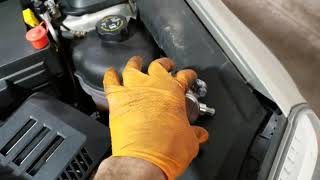
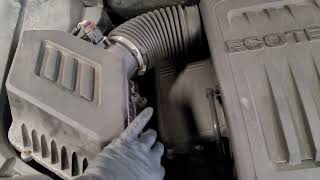
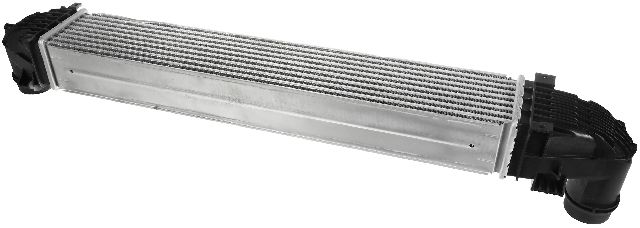
The 2018-2022 Equinox primarily uses small displacement turbocharged engines (1.5L and 2.0L). A widely documented issue on these platforms is the charge air cooler (CAC) pipe detaching from the throttle body. This creates a significant unmetered air leak *after* the mass airflow sensor, leading to an incorrect air-fuel mixture that the ECM interprets as rich, triggering P0172. 🎬 Watch: See how the charge air pipe causes these codes. This specific mechanical failure is so common that General Motors has issued multiple Technical Service Bulletins (TSBs), including a voluntary emissions recall for some 2019 models to install an improved retainer clip.
Diagnostic Flowchart

Tap your situation to follow the diagnostic path that matches what you're seeing on this vehicle.
Symptoms You May Notice

- Check Engine Light (MIL) illuminated
- Reduced engine power or "limp mode"
- Poor fuel economy
- Rough or unstable idle
- Hesitation during acceleration
- Smell of gasoline from the exhaust
- Black smoke from the exhaust
- Engine stalls, especially at low speed or idle
- Engine run-on or "dieseling" after shutoff
- Replacing oxygen sensors without diagnosis. While an O2 sensor can be the cause, it is often just correctly reporting the rich condition caused by another component like a disconnected charge pipe or fuel-contaminated oil.
- Replacing the MAF sensor or throttle body. TSB #22-NA-224 specifically advises against replacing these parts for the common charge-pipe-disconnection issue unless they are physically damaged from the pipe blowing off.
Most Likely Causes

- Disconnected Charge Air Cooler Pipe 🔴 High Probability Multiple TSBs (#PIP5651G, #22-NA-224) and a recall (#N192271200) confirm the pipe connecting the charge air cooler (intercooler) to the throttle body can become disconnected. The original retaining clip design was insufficient to hold the pipe under turbo boost pressure.
How to confirm: Visually inspect the large air duct connected to the throttle body. It will often be completely detached or very loose. This issue is almost always accompanied by codes like P0299 (Turbo Underboost), P0101 (MAF Performance), and P1101 (Intake Air Flow System Performance).
Typical fix: Re-attach the charge air cooler pipe to the throttle body and ensure the clamp is secure. For 2019 models, a recall involved installing an improved retainer (Part No. 13434668). In some cases, an updated or stronger clamp may be needed. Inspect the tube end and throttle body for damage; if damaged, replacement is necessary.
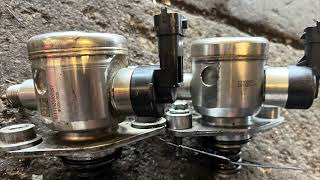
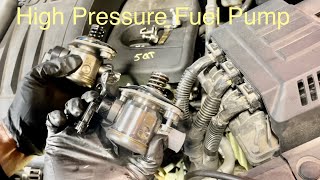
Est. part cost: $15-$35 for an updated retainer/clamp. - Fuel in Crankcase Oil 🟡 Medium Probability TSB #18-NA-246 directly addresses that frequent short-trip driving can cause fuel to accumulate in the engine oil, leading to a rich condition as fuel vapors are pulled through the PCV system. Separately, the high-pressure fuel pump (HPFP), which is driven by the camshaft, can develop internal leaks, allowing gasoline to seep directly into the crankcase.
How to confirm: Remove the oil dipstick and smell the oil. A strong gasoline smell is a clear indicator. The oil level may also be over the full mark. A diagnostic step is to remove the PCV hose or oil cap; if the engine's running condition or fuel trims improve, it confirms fuel vapors from the crankcase are the source of the rich mixture.
Typical fix: If caused by short trips, an oil and filter change and a long highway drive may resolve it. If the high-pressure fuel pump is leaking, it must be replaced, followed by an immediate oil and filter change. Using an OEM pump is highly recommended as some aftermarket pumps have been reported to cause other codes like P0191.
Est. part cost: $200-$500 for an OEM HPFP. - Dirty or Faulty Mass Airflow (MAF) Sensor ⚪ Low Probability
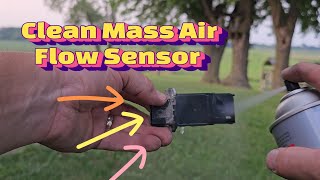
How to confirm: A dirty MAF sensor can under-report the amount of air entering the engine, causing the ECM to inject too much fuel. Inspect the sensor wires for contamination. Cleaning with a dedicated MAF sensor cleaner may resolve the issue. However, TSB #22-NA-224 explicitly states not to replace the MAF sensor for this code unless it is damaged or found to be the direct cause through separate diagnostics.
Typical fix: Clean the MAF sensor with a specialized cleaner. If cleaning doesn't work, the sensor may need to be replaced.
Est. part cost: $70-$150 - Leaking Fuel Injector(s) ⚪ Low Probability
How to confirm: This is harder to diagnose without professional tools. A mechanic can perform a fuel injector balance test or check for a rapid drop in fuel rail pressure after the engine is shut off. A single leaking injector may also cause a misfire on a specific cylinder.
Typical fix: Replace the faulty fuel injector(s).
Est. part cost: $50-$150 per injector - Faulty Upstream Oxygen (O2) Sensor ⚪ Low Probability
How to confirm: A failing O2 sensor can send an incorrect signal (biased rich), tricking the computer into adding fuel. A scan tool can be used to monitor the O2 sensor's voltage to see if it is responding correctly or is stuck at a high voltage (e.g., >0.8V).
Typical fix: Replace the upstream O2 sensor (also called an air/fuel ratio sensor).
Est. part cost: $50-$120
Rare But Worth Checking
- Stuck Open EVAP Purge Valve: If the evaporative emissions purge valve sticks open, it can allow unmetered fuel vapor from the gas tank to enter the engine at the wrong time, creating a rich mixture. This can typically be tested by applying vacuum to the valve to see if it holds.
- Excessive Fuel Pressure: A failing fuel pressure regulator or a restriction in the fuel return line (less common on modern systems) can cause system-wide high fuel pressure, leading to a rich condition.
- Frozen/Contaminated Charge Air Cooler or PCV System: In extremely cold climates (-18°C / 0°F or below), ice can form in the PCV system, intake manifold, or charge air cooler, restricting airflow and causing driveability issues, including rich conditions, as noted in TSB #22-NA-133.
Diagnosis Steps
- Scan for all DTCs. If P0299, P0101, or P1101 are present with P0172, proceed directly to step 2.
- Visually inspect the entire air intake tract, especially the connection of the large charge air cooler pipe to the engine's throttle body. Check for looseness or complete disconnection. Confirm the retaining clip and seal are present and undamaged.
- If the intake is secure, remove the engine oil dipstick. Check for a strong smell of gasoline and an oil level that is higher than the full mark.
- If fuel contamination is suspected, a further test is to briefly disconnect the PCV fresh air source (e.g., by removing the oil fill cap) while the engine is running and observe fuel trims with a scan tool. A rapid improvement towards 0% confirms fuel vapors from the crankcase are the cause.
- If no issues are found, use a scan tool to observe long-term and short-term fuel trims (LTFT/STFT). For P0172, they will be significantly negative (e.g., -20% or lower).
- Inspect the MAF sensor element for any dirt, oil, or debris. Clean it with dedicated MAF cleaner if necessary.
- Monitor the upstream O2 sensor voltage. It should fluctuate rapidly between approximately 0.1V and 0.9V. If it is stuck high or seems slow to respond, it may be faulty.
- If fuel is confirmed in the oil, perform an engine oil and filter change. If the issue is suspected to be from short-trip driving, clear codes and drive the vehicle extensively. If it returns, suspect the high-pressure fuel pump.
Parts You'll Likely Need
- Charge Air Cooler Hose Retainer/Clamp
(OEM #13434668 (Updated Retainer Kit for 2019 models))— This is often all that's needed to fix the common issue of the charge air cooler pipe disconnecting. The original clip can fail, and an updated design is available.
Trusted brands: ACDelco, GM Genuine
OEM price range: $15-$35
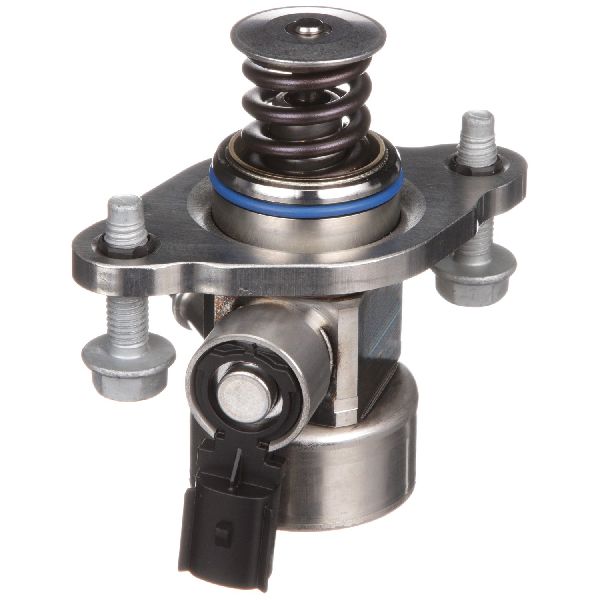
Aftermarket price range: $10-$25 - High-Pressure Fuel Pump
(OEM #12679199 (Example for 2.0L LTG, verify by VIN))— A common failure point on direct injection engines that can leak fuel into the crankcase, causing a rich condition and fuel-in-oil contamination.
Trusted brands: ACDelco, Bosch
OEM price range: $350-$500
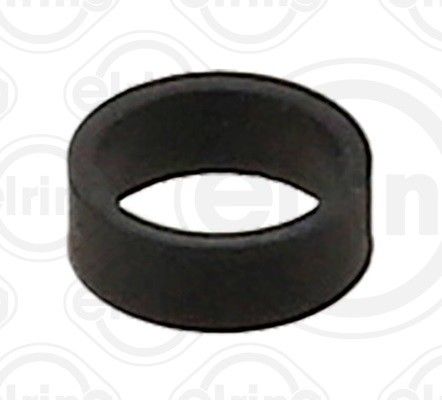
Aftermarket price range: $200-$350 - Charge Air Cooler Outlet Tube Seal
(OEM #84027052 (Example for 1.5L, verify by VIN))— When the charge air cooler pipe blows off the throttle body, this O-ring seal can be lost or damaged, requiring replacement to ensure a proper seal upon reinstallation.
Trusted brands: ACDelco, GM Genuine
OEM price range: $20-$35
Aftermarket price range: $10-$20
Related Codes That Often Appear With This One
- P0299 — Turbocharger/Supercharger Underboost. This code is very common with P0172 when the charge air cooler pipe has disconnected, as the turbo cannot build boost pressure.
- P0101 — Mass Air Flow (MAF) Circuit Range/Performance. This code often sets with the disconnected charge air cooler pipe because the air measured by the MAF sensor doesn't match what the engine expects to see.
- P1101 — Intake Air Flow System Performance. This is another GM-specific code that points to a discrepancy between the measured airflow and the calculated airflow, often caused by the same charge pipe leak.
- P06DE — Engine Oil Pressure Control Solenoid Valve Stuck On. TSBs #18-NA-246 and #22-NA-056 link this code with P0172, suggesting a potential underlying issue related to oil condition or pressure, strongly pointing towards checking the engine oil for fuel contamination.
- P0521 — Engine Oil Pressure Sensor/Switch Range/Performance. Also cited in TSBs #18-NA-246 and #22-NA-056, this code appearing with P0172 points towards checking the engine oil for fuel contamination.
- P0506 — Idle Air Control System RPM Lower Than Expected. This code can set alongside the others when the charge air cooler pipe disconnects, causing a rough, low idle or stalling.
Technical Service Bulletins (TSBs) & Recalls
- 22-NA-224: Supersedes PIP5651G. Details the procedure for addressing a disconnected Charge Air Cooler (CAC) outlet tube from the throttle body, which causes codes P0172, P0299, P0101, etc. Advises inspecting for damage before replacing parts.
- PIP5651G: An earlier version of TSB 22-NA-224, also identifying the charge air cooler pipe disconnection as the cause for P0172 and related codes.
- PIP5710A: Communicates the possibility of the charge air cooler tube becoming disconnected from the throttle body, causing reduced power and multiple DTCs.
- 18-NA-246: Addresses P0172 (and oil pressure codes P06DE/P0521) caused by fuel accumulation in the crankcase due to frequent short-trip driving. The fix involves an ECM update for some models, a potential PCV valve update, and an oil change.
- 22-NA-056: Similar to 18-NA-246, this bulletin provides a repair procedure for a MIL-on with DTCs P0172, P06DE, and/or P0521, pointing to fuel-contaminated oil.
- N192271200 (Voluntary Emissions Recall): For certain 2019 models, this recall instructs dealers to install an improved charge air cooler retainer (Part No. 13434668) to prevent the duct from disconnecting.
- PIE0569B: An Engineering Information request to gather data from vehicles exhibiting P0172/P0299, specifically related to the charge air cooler pipe issue, to help root-cause the problem.
Platform-Specific Known Issues
- Charge Air Cooler (CAC) Pipe Disconnection: The most prevalent issue for this code on the 2018-2022 Equinox. The factory retaining clip on the pipe connecting the intercooler to the throttle body is a known weak point. Under normal turbo boost, the pipe can pop off, creating a massive air leak that the ECM misinterprets as a rich condition, setting P0172 along with underboost (P0299) and MAF performance (P0101, P1101) codes. GM issued a recall for some 2019 models to install a better clip.
- Fuel Dilution of Engine Oil: Direct injection engines, like the 1.5L and 2.0L turbo, are susceptible to fuel contaminating the engine oil. TSB 18-NA-246 confirms this can happen from frequent short trips where the engine doesn't get hot enough to burn off fuel vapors. A more severe cause is a mechanical failure of the high-pressure fuel pump, which is lubricated by engine oil and driven by the camshaft, allowing raw fuel to enter the crankcase. In both cases, the PCV system sucks these fuel vapors into the intake, creating a rich mixture.
Mechanic-Grade Diagnostic Values
- Long-Term Fuel Trim (LTFT) — expected: -10% to +10%. Failure: Exceeds -20% to -25%, indicating the ECM is consistently removing fuel to correct a rich condition.
- Upstream O2 Sensor Voltage — expected: Fluctuates rapidly between ~0.1V and 0.9V.. Failure: Consistently reads high, above 0.8V, with reduced switching activity.
- Mass Air Flow (MAF) Sensor Reading at Idle — expected: Approximately 2-7 grams/second (g/s) for a small displacement engine like the 1.5L/2.0L. A common rule of thumb is the g/s reading should approximate the engine's displacement in liters at warm idle.. Failure: A reading significantly lower than expected may indicate a dirty sensor, while an inaccurate reading can cause a rich condition.
- High-Pressure Fuel System Pressure — expected: Can range from 2,000 to 2,800 PSI (138 to 193 bar) under operation. For 2018-2022 LYX engines, the system pressure is 20 MPa (approx. 2900 PSI).. Failure: Inability to hold pressure after shutdown (leak-down) points to a leaking injector or faulty high-pressure fuel pump.
Scan Tool Commands That Help
- GDS2 / Professional Scan Tool: Throttle/Idle Learn or Reset — After cleaning or replacing the throttle body, a reset of the 'Throttle Body Idle Air Flow Compensation' may be needed. If this value is high (e.g., 100%), it indicates the ECM is compensating for an issue, and a reset after cleaning can bring it back to 0%, resolving idle or low-speed performance problems that can accompany P0172.
- GDS2 / Professional Scan Tool: Fuel Trim Reset — After replacing a component that was causing a rich condition, such as a high-pressure fuel pump or leaking injectors, a fuel trim reset should be performed. TSB PIP4783 specifically calls for a fuel trim reset after replacing the HPFP.
Wiring & Ground Locations
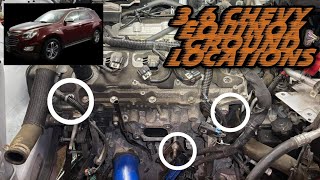
- G103 — Located at the left rear of the engine compartment on the cowl, above the brake booster.. This ground point serves the Engine Control Module (ECM), Body Control Module (BCM), and the Data Link Connector (DLC). A poor connection here can cause erratic behavior from the ECM and various sensors, potentially leading to incorrect fuel calculations and fault codes.
Real Owner Repair Stories
- Chevrolet Forum user 'hecrypavo' (2014 Chevrolet Equinox 2.4L Ecotec) — P0172 code, smell of gas on the oil dipstick.
❌ Tried (didn't work) Cleaned the air intake system., Cleaned the MAF sensor., Cleaned the PCV valve., Cleaned the throttle body.
✅ What actually fixed it Replacing the high-pressure fuel pump (HPFP) and changing the engine oil and filter resolved the P0172 code.
"I Checked Everything" — The Actual Cause
- In cases where a smoke test reveals no vacuum or intake leaks, the root cause is often internal, such as a high-pressure fuel pump leaking fuel into the crankcase. The fuel vapors are then drawn into the intake manifold via the PCV system, creating a rich condition that a smoke test cannot detect.
OEM Part Supersession History
Unknown→13434668— Improved design to prevent the charge air cooler pipe from disconnecting from the throttle body.
Heads up: This is the updated retainer clip mentioned in GM recall #N192271200.Unknown→AC Delco HPM1010 (for 1.5L LYX)— Standard replacement for the high-pressure fuel pump.
Heads up: Using non-OEM pumps has been linked to causing P0191 trouble codes after installation. It is highly recommended to use an OEM (AC Delco) part.Unknown→42651298— Standard replacement clamp for the charge air cooler inlet hose.
Model Year Variations Within This Range
- 2018-2020: The 2.0L LTG Turbo I4 engine was available as an option but was discontinued after the 2020 model year.
- 2023+: For the 2023 model year, the 1.5L LYX engine was replaced by the 1.5L LSD engine. This new engine features a higher-pressure fuel system, increasing from 20 MPa (2900 PSI) to 35 MPa (5076 PSI), which could affect diagnostics and parts compatibility for fuel-related codes.
Helpful Videos

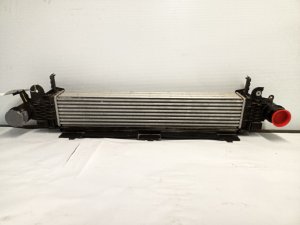
Used OEM Parts in Stock

New Aftermarket Parts Available


The information in this article is provided for general reference and educational purposes only. Vehicle specifications, procedures, and part compatibility can vary by production date, trim level, and region. Always consult your vehicle's factory service manual and verify part numbers before purchasing or performing repairs. Safety-critical components such as airbags, seat belts, and braking systems should be installed by a qualified professional.
- Chevrolet EQUINOX:
- 🎬 Helpful Videos
- 🛍️ Shop This Part
- What's Unique About the 2018-2022 Chevrolet EQUINOX
- Diagnostic Flowchart
- Symptoms You May Notice
- Most Likely Causes
- Rare But Worth Checking
- Diagnosis Steps
- Parts You'll Likely Need
- Related Codes That Often Appear With This One
- Technical Service Bulletins (TSBs) & Recalls
- Platform-Specific Known Issues
- Mechanic-Grade Diagnostic Values
- Scan Tool Commands That Help
- Wiring & Ground Locations
- Real Owner Repair Stories
- "I Checked Everything" — The Actual Cause
- OEM Part Supersession History
- Model Year Variations Within This Range
- 🎟️ Get 5% Off